
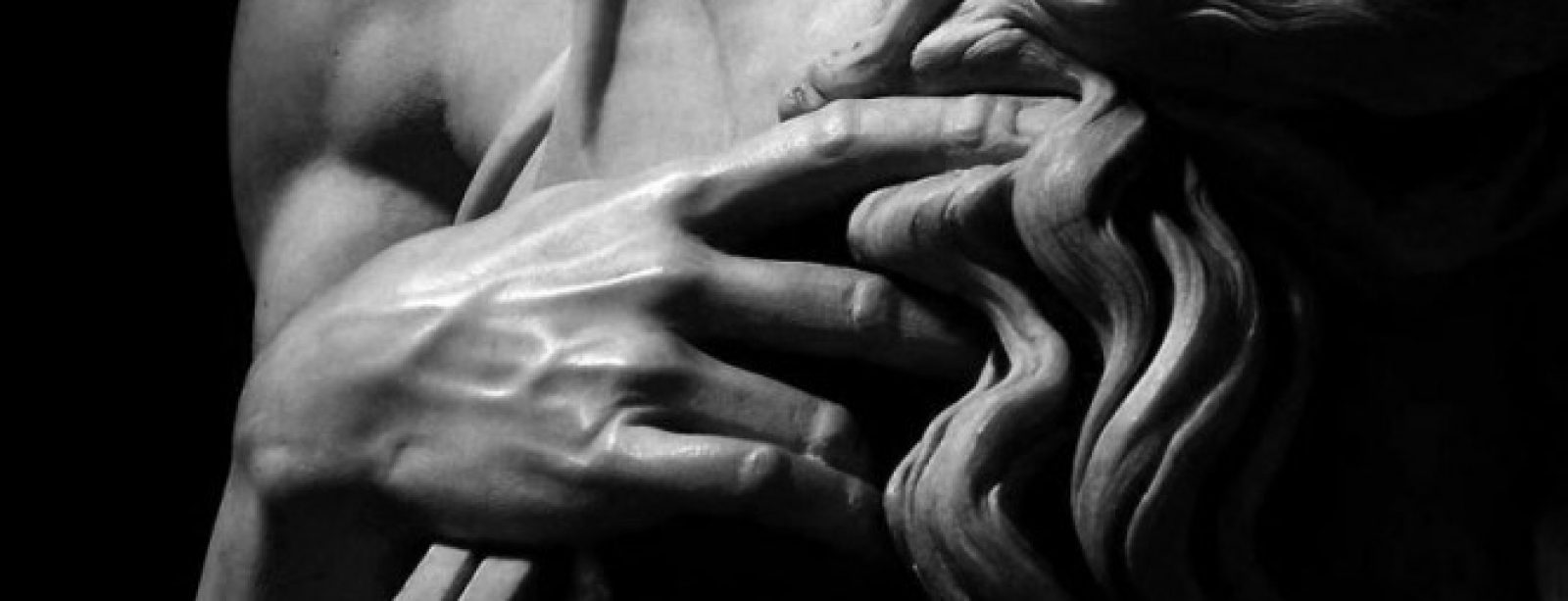
28 novembre 1680: muore Gian Lorenzo Bernini, l’uomo che trasformò Roma in un teatro di marmo
Il 28 novembre 1680 si spegneva a Roma Gian Lorenzo Bernini, uno dei più grandi protagonisti della storia dell’arte.
Scultore, architetto, pittore e scenografo, aveva trasformato il marmo in materia viva, capace di esprimere emozioni, movimento e meraviglia. Ancora oggi le sue opere continuano a definire il volto della Città Eterna.
Quando Bernini morì, il 28 novembre 1680, Roma perdeva uno dei suoi protagonisti più illustri, ma cominciava anche a consolidarsi il mito di un artista che aveva saputo dare forma alle ambizioni di un’intera epoca.

Era nato a Napoli il 7 dicembre 1598, figlio dello scultore Pietro Bernini e di Angelica Galante. Crebbe in un ambiente nel quale l’arte era una presenza quotidiana e fin da bambino mostrò una straordinaria predisposizione per il disegno e la scultura. Il padre intuì presto le sue capacità e lo accompagnò nella formazione, portandolo con sé anche a Roma, dove il giovane Gian Lorenzo avrebbe trovato il terreno ideale per sviluppare il proprio talento.
La sua fu una carriera eccezionale, sostenuta da committenti potenti, pontefici e cardinali che riconobbero in lui un artista fuori dal comune. Ma il suo successo non fu soltanto il risultato di protezioni e commissioni prestigiose. Bernini possedeva una capacità rara: riusciva a infondere vita alla pietra, trasformando il marmo in carne, tessuto, movimento e sentimento.
Il giovane Bernini conquista Roma
Il talento di Gian Lorenzo non passò inosservato negli ambienti ecclesiastici e aristocratici della capitale. Tra coloro che compresero per primi la grandezza del giovane scultore ci fu il cardinale Maffeo Barberini, futuro papa Urbano VIII, che ne divenne uno dei più importanti sostenitori.
Un altro personaggio fondamentale per la sua affermazione fu il cardinale Scipione Borghese, grande collezionista e raffinato conoscitore d’arte. Per lui Bernini realizzò alcune delle sculture più sorprendenti della sua giovinezza, opere nelle quali dimostrò una padronanza tecnica che lasciava già intuire la portata della sua rivoluzione artistica.
La Galleria Borghese conserva ancora oggi un nucleo eccezionale di suoi capolavori. È uno dei luoghi imprescindibili per comprendere la genialità dello scultore e seguire l’evoluzione del suo linguaggio.
Qui si possono ammirare il David, il Ratto di Proserpina, Enea, Anchise e Ascanio e Apollo e Dafne.
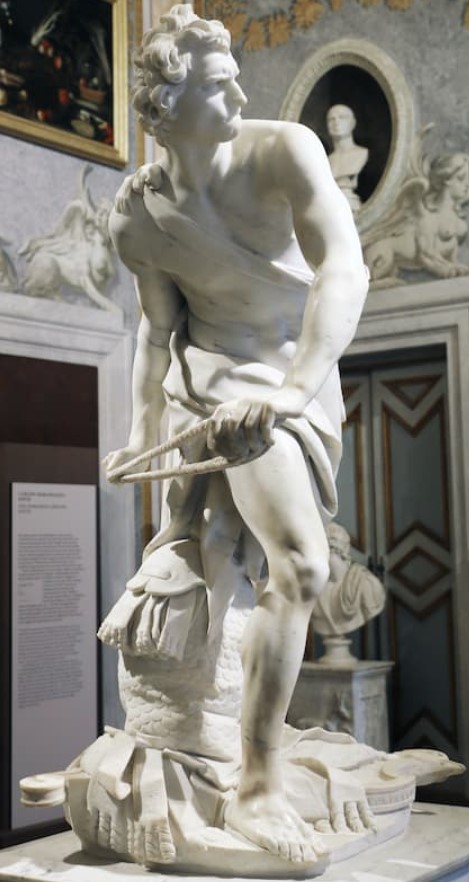
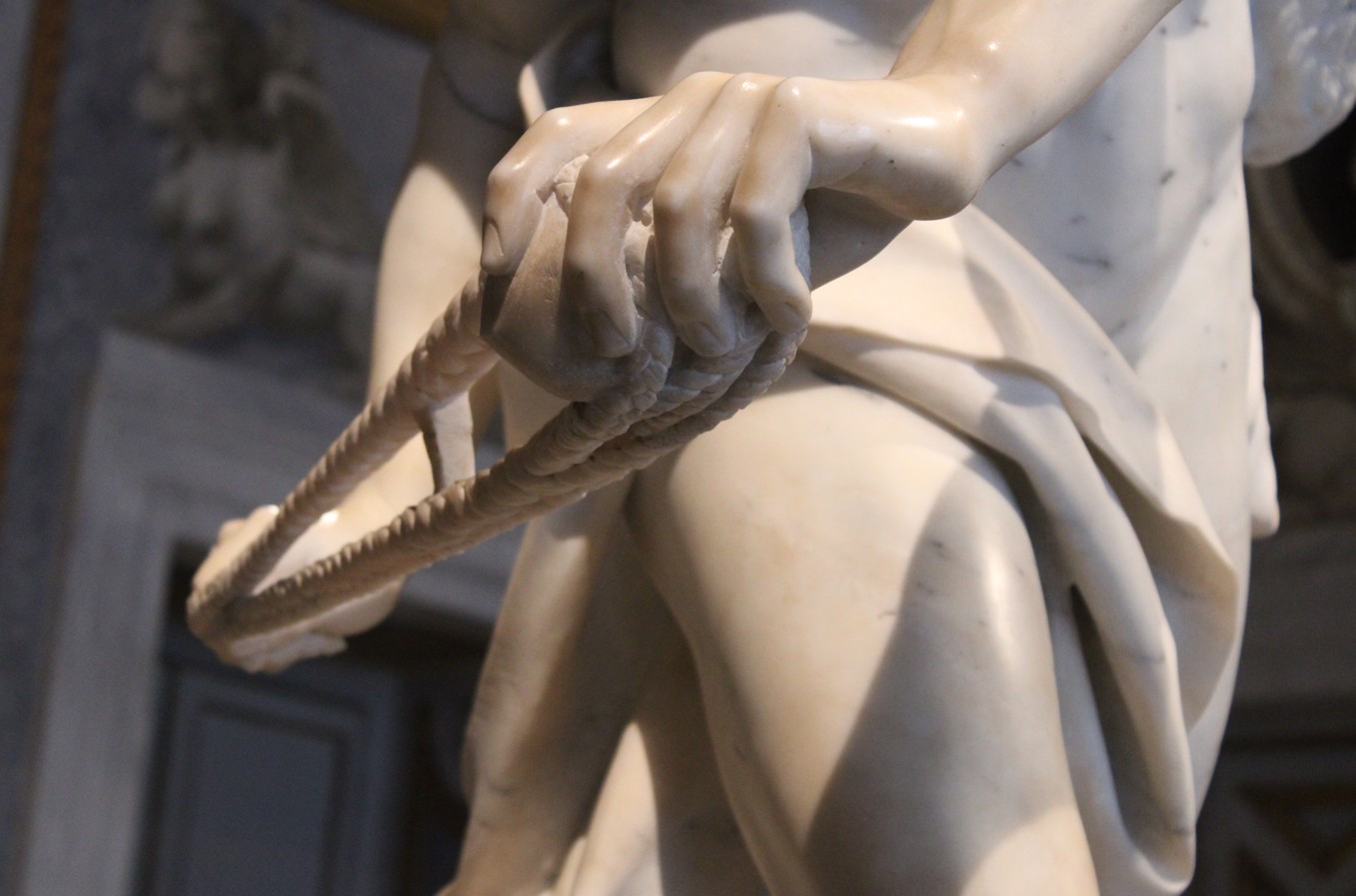
Nel David, realizzato tra il 1623 e il 1624, Bernini sceglie di rappresentare l’eroe biblico nell’istante in cui sta per scagliare la pietra contro Golia. Non c’è la compostezza del giovane vincitore, ma la tensione di un corpo che si prepara all’azione. Il volto è contratto, le labbra serrate, i muscoli impegnati nello sforzo. Lo spettatore sembra trovarsi proprio davanti alla traiettoria della fionda.
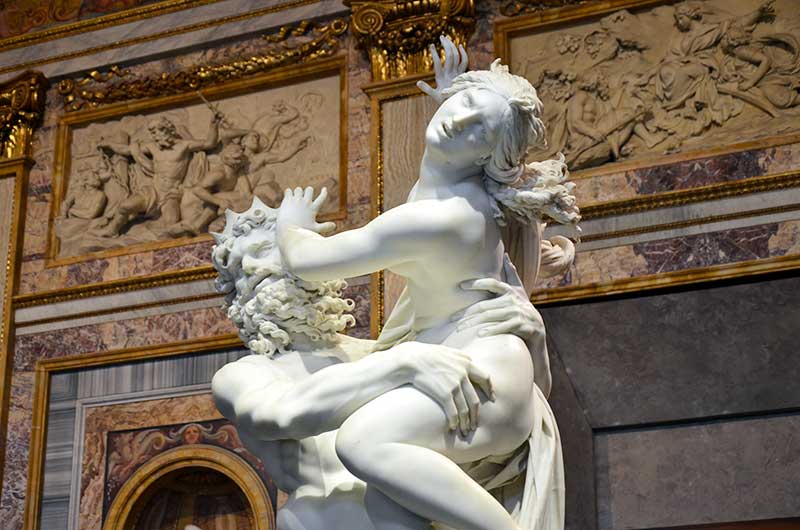
Nel Ratto di Proserpina, eseguito tra il 1621 e il 1622, la materia raggiunge risultati che ancora oggi lasciano increduli. Le dita di Plutone affondano nella carne della giovane dea, mentre le lacrime le rigano il volto. Il marmo sembra perdere la propria durezza e diventare pelle.
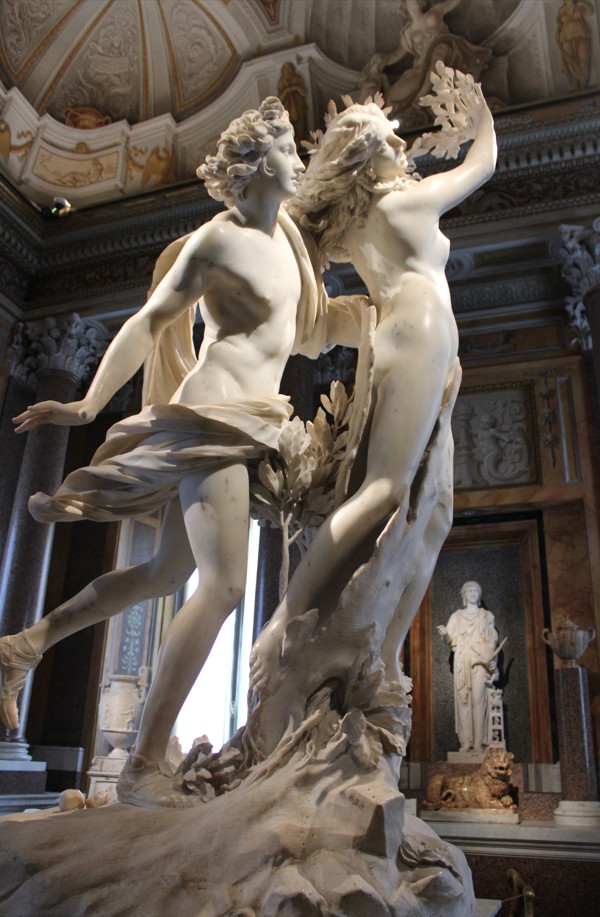
Con Apollo e Dafne, realizzato tra il 1622 e il 1625, Bernini porta questa ricerca a un livello ancora più sorprendente. La ninfa si trasforma in alloro proprio mentre Apollo tenta di raggiungerla. Le dita diventano foglie, i capelli si confondono con i rami, i piedi mettono radici. È un istante fugace, bloccato per sempre nella pietra.
Io e Bernini: due geni, due epoche
Io e Gian Lorenzo Bernini abbiamo vissuto in tempi differenti e non ci siamo mai incontrati. Ci separano quasi ottant’anni dalla mia morte, avvenuta nel 1564. Eppure, in qualche modo, le nostre strade artistiche si sono incrociate nella storia della Basilica di San Pietro.
Entrambi abbiamo lavorato per il grandioso progetto della Basilica Vaticana con linguaggi profondamente differenti.
Io avevo contribuito a definirne l’architettura con la grande cupola e il progetto della basilica. Bernini intervenne successivamente, dando al complesso monumentale una nuova dimensione scenografica e simbolica.
A lui si devono il monumentale Baldacchino sull’altare papale, la Cattedra di San Pietro con la Gloria, la sistemazione di importanti elementi interni e soprattutto il magnifico Colonnato che abbraccia Piazza San Pietro.
Papa Urbano VIII Barberini comprese perfettamente la portata del suo talento. Di lui disse:
«Huomo raro, ingegno sublime, e nato per disposizione divina, e per gloria di Roma a portar luce al secolo».

Il Baldacchino di San Pietro: un’opera che domina lo spazio
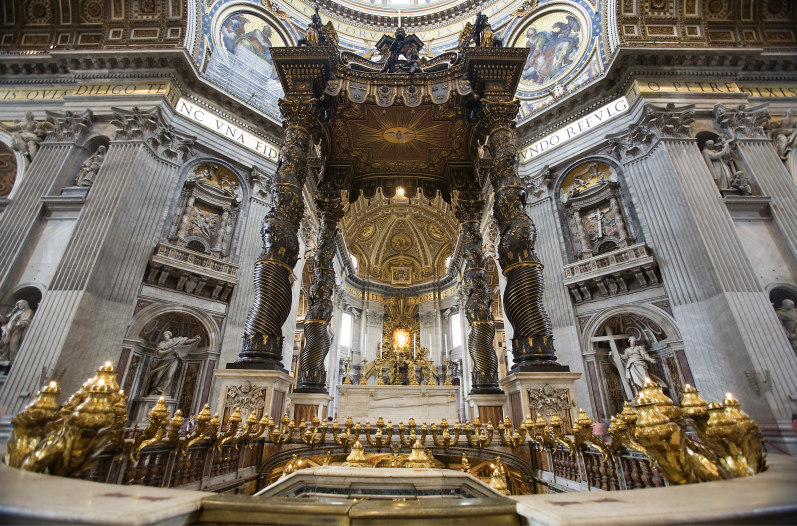
Tra i suoi interventi più spettacolari nella Basilica di San Pietro c’è senza ombra di dubbio il Baldacchino, commissionato da papa Urbano VIII e realizzato tra il 1624 e il 1633 in collaborazione con Francesco Borromini e numerose maestranze.
Alto quasi 29 metri, si innalza sopra l’altare papale e la tomba dell’apostolo Pietro. Le quattro imponenti colonne tortili in bronzo, caratterizzate da decorazioni vegetali e motivi ornamentali, sostengono una struttura dalla forma dinamica, coronata da volute e da una sfera con la croce.
La grande impresa suscitò discussioni e polemiche, ma il risultato fu una delle più potenti invenzioni scenografiche del Barocco romano.
Bernini voleva creare un punto di riferimento visivo e spirituale, capace di collegare la monumentalità della basilica alla presenza simbolica di San Pietro.
L’Estasi di Santa Teresa: quando la scultura diventa teatro
Bernini scolpì l’Estasi di Santa Teresa d’Avila, realizzata tra il 1647 e il 1652 nella Cappella Cornaro della chiesa di Santa Maria della Vittoria a Roma.
La scena rappresenta un episodio descritto dalla mistica spagnola nei suoi scritti: la visione di un angelo che le trafigge il cuore con una freccia infuocata, provocandole un’esperienza di amore divino e abbandono spirituale.
Il volto della santa, gli occhi socchiusi, le labbra dischiuse e le pieghe movimentate dell’abito restituiscono tutta l’intensità di quell’esperienza mistica.
L’angelo tiene in mano la freccia che diventa il simbolo dell’Amor Divino. La luce naturale, proveniente da una finestra nascosta, illumina il gruppo scultoreo e sembra farlo emergere da una dimensione soprannaturale.
Bernini concepì l’intera cappella come una vera e propria rappresentazione teatrale. Ai lati, i membri della famiglia Cornaro assistono alla scena da palchetti scolpiti nel marmo, come spettatori di un evento che si svolge davanti ai loro occhi.


La Fontana dei Quattro Fiumi: il mondo in Piazza Navona
Un altro luogo nel quale il genio di Bernini si manifesta in tutta la sua grandezza è Piazza Navona.
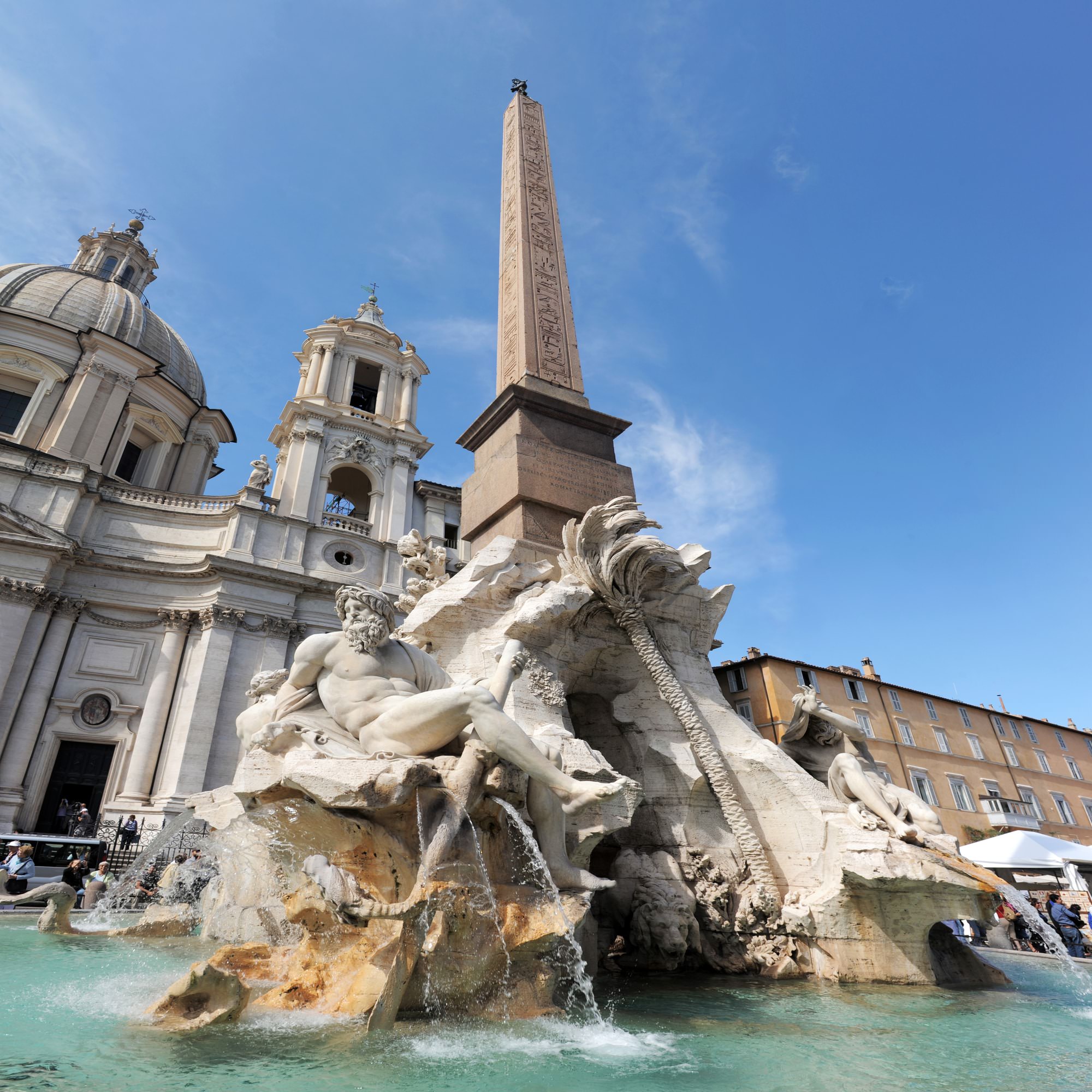
Al centro della piazza si trova la celebre Fontana dei Quattro Fiumi, realizzata tra il 1648 e il 1651 per volontà di papa Innocenzo X Pamphilj.
L’opera è dominata da una grande roccia in travertino, dalla quale emergono quattro figure monumentali che rappresentano i principali fiumi dei continenti allora conosciuti: il Danubio per l’Europa, il Nilo per l’Africa, il Gange per l’Asia e il Rio della Plata per le Americhe.
Al centro della composizione si innalza un obelisco di epoca romana, proveniente dall’area del Circo di Massenzio.
I quattro giganti sono le personificazioni dei quattro fiumi più importanti per l’epoca. Attraverso le loro pose, i gesti e gli attributi, Bernini costruisce una composizione dinamica, nella quale la natura sembra prendere vita.
La fontana celebra simbolicamente la diffusione della fede cristiana nel mondo e la grandezza della Chiesa, attraverso una delle invenzioni più spettacolari della Roma barocca.
Il Colonnato di San Pietro: l’abbraccio che accoglie il mondo
Se esiste un’opera capace di rappresentare il rapporto tra Bernini e Roma, è probabilmente il Colonnato di Piazza San Pietro.
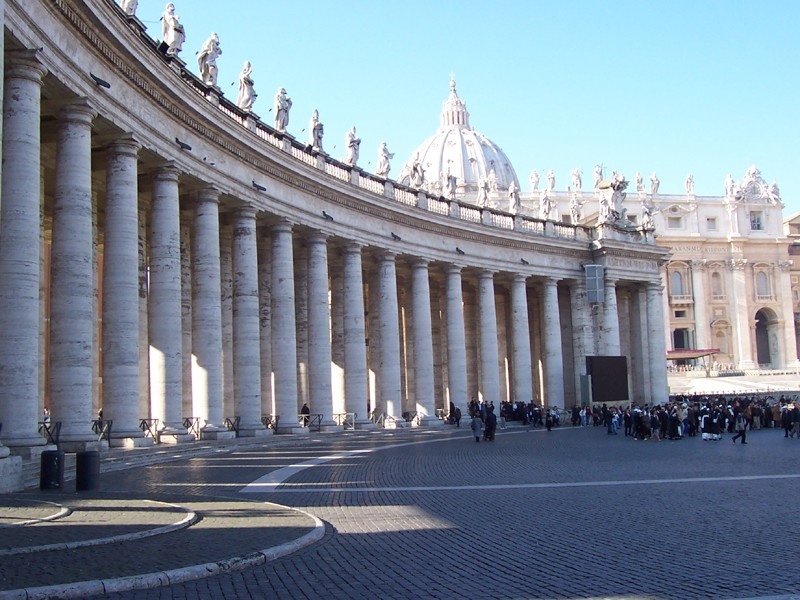
Il progetto fu commissionato da papa Alessandro VII Chigi nel 1657. Bernini immaginò due grandi emicicli che si sviluppano ai lati della piazza, creando uno spazio monumentale dalla forma aperta.
Il colonnato comprende quattro file di colonne disposte in modo da formare una struttura ellittica. Sono 284 colonne, alte circa 13 metri ciascuna, sormontate da capitelli di ordine tuscanico.
Al di sopra della balaustra vennero collocate 140 sculture di santi, che sembrano osservare dall’alto i fedeli e i visitatori provenienti da ogni parte del mondo.
Costanza Bonarelli: il capolavoro e la vicenda più tormentata
La vita di Bernini non fu fatta soltanto di commissioni prestigiose, riconoscimenti e successi. Dietro la figura dell’artista celebrato dai pontefici si nascondeva anche un uomo dal carattere impetuoso, capace di passioni violente e comportamenti difficili da giustificare.
Una delle vicende più controverse della sua esistenza riguarda Costanza Bonarelli, donna con la quale intrattenne una relazione sentimentale.
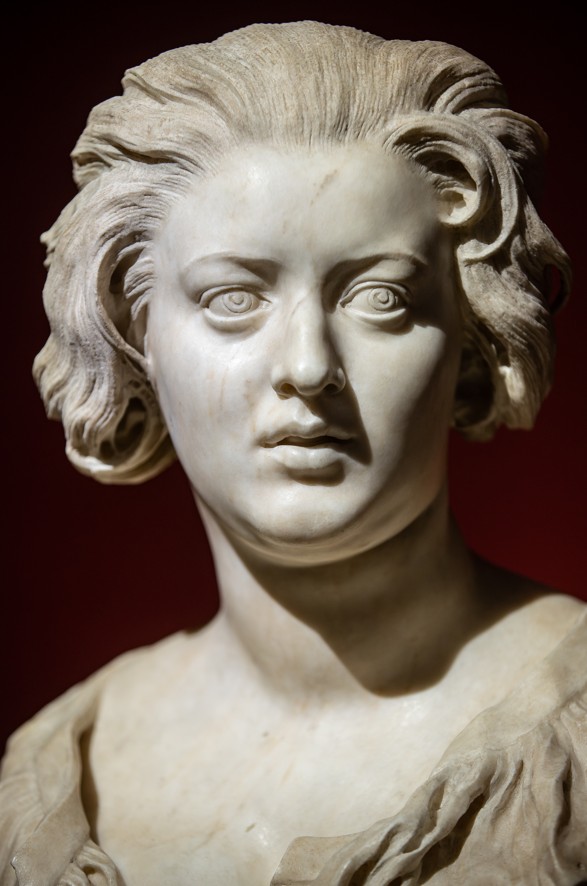
Tra il 1636 e il 1638 Bernini realizzò il suo celebre busto, oggi custoditoal Museo Nazionale del Bargello di Firenze.
È un ritratto di straordinaria modernità. Costanza appare con i capelli raccolti in modo disordinato, la camicia aperta sul petto e uno sguardo diretto, intenso, quasi confidenziale.
E’ il ritratto di una donna vera, colta in un momento di naturalezza e spontaneità. La sua presenza sembra uscire dal marmo per entrare nello spazio dello spettatore.
La vicenda personale ebbe però un epilogo drammatico. Quando Bernini scoprì la relazione tra Costanza e suo fratello Luigi, reagì con una violenza inaudita. Fece aggredire la donna da un servitore, che le sfregiò il volto con un rasoio, mentre il fratello subì una violenta aggressione.
L’episodio provocò un grande scandalo e arrivò all’attenzione delle autorità pontificie. Papa Urbano VIII intervenne per proteggerlo e Bernini riuscì a evitare conseguenze giudiziarie particolarmente gravi.
È una pagina oscura della sua biografia, che ricorda quanto possa essere complesso separare la grandezza artistica dalle contraddizioni dell’uomo.
Gli ultimi anni e la morte del grande artista
Nel corso della sua lunga carriera Bernini non fu soltanto scultore e architetto. Si dedicò anche alla pittura, alla scenografia e alla progettazione di apparati teatrali, dimostrando una versatilità rara.
La sua fama superò i confini italiani. Nel 1665 si recò a Parigi, chiamato da Luigi XIV per partecipare ai progetti legati alla residenza reale del Louvre. Il soggiorno francese non portò però alla realizzazione dei suoi progetti architettonici, anche se contribuì a rafforzare ulteriormente la sua reputazione internazionale.
Negli ultimi anni continuò a lavorare, nonostante l’età avanzata. Tra le sue ultime opere si ricorda la Beata Ludovica Albertoni, realizzata per la chiesa di San Francesco a Ripa a Roma, dove la figura della beata è rappresentata nel momento della sua estasi mistica.
Gian Lorenzo Bernini morì a Roma il 28 novembre 1680, all’età di 81 anni. Le sue spoglie furono tumulate nella Basilica di Santa Maria Maggiore, nella semplice tomba di famiglia, lontano dalla monumentalità delle opere che aveva lasciato alla città.
Per il momento il sempre vostro Michelangelo Buonarroti vi saluta dandovi appuntamento ai prossimi post e sui social.
November 28, 1680: The death of Gian Lorenzo Bernini, the man who transformed Rome into a theater of marble
On November 28, 1680, Gian Lorenzo Bernini—one of the greatest figures in the history of art—passed away in Rome.
A sculptor, architect, painter, and set designer, he transformed marble into living matter, capable of expressing emotion, movement, and wonder. To this day, his works continue to define the face of the Eternal City.
When Bernini died on November 28, 1680, Rome lost one of its most illustrious figures; yet, at the same time, the legend began to take root—the legend of an artist who had succeeded in giving form to the ambitions of an entire era.
He was born in Naples on December 7, 1598, the son of the sculptor Pietro Bernini and Angelica Galante. He grew up in an environment where art was an everyday presence, and from a young age, he displayed an extraordinary aptitude for drawing and sculpture. His father quickly recognized his abilities and guided his training, eventually bringing him to Rome—the ideal setting for the young Gian Lorenzo to cultivate his talent.
His career was exceptional, bolstered by powerful patrons—popes and cardinals—who recognized him as an artist of extraordinary caliber. Yet, his success was not merely the result of high-level protection and prestigious commissions. Bernini possessed a rare gift: the ability to breathe life into stone, transmuting marble into flesh, fabric, movement, and emotion.
The young Bernini conquers Rome
Gian Lorenzo’s talent did not go unnoticed within the ecclesiastical and aristocratic circles of the capital. Among those who were the first to grasp the greatness of the young sculptor was Cardinal Maffeo Barberini—the future Pope Urban VIII—who became one of his most significant patrons.
Another pivotal figure in his rise to prominence was Cardinal Scipione Borghese, a major collector and a refined connoisseur of art. For him, Bernini created some of the most striking sculptures of his youth—works in which he demonstrated a technical mastery that already hinted at the magnitude of his artistic revolution.
The Galleria Borghese still houses an exceptional collection of his masterpieces today. It is an essential destination for anyone wishing to understand the sculptor’s genius and trace the evolution of his artistic language.
Here, one can admire David, The Rape of Proserpina, Aeneas, Anchises, and Ascanius, and Apollo and Daphne.
In David, created between 1623 and 1624, Bernini chooses to depict the biblical hero at the very moment he is about to hurl a stone at Goliath. There is no sense of calm in the young victor; instead, there is the intense strain of a body bracing for action. His face is contorted, his lips pressed tight, and his muscles taut with effort. The viewer feels as though they are standing directly in the path of the sling.
In The Rape of Proserpina, executed between 1621 and 1622, the material is manipulated to achieve effects that remain astonishing even today. Pluto’s fingers sink into the young goddess’s flesh, while tears stream down her face. The marble seems to lose its inherent hardness, taking on the appearance of living skin.
With Apollo and Daphne, created between 1622 and 1625, Bernini takes this exploration to an even more remarkable level. The nymph transforms into a laurel tree just as Apollo attempts to reach her. Her fingers turn into leaves, her hair merges with the branches, and her feet take root. It is a fleeting moment, frozen forever in stone.
Bernini and I: Two Geniuses, Two Eras
Gian Lorenzo Bernini and I lived in different times and never met. Nearly eighty years separate us—from my death in 1564, that is. Yet, in a way, our artistic paths crossed within the history of St. Peter’s Basilica.
We both contributed to the grand project of the Vatican Basilica, though we employed profoundly different artistic languages.
I helped define its architecture through the great dome and the overall design of the basilica. Bernini arrived later, imbuing the monumental complex with a new, theatrical, and symbolic dimension.
To him, we owe the monumental Baldacchino over the papal altar, the Cathedra Petri (Chair of St. Peter) with its Gloria, the arrangement of key interior elements, and, above all, the magnificent Colonnade that embraces St. Peter’s Square.
Pope Urban VIII Barberini fully grasped the magnitude of his talent. Of him, he said:
“A rare man, a sublime genius—born by divine providence, and for the glory of Rome, to bring light to this century.”
The Baldacchino of St. Peter’s: A Work That Commands the Space
Among his most spectacular interventions in St. Peter’s Basilica is, without a doubt, the Baldacchino—commissioned by Pope Urban VIII and created between 1624 and 1633, with the collaboration of Francesco Borromini and numerous craftsmen.
Standing nearly 29 meters tall, it rises above the papal altar and the tomb of the Apostle Peter. Its four imposing, spiraling bronze columns characterized by vegetal decorations and ornamental motifs, they support a dynamically shaped structure, crowned by volutes and a sphere topped with a cross.
This ambitious undertaking sparked debate and controversy, yet the result stands as one of the most powerful scenographic inventions of the Roman Baroque.
Bernini sought to create a visual and spiritual landmark—a focal point capable of bridging the monumental scale of the basilica with the symbolic presence of Saint Peter.
The Ecstasy of Saint Teresa: When Sculpture Becomes Theater
Bernini’s Ecstasy of Saint Teresa of Ávila—created between 1647 and 1652—is housed in the Cornaro Chapel within the church of Santa Maria della Vittoria in Rome.
The scene depicts an episode recounted by the Spanish mystic in her own writings: a vision of an angel piercing her heart with a flaming arrow, an encounter that evokes both divine love and spiritual surrender.
The saint’s expression—her half-closed eyes, parted lips—and the fluid, dramatic folds of her habit capture the full intensity of this mystical experience.
The angel holds an arrow, which serves as a symbol of Divine Love. Natural light, filtering in from a hidden window, illuminates the sculptural group, making it appear as though it has emerged from a supernatural realm.
Bernini conceived the entire chapel as a theatrical performance. On either side, members of the Cornaro family are depicted watching the scene from marble-carved boxes, much like spectators witnessing an event unfold before their very eyes.
The Fountain of the Four Rivers: The World in Piazza Navona
Another site where Bernini’s genius is revealed in all its grandeur is Piazza Navona. At the center of the square stands the famous Fountain of the Four Rivers, created between 1648 and 1651 by the commission of Pope Innocent X Pamphilj.
The work is dominated by a large travertine rock, from which emerge four monumental figures representing the major rivers of the continents known at the time: the Danube for Europe, the Nile for Africa, the Ganges for Asia, and the Rio de la Plata for the Americas.
Rising from the center of the composition is a Roman-era obelisk, brought from the site of the Circus of Maxentius.
The four giants are personifications of the four most significant rivers of that era. Through their poses, gestures, and attributes, Bernini constructs a dynamic composition in which nature appears to come to life.
The fountain symbolically celebrates the spread of the Christian faith throughout the world and the greatness of the Church, standing as one of the most spectacular inventions of Baroque Rome.
The Colonnade of St. Peter’s: an embrace that welcomes the world
If there is any work capable of representing the relationship between Bernini and Rome, it is arguably the Colonnade of St. Peter’s Square.
The project was commissioned by Pope Alexander VII Chigi in 1657. Bernini envisioned two grand hemicycles extending along the sides of the square, creating a monumental, open-ended space.
The colonnade consists of four rows of columns arranged to form an elliptical structure. There are 284 columns, each approximately 13 meters high, topped with Tuscan-order capitals.
Above the balustrade, 140 statues of saints were placed, appearing to look down from above upon the faithful and visitors arriving from every corner of the globe.
Costanza Bonarelli: A Masterpiece and a Most Tormented Episode
Bernini’s life was not defined solely by prestigious commissions, accolades, and successes. Behind the figure of the artist celebrated by the popes lay a man of impetuous character, capable of intense, violent passions and behavior that is difficult to justify.
One of the most controversial episodes of his life concerns Costanza Bonarelli, a woman with whom he had a romantic relationship.
Between 1636 and 1638, Bernini created his famous bust of her, which is now housed in the Bargello National Museum in Florence.
It is a portrait of extraordinary modernity. Costanza is depicted with her hair gathered in a disheveled manner, her chemise open at the chest, and a gaze that is direct, intense, and almost intimate.
It is the portrait of a real woman, captured in a moment of naturalness and spontaneity. Her presence seems to emerge from the marble and enter the viewer’s own space.
However, this personal affair had a dramatic conclusion. When Bernini discovered a relationship between Costanza and his own brother, Luigi, he reacted with shocking violence. He had a servant attack the woman—slashing her face with a razor—while his brother was also subjected to a brutal assault.
The incident caused a major scandal and came to the attention of the papal authorities. Pope Urban VIII intervened to protect him, and Bernini managed to avoid any severe legal consequences.
It remains a dark chapter in his biography, serving as a reminder of how complex it can be to separate artistic greatness from the contradictions of the man himself.
His final years and death of the great artist
Throughout his long career, Bernini was not merely a sculptor and architect. He also dedicated himself to painting, set design, and the creation of theatrical displays, demonstrating a rare versatility.
His fame extended well beyond the borders of Italy. In 1665, he traveled to Paris at the invitation of Louis XIV to contribute to projects for the royal residence, the Louvre. Although his architectural proposals for the palace were never realized, his time in France served to further bolster his international reputation.
He continued to work into his final years, despite his advanced age. Among his last works is the Blessed Ludovica Albertoni, created for the church of San Francesco a Ripa in Rome, in which the figure of the blessed woman is depicted in the midst of a mystical ecstasy.
Gian Lorenzo Bernini passed away in Rome on November 28, 1680, at the age of 81. He was laid to rest in the Basilica of Santa Maria Maggiore, in a simple family tomb—a stark contrast to the monumental works he had bequeathed to the city.
For now, yours truly, Michelangelo Buonarroti, bids you farewell—until the next posts and over on social media.
Sostienici – Support Us
Se questo blog ti piace e ti appassiona, puoi aiutarci a farlo crescere sempre più sostenendoci in modo concreto condividendo i post, seguendo le pagine social e con un contributo che ci aiuta ad andare avanti con il nostro lavoro di divulgazione. . ENGLISH: If you like and are passionate about this blog, you can help us make it grow more and more by supporting us in a concrete way by sharing posts, following social pages and with a contribution that helps us to move forward with our dissemination work.
10,00 €
Condividi:


Questo sono io



sostienici

Sostienici - Support Us
Se questo blog ti piace e ti appassiona, puoi aiutarci a farlo crescere sempre più sostenendoci in modo concreto condividendo i post, seguendo le pagine social e con un contributo che ci aiuta ad andare avanti con il nostro lavoro di divulgazione. . ENGLISH: If you like and are passionate about this blog, you can help us make it grow more and more by supporting us in a concrete way by sharing posts, following social pages and with a contribution that helps us to move forward with our dissemination work.
€10,00


