
Palazzo Vecchio, il restauro svela la vera natura dei quattro leoni e il mistero della fontana greca
A Firenze è terminato il restauro conservativo del Cortile della Dogana, uno degli spazi monumentali di Palazzo Vecchio.
Le indagini hanno chiarito la natura dei quattro leoni, restituito i colori originari di alcuni apparati decorativi e aperto nuovi interrogativi su una fontana in pietra, forse di origine bizantina.
Nel cuore di Palazzo Vecchio, a Firenze, il restauro del Cortile della Dogana ha riportato l’attenzione su un insieme di opere e decorazioni che raccontano la storia del palazzo anche attraverso i segni lasciati dal tempo. Fontane, leoni, mascheroni, superfici architettoniche e la statua dell’Elettrice Palatina sono stati interessati da un intervento conservativo che non si è limitato a ripulire le superfici, ma ha permesso di raccogliere nuove informazioni sulla natura dei manufatti e sulle loro trasformazioni.
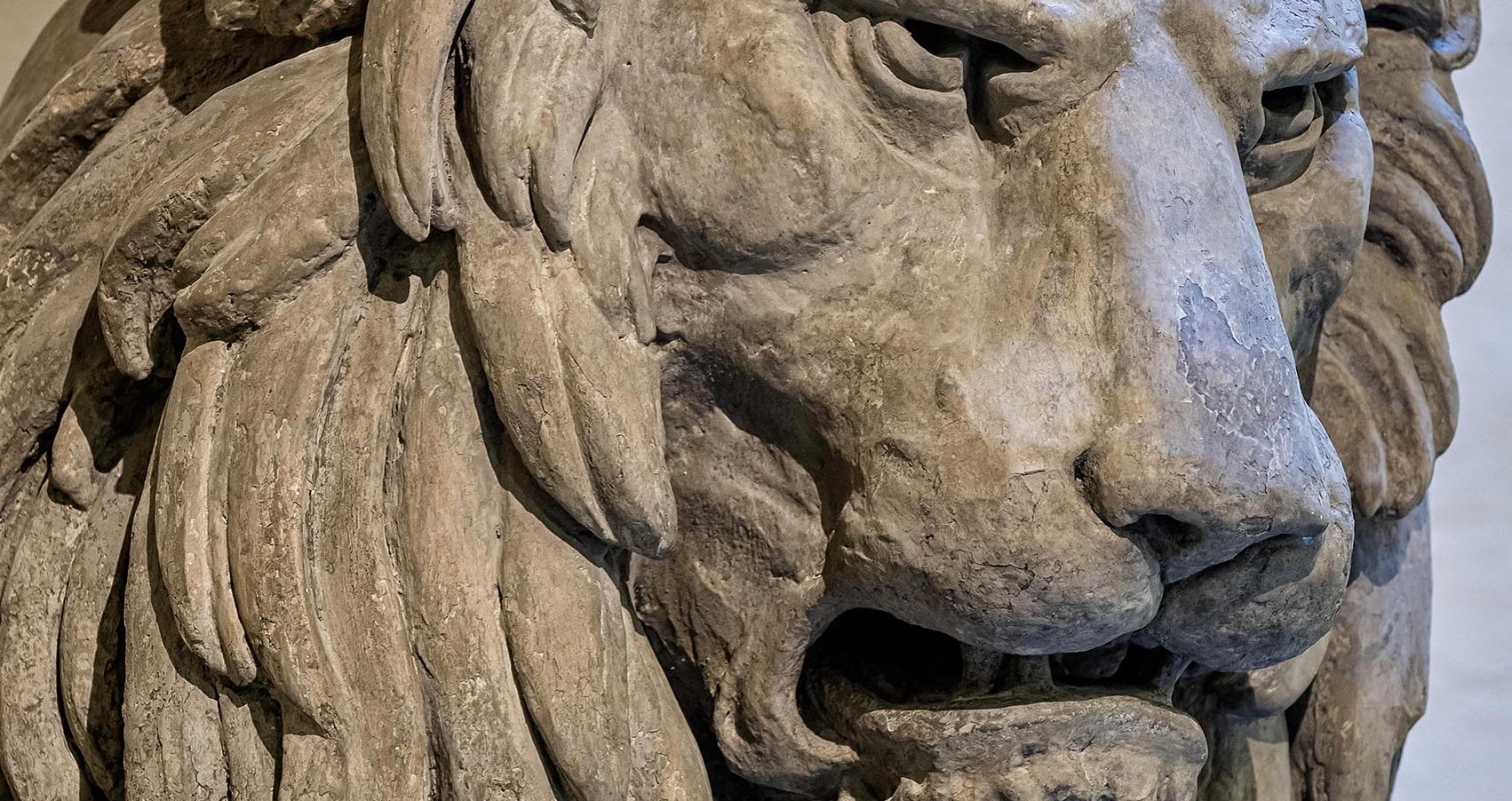
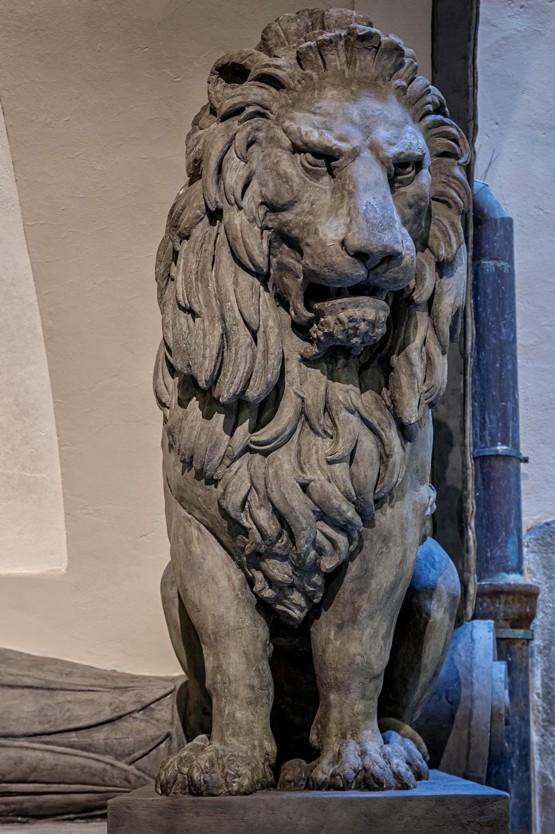
Tra le scoperte più interessanti c’è quella relativa ai quattro leoni che accompagnano le fontane del cortile. Prima dell’inizio dei lavori si riteneva che due fossero realizzati in pietra e gli altri due fossero copie ottenute da calchi. Le verifiche hanno invece accertato che tutti e quattro i leoni sono calchi di ottima qualità. Resta da approfondire la ricerca degli eventuali modelli originali, un’indagine storico-artistica che potrebbe contribuire a chiarire la loro provenienza.
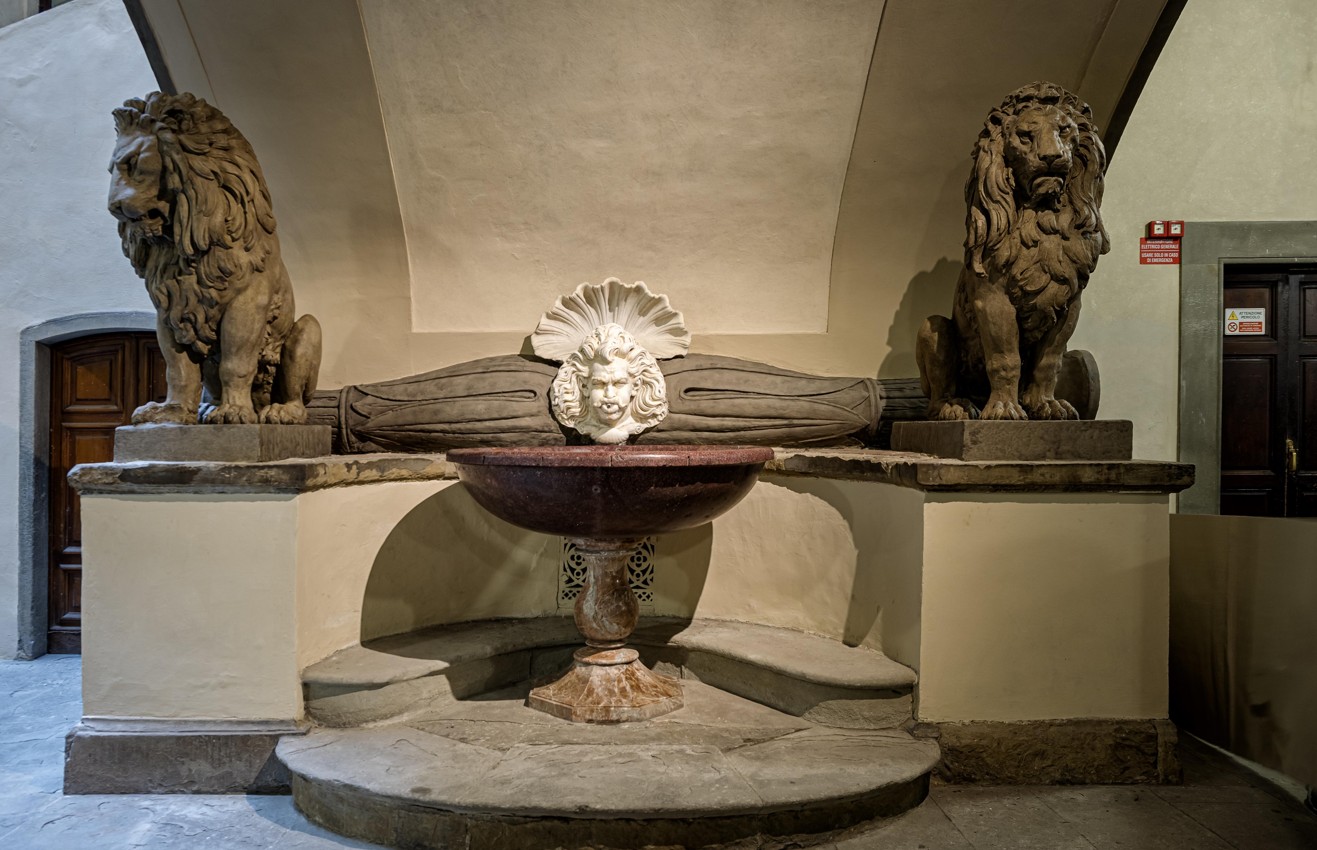
Non meno intrigante è la storia della fontana in pietra collocata verso l’ingresso dalla piazza. Il manufatto, ritenuto di sicura antichità, presenta un’iscrizione con caratteri greci che è tuttora oggetto di studio. Le analisi petrografiche e gli approfondimenti paleografici in corso dovranno aiutare a stabilirne la natura, la datazione e l’origine.
Tra le ipotesi da verificare c’è quella di una possibile provenienza da una chiesa di Roma, ma al momento non esistono elementi sufficienti per considerarla accertata.
Il restauro, reso possibile grazie al sostegno di Scuola del Cuoio SRL, ha restituito leggibilità agli apparati decorativi e migliorato la fruibilità del cortile, con il recupero della funzionalità di entrambe le fontane e l’introduzione di un’illuminazione regolabile.
I quattro leoni di Palazzo Vecchio: la scoperta durante il restauro
I leoni sono tra gli elementi che attirano lo sguardo di chi attraversa il Cortile della Dogana, ma la loro natura materiale non era quella che si pensava prima dell’intervento.
Le verifiche condotte durante il restauro hanno stabilito che tutti e quattro sono manufatti realizzati su calco, di ottima qualità. La distinzione è importante perché modifica le conoscenze finora disponibili sull’apparato scultoreo e apre una nuova pista di ricerca: individuare gli eventuali originali dai quali furono ricavati i calchi.
Il lavoro sui leoni ha richiesto particolare attenzione anche per la presenza di ridipinture sovrapposte, riconducibili a differenti fasi di manutenzione. Prima di intervenire è stato necessario valutare la consistenza degli strati, la loro adesione e il rapporto con il supporto sottostante.
La pulitura è stata quindi calibrata sulle condizioni effettive di ciascun manufatto, evitando di rimuovere indiscriminatamente le stratificazioni e di compromettere la materia conservata. L’obiettivo non era ottenere superfici artificialmente nuove, ma recuperare la leggibilità delle forme rispettando le tracce della storia materiale delle opere.
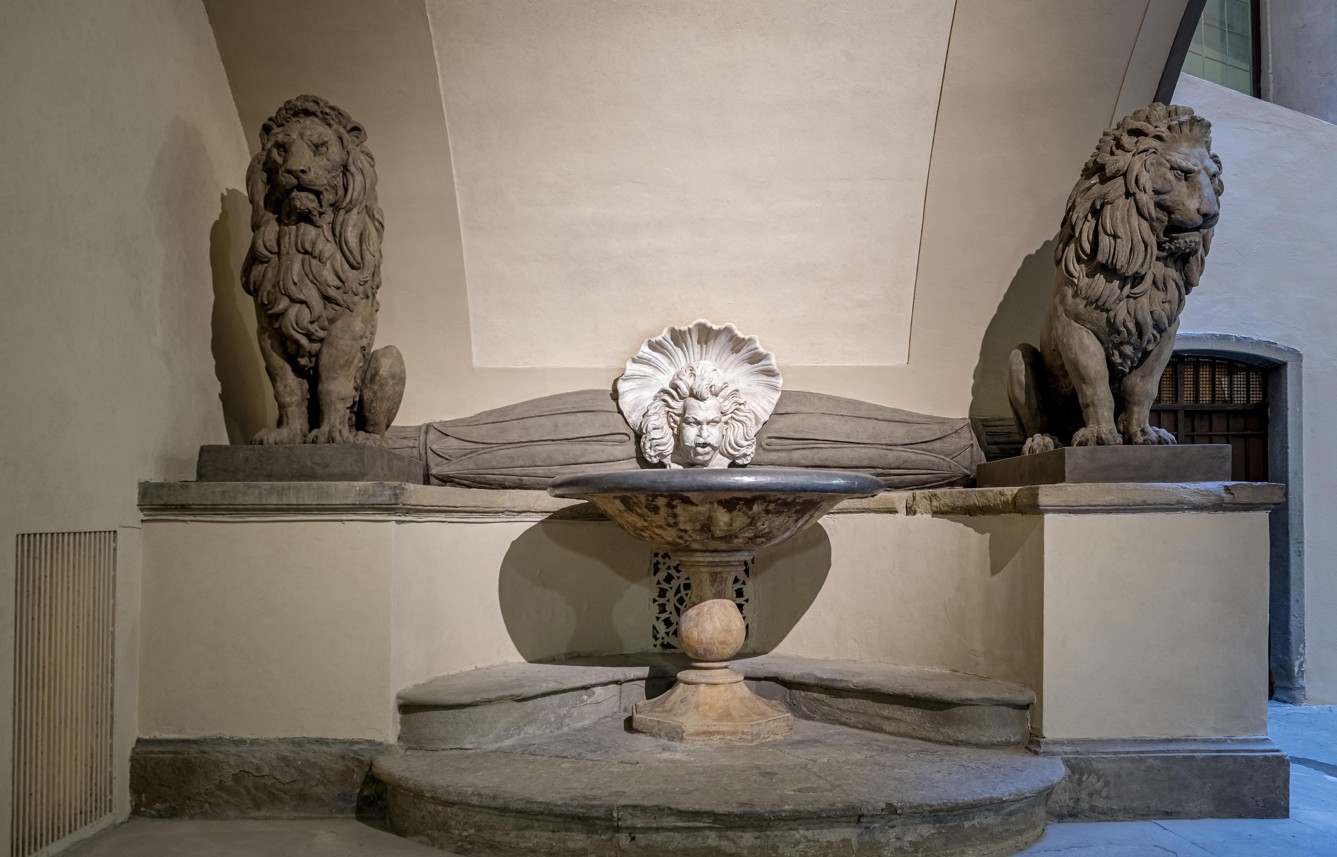
La fontana in pietra e l’iscrizione greca ancora da studiare
Un altro capitolo significativo del restauro riguarda la fontana principale del cortile, collocata verso l’ingresso dalla piazza.
Realizzata in pietra e ritenuta di sicura antichità, conserva un’iscrizione che potrebbe offrire indicazioni importanti sulla sua storia. I caratteri greci hanno suggerito una possibile relazione con un ambito bizantino, ma l’ipotesi deve ancora essere verificata attraverso gli studi specialistici.
Sono in corso approfondimenti petrografici per identificare il materiale lapideo e analisi paleografiche per esaminare la scrittura. L’incrocio tra questi dati potrà aiutare a comprendere meglio l’origine del manufatto e il contesto per il quale fu realizzato.
Tra le possibilità prese in considerazione c’è quella che la fontana provenga da un edificio ecclesiastico romano e che possa avere una storia precedente alla sua collocazione attuale. Si tratta, tuttavia, di una pista di ricerca ancora aperta: la datazione e la provenienza della fontana non sono state definitivamente stabilite.
Durante i lavori è emerso anche un sistema di staffatura e ancoraggio molto datato, presumibilmente antico, che è stato esaminato con particolare attenzione. Le stuccature sono state pulite e preparate nuovamente, mentre le integrazioni sono state realizzate con una finitura mimetica e materiali scelti per consentire, ove tecnicamente possibile, la rimozione in occasione di futuri interventi.
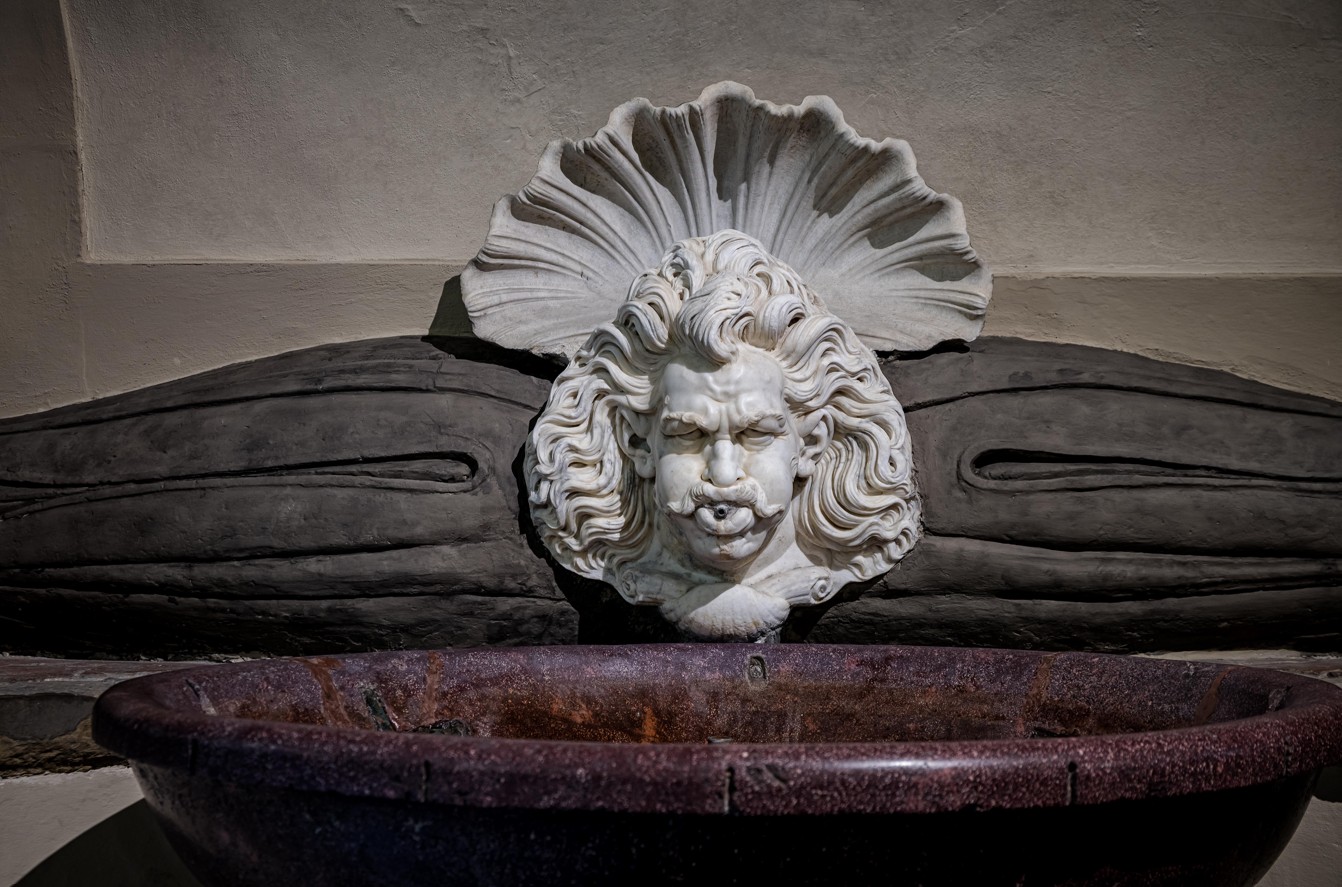
Due fontane tornano a funzionare nel Cortile della Dogana
Il restauro ha interessato anche la fontana sul lato di via della Ninna, un elemento composito realizzato su calco. Le condizioni del materiale e le lesioni presenti non permettevano di riattivare il sistema idraulico senza un intervento specifico.
Per risolvere il problema sono state ripristinate le tubazioni esistenti ed è stato realizzato un elemento in piombo, sagomato su misura e collocato all’interno della vasca. La soluzione ha permesso di recuperare la funzionalità della fontana, ricorrendo a una lavorazione che trova confronti anche in altri contesti storici fiorentini, come Santa Croce.
Al termine delle operazioni, entrambe le fontane sono tornate a funzionare. La loro valorizzazione è stata completata con un sistema di illuminazione dimmerabile, che consente di regolare l’intensità della luce in rapporto alle opere e allo spazio monumentale.
L’acqua e la luce contribuiscono nuovamente alla percezione del cortile, mettendo in relazione le fontane con le superfici architettoniche e gli elementi scultorei che le circondano.
I mascheroni puliti con il laser e la traccia di una decorazione perduta
Anche i due mascheroni del Cortile della Dogana hanno richiesto interventi specifici. Sebbene siano simili nella funzione decorativa, sono realizzati con materiali differenti: uno è in marmo, mentre l’altro è un manufatto composito ottenuto da calco.
Il mascherone in marmo è stato sottoposto a una pulitura integrale con il laser. Per quello realizzato su calco è stato invece utilizzato un sistema laser diverso, scelto sulla base delle caratteristiche del supporto e delle verifiche preliminari.
La scelta di impiegare tecnologie differenti non è stata casuale. Durante un restauro, infatti, non esiste una tecnica di pulitura adatta indistintamente a ogni superficie: la risposta del materiale, la natura dei depositi e lo stato di conservazione determinano le modalità di intervento.
Nel caso del mascherone composito, le indagini hanno inoltre rilevato tracce di una decorazione a finto marmo, oggi perduta. La pulitura ha migliorato la leggibilità del manufatto e preparato la superficie a una possibile riproposizione di quella finitura, documentata come parte del suo aspetto originario.
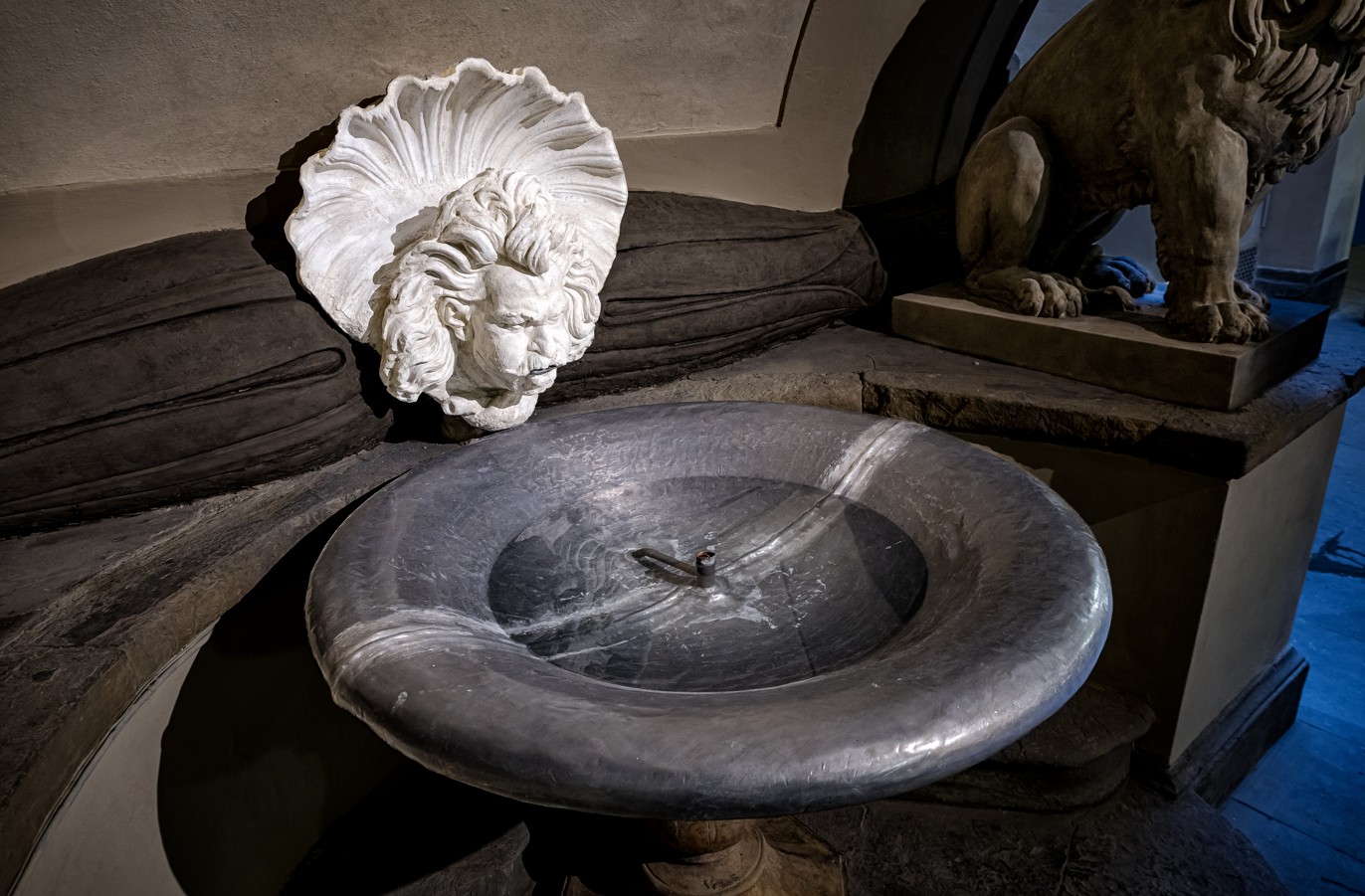
Ritrovati i colori originari dei fascioni decorativi
Una delle informazioni più interessanti emerse dal cantiere riguarda i fascioni decorativi alle spalle delle fontane.
I saggi stratigrafici hanno permesso di individuare una cromia originaria conservata sotto le alterazioni e le trasformazioni superficiali accumulate nel tempo. Il colore riconosciuto è stato riproposto nelle superfici interessate, contribuendo a ricomporre il rapporto cromatico tra architettura, fontane e apparati scultorei.
Si tratta di un passaggio importante per la lettura complessiva del cortile. Le superfici architettoniche non costituiscono infatti un semplice sfondo per le opere: colori, finiture e decorazioni partecipano alla definizione dello spazio e al modo in cui i singoli elementi vengono percepiti.
Gli interventi hanno riguardato anche le superfici intonacate e le finiture, con revisioni localizzate e riprese puntuali dove necessarie. Ogni trattamento è stato scelto in relazione ai materiali e alle condizioni riscontrate, evitando operazioni generalizzate che avrebbero potuto cancellare informazioni storiche.
La scultura dell’Elettrice Palatina: consolidamento e recupero delle superfici
Nel progetto di restauro è stata compresa anche la scultura dell’Elettrice Palatina, figura strettamente legata alla memoria storica di Firenze e alla valorizzazione del patrimonio cittadino.
L’intervento ha interessato le esigenze conservative del manufatto, con operazioni di consolidamento, revisione delle stuccature e integrazione delle lacune. Particolare attenzione è stata riservata alla stabilizzazione dei margini, alla riduzione delle discontinuità e al recupero della leggibilità delle superfici.
Le reintegrazioni sono state calibrate sulla materia originale e sulle caratteristiche delle lacune, evitando ricostruzioni non giustificate dalle evidenze conservate. Anche in questo caso, il criterio seguito è stato quello di conservare e rendere più comprensibile ciò che è arrivato fino a noi, senza trasformare il restauro in una ricostruzione idealizzata dell’opera.
La statua è stata considerata parte integrante dell’insieme monumentale, in relazione con l’architettura, le fontane e gli apparati decorativi del cortile.
Chi ha finanziato il restauro del Cortile della Dogana?
Il restauro conservativo del Cortile della Dogana e delle opere che lo caratterizzano è stato reso possibile grazie al sostegno di Scuola del Cuoio SRL, il cui contributo ha permesso di realizzare l’intervento di conservazione e valorizzazione.
La collaborazione tra risorse pubbliche e iniziativa privata ha contribuito alla tutela di uno spazio significativo del patrimonio storico-artistico di Palazzo Vecchio.
Per il momento il sempre vostro Michelangelo Buonarroti vi saluta dandovi appuntamento ai prossimi post e sui social.
Palazzo Vecchio: Restoration Reveals the True Nature of the Four Lions and the Mystery of a Greek Fountain
In Florence, the conservation restoration of the Cortile della Dogana (Customs Courtyard)—one of the monumental spaces within Palazzo Vecchio—has been completed.
Investigations have clarified the nature of the four lions, restored the original colors of certain decorative elements, and raised new questions regarding a stone fountain, possibly of Byzantine origin.
In the heart of Florence’s Palazzo Vecchio, the restoration of the Cortile della Dogana has brought renewed attention to a collection of works and decorations that recount the history of the palace, including the marks left by the passage of time. Fountains, lions, grotesque masks, architectural surfaces, and the statue of the Electress Palatine have all undergone conservation work; this process went beyond mere surface cleaning, yielding new insights into the nature of these artifacts and how they have evolved over time.
Among the most intriguing discoveries concerns the four lions that accompany the courtyard’s fountains. Before the project began, it was believed that two were carved from stone, while the other two were copies made from casts. Examinations have revealed, however, that all four lions are, in fact, high-quality casts. Further research is now required to locate the original models—a historical-artistic inquiry that could help clarify their provenance.
Equally compelling is the story of the stone fountain located near the entrance from the piazza. The piece, which is clearly of great antiquity, bears an inscription in Greek characters that is currently under study. Ongoing petrographic analyses and paleographic research are expected to help determine the fountain’s nature, age, and origin. Among the hypotheses being investigated is the possibility that the pieces originated from a church in Rome; however, there is currently insufficient evidence to confirm this.
The restoration, made possible through the support of Scuola del Cuoio SRL, has restored the legibility of the decorative elements and improved the accessibility of the courtyard, including the reactivation of both fountains and the installation of adjustable lighting.
The four lions of Palazzo Vecchio: a discovery during restoration
The lions are among the features that catch the eye of anyone passing through the Cortile della Dogana (Customs Courtyard), but their material nature proved to be different from what was previously assumed.
Examinations conducted during the restoration revealed that all four are high-quality casts. This distinction is significant, as it alters our current understanding of the sculptural program and opens a new avenue for research: identifying the original works from which these casts were taken.
The work on the lions required particular care due to the presence of multiple layers of overpainting, dating back to various phases of maintenance. Before proceeding, it was necessary to assess the consistency of these layers, how well they adhered, and their relationship to the underlying material.
The cleaning process was therefore tailored to the specific condition of each piece, ensuring that layers were not removed indiscriminately, which could have compromised the original material. The goal was not to create an artificially “new” appearance, but rather to restore the legibility of the forms while respecting the physical traces of the objects’ history.
The stone fountain and an as-yet-unstudied Greek inscription
Another significant aspect of the restoration concerns the courtyard’s main fountain, located near the entrance from the piazza.
Crafted from stone and clearly of great antiquity, the fountain bears an inscription that could provide important clues regarding its history. The Greek characters suggest a possible connection to the Byzantine sphere, though this hypothesis remains to be verified through specialized research.
Petrographic studies are currently underway to identify the stone material, alongside paleographic analyses to examine the script. Correlating these findings may help clarify the artifact’s origin and the context for which it was created.
One possibility under consideration is that the fountain originated from a Roman ecclesiastical building and may have a history predating its current location. This remains an open line of inquiry, however; the fountain’s dating and provenance have not yet been definitively established.
During the restoration work, a very old—presumably ancient—system of brackets and anchors was discovered and examined with particular care. Existing grouting was cleaned and re-prepared, while new additions were crafted with a “mimetic” (blending) finish, using materials selected to allow for their removal during any future interventions, wherever technically feasible.
Two fountains are once again operational in the Cortile della Dogana
The restoration also encompassed the fountain on the Via della Ninna side—a composite element created from a cast. The condition of the material and the existing cracks made it impossible to reactivate the hydraulic system without targeted intervention.
To resolve this, the existing piping was restored, and a custom-shaped lead element was fabricated and installed within the basin. This solution restored the fountain’s functionality, employing a technique with precedents in other historic Florentine sites, such as the Basilica of Santa Croce.
Once the work was complete, both fountains were made operational again. Their enhancement was further complemented by a dimmable lighting system, which allows for the adjustment of light intensity in relation to the surrounding artworks and the monumental space.
Water and light now once again shape the perception of the courtyard, establishing a dialogue between the fountains, the architectural surfaces, and the surrounding sculptural elements.
Laser-cleaned grotesque masks and the traces of a lost decoration
The two grotesque masks (mascheroni) in the Cortile della Dogana also required specific interventions. Although they serve a similar decorative function, they are made of different materials: one is marble, while the other is a composite piece created from a cast.
The marble mask underwent a comprehensive laser cleaning. For the cast version, a different type of laser system was used—selected based on the specific characteristics of the substrate and the results of preliminary testing.
The decision to employ different technologies was deliberate. In restoration, there is no single cleaning technique universally suited to every surface; the material’s response, the nature of the deposits, and the object’s state of conservation dictate the appropriate approach. In the case of the composite grotesque mask, investigations also revealed traces of a faux-marble finish—a decorative element that has since been lost. The cleaning process has improved the legibility of the piece and prepared the surface for the potential reinstatement of this finish, which is documented as part of its original appearance.
Rediscovery of the original colors of the decorative bands
One of the most compelling findings to emerge during the restoration project concerns the decorative bands located behind the fountains.
Stratigraphic analysis made it possible to identify the original color scheme, preserved beneath surface alterations and changes that had accumulated over time. This original color has been reapplied to the relevant surfaces, helping to restore the chromatic relationship between the architecture, the fountains, and the sculptural elements.
This is a significant step toward a comprehensive understanding of the courtyard. The architectural surfaces do not merely serve as a backdrop for the artworks; rather, their colors, finishes, and decorations play an active role in defining the space and shaping how individual elements are perceived.
The work also addressed the plastered surfaces and finishes, involving localized repairs and targeted touch-ups where necessary. Each treatment was selected based on the specific materials and conditions encountered, avoiding broad, generalized interventions that could have erased historical evidence.
The sculpture of the Electress Palatine: consolidation and surface restoration
The restoration project also encompassed the sculpture of the Electress Palatine—a figure deeply intertwined with the historical memory of Florence and the preservation of the city’s cultural heritage.
The intervention focused on the object’s conservation needs, including consolidation, the revision of mortar joints (stuccature), and the filling of losses. Particular attention was paid to stabilizing the edges, minimizing discontinuities, and restoring the legibility of the surfaces. The restorations were calibrated based on the original material and the specific nature of the losses, avoiding any reconstructions not supported by the surviving evidence. In this instance, too, the guiding principle was to preserve what has come down to us—making it more intelligible—without turning the restoration into an idealized reconstruction of the work.
The statue was treated as an integral part of the monumental complex, in relation to the architecture, fountains, and decorative elements of the courtyard.
Who funded the restoration of the Cortile della Dogana (Customs Courtyard)?
The conservation restoration of the Cortile della Dogana and the works within it was made possible through the support of Scuola del Cuoio SRL, whose contribution enabled the conservation and enhancement project to be carried out.
This collaboration between public resources and private initiative has helped safeguard a significant space within the historical and artistic heritage of Palazzo Vecchio.
For now, your ever-faithful Michelangelo Buonarroti bids you farewell—until the next posts and on social media.
Sostienici – Support Us
Se questo blog ti piace e ti appassiona, puoi aiutarci a farlo crescere sempre più sostenendoci in modo concreto condividendo i post, seguendo le pagine social e con un contributo che ci aiuta ad andare avanti con il nostro lavoro di divulgazione. . ENGLISH: If you like and are passionate about this blog, you can help us make it grow more and more by supporting us in a concrete way by sharing posts, following social pages and with a contribution that helps us to move forward with our dissemination work.
10,00 €

Condividi:


Questo sono io




sostienici

Sostienici - Support Us
Se questo blog ti piace e ti appassiona, puoi aiutarci a farlo crescere sempre più sostenendoci in modo concreto condividendo i post, seguendo le pagine social e con un contributo che ci aiuta ad andare avanti con il nostro lavoro di divulgazione. . ENGLISH: If you like and are passionate about this blog, you can help us make it grow more and more by supporting us in a concrete way by sharing posts, following social pages and with a contribution that helps us to move forward with our dissemination work.
€10,00


