

Kekova, Turchia: trovato un relitto di quasi 5.000 anni fa
Al largo dell’isola di Kekova, nel Mediterraneo orientale, gli archeologi hanno individuato i resti di un’antichissima imbarcazione. Del legno non è rimasto nulla, ma oltre trenta recipienti di ceramica potrebbero aiutare a ricostruire il viaggio e i commerci di quasi cinque millenni fa.
Che cosa trasportava una nave che solcava il Mediterraneo quasi 5.000 anni fa? E da dove era partita prima di finire sul fondo del mare? Sono alcune delle domande alle quali gli archeologi stanno cercando di rispondere dopo una scoperta avvenuta al largo dell’isola di Kekova, lungo la costa meridionale della Turchia.
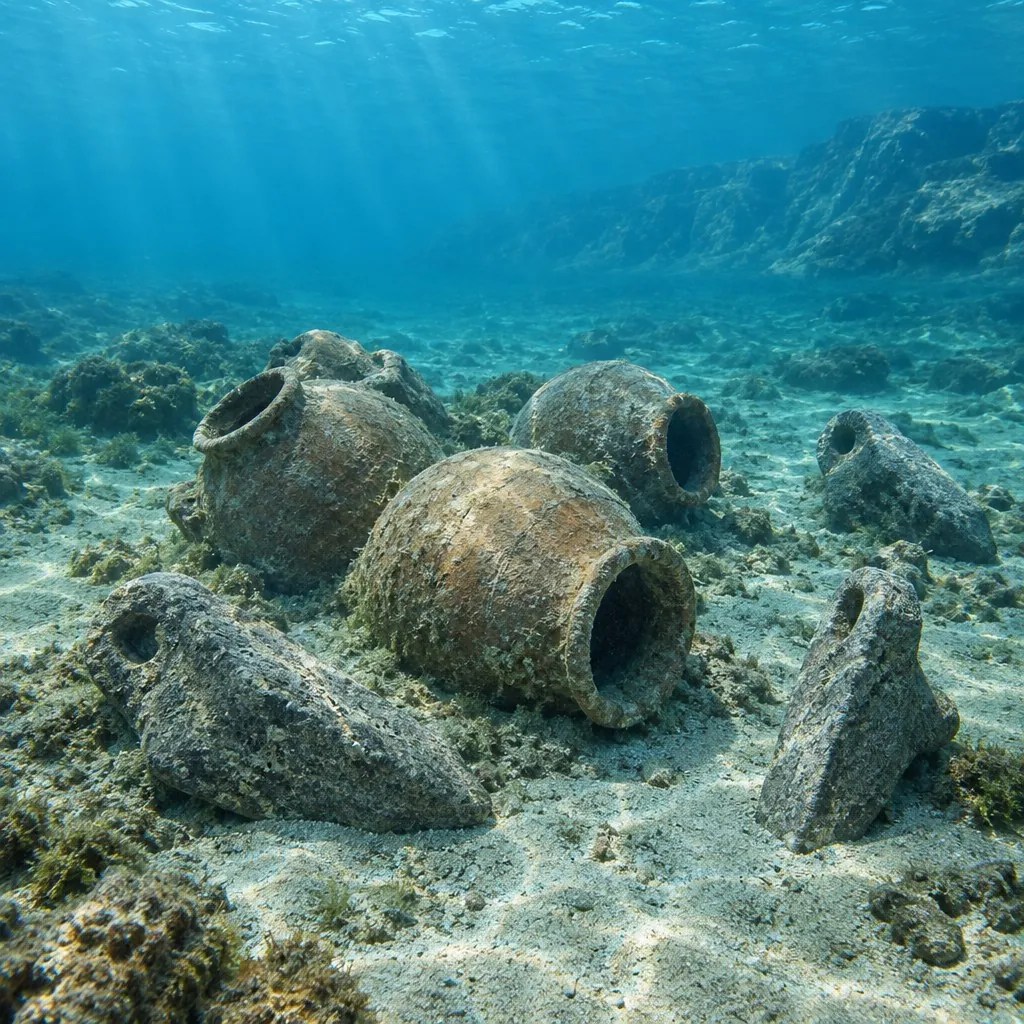
Il relitto potrebbe risalire a un periodo compreso tra 4.400 e 4.700 anni fa, agli inizi dell’Età del Bronzo. Se la datazione sarà confermata, potrebbe essere più antico del celebre relitto di Dokos, nelle acque greche, generalmente datato a circa 4.200 anni fa.
La ricerca è condotta dagli archeologi subacquei dell’Università di Akdeniz, ad Antalya, insieme al Ministero della Cultura e del Turismo turco. A guidare il lavoro è il professor Hakan Öniz, impegnato nello studio di un sito che potrebbe offrire nuove informazioni sulle prime rotte commerciali del Mediterraneo.
Sul fondo del mare sono rimaste più di trenta anfore
Della nave, purtroppo, non si è conservata la struttura in legno. Dopo migliaia di anni trascorsi sott’acqua, il materiale è scomparso e gli studiosi non possono quindi ricorrere alla datazione al radiocarbonio dello scafo.
A raccontare la storia dell’imbarcazione sono soprattutto gli oggetti che trasportava. Sul fondale sono stati recuperati oltre trenta contenitori ceramici, la cui forma e le cui decorazioni stanno offrendo indicazioni utili per stabilire l’epoca del naufragio.
Per gli archeologi, le anfore sono molto più di semplici recipienti. Osservandone le caratteristiche e confrontandole con quelle di altri reperti, è possibile cercare di capire dove furono realizzate e quali contatti esistessero tra le popolazioni antiche.
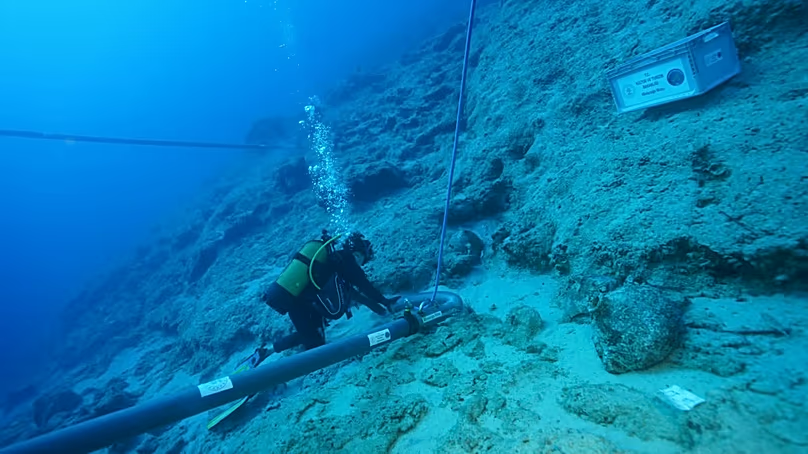
Dall’Egitto a Troia, le tracce di antichi commerci
I contenitori recuperati a Kekova presentano somiglianze con ceramiche rinvenute in Egitto, nell’area dell’antica Troia e in altri insediamenti del Vicino Oriente.
Alcuni recipienti hanno due anse, un rilievo nella parte centrale e una base piatta. Caratteristiche che richiamano manufatti associati a contesti della valle del Giordano.
Queste analogie potrebbero aiutare a ricostruire i collegamenti tra le diverse regioni del Mediterraneo orientale. Naturalmente, la somiglianza tra due oggetti non basta da sola a stabilirne con certezza il luogo di produzione, ma rappresenta un punto di partenza importante per le ricerche.
La scoperta suggerisce che già durante l’Età del Bronzo antico il mare fosse una via di comunicazione utilizzata per spostare merci e mantenere rapporti tra comunità anche lontane. Un quadro che, grazie a nuovi ritrovamenti, potrebbe diventare sempre più preciso.

Olio, vino o resine vegetali: che cosa trasportava la nave?
C’è un altro particolare che rende interessante il ritrovamento. All’interno di alcune anfore integre sono rimasti dei residui, sui quali sono state condotte analisi per cercare di identificarne la natura.
L’archeologa Karin Sowada, della Macquarie University di Sydney, ha esaminato le sostanze viscose conservate nei recipienti. Tra le possibilità prese in considerazione ci sono l’olio d’oliva, il vino e le resine vegetali.
Per il momento non è possibile indicare con certezza quale fosse il contenuto delle anfore. Le analisi dovranno chiarire se i residui siano riconducibili a uno di questi prodotti o ad altre sostanze.
Capire che cosa trasportasse la nave sarebbe importante anche per ricostruire le abitudini commerciali dell’epoca. Le merci, infatti, possono raccontare molto sulle risorse disponibili in una regione, sulle esigenze di altre comunità e sui rapporti economici che si sviluppavano lungo le coste.
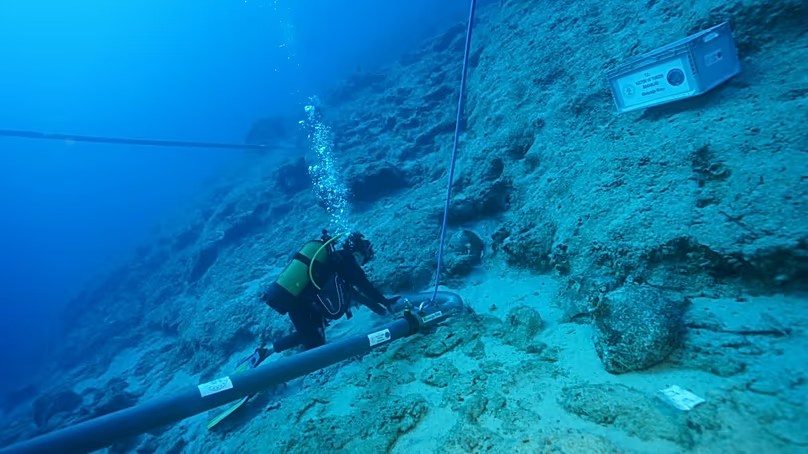
Potrebbe essere più antico del relitto di Dokos
Se la cronologia proposta dagli studiosi sarà confermata, il relitto di Kekova potrebbe superare per antichità quello di Dokos, scoperto nelle acque della Grecia e generalmente datato a circa 4.200 anni fa.
È un confronto interessante, ma occorre ricordare che non tutti i relitti antichi sono conservati nelle stesse condizioni. Nel caso di Kekova, l’assenza dello scafo rende particolarmente importante lo studio del carico e degli altri elementi archeologici disponibili.
Il ritrovamento potrebbe comunque aggiungere un tassello importante alla storia della navigazione. Ricostruire le prime imbarcazioni è difficile, perché il legno raramente sopravvive per millenni in ambiente marino. Per questo motivo, i carichi e i materiali recuperati dai fondali possono diventare testimonianze preziose.
Le anfore saranno conservate ad Antalya
Le indagini proseguono e i reperti recuperati sono sottoposti a interventi di restauro e conservazione. Secondo quanto annunciato dal ministro della Cultura e del Turismo turco, Mehmet Nuri Ersoy, le anfore sono destinate al futuro Museo di Archeologia Subacquea del Mediterraneo, ad Antalya.
Una volta completati gli interventi necessari, questi oggetti potranno essere studiati e mostrati al pubblico, permettendo di conoscere meglio un periodo della storia nel quale le testimonianze scritte sono ancora limitate.
Resta da capire da dove provenisse l’imbarcazione, verso quale porto fosse diretta e che cosa abbia provocato il naufragio. Non sappiamo chi fossero i suoi occupanti né quale fosse il loro ruolo nei commerci dell’epoca. Sono domande alle quali, almeno per ora, gli oggetti recuperati non possono dare una risposta definitiva.
Una storia rimasta nascosta per quasi cinque millenni
Il relitto di Kekova dimostra quanto il Mediterraneo abbia ancora da raccontare. Sotto le sue acque si conservano tracce di viaggi e commerci che risalgono a epoche molto più antiche delle civiltà greca e romana, quando le comunità costiere avevano già imparato a sfruttare il mare per raggiungere altri territori.
In questo caso, a riportare alla luce una parte di quella storia sono state alcune anfore, sopravvissute mentre la nave che le trasportava scompariva lentamente.
Se gli studi confermeranno la datazione proposta, il ritrovamento contribuirà a chiarire quanto fossero sviluppati gli scambi marittimi nel Mediterraneo orientale durante l’Età del Bronzo antico.
E forse, continuando a studiare quei recipienti, gli archeologi riusciranno a ricostruire almeno una parte del viaggio di una nave che, quasi 5.000 anni fa, non arrivò mai a destinazione.
Per il momento il sempre vostro Michelangelo Buonarroti vi saluta dandovi appuntamento ai prossimi post e sui social.
Kekova, Turkey: Nearly 5,000-Year-Old Shipwreck Discovered
Off the coast of the island of Kekova, in the eastern Mediterranean, archaeologists have located the remains of an ancient vessel. While no wood has survived, more than thirty ceramic vessels may help reconstruct the voyages and trade activities that took place nearly five millennia ago.
What did a ship sailing the Mediterranean nearly 5,000 years ago carry? And where did it depart from before ending up on the seabed? These are some of the questions archaeologists are now seeking to answer following a discovery made off the island of Kekova, along the southern coast of Turkey.
The shipwreck may date back to a period between 4,400 and 4,700 years ago—the early Bronze Age. If this dating is confirmed, it could be older than the famous Dokos shipwreck in Greek waters, which is generally dated to approximately 4,200 years ago.
The research is being conducted by underwater archaeologists from Akdeniz University in Antalya, in collaboration with the Turkish Ministry of Culture and Tourism. The project is led by Professor Hakan Öniz, who is studying a site that could provide new insights into early Mediterranean trade routes.
More than thirty amphorae remain on the seabed
Unfortunately, the ship’s wooden structure has not been preserved. After thousands of years underwater, the material has vanished, meaning researchers cannot use radiocarbon dating on the hull.
Instead, it is the objects the ship was carrying that tell its story. More than thirty ceramic containers have been recovered from the seabed; their shape and decorations are providing useful clues for dating the shipwreck.
For archaeologists, these amphorae are much more than simple vessels. By examining their characteristics and comparing them with other artifacts, researchers can attempt to determine where they were made and what kind of contact existed between ancient populations.
From Egypt to Troy: Traces of Ancient Trade
The containers recovered at Kekova bear similarities to pottery found in Egypt, the area of ancient Troy, and other settlements in the Near East.
Some of the vessels feature two handles, a raised band around the middle, and a flat base—characteristics reminiscent of artifacts associated with the Jordan Valley.
These parallels could help reconstruct the connections between various regions of the Eastern Mediterranean. While the resemblance between two objects is not, on its own, enough to definitively establish their place of origin, it serves as an important starting point for further research.
The discovery suggests that, as early as the Early Bronze Age, the sea served as a thoroughfare for transporting goods and maintaining ties between even distant communities—a picture that may become increasingly clear as more findings emerge.
Oil, wine, or plant resins: what was the ship carrying?
There is another detail that makes this discovery particularly interesting: some of the intact amphorae contain residues, which have been analyzed to determine their nature.
Archaeologist Karin Sowada, from Macquarie University in Sydney, has examined the viscous substances preserved within the vessels. Possibilities under consideration include olive oil, wine, and plant resins. For the time being, it is not possible to state with certainty what the amphorae contained. Analyses will need to clarify whether the residues can be linked to one of these products or to other substances.
Determining what the ship was carrying would also be significant for reconstructing the commercial practices of the era. Goods, in fact, can reveal a great deal about the resources available in a given region, the needs of other communities, and the economic relationships that developed along the coasts.
It could be older than the Dokos shipwreck
If the chronology proposed by researchers is confirmed, the Kekova shipwreck could prove to be even older than the Dokos wreck—discovered in Greek waters and generally dated to approximately 4,200 years ago.
While this makes for an interesting comparison, it should be noted that not all ancient shipwrecks are preserved under the same conditions. In the case of the Kekova site, the absence of the hull makes the study of the cargo and other available archaeological elements particularly important.
In any event, this discovery could add a significant piece to the history of navigation. Reconstructing early vessels is challenging, as wood rarely survives for millennia in a marine environment. For this reason, the cargoes and materials recovered from the seabed can serve as invaluable evidence.
The amphorae will be housed in Antalya
Investigations are ongoing, and the recovered artifacts are currently undergoing restoration and conservation. According to what has been announced according to the Turkish Minister of Culture and Tourism, Mehmet Nuri Ersoy, the amphorae are destined for the future Museum of Underwater Archaeology of the Mediterranean in Antalya.
Once the necessary conservation work is complete, these artifacts can be studied and displayed to the public, offering greater insight into a historical period for which written records remain scarce.
It remains to be determined where the vessel originated, which port it was heading toward, and what caused the shipwreck. We do not know who was on board, nor what role they played in the trade networks of that era. For now, at least, the recovered objects cannot provide definitive answers to these questions.
A story hidden for nearly five millennia
The Kekova shipwreck demonstrates how much the Mediterranean still has to reveal. Beneath its waters lie traces of voyages and trade dating back to eras long before the Greek and Roman civilizations—a time when coastal communities had already learned to harness the sea to reach distant lands.
In this instance, it was a collection of amphorae—which survived even as the ship carrying them slowly vanished—that brought a piece of this history back to light.
If further study confirms the proposed dating, this discovery will help clarify the extent to which maritime trade was developed in the Eastern Mediterranean during the Early Bronze Age.
And perhaps, through continued analysis of these vessels, archaeologists will be able to reconstruct at least part of the journey of a ship that, nearly 5,000 years ago, never reached its destination.
For now, yours truly, Michelangelo Buonarroti, bids you farewell—until the next post, and see you on social media.

Sostienici – Support Us
Se questo blog ti piace e ti appassiona, puoi aiutarci a farlo crescere sempre più sostenendoci in modo concreto condividendo i post, seguendo le pagine social e con un contributo che ci aiuta ad andare avanti con il nostro lavoro di divulgazione. . ENGLISH: If you like and are passionate about this blog, you can help us make it grow more and more by supporting us in a concrete way by sharing posts, following social pages and with a contribution that helps us to move forward with our dissemination work.
10,00 €



Condividi:


Questo sono io




sostienici

Sostienici - Support Us
Se questo blog ti piace e ti appassiona, puoi aiutarci a farlo crescere sempre più sostenendoci in modo concreto condividendo i post, seguendo le pagine social e con un contributo che ci aiuta ad andare avanti con il nostro lavoro di divulgazione. . ENGLISH: If you like and are passionate about this blog, you can help us make it grow more and more by supporting us in a concrete way by sharing posts, following social pages and with a contribution that helps us to move forward with our dissemination work.
€10,00


