
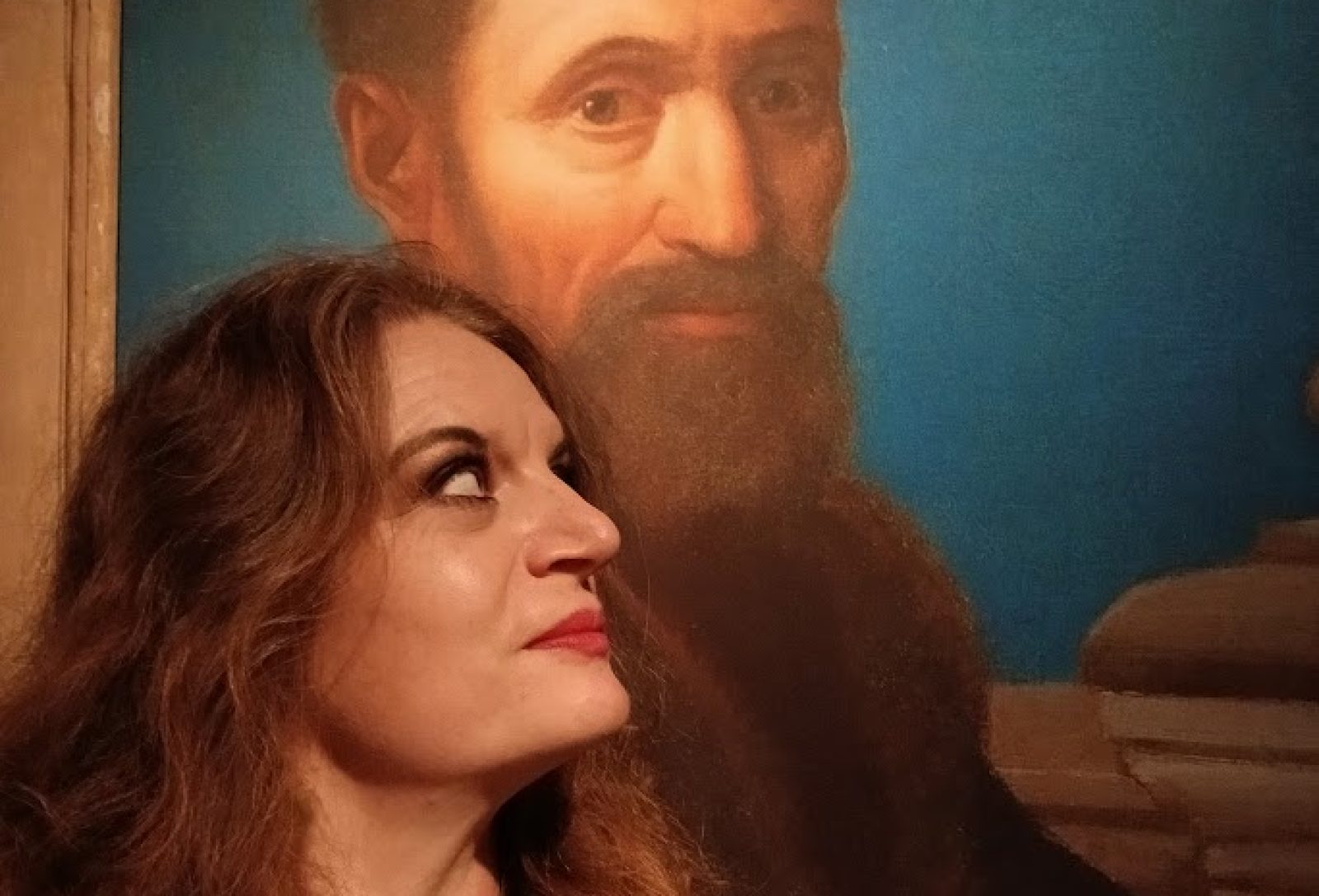
13 settembre 1506: Mantegna muore a Mantova
Il 13 settembre 1506 Andrea Mantegna morì a Mantova. Aveva trascorso gran parte della sua vita alla corte dei Gonzaga e aveva trasformato la pittura in qualcosa di quasi scultoreo, fatto di corpi solidi, prospettive vertiginose e richiami all’antichità.
Quando Andrea Mantegna chiuse gli occhi a Mantova, quel 13 settembre 1506, aveva alle spalle una carriera straordinaria ma anche anni tutt’altro che semplici. Era nato intorno al 1430-1431 a Isola di Carturo, nel territorio padovano, e fin da giovanissimo aveva mostrato un talento fuori dal comune.
La sua morte colpì anche un artista che avrebbe voluto conoscerlo personalmente: Albrecht Dürer. Il grande pittore e incisore tedesco aveva infatti una profonda ammirazione per Mantegna e ne aveva studiato le opere attraverso le stampe. Nel 1506 Dürer si trovava a Venezia e progettava di raggiungere Mantova. La morte del maestro gli impedì però quell’incontro tanto desiderato.
Non era soltanto un pittore che Dürer ammirava: Mantegna era diventato un modello internazionale.
Mantegna, il bambino prodigio nella bottega di Squarcione
Andrea Mantegna arrivò giovanissimo nella bottega di Francesco Squarcione, a Padova. Aveva circa dieci anni.
Qui entrò in contatto con un ambiente artistico particolarmente vivace. Padova era allora un vero laboratorio del Rinascimento settentrionale e Mantegna poté confrontarsi con l’arte antica e con le novità portate in città da artisti come Donatello, oltre che con la cultura figurativa fiorentina.
Proprio l’interesse per la scultura antica sarebbe diventato uno dei tratti distintivi della sua pittura. Mantegna guardava infatti alle statue e ai rilievi romani non semplicemente come modelli da copiare, ma come una sorta di repertorio dal quale ricavare corpi, pose, panneggi, muscoli e gesti.
Il risultato è evidente nelle sue figure: sembrano spesso scolpite nella pietra anziché dipinte.
La Cappella Ovetari e il dramma della distruzione
Tra le imprese più importanti della giovinezza di Mantegna ci fu la decorazione della Cappella Ovetari nella chiesa degli Eremitani a Padova.
L’artista lavorò alle Storie di san Giacomo e san Cristoforo, un ciclo destinato a diventare uno dei grandi capolavori del Rinascimento padovano. Ma oggi non possiamo più vedere l’opera nella sua interezza.
Nel 1944, durante la Seconda guerra mondiale, la chiesa degli Eremitani fu gravemente colpita dai bombardamenti e gli affreschi andarono in gran parte distrutti.
Quello che resta permette comunque di comprendere la straordinaria modernità di Mantegna: architetture costruite con una prospettiva rigorosa, figure monumentali e una concezione dello spazio che sembra anticipare molte delle ricerche prospettiche del Rinascimento maturo.
Nel 1460 arriva a Mantova: comincia la grande avventura dei Gonzaga
Nel 1460 Mantegna si trasferì a Mantova per entrare al servizio dei Gonzaga.
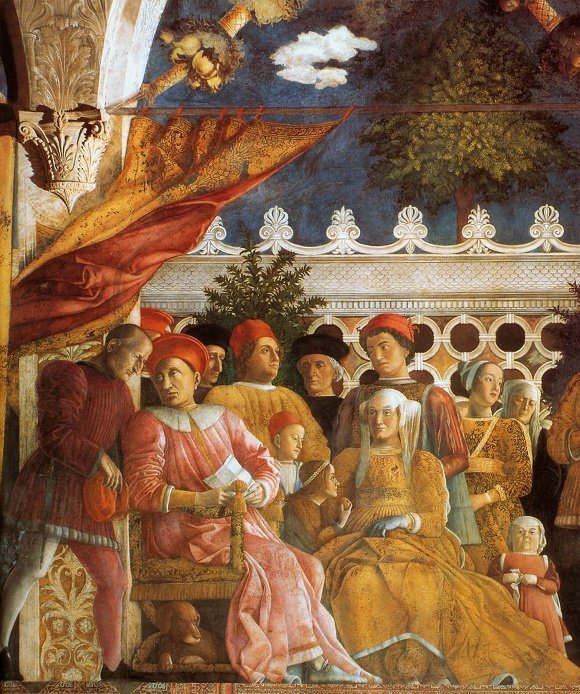
Aveva meno di trent’anni e avrebbe trascorso nella città gran parte del resto della sua vita. Il suo rapporto con la corte fu fondamentale: per i Gonzaga realizzò dipinti, decorazioni, disegni e soprattutto una delle imprese più celebri dell’intero Rinascimento italiano.
La corte mantovana era anche un ambiente straordinariamente colto. Qui Mantegna entrò in contatto con la cultura umanistica e con il culto dell’antichità che caratterizzava i Gonzaga. Non sorprende quindi che nelle sue opere la Roma antica ritorni continuamente attraverso architetture, iscrizioni, armature, rilievi, statue e citazioni archeologiche.
La Camera degli Sposi: il soffitto che inganna l’occhio
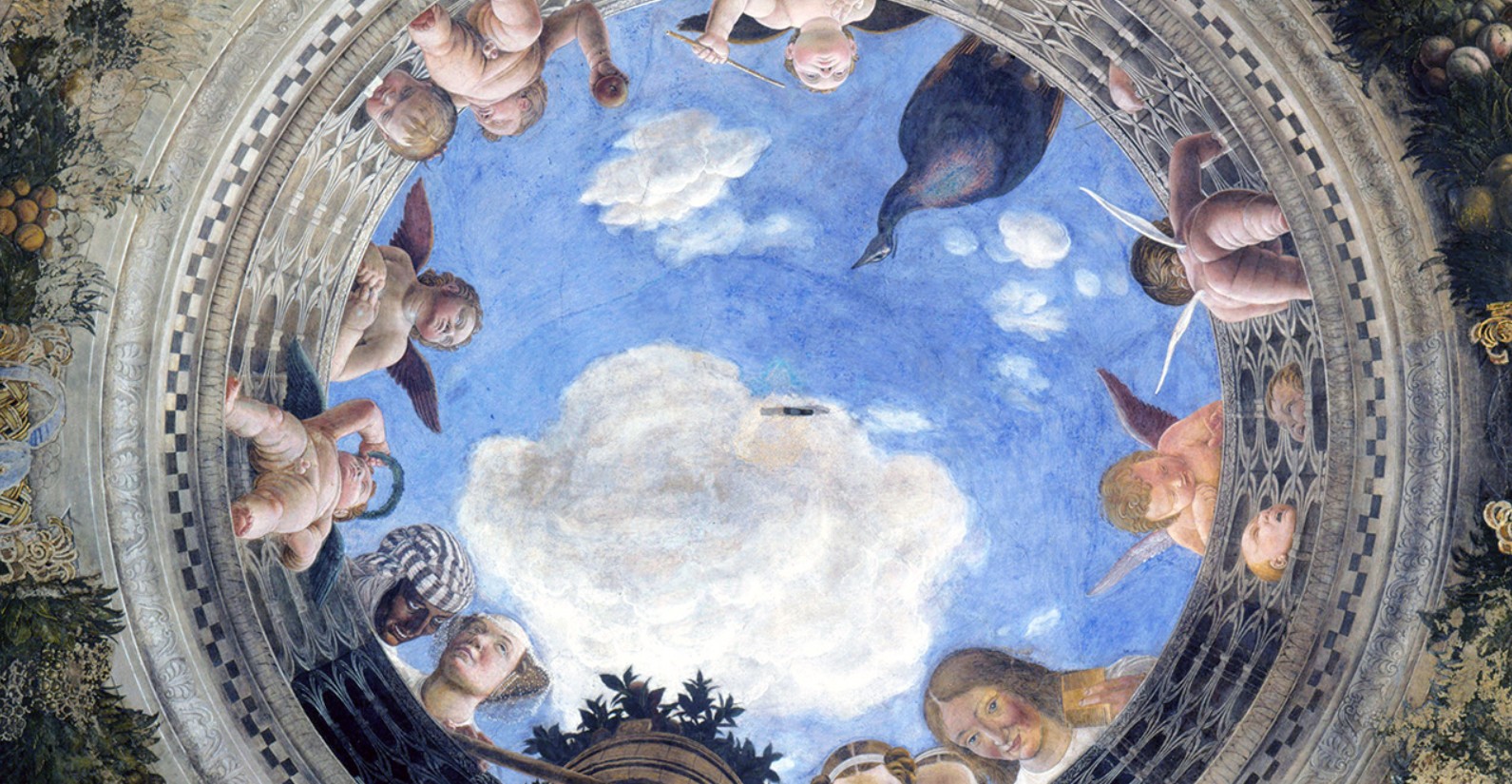
È però nella Camera degli Sposi, nel Castello di San Giorgio a Mantova, che Mantegna porta la sua ricerca prospettica a un livello sorprendente.
Il ciclo, concluso nel 1474, trasforma le pareti della stanza in uno spazio apparentemente reale. E’ però soprattutto il soffitto a lasciare senza parole.
Al centro si apre infatti il celeberrimo oculo prospettico, dal quale sembrano affacciarsi putti, figure e personaggi curiosi.
È come se Mantegna avesse bucato la superficie dipinta per creare un’apertura verso un altro spazio.
Questa idea di superare il confine tra pittura e realtà appartiene alla ricerca più profonda dell’artista. Già in opere precedenti, come la Madonna col Bambino con serafini e cherubini, Mantegna sperimentava ambienti illusionistici capaci di spingere lo spazio dipinto verso quello dello spettatore.

Perché Mantegna amava così tanto le statue antiche?
Secondo la testimonianza raccolta da Giorgio Vasari nelle Vite, Mantegna considerava le antiche statue particolarmente perfette perché gli scultori del passato avevano saputo selezionare dalle persone reali le parti più belle e armoniose.
Per lui la scultura antica poteva dunque essere persino più perfetta della natura.
Un’altra rivoluzione: Mantegna e l’incisione
Mantegna non fu importante soltanto come pittore: fu infatti uno dei protagonisti della diffusione dell’incisione nell’Italia settentrionale.
Le sue composizioni circolarono attraverso le stampe e raggiunsero artisti lontani dall’Italia. È proprio attraverso queste immagini che la sua influenza arrivò anche nel mondo germanico.
Il rapporto con Dürer diventa così ancora più interessante.
Il pittore tedesco studiò infatti alcune incisioni legate a Mantegna e ne trasse ispirazione. Il Metropolitan Museum ricorda, per esempio, come Dürer abbia realizzato nel 1494 un disegno a partire da una stampa della Battaglia degli dei marini di Mantegna.
Mantegna, dunque, non aveva bisogno di viaggiare in tutta Europa per far conoscere la propria arte.
Le sue immagini viaggiavano al posto suo.
Il Cristo morto: quando la prospettiva diventa vertigine
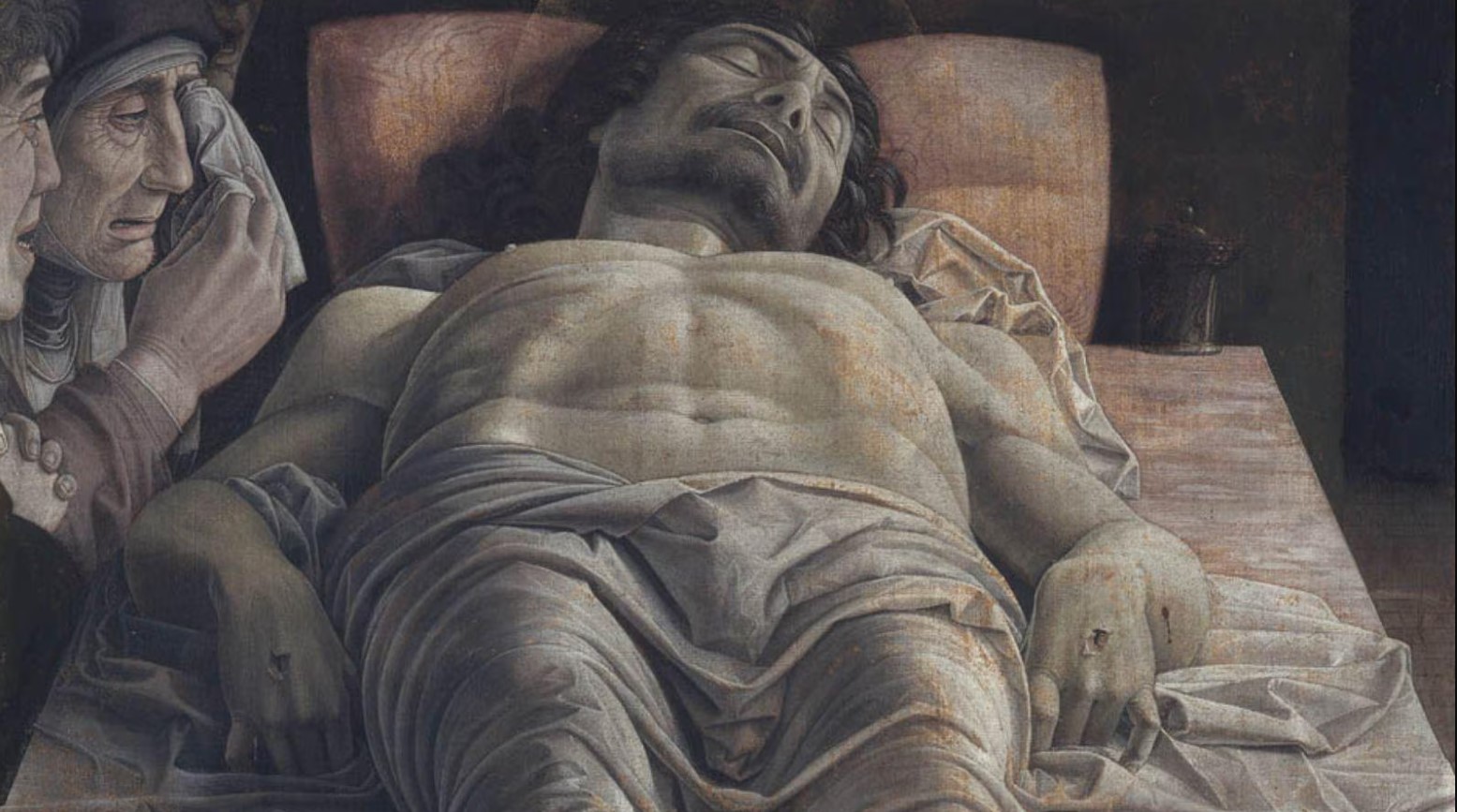
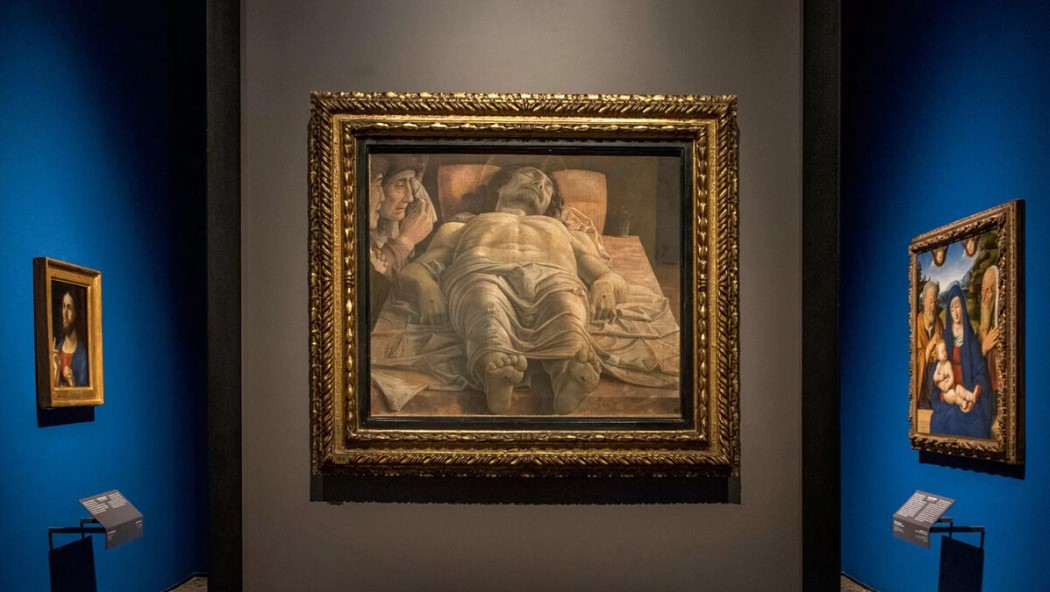
Tra le opere più celebri di Mantegna c’è naturalmente il Cristo morto, oggi alla Pinacoteca di Brera di Milano.
È difficile dimenticare quella figura osservata da un punto di vista estremamente ravvicinato e insolito.
I piedi sono in primo piano e il corpo di Cristo si allontana progressivamente verso il fondo.
La prospettiva non è qui un semplice esercizio tecnico ma diventa uno strumento emotivo.
Lo spettatore viene collocato quasi ai piedi del sepolcro e si trova davanti al corpo morto di Cristo. Il risultato è spiazzante: il dipinto sembra costringerci fisicamente dentro la scena.
I Trionfi di Cesare e l’ossessione per Roma
Un altro grande capitolo della produzione mantovana sono i Trionfi di Cesare, una monumentale serie dedicata alla celebrazione del trionfo romano. Anche qui torna l’ossessione di Mantegna per l’antichità.
Soldati, carri, armature, vessilli, prigionieri e trofei sembrano uscire da un antico corteo romano riportato in vita attraverso la pittura.
La serie, realizzata per i Gonzaga, sarebbe diventata una delle più celebri testimonianze della passione rinascimentale per Roma e per il mondo classico.
Il 13 settembre 1506 Mantegna muore a Mantova
E poi arrivò il 13 settembre 1506. Andrea Mantegna morì a Mantova dopo una vita trascorsa fra Padova e la corte dei Gonzaga. Aveva lasciato dietro di sé un linguaggio completamente personale: figure monumentali, prospettive ardite, illusioni ottiche, passione per l’archeologia e un rapporto quasi fisico con la materia.
La sua morte arrivò in un momento nel quale la sua fama aveva ormai oltrepassato i confini italiani. Dürer, che avrebbe voluto incontrarlo, non fece in tempo.
Un pittore capace di trasformare la pittura in qualcosa che sembra scolpito, la prospettiva in uno spazio reale e l’antichità in una presenza ancora viva.
Per il momento il sempre vostro Michelangelo Buonarroti vi saluta dandovi appuntamento ai prossimi post e sui social.
September 13, 1506: Mantegna Dies in Mantua
On September 13, 1506, Andrea Mantegna died in Mantua. He had spent much of his life at the Gonzaga court, transforming painting into something almost sculptural—characterized by solid bodies, dizzying perspectives, and references to antiquity.
When Andrea Mantegna breathed his last in Mantua on that September day in 1506, he left behind an extraordinary career, though one marked by years that were far from easy. Born around 1430–1431 in Isola di Carturo, in the territory of Padua, he had demonstrated exceptional talent from a very young age.
His death also affected an artist who had hoped to meet him in person: Albrecht Dürer. The great German painter and printmaker deeply admired Mantegna and had studied his work through prints. In 1506, Dürer was in Venice and planning to travel to Mantua; however, the master’s death prevented that long-awaited meeting.
It was not merely as a painter that Dürer admired him; Mantegna had become an international role model.
Mantegna, the Child Prodigy in Squarcione’s Workshop
Andrea Mantegna arrived at Francesco Squarcione’s workshop in Padua at a very young age—he was around ten years old.
There, he encountered a particularly vibrant artistic environment. Padua was then a true laboratory of the Northern Renaissance, and Mantegna was able to engage with ancient art and the innovations brought to the city by artists such as Donatello, as well as with Florentine figurative culture.
Indeed, his interest in ancient sculpture would become one of the defining characteristics of his painting. Mantegna viewed Roman statues and reliefs not simply as models to be copied, but as a sort of repertoire from which to draw bodies, poses, drapery, musculature, and gestures. The result is evident in his figures: they often appear carved in stone rather than painted.
The Ovetari Chapel and the tragedy of its destruction
One of the most significant undertakings of Mantegna’s early career was the decoration of the Ovetari Chapel in the Church of the Eremitani in Padua.
The artist worked on the Stories of Saint James and Saint Christopher, a cycle destined to become one of the great masterpieces of the Paduan Renaissance. Yet today, we can no longer view the work in its entirety.
In 1944, during the Second World War, the Church of the Eremitani was severely damaged by bombing raids, and the frescoes were largely destroyed.
What remains, however, allows us to appreciate Mantegna’s extraordinary modernity: architectural settings constructed with rigorous perspective, monumental figures, and a conception of space that seems to anticipate many of the perspectival innovations of the High Renaissance.
Arrival in Mantua (1460): the great Gonzaga adventure begins
In 1460, Mantegna moved to Mantua to enter the service of the Gonzaga family.
He was under thirty years old and would spend much of the rest of his life in the city. His relationship with the court was pivotal: for the Gonzaga family, he created paintings, decorations, and drawings—and, above all, one of the most celebrated undertakings of the entire Italian Renaissance.
The Mantuan court was also an extraordinarily cultured environment. Here, Mantegna came into contact with humanist culture and the reverence for antiquity that characterized the Gonzaga family. It is hardly surprising, then, that ancient Rome constantly recurs in his works through architectural elements, inscriptions, armor, reliefs, statues, and archaeological references.
The Camera degli Sposi: a ceiling that tricks the eye
It is in the Camera degli Sposi (Wedding Chamber) at the Castle of San Giorgio in Mantua, however, that Mantegna takes his exploration of perspective to an astonishing level. The cycle, completed in 1474, transforms the room’s walls into a seemingly real space. Yet, it is the ceiling, above all, that leaves the viewer speechless.
At its center opens the celebrated oculus—a masterpiece of perspective—through which putti, figures, and curious characters appear to be peering down.
It is as if Mantegna had pierced the painted surface to create an opening into another space.
This concept of transcending the boundary between painting and reality lies at the heart of the artist’s deepest artistic inquiries. Even in earlier works, such as the Madonna and Child with Seraphim and Cherubim, Mantegna experimented with illusionistic settings designed to project the painted space into the viewer’s own realm.
Why did Mantegna have such a passion for ancient statues?
According to accounts recorded by Giorgio Vasari in The Lives, Mantegna regarded ancient statues as possessing a unique perfection because the sculptors of antiquity had known how to select the most beautiful and harmonious features from real people.
For him, therefore, ancient sculpture could be even more perfect than nature itself.
Another revolution: Mantegna and printmaking
Mantegna’s significance extended beyond painting; he was also a key figure in the spread of printmaking in Northern Italy.
His compositions circulated via prints and reached artists far beyond Italy. It was precisely through these images that his influence extended into the Germanic world.
This makes his relationship with Dürer all the more interesting.
The German painter studied several engravings associated with Mantegna and drew inspiration from them. The Metropolitan Museum, for instance, notes that in 1494 Dürer created a drawing based on a print of Mantegna’s Battle of the Sea Gods.
Mantegna, therefore, did not need to travel across Europe to make his art known.
His images traveled in his stead.
The Dead Christ: When Perspective Becomes Vertigo
Naturally, one of Mantegna’s most famous works is The Dead Christ, now housed in the Pinacoteca di Brera in Milan.
It is hard to forget that figure, viewed from an extremely close and unusual vantage point.
The feet are in the foreground, while Christ’s body recedes into the background.
Here, perspective is not merely a technical exercise.
It becomes an emotional tool.
The viewer is placed almost at the foot of the burial slab, confronting Christ’s dead body. The effect is disorienting: the painting seems to physically draw us into the scene.
The Triumphs of Caesar and the Obsession with Rome
Another major chapter of his work in Mantua is The Triumphs of Caesar, a monumental series celebrating the Roman triumph. Here, too, Mantegna’s obsession with antiquity is evident.
Soldiers, chariots, armor, banners, prisoners, and trophies seem to emerge from an ancient Roman procession, brought back to life through painting.
Created for the Gonzaga family, the series would become one of the most celebrated testaments to the Renaissance passion for Rome and the classical world. On September 13, 1506, Mantegna died in Mantua.
Then came September 13, 1506. Andrea Mantegna passed away in Mantua after a life spent between Padua and the Gonzaga court. He left behind a completely distinctive artistic language: monumental figures, daring perspectives, optical illusions, a passion for archaeology, and an almost physical connection to his materials.
His death came at a time when his fame had already transcended Italy’s borders. Dürer, who had hoped to meet him, arrived too late.
He was a painter capable of transforming painting into something that seemed sculpted, perspective into real space, and antiquity into a living presence.
For now, yours truly, Michelangelo Buonarroti, bids you farewell and looks forward to seeing you in future posts and on social media.

Sostienici – Support Us
Se questo blog ti piace e ti appassiona, puoi aiutarci a farlo crescere sempre più sostenendoci in modo concreto condividendo i post, seguendo le pagine social e con un contributo che ci aiuta ad andare avanti con il nostro lavoro di divulgazione. . ENGLISH: If you like and are passionate about this blog, you can help us make it grow more and more by supporting us in a concrete way by sharing posts, following social pages and with a contribution that helps us to move forward with our dissemination work.
10,00 €
-
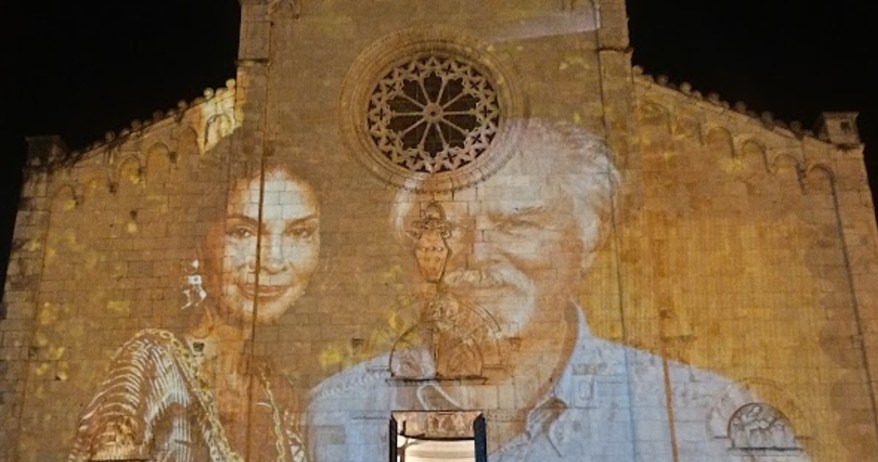
Pietrasanta: un museo per Fernando Botero
🇮🇹Pietrasanta prepara un museo dedicato a Fernando Botero con circa 90 bozzetti a Palazzo Panichi. Il legame con la città che lo nominò cittadino onorario nel 2001… 🇬🇧Pietrasanta is preparing a museum dedicated to Fernando Botero, featuring around 90 sketches at Palazzo Panichi. This reflects his connection to the city, which named him an honorary…
-
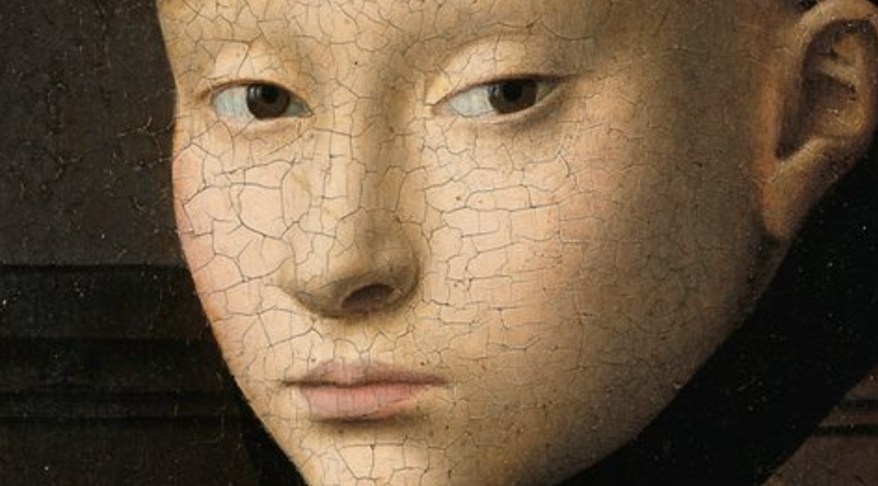
Il ritratto enigmatico di Petrus Christus
🇮🇹Chi è la giovane ritratta da Petrus Christus? Un volto misterioso, abiti preziosi e la luce del capolavoro fiammingo del 1470… 🇬🇧Who is the young woman portrayed by Petrus Christus? A mysterious face, exquisite attire, and the light of a Flemish masterpiece from 1470…
-
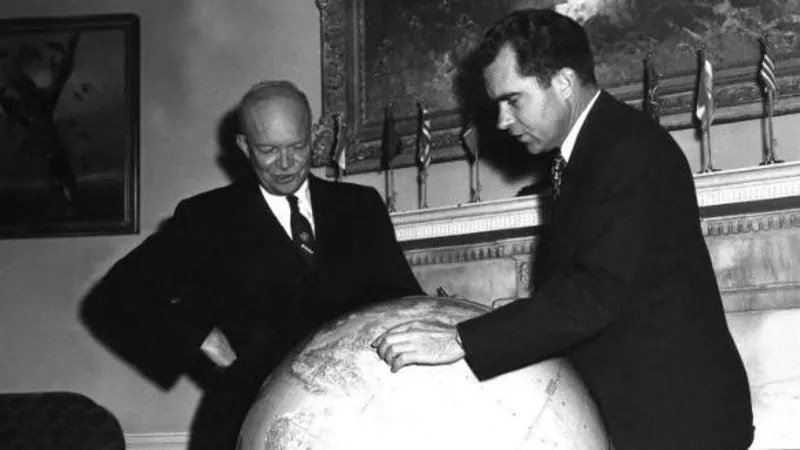
Pentagono, danneggiato il mappamondo legato a Eisenhower: era destinato all’ufficio di Hegseth
🇮🇹Il mappamondo di Eisenhower, cimelio della Seconda guerra mondiale conservato al Pentagono, è stato danneggiato durante un tentativo di trasferimento nell’ufficio di Pete Hegseth… 🇬🇧Eisenhower’s globe, a World War II relic kept at the Pentagon, was damaged during an attempt to move it to Pete Hegseth’s office…
Condividi:


Questo sono io




sostienici

Sostienici – Support Us
Se questo blog ti piace e ti appassiona, puoi aiutarci a farlo crescere sempre più sostenendoci in modo concreto condividendo i post, seguendo le pagine social e con un contributo che ci aiuta ad andare avanti con il nostro lavoro di divulgazione. . ENGLISH: If you like and are passionate about this blog, you can help us make it grow more and more by supporting us in a concrete way by sharing posts, following social pages and with a contribution that helps us to move forward with our dissemination work.
€10,00


Buongiorno. Grazie per questa pagina magistrale che arricchisce la mia conoscenza dei pittori del 400. Odile L.
"Mi piace"Piace a 1 persona
Opere davvero straordinarie 👍👍👏👏👏👏👏👏👏
"Mi piace"Piace a 1 persona
si, un grande artista
"Mi piace"Piace a 1 persona