
San Matteo e l’Angelo di Caravaggio: storia, significato e quel capolavoro perduto
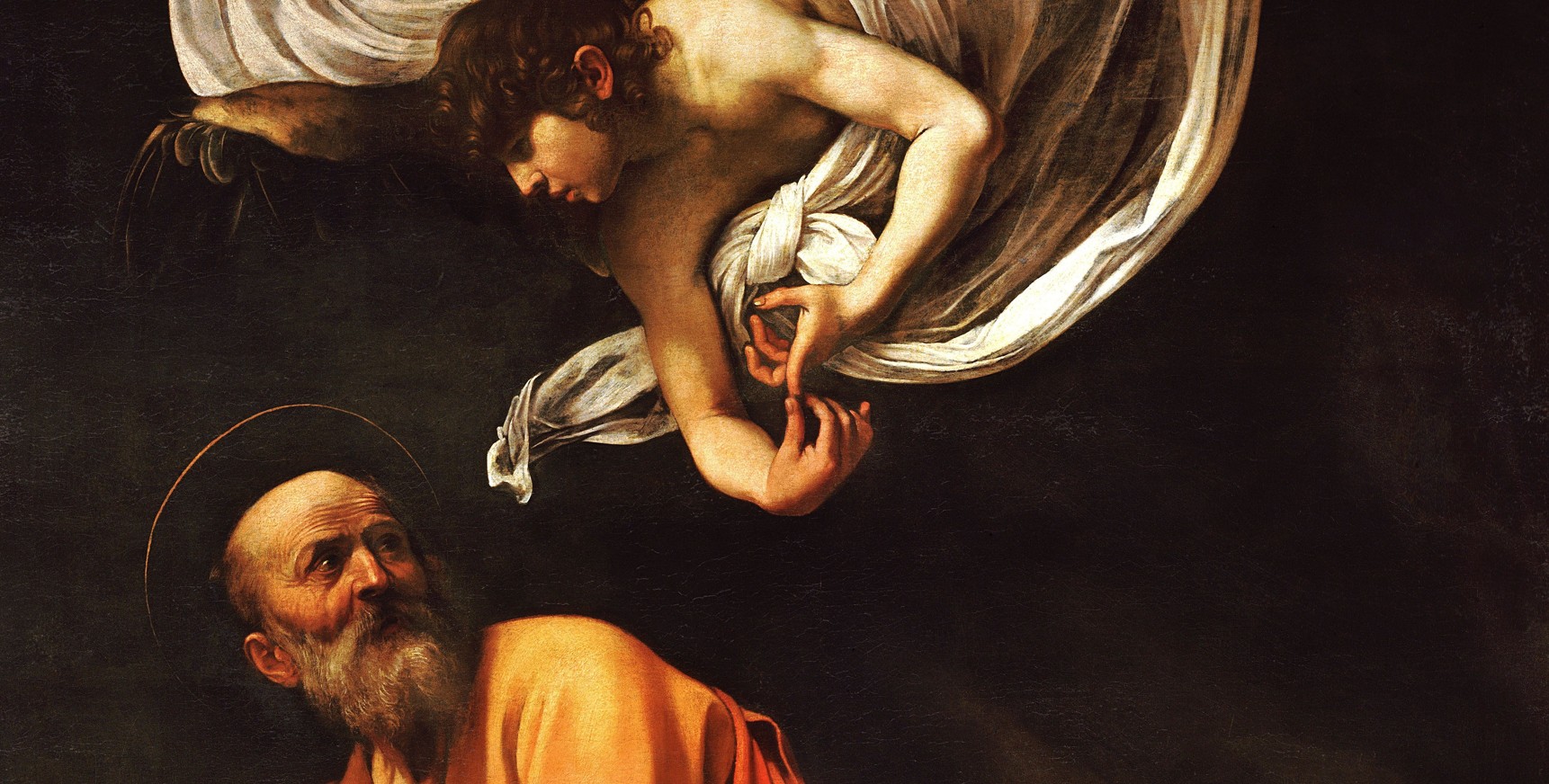
San Matteo e l’Angelo di Caravaggio è uno dei mirabili capolavoro del maestro della luce. Il dipinto a olio su tela è custodito da secoli nella Cappella Contarelli della Chiesa di San Luigi dei francesi, a Roma ma dietro quella celebre opera si cela una vicenda fatta di committenze, polemiche, capolavori scomparsi e rivoluzioni artistiche che hanno cambiato per sempre la pittura europea.
L’opera, realizzata nel 1602, conclude il celebre ciclo dedicato a San Matteo nella chiesa di San Luigi dei Francesi, insieme alla Vocazione di San Matteo e al Martirio di San Matteo. Ma pochi sanno che Caravaggio dipinse due versioni dello stesso soggetto: una è arrivata fino a noi, l’altra è andata tragicamente perduta durante la Seconda guerra mondiale.
La Cappella Contarelli e la nascita del capolavoro
Il ciclo pittorico dedicato a San Matteo nasce dal testamento del cardinale francese Matteo Contarelli, al secolo Matthieu Cointrel, che già intorno al 1560 aveva progettato una cappella dedicata al proprio santo patrono.
Dopo diversi tentativi affidati a Girolamo Muziano e al Cavalier d’Arpino, l’incarico passò a Caravaggio, probabilmente grazie all’intermediazione del cardinale Francesco Maria del Monte.
Dopo il successo delle due tele laterali, il pittore ricevette nel febbraio del 1602 la commissione per realizzare anche la pala d’altare centrale, destinata a rappresentare San Matteo mentre scrive il proprio Vangelo sotto l’ispirazione dell’angelo.
La prima versione di San Matteo e l’Angelo: il dipinto perduto per sempre
La prima versione è una delle opere più discusse dell’intera produzione di Caravaggio.
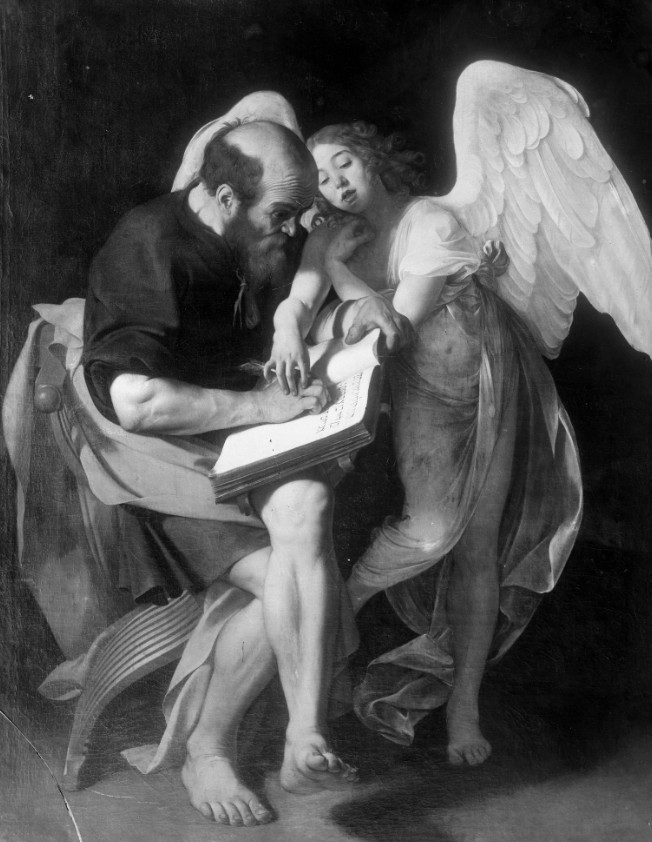
L’evangelista appare come un uomo semplice, scalzo, con le gambe nude e un’espressione sorpresa. L’angelo non si limita a ispirarlo, ma gli prende letteralmente la mano, aiutandolo a scrivere il Vangelo.
Per secoli questa immagine è stata interpretata come la causa del presunto rifiuto dell’opera da parte del clero, giudicata troppo realistica e poco decorosa.
Oggi, però, gli studi più recenti raccontano una storia diversa.
Lo storico dell’arte Luigi Spezzaferro ha dimostrato che non esistono prove documentarie di un vero rifiuto. La prima tela sarebbe stata concepita come soluzione provvisoria, destinata a essere sostituita una volta conclusi i lavori della cappella.
Successivamente il dipinto fu acquistato dal raffinato collezionista Vincenzo Giustiniani, che ne comprese immediatamente il valore artistico.
La distruzione durante la Seconda guerra mondiale
Nel 1815 il dipinto entrò nelle collezioni dei Musei di Berlino. Il suo destino cambiò definitivamente durante gli ultimi mesi della Seconda guerra mondiale.
Custodita nella Flakturm Friedrichshain per proteggerla dai bombardamenti, la tela fu distrutta nell’incendio che devastò il deposito nel 1945 insieme a decine di capolavori della pittura europea.
Di quella straordinaria versione rimangono oggi soltanto fotografie storiche in bianco e nero.
La seconda versione conservata nella Cappella Contarelli
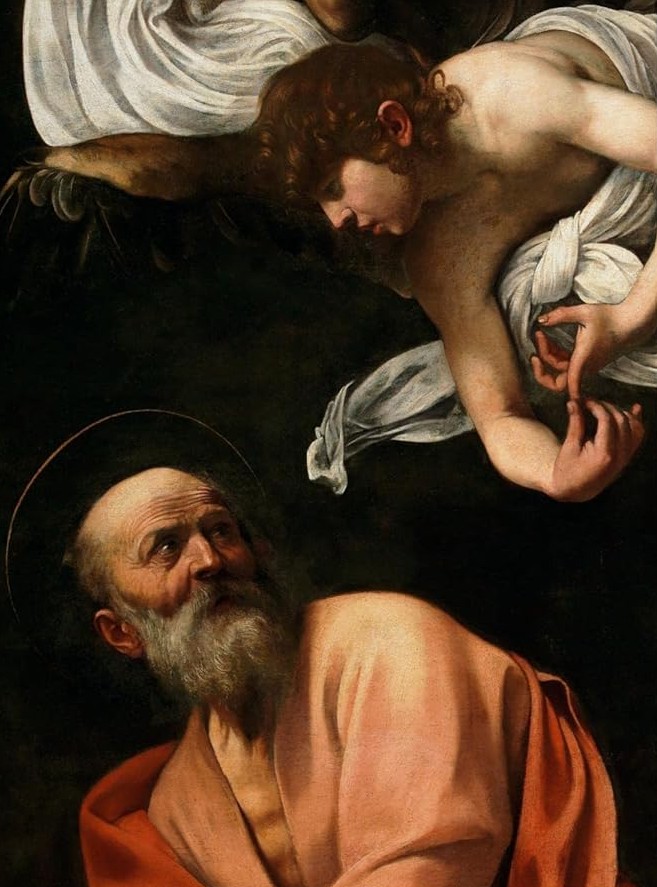
Caravaggio realizzò una nuova pala d’altare nello stesso anno. È quella che ancora oggi possiamo ammirare nella Cappella Contarelli.
L’atmosfera cambia profondamente. San Matteo non appare più come un contadino inesperto, ma come un uomo maturo e consapevole della propria missione.
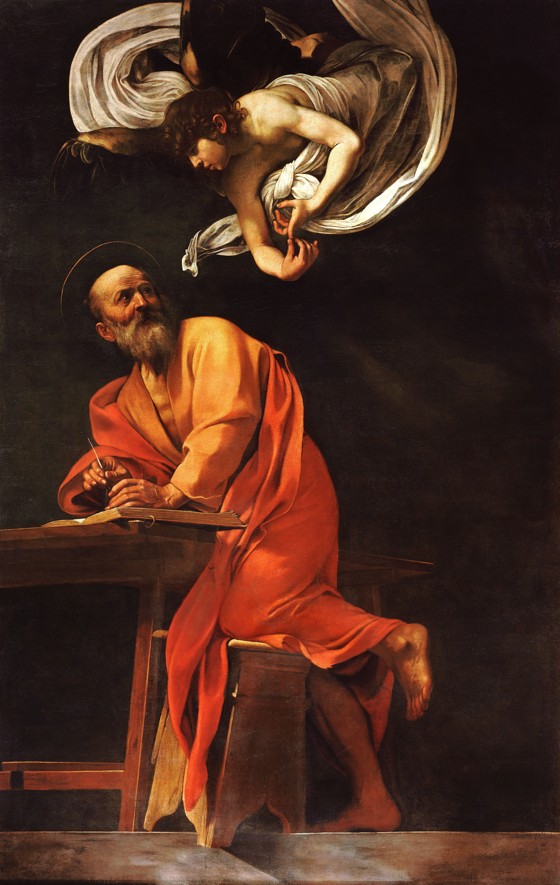
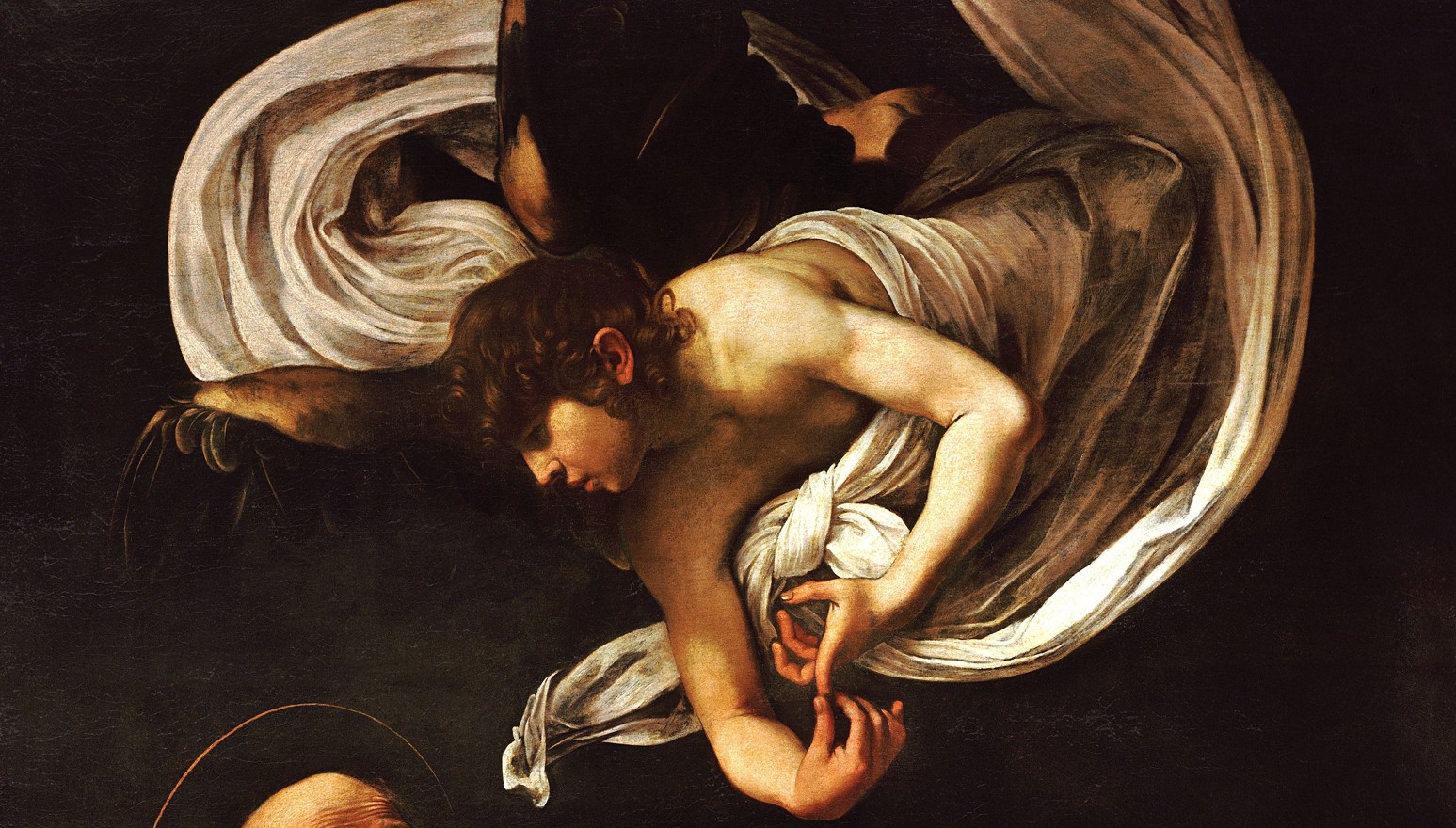
L’angelo vola alle sue spalle e, con il movimento delle dita, sembra elencare la genealogia di Cristo, ispirando il santo senza guidarne fisicamente la mano. La composizione diventa più monumentale, il linguaggio più solenne e il messaggio teologico più vicino ai principi della Controriforma.
Il rapporto tra l’uomo e Dio
Il vero tema dell’opera non è soltanto la scrittura del Vangelo. Caravaggio mette in scena il rapporto tra l’uomo e Dio.
Nella seconda versione l’evangelista riceve l’ispirazione divina, ma resta protagonista del proprio gesto. Non è un semplice strumento passivo: collabora con la grazia, secondo la dottrina affermata dal Concilio di Trento.
Questo equilibrio tra intervento divino e libertà umana costituisce uno degli aspetti più profondi dell’intero dipinto.
Lo stile di Caravaggio
La luce, proveniente dall’alto, scolpisce le figure con una forza teatrale straordinaria.
Il fondo scuro elimina ogni elemento superfluo, concentrando l’attenzione sul dialogo tra il santo e l’angelo. Lo sgabello precario, il grande libro, il tavolo e il calamaio trasformano una scena sacra in un episodio incredibilmente reale.
Per il momento il sempre vostro Michelangelo Buonarroti vi saluta dandovi appuntamento ai prossimi post e sui social.
Caravaggio’s Saint Matthew and the Angel: History, Meaning, and That Lost Masterpiece
Caravaggio’s Saint Matthew and the Angel is one of the master of light’s admirable masterpieces. The oil on canvas painting has been preserved for centuries in the Contarelli Chapel of the Church of San Luigi dei Francesi in Rome, but behind that famous work lies a story of commissions, controversies, lost masterpieces, and artistic revolutions that forever changed European painting.
The work, created in 1602, concludes the famous cycle dedicated to Saint Matthew in the Church of San Luigi dei Francesi, along with The Calling of Saint Matthew and The Martyrdom of Saint Matthew. But few know that Caravaggio painted two versions of the same subject: one has survived to this day, the other was tragically lost during World War II.
The Contarelli Chapel and the Birth of a Masterpiece
The pictorial cycle dedicated to Saint Matthew was born from the will of French Cardinal Matteo Contarelli, born Matthieu Cointrel, who had already planned a chapel dedicated to his patron saint around 1560.
After several attempts entrusted to Girolamo Muziano and Cavalier d’Arpino, the commission passed to Caravaggio, likely through the intermediation of Cardinal Francesco Maria del Monte.
Following the success of the two side canvases, the painter received the commission in February 1602 to also create the central altarpiece, intended to depict Saint Matthew writing his Gospel under the inspiration of the angel.
The first version of Saint Matthew and the Angel: the painting lost forever
The first version is one of the most discussed works of Caravaggio’s entire oeuvre.
The evangelist appears as a simple, barefoot man with bare legs and a surprised expression. The angel not only inspires him, but literally takes his hand, helping him write the Gospel.
For centuries, this image has been interpreted as the reason for the clergy’s alleged rejection of the work, deemed too realistic and unseemly.
Today, however, more recent studies tell a different story.
Art historian Luigi Spezzaferro has demonstrated that there is no documentary evidence of a true rejection. The first canvas was conceived as a temporary solution, intended to be replaced once the chapel was completed.
The painting was subsequently purchased by the refined collector Vincenzo Giustiniani, who immediately recognized its artistic value.
Destruction during World War II
In 1815, the painting entered the collections of the Berlin Museums. Its fate changed definitively during the final months of World War II.
Stored in the Flakturm Friedrichshain to protect it from bombing, the canvas was destroyed in the fire that devastated the warehouse in 1945, along with dozens of other European masterpieces.
Today, only historic black-and-white photographs remain of that extraordinary version.
The second version preserved in the Contarelli Chapel
Caravaggio created a new altarpiece in the same year. It is the one we can still admire today in the Contarelli Chapel.
The atmosphere changes profoundly. Saint Matthew no longer appears as an inexperienced farmer, but as a mature man, aware of his mission.
The angel flies behind him and, with the movement of his fingers, seems to recite the genealogy of Christ, inspiring the saint without physically guiding his hand. The composition becomes more monumental, the language more solemn, and the theological message closer to the principles of the Counter-Reformation.
The relationship between man and God
The true theme of the work is not merely the writing of the Gospel. Caravaggio dramatizes the relationship between man and God.
In the second version, the evangelist receives divine inspiration but remains the protagonist of his own gesture. He is not a mere passive instrument: he collaborates with grace, according to the doctrine affirmed by the Council of Trent.
This balance between divine intervention and human freedom is one of the most profound aspects of the entire painting.
Caravaggio’s Style
The light, coming from above, sculpts the figures with extraordinary theatrical force.
The dark background eliminates all superfluous elements, focusing attention on the dialogue between the saint and the angel. The precarious stool, the large book, the table, and the inkwell transform a sacred scene into an incredibly real episode.
For now, yours truly, Michelangelo Buonarroti bids you farewell and invites you to join him in future posts and on social media.

Sostienici – Support Us
Se questo blog ti piace e ti appassiona, puoi aiutarci a farlo crescere sempre più sostenendoci in modo concreto condividendo i post, seguendo le pagine social e con un contributo che ci aiuta ad andare avanti con il nostro lavoro di divulgazione. . ENGLISH: If you like and are passionate about this blog, you can help us make it grow more and more by supporting us in a concrete way by sharing posts, following social pages and with a contribution that helps us to move forward with our dissemination work.
10,00 €
Articoli

Condividi:


Questo sono io




sostienici

Sostienici – Support Us
Se questo blog ti piace e ti appassiona, puoi aiutarci a farlo crescere sempre più sostenendoci in modo concreto condividendo i post, seguendo le pagine social e con un contributo che ci aiuta ad andare avanti con il nostro lavoro di divulgazione. . ENGLISH: If you like and are passionate about this blog, you can help us make it grow more and more by supporting us in a concrete way by sharing posts, following social pages and with a contribution that helps us to move forward with our dissemination work.
€10,00


