

Jan Frans van Dael, il pittore che trasformò i fiori in capolavori senza tempo
Nel silenzio raffinato della pittura fiamminga di fine Settecento, un vaso di fiori può trasformarsi in un universo di luce, simboli e meraviglia.
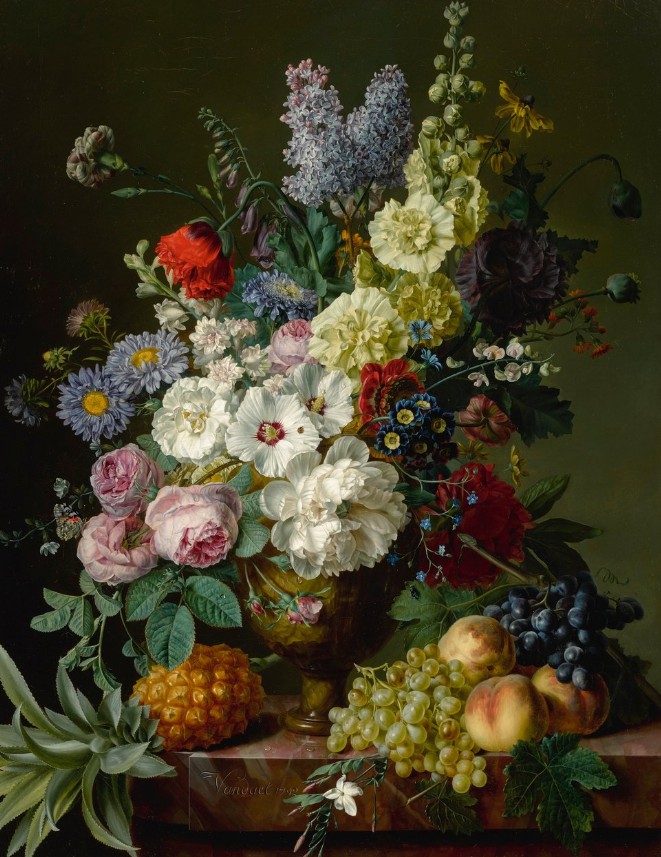
È quello che accade davanti alla Natura morta di fiori in vaso, una delle opere più eleganti realizzate da Jan Frans van Dael nel 1792. Un dipinto che ancora oggi cattura lo sguardo con la stessa intensità con cui doveva sorprendere le corti europee dell’epoca.
Chi era Jan Frans van Dael, maestro delle nature morte floreali
Van Dael, nato ad Anversa ma attivo soprattutto a Parigi, fu tra i grandi interpreti della natura morta floreale tra XVIII e XIX secolo. Le sue composizioni non erano semplici esercizi decorativi: ogni petalo, ogni riflesso e ogni insetto raccontavano il gusto sofisticato di un’Europa sospesa tra il fasto aristocratico e l’imminente trasformazione della modernità.
Nell’opera “Natura morta di fiori in vaso”, questa sensibilità raggiunge una delle sue forme più poetiche.
La bellezza dei dettagli nel dipinto “Natura morta di fiori in vaso”
Il dipinto si apre con un tripudio di colori orchestrato con precisione quasi musicale. Rose, tulipani, peonie e altri fiori si intrecciano in una composizione armoniosa che sembra sfidare il tempo.
La luce accarezza delicatamente le corolle, creando contrasti morbidi e profondità sorprendenti. Nulla appare casuale: Van Dael costruisce l’immagine con la meticolosità di un miniaturista e la sensibilità cromatica di un grande pittore di storia.
Ciò che rende quest’opera ancora oggi incredibilmente contemporanea è la sua capacità di unire realismo e idealizzazione. I fiori sono dipinti con una precisione botanica straordinaria, eppure l’insieme non appare mai freddo o scientifico. Al contrario, l’atmosfera è vibrante, quasi teatrale. Ogni elemento sembra sul punto di muoversi, come se una lieve corrente d’aria potesse spargere i petali fuori dalla tela.
Il significato simbolico della natura morta nel Settecento
Dietro la bellezza della composizione si nasconde anche il significato profondo della tradizione della natura morta.
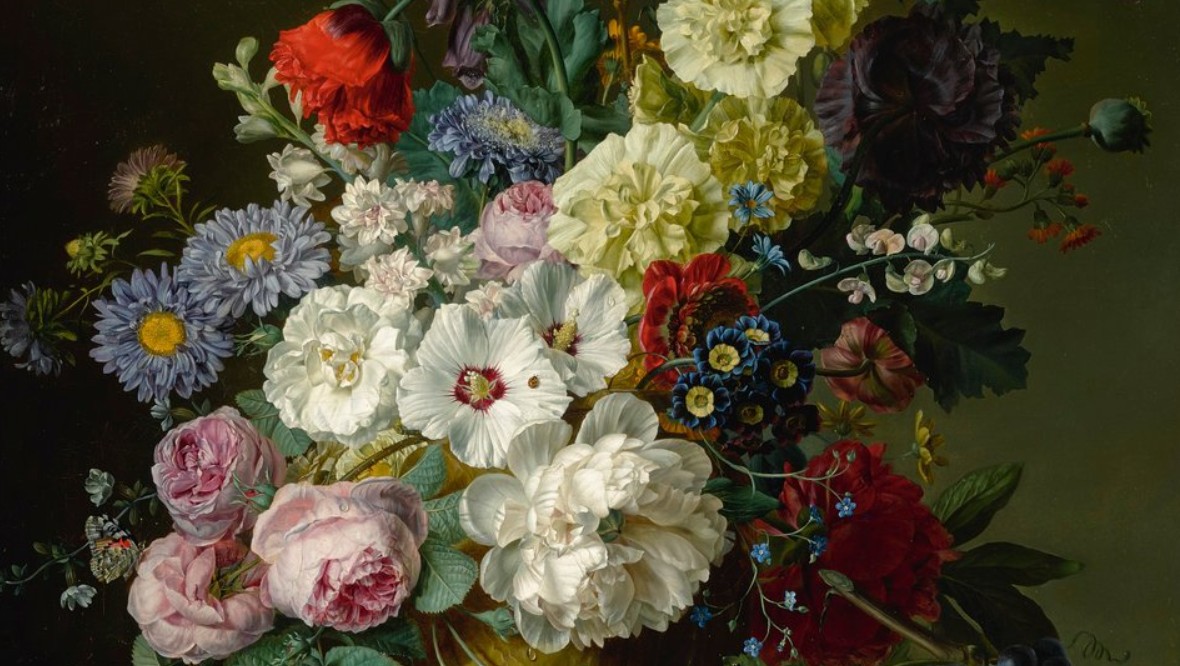
Nel Settecento questi dipinti erano spesso meditazioni silenziose sulla fugacità della vita. I fiori, magnifici ma destinati ad appassire rapidamente, diventavano simbolo della bellezza effimera e del trascorrere del tempo.
Van Dael affronta questo tema con straordinaria delicatezza: non c’è malinconia drammatica, ma una celebrazione luminosa della perfezione naturale nel suo momento più intenso.
La tecnica pittorica di Jan Frans van Dael
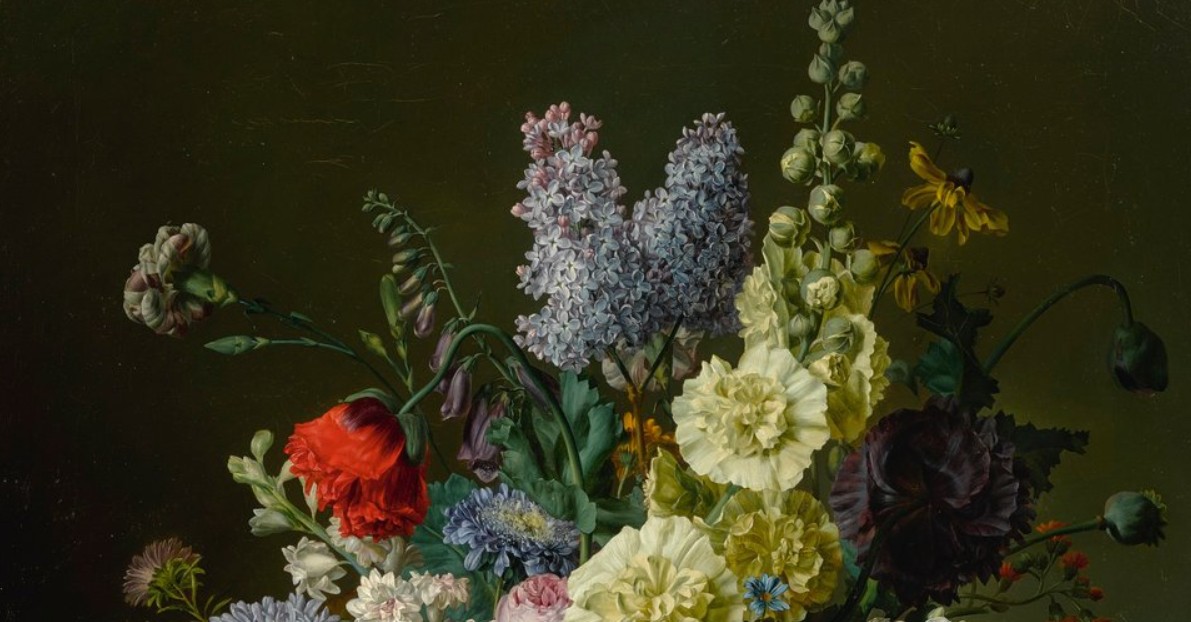
Osservando attentamente l’opera emergono dettagli che rivelano la straordinaria abilità tecnica dell’artista. Le trasparenze dei petali, le gocce di rugiada appena percepibili, gli effetti satinati delle foglie mostrano un controllo assoluto della pittura a olio. Anche il vaso, elegante ma discreto, contribuisce all’equilibrio della scena senza mai sottrarre attenzione ai fiori.
Nel panorama artistico europeo del tempo, Jan Frans van Dael riuscì a distinguersi proprio grazie a questa combinazione di precisione fiamminga e gusto francese per la raffinatezza.
Le sue opere conquistarono collezionisti aristocratici e ambienti di corte, diventando simboli di lusso e cultura visiva. Ancora oggi le sue nature morte continuano a essere amate per la loro capacità di trasmettere armonia e stupore immediato.
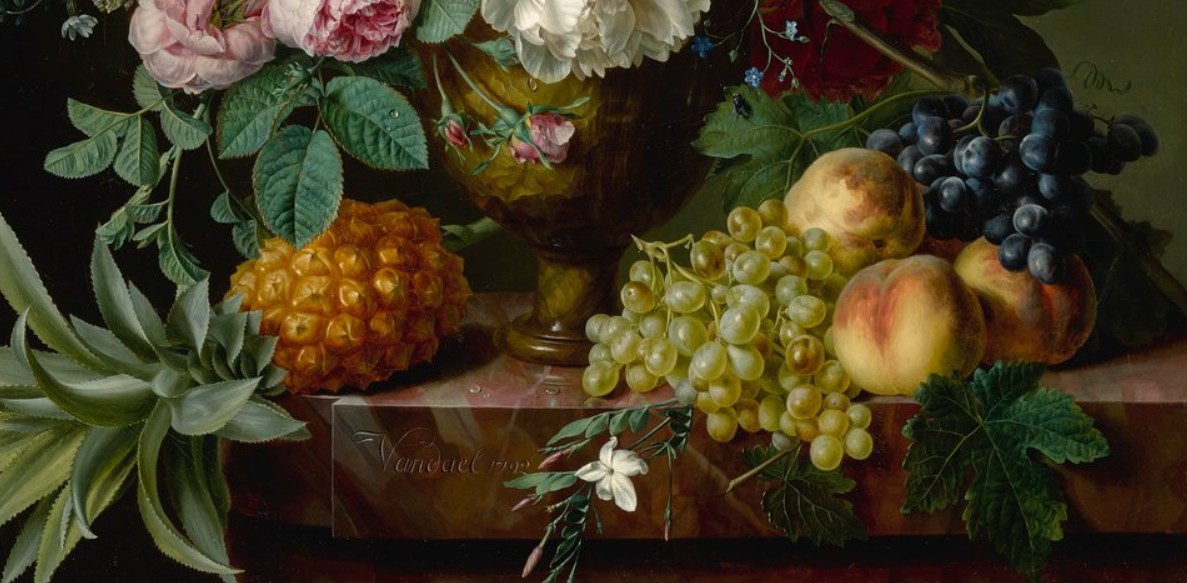
L’artista volle lasciare il tocco da maestro sulla base, firmandola con il cognome e l’anno di realizzazione del dipinto.
Per il momento il sempre vostro Michelangelo Buonarroti vi saluta dandovi appuntamento ai prossimi post e sui social.
Jan Frans van Dael, the painter who transformed flowers into timeless masterpieces
In the refined silence of late eighteenth-century Flemish painting, a vase of flowers can transform into a universe of light, symbols, and wonder.
This is what happens before Still Life of Flowers in a Vase, one of the most elegant works by Jan Frans van Dael, created in 1792. A painting that still captures the gaze today with the same intensity with which it must have astonished the European courts of the time.
Who was Jan Frans van Dael, master of floral still lifes?
Van Dael, born in Antwerp but active primarily in Paris, was among the great interpreters of floral still lifes between the 18th and 19th centuries. His compositions were not simple decorative exercises: every petal, every reflection, and every insect spoke of the sophisticated taste of a Europe suspended between aristocratic pomp and the imminent transformation of modernity.
In “Still Life with Flowers in a Vase,” this sensitivity reaches one of its most poetic forms.
The beauty of detail in “Still Life with Flowers in a Vase”
The painting opens with a riot of color orchestrated with almost musical precision. Roses, tulips, peonies, and other flowers intertwine in a harmonious composition that seems to defy time.
The light delicately caresses the corollas, creating soft contrasts and surprising depth. Nothing appears random: Van Dael constructs the image with the meticulousness of a miniaturist and the chromatic sensitivity of a great history painter.
What makes this work incredibly contemporary even today is its ability to combine realism and idealization. The flowers are painted with extraordinary botanical precision, yet the overall effect never appears cold or scientific. On the contrary, the atmosphere is vibrant, almost theatrical. Each element seems poised to move, as if a gentle current of air could scatter the petals off the canvas.
The Symbolic Meaning of Still Life in the 18th Century
Behind the beauty of the composition lies the profound meaning of the still life tradition.
In the 18th century, these paintings were often silent meditations on the fleeting nature of life. Flowers, magnificent yet destined to fade quickly, became symbols of ephemeral beauty and the passage of time.
Van Dael approaches this theme with extraordinary delicacy: there is no dramatic melancholy, but rather a luminous celebration of natural perfection at its most intense.
Jan Frans van Dael’s Painting Technique
A careful examination of the work reveals details that reveal the artist’s extraordinary technical skill. The transparencies of the petals, the barely perceptible dewdrops, and the satiny effects of the leaves demonstrate absolute control of the oil paint. Even the vase, elegant yet discreet, contributes to the balance of the scene without ever distracting from the flowers.
In the European art scene of the time, Jan Frans van Dael stood out precisely thanks to this combination of Flemish precision and French taste for refinement.
His works won over aristocratic collectors and courtly circles, becoming symbols of luxury and visual culture. Even today, his still lifes continue to be beloved for their ability to convey harmony and immediate wonder.
The artist wanted to leave his masterly touch on the base, signing it with his surname and the year the painting was created.
For now, yours truly, Michelangelo Buonarroti, bids you farewell and invites you to join him in future posts and on social media.

Sostienici – Support Us
Se questo blog ti piace e ti appassiona, puoi aiutarci a farlo crescere sempre più sostenendoci in modo concreto condividendo i post, seguendo le pagine social e con un contributo che ci aiuta ad andare avanti con il nostro lavoro di divulgazione. . ENGLISH: If you like and are passionate about this blog, you can help us make it grow more and more by supporting us in a concrete way by sharing posts, following social pages and with a contribution that helps us to move forward with our dissemination work.
10,00 €
Articoli

Condividi:


Questo sono io




sostienici

Sostienici – Support Us
Se questo blog ti piace e ti appassiona, puoi aiutarci a farlo crescere sempre più sostenendoci in modo concreto condividendo i post, seguendo le pagine social e con un contributo che ci aiuta ad andare avanti con il nostro lavoro di divulgazione. . ENGLISH: If you like and are passionate about this blog, you can help us make it grow more and more by supporting us in a concrete way by sharing posts, following social pages and with a contribution that helps us to move forward with our dissemination work.
€10,00


Che spettacolo 👏👏👏👏👏👏👏👏👏
"Mi piace"Piace a 1 persona