
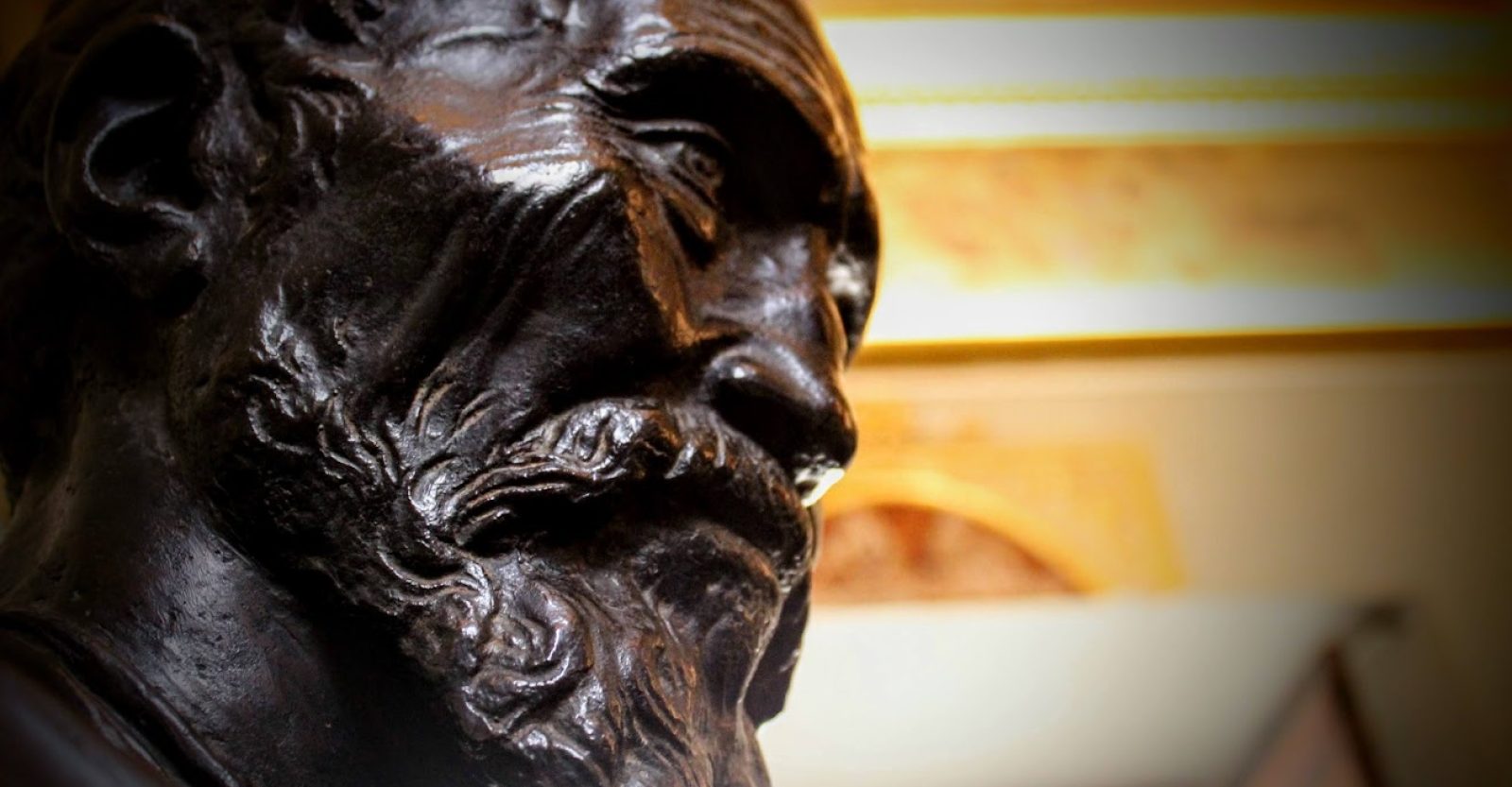
Dentro l’universo dorato di Klimt: il libro XXL Taschen è un’opera d’arte
Esistono libri d’arte che si limitano a documentare un artista e altri che riescono invece a trasformarsi in esperienze visive ed emotive. Gustav Klimt, versione XXL pubblicato dalla Taschen appartiene senza dubbio alla seconda categoria.
Questo straordinario volume dedicato a Gustav Klimt, oltre a essere una monografia di lusso, è un’autentica immersione nell’universo simbolico, erotico e decorativo del più celebre protagonista della Secessione Viennese.
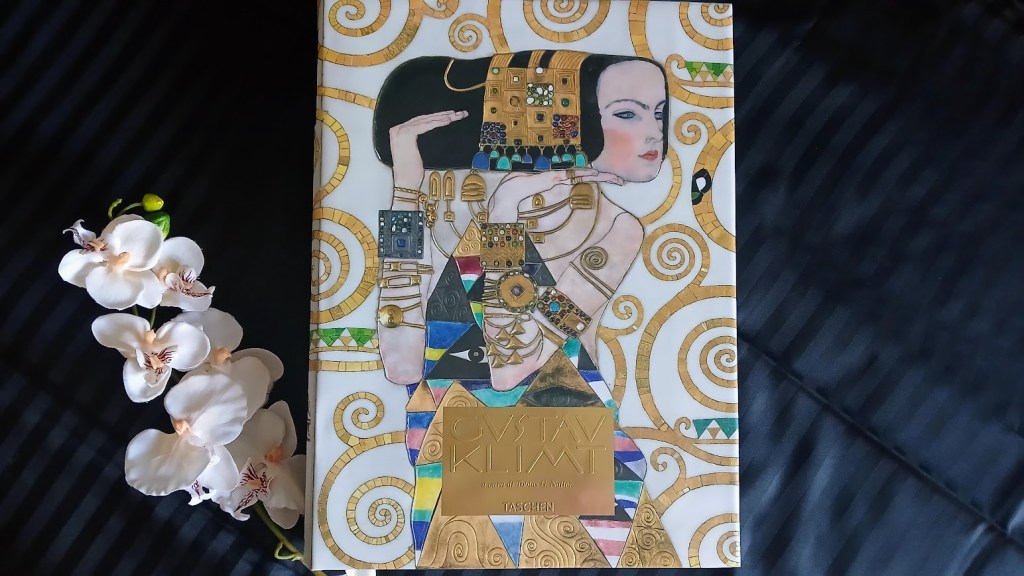
Sin dalle prime pagine si percepisce la volontà di realizzare qualcosa di monumentale. Il formato XXL amplifica ogni dettaglio delle opere e restituisce tutta la ricchezza materica dei dipinti: l’oro, le texture musive, le decorazioni geometriche e i corpi femminili sembrano prendere vita sotto gli occhi di chi le osserva.
È un libro pensato per essere letto e osservato lentamente, come se ogni pagina fosse la stanza di un museo.
Gustav Klimt XXL Taschen: un’edizione monumentale per collezionisti e appassionati d’arte
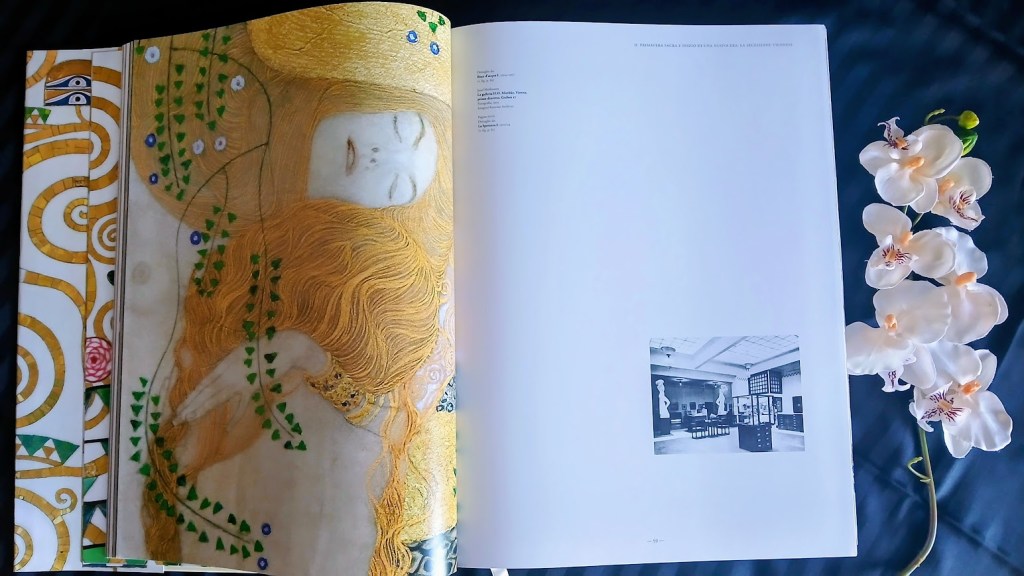
L’edizione XXL della prestigiosa casa editrice Taschen si fa notare. Le dimensioni imponenti del volume consentono di avere a portata di vista particolari che spesso rimangono inosservati nei libri tradizionali. Grazie alle fotografie ad altissima definizione si possono notare finanche la pittura screpolata a tratti così come inserti decorativi e dettagli ornamentali che sfuggono persino durante la visita in un museo.
Si ha quasi la sensazione di essere dinanzi alle opere originali. La carta di pregio esalta la brillantezza delle immagini, mentre l’impaginazione elegante consente di leggere i testi agevolmente. Taschen conferma ancora una volta la propria eccellenza editoriale, proponendo un libro sì accademico ma anche spettacolare dal punto di vista gafico.
Il volime ripercorre accuratamente tutta la vita e la produzione artistica di Klimt, seguendo l’evoluzione stilistica, dai primi esordi fino alle ultime opere incompiute.
Il periodo dorato di Klimt raccontato attraverso immagini straordinarie
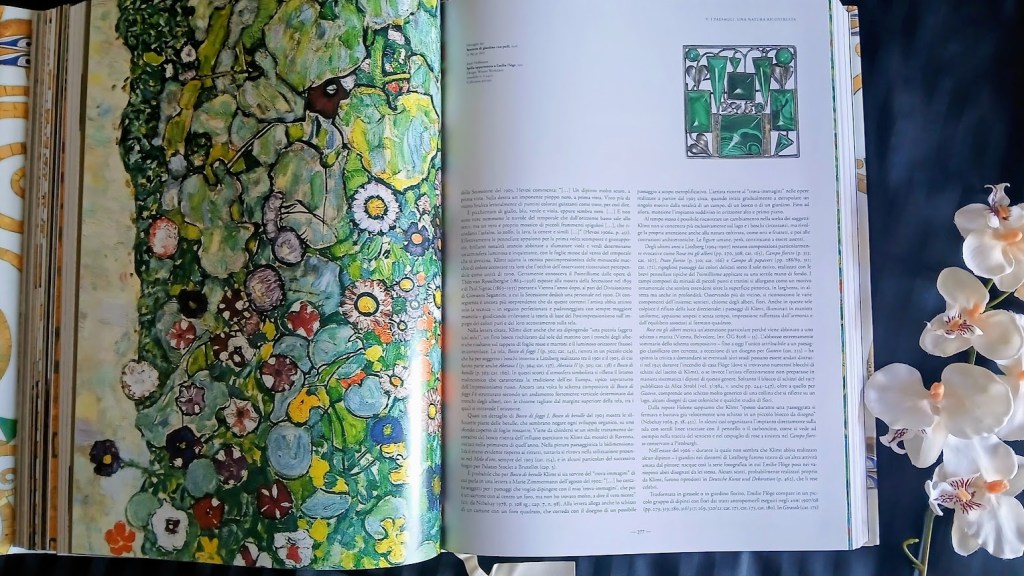
La parte più affascinante del volume, a mio avviso, è quella dedicata al cosiddetto “periodo dorato”, la fase artistica che ha reso Gustav Klimt immortale e così amato dal grande pubblico.
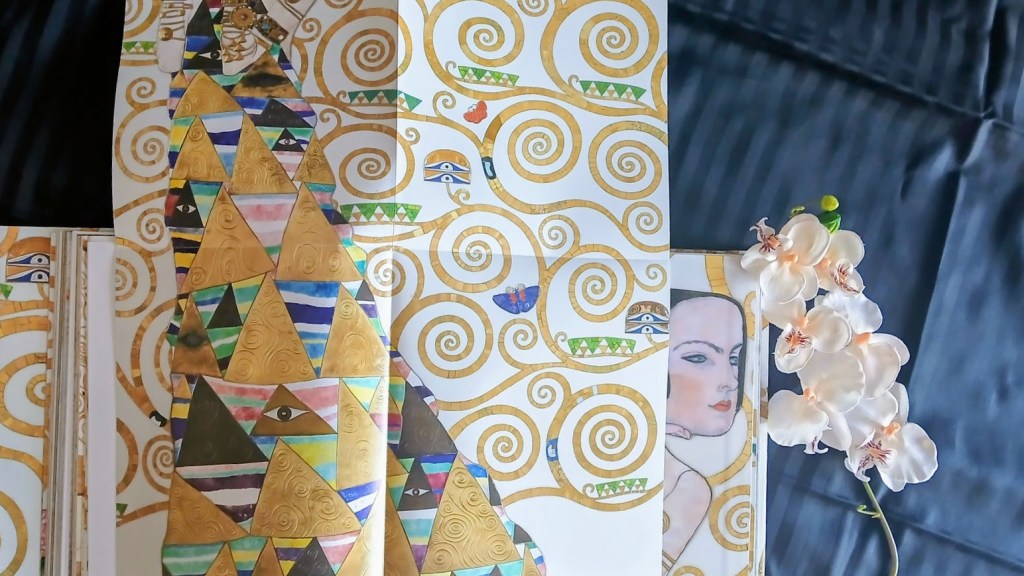
Le pagine dedicate a L’albero della vita rappresentano uno dei vertici assoluti del libro. Le riproduzioni consentono di entrare letteralmente nelle spirali dorate dei rami, nei motivi ornamentali e nelle influenze orientali che caratterizzano il fregio realizzato per il Palazzo Stoclet.
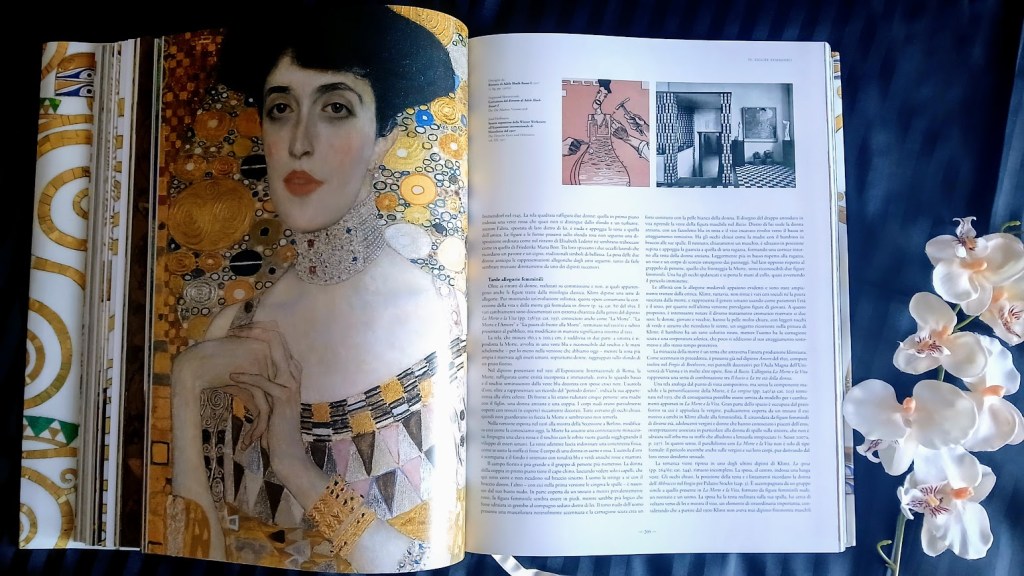
Il volume approfondisce nel dettaglio il significato simbolico dell’opera, spiegando come Klimt abbia trasformato un tema antichissimo come l’albero della vita in una visione a lui contemporanea. Le pareti dominate dagli alberi dorati, i falchi associati al dio Horus, i prati fioriti e le figure sospese tra sensualità e spiritualità vengono raccontati con un livello di analisi raro nelle pubblicazioni divulgative.
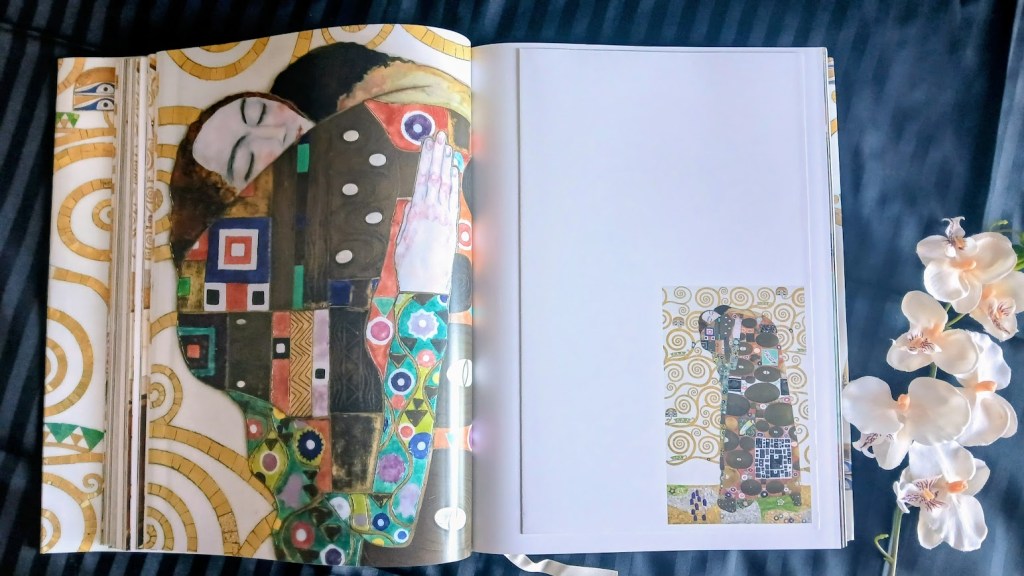
Eccellente è anche la sezione dedicata a L’attesa e L’abbraccio, nella quale viene raccontata la capacità di Klimt di fondere eros e decorazione. Gli abiti riccamente ornati diventino parte integrante della psicologia dei personaggi, fino a trasformare le figure femminili in una sorta di gioielli viventi.
La relazione tra Klimt e le Wiener Werkstätte viene scandagliata mediante la proposta di documenti, bozzetti e riferimenti storici. Non è un dettaglio da poco ma anzi, serve a capire quanto il pittore fosse centrale nella definizione dello stile viennese del primo Novecento.
La Morte e la Vita: il lato più inquieto e simbolista di Gustav Klimt
Nel volume dedicato all’artista austriaco, viene mostrato anche il lato più oscuro e drammatico di Klimt, che va nel oltre l’abbondanza dell’oro e la bellezza decorativa.
Le pagine dedicate a La Morte e la Vita sono tra le più coinvolgenti dell’intera pubblicazione. Il volume analizza nel dettaglio le due versioni dell’opera, spiegando come il dipinto si sia trasformato nel corso degli anni.
Nella prima versione la Morte appare distante, quasi astratta, avvolta in una veste blu decorata da croci nere e circondata da figure umane inconsapevoli del destino imminente. Nella seconda versione, invece, il personaggio assume una presenza molto più minacciosa: il teschio emerge con brutalità, il corpo acquista consistenza fisica e la tensione psicologica invade l’intera composizione.
Un’opera che riflette il cambiamento interiore dell’artista e il clima culturale sempre più inquieto alla vigilia della crisi europea del Novecento.
I disegni di Gustav Klimt: il cuore della sua arte
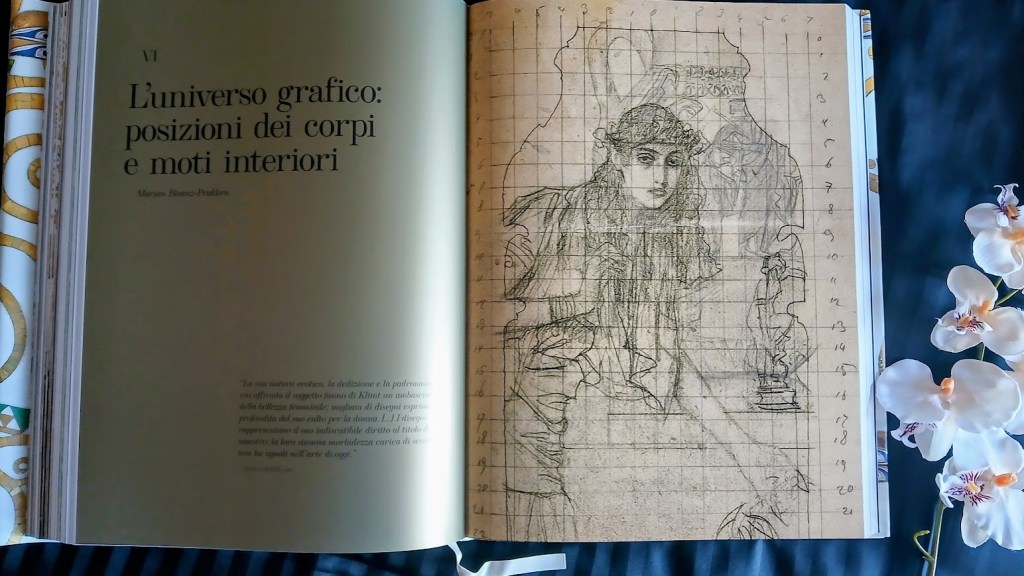
Uno dei grandi meriti di questa edizione XXL è l’ampissimo spazio dedicato ai disegni preparatori, spesso trascurati nelle pubblicazioni più commerciali.
Il libro mostra come il disegno fosse il reale laboratorio creativo di Klimt. Migliaia di schizzi accompagnavano la nascita delle sue opere e rivelano un artista metodico, ossessivo e al contempo moderno.
Le linee morbide e sinuose fermano su carta il movimento dei corpi con una naturalezza impressionante. Le modelle dell’artista vengono ritratte in pose intime, raccolte, sensuali e quasi sembrano inconsapevoli dello sguardo dell’artista.
Il volume approfondisce anche l’evoluzione tecnica del disegno klimtiano, raccontando il passaggio dal gessetto nero al lapis, l’utilizzo della carta giapponese lucida importata direttamente dal Giappone e l’importanza del segno come elemento autonomo dell’opera.
Le opere per l’Università di Vienna e la svolta simbolista
Eccellente anche la sezione dedicata ai pannelli realizzati da Klimt l’Università di Vienna, uno dei momenti più controversi della carriera dell’artista.
Le allegorie della Filosofia, della Medicina e della Giurisprudenza vengono analizzate come il punto di rottura definitivo tra Klimt e l’arte accademica tradizionale. Il libro racconta con precisione il clima di scandalo che accompagnò queste opere, considerate troppo sensuali, inquietanti e provocatorie per una committenza pubblica.
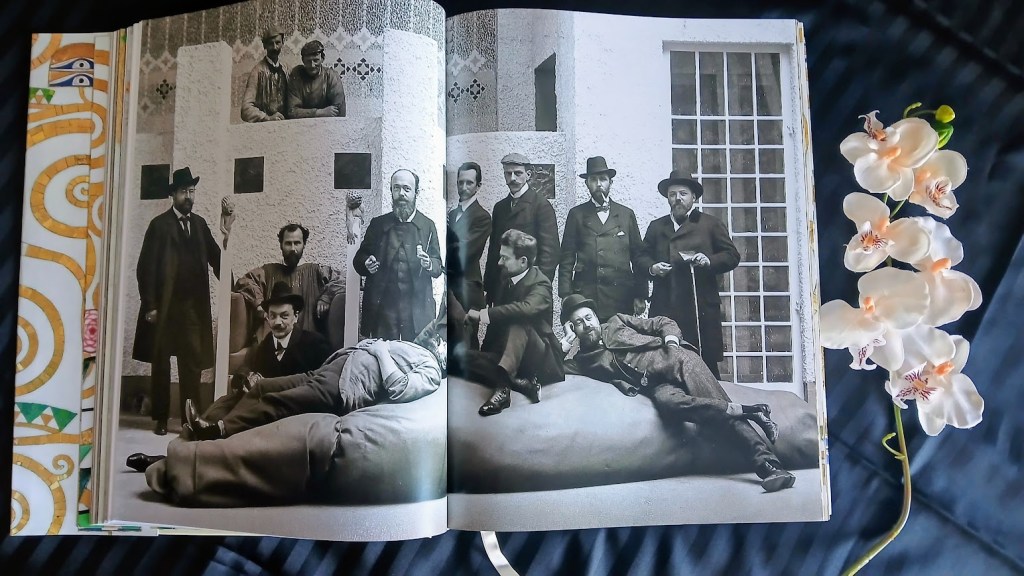
Gustav Klimt versione XXL della Taschen: uno dei più bei libri d’arte
La grande forza del grande volume Gustav Klimt sta nella sua capacità di unire rigore storico, spettacolarità visiva e profondità emotiva. Ogni sezione è costruita per accompagnare il lettore dentro l’universo mentale dell’artista, mostrando le opere finite ma anche il processo creativo, influenze culturali e le ossessioni personali.
Un libro capace di trasformare la lettura in contemplazione visiva e di far comprendere, pagina dopo pagina, perché Gustav Klimt continui ancora oggi a esercitare un fascino universale.
Per il momento il sempre vostro Michelangelo Buonarroti vi saluta dandovi appuntamento ai prossimi post e sui social.
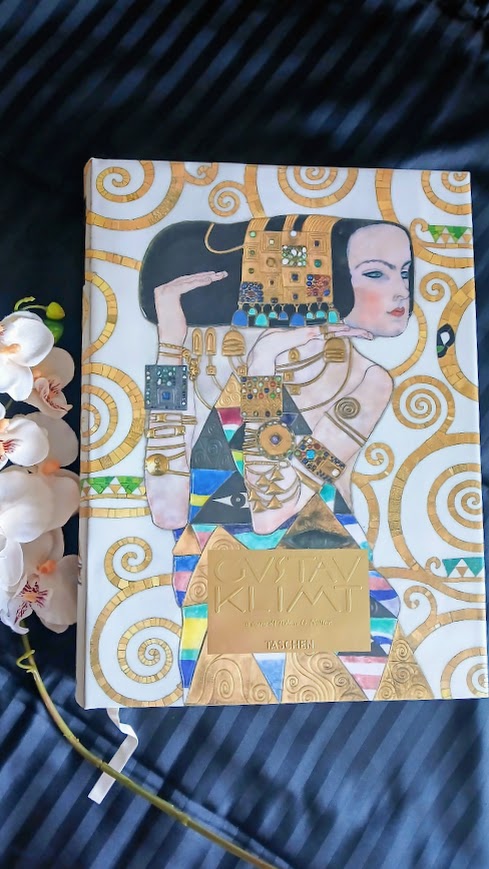
Inside Klimt’s Golden Universe: The XXL Taschen Book Is a Work of Art
There are art books that simply document an artist, while others transform themselves into visual and emotional experiences. Gustav Klimt, XXL Version, published by Taschen, undoubtedly belongs to the latter category. This extraordinary volume dedicated to Gustav Klimt is not just a luxury monograph, but a true immersion in the symbolic, erotic, and decorative universe of the most famous protagonist of the Vienna Secession.
From the very first pages, one senses the desire to create something monumental. The XXL format amplifies every detail of the works and conveys all the richness of the paintings’ textures: the gold, the mosaic textures, the geometric decorations, and the female bodies seem to come to life before the eyes of the viewer.
It is a book designed to be read and observed slowly, as if each page were a museum room.
Gustav Klimt XXL Taschen: a monumental edition for collectors and art enthusiasts
The XXL edition from the prestigious Taschen publishing house stands out. The impressive size of the volume allows for detailed insights that often go unnoticed in traditional books. Thanks to the ultra-high-definition photographs, even the occasional cracked paint can be seen, as well as decorative inserts and ornamental details that can be overlooked even during a museum visit.
You almost feel like you’re standing before the original works. The high-quality paper enhances the brilliance of the images, while the elegant layout allows for easy reading. Taschen once again confirms its editorial excellence, offering a book that is both scholarly and graphically spectacular.
The volume carefully traces Klimt’s entire life and artistic output, following his stylistic evolution from his earliest beginnings to his final, unfinished works.
Klimt’s Golden Period Told Through Extraordinary Images
The most fascinating section of the book, in my opinion, is the one dedicated to the so-called “Golden Period,” the artistic phase that made Gustav Klimt immortal and so beloved by the general public.
The pages dedicated to The Tree of Life represent one of the absolute highlights of the book. The reproductions allow us to literally immerse ourselves in the golden spirals of the branches, the ornamental motifs, and the oriental influences that characterize the frieze created for the Stoclet Palace.
The book delves into the work’s symbolic meaning in detail, explaining how Klimt transformed an ancient theme like the Tree of Life into a contemporary vision. The walls dominated by golden trees, the falcons associated with the god Horus, the flowery meadows, and the figures suspended between sensuality and spirituality are depicted with a level of analysis rare in popular publications.
The section dedicated to The Waiting and The Embrace is also excellent, demonstrating Klimt’s ability to blend eroticism and decoration. The richly adorned garments become an integral part of the characters’ psychology, transforming the female figures into a kind of living jewel.
The relationship between Klimt and the Wiener Werkstätte is explored through documents, sketches, and historical references. This is no small detail, but rather, it helps us understand how central the painter was to the definition of early 20th-century Viennese style.
Death and Life: Gustav Klimt’s More Troubled and Symbolist Side
This volume dedicated to the Austrian artist also reveals Klimt’s darker and more dramatic side, which goes beyond the abundance of gold and decorative beauty.
The pages dedicated to Death and Life are among the most engaging in the entire publication. The volume analyzes the two versions of the work in detail, explaining how the painting transformed over the years.
In the first version, Death appears distant, almost abstract, wrapped in a blue robe decorated with black crosses and surrounded by human figures unaware of his impending doom. In the second version, however, the figure takes on a much more menacing presence: the skull emerges brutally, the body takes on physical consistency, and psychological tension pervades the entire composition.
This work reflects the artist’s inner transformation and the increasingly unsettled cultural climate on the eve of the European crisis of the twentieth century.
Gustav Klimt’s Drawings: The Heart of His Art
One of the great merits of this XXL edition is the extensive space dedicated to preparatory drawings, often overlooked in more commercial publications.
The book demonstrates how drawing was Klimt’s true creative laboratory. Thousands of sketches accompanied the birth of his works and reveal a methodical, obsessive, and at the same time modern artist.
The soft, sinuous lines capture the movement of bodies on paper with impressive naturalness. The artist’s models are portrayed in intimate, collected, sensual poses, almost seeming unaware of the artist’s gaze.
The volume also delves into the technical evolution of Klimt’s drawing, recounting the transition from black chalk to pencil, the use of glossy Japanese paper imported directly from Japan, and the importance of the mark as an autonomous element of the work.
Works for the University of Vienna and the Symbolist Turn
Also excellent is the section dedicated to the panels Klimt created for the University of Vienna, one of the most controversial moments in the artist’s career.
The allegories of Philosophy, Medicine, and Jurisprudence are analyzed as the definitive breaking point between Klimt and traditional academic art. The book accurately recounts the climate of scandal that surrounded these works, considered too sensual, disturbing, and provocative for a public commission.
Taschen’s Gustav Klimt XXL Edition: One of the Most Beautiful Art Books
The great strength of the large volume Gustav Klimt lies in its ability to combine historical rigor, visual spectacularity, and emotional depth. Each section is designed to accompany the reader into the artist’s mental universe, showcasing the finished works as well as the creative process, cultural influences, and personal obsessions.
A book capable of transforming reading into visual contemplation and helping you understand, page after page, why Gustav Klimt continues to exert such universal appeal today.
For now, yours truly, Michelangelo Buonarroti bids you farewell, and we’ll see you in future posts and on social media.

Sostienici – Support Us
Se questo blog ti piace e ti appassiona, puoi aiutarci a farlo crescere sempre più sostenendoci in modo concreto condividendo i post, seguendo le pagine social e con un contributo che ci aiuta ad andare avanti con il nostro lavoro di divulgazione. . ENGLISH: If you like and are passionate about this blog, you can help us make it grow more and more by supporting us in a concrete way by sharing posts, following social pages and with a contribution that helps us to move forward with our dissemination work.
10,00 €
Articoli

Condividi:


Questo sono io




sostienici

Sostienici – Support Us
Se questo blog ti piace e ti appassiona, puoi aiutarci a farlo crescere sempre più sostenendoci in modo concreto condividendo i post, seguendo le pagine social e con un contributo che ci aiuta ad andare avanti con il nostro lavoro di divulgazione. . ENGLISH: If you like and are passionate about this blog, you can help us make it grow more and more by supporting us in a concrete way by sharing posts, following social pages and with a contribution that helps us to move forward with our dissemination work.
€10,00


