
La Pietà Palestrina e il grande equivoco sull’attribuzione
Nella Galleria dell’Accademia di Firenze, lungo il corridoio che conduce verso il mio David, si incontra una scultura che per molti anni mi è stata attribuita: la cosiddetta Pietà Palestrina.
La vedete lì, accanto ai Prigioni e al San Matteo, quasi a volerla inserire a forza dentro il mio linguaggio. Eppure, se potessi ancora impugnare scalpello e mazzuolo, vi potrei confermare che quella mano non sia la mia.
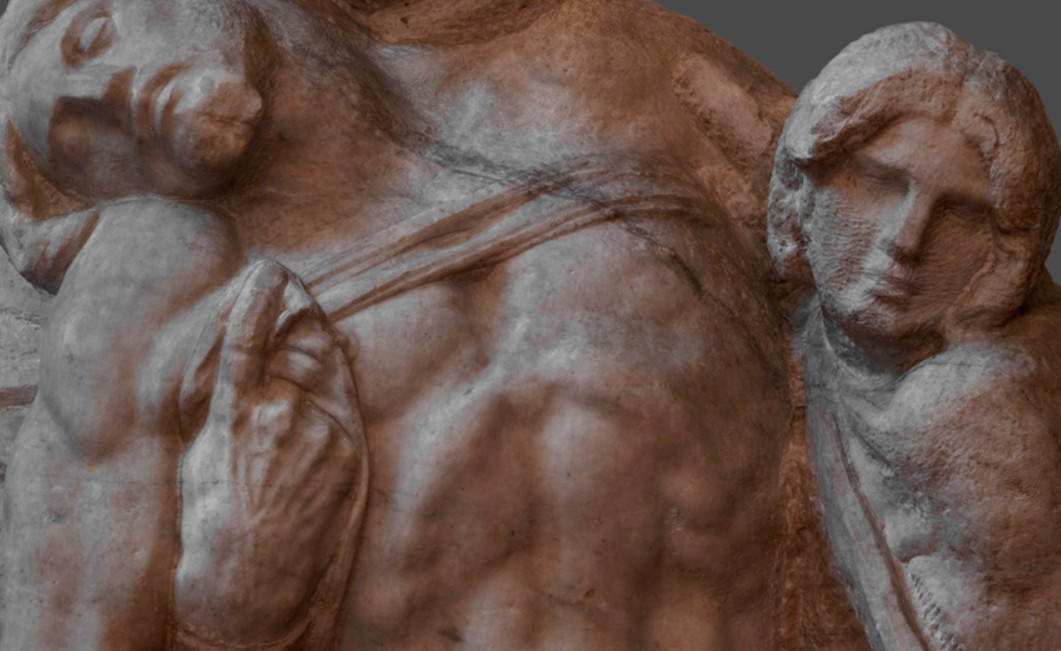
La Pietà Palestrina l’equivoco della sua attribuzione
La Pietà Palestrina è una scultura ricavata da un blocco di marmo di recupero. Sul retro si notano ancora tracce di decorazioni precedenti, probabilmente appartenenti a una trabeazione antica.
Già questo dettaglio racconta di un’opera nata in circostanze insolite, quasi arrangiate, lontane dalla cura con cui sceglievo personalmente i miei marmi di Carrara. Beh anche in quel caso la Pietà Rondanini la ricavai da un rocchio di colonna ma quella ha un’altra storia.
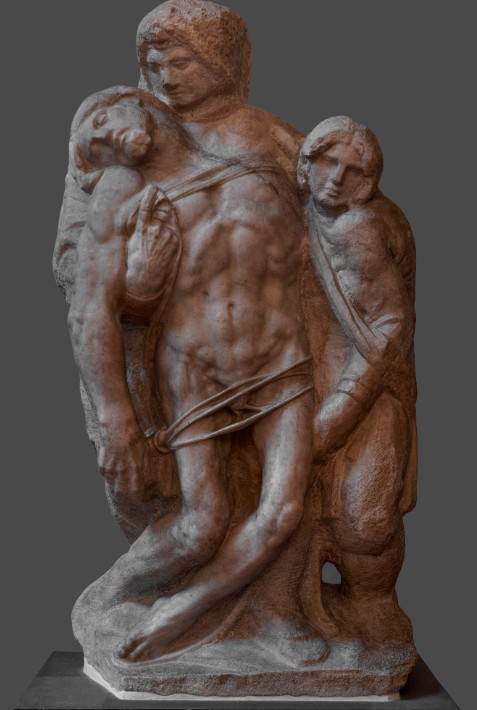
Nessun documento del mio tempo menziona però questa Pietà. Nessuna lettera, nessun pagamento, nessun biografo affidabile ne parla. Né il Vasari né il Condivi, che pure rovistarono nella mia vita come topi in un granaio, dissero mai una parola su quest’opera.
La prima menzione compare soltanto nel 1736, nel testo “Storia di Palestrina” scritto da Cecconi. Fu lui il primo ad attribuire la scultura a me, quando l’opera si trovava nella cappella Barberini nella chiesa di Santa Rosalia a Palestrina.
Come ci fosse arrivata, nessuno lo sa davvero. Le ipotesi formulate nei secoli sono numerose, ma paiono più novelle da taverna che ricostruzioni attendibili.
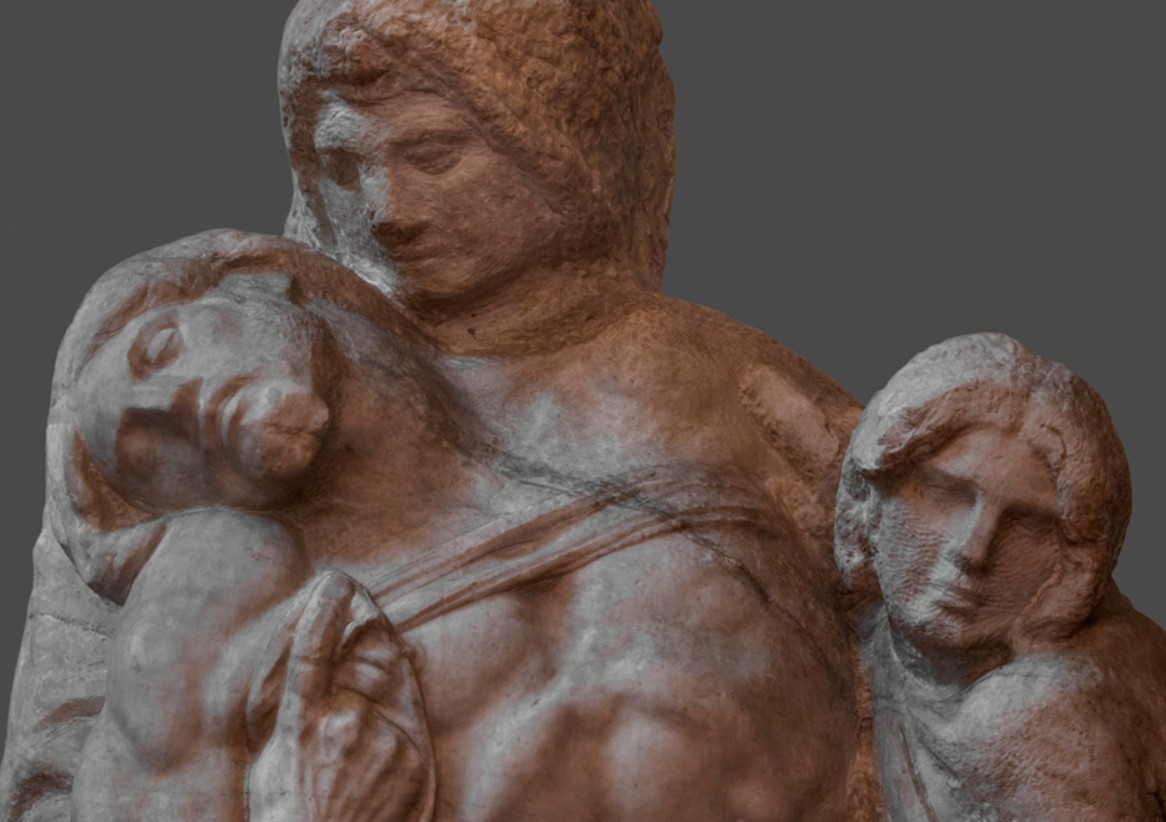
Perché molti storici dell’arte dubitano che sia opera mia
All’inizio del Novecento il critico Grenier rilanciò con forza l’attribuzione, datando la Pietà attorno al 1550. Alcuni studiosi, come Gengaro e Adolfo Venturi, sostennero quella teoria. Altri invece restarono profondamente scettici.
E avevano ragione a dubitare.
Io lavoravo sempre cercando una tensione interna delle figure, una costruzione piramidale o a fiamma. Nella Pietà Palestrina tutto questo manca. Il gruppo appare squadrato, pesante, quasi immobile.
Le gambe del Cristo risultano sproporzionate rispetto al tronco, le braccia eccessivamente lunghe, il rilievo troppo schiacciato.
Anche il modellato lascia perplessi. Troppo morbido, troppo arrendevole. Io combattevo col marmo; qui invece sembra quasi accarezzato.
Fra gli studiosi contrari all’attribuzione vi furono nomi enormi come Henry Thode, Bernard Berenson e Charles de Tolnay. Pochissimi uomini hanno conosciuto davvero la mia scultura quanto loro. Se costoro storcevano il naso, una ragione c’era.
Un progetto forse completato da altri
Oggi la maggior parte degli studiosi propende per una soluzione intermedia: un’idea nata forse nella mia bottega, magari un abbozzo o un progetto impostato da me e poi terminato da seguaci.
Ed è possibile.
Alcuni dettagli del Cristo mostrano infatti una certa qualità. Il torso e l’addome possiedono una tensione anatomica non disprezzabile. Ma altre parti risultano approssimative, risolte senza quella furia interiore che guidava il mio scalpello.
Chiunque abbia scolpito quella Pietà era certamente capace. Ma non ero io.
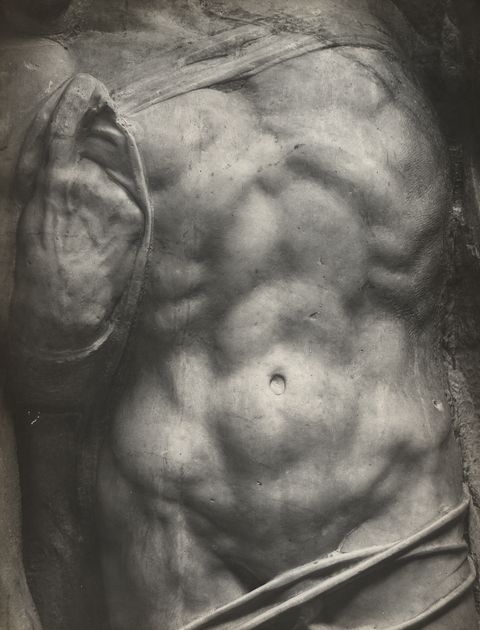
La Pietà Palestrina alla Galleria dell’Accademia di Firenze
Nel 1939 lo Stato italiano acquistò la Pietà Palestrina e decise di collocarla nella Galleria dell’Accademia di Firenze insieme alle altre opere attribuite con certezza alla mia mano: il David, i Prigioni e il San Matteo.
Una scelta dal forte valore simbolico. Sistemare quella Pietà accanto ai miei capolavori significava consacrarla definitivamente come opera michelangiolesca agli occhi del grande pubblico.
Peccato che le incertezze storiche e stilistiche fossero già enormi.
Quando il fascismo usò la Pietà Palestrina come propaganda
La vicenda fu portata alla ribalta della cronaca un anno prima, nel 1938, quando il regime fascista trasformò la Pietà Palestrina in uno strumento di propaganda culturale.
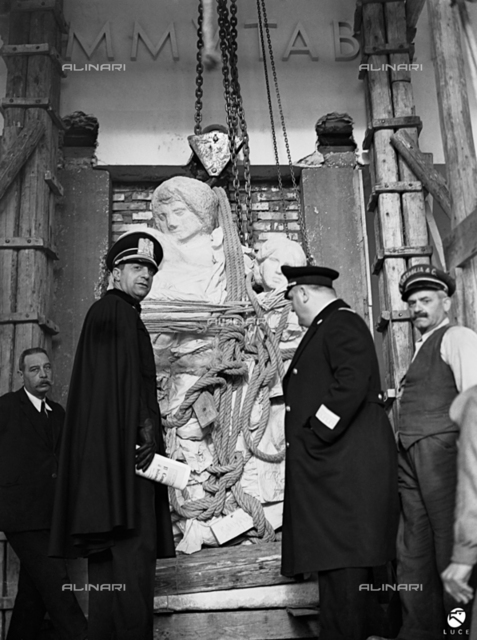
Prima di arrivare definitivamente a Firenze, la scultura venne esibita alla Mostra Autarchica del Minerale Italiano, organizzata nell’area del Circo Massimo a Roma tra il novembre 1938 e il maggio 1939. L’esposizione celebrava l’autosufficienza economica italiana dopo le sanzioni imposte dalla Società delle Nazioni per l’invasione dell’Etiopia.
Tra padiglioni dedicati a zinco, piombo, piriti, alluminio, mercurio, graniti e marmi, comparve pure questa presunta mia Pietà, esposta nel padiglione delle arti alla presenza del ministro Bottai.
Il regime voleva mostrare al mondo non soltanto la forza industriale italiana, ma anche la continuità ideale con la grandezza artistica del Rinascimento. E così finirono per trascinare pure me, morto da secoli, dentro la loro rappresentazione politica.
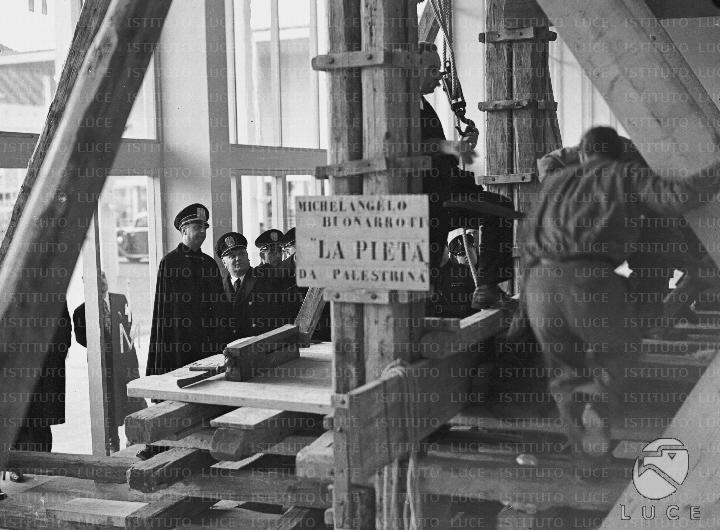
Il Duce inaugurò l’esposizione esaltando il recente acquisto. Nessuno sembrava preoccuparsi troppo del fatto che avessero pagato somme enormi per un’opera dalla attribuzione fragilissima.
Ma questo accade spesso quando cercano di usare il mio nome.
Per il momento il sempre vostro Michelangelo Buonarroti vi saluta dandovi appuntamento ai prossimi post e sui social.
The Palestrina Pietà and the Great Misunderstanding of Its Attribution
In the Galleria dell’Accademia in Florence, along the corridor leading to my David, you come across a sculpture that for many years was attributed to me: the so-called Palestrina Pietà.
You see it there, next to the Prisoners and the Saint Matthew, as if trying to force it into my language. Yet, if I could still hold a chisel and mallet, I could confirm that that hand is not mine.
The Palestrina Pietà and the Misunderstanding of Its Attribution
The Palestrina Pietà is a sculpture carved from a block of reclaimed marble. On the back, traces of previous decorations can still be seen, likely belonging to an ancient entablature.
This detail alone speaks of a work born in unusual circumstances, almost makeshift, far from the care with which I personally selected my Carrara marbles. Well, I also carved the Rondanini Pietà from a column drum, but that has a different story.
However, no document from my time mentions this Pietà. No letter, no payment, no reliable biographer mentions it. Neither Vasari nor Condivi, who rummaged through my life like mice in a barn, ever said a word about this work.
The first mention appears only in 1736, in the text “History of Palestrina” written by Cecconi. He was the first to attribute the sculpture to me, when it was located in the Barberini Chapel in the church of Santa Rosalia in Palestrina.
How it got there, no one really knows. Numerous hypotheses have been formulated over the centuries, but they seem more like tavern tales than reliable reconstructions.
Why many art historians doubt that it is my work
At the beginning of the twentieth century, the critic Grenier forcefully relaunched the attribution, dating the Pietà to around 1550. Some scholars, such as Gengaro and Adolfo Venturi, supported that theory. Others, however, remained deeply skeptical.
And they were right to doubt.
I always worked seeking an internal tension in the figures, a pyramidal or flame-like construction. In the Palestrina Pietà, all of this is missing. The group appears square, heavy, almost immobile.
Christ’s legs are disproportionate to the torso, the arms excessively long, the relief too flattened.
The modeling also leaves one perplexed. Too soft, too yielding. I struggled with the marble; here, however, it almost seems caressed.
Among the scholars who opposed the attribution were such illustrious names as Henry Thode, Bernard Berenson, and Charles de Tolnay. Very few men truly knew my sculpture as well as they did. If they turned up their noses, there was a reason.
A project perhaps completed by others
Today, most scholars lean toward a middle ground: an idea perhaps born in my workshop, perhaps a sketch or a project conceived by me and then completed by followers.
And it’s possible.
Some details of Christ do indeed display a certain quality. The torso and abdomen possess a notable anatomical tension. But other parts appear superficial, finished without the inner fury that guided my chisel.
Whoever sculpted that Pietà was certainly capable. But it wasn’t me.
The Palestrina Pietà at the Galleria dell’Accademia in Florence
In 1939, the Italian state purchased the Palestrina Pietà and decided to place it in the Galleria dell’Accademia in Florence along with other works definitively attributed to me: the David, the Prisoners, and the Saint Matthew.
A decision with strong symbolic value. Placing that Pietà alongside my masterpieces meant definitively consecrating it as a Michelangelo work in the eyes of the general public.
It’s a shame that the historical and stylistic uncertainties were already enormous.
When Fascism Used the Palestrina Pietà as Propaganda
The story had been brought to the forefront a year earlier, in 1938, when the Fascist regime transformed the Palestrina Pietà into a tool of cultural propaganda.
Before arriving in Florence, the sculpture was exhibited at the Autarchic Exhibition of Italian Minerals, held in the Circus Maximus area of Rome between November 1938 and May 1939. The exhibition celebrated Italy’s economic self-sufficiency after the sanctions imposed by the League of Nations for the invasion of Ethiopia.
Among pavilions dedicated to zinc, lead, pyrites, aluminum, mercury, granite, and marble, this so-called Pietà of mine also appeared, displayed in the Arts Pavilion in the presence of Minister Bottai.
The regime wanted to show the world not only Italy’s industrial strength, but also its ideal continuity with the artistic greatness of the Renaissance. And so they ended up dragging me, dead for centuries, into their political representation.
Il Duce inaugurated the exhibition by extolling the recent purchase. No one seemed overly concerned that they had paid enormous sums for a work of extremely fragile attribution.
But this often happens when they try to use my name.
For now, yours truly, Michelangelo Buonarroti, bids farewell and invites you to join him in future posts and on social media.

Sostienici – Support Us
Se questo blog ti piace e ti appassiona, puoi aiutarci a farlo crescere sempre più sostenendoci in modo concreto condividendo i post, seguendo le pagine social e con un contributo che ci aiuta ad andare avanti con il nostro lavoro di divulgazione. . ENGLISH: If you like and are passionate about this blog, you can help us make it grow more and more by supporting us in a concrete way by sharing posts, following social pages and with a contribution that helps us to move forward with our dissemination work.
10,00 €
Articoli
Condividi:


Questo sono io




sostienici

Sostienici – Support Us
Se questo blog ti piace e ti appassiona, puoi aiutarci a farlo crescere sempre più sostenendoci in modo concreto condividendo i post, seguendo le pagine social e con un contributo che ci aiuta ad andare avanti con il nostro lavoro di divulgazione. . ENGLISH: If you like and are passionate about this blog, you can help us make it grow more and more by supporting us in a concrete way by sharing posts, following social pages and with a contribution that helps us to move forward with our dissemination work.
€10,00


