

13 maggio 1981: l’attentato a Papa Giovanni Paolo II e la memoria incisa in Piazza San Pietro
Nel cuore del Vaticano il 13 maggio 1981 si è impresso come una delle date più drammatiche del Novecento. Un giorno che ha cambiato per sempre il rapporto tra la modernità, la comunicazione globale e la figura del pontefice.
In Piazza San Pietro, gremita di fedeli per l’udienza generale del mercoledì, Papa Giovanni Paolo II — al secolo Karol Wojtyła — si muoveva tra la folla a bordo della jeep scoperta. Sorrisi, benedizioni, mani tese. Una scena diventata iconica del suo pontificato: la prossimità fisica, quasi rivoluzionaria, tra il Papa e il popolo.
Poi, alle 17:17, la realtà si spezzò.
Gli spari e il caos in piazza
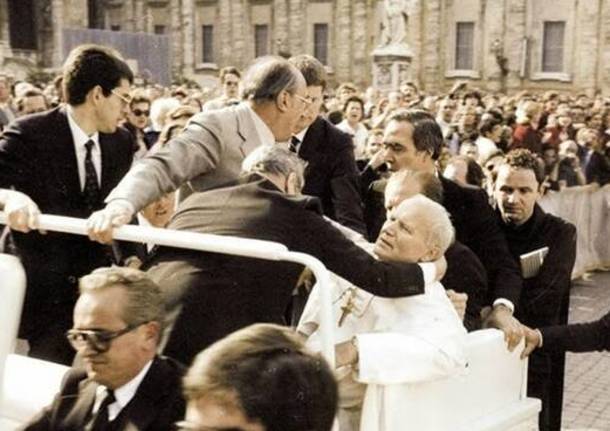
Dal mezzo della folla, Mehmet Ali Ağca — un uomo poi identificato come terrorista turco con precedenti criminali — estrasse una pistola semiautomatica. I colpi furono rapidi, secchi, irreali. Due proiettili calibro 9mm raggiunsero il pontefice all’addome e alla mano destra.
Il Papa si accasciò immediatamente, sorretto da chi gli era accanto: il segretario particolare Stanisław Dziwisz e l’agente di sicurezza Angelo Gugel. Attorno, il panico si diffuse come un’onda improvvisa. Alcune religiose presenti reagirono con prontezza, intervenendo per bloccare l’attentatore fino all’arrivo delle forze di sicurezza che lo immobilizzarono.
In pochi istanti, quella piazza simbolo di universalità si trasformò in un luogo di paura collettiva.
La corsa al Gemelli e la lotta per la vita
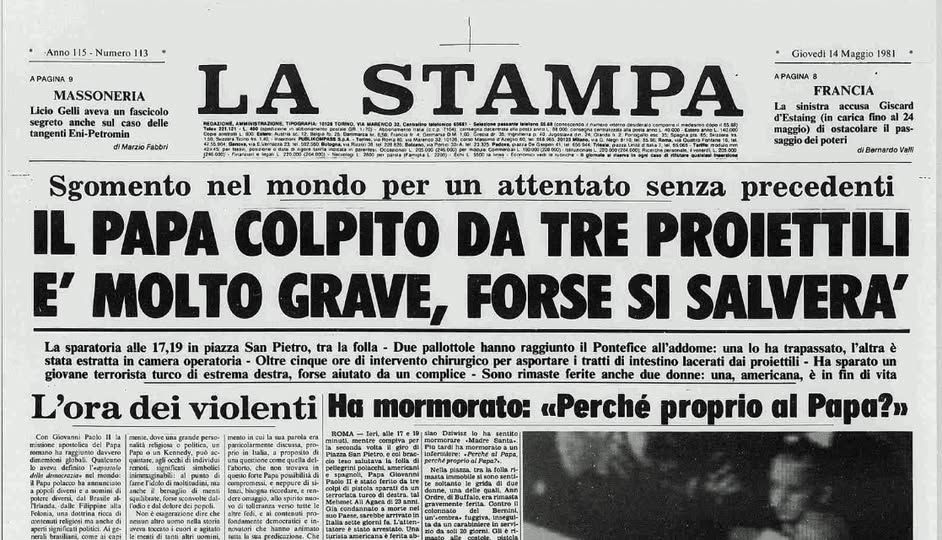
Giovanni Paolo II venne trasportato d’urgenza al Policlinico Gemelli, dove fu sottoposto a un intervento chirurgico durato ore. Le sue condizioni erano gravissime: la perdita di sangue e i danni interni resero le ore successive un delicatissimo equilibrio tra vita e morte.
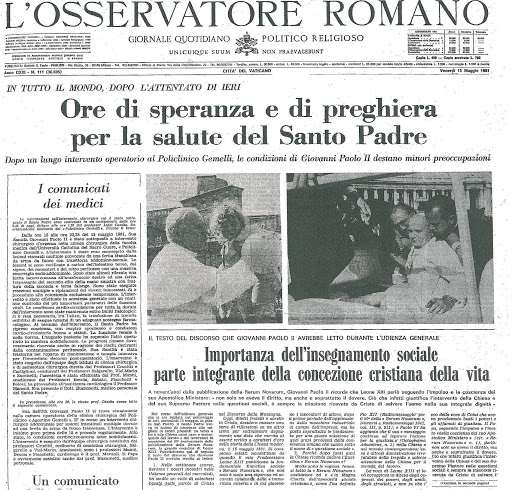
Il mondo intero seguì con il fiato sospeso. Telegiornali, radio e giornali interruppero le programmazioni. Per molti, fu uno dei primi eventi globali vissuti in diretta mediatica planetaria.
Il perdono e il mistero dei mandanti
Nei giorni successivi, contro ogni previsione, il Papa iniziò una lenta ripresa. Ma ciò che colpì profondamente l’opinione pubblica fu la sua reazione spirituale: il perdono immediato nei confronti del suo attentatore.
Le indagini sul caso si rivelarono complesse e stratificate. Diverse ipotesi emersero nel tempo, tra possibili coinvolgimenti di servizi segreti dell’Est e reti terroristiche internazionali, senza però giungere a una verità definitiva condivisa.
L’incontro a Rebibbia
Nel dicembre 1983 avvenne uno degli episodi più simbolici del pontificato: l’incontro tra il Papa e Mehmet Ali Ağca nel carcere di Rebibbia. Un faccia a faccia silenzioso e carico di tensione umana, culminato in una stretta di mano.
Un gesto che trasformò la cronaca in un’immagine destinata alla storia: quella del perdono come atto radicale, quasi incomprensibile nella sua grandezza pubblica.
Fátima e il destino interpretato
Giovanni Paolo II attribuì la propria sopravvivenza all’intercessione della Madonna di Fátima, la cui ricorrenza cade proprio il 13 maggio. In segno di gratitudine, fece incastonare uno dei proiettili nella corona della statua della Vergine nel santuario portoghese, trasformando un oggetto di violenza in simbolo di devozione.
La targa nella pietra di Piazza San Pietro
Oggi, nel silenzio solenne della piazza, un segno discreto continua a ricordare quell’istante sospeso nella storia. Nella pavimentazione di Piazza San Pietro è stata infatti collocata una lapide in marmo nel punto esatto dell’attentato.
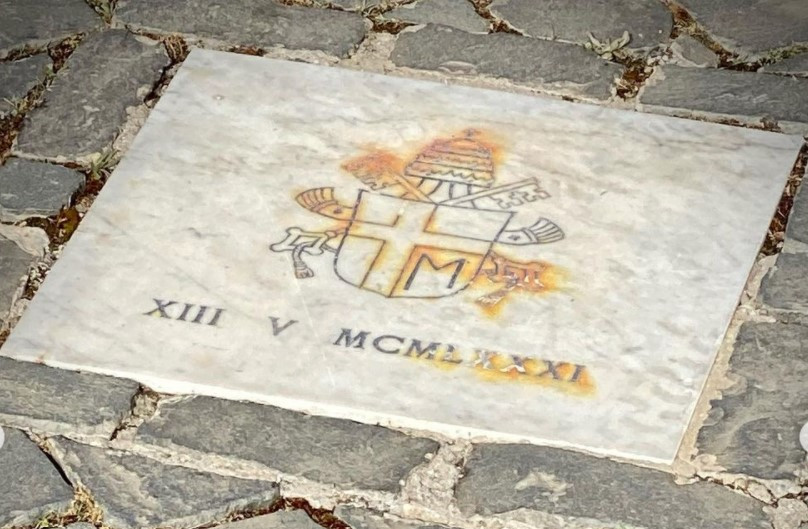
Sulla superficie sono incise le insegne papali di Giovanni Paolo II e la data in numeri romani. Un dettaglio quasi nascosto ai più, ma carico di significato: la memoria fisica di un evento che ha segnato non solo un pontificato, ma l’immaginario collettivo del mondo contemporaneo.
Una ferita che è diventata memoria
L’attentato del 13 maggio 1981 resta uno dei momenti più intensi del XX secolo: non solo per la sua drammaticità, ma per ciò che è seguito. Il perdono, la sopravvivenza, la trasformazione del dolore in simbolo.
Oggi, tra i marmi di San Pietro e il flusso incessante dei visitatori, quella storia continua a vivere in una soglia sottile tra arte, fede e memoria.
Per il momento il sempre vostro Michelangelo Buonarroti vi saluta dandovi appuntamento ai prossimi post e sui social.
May 13, 1981: The Assassination of Pope John Paul II and the Memory Engraved in St. Peter’s Square
In the heart of the Vatican, May 13, 1981, has become etched as one of the most dramatic dates of the twentieth century. A day that forever changed the relationship between modernity, global communication, and the figure of the pontiff.
In St. Peter’s Square, packed with faithful for the Wednesday general audience, Pope John Paul II—born Karol Wojtyła—moved through the crowd in his open-top jeep. Smiles, blessings, outstretched hands. A scene that has become iconic of his pontificate: the physical, almost revolutionary, closeness between the Pope and the people.
Then, at 5:17 PM, reality shattered.
Gunshots and chaos in the square
From the midst of the crowd, Mehmet Ali Ağca—a man later identified as a Turkish terrorist with a criminal record—pulled out a semi-automatic pistol. The shots were rapid, sharp, and unreal. Two 9mm bullets struck the pontiff in the abdomen and right hand.
The Pope immediately collapsed, supported by those around him: his personal secretary Stanisław Dziwisz and security guard Angelo Gugel. Panic spread like a sudden wave. Some of the nuns present reacted quickly, intervening to restrain the attacker until security forces arrived and subdued him.
In a matter of moments, that square, a symbol of universality, transformed into a place of collective fear.
The Race to Gemelli and the Fight for Life
John Paul II was rushed to the Gemelli Hospital, where he underwent hours-long surgery. His condition was extremely serious: blood loss and internal damage made the following hours a delicate balance between life and death.
The entire world watched with bated breath. Television news, radio, and newspapers interrupted their broadcasts. For many, it was one of the first global events to be experienced live on the planet.
Forgiveness and the Mystery of the Instigators
In the following days, against all odds, the Pope began a slow recovery. But what deeply affected public opinion was his spiritual reaction: immediate forgiveness of his attacker.
The investigation into the case proved complex and multifaceted. Various hypotheses emerged over time, including the possible involvement of Eastern European secret services and international terrorist networks, but no definitive consensus emerged.
The Meeting in Rebibbia
In December 1983, one of the most symbolic episodes of his pontificate took place: the meeting between the Pope and Mehmet Ali Ağca in Rebibbia prison. A silent, tense face-to-face meeting culminated in a handshake.
A gesture that transformed the news into an image destined for history: that of forgiveness as a radical act, almost incomprehensible in its public grandeur.
Fatima and Destiny Interpreted
John Paul II attributed his survival to the intercession of Our Lady of Fatima, whose feast day falls on May 13th. As a sign of gratitude, he had one of the bullets embedded in the crown of the statue of the Virgin in the Portuguese sanctuary, transforming an object of violence into a symbol of devotion.
The Stone Plaque in St. Peter’s Square
Today, in the solemn silence of the square, a discreet sign continues to commemorate that moment suspended in history. A marble plaque has been placed in the pavement of St. Peter’s Square at the exact spot of the attack.
The papal insignia of John Paul II and the date in Roman numerals are engraved on the surface. A detail almost hidden from most, yet charged with meaning: the physical reminder of an event that marked not only a pontificate, but the collective imagination of the contemporary world.
A wound that became memory
The attack of May 13, 1981, remains one of the most intense moments of the 20th century: not only for its drama, but for what followed. Forgiveness, survival, the transformation of pain into symbolism.
Today, among the marbles of St. Peter’s and the incessant flow of visitors, that story lives on in a subtle threshold between art, faith, and memory.
For now, yours truly, Michelangelo Buonarroti bids you farewell and invites you to join him in future posts and on social media.

Sostienici – Support Us
Se questo blog ti piace e ti appassiona, puoi aiutarci a farlo crescere sempre più sostenendoci in modo concreto condividendo i post, seguendo le pagine social e con un contributo che ci aiuta ad andare avanti con il nostro lavoro di divulgazione. . ENGLISH: If you like and are passionate about this blog, you can help us make it grow more and more by supporting us in a concrete way by sharing posts, following social pages and with a contribution that helps us to move forward with our dissemination work.
10,00 €
Condividi:


Questo sono io




sostienici

Sostienici – Support Us
Se questo blog ti piace e ti appassiona, puoi aiutarci a farlo crescere sempre più sostenendoci in modo concreto condividendo i post, seguendo le pagine social e con un contributo che ci aiuta ad andare avanti con il nostro lavoro di divulgazione. . ENGLISH: If you like and are passionate about this blog, you can help us make it grow more and more by supporting us in a concrete way by sharing posts, following social pages and with a contribution that helps us to move forward with our dissemination work.
€10,00


