

La Scultura del giorno: il Ragazzo Accovacciato di Enrico Ferrarini
La scultura del giorno che vi propongo oggi è il Ragazzo Accovacciato scolpito da Enrico Ferrarini nella seconda metà dell’Ottocento.
L’opera è stata acquistata all’asta da un privato qualche decina di anni fa e non è data sapere la sua collocazione attuale.
Scolpito nel marmo statuario con una tecnica impeccabile e con ricchezza di dettagli, il Ragazzo Accovacciato mostra un sorriso appena accennato mentre porge il palmo della mano destra.
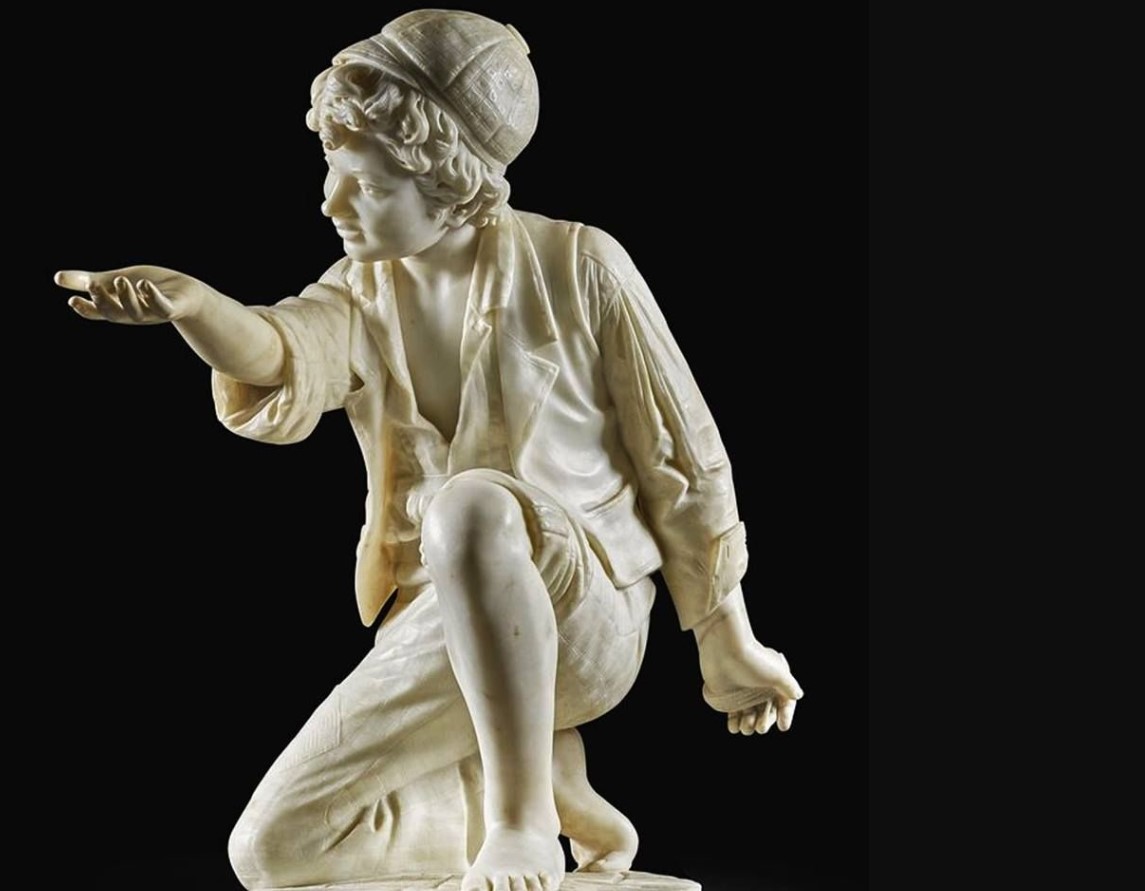
Ferrarini volle raffigurare un giovanetto di un età compresa tra i dieci e i dodici anni circa, abbigliato con vesti che denotano le sue umili condizioni.
Osservate il rattoppo sui pantaloni e la camicia senza più bottoni, trattenuta a stento da un laccio stretto in vita. Proprio la camicia sembra più grande di tre taglie della propria misura, con le maniche arrotolate altrimenti troppo lunghe per le sue braccia.
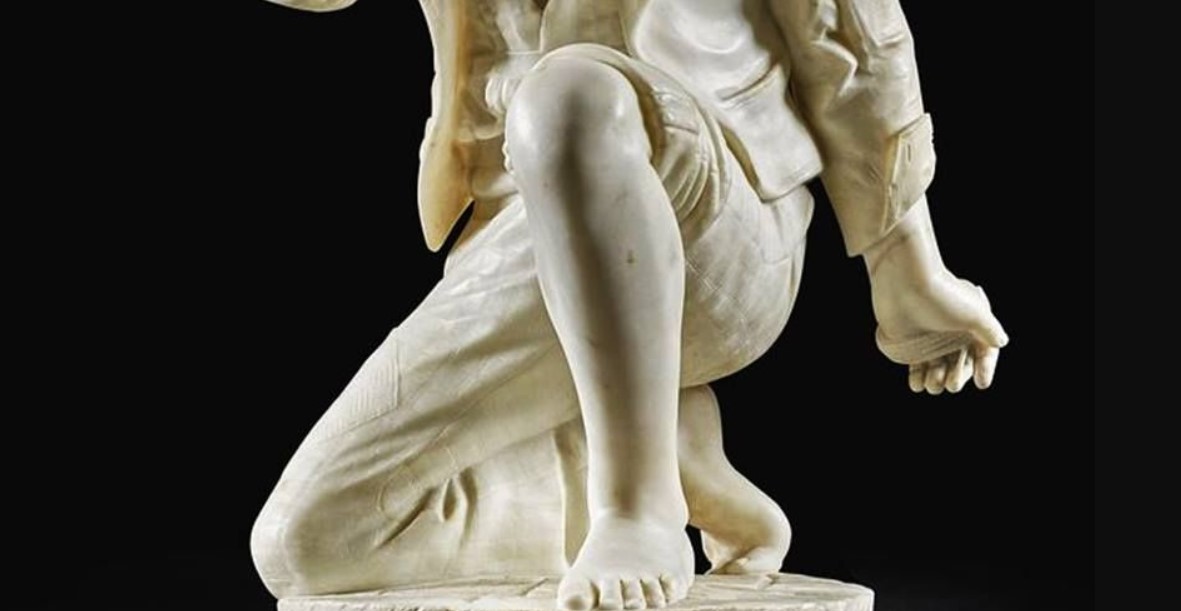
Il giovane calza in capo un berretto che contiene parte della sua fluente capigliatura.
Lo scultore Enrico Ferrarini lavorò con maestria il materiale per rendere ben distinguibili le trame diverse dei vari tessuti: da quello del cappello al cotone leggero dei pantaloni, dalla camicia sottile fino al gilet più pesante.

Nonostante l’opera abbia un’altezza di soli 76 centimetri, riesce a palesare tutta la bravura dell’artista e la sua abilità nel trasformare il marmo in materia viva.
Per il momento il sempre vostro Michelangelo Buonarroti vi saluta dandovi appuntamento ai prossimi post e sui social.
Sculpture of the day: The Crouching Boy by Enrico Ferrarini
The sculpture of the day that I propose to you today is the Crouching Boy sculpted by Enrico Ferrarini in the second half of the nineteenth century.
The work was purchased at auction by a private individual a few decades ago and its current location is unknown.
Sculpted in statuary marble with an impeccable technique and with a wealth of details, the Crouching Boy shows a hint of a smile while holding out the palm of his right hand.
Ferrarini wanted to depict a young man of an age between ten and twelve years old, dressed in clothes that denote his humble conditions.
Observe the patch on the trousers and the shirt without buttons, held by a tight lace at the waist that seems three sizes too big for his size with the sleeves rolled up otherwise too long for his arms.
The young man wears a hat on his head that seems to contain part of his flowing hair.
The sculptor Enrico Ferrarini worked the material with mastery to make the different textures of the various fabrics clearly distinguishable: from that of the hat to the light cotton of the trousers, from the thin shirt to the heavier vest.
Despite the work being only 76 centimeters high, it manages to reveal all the artist’s mastery and his ability to transform marble into living matter.
For the moment, the ever-your Michelangelo Buonarroti bids you farewell, making an appointment with you in the next posts and on social media.

Sostienici – Support Us
Se questo blog ti piace e ti appassiona, puoi aiutarci a farlo crescere sempre più sostenendoci in modo concreto condividendo i post, seguendo le pagine social e con un contributo che ci aiuta ad andare avanti con il nostro lavoro di divulgazione. . ENGLISH: If you like and are passionate about this blog, you can help us make it grow more and more by supporting us in a concrete way by sharing posts, following social pages and with a contribution that helps us to move forward with our dissemination work.
10,00 €
-
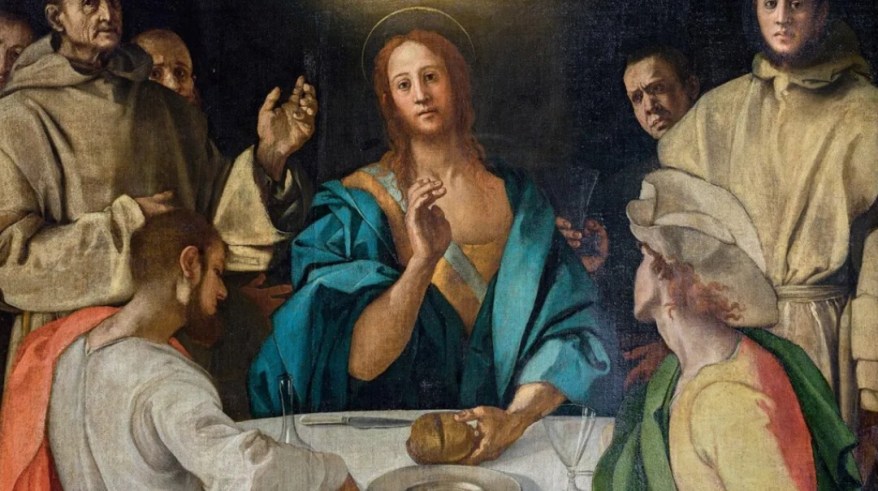
Cena in Emmaus di Pontormo: il pane, il gatto e il cane alle Scuderie del Quirinale
La Cena in Emmaus di Pontormo nasconde dettagli sorprendenti: il significato del pane, i simboli e il mistero della Resurrezione. Scopri il capolavoro del 1525 in mostra alle Scuderie del Quirinale a Roma… 🇬🇧Pontormo’s *Supper at Emmaus* conceals surprising details: the significance of the bread, various symbols, and the mystery of the Resurrection. Discover this…
-
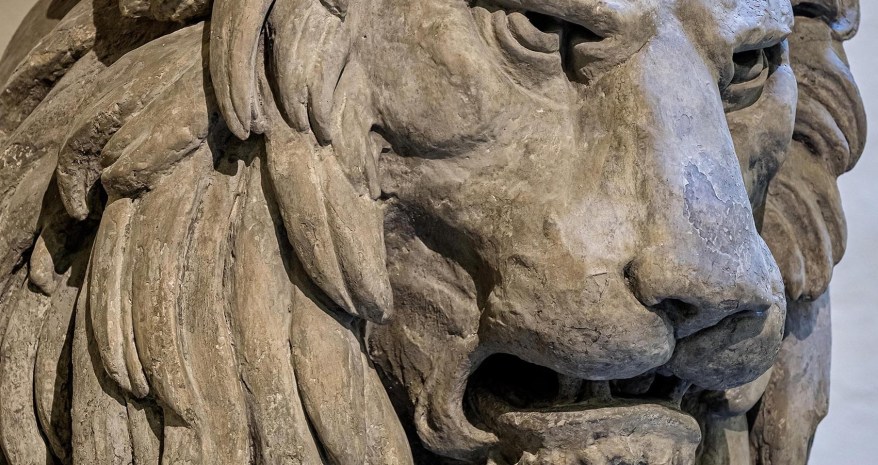
Palazzo Vecchio, il restauro svela la vera natura dei quattro leoni e il mistero della fontana greca
🇮🇹Restaurato il Cortile della Dogana di Palazzo Vecchio a Firenze: i quattro leoni sono calchi, una fontana conserva un’iscrizione greca da studiare e tornano a funzionare entrambe le fontane… 🇬🇧The Cortile della Dogana (Customs Courtyard) at Palazzo Vecchio in Florence has been restored: the four lions are casts, one fountain features a Greek inscription that…
-
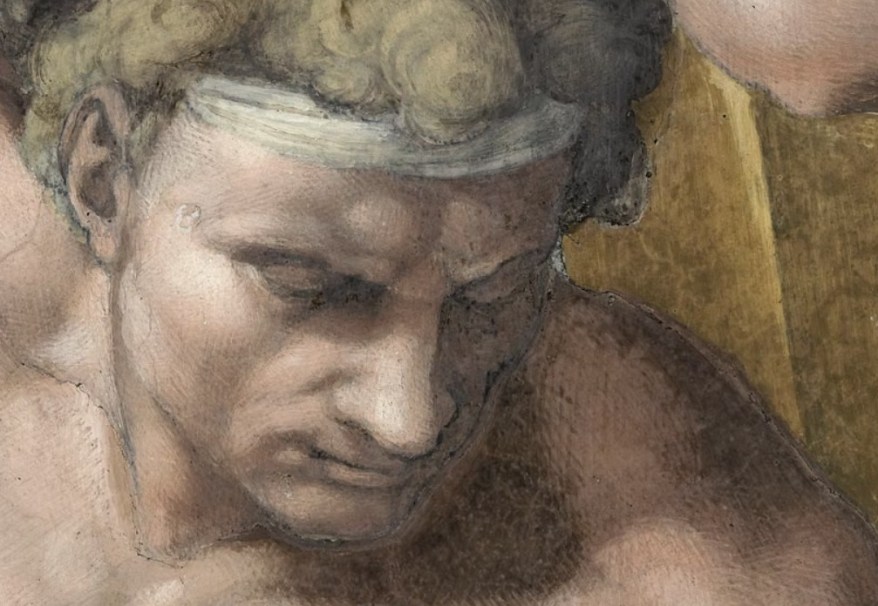
Disma, il buon ladrone nel Giudizio Universale: la misericordia e la giustizia divina
Nel Giudizio Universale della Cappella Sistina ci sono particolari che rischiano di passare inosservati, anche a chi ha avuto la fortuna di alzare gli occhi verso la mia grande parete. Tra i corpi che si sollevano, gli angeli che suonano le trombe e le anime che cercano di raggiungere il cielo, ci sono figure che…
Condividi:


Questo sono io




sostienici

Sostienici – Support Us
Se questo blog ti piace e ti appassiona, puoi aiutarci a farlo crescere sempre più sostenendoci in modo concreto condividendo i post, seguendo le pagine social e con un contributo che ci aiuta ad andare avanti con il nostro lavoro di divulgazione. . ENGLISH: If you like and are passionate about this blog, you can help us make it grow more and more by supporting us in a concrete way by sharing posts, following social pages and with a contribution that helps us to move forward with our dissemination work.
€10,00


