
La Scultura del giorno: Raffaello e la Fornarina del Romanelli
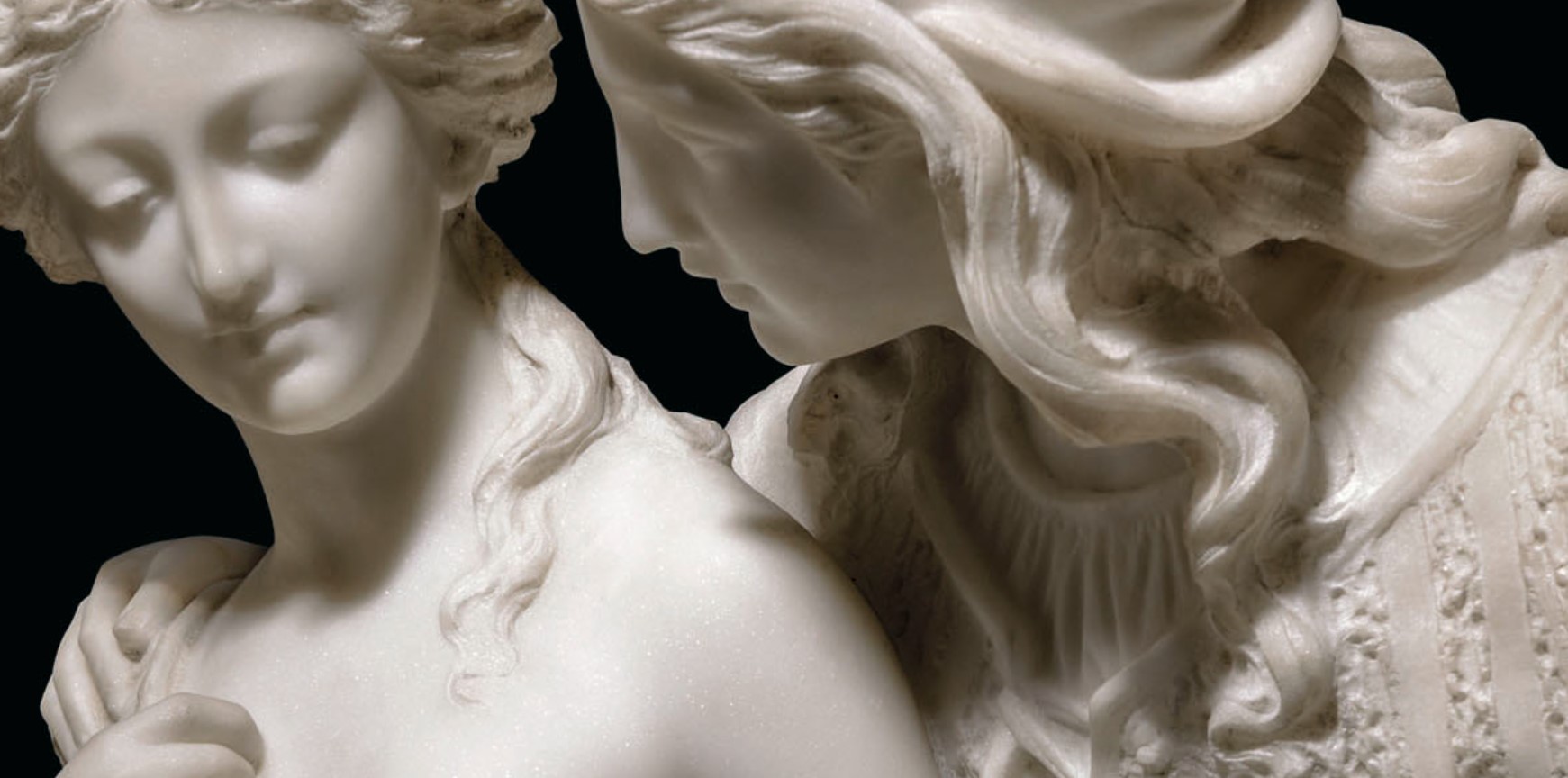
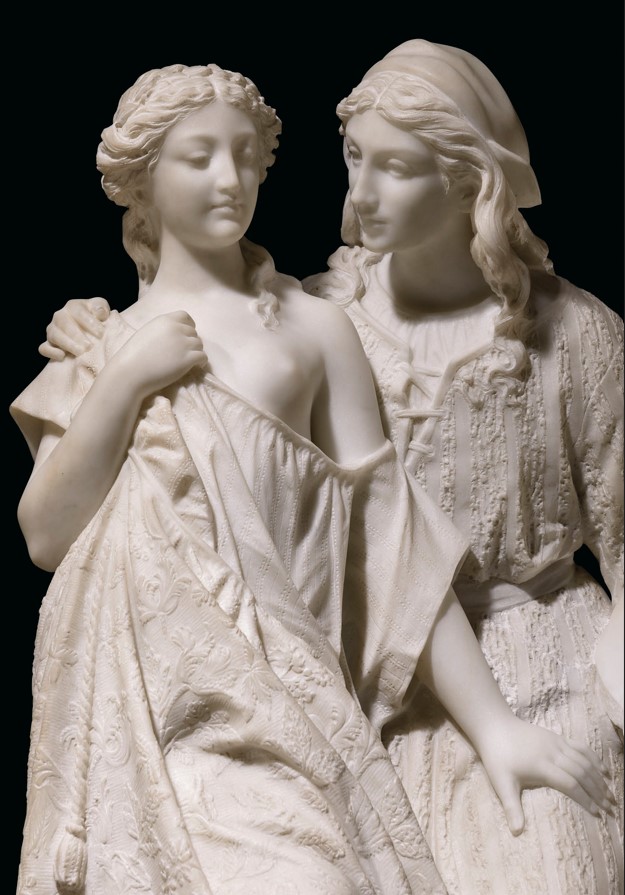
La scultura del giorno di cui voglio parlarvi oggi è il gruppo di Raffaello e la Fornarina, scolpito da Raffaello Romanelli fra il 1860 e il 1870.
Raffaello Romanelli era il figliolo del più noto scultore Pasquale. Nato a Firenze il 13 maggio del 1856, fin da bambino apprese l’arte del disegno prima e quella della scultura poi, frequentando assiduamente lo studio del padre.
Durante l’estate la famiglia per sfuggire alla calura cittadina era solita trascorrere un lungo periodo di soggiorno a Viareggio. Proprio lì Raffaello si innamorò perdutamente del mare e a quattordici anni il padre lo fece imbarcare su un veliero che partiva dal porto di Livorno.
Tornò però a terra dopo qualche mese e si ammalò. Fu allora che il padre Pasquale lo convinse a iscriversi all’Accademia di Belle Arti di Firenze.
Raggiunti i venti anni d’età, nel 1876 Raffaello conquistò il primo premio del concorso annuale dell’Accademia proponendo un interessante bassorilievo con Giacobbe e Rachele al pozzo mentre tre anni dopo riuscì a ottenere una borsa di studio per partire alla volta di Roma.
Quando il padre Pasquale passò a miglior vita nel 1887, Raffaello prese in mano le redini del suo studio in borgo San Frediano completando le opere lasciate incompiute.
Raffaello Romanelli fu uno scultore molto prolifico e nel corso della sua esistenza riuscì a realizzare oltre 2300 opere fra grandi commissioni come il monumento dedicato allo zar Alessandro II, tutt’oggi uno dei più grandi d’Europa, fino a sculture alte pochi centimetri.
Una delle sue opere più note è senza dubbio Raffaello e la Fornarina che raffigura il celebre pittore urbinate nato nel 1483 assieme alla sua amante e musa Margherita Buti, più nota come la Fornarina.
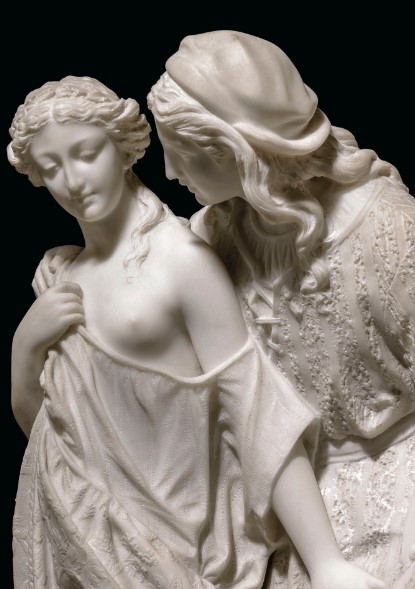
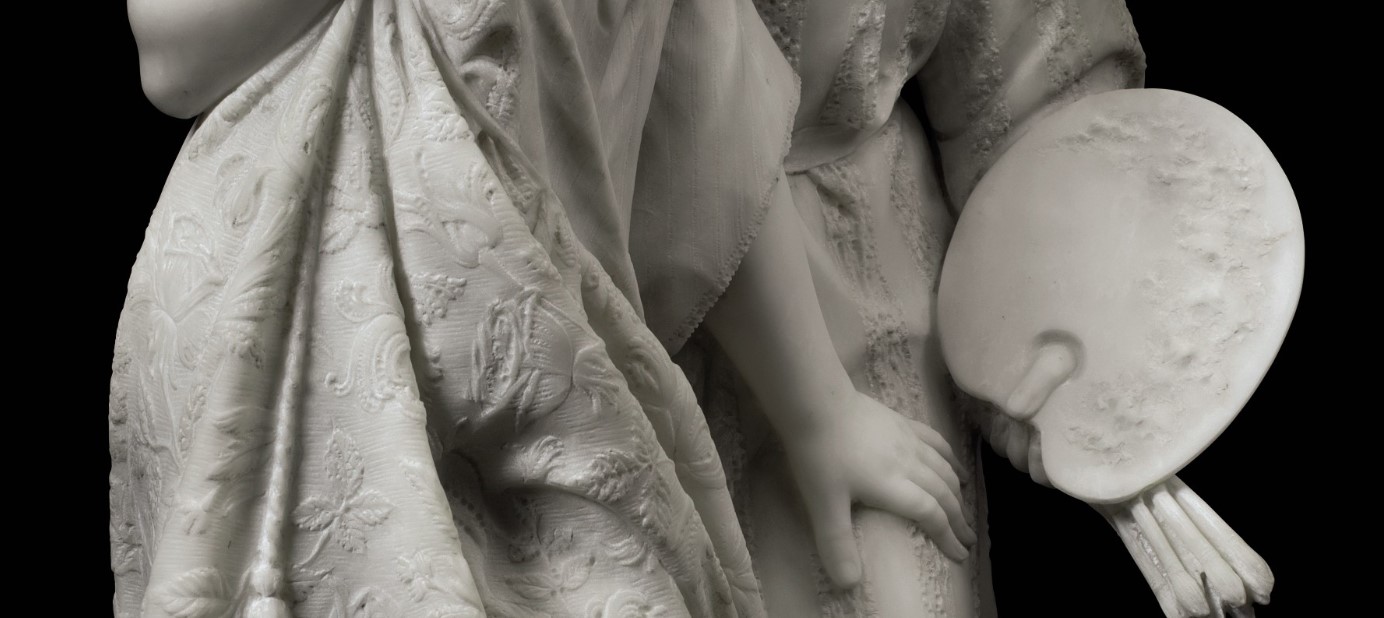
Il soggetto scelto dal Romanelli era molto popolare durante l’Ottocento e fu scelto da un gran numero di artisti. Le pregiate stoffe con cui lo scultore vestì i due amanti erano perfette per mettere a frutto le proprie abilità scultore e mostrare quanto fosse abile nel riprodurre decori minimi e dettagliati.
Probabilmente Romanelli prese ispirazione da una delle cinque versioni di Raffaello e la Fornarina dipinte da Jean Auguste Dominique Ingres tra il 1813 e la sua morte, accaduta nel 1867.
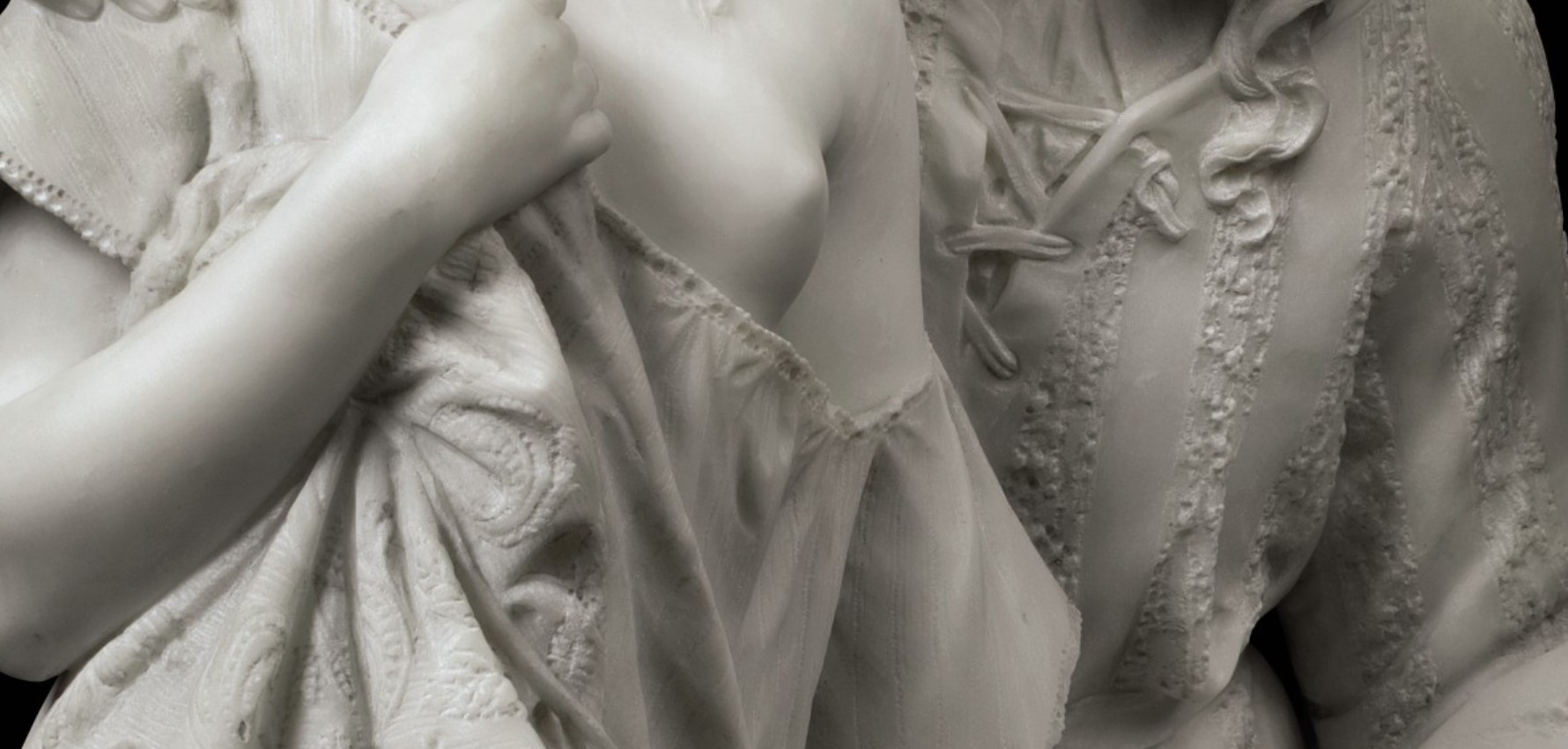
Osservate con attenzione la cura che lo scultore pose proprio nello scolpire i dettagli. Quei tessuti damascati che ricadono verso il basso formando pieghe sostenute, le scarpe, i lacci che si chiudono sul petto di lui e quella veste che scivola dalle spalle della Fornarina rendono vibrante il complesso scultoreo.
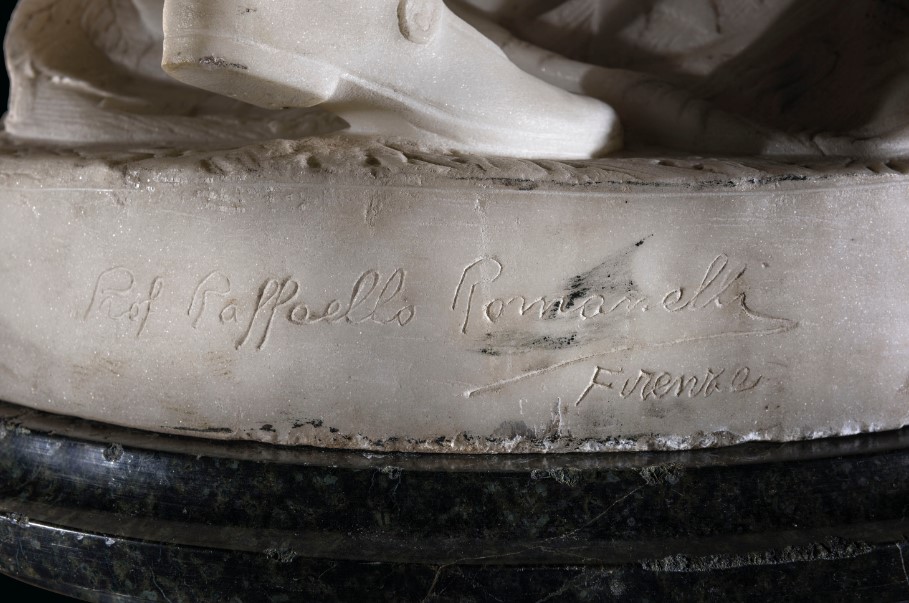
Raffaello Romanelli volle firmare l’opera sul basamento, incidendo la dicitura Prof. Raffaello Romanelli.
Se desiderate vedere dal vero questa scultura, dovrete andare fino in Russia, preso il Museo dell’Hermitage a San Pietroburgo.
Per il momento il vostro Michelangelo Buonarroti vi saluta dandovi appuntamento ai prossimi post e sui social.
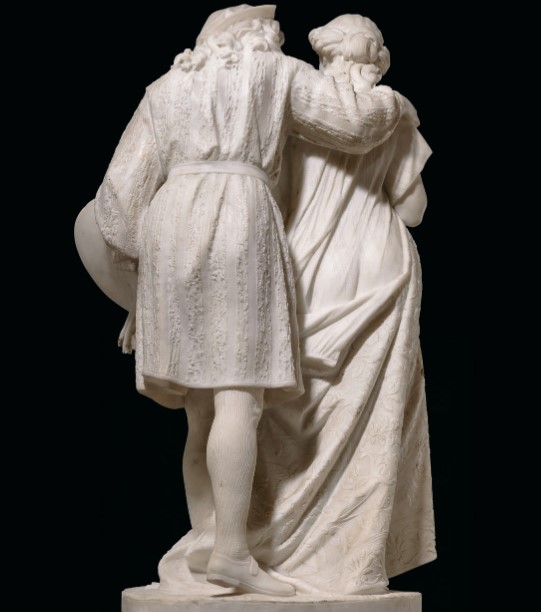
Sculpture of the day: Raphael and Romanelli’s Fornarina
The sculpture of the day I want to tell you about today is the group of Raphael and the Fornarina, sculpted by Raffaello Romanelli between 1860 and 1870.
Raffaello Romanelli was the son of the better known sculptor Pasquale. Born in Florence on May 13, 1856, as a child he first learned the art of drawing and then that of sculpture, assiduously attending his father’s studio.
During the summer, to escape the city heat, the family used to spend a long period of stay in Viareggio. Right there Raphael fell madly in love with the sea and at the age of fourteen his father had him embarked on a sailing ship that departed from the port of Livorno.
However, he returned to land after a few months and fell ill. It was then that his father Pasquale convinced him to enroll in the Academy of Fine Arts in Florence.
Reached the twenty years of age, in 1876 Raphael won the first prize he won the prize of the Academy’s annual competition proposing an interesting bas-relief with Jacob and Rachel at the well while three years later he managed to obtain a scholarship to leave for Rome.
When his father Pasquale passed away in 1887, Raphael took over the reins of his studio in Borgo San Frediano and completed the works left unfinished.
Raffaello Romanelli was a very prolific sculptor and during his existence he managed to create over 2300 works including large commissions such as the monument dedicated to Tsar Alexander II still one of the largest in Europe up to sculptures a few centimeters high.
One of his best known works is undoubtedly Raphael and the Fornarina which depicts the famous painter from Urbino born in 1483 together with his lover and muse Margherita Buti, better known as the Fornarina.
The subject chosen by Romanelli was very popular during the 19th century and was chosen by a large number of artists. The precious fabrics with which the sculptor dressed the two lovers were perfect for putting his sculpting skills to good use and showing how skilled he was in reproducing minimal and detailed decorations.
Romanelli probably took inspiration from one of the five versions of Raphael and the Fornarina painted by Jean Auguste Dominique Ingres between 1813 and his death in 1867.
Observe carefully the care that the sculptor put right into the details. Those damask fabrics that fall downwards forming sustained folds, the details of the shoes, the laces that close on his chest and that dress that slips from the Fornarina’s shoulders make the sculptural complex vibrant.
Raffaello Romanelli wanted to sign the work on the base, engraving the words Prof. Raffaello Romanelli.
Observe carefully the care that the sculptor put right into the details. Those damask fabrics that fall downwards forming sustained folds, the details of the shoes, the laces that close on his chest and that dress that slips from the Fornarina’s shoulders make the sculptural complex vibrant.
Raffaello Romanelli wanted to sign the work on the base, engraving the words Prof. Raffaello Romanelli.

Sostienici – Support Us
Se questo blog ti piace e ti appassiona, puoi aiutarci a farlo crescere sempre più sostenendoci in modo concreto condividendo i post, seguendo le pagine social e con un contributo che ci aiuta ad andare avanti con il nostro lavoro di divulgazione. . ENGLISH: If you like and are passionate about this blog, you can help us make it grow more and more by supporting us in a concrete way by sharing posts, following social pages and with a contribution that helps us to move forward with our dissemination work.
8,00 €
-
21 aprile, Natale di Roma: il fenomeno del Pantheon che illumina la nascita dell’Impero
🇮🇹Il 21 aprile segna, secondo la tradizione, la fondazione della città eterna: il Natale di Roma. A stabilire questa data fu Marco Terenzio Varrone, che nel I secolo a.C. indicò il 753 a.C. come anno di nascita dell’Urbe… 🇬🇧April 21st marks, according to tradition, the founding of the Eternal City: the Birth of Rome. This…
-
Luca Giordano, “Scena di osteria”: il realismo morale di un giovane maestro tra Napoli e l’Europa
🇮🇹La Scena di osteria di Luca Giordano è uno dei suoi più bei dipinti giovanili… 🇬🇧Luca Giordano’s Tavern Scene is one of his finest early paintings…
-

Il limite dell’amore umano: perché la vera bellezza non può essere sopportata
🇮🇹Se il fuoco che nasce dai vostri occhi fosse davvero pari alla vostra bellezza, il mondo intero non conoscerebbe più il gelo. Ogni cosa arderebbe, colpita come da una freccia infuocata. Così scrissi nei miei versi… 🇬🇧If the fire that rises from your eyes truly matched your beauty, the entire world would no longer know…
Condividi:


Questo sono io





sostienici

Sostienici – Support Us
Se questo blog ti piace e ti appassiona, puoi aiutarci a farlo crescere sempre più sostenendoci in modo concreto condividendo i post, seguendo le pagine social e con un contributo che ci aiuta ad andare avanti con il nostro lavoro di divulgazione. . ENGLISH: If you like and are passionate about this blog, you can help us make it grow more and more by supporting us in a concrete way by sharing posts, following social pages and with a contribution that helps us to move forward with our dissemination work.
€10,00


indiscutibile il virtuosismo dei dettagli, cosa meravigliosa quei ricami sull’abito del pittore e poi, la visione da dietro offre tutta la dolcezza di quell’abbraccio protettivo. Un grande di cui si parla poco
Grazie e buon fine settimana
"Mi piace"Piace a 1 persona
di fronte a capolavori di simile bellezza ogni parola è vana, si rimarrebbe ore ad ammirarli. 👍👍👍👍👍👍👍👍👍👍👏👏👏👏👏👏
"Mi piace"Piace a 1 persona