
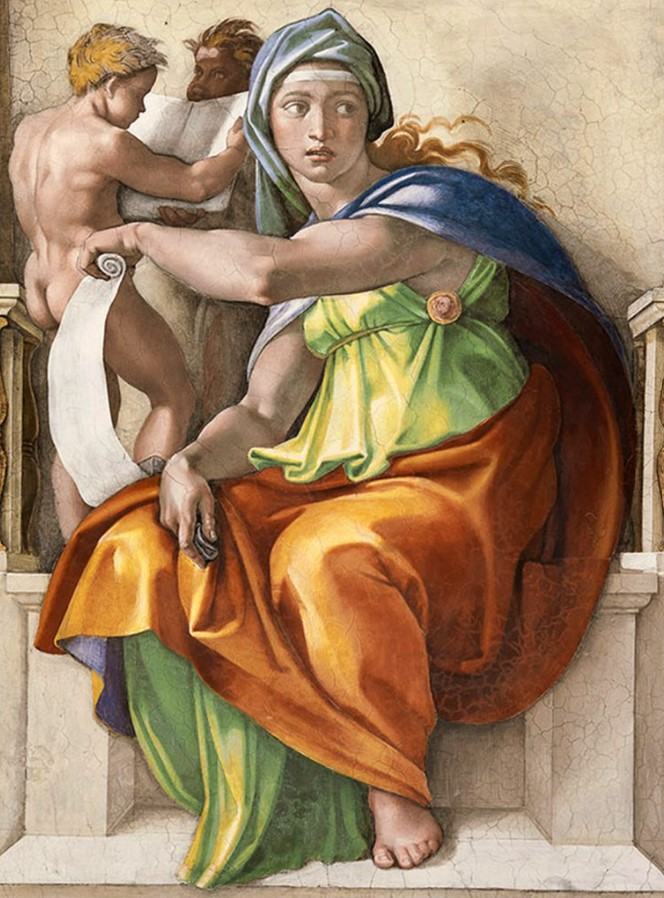
Lo sguardo della Sibilla Delfica
La Sibilla Delfica è senza dubbio una delle figure più suggestive, emblematiche ed affascinanti che affrescai nella volta della Sistina.
Basta varcare le soglie della Cappella Magna e guardare verso l’alto: la sua presenza scenica non passa inosservata e sarà una delle prime figure che riuscirete a distinguere nettamente, dopo il celebre brano di pittura della Creazione di Adamo.

Lo sguardo, la postura e quella sua veste verde avvolta in parte dal mantello celeste che cangia in arancione: impossibile non rimanere incantati da questa figura enigmatica che a distanza di secoli pare ancora saper vedere nel futuro.
Mentre alle sue spalle un genio sorregge un librone, l’altro prova a decifrare ciò che ci sta scritto sopra. La Sibilla ha i capelli coperti dal velo azzurro ma un paio di ciocche ribelli si liberano nel vento aggiungendo movimento alla figura.
Il trono su cui siede si intuisce ma non si vede, coperto dal suo corpo e dalla veste panneggiata. I quattro putti divisi a coppie posti come cariatidi li realizzai specchiandoli, ovvero rovesciando il cartone preparatorio.

A sorprendere è proprio lo sguardo della Sibilla Delfica che denota un grande senso di apprensione. Sembra sia spaventata da un evento che sta per accadere o stupita per vedere oggi che quello che profetizzo non fu vano.
Ma chi era la Sibilla Delfica?
Un tempo, nella Grecia continentale, si narrava la presenza di una profetessa che dimorava presso il santuario di Delfi: la Pizia. Lei, posseduta dal dio Apollo, prevedeva il futuro. Raccontano della Delfica e delle sue affascinanti premonizioni diversi autori, sia latini che greci.
La Sibilla Delfica fu una delle figure che dipinsi nel primo blocco, terminato nel 1510. Dietro di lei ci sono i due assistenti: uno sorregge un libro e l’altro lo legge. Lei invece svolge il rotolo tenuto sulla sinistra mentre volge il corpo in quella direzione con il braccio sinistro sollevato. Ha uno sguardo sorpreso per metà in luce e per metà in ombra. La sua meraviglia è forse causata dalla venuta di Cristo, predetta anche da lei?
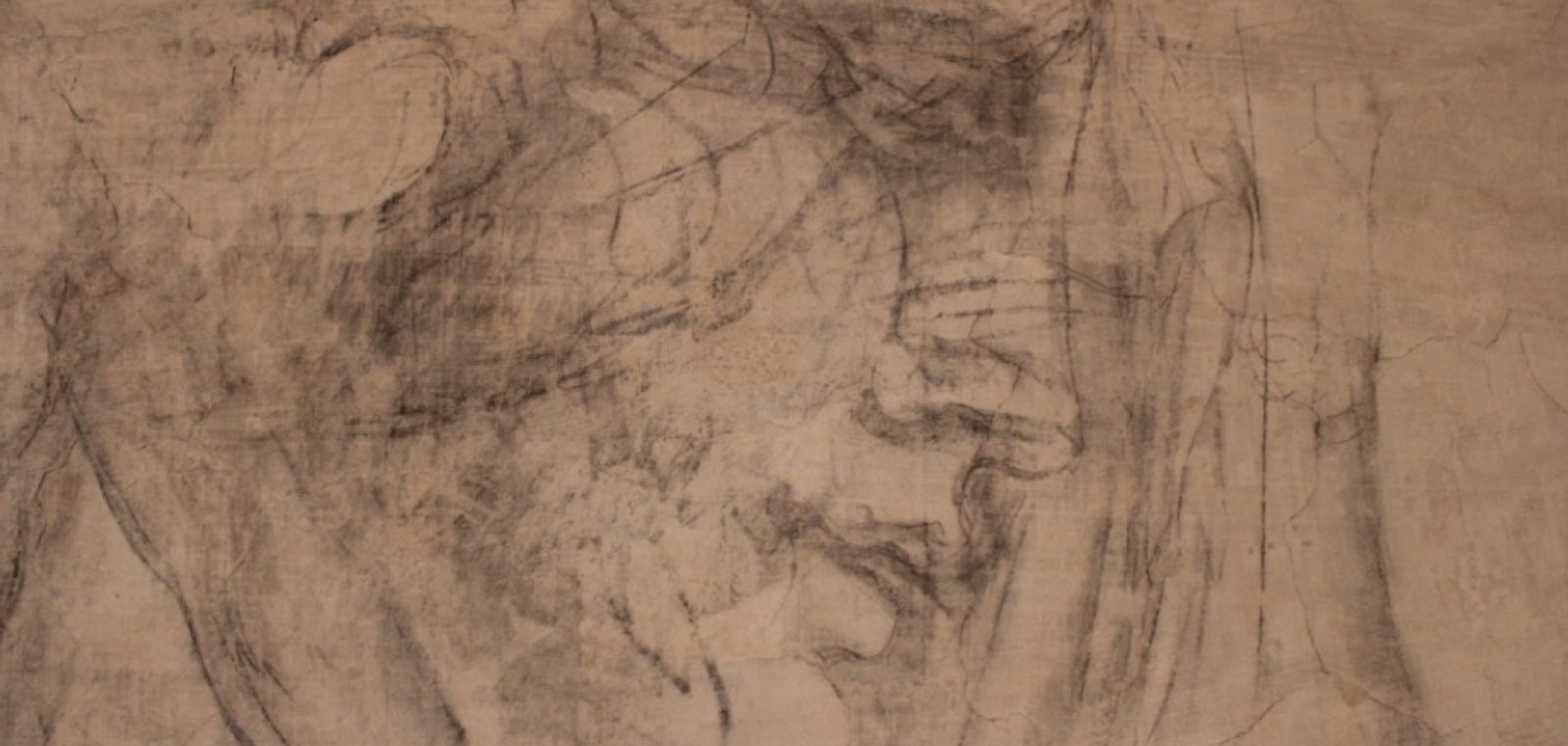
Particolarità
Se aguzzate la vista su una foto scattata a distanza ravvicinata potrete notare una croce incisa nell’intonaco fra i due occhi: mi servì per allinearli bene e per affrescarli in maniera simmetrica.
Lo so bene che oramai l’occhio vi cade automaticamente, o quasi, sul quinto incisivo. Ebbene la Sibilla delfica ha proprio un incisivo in più rispetto ai quattro che più o meno tutti abbiamo in bocca.

Qualche anno fa è stato ipotizzato fosse la raffigurazione del dente del male, del peccato. Una teoria che non posso liquidare in due righe ma che poco mi convince per diverse ragioni e ve ne avevo già parlato diffusamente QUA.
Per il momento il vostro Michelangelo Buonarroti vi saluta dandovi appuntamento ai prossimi post e sui social.

The gaze of the Delphic Sibyl
The Delphic Sibyl is undoubtedly one of the most evocative, emblematic and fascinating figures that I frescoed in the vault of the Sistine Chapel.
Just cross the threshold of the Magna Chapel and look upwards: her stage presence does not go unnoticed and she will be one of the first figures that you will be able to distinguish clearly, after the famous piece of painting of the Creation of Adam.
Her gaze, her posture and her green dress partially wrapped in a light blue cloak that turns orange: it is impossible not to be enchanted by this enigmatic figure who, centuries later, still seems to be able to see into the future.
While behind her a genius holds up a large book, the other tries to decipher what is written on it. The Sibyl has her hair covered by a blue veil but a couple of unruly locks are released in the wind, adding movement to the figure.
The throne on which she sits can be perceived but not seen, covered by her body and her draped dress. I made the four putti divided into pairs as caryatids by mirroring them, or by turning the preparatory cartoon upside down.
What is surprising is precisely the gaze of the Delphic Sibyl which denotes a great sense of apprehension. She seems either frightened by an event that is about to happen or amazed to see today that what I prophesied was not in vain.
But who was the Delphic Sibyl?
Once upon a time, in mainland Greece, the presence of a prophetess was narrated who lived at the sanctuary of Delphi: the Pythia. She, possessed by the god Apollo, predicted the future. Several authors, both Latin and Greek, tell of Delphic and her fascinating premonitions.
The Delphic Sibyl was one of the figures I painted in the first block, finished in 1510. Behind her are the two assistants: one is holding a book and the other is reading it. Instead, she unwinds the scroll held on her left as she turns her body in that direction with her left arm raised. She has a surprised look half in light and half in shadow. Is her wonder caused by the coming of Christ, which she also foretold?
Peculiarities
If you sharpen your eyes on a photo taken at close range, you will notice a cross engraved in the plaster between her two eyes: she helped me to align them well and to fresco them symmetrically.
I know well that by now the eye falls automatically or almost on the fifth incisor. Well, the Delphic Sibyl has just one more incisor than the four that more or less we all have in our mouths.
A few years ago it was assumed that it was the representation of the tooth of evil, of sin. A theory that I can’t liquidate in two lines but that doesn’t convince me for various reasons and I had already talked about it extensively HERE.
For the moment, your Michelangelo Buonarroti greets you by making an appointment for the next posts and on social media.

Sostienici – Support Us
Se questo blog ti piace e ti appassiona, puoi aiutarci a farlo crescere sempre più sostenendoci in modo concreto condividendo i post, seguendo le pagine social e con un contributo che ci aiuta ad andare avanti con il nostro lavoro di divulgazione. . ENGLISH: If you like and are passionate about this blog, you can help us make it grow more and more by supporting us in a concrete way by sharing posts, following social pages and with a contribution that helps us to move forward with our dissemination work.
8,00 €
-
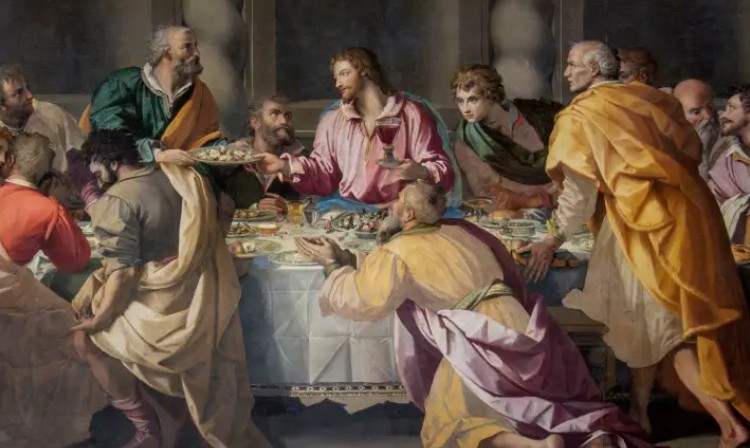
Giovedì Santo: l’Ultima Cena di Allori che pochi conoscono a Firenze
🇮🇹Nel cuore di Museo di Santa Maria Novella, a Firenze, si conserva una delle interpretazioni più affascinanti e meno note dell’Ultima Cena: quella realizzata da Alessandro Allori nel 1584… 🇬🇧In the heart of the Santa Maria Novella Museum in Florence, one of the most fascinating and least-known interpretations of the Last Supper is preserved: the…
-
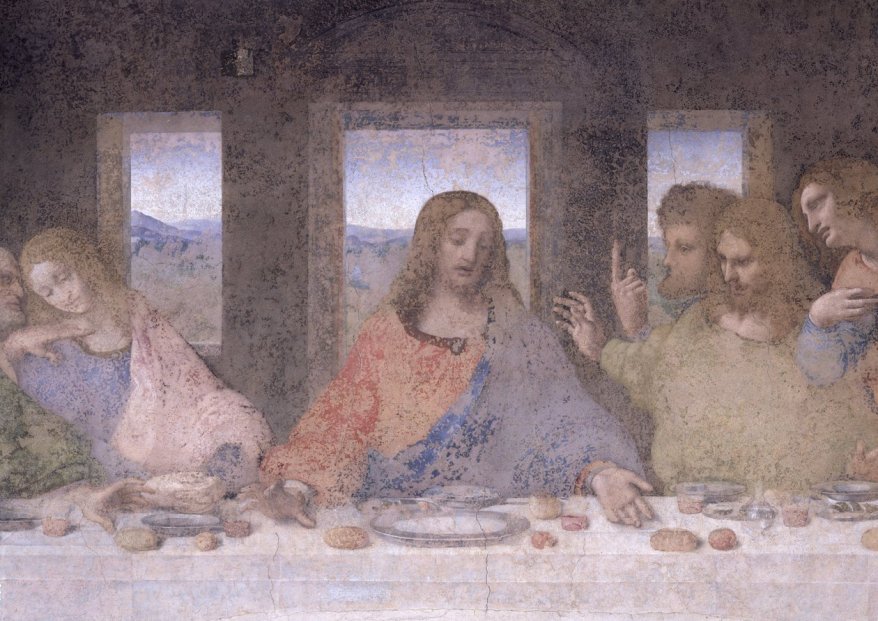
Cenacolo di Leonardo: i dettagli che raccontano il tradimento
🇮🇹Nel Cenacolo di Leonardo da Vinci, custodito a Santa Maria delle Grazie, Cristo annuncia il tradimento e il tempo si ferma… 🇬🇧In Leonardo da Vinci’s Last Supper, housed in Santa Maria delle Grazie, Christ announces the betrayal and time stands still…
-
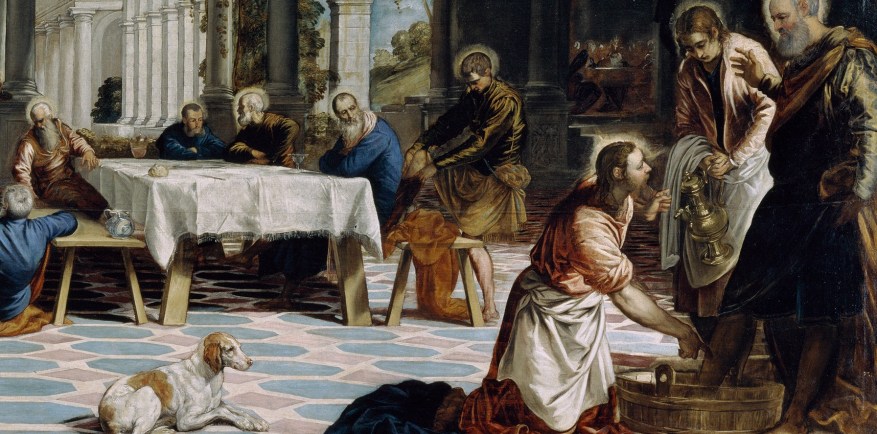
La Lavanda dei Piedi di Tintoretto: Il Capolavoro Veneziano al Prado
🇮🇹Tra i capolavori più affascinanti del Rinascimento veneziano, “La Lavanda dei Piedi” di Jacopo Tintoretto rappresenta un perfetto equilibrio tra spiritualità, innovazione compositiva e straordinaria forza narrativa… 🇬🇧Among the most fascinating masterpieces of the Venetian Renaissance, Jacopo Tintoretto’s “The Washing of the Feet” represents a perfect balance between spirituality, compositional innovation, and extraordinary narrative force…
Condividi:


Questo sono io





sostienici

Sostienici – Support Us
Se questo blog ti piace e ti appassiona, puoi aiutarci a farlo crescere sempre più sostenendoci in modo concreto condividendo i post, seguendo le pagine social e con un contributo che ci aiuta ad andare avanti con il nostro lavoro di divulgazione. . ENGLISH: If you like and are passionate about this blog, you can help us make it grow more and more by supporting us in a concrete way by sharing posts, following social pages and with a contribution that helps us to move forward with our dissemination work.
€10,00


1 commento »