
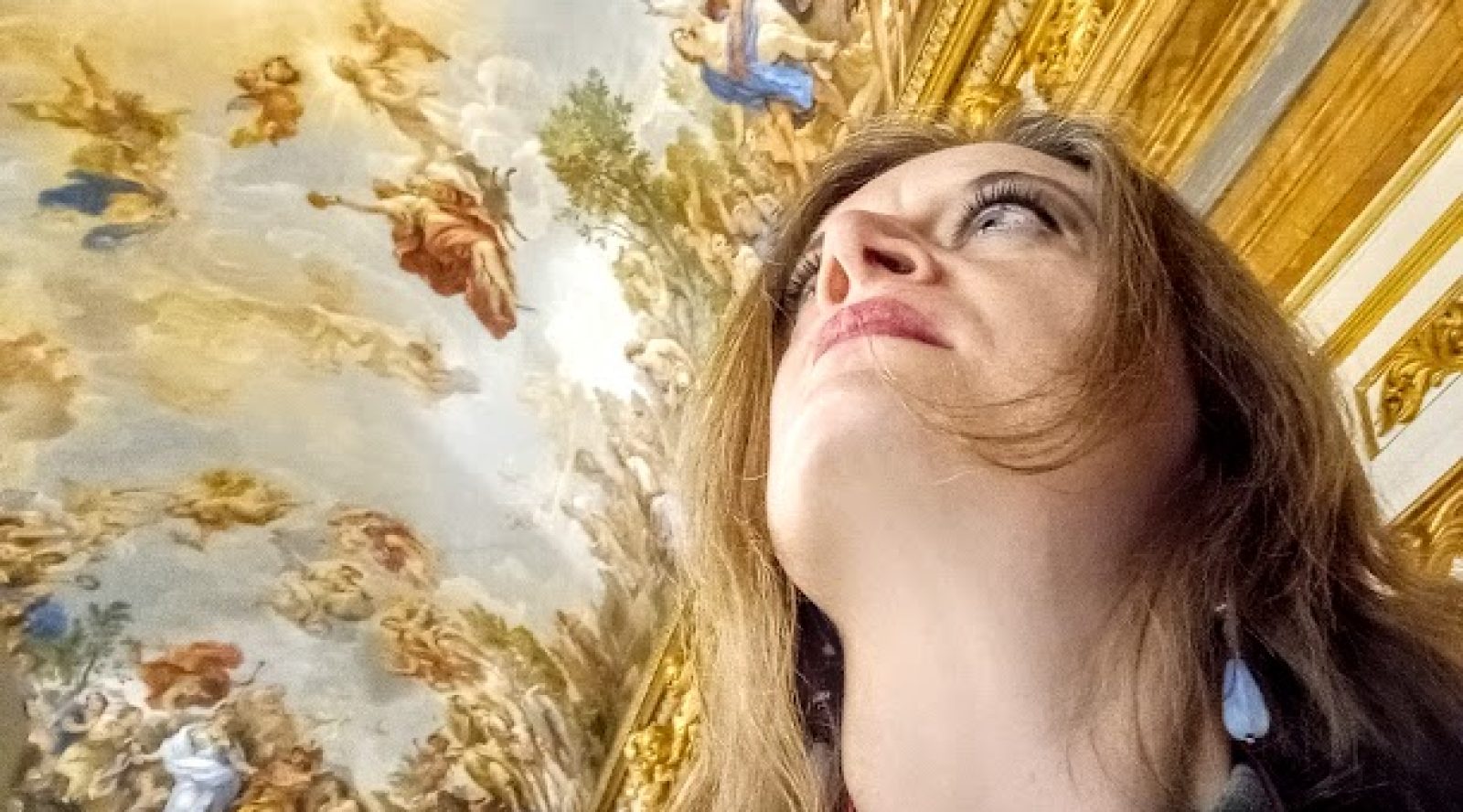
La Creazione degli astri e delle piante
Nel riquadro che raffigura la Creazione degli astri e delle piante affrescai la terza e la quarta giornata della Genesi.
Dio con un gesto perentorio delle braccia e delle mani crea il Sole e la Luna, attorniato da quattro angeli. Poco dopo, ancora in volo, volge le spalle agli spettatori per dar vita alle piante.

Per trasporre i cartoni sull’affresco, in questo caso specifico, adoperai la tecnica dell’incisione. Sicuramente meno precisa e dettagliata dello spolvero ma molto più rapida.
Sapete in quante giornate affrescai questo riquadro? Sette, solo sette avviando i lavori dall’angolo in alto a destra.. Sembra incredibile no?

Prima del restauro, questo riquadro era molto deteriorato. Non solo era divenuto difficile da leggere attraverso secoli di depositi polverosi, nerofumo delle candele e restauri eseguiti con criteri differenti da quelli adoperati oggi ma era anche attraversato da crepe molto profonde e ben evidenti da chi volgeva lo sguardo verso l’alto per ammirare il mio capolavoro.
Queste crepe si aprirono molti anni fa, quando ancora la Cappella Sistina aveva grossi problemi di stabilità e ancora non erano stati realizzati i contrafforti esterni.

L’ultimo restauro ha riportato alla luce le delicatissime variazioni cromatiche e la veste che avvolge io è tornata ad essere leggera e vibrante.
Il sempre vostro Michelangelo Buonarroti per il momento vi saluta sperando di non avervi tediato con i suoi scritti quasi quotidiani.
The Creation of the Asters and Plants
In the box depicting the Creation of the stars and plants, I frescoed the third and fourth day of Genesis.
God with a peremptory gesture of his arms and hands creates the Sun and the Moon, surrounded by four angels. A little later, still in flight, he turns his back on the spectators to bring the plants to life.
To transpose the cartoons onto the fresco, in this specific case, I used the engraving technique. Definitely less precise and detailed than dusting but much faster.
Do you know how many days I frescoed this box? Seven, only seven starting the work from the upper right corner.. It seems incredible, right?
Before the restoration, this panel was very deteriorated. Not only had it become difficult to read through centuries of dusty deposits, soot from candles and restorations carried out with criteria different from those used today, but it was also criss-crossed by very deep cracks which were clearly evident by anyone who looked up to admire my masterpiece.
These cracks opened many years ago, when the Sistine Chapel still had major stability problems and the external buttresses had not yet been built.
The latest restoration has brought to light the very delicate chromatic variations and the garment that envelops io has returned to being light and vibrant. Your always Michelangelo Buonarroti for the moment greets you hoping not to have bored you with his almost daily writings of him.

Sostienici – Support Us
Se questo blog ti piace e ti appassiona, puoi aiutarci a farlo crescere sempre più sostenendoci in modo concreto condividendo i post, seguendo le pagine social e con un contributo che ci aiuta ad andare avanti con il nostro lavoro di divulgazione. . ENGLISH: If you like and are passionate about this blog, you can help us make it grow more and more by supporting us in a concrete way by sharing posts, following social pages and with a contribution that helps us to move forward with our dissemination work.
5,00 €
ULTIMI ARTICOLI
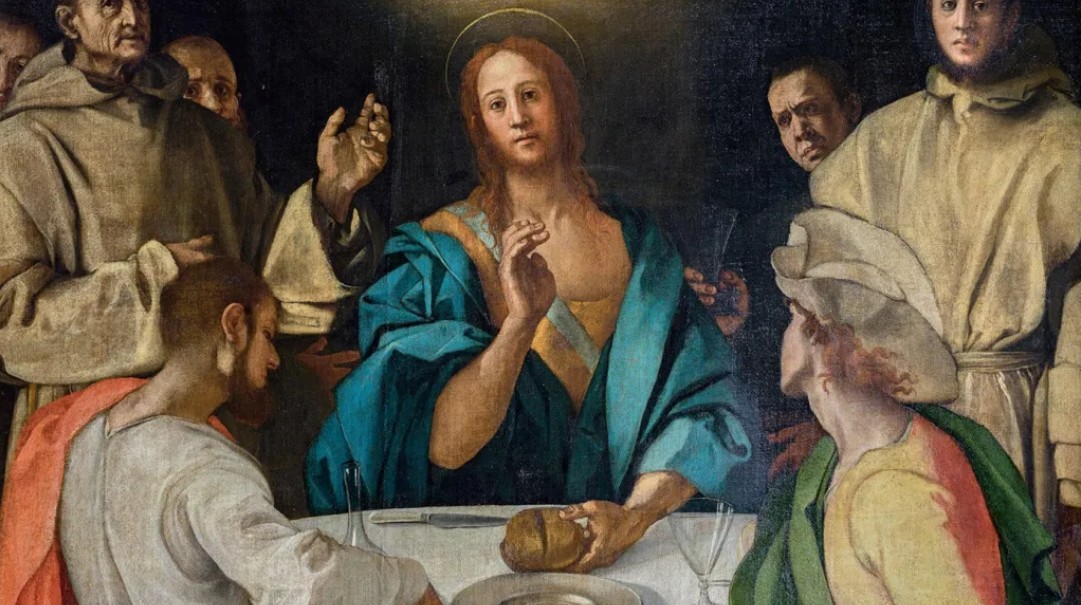
Cena in Emmaus di Pontormo: il pane, il gatto e il cane alle Scuderie del Quirinale
La Cena in Emmaus di Pontormo nasconde dettagli sorprendenti: il significato del pane, i simboli e il mistero della Resurrezione. Scopri il capolavoro del 1525 in mostra alle Scuderie del Quirinale a Roma… 🇬🇧Pontormo’s *Supper at Emmaus* conceals surprising details: the significance of the bread, various symbols, and the mystery of the Resurrection. Discover this…
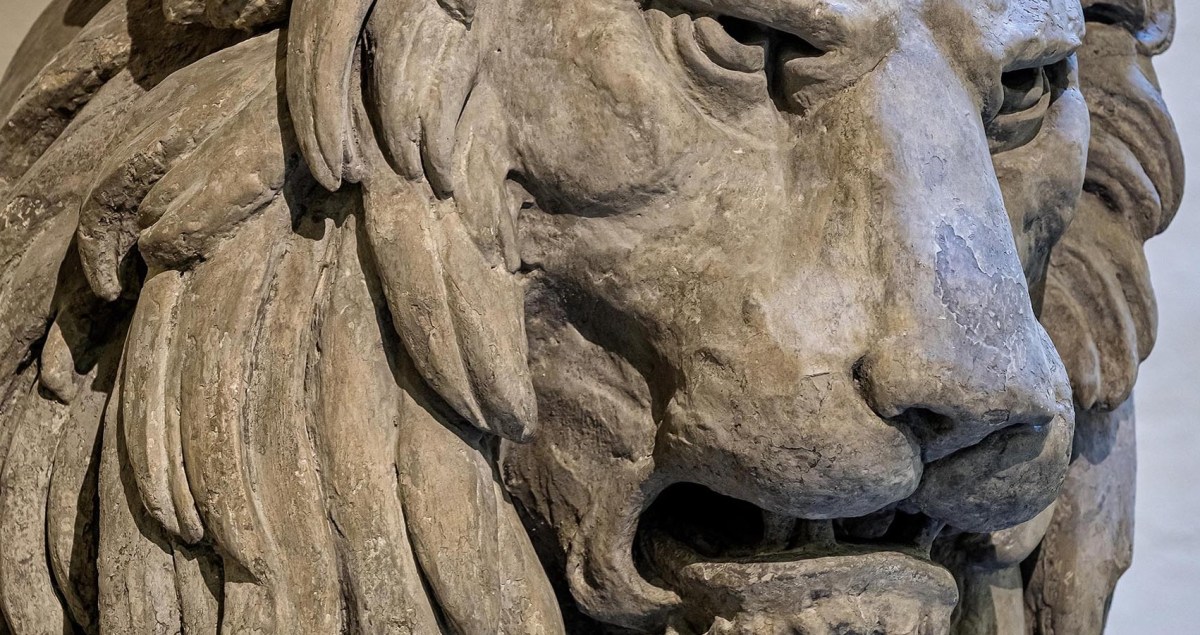
Palazzo Vecchio, il restauro svela la vera natura dei quattro leoni e il mistero della fontana greca
🇮🇹Restaurato il Cortile della Dogana di Palazzo Vecchio a Firenze: i quattro leoni sono calchi, una fontana conserva un’iscrizione greca da studiare e tornano a funzionare entrambe le fontane… 🇬🇧The Cortile della Dogana (Customs Courtyard) at Palazzo Vecchio in Florence has been restored: the four lions are casts, one fountain features a Greek inscription that…
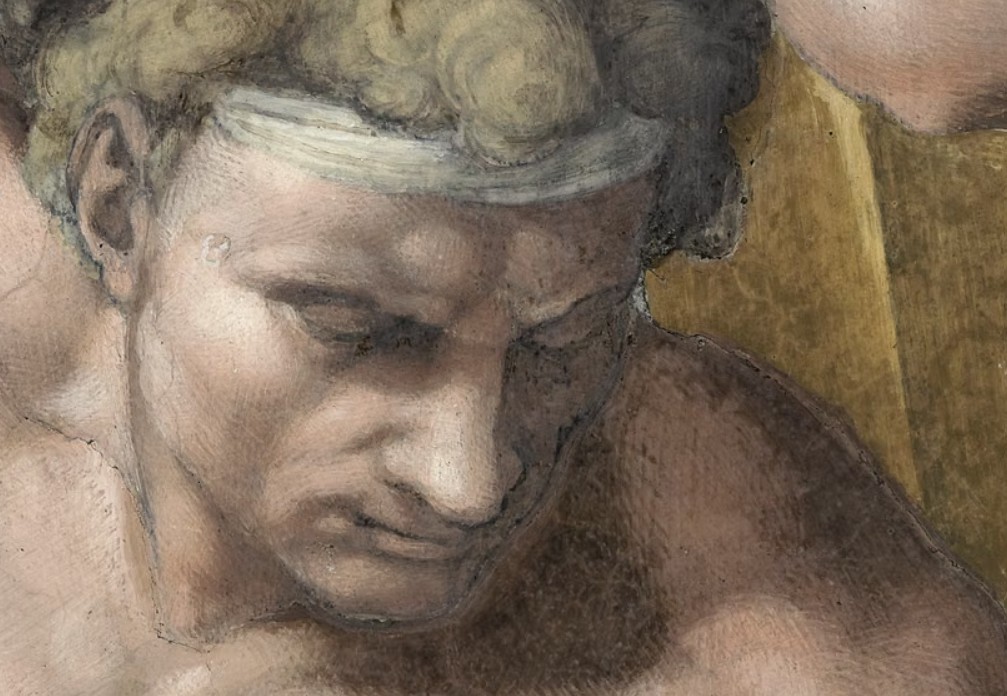
Disma, il buon ladrone nel Giudizio Universale: la misericordia e la giustizia divina
Nel Giudizio Universale della Cappella Sistina ci sono particolari che rischiano di passare inosservati, anche a chi ha avuto la fortuna di alzare gli occhi verso la mia grande parete. Tra i corpi che si sollevano, gli angeli che suonano le trombe e le anime che cercano di raggiungere il cielo, ci sono figure che…
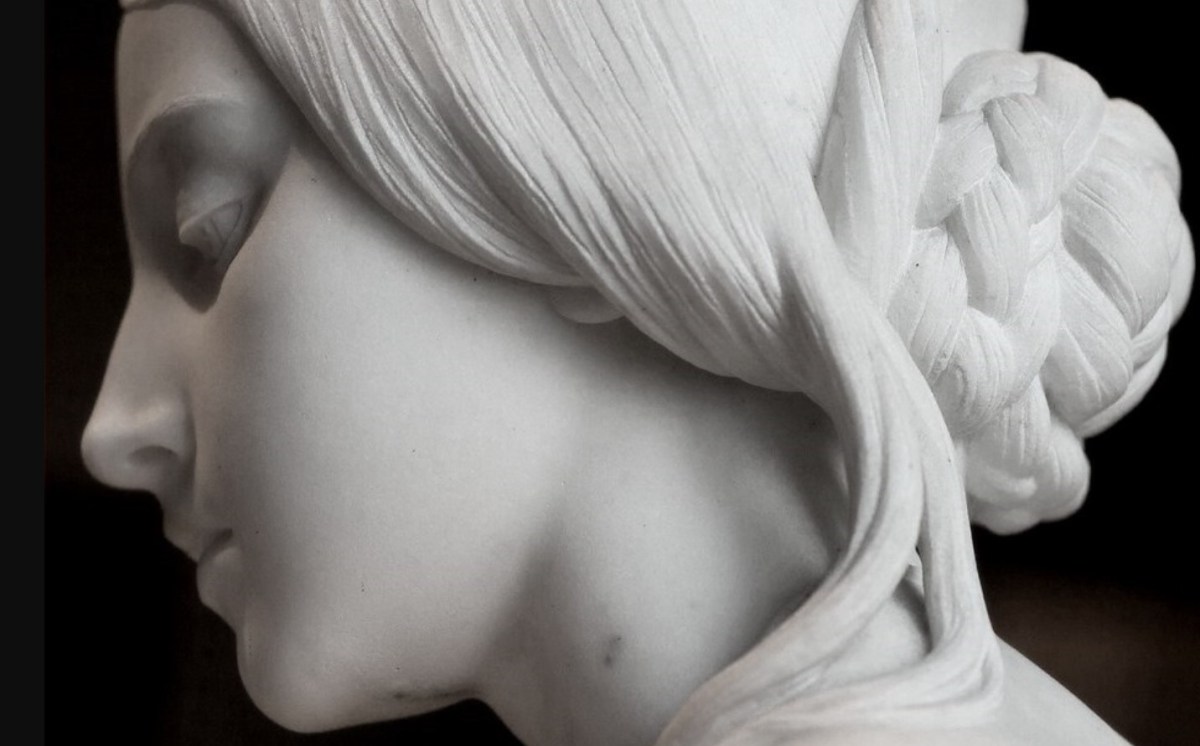
21 ottobre 1816: nasce Pietro Magni, lo scultore che trasformò una giovane lettrice in un capolavoro
🇮🇹Il 21 ottobre 1816 nasceva Pietro Magni, lo scultore della Giovane leggitrice. Scopri la storia dell’opera ignorata a Brera e diventata un successo nel 1861… 🇬🇧On October 21, 1816, Pietro Magni—the sculptor behind The Young Reader was born. Discover the story of this work, which was initially overlooked at the Brera Academy before becoming a…
Si è verificato un problema. Aggiorna la pagina e/o riprova in seguito.
Condividi:


Questo sono io





sostienici

Sostienici – Support Us
Se questo blog ti piace e ti appassiona, puoi aiutarci a farlo crescere sempre più sostenendoci in modo concreto condividendo i post, seguendo le pagine social e con un contributo che ci aiuta ad andare avanti con il nostro lavoro di divulgazione. . ENGLISH: If you like and are passionate about this blog, you can help us make it grow more and more by supporting us in a concrete way by sharing posts, following social pages and with a contribution that helps us to move forward with our dissemination work.
€10,00


1 commento »