

29 agosto, Martirio di San Giovanni Battista: le opere più belle nell’arte
Il 29 agosto la Chiesa ricorda il Martirio di San Giovanni Battista, una delle figure più importanti del cristianesimo e uno dei soggetti più drammatici della storia dell’arte.
La sua decapitazione, ordinata da Erode Antipa dopo la richiesta di Salomè, ha ispirato nei secoli alcuni dei più grandi pittori, da Caravaggio a Tiziano. Ecco cinque opere straordinarie che raccontano, ciascuna con un linguaggio diverso, la morte del Battista.
«Subito il re mandò una guardia con l’ordine che gli fosse portata la testa. La guardia andò, lo decapitò in prigione e portò la testa su un vassoio, la diede alla ragazza e la ragazza la diede a sua madre. I discepoli di Giovanni, saputa la cosa, vennero, ne presero il cadavere e lo posero in un sepolcro».
(Mc 6, 27-29)

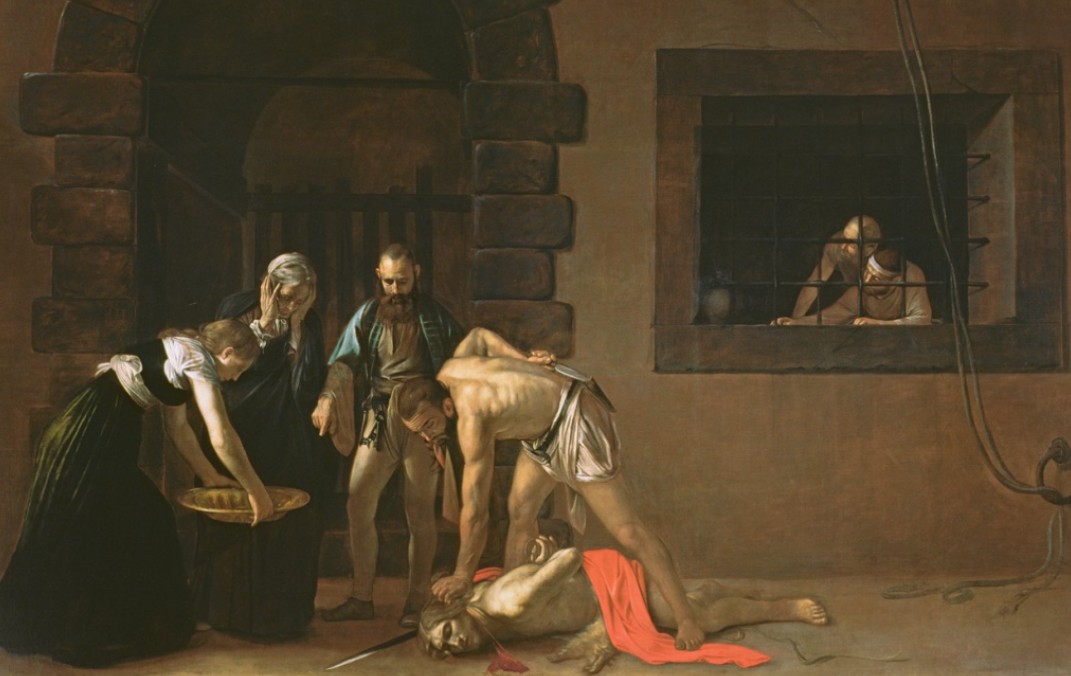
Caravaggio e il silenzio della morte
La decollazione di San Giovanni Battista, 1608
Se esiste un dipinto capace di trasformare il martirio di Giovanni in un’esperienza quasi fisica per lo spettatore, è la Decollazione di San Giovanni Battista di Caravaggio, realizzata nel 1608 e conservata nell’Oratorio della Concattedrale di San Giovanni a La Valletta.
Caravaggio sceglie di rappresentare il momento stesso dell’esecuzione. Il corpo del Battista è disteso a terra, mentre il carnefice si china su di lui. Intorno, poche figure assistono alla scena. Non c’è una folla, non c’è movimento concitato: c’è soprattutto silenzio.
Il grande spazio vuoto che domina la parte superiore della tela sembra inghiottire i personaggi e lasciare lo spettatore solo davanti alla morte. Giovanni non viene rappresentato come un eroe invincibile: è un uomo inerme, caduto a terra, vittima della violenza del potere. Nonostante ciò la sua figura domina il dipinto.
Un dettaglio rende l’opera ancora più straordinaria: Caravaggio inserisce la propria firma nel sangue che sgorga dalla ferita del santo. È l’unico dipinto noto dell’artista nel quale egli abbia apposto la propria firma.
Il martirio diventa così anche l’autoritratto spirituale dell’artista, una presenza lasciata proprio là dove la vita sta per essere definitivamente spezzata.
Tiziano e la bellezza inquietante di Salomè
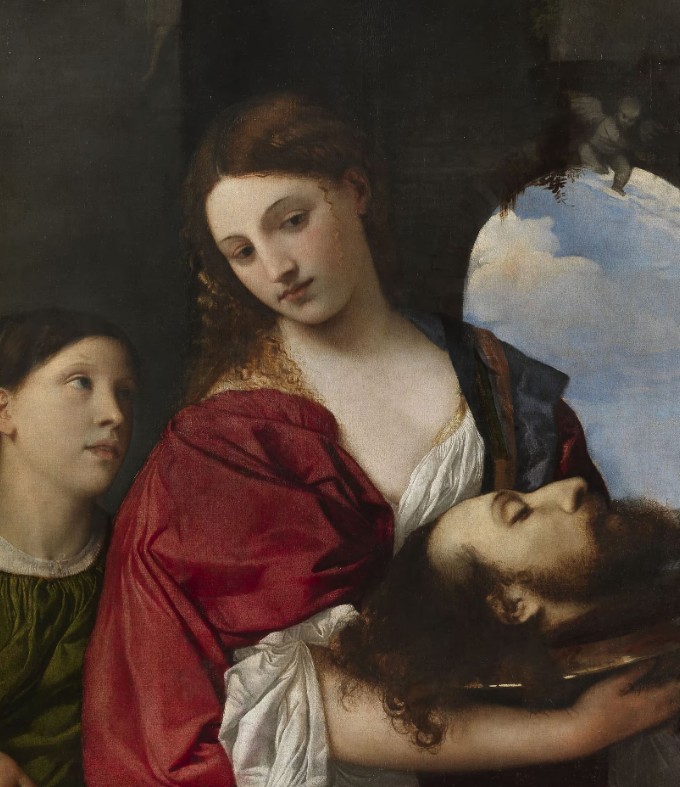
Salomè, circa 1550
Se Caravaggio ci porta davanti al momento dell’esecuzione, Tiziano sceglie l’istante immediatamente successivo.
Nella Salomè, conservata al Museo del Prado di Madrid, la giovane tiene davanti a sé il vassoio sul quale è stata deposta la testa del Battista.
È una scena di una bellezza quasi seducente e profondamente inquietante. Tiziano mette infatti in contrasto due elementi opposti: la giovinezza e la bellezza di Salomè da una parte, la morte dall’altra.
La pelle luminosa della giovane, i capelli, i preziosi tessuti e l’eleganza della composizione sembrano quasi distogliere lo sguardo dall’orrore che si trova al centro della scena.
La testa di Giovanni è lì, sul vassoio, silenziosa testimonianza della crudeltà della richiesta di Salomè.
Lo sguardo della giovane non sembra esprimere un’emozione facilmente interpretabile. È proprio questa ambiguità a rendere il dipinto affascinante. Tiziano lascia allo spettatore il compito di confrontarsi con quella presenza terribile.
Andrea Solario e il volto del Battista
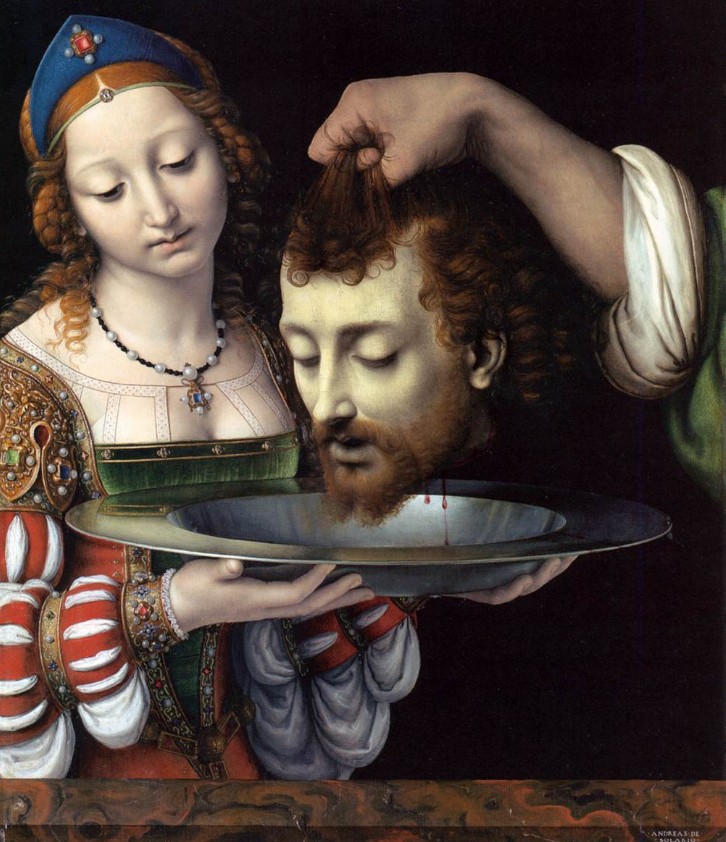
Salomè con la testa di San Giovanni Battista, circa 1507-1509
Qualche decennio prima di Tiziano, Andrea Solario aveva già affrontato il tema con una sensibilità straordinariamente raffinata.
La sua Salomè con la testa di San Giovanni Battista, conservata al Metropolitan Museum of Art di New York, concentra l’attenzione sui due protagonisti.
Salomè occupa il centro della composizione, mentre accanto a lei appare la testa del Battista deposta sul vassoio. Solario compie una scelta particolarmente interessante: dell’esecuzione rimane soltanto un dettaglio, la mano del carnefice con la spada.
Il gesto violento è dunque quasi scomparso ma quello che rimane è il risultato della violenza. Il volto di Giovanni, pallido e immobile, diventa il vero centro emotivo del dipinto. Accanto, Salomè appare giovane e composta.
Il contrasto è fortissimo: una vita appena spezzata e una giovane donna ancora immersa nella sua bellezza.
Guido Reni e la tragedia trasformata in eleganza
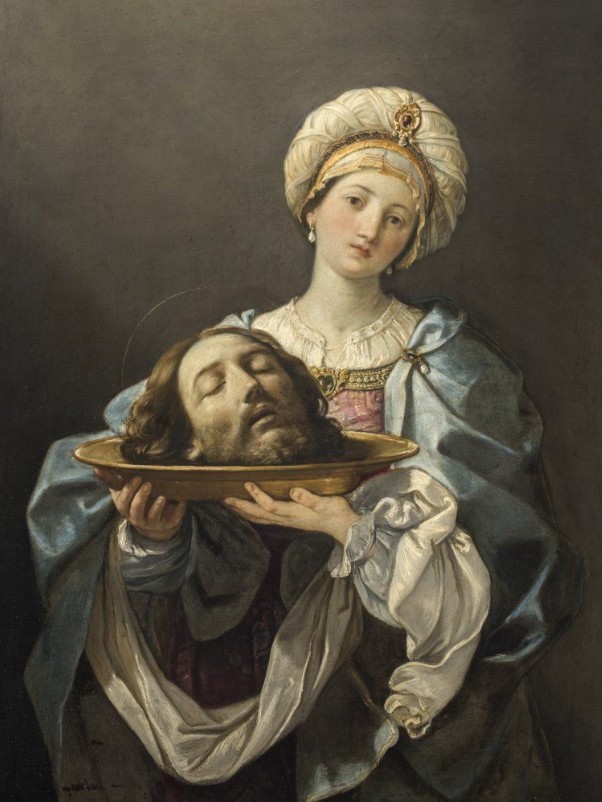
Salomè con la testa di San Giovanni Battista
Nel Seicento il soggetto cambia nuovamente volto.
Guido Reni affronta più volte la figura di Salomè con la testa del Battista e trasforma la tragedia in una scena di straordinaria eleganza.
Le sue figure sono caratterizzate da una bellezza idealizzata, quasi perfetta. Salomè appare raffinata, composta, avvolta in splendidi tessuti. Il volto di Giovanni, invece, emerge pallido e immobile.
La violenza non viene mostrata nella sua brutalità ed è quasi sublimata dalla bellezza.
Ed è proprio questa scelta a creare un effetto straniante. Più la scena appare elegante, più la presenza della testa mozzata diventa disturbante.
Mattia Preti e l’attimo prima dell’irreparabile
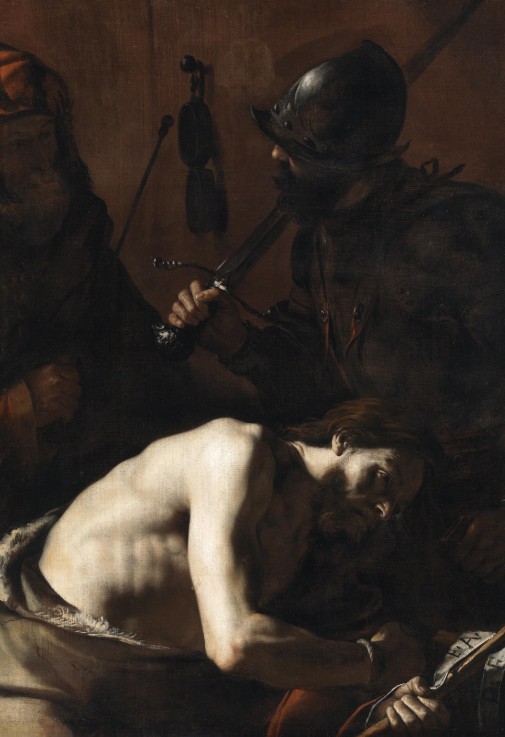
La decapitazione di San Giovanni Battista, circa 1640
Con Mattia Preti torniamo invece al momento immediatamente precedente alla morte.
La sua Decapitazione di San Giovanni Battista, conservata alla National Gallery of Ireland di Dublino, mette in scena un istante sospeso.
Giovanni è inginocchiato. Il carnefice è pronto a colpire: ancora un attimo e tutto sarà compiuto.
Preti raccoglie l’eredità del chiaroscuro caravaggesco e la combina con la teatralità del Barocco. La luce colpisce i protagonisti e lascia il resto nell’ombra, come se l’intero universo si fosse ristretto intorno a quel gesto.
Per il momento il sempre vostro Michelangelo Buonarroti vi saluta dandovi appuntamento ai prossimi post e sui social.
August 29, Martyrdom of St. John the Baptist: the most beautiful works in art
On August 29, the Church commemorates the Martyrdom of St. John the Baptist, one of the most important figures in Christianity and one of the most dramatic subjects in the history of art.
His beheading, ordered by Herod Antipas at Salome’s request, has inspired some of the greatest painters over the centuries, from Caravaggio to Titian. Here are five extraordinary works that recount, each in a different language, the Baptist’s death.
“The king immediately sent a guard with orders to bring his head. The guard went, beheaded him in prison, and brought his head on a platter, gave it to the girl, and the girl gave it to her mother. When John’s disciples learned of this, they came, took his body, and laid it in a tomb.”
(Mark 6:27-29)
Caravaggio and the Silence of Death
The Beheading of Saint John the Baptist, 1608
If there is a painting capable of transforming John’s martyrdom into an almost physical experience for the viewer, it is Caravaggio’s Beheading of Saint John the Baptist, created in 1608 and preserved in the Oratory of St. John’s Co-Cathedral in Valletta.
Caravaggio chooses to depict the very moment of the execution. The Baptist’s body lies on the ground, while the executioner bends over him. A few figures witness the scene. There is no crowd, no commotion: above all, there is silence.
The large empty space that dominates the upper part of the canvas seems to swallow the figures and leave the viewer alone before death. John is not depicted as an invincible hero: he is a defenseless man, fallen to the ground, a victim of the violence of power. Despite this, his figure dominates the painting.
One detail makes the work even more extraordinary: Caravaggio inserts his signature in the blood flowing from the saint’s wound. It is the only known painting by the artist to which he added his signature.
The martyrdom thus also becomes the artist’s spiritual self-portrait, a presence left precisely where life is about to be definitively ended.
Titian and the Disturbing Beauty of Salome
Salome, circa 1550
If Caravaggio brings us to the moment of execution, Titian chooses the instant immediately following.
In Salome, now in the Prado Museum in Madrid, the young woman holds before her the tray on which John the Baptist’s head has been placed.
It is a scene of almost seductive and profoundly disturbing beauty. Titian contrasts two opposing elements: Salome’s youth and beauty on the one hand, and death on the other.
The young woman’s luminous skin, her hair, the precious fabrics, and the elegance of the composition almost seem to distract from the horror at the center of the scene.
John’s head is there, on the tray, a silent testimony to the cruelty of Salome’s request.
The young woman’s gaze does not seem to express an easily interpretable emotion. It is precisely this ambiguity that makes the painting fascinating. Titian leaves the viewer to confront that terrible presence.
Andrea Solario and the Face of the Baptist
Salome with the Head of Saint John the Baptist, circa 1507-1509
A few decades before Titian, Andrea Solario had already approached the subject with an extraordinarily refined sensitivity.
His Salome with the Head of Saint John the Baptist, now at the Metropolitan Museum of Art in New York, focuses attention on the two protagonists.
Salome occupies the center of the composition, while the head of the Baptist appears on the tray next to her. Solario makes a particularly interesting choice: only one detail of the execution remains: the executioner’s hand with the sword.
The violent gesture has thus almost disappeared, but what remains is the result of the violence. John’s face, pale and immobile, becomes the true emotional center of the painting. Next to him, Salome appears young and composed.
The contrast is striking: a life recently cut short and a young woman still immersed in her beauty.
Guido Reni and Tragedy Transformed into Elegance
Salome with the Head of Saint John the Baptist
In the 17th century, the subject again changed face.
Guido Reni repeatedly tackled the figure of Salome with the head of John the Baptist, transforming the tragedy into a scene of extraordinary elegance.
His figures are characterized by an idealized, almost perfect beauty. Salome appears refined, composed, draped in splendid fabrics. John’s face, on the other hand, emerges pale and immobile.
The violence is not shown in all its brutality but is almost sublimated by beauty.
And it is precisely this choice that creates a disturbing effect. The more elegant the scene appears, the more disturbing the presence of the severed head becomes.
Mattia Preti and the moment before the irreparable
The Beheading of Saint John
John the Baptist, circa 1640
With Mattia Preti, we return to the moment immediately preceding death.
His Beheading of Saint John the Baptist, housed at the National Gallery of Ireland in Dublin, depicts a suspended moment.
John is kneeling. The executioner is ready to strike: just a moment more and all will be done.
Preti takes up the legacy of Caravaggio’s chiaroscuro and combines it with the theatricality of the Baroque. The light strikes the protagonists and leaves the rest in shadow, as if the entire universe had converged around that gesture.
For now, the ever-friendly Michelangelo Buonarroti bids farewell and invites you to join him in future posts and on social media.

Sostienici – Support Us
Se questo blog ti piace e ti appassiona, puoi aiutarci a farlo crescere sempre più sostenendoci in modo concreto condividendo i post, seguendo le pagine social e con un contributo che ci aiuta ad andare avanti con il nostro lavoro di divulgazione. . ENGLISH: If you like and are passionate about this blog, you can help us make it grow more and more by supporting us in a concrete way by sharing posts, following social pages and with a contribution that helps us to move forward with our dissemination work.
10,00 €
-
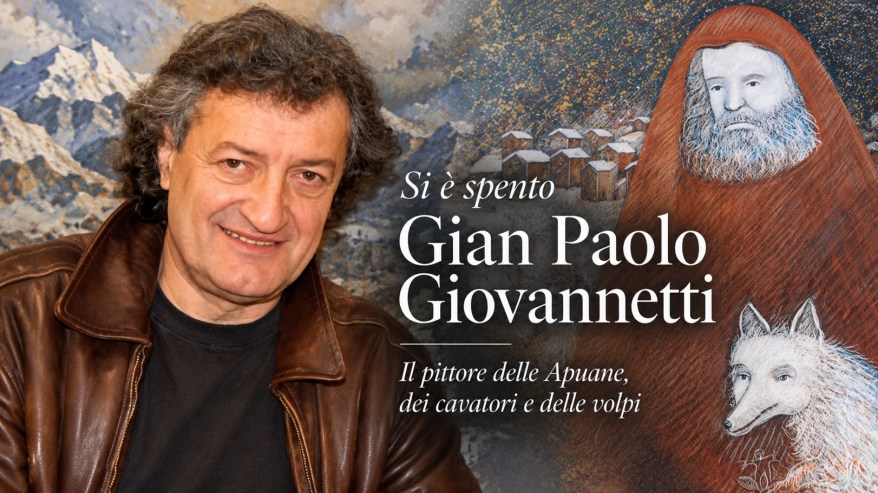
Si è spento Gian Paolo Giovannetti, il pittore delle Apuane, dei cavatori e delle volpi
🇮🇹È morto Gian Paolo Giovannetti, pittore e scultore di Giustagnana. Il ricordo di un artista che ha raccontato Apuane, cavatori, volpi e Alta Versilia… 🇬🇧Gian Paolo Giovannetti, a painter and sculptor from Giustagnana, has passed away. A tribute to an artist who chronicled the Apuan Alps, quarrymen, foxes, and Alta Versilia…
-
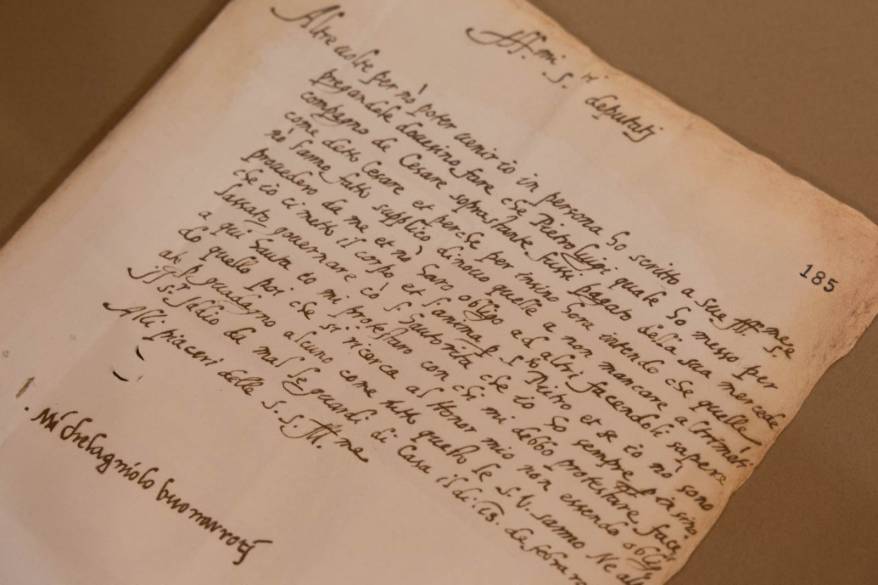
Michelangelus: la mia grafia diventa un font digitale
🇮🇹La mia grafia diventa Michelangelus, il nuovo font commissionato dalla Fabbrica di San Pietro: oltre 500 glifi e quattro stili disponibili nel mondo digitale… 🇬🇧My handwriting becomes Michelangelus, the new font commissioned by the Fabbrica di San Pietro: over 500 glyphs and four styles available in the digital world…
-
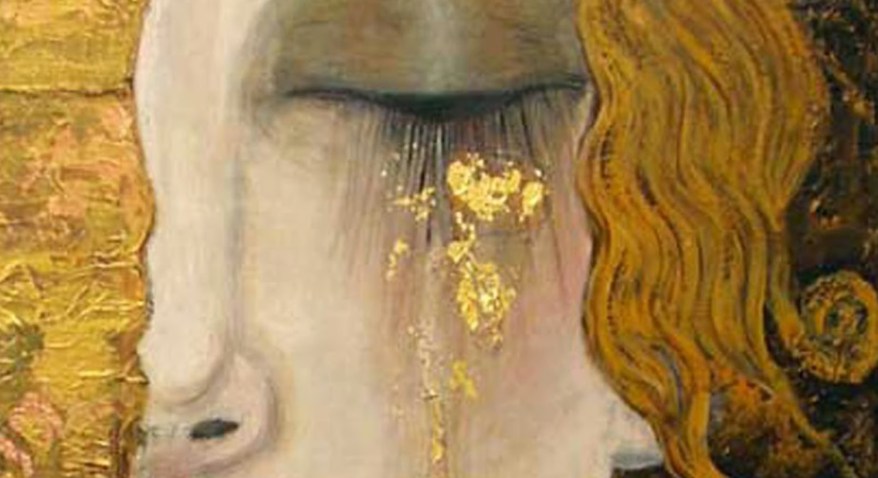
Freyja piange oro: la triste storia della dea nordica dipinta da Anne-Marie Zilberman
🇮🇹Le lacrime di Freyja di Anne-Marie Zilberman racconta la dea nordica attraverso il mito, il dolore e l’amore. Scopri la storia delle sue leggendarie lacrime d’oro… 🇬🇧Anne-Marie Zilberman’s *Freyja’s Tears* portrays the Norse goddess through myth, sorrow, and love. Discover the story of her legendary golden tears…
Condividi:


Questo sono io




sostienici

Sostienici – Support Us
Se questo blog ti piace e ti appassiona, puoi aiutarci a farlo crescere sempre più sostenendoci in modo concreto condividendo i post, seguendo le pagine social e con un contributo che ci aiuta ad andare avanti con il nostro lavoro di divulgazione. . ENGLISH: If you like and are passionate about this blog, you can help us make it grow more and more by supporting us in a concrete way by sharing posts, following social pages and with a contribution that helps us to move forward with our dissemination work.
€10,00


