

Il corpo umano: ecco perché lo studiavo così ossessivamente
Michelangelo BuonarrotimichelangelobuonarrotiscultoreModifica Profilo
Per me il corpo umano non fu mai soltanto anatomia: era il riflesso della perfezione divina. Per questo lo studiai nei minimi dettagli, arrivando a sezionare cadaveri di notte per comprendere come muscoli, tendini e ossa potessero trasformarsi in arte.
Mi avete conosciuto come scultore, pittore e architetto. Avete visto le mie figure muoversi nel marmo e negli affreschi, avete osservato i muscoli del David, la potenza di Adamo nella Creazione, i corpi del Giudizio Universale.
Forse vi sarete chiesti perché dedicassi così tanta attenzione al corpo umano.

La risposta non è complessa anche se, per comprenderla, bisogna entrare nel mio modo di vedere l’arte.
Dio ci ha fatti a Sua immagine e somiglianza. Come avrei potuto rappresentare quella creatura senza cercare la perfezione?
Per me realizzare un corpo imperfetto avrebbe significato non comprendere la grandezza del Creatore: insomma, sarebbe stato come bestemmiare.
Il corpo umano era per me un’immagine di Dio
Il corpo non è solo un insieme di muscoli, ossa e tendini: Nella sua forma c’è qualcosa di più alto.
La bellezza dell’uomo è un segno visibile di qualcosa che non potevo vedere con gli occhi: la bellezza divina.
Ho sempre creduto che la bellezza fosse uno specchio di Dio. Lui fece ogni cosa: la terra, le stelle, la natura, la carne e lo spirito. Ma nell’uomo volle lasciare un riflesso particolare di Sé.
Per questo il corpo umano diventò uno dei principali strumenti attraverso i quali cercai di avvicinarmi alla perfezione.
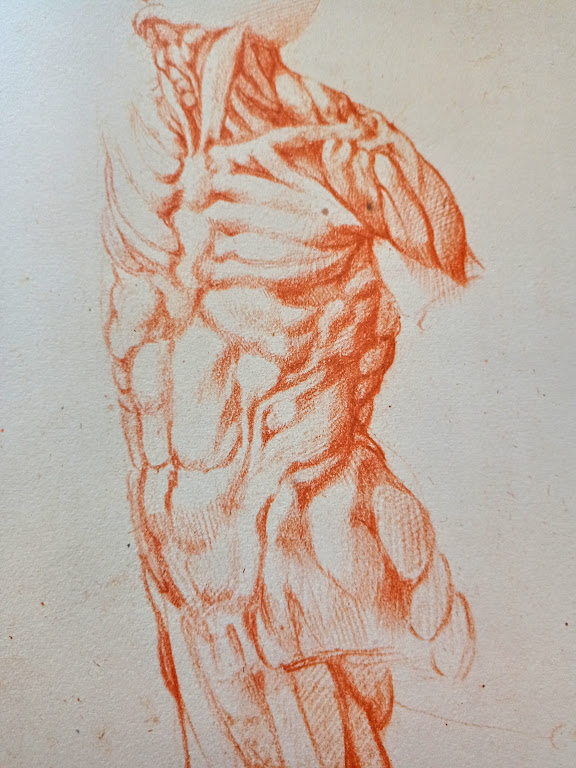
Avevo bisogno di conoscere ogni muscolo
Non mi bastava osservare superficialmente un corpo. Volevo sapere cosa accadesse quando un braccio si piegava, quando una gamba sosteneva il peso del corpo, quando il busto compiva uno sforzo.
Volevo capire quali muscoli si contraessero, quali si rilassassero, come i tendini modificassero l’aspetto della figura e come le ossa determinassero il movimento. Per questo studiai l’anatomia direttamente sui corpi.
Cominciai molto giovane. Avevo circa diciassette anni quando ebbi la possibilità di frequentare il convento di Santo Spirito a Firenze e di studiare i cadaveri provenienti dall’ospedale del convento.
Il priore Lapo Bicchiellini mi concesse questa possibilità, probabilmente anche grazie all’intercessione di Piero de’ Medici. Passavo ore a osservare quei corpi.
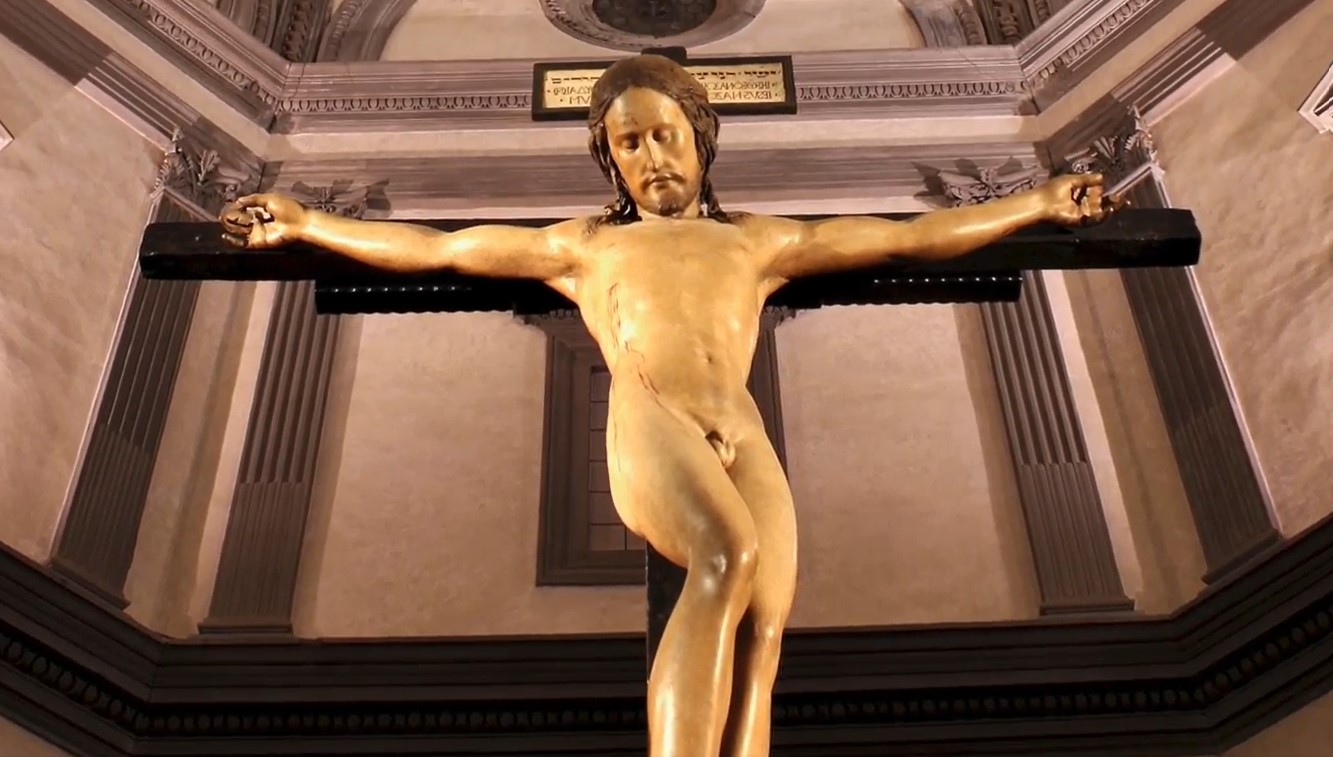
Li studiavo.
Cercavo di comprendere cosa ci fosse sotto la pelle, come fossero disposti i muscoli e quale fosse il loro comportamento durante il movimento. Era uno studio difficile e spesso terribile.
L’odore di quei luoghi mi rimase impresso per tutta la vita. Quelle immagini continuarono a tornarmi alla mente anche molti anni dopo.
Eppure continuavo. Ero sicuro che senza quella conoscenza non avrei potuto rappresentare il corpo come volevo.
Studiavo i cadaveri anche di notte
Non era affatto normale, ai miei tempi, che un artista potesse dedicarsi liberamente alla dissezione dei cadaveri. Lo studio anatomico era legato soprattutto alla medicina e poteva essere guardato con sospetto. Per questo capitava che trascorressi molto tempo nell’obitorio durante la notte.
In un’epoca nella quale la paura della negromanzia e dell’Inquisizione era tutt’altro che teorica, dedicarsi a certe pratiche poteva creare seri problemi.
Una volta mi capitò persino di sezionare, senza saperlo, il corpo di un giovane appartenente alla potente famiglia Corsini.
Quando i suoi familiari lo seppero, iniziarono a cercare vendetta. Si rivolsero al gonfaloniere di giustizia Pier Soderini. Ma Soderini, comprendendo il motivo dei miei studi, non diede seguito alle loro accuse.
Non cercavo la morte ma la conoscenza.
I miei disegni dei corpi scorticati
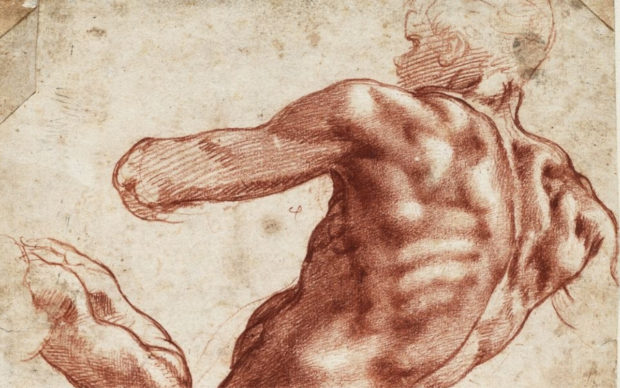
Una parte importante di questo lavoro anatomico è rimasta sulla carta. Esistono ancora fogli nei quali studiai corpi scorticati e singole parti dell’anatomia umana. Sono oggi conservati in importanti collezioni, tra cui Casa Buonarroti, il Louvre, il Teylers Museum e il Windsor Castle.
La datazione di alcuni di questi disegni è ancora discussa dagli studiosi. Alcuni li hanno collocati prima del 1500, mentre altri hanno proposto una datazione successiva di alcuni anni.
Io non disegnavo il corpo per semplice esercizio. Cercavo di comprenderlo.
In alcuni disegni compaiono anche lettere che indicano specifici muscoli. Ogni linea aveva uno scopo.
Ogni rilievo, ogni avvallamento, ogni tendine poteva diventare importante quando avrei dovuto trasferire quella conoscenza nella scultura o nella pittura.

Il David e Adamo: due corpi, due rivoluzioni
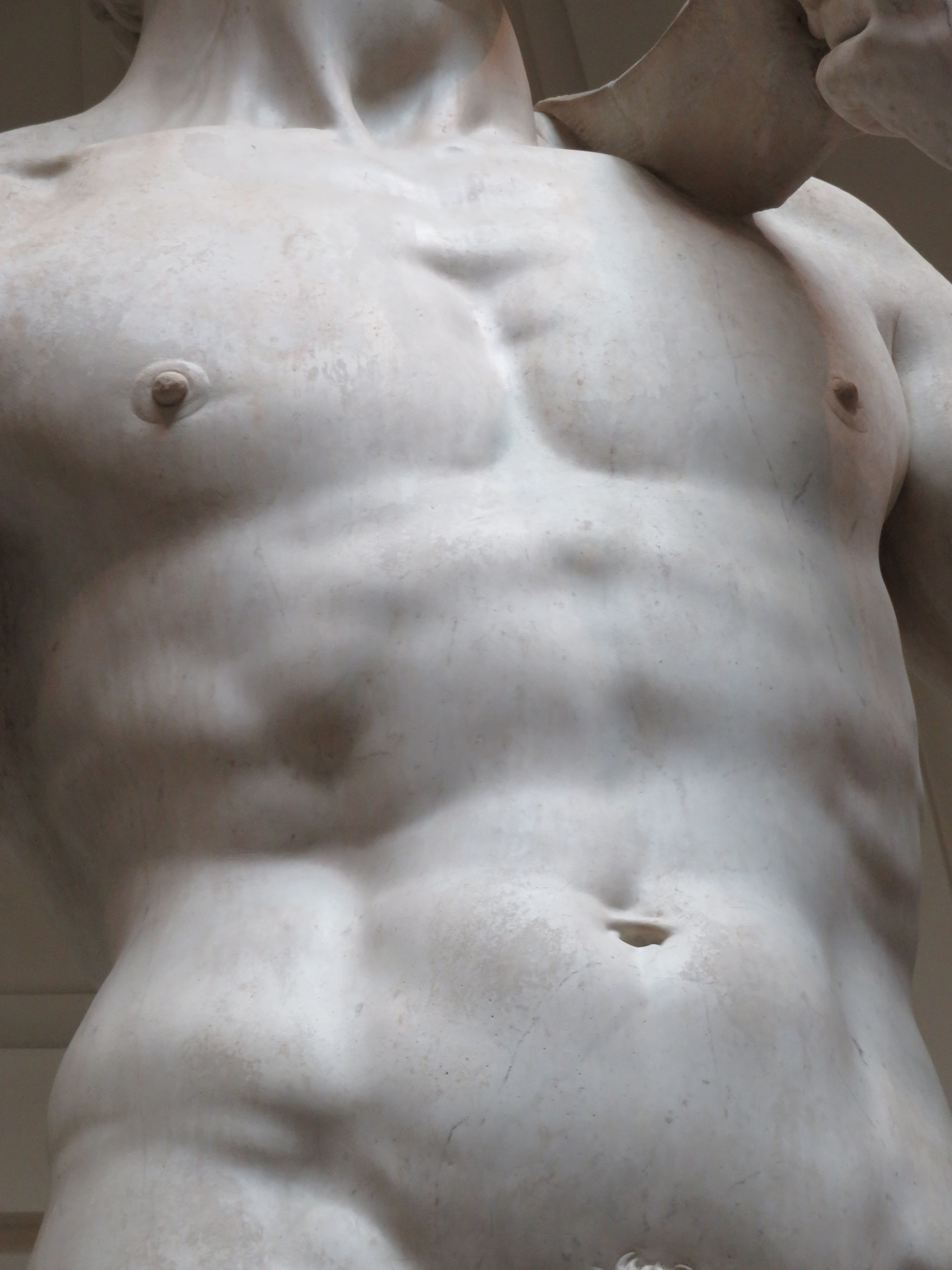
Pensate al mio David. Guardatelo attentamente. Non è soltanto un giovane uomo nudo ma un corpo che comunica tensione, concentrazione, energia.
Oppure guardate Adamo nella Creazione della Cappella Sistina. Il suo corpo è ancora inerte, ma sta per ricevere la scintilla della vita.
In entrambi i casi il corpo umano è il protagonista della narrazione. Proprio per questo doveva essere credibile. Credibile non significa necessariamente identico a un corpo visto per strada.
L’anatomia reale era il punto di partenza; l’arte trasformava quella conoscenza in qualcosa di più grande.
“In lui l’anatomia diviene musica”
Molti anni dopo, Umberto Boccioni descrisse in maniera particolarmente efficace questo aspetto della mia arte. Secondo Boccioni, nel mio lavoro l’anatomia diventa quasi musica e il corpo assume una dimensione architettonica.
” In lui l’anatomia diviene musica. In lui il corpo umano è materiale quasi puramente architettonico. I corpi vengono mossi, negli affreschi e nelle statue, al di là del loro perché logico e le linee melodiche dei muscoli si inseguono con legge musicale, non con legge logica rappresentativa.”, scrisse Boccioni.
San Pietro: il corpo che lotta contro il peso
Uno degli esempi più significativi della mia attenzione all’anatomia si trova nell’ultimo grande affresco che realizzai nella mia vita: la Crocifissione di San Pietro nella Cappella Paolina, alla quale lavorai a partire dal 1545, quando avevo già settant’anni.
Era un’impresa tutt’altro che semplice. Il lavoro fu commissionato da papa Paolo III Farnese insieme alla Conversione di Saulo, dopo la conclusione del Giudizio Universale nella Cappella Sistina.
Nel dipinto San Pietro è rappresentato nel momento della crocifissione ma osservate il suo corpo.
Non è abbandonato passivamente: il busto compie uno sforzo. Il Santo sembra tentare di sollevarsi mentre il corpo è sottoposto a una torsione complessa. Il torso e le gambe seguono direzioni differenti mentre i muscoli dell’addome si contraggono e il corpo cerca un equilibrio.
È ancora una volta l’anatomia a raccontare ciò che le parole non potrebbero esprimere.

Se l’uomo è fatto a immagine e somiglianza di Dio, rappresentarlo nella sua nudità significa mostrare la sua forma nella maniera più essenziale. Senza abiti, senza ornamenti, senza ciò che è superfluo.
Solo il corpo.
E attraverso il corpo, la perfezione della creazione.
Alla fine conosce davvero il corpo può anche trasformarlo senza perderne la credibilità.
Dio fu il primo artista e io davanti al marmo, al colore o alla carta, non potevo fare altro che cercare di seguirne l’esempio.
Ecco perché studiai il corpo umano con tanta ostinazione. Volevo capire come la materia potesse diventare espressione, movimento, bellezza e infine qualcosa capace di parlare dell’anima.
Il corpo era materia e attraverso quella materia cercavo lo spirito.
Per il momento il sempre vostro Michelangelo Buonarroti vi saluta dandovi appuntamento ai prossimi post e sui social.

The human body: here is why I studied it so obsessively
To me, the human body was never merely a matter of anatomy; it was a reflection of divine perfection. That is why I studied it in minute detail, going so far as to dissect cadavers by night to understand how muscles, tendons, and bones could be transformed into art.
You have known me as a sculptor, a painter, and an architect. You have seen my figures come to life in marble and frescoes; you have observed the muscles of David, the power of Adam in The Creation, and the bodies in The Last Judgment.
Perhaps you have wondered why I devoted such intense attention to the human body.
The answer is not complex, though understanding it requires grasping my vision of art.
God created us in His own image and likeness. How could I possibly depict such a creature without striving for perfection?
To me, rendering an imperfect body would have meant failing to comprehend the greatness of the Creator; in short, it would have been akin to blasphemy.
To me, the human body was an image of God
The body is not merely a collection of muscles, bones, and tendons; there is something higher in its form.
Human beauty is a visible sign of something I could not see with my eyes: divine beauty.
I have always believed that beauty is a mirror of God. He created all things—the earth, the stars, nature, flesh, and spirit—but in man, He chose to leave a unique reflection of Himself.
That is why the human body became one of the primary instruments through which I sought to draw closer to perfection.
I needed to know every muscle
A superficial observation of the body was not enough for me. I wanted to know what happened when an arm bent, when a leg bore the body’s weight, or when the torso exerted itself. I wanted to understand which muscles contracted and which relaxed, how tendons altered the figure’s appearance, and how bones determined movement. That is why I studied anatomy directly on bodies.
I began at a very young age. I was about seventeen when I gained access to the convent of Santo Spirito in Florence to study cadavers from the convent’s hospital.
Prior Lapo Bicchiellini granted me this opportunity, likely thanks in part to the intercession of Piero de’ Medici. I spent hours observing those bodies.
I studied them.
I sought to understand what lay beneath the skin, how the muscles were arranged, and how they behaved during movement. It was a difficult and often gruesome undertaking.
The smell of those places stayed with me for the rest of my life. Those images kept returning to my mind, even years later.
Yet, I persisted. I was certain that without that knowledge, I could not depict the body as I wished.
I studied cadavers at night, too
In my time, it was by no means normal for an artist to freely engage in the dissection of cadavers. Anatomical study was primarily linked to medicine and could be viewed with suspicion. That is why I often spent long hours in the morgue at night.
In an era when the fear of necromancy and the Inquisition was far from theoretical, engaging in such practices could lead to serious trouble.
I even once happened to dissect—unknowingly—the body of a young man from the powerful Corsini family.
When his relatives found out, they sought revenge. They appealed to the Gonfaloniere of Justice, Pier Soderini. But Soderini, understanding the purpose of my studies, did not pursue their accusations.
I was not seeking death, but knowledge.
My drawings of flayed bodies
A significant part of this anatomical work remained on paper. Sheets still exist on which I studied flayed bodies and individual parts of human anatomy. Today, they are preserved in important collections, including Casa Buonarroti, the Louvre, the Teylers Museum, and Windsor Castle.
The dating of some of these drawings is still a subject of scholarly debate. Some have placed them before 1500, while others have proposed a date a few years later.
I did not draw the body merely as an exercise. I sought to understand it.
Some drawings also feature letters indicating specific muscles. Every line had a purpose.
Every ridge, every hollow, every tendon could become important when the time came to translate that knowledge into sculpture or painting.
David and Adam: two bodies, two revolutions
Think of my David. Look at him closely. He is not merely a naked young man, but a body that conveys tension, concentration, and energy.
Or look at Adam in the Creation scene of the Sistine Chapel. His body is still inert, yet it is on the verge of receiving the spark of life.
In both instances, the human body is the protagonist of the narrative. For this very reason, it had to be credible. Credible it does not necessarily mean identical to a body seen on the street.
Real anatomy was the starting point; art transformed that knowledge into something greater.
“In him, anatomy becomes music”
Many years later, Umberto Boccioni described this aspect of my art particularly effectively. According to Boccioni, in my work, anatomy becomes almost music, and the body takes on an architectural dimension.
“In him, anatomy becomes music. In him, the human body is a material that is almost purely architectural. In the frescoes and statues, the bodies are moved beyond their logical rationale, and the melodic lines of the muscles follow one another according to musical laws, not the laws of logical representation,” wrote Boccioni.
Saint Peter: the body struggling against weight
One of the most significant examples of my focus on anatomy is found in the last great fresco I ever created: The Crucifixion of Saint Peter in the Pauline Chapel, a project I began in 1545 when I was already seventy years old.
It was no simple undertaking. The work was commissioned by Pope Paul III Farnese—alongside The Conversion of Saul—following the completion of The Last Judgment in the Sistine Chapel.
In the painting, Saint Peter is depicted at the moment of his crucifixion, but observe his body.
He is not slumped passively; his torso is exerting effort. The Saint appears to be trying to lift himself up while his body undergoes a complex twist. His torso and legs move in different directions as his abdominal muscles contract and his body seeks balance.
Once again, it is anatomy that conveys what words could not express.
If man is made in the image and likeness of God, depicting him naked means revealing his form in its most essential state. Without clothes, without ornaments, without anything superfluous.
Just the body. And through the body, the perfection of creation.
Ultimately, one who truly understands the body can transform it without losing its authenticity.
God was the first artist, and when faced with marble, pigment, or paper, I could do nothing but try to follow His example.
That is why I studied the human body with such persistence. I wanted to understand how matter could become expression, movement, beauty, and—ultimately—something capable of speaking to the soul.
The body was matter, and through that matter, I sought the spirit.
For now, your ever-devoted Michelangelo Buonarroti bids you farewell, looking forward to seeing you in future posts and on social media.

Sostienici – Support Us
Se questo blog ti piace e ti appassiona, puoi aiutarci a farlo crescere sempre più sostenendoci in modo concreto condividendo i post, seguendo le pagine social e con un contributo che ci aiuta ad andare avanti con il nostro lavoro di divulgazione. . ENGLISH: If you like and are passionate about this blog, you can help us make it grow more and more by supporting us in a concrete way by sharing posts, following social pages and with a contribution that helps us to move forward with our dissemination work.
10,00 €
-
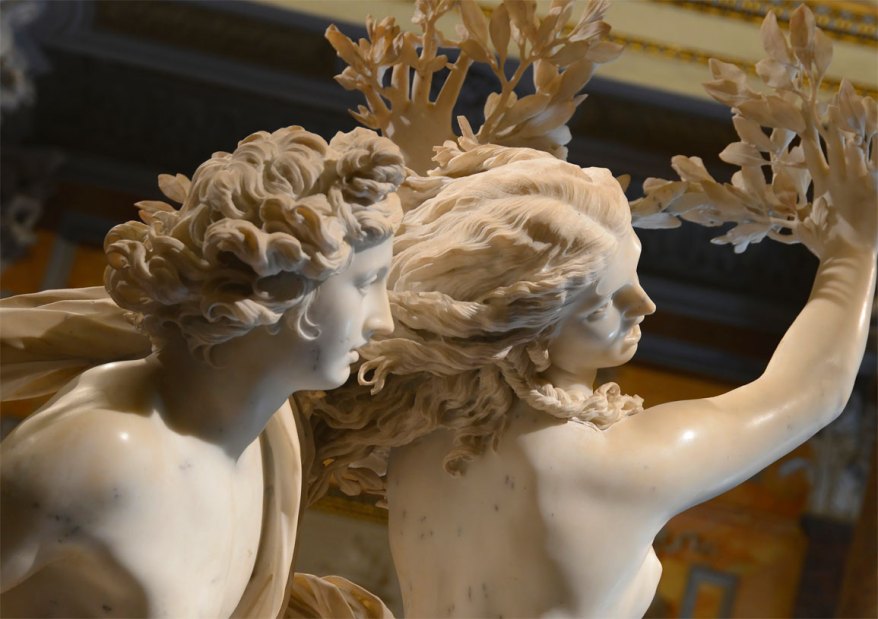
I giganti del Barocco: i grandi scultori del Seicento
🇮🇹Nel Seicento la scultura cambia per sempre. A Roma, Bernini, Algardi, Mochi e Maderno trasformano le sculture in scene capaci di coinvolgere lo sguardo e lasciare senza fiato… 🇬🇧In the seventeenth century, sculpture changed forever. In Rome, Bernini, Algardi, Mochi, and Maderno transformed sculptures into scenes capable of captivating the eye and leaving the viewer…
-
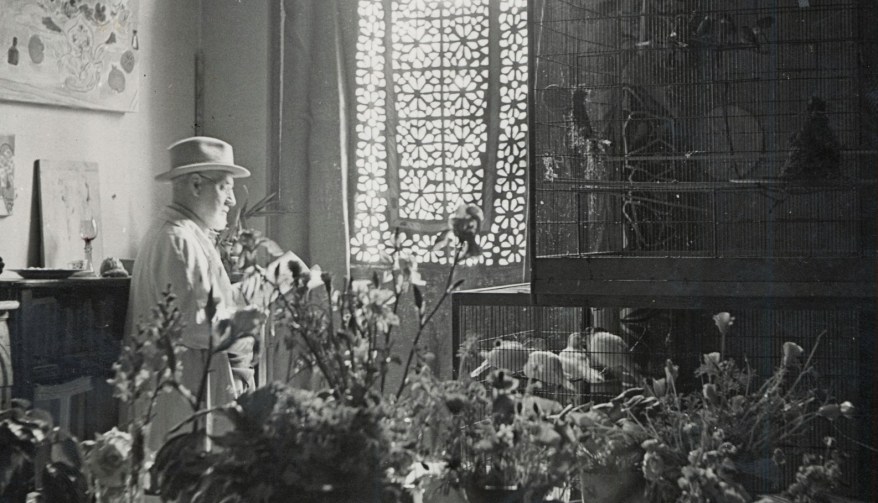
Matisse, il mondo intero dentro una stanza: al MUDEC la mostra che racconta la sua arte
🇮🇹’Matisse. Il mondo in una stanza’ al MUDEC di Milano racconta come Africa, Islam, Russia, Cina e Tahiti cambiarono l’arte di Henri Matisse… 🇬🇧’Matisse: The World in a Room’ at MUDEC in Milan tells the story of how Africa, Islam, Russia, China, and Tahiti transformed the art of Henri Matisse…
-
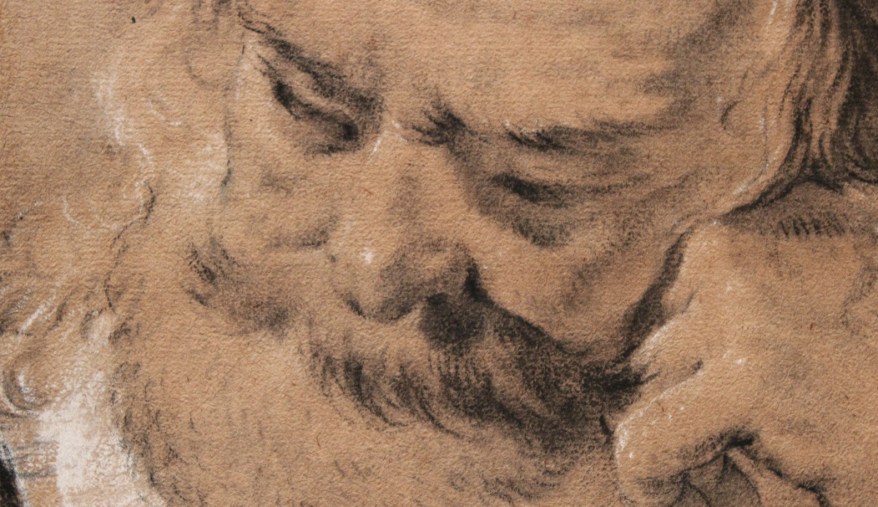
Giovanni Battista Piazzetta, il vecchio che sembra vivo: la poesia in un disegno
🇮🇹Una testa, una barba, due mani e una luce straordinaria: nella Testa di vecchio, Piazzetta trasforma gesso bianco e nero e carta bruna in un’immagine di incredibile intensità… 🇬🇧A head, a beard, two hands, and extraordinary light: in *Head of an Old Man*, Piazzetta transforms black and white chalk and brown paper into an image…
Condividi:


Questo sono io




sostienici

Sostienici – Support Us
Se questo blog ti piace e ti appassiona, puoi aiutarci a farlo crescere sempre più sostenendoci in modo concreto condividendo i post, seguendo le pagine social e con un contributo che ci aiuta ad andare avanti con il nostro lavoro di divulgazione. . ENGLISH: If you like and are passionate about this blog, you can help us make it grow more and more by supporting us in a concrete way by sharing posts, following social pages and with a contribution that helps us to move forward with our dissemination work.
€10,00


