
Rembrandt e il Festino di Baldassarre: sete, broccati e gioielli prendono vita
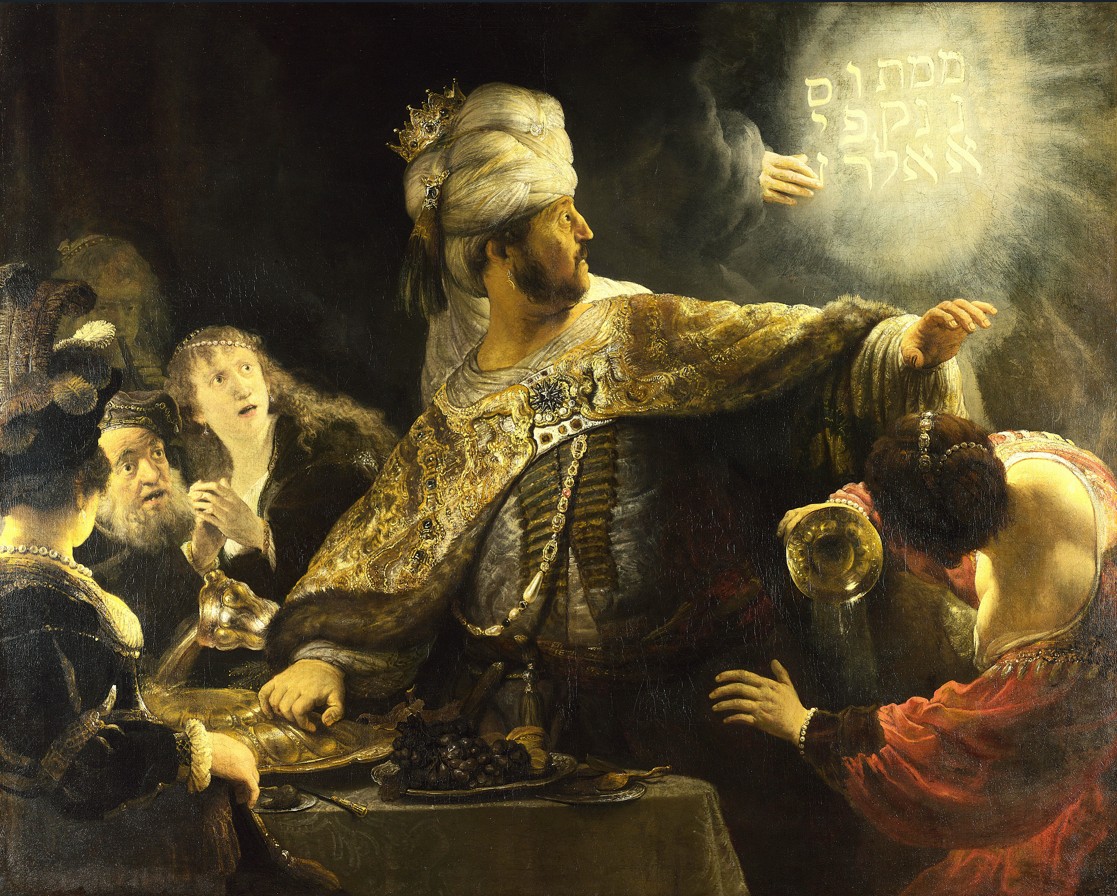
Il Festino di Baldassarre di Rembrandt van Rijn, realizzato tra il 1635 e il 1638, appartiene alle collezioni della National Gallery di Londra.
Davanti a questa tela monumentale si ha quasi l’impressione di udire il tintinnio dei calici, il fruscio delle sete preziose e persino il suono dell’acqua che trabocca da una brocca d’argento.
È uno dei dipinti più spettacolari del Seicento europeo che riesce a trasformare un episodio biblico in una scena di sorprendente realismo.
Il racconto biblico che ispirò Rembrandt
L’episodio è tratto dal Libro di Daniele. Baldassarre, ultimo sovrano dell’impero babilonese, organizza un sontuoso banchetto mentre l’esercito dei Medi e dei Persiani è ormai alle porte della città.
In un gesto di superbia ordina di utilizzare durante il convito i preziosi vasi sacri che suo padre Nabucodonosor aveva sottratto al Tempio di Gerusalemme. Mentre gli invitati brindano, accade l’impensabile: una mano misteriosa appare nel nulla e scrive sulla parete le celebri parole “Mene, Mene, Tekel, Upharsin”, annuncio del giudizio divino e della fine imminente del regno.
Rembrandt sceglie proprio l’istante in cui il tempo sembra fermarsi: lo stupore, il terrore e l’incredulità attraversano i volti dei presenti in una composizione carica di tensione drammatica.
La committenza e il gusto della ricca Amsterdam
Il dipinto fu probabilmente realizzato per un ricco mercante della prospera Amsterdam degli anni Trenta del Seicento, una città che stava vivendo il suo straordinario Secolo d’Oro.
Sebbene il nome del primo committente non sia documentato con assoluta certezza, l’opera risponde perfettamente ai gusti della nuova élite mercantile: grandi tele ricche di simboli morali, destinate a impreziosire le dimore più prestigiose.
Rembrandt, già celebre per la sua capacità di rappresentare emozioni profonde e superfici preziose, trovò in questo soggetto l’occasione ideale per mostrare tutto il suo virtuosismo pittorico.
Gioielli, sete e broccati: un trionfo di lusso dipinto
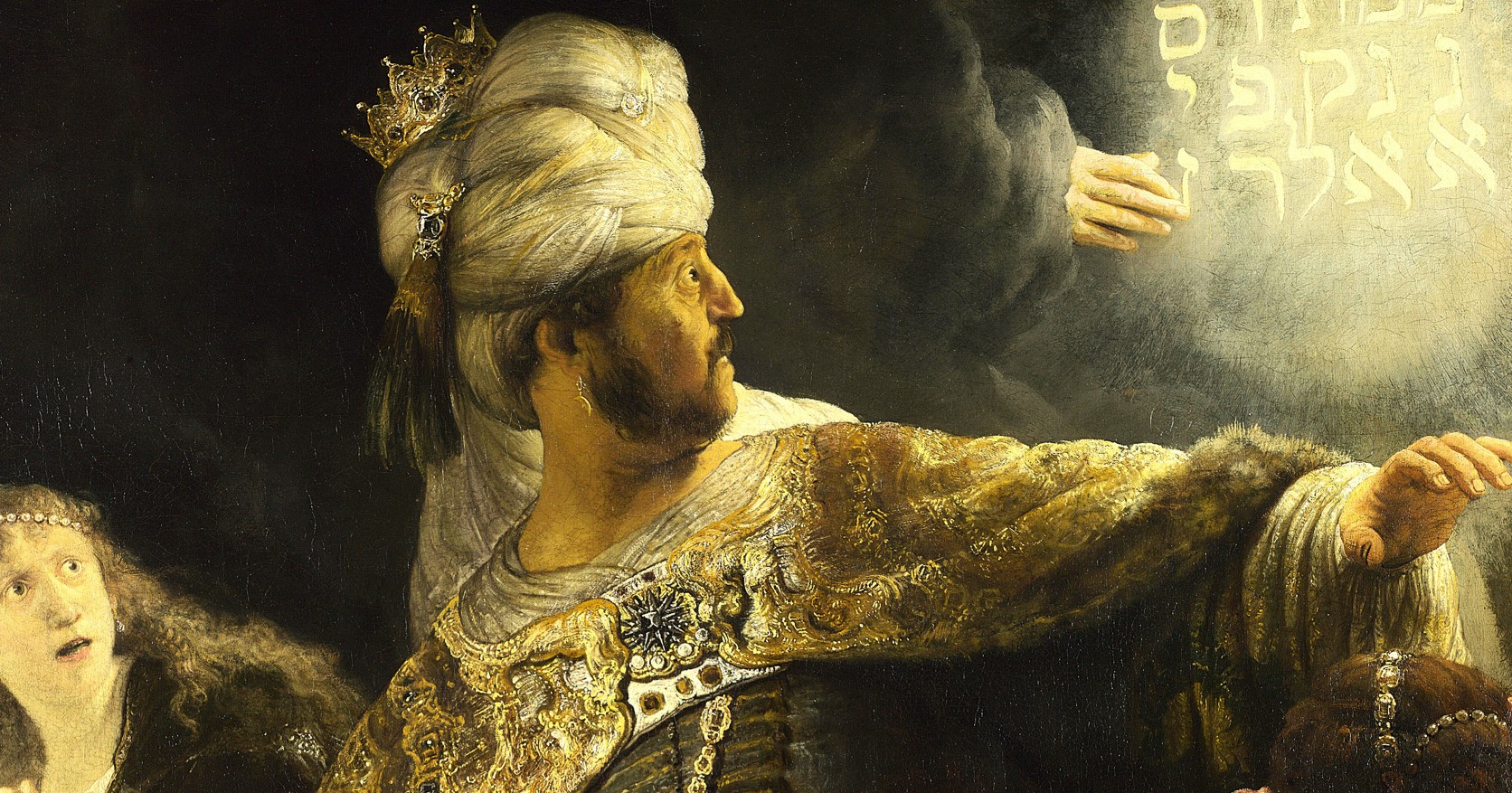
Ciò che colpisce immediatamente è la straordinaria resa dei materiali.
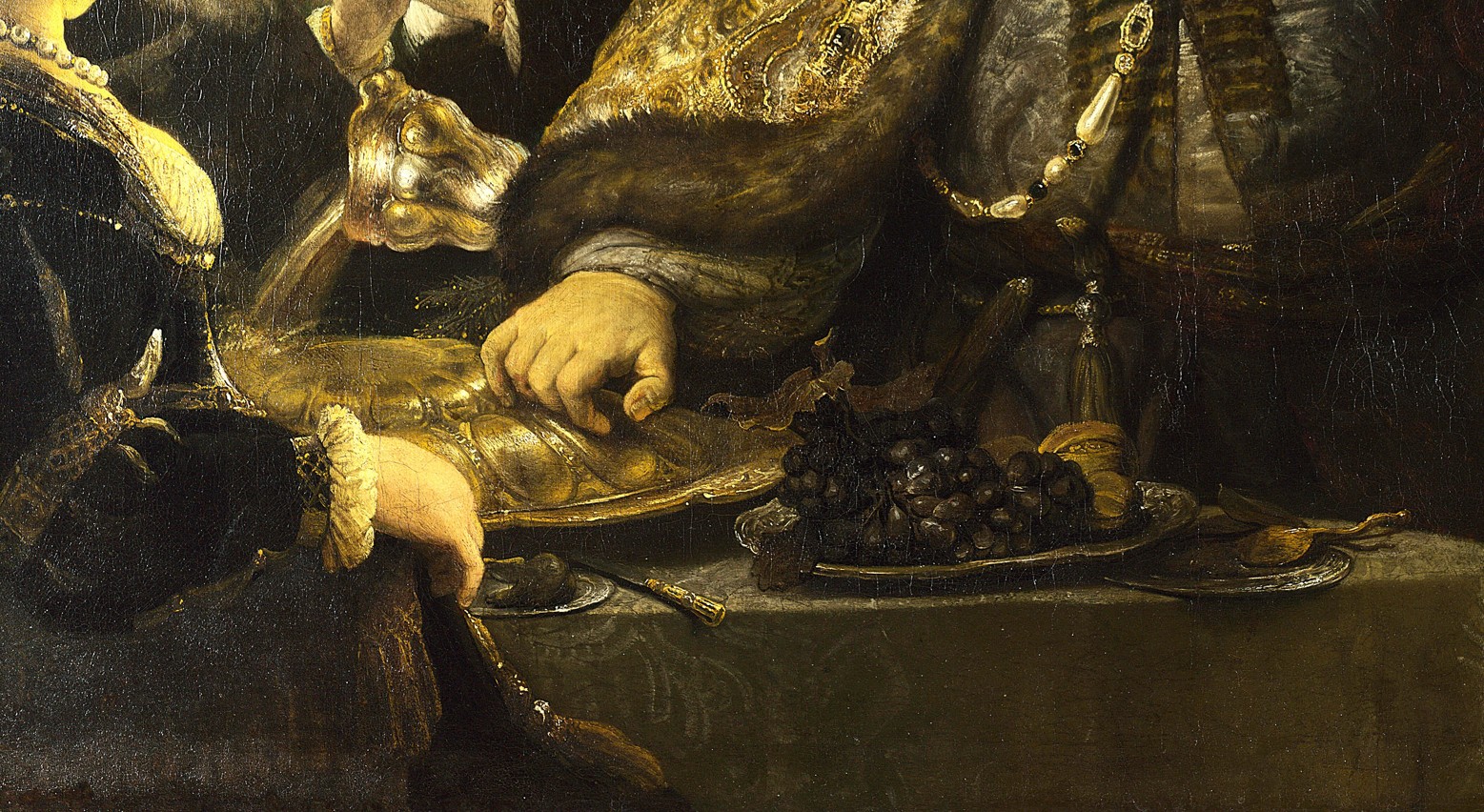
Le vesti dei protagonisti sembrano realmente tessute in seta, velluto e broccato. Ogni piega cattura la luce con sfumature diverse, creando una sensazione tattile sorprendente. Le maniche ricamate, i copricapi orientaleggianti e i raffinati drappeggi raccontano il gusto per il lusso che caratterizzava la pittura barocca.
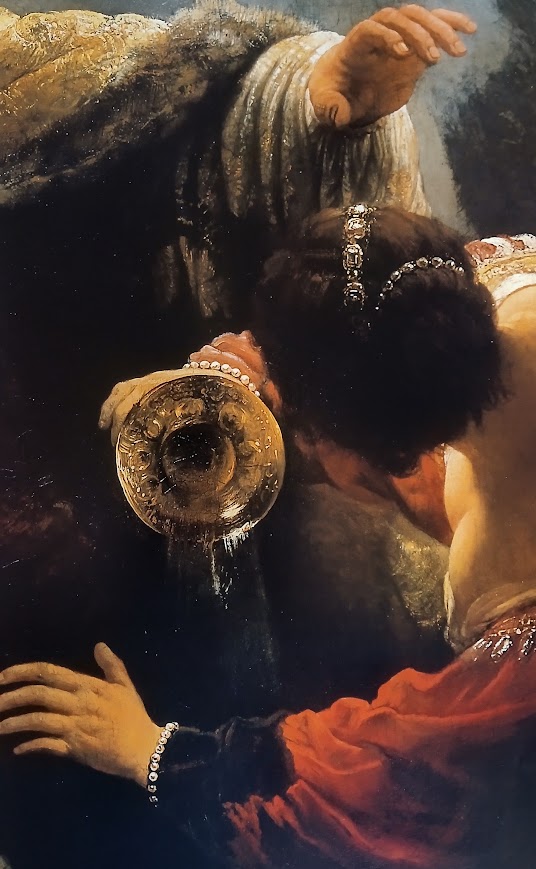
Ancora più impressionanti sono i gioielli. Perle, collane, pendenti e diademi riflettono la luce con minuscoli tocchi di colore e impasti materici che fanno brillare ogni pietra preziosa. Rembrandt rende vivi gli ornamenti, facendone strumenti narrativi che sottolineano la ricchezza e, allo stesso tempo, la vanità dei protagonisti.
Ogni dettaglio contribuisce a costruire il contrasto tra lo splendore terreno e il giudizio divino che sta per abbattersi sul sovrano.
L’acqua che scorre: uno dei dettagli più sorprendenti del dipinto
Fra i particolari più affascinanti dell’intera composizione ce n’è uno che spesso passa inosservato in foto ma che ma che dal vivo lascia senza parole.
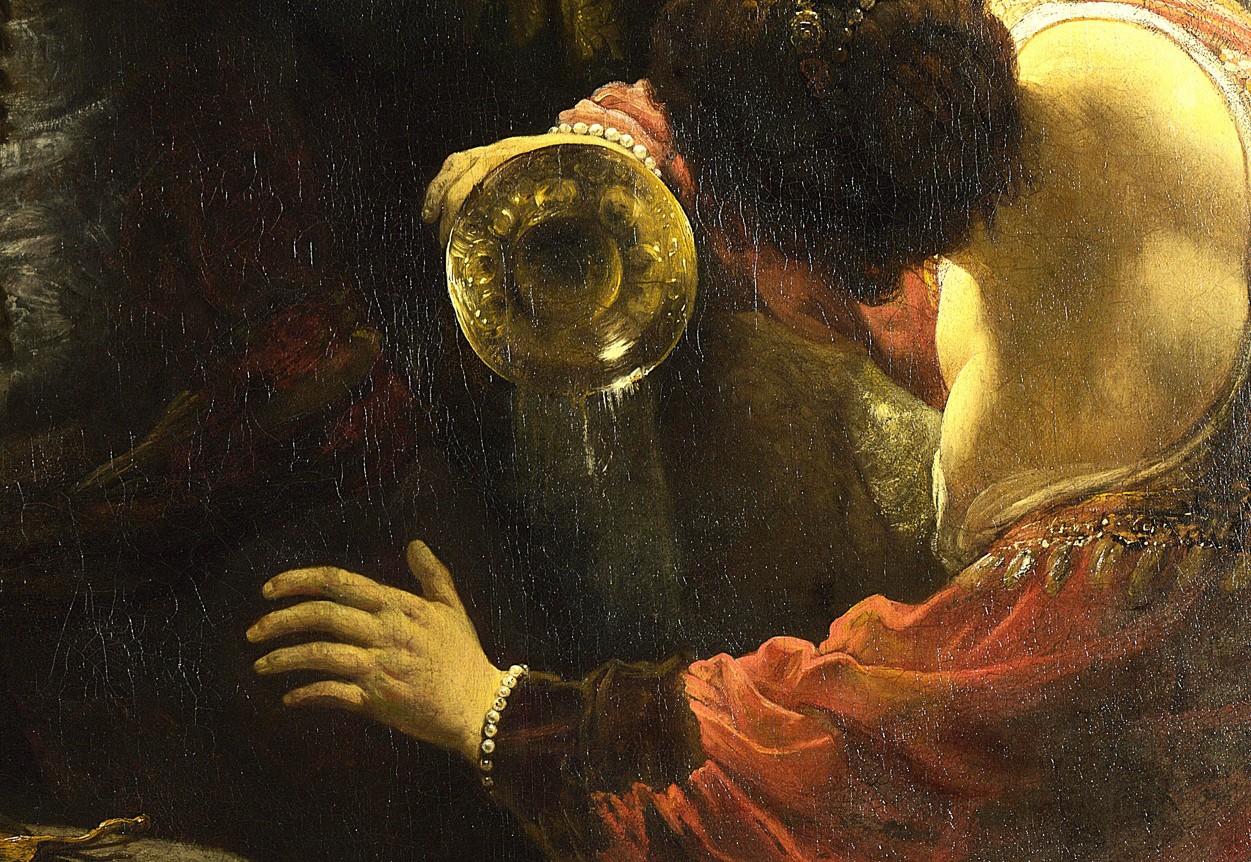
Dalla preziosa brocca metallica che una figura stringe con forza, l’acqua trabocca improvvisamente, conseguenza dello spavento provocato dall’apparizione della mano divina.
Rembrandt riesce a rappresentare il liquido con una tale naturalezza che sembra quasi possibile percepirne il movimento. La sottile cascata riflette la luce, si infrange sul recipiente sottostante e restituisce un’impressione di freschezza incredibilmente realistica.
È uno di quei dettagli che dimostrano la capacità del maestro di trasformare la pittura in esperienza sensoriale. Osservandola attentamente si ha quasi l’impressione di sentirne il lieve scroscio, come se il silenzio improvviso della sala fosse rotto soltanto dall’acqua che continua a cadere.
La luce teatrale che racconta il dramma
Come in molti capolavori di Rembrandt, è la luce a costruire il racconto.
L’oscurità avvolge la scena lasciando emergere i volti, le mani, gli ori e gli oggetti più preziosi. Il bagliore che illumina la scritta sulla parete investe i protagonisti, evidenziandone le espressioni di paura con un’intensità quasi cinematografica.
Ogni volto reagisce in modo diverso: c’è chi spalanca gli occhi, chi trattiene il respiro, chi cerca istintivamente di allontanarsi dal prodigio. Le mani si agitano, i tessuti si increspano, i calici oscillano. Tutto contribuisce a dare l’impressione che la scena stia realmente accadendo davanti allo spettatore.
Un capolavoro che continua a stupire
Il Festino di Baldassarre è una dimostrazione tangibile della capacità di Rembrandt di trasformare la materia pittorica in oggetti reali.
L’oro sembra brillare davvero, le sete sembrano morbide al tatto, le gemme riflettono la luce e quella semplice acqua che esce dalla brocca riesce ancora oggi a stupire, ricordando come il genio del pittore olandese fosse capace di superare i confini della tela e di coinvolgere lo spettatore con un realismo senza tempo.
Per il momento il sempre vostro Michelangelo Buonarroti vi saluta dandovi appuntamento ai prossimi post e sui social.
Rembrandt and Belshazzar’s Feast: Silks, Brocades, and Jewels Come to Life
Rembrandt van Rijn’s Belshazzar’s Feast, painted between 1635 and 1638, is part of the collections of the National Gallery in London.
Standing before this monumental canvas, one almost seems to hear the clinking of glasses, the rustle of precious silks, and even the sound of water overflowing from a silver jug.
It is one of the most spectacular paintings of seventeenth-century Europe, transforming a biblical episode into a scene of astonishing realism.
The biblical story that inspired Rembrandt
The episode is taken from the Book of Daniel. Belshazzar, the last ruler of the Babylonian Empire, hosts a sumptuous banquet as the armies of the Medes and Persians approach the city gates.
In a gesture of pride, he orders the use of the precious sacred vessels that his father Nebuchadnezzar had stolen from the Temple of Jerusalem during the banquet. While the guests toast, the unthinkable happens: a mysterious hand appears out of nowhere and writes the famous words “Mene, Mene, Tekel, Upharsin” on the wall, announcing divine judgment and the imminent end of the kingdom.
Rembrandt chooses precisely the moment when time seems to stand still: amazement, terror, and disbelief cross the faces of those present in a composition charged with dramatic tension.
The patronage and taste of wealthy Amsterdam
The painting was likely created for a wealthy merchant in prosperous Amsterdam in the 1630s, a city experiencing its extraordinary Golden Age.
Although the name of the first patron is not documented with absolute certainty, the work perfectly suited the tastes of the new mercantile elite: large canvases rich with moral symbols, destined to adorn the most prestigious homes.
Rembrandt, already renowned for his ability to depict profound emotions and precious surfaces, found in this subject the ideal opportunity to showcase his pictorial virtuosity.
Jewels, silks, and brocades: a triumph of painted luxury
What is immediately striking is the extraordinary rendering of the materials.
The protagonists’ garments appear to be genuinely woven from silk, velvet, and brocade. Each fold captures the light with different nuances, creating a surprising tactile sensation. The embroidered sleeves, the oriental-style headdresses, and the refined draperies speak to the taste for luxury that characterized Baroque painting.
Even more impressive are the jewels. Pearls, necklaces, pendants, and tiaras reflect the light with tiny touches of color and textured textures that make each precious stone sparkle. Rembrandt brings the ornaments to life, turning them into narrative tools that emphasize the wealth and, at the same time, the vanity of the protagonists.
Every detail contributes to the contrast between earthly splendor and the divine judgment about to fall upon the sovereign.
Flowing Water: One of the Painting’s Most Striking Details
Among the most fascinating details of the entire composition is one that often goes unnoticed in photographs but is truly astonishing in person.
Water suddenly overflows from the precious metal jug tightly gripped by a figure, a reflection of the shock provoked by the apparition of the divine hand.
Rembrandt manages to depict the liquid with such naturalness that it almost seems possible to perceive its movement. The subtle waterfall reflects the light, crashing onto the vessel below, and conveys an incredibly realistic impression of freshness.
It is one of those details that demonstrate the master’s ability to transform painting into a sensory experience. Looking closely, one almost feels like hearing the gentle splash, as if the sudden silence of the room were broken only by the continuing falling water.
Theatrical lighting that tells the drama
As in many of Rembrandt’s masterpieces, it is light that constructs the story.
Darkness envelops the scene, revealing faces, hands, gold, and the most precious objects. The glow illuminating the writing on the wall bathes the protagonists, highlighting their expressions of fear with an almost cinematic intensity.
Each face reacts differently: some widen their eyes, some hold their breath, some instinctively try to distance themselves from the prodigy. Hands fidget, fabrics ripple, goblets sway. Everything contributes to the impression that the scene is actually happening before the viewer.
A masterpiece that continues to amaze
Belshazzar’s Feast is a tangible demonstration of Rembrandt’s ability to transform pictorial matter into real objects.
The gold seems to truly shine, the silks seem soft to the touch, the gems reflect the light, and that simple water flowing from the jug still amazes today, reminding us of how the Dutch painter’s genius transcended the confines of the canvas and captivated the viewer with timeless realism.
For now, yours truly, Michelangelo Buonarroti, bids farewell and invites you to join him in future posts and on social media.

Sostienici – Support Us
Se questo blog ti piace e ti appassiona, puoi aiutarci a farlo crescere sempre più sostenendoci in modo concreto condividendo i post, seguendo le pagine social e con un contributo che ci aiuta ad andare avanti con il nostro lavoro di divulgazione. . ENGLISH: If you like and are passionate about this blog, you can help us make it grow more and more by supporting us in a concrete way by sharing posts, following social pages and with a contribution that helps us to move forward with our dissemination work.
10,00 €
Articoli

Condividi:


Questo sono io




sostienici

Sostienici – Support Us
Se questo blog ti piace e ti appassiona, puoi aiutarci a farlo crescere sempre più sostenendoci in modo concreto condividendo i post, seguendo le pagine social e con un contributo che ci aiuta ad andare avanti con il nostro lavoro di divulgazione. . ENGLISH: If you like and are passionate about this blog, you can help us make it grow more and more by supporting us in a concrete way by sharing posts, following social pages and with a contribution that helps us to move forward with our dissemination work.
€10,00


