
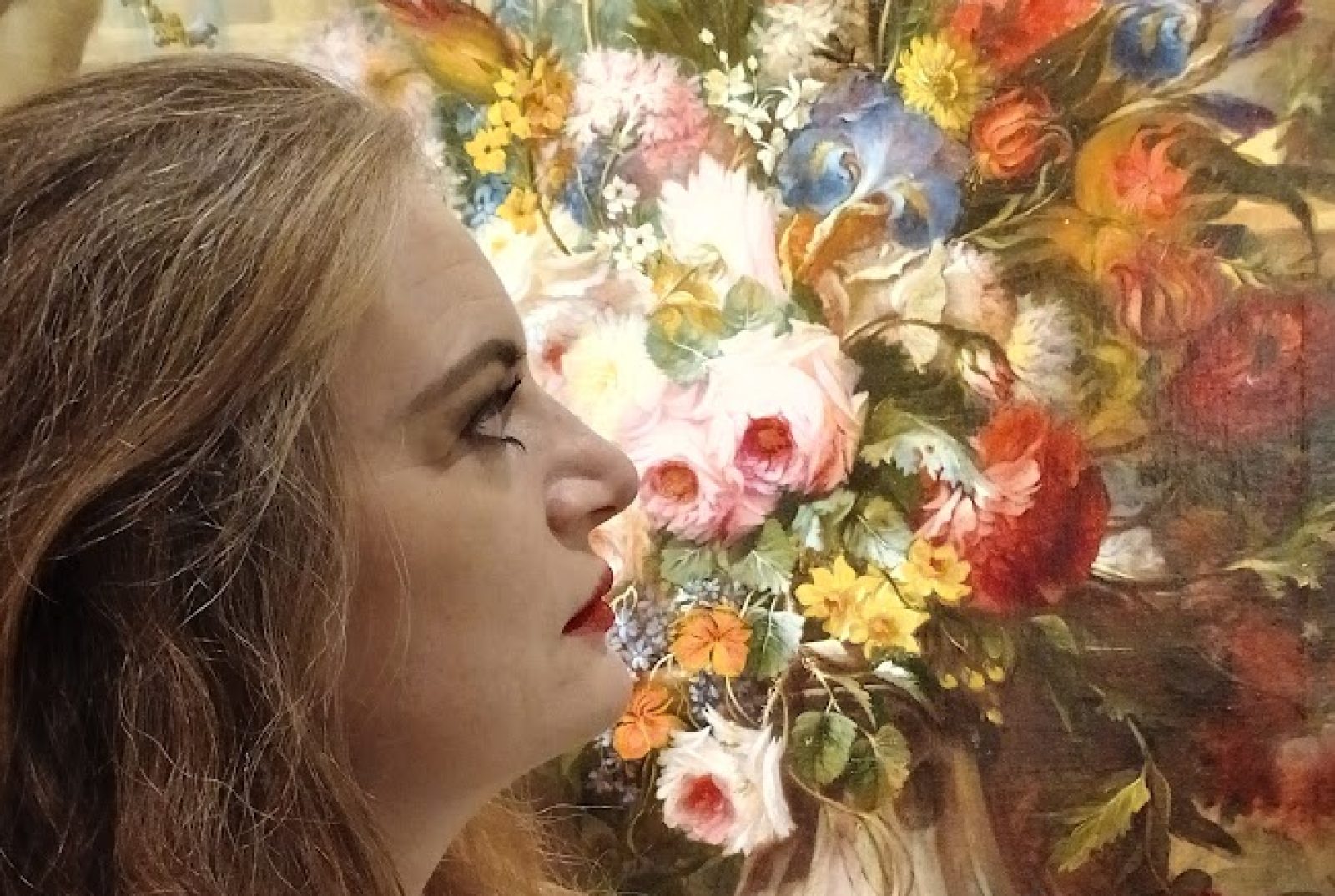
Credevano di averla nascosta per sempre: il 10 luglio 1945 la mia Madonna di Bruges tornò finalmente alla luce
Ci sono giorni che nemmeno il tempo riesce a cancellare e che regalano emozioni che perdurano nei secoli.
Il 10 luglio 1945 è uno di quelli che porto nel cuore come fosse accaduto ieri. Dopo mesi trascorsi nel silenzio della montagna, nascosta nelle profondità delle miniere di sale di Altaussee, la mia Madonna di Bruges tornò finalmente a rivedere la luce del sole.
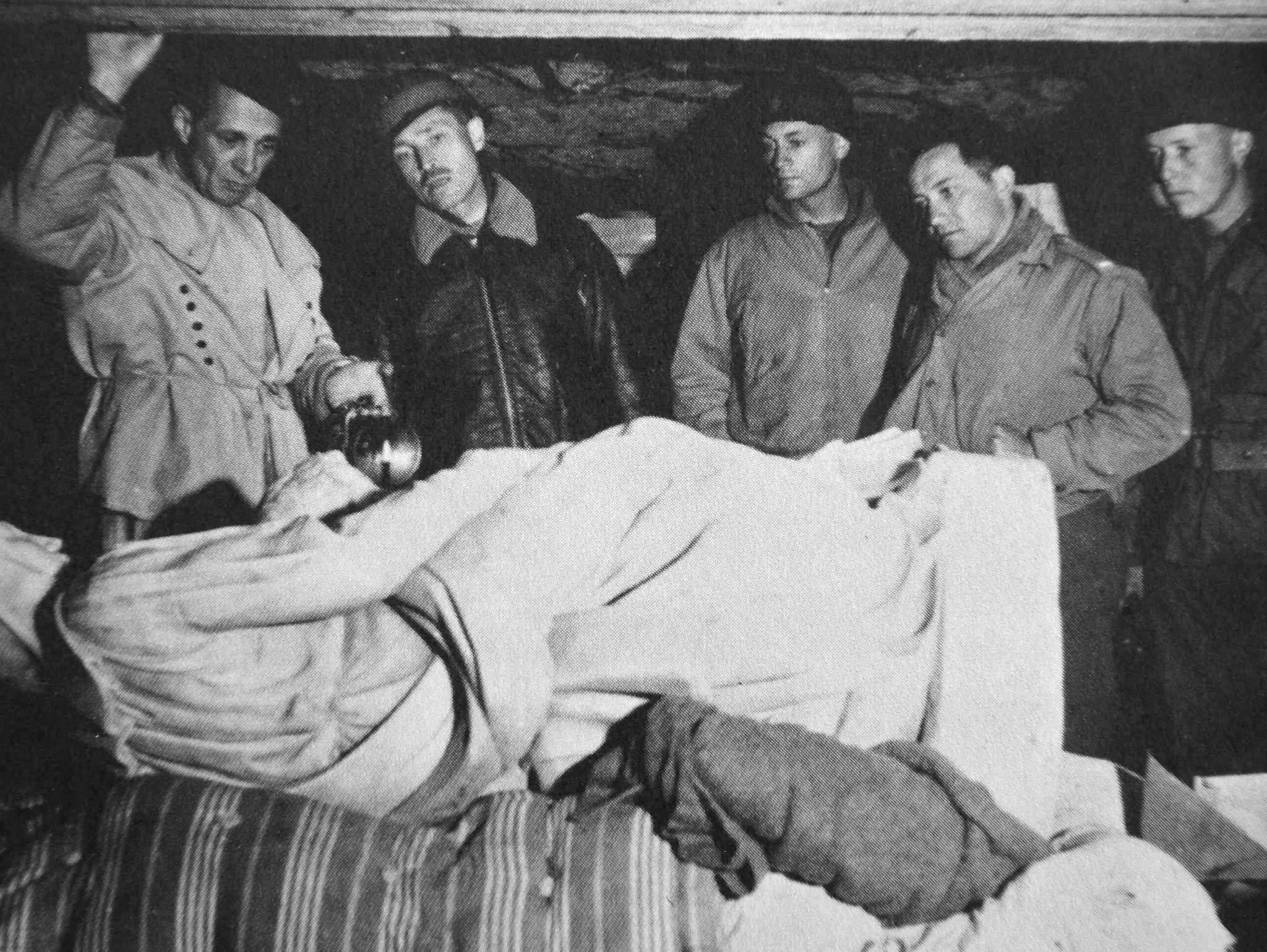
Quella Madre che stringeva il proprio Figlio davanti a sé era fede, speranza. Era una parte della mia anima.
Sapere che era sopravvissuta alla follia della guerra è una gioia che ancora oggi mi commuove. L’atrocità della guerra e la bellezza dell’arte che narra per immagini.
Il furto della Madonna di Bruges durante l’occupazione nazista
Nella notte tra il 6 e il 7 settembre 1944, i nazisti trafugarono la mia Madonna dalla Chiesa di Notre-Dame di Bruges, in Belgio.
Cominciò così un viaggio drammatico, prima via mare e poi attraverso l’Europa, fino alle miniere di sale di Altaussee, in Austria.
Lì non venne nascosta da sola. Assieme a Lei infatti vennero accumulate oltre 6.500 opere d’arte, tra dipinti, sculture, codici miniati, libri preziosi e tesori provenienti da ogni angolo del continente.
Tutto era destinato al grande museo che Adolf Hitler sognava di costruire a Linz.
Perché le miniere di Altaussee erano considerate il rifugio perfetto
La scelta delle miniere non fu casuale. Erano state inizialmente utilizzate dai musei viennesi per proteggere le proprie collezioni dai bombardamenti.
Scavate orizzontalmente nella montagna, erano quasi impossibili da distruggere dall’alto. Il salgemma assorbiva naturalmente l’umidità e la temperatura rimaneva stabile, tra i 4 e gli 8 gradi durante tutto l’anno. Per dipinti e sculture rappresentavano un ambiente quasi ideale.
Gli oggetti metallici, invece, dovevano essere protetti con uno strato di grasso per evitare la corrosione.
Quando Hitler ne prese il controllo, quel luogo nato per salvare l’arte divenne il più grande deposito dei tesori trafugati in Europa.

I Monuments Men arrivano ad Altaussee
Il 12 maggio 1945, i Monuments Men Robert Posey e Lincoln Kirstein raggiunsero finalmente Altaussee e ciò che trovarono fu scoraggiante.
I minatori avevano fatto esplodere l’ingresso della miniera, sigillandolo con enormi masse di roccia.
Lo fecero per impedire distruzioni peggiori e, soprattutto, per salvaguardare sia le opere sia la stessa miniera. Posey e Kirstein riuscirono comunque a infilarsi attraverso uno stretto passaggio tra le macerie.
Ed è proprio lì che avvenne uno degli incontri più emozionanti della storia dell’arte.

La Madonna riappare nel buio della miniera
Immaginate il silenzio, l’aria fredda e il sale che ricopriva ogni cosa. E poi la luce tremolante delle torce.
Fu allora che comparve la mia Madonna. Era ancora appoggiata sullo stesso materasso a righe utilizzato per trasportarla dal Belgio.
Thomas Carr Howe Jr. ricordò quel momento con parole che ancora oggi emozionano:
“La luce delle nostre lampade rimbalzava sulle morbide pieghe della veste della Madonna, sulle sue fattezze delicate. Il suo sguardo serio sembrava appena consapevole della presenza del Cristo ai suoi piedi.”
In quell’istante i Monuments Man stavano restituendo dignità alla civiltà europea.

10 luglio 1945: il giorno in cui la Madonna uscì dalla montagna
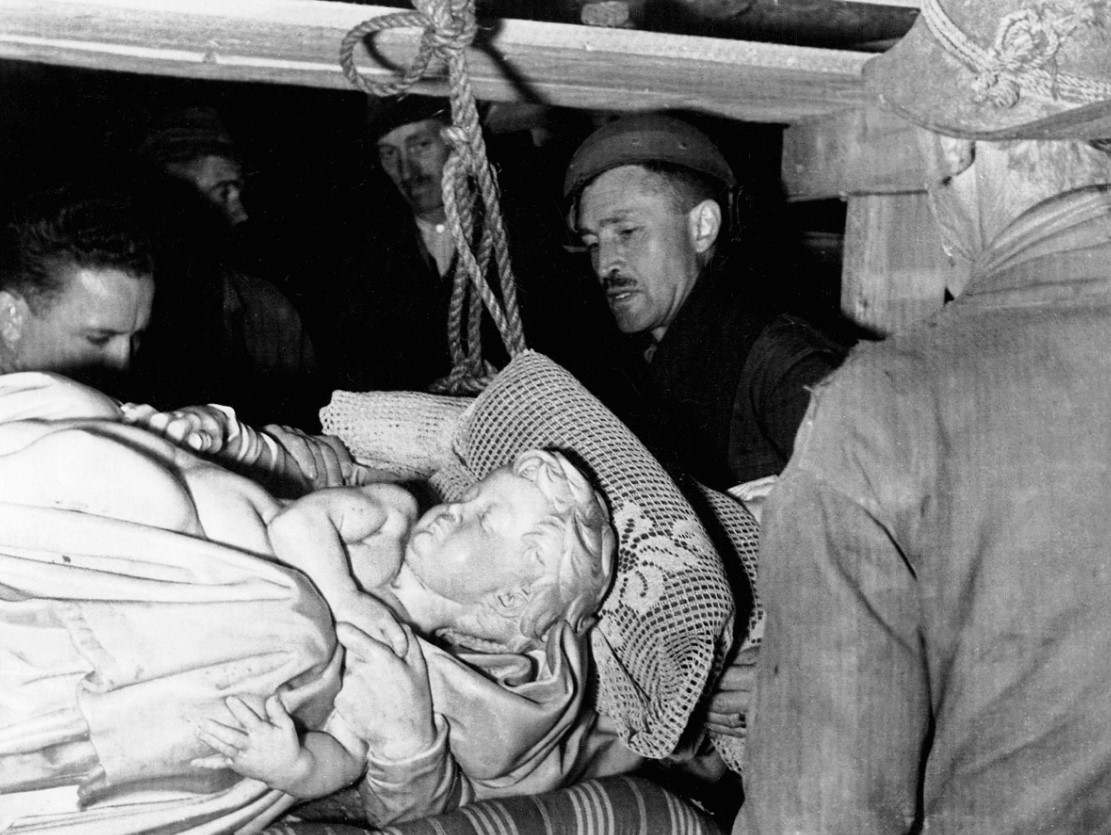
Portare fuori una scultura che supera la tonnellata non era certo un’impresa semplice.
Il tenente George Stout, insieme a Stephen Kovalyak e Thomas Carr Howe, preparò ogni dettaglio.
Il giorno precedente la mia Madonna venne protetta con carta, cappotti e robuste corde.
Fu poi Stout a ideare un ingegnoso sistema di pulegge che consentì di sollevare lentamente la scultura e accompagnarla verso l’uscita senza arrecare il minimo danno.
Il 10 luglio 1945, dopo mesi trascorsi nel buio assoluto, la mia Madonna respirò di nuovo la luce del giorno.
Venne caricata su un camion che il giorno seguente raggiunse il centro di raccolta di Monaco insieme a numerose altre opere recuperate.
Fu una vittoria dell’arte sulla guerra.
Il ritorno della Madonna di Bruges in Belgio
Il 22 settembre 1945 la mia Madonna lasciò Monaco insieme ad altri diciassette dipinti per fare ritorno in Belgio. Prima venne accolta al Museo Reale delle Belle Arti di Bruxelles.
Successivamente fu esposta nel Palazzo Provinciale di Piazza Markt.
Infine, il 12 novembre 1945, tornò nella sua dimora originaria.
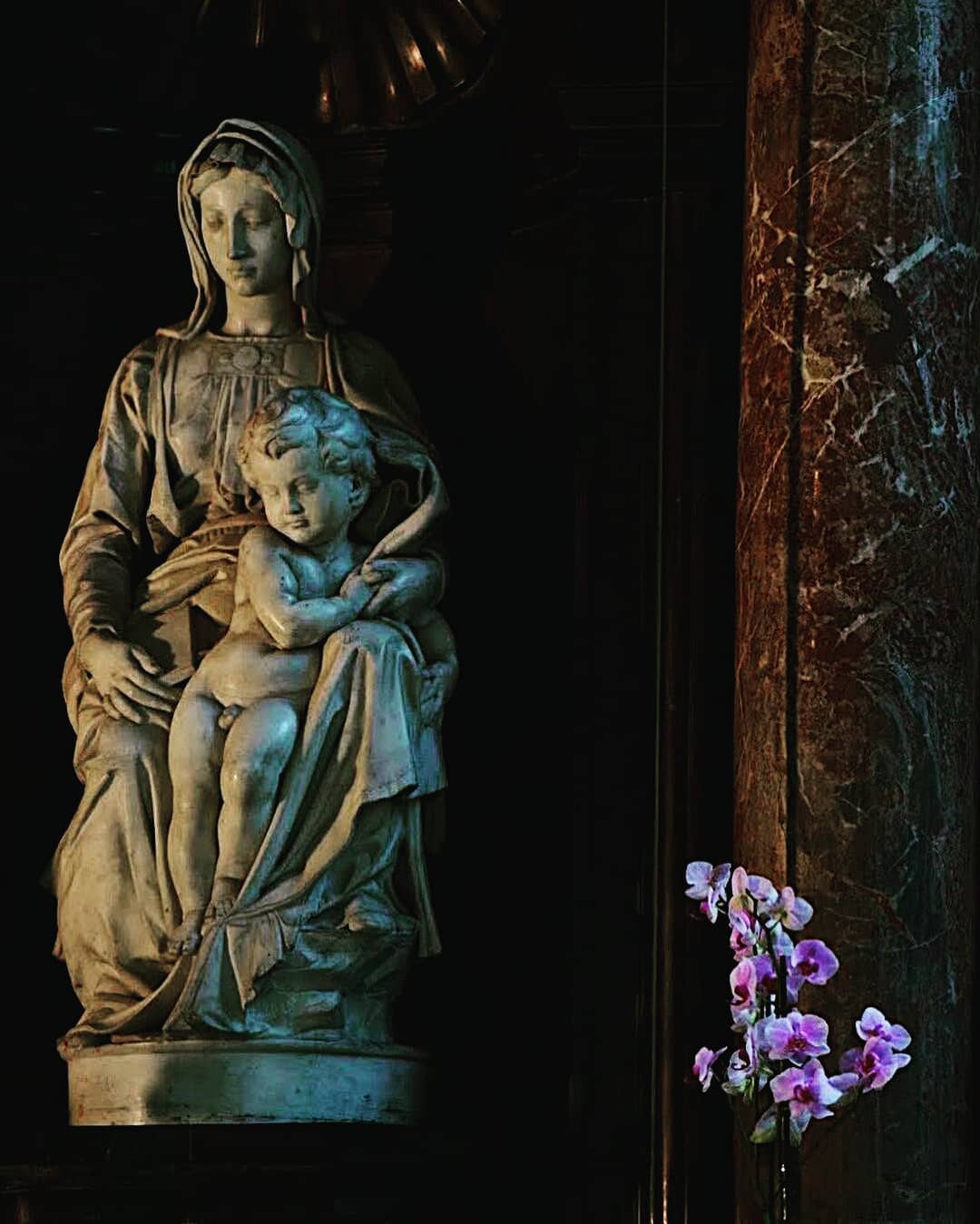
La nicchia di marmi neri della Chiesa di Notre-Dame di Bruges tornò finalmente ad abbracciare la scultura per cui era stata pensata. Dopo oltre un anno di lontananza, quel viaggio era finalmente terminato.
Per il momento il sempre vostro Michelangelo Buonarroti vi saluta dandovi appuntamento ai prossimi post e sui social.
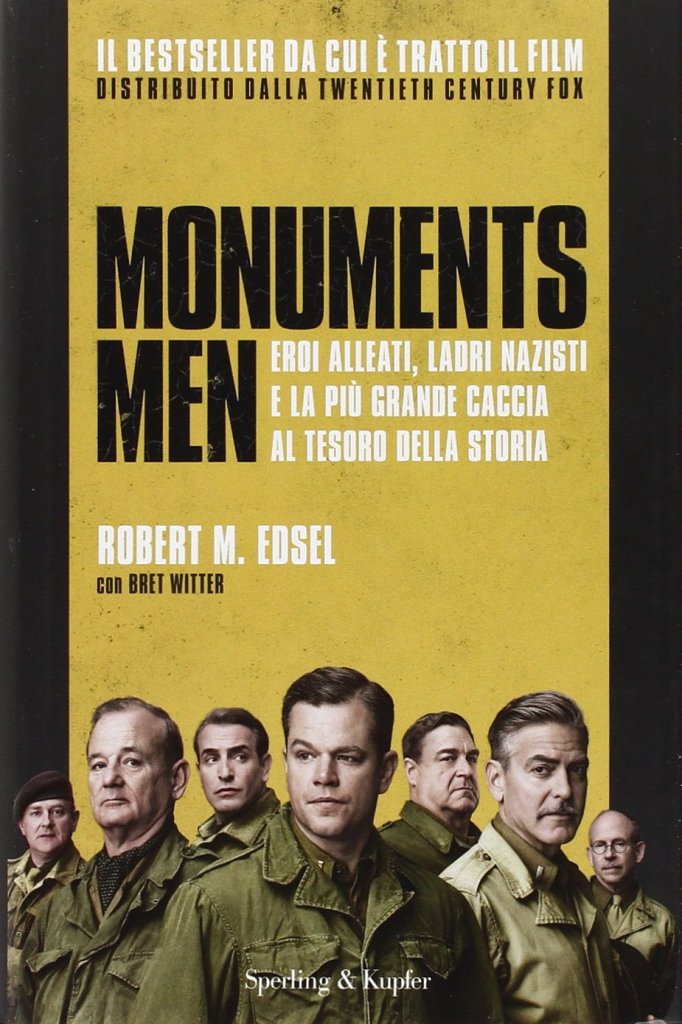
They thought they had hidden her forever: on July 10, 1945, my Madonna of Bruges finally came to light.
There are days that not even time can erase, days that offer emotions that endure through the centuries.
July 10, 1945, is one of those days I carry in my heart as if it happened yesterday. After months spent in the silence of the mountains, hidden in the depths of the Altaussee salt mines, my Madonna of Bruges finally saw the light of day again.
That Mother holding her Son before her was faith, hope. She was a part of my soul.
Knowing that she had survived the madness of war is a joy that still moves me today. The atrocity of war and the beauty of art that narrates through images.
The Theft of the Madonna of Bruges During the Nazi Occupation
On the night between September 6 and 7, 1944, the Nazis stole my Madonna from the Church of Notre-Dame in Bruges, Belgium.
Thus began a dramatic journey, first by sea and then across Europe, to the Altaussee salt mines in Austria.
She was not hidden there alone. Along with her, over 6,500 works of art were amassed, including paintings, sculptures, illuminated manuscripts, precious books, and treasures from every corner of the continent.
All of them were destined for the great museum that Adolf Hitler dreamed of building in Linz.
Why the Altaussee mines were considered the perfect refuge
The choice of the mines was no coincidence. They had initially been used by Viennese museums to protect their collections from bombing raids.
Dug horizontally into the mountain, they were almost impossible to destroy from above. The rock salt naturally absorbed moisture, and the temperature remained stable, between 40 and 46 degrees Fahrenheit (4 and 8 degrees Celsius) year-round. For paintings and sculptures, it represented a nearly ideal environment.
Metal objects, however, had to be protected with a layer of grease to prevent corrosion.
When Hitler took control, this place created to save art became the largest repository of stolen treasures in Europe.
The Monuments Men Arrive at Altaussee
On May 12, 1945, Monuments Men Robert Posey and Lincoln Kirstein finally reached Altaussee, and what they found was discouraging.
The miners had blasted open the mine entrance, sealing it with enormous masses of rock.
They did this to prevent further destruction and, above all, to safeguard both the works and the mine itself. Posey and Kirstein nevertheless managed to squeeze through a narrow passageway in the rubble.
And it was there that one of the most moving encounters in the history of art took place.
The Madonna reappears in the darkness of the mine
Imagine the silence, the cold air, and the salt covering everything. And then the flickering light of the torches.
It was then that my Madonna appeared. She was still resting on the same striped mattress used to transport her from Belgium.
Thomas Carr Howe Jr. remembered that moment with words that still resonate today:
“The light from our lamps bounced off the soft folds of the Madonna’s robe, on her delicate features. Her serious gaze seemed barely aware of the presence of Christ at her feet.”
In that moment, the Monuments Men were restoring dignity to European civilization.
July 10, 1945: The Day the Madonna Came Out of the Mountain
Removing a sculpture weighing over a ton was certainly no easy feat.
Lieutenant George Stout, along with Stephen Kovalyak and Thomas Carr Howe, prepared every detail.
The day before, my Madonna was protected with paper, coats, and sturdy ropes.
Stout then devised an ingenious pulley system that allowed the sculpture to be slowly lifted and guided toward the exit without causing the slightest damage.
On July 10, 1945, after months spent in absolute darkness, my Madonna breathed daylight again.
It was loaded onto a truck that reached the Munich collection center the following day, along with numerous other recovered works.
It was a victory for art over war.
The Return of the Madonna of Bruges to Belgium
On September 22, 1945, my Madonna left Munich along with seventeen other paintings to return to Belgium. It was first welcomed into the Royal Museum of Fine Arts in Brussels.
It was subsequently exhibited in the Provincial Palace on the Markt Square.
Finally, on November 12, 1945, it returned to its original home.
The black marble niche of the Church of Notre-Dame in Bruges finally returned to embrace the sculpture for which it was intended. After more than a year of absence, that journey was finally over.
For now, yours truly, Michelangelo Buonarroti bids you farewell and invites you to join him in future posts and on social media.

Sostienici – Support Us
Se questo blog ti piace e ti appassiona, puoi aiutarci a farlo crescere sempre più sostenendoci in modo concreto condividendo i post, seguendo le pagine social e con un contributo che ci aiuta ad andare avanti con il nostro lavoro di divulgazione. . ENGLISH: If you like and are passionate about this blog, you can help us make it grow more and more by supporting us in a concrete way by sharing posts, following social pages and with a contribution that helps us to move forward with our dissemination work.
10,00 €
Articoli

Condividi:


Questo sono io




sostienici

Sostienici – Support Us
Se questo blog ti piace e ti appassiona, puoi aiutarci a farlo crescere sempre più sostenendoci in modo concreto condividendo i post, seguendo le pagine social e con un contributo che ci aiuta ad andare avanti con il nostro lavoro di divulgazione. . ENGLISH: If you like and are passionate about this blog, you can help us make it grow more and more by supporting us in a concrete way by sharing posts, following social pages and with a contribution that helps us to move forward with our dissemination work.
€10,00


