
La scultura che sembra respirare: il San Pietro di Artus Quellinus
Artus Quellinus è uno dei più straordinari scultori del Seicento europeo. Poco noto al grande pubblico, ebbbe la capacità di trasformare la pietra in materia viva, di dare peso alle emozioni e movimento ai corpi, fino a far dimenticare allo spettatore che tutto ciò che osserva è stato ricavato da un unico blocco di marmo.
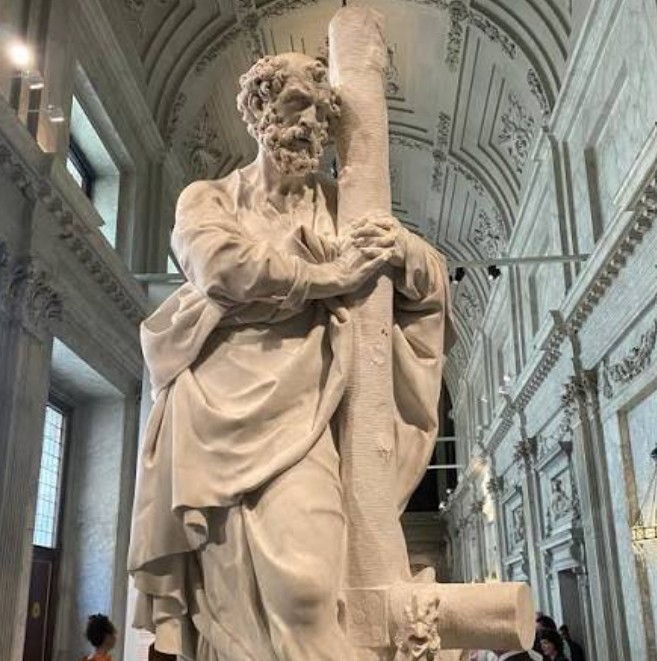
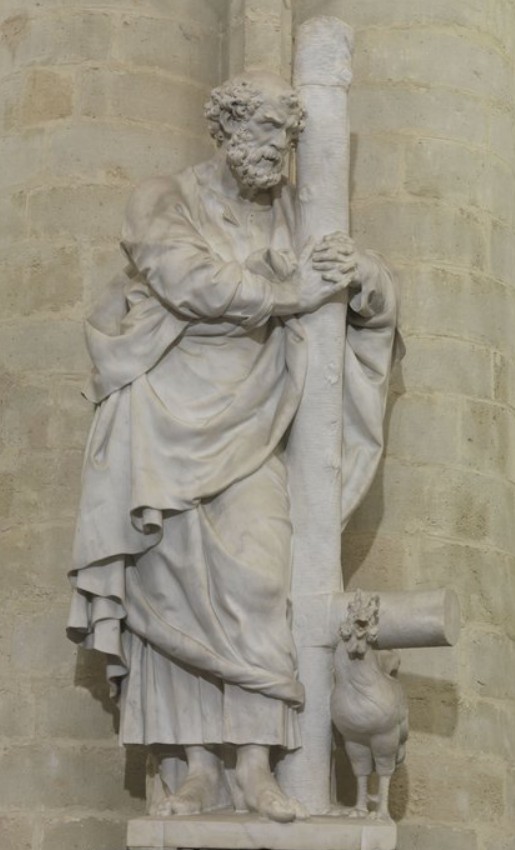
Tra le sue opere più belle, c’è senza dubbio il San Pietro scolpito assieme al gallo, esplicito riferimento alle parole pronunciate da Cristo che si trovano nel vangelo di Matteo “In verità ti dico: questa notte stessa, prima che il gallo canti, mi rinnegherai tre volte”.
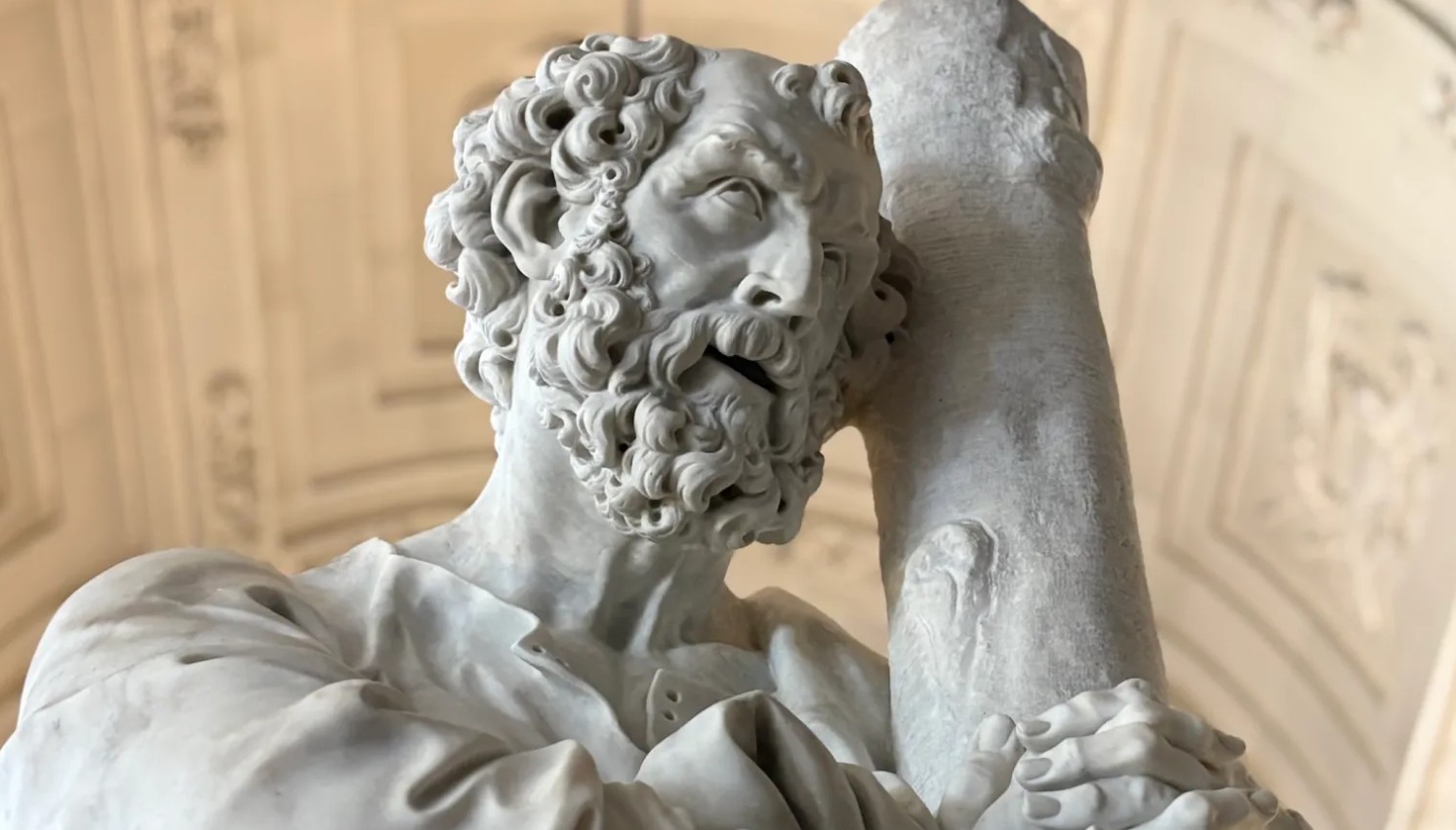
E poi c’è la croce del martirio che San Pietro stesso volle fosse innalzata a testa in giù perché non si riteneva degno di subire lo stesso tipo di martirio che era stato riservato al Salvatore.
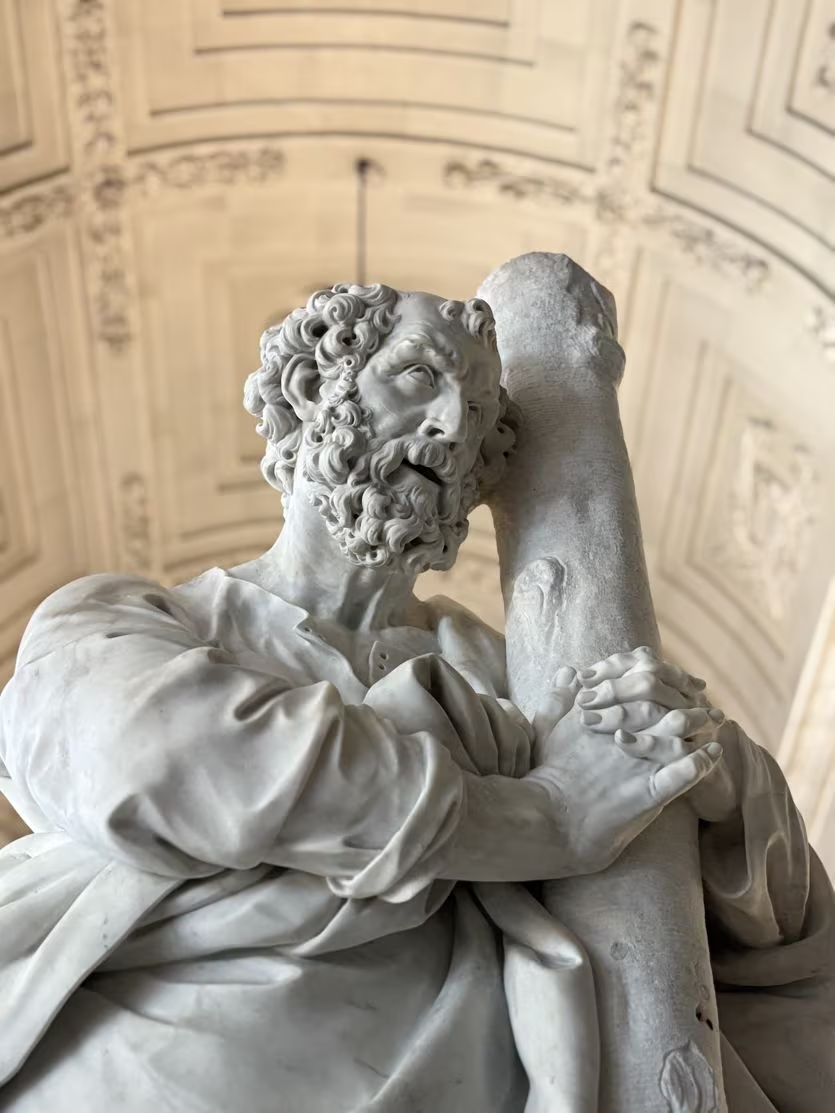
Davanti al volto dell’apostolo e alle profonde pieghe del mantello, sotto le mani di Quellinus il marmo perde rigidità. Per un istante si ha quasi l’impressione che il santo possa respirare, voltarsi o pronunciare una parola che faccia da monito per tutta l’umanità.
Chi era Artus Quellinus, il maestro del marmo vivo
Nato nelle Fiandre nel 1609, Artus Quellinus è considerato il più importante scultore barocco attivo ad Amsterdam e una delle figure centrali della scultura europea del XVII secolo. La sua fama non derivò soltanto dalla straordinaria abilità tecnica, ma dalla capacità di fondere il classicismo italiano con la sensibilità fiamminga, dando vita a opere di intensa forza espressiva.
La sua formazione iniziò nella bottega del padre Erasmus Quellinus, ma fu il soggiorno romano, tra il 1634 e il 1639, a cambiare definitivamente il suo linguaggio artistico.
Nella Città Eterna studiò la statuaria antica e poté confrontarsi con i capolavori di Gian Lorenzo Bernini, Alessandro Algardi, François du Quesnoy e Giuliano Finelli. Da loro assimilò il gusto per il naturalismo, il dinamismo e la capacità di raccontare le emozioni attraverso il marmo.
Quando il marmo sembra pelle
Osservando il San Pietro le superfici non appaiono fredde o rigide, ma restituiscono la consistenza della pelle, la tensione dei muscoli e persino il peso dei tessuti che ricadono sul corpo.
Le profonde pieghe del mantello sembrano muoversi seguendo i moti dell’anima del Santo, mentre il volto rivela una straordinaria introspezione psicologica. È un eccellente equilibrio tra abilità tecnica e intensità emotiva.
La stessa morbidezza che Peter Paul Rubens riusciva a ottenere con il colore, Quellinus la trasferì nella pietra. Anche il duro marmo in fondo racconta la fragilità umana.
Il grande protagonista del Palazzo Reale di Amsterdam
Al ritorno dall’Italia, la fama di Quellinus era ormai consolidata. Il consiglio comunale di Amsterdam gli affidò la decorazione del nuovo Municipio cittadino, oggi Palazzo Reale, uno dei più ambiziosi programmi artistici del Seicento europeo.
Qui realizzò alcune delle sue opere più celebri, tra cui il monumentale Atlante, le eleganti statue della Burgerzaal e gli spettacolari bassorilievi del Tribunale, un ciclo narrativo così ricco e complesso da essere stato definito la “Ronda di Notte della scultura”.
Il prestigio dell’incarico gli valse persino il titolo onorifico di “Scultore di Amsterdam”, riconoscimento che testimonia quanto fosse apprezzato dai contemporanei.
L’artista che ispirò un’intera generazione
L’influenza di Artus Quellinus si estese ben oltre i Paesi Bassi. Molti artisti guardarono alle sue opere come a un modello da seguire, tra cui Lucas Faydherbe, Rombout Verhulst, Artus II Quellinus e Josse de Corte, conosciuto in Italia come Giusto Le Court.
Fu proprio quest’ultimo a trasferire a Venezia il linguaggio elaborato dal maestro fiammingo, contribuendo alla diffusione dello stile barocco nordico nella penisola italiana.
Persino la regina Cristina di Svezia cercò di convincerlo a diventare scultore di corte a Stoccolma, ma Quellinus preferì dedicarsi ai grandi cantieri che lo avrebbero consacrato come uno dei protagonisti assoluti della scultura europea.
Dove si trova il San Pietro di Quellinus
Il fascino del San Pietro va ben oltre le forme. A colpire è soprattutto la sensazione di trovarsi davanti a una presenza reale. Ci si sente trapassati dallo sguardo del Santo, come se il suo animo interrogasse chi lo osserva.
L’opera fu realizzata dall’artista tra il 1657 e il 1664 e si trova nella Chiesa di Sant’Andrea ad Anversa.
Per il momento il sempre vostro Michelangelo Buonarroti vi saluta dandovi appuntamento ai prossimi post e sui social.
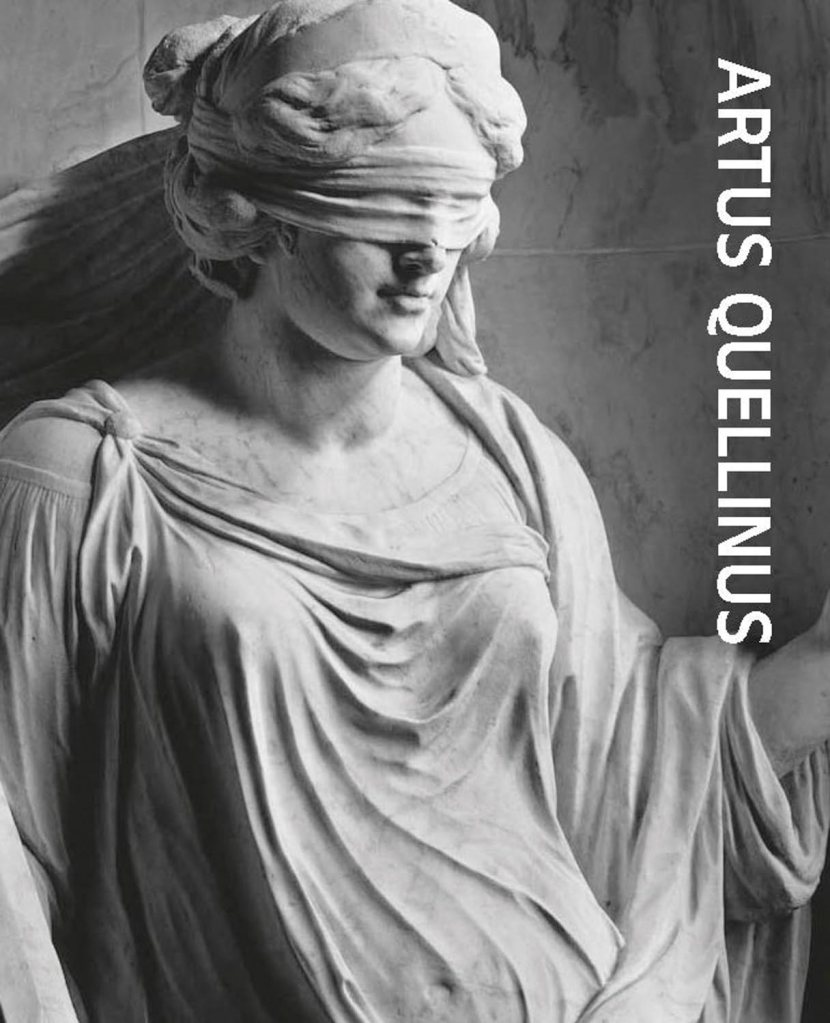
The sculpture that seems to breathe: Saint Peter by Artus Quellinus
Artus Quellinus is one of the most extraordinary sculptors of seventeenth-century Europe. Little known to the general public, he possessed the ability to transform stone into living matter, to give weight to emotions and movement to bodies, to the point of making the viewer forget that everything they observe was carved from a single block of marble.
Among his most beautiful works is undoubtedly the Saint Peter sculpted with the rooster, an explicit reference to the words spoken by Christ in the Gospel of Matthew: “Truly, I say to you, this very night, before the rooster crows, you will deny me three times.”
And then there is the cross of martyrdom, which Saint Peter himself wanted raised upside down because he did not consider himself worthy of suffering the same kind of martyrdom that had been reserved for the Savior.
Before the apostle’s face and the deep folds of his cloak, the marble loses its rigidity under Quellinus’s hands. For a moment, one almost has the impression that the saint can breathe, turn, or utter a word that serves as a warning to all humanity.
Who was Artus Quellinus, the master of living marble?
Born in Flanders in 1609, Artus Quellinus is considered the most important Baroque sculptor active in Amsterdam and one of the central figures of 17th-century European sculpture. His fame stemmed not only from his extraordinary technical skill, but also from his ability to blend Italian classicism with Flemish sensibility, creating works of intense expressive power.
His training began in the workshop of his father Erasmus Quellinus, but it was his stay in Rome, between 1634 and 1639, that definitively changed his artistic language.
In the Eternal City, he studied ancient statuary and was able to engage with the masterpieces of Gian Lorenzo Bernini, Alessandro Algardi, François du Quesnoy, and Giuliano Finelli. From them he inherited a taste for naturalism, dynamism, and the ability to convey emotions through marble.
When marble looks like skin
Looking at Saint Peter, the surfaces do not appear cold or rigid, but convey the texture of the skin, the tension of the muscles, and even the weight of the fabrics falling on the body.
The deep folds of the cloak seem to move in harmony with the movements of the Saint’s soul, while the face reveals an extraordinary psychological insight. It is an excellent balance between technical skill and emotional intensity.
The same softness that Peter Paul Rubens achieved with color, Quellinus transferred to stone. Even the hard marble ultimately speaks of human fragility.
The great protagonist of the Royal Palace of Amsterdam
By the time he returned from Italy, Quellinus’s fame was consolidated. The Amsterdam city council entrusted him with the decoration of the new City Hall, now the Royal Palace, one of the most ambitious artistic programs of seventeenth-century Europe.
Here he created some of his most celebrated works, including the monumental Atlas, the elegant statues of the Burgerzaal, and the spectacular bas-reliefs of the Courthouse, a narrative cycle so rich and complex that it has been called the “Night Watch of Sculpture.”
The prestige of the commission even earned him the honorary title of “Sculptor of Amsterdam,” a recognition that testifies to the esteem in which he was held by his contemporaries.
The artist who inspired an entire generation
Artus Quellinus’ influence extended far beyond the Netherlands. Many artists looked to his work as a model, including Lucas Faydherbe, Rombout Verhulst, Artus II Quellinus, and Josse de Corte, known in Italy as Giusto Le Court.
It was the latter who brought the Flemish master’s artistic language to Venice, contributing to the spread of the Nordic Baroque style throughout the Italian peninsula.
Even Queen Christina of Sweden tried to convince him to become a court sculptor in Stockholm, but Quellinus preferred to dedicate himself to the major projects that would establish him as one of the absolute protagonists of European sculpture.
Where Quellinus’s Saint Peter is located
The allure of the Saint Peter goes far beyond its form. What is most striking is the sensation of standing before a real presence. One feels transfixed by the Saint’s gaze, as if his soul were questioning the viewer.
The work was created by the artist between 1657 and 1664 and is located in the Church of Saint Andrew in Antwerp.
For now, yours truly, Michelangelo Buonarroti bids you farewell and invites you to see him in future posts and on social media.

Sostienici – Support Us
Se questo blog ti piace e ti appassiona, puoi aiutarci a farlo crescere sempre più sostenendoci in modo concreto condividendo i post, seguendo le pagine social e con un contributo che ci aiuta ad andare avanti con il nostro lavoro di divulgazione. . ENGLISH: If you like and are passionate about this blog, you can help us make it grow more and more by supporting us in a concrete way by sharing posts, following social pages and with a contribution that helps us to move forward with our dissemination work.
10,00 €
Articoli
Condividi:


Questo sono io




sostienici

Sostienici – Support Us
Se questo blog ti piace e ti appassiona, puoi aiutarci a farlo crescere sempre più sostenendoci in modo concreto condividendo i post, seguendo le pagine social e con un contributo che ci aiuta ad andare avanti con il nostro lavoro di divulgazione. . ENGLISH: If you like and are passionate about this blog, you can help us make it grow more and more by supporting us in a concrete way by sharing posts, following social pages and with a contribution that helps us to move forward with our dissemination work.
€10,00


