

Napoli, rinasce il gioiello di Santa Chiara: tornano a splendere le spettacolari maioliche del Chiostro
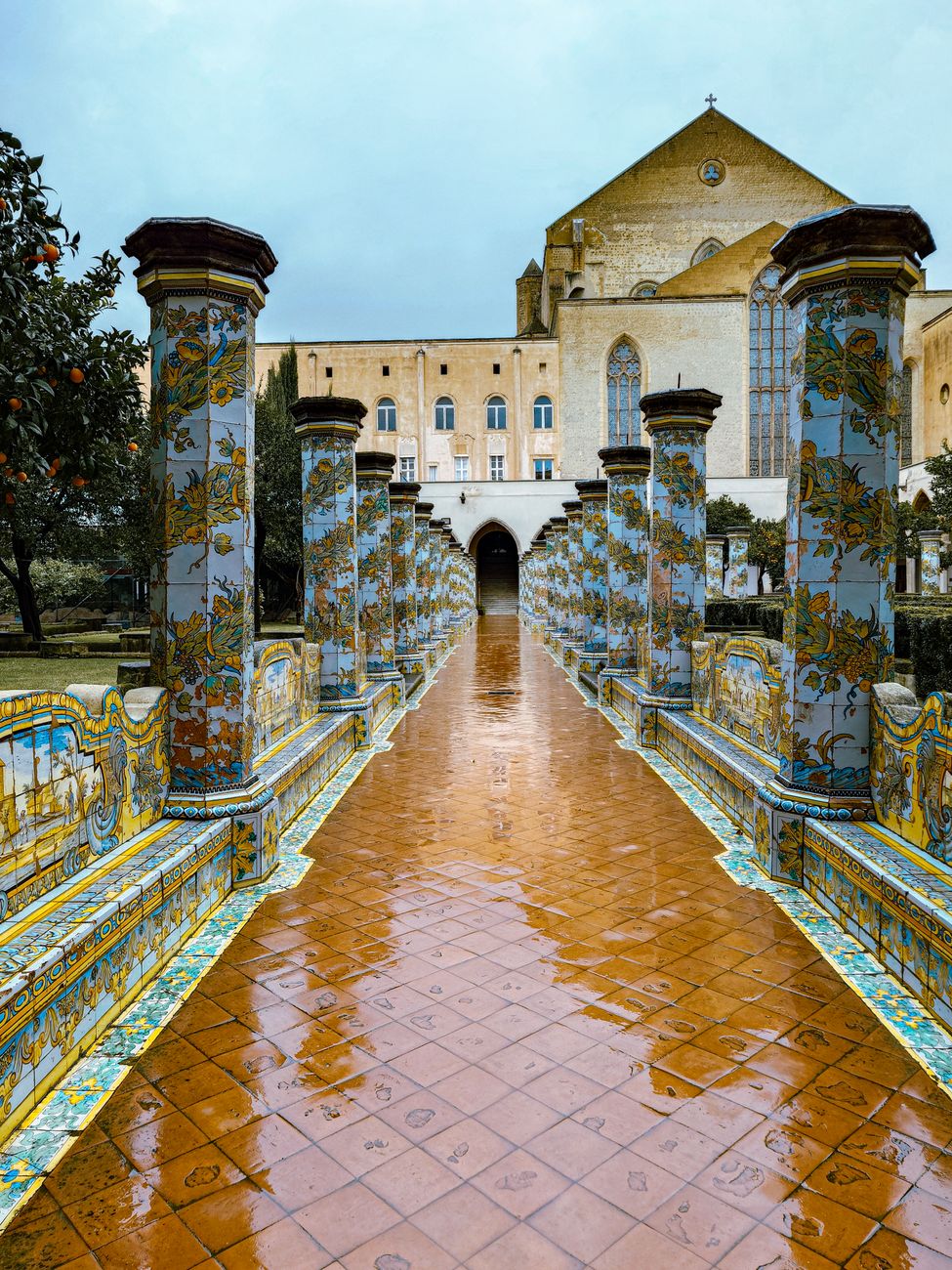
Dopo un delicato intervento conservativo durato circa un anno e mezzo, il Chiostro Maiolicato di Santa Chiara a Napoli torna a mostrarsi in tutta la sua straordinaria bellezza.
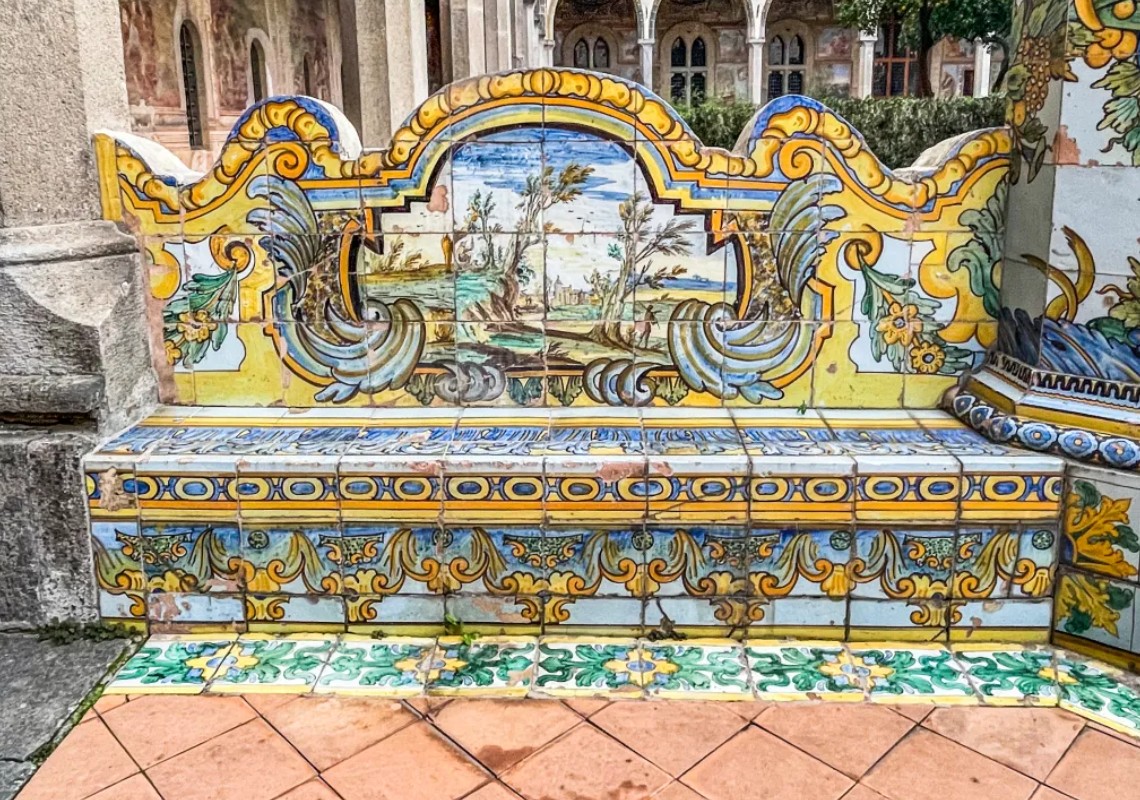
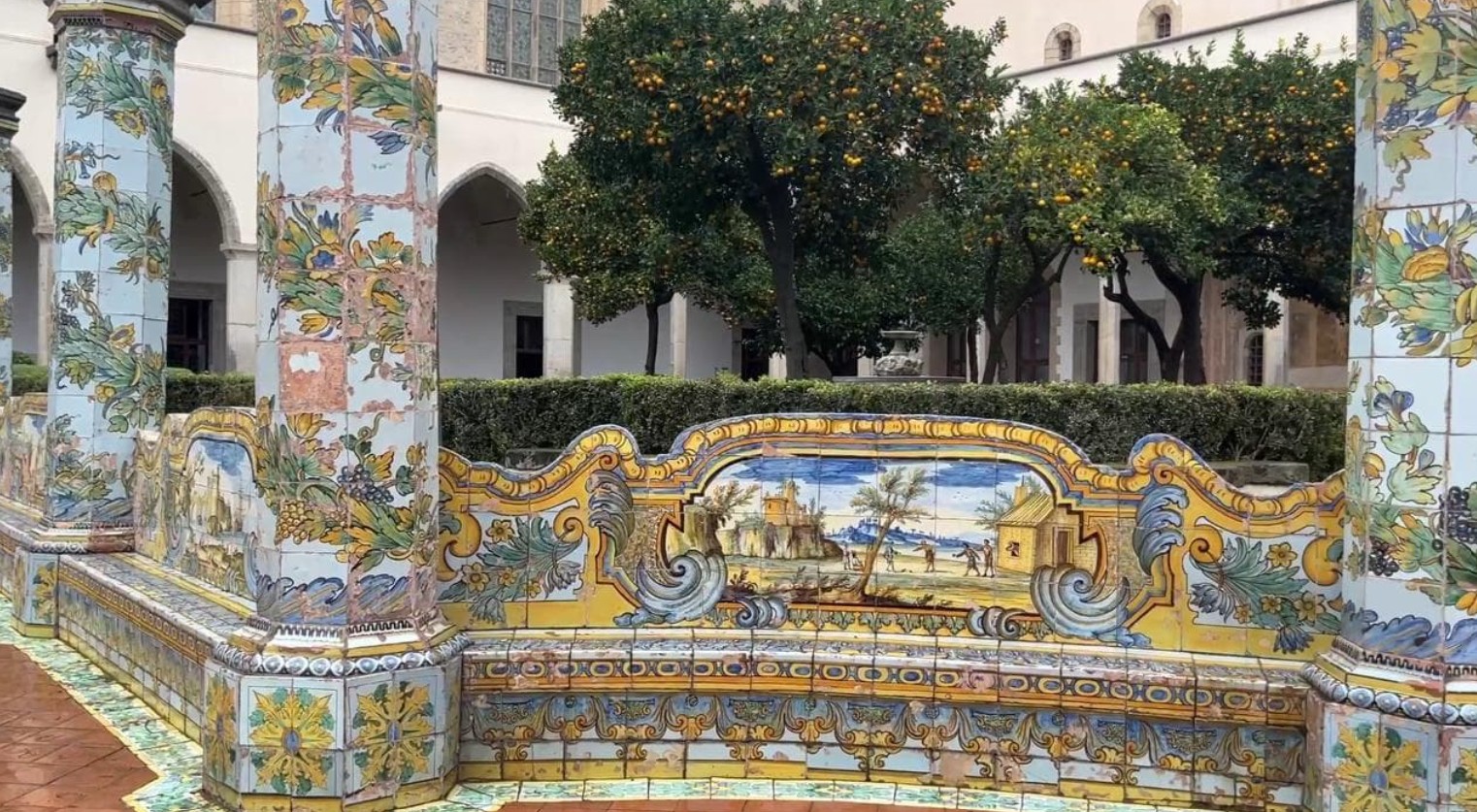
I colori vivaci delle maioliche settecentesche, le scene campestri, i paesaggi e i motivi floreali che decorano pilastri e sedute sono stati restituiti alla loro massima leggibilità possibile, riportando alla luce uno dei capolavori più iconici del patrimonio artistico napoletano.
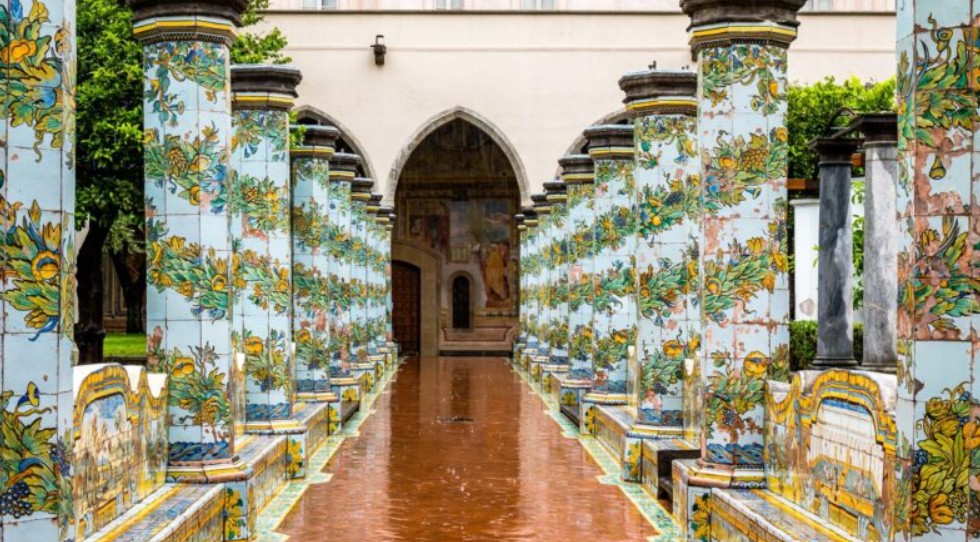
Il completamento del restauro rappresenta una tappa fondamentale per la valorizzazione del complesso monumentale di Santa Chiara, uno dei luoghi più visitati della città e tra i più affascinanti esempi di giardino monumentale decorato in ceramica d’Europa.
La storia del Chiostro di Santa Chiara tra committenza angioina e trasformazione barocca
Il complesso monumentale di Santa Chiara affonda le sue radici nel XIV secolo. La sua costruzione fu voluta da re Roberto d’Angiò e dalla regina Sancia di Maiorca, che promossero la realizzazione della basilica e del monastero come uno dei più importanti centri religiosi del Regno di Napoli. I lavori iniziarono nel 1310 e furono completati nel 1340, dando vita a uno dei più vasti complessi francescani d’Europa.
L’attuale Chiostro Maiolicato, tuttavia, è il risultato di una profonda trasformazione avvenuta nel Settecento. La committenza affidò all’architetto e artista Domenico Antonio Vaccaro il compito di rinnovare il chiostro medievale secondo il gusto barocco dell’epoca.
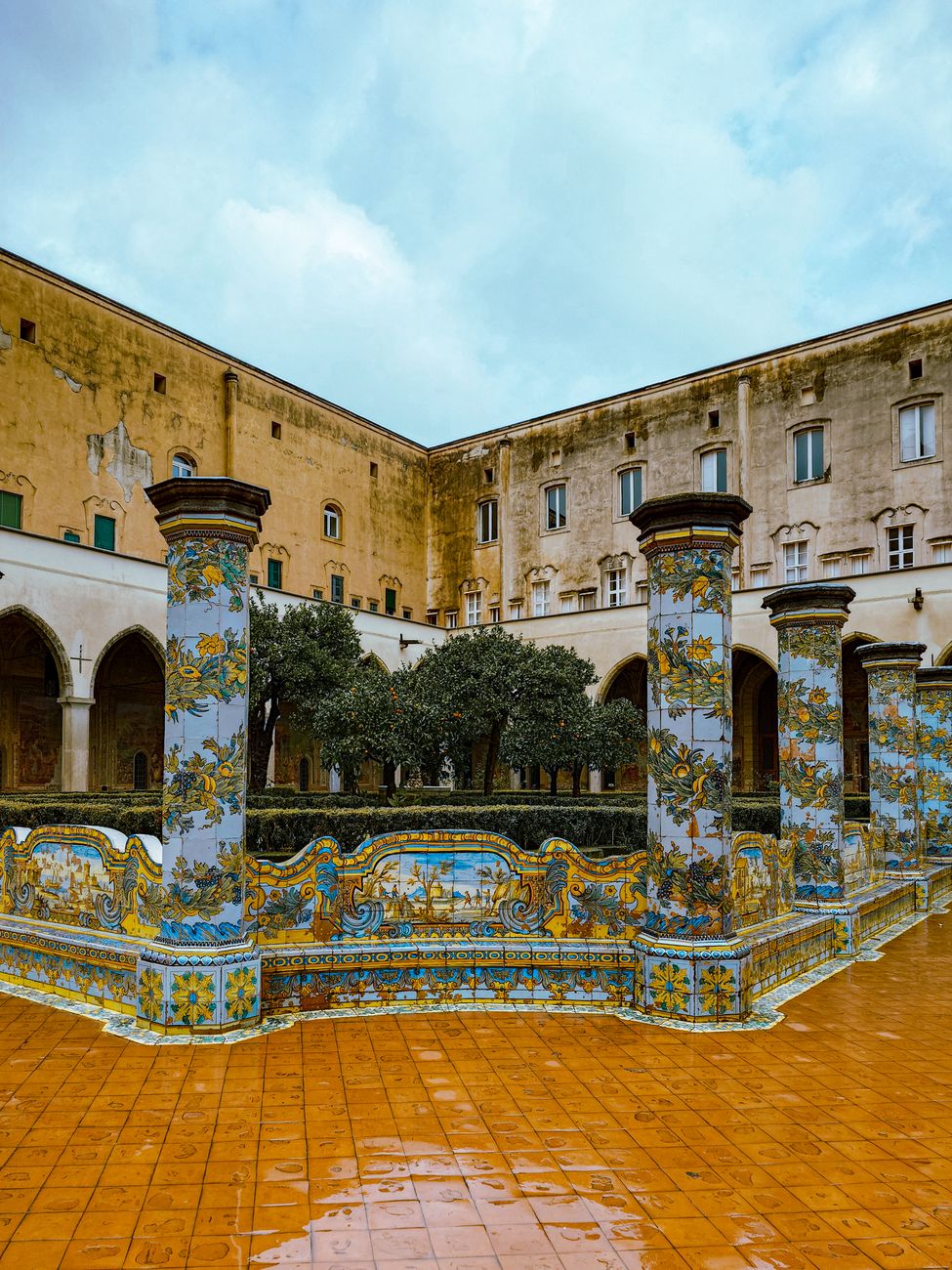
Tra il 1739 e il 1742 nacque così il celebre giardino decorato da pergolati e sedili rivestiti di maioliche policrome realizzate dalle botteghe ceramiche napoletane, probabilmente sotto la direzione dei maestri Donato e Giuseppe Massa.
L’intervento di Vaccaro trasformò completamente l’aspetto del chiostro, creando uno spazio unico nel panorama europeo. Le maioliche raccontano scene della vita quotidiana, paesaggi rurali, vedute marine e motivi vegetali che celebrano la natura e la cultura del Regno di Napoli, rendendo il complesso una delle più alte espressioni dell’arte decorativa del Settecento.
Come è stato eseguito il restauro delle maioliche del Chiostro di Santa Chiara
L’intervento, finanziato con fondi del Pnrr e coordinato dalla Prefettura di Napoli insieme al Ministero dell’Interno attraverso il Fondo Edifici di Culto, dal Provveditorato alle Opere Pubbliche e dalla Soprintendenza, ha richiesto un investimento di circa 2 milioni di euro.
I lavori hanno interessato l’intero Chiostro Maiolicato e, grazie alle economie recuperate durante il cantiere, è stato possibile estendere il restauro a tutti e quattro i bracci della struttura. L’operazione è stata condotta dalla ditta specializzata Lithos sotto la supervisione degli organi di tutela e ha coinvolto un team di quattordici restauratori.
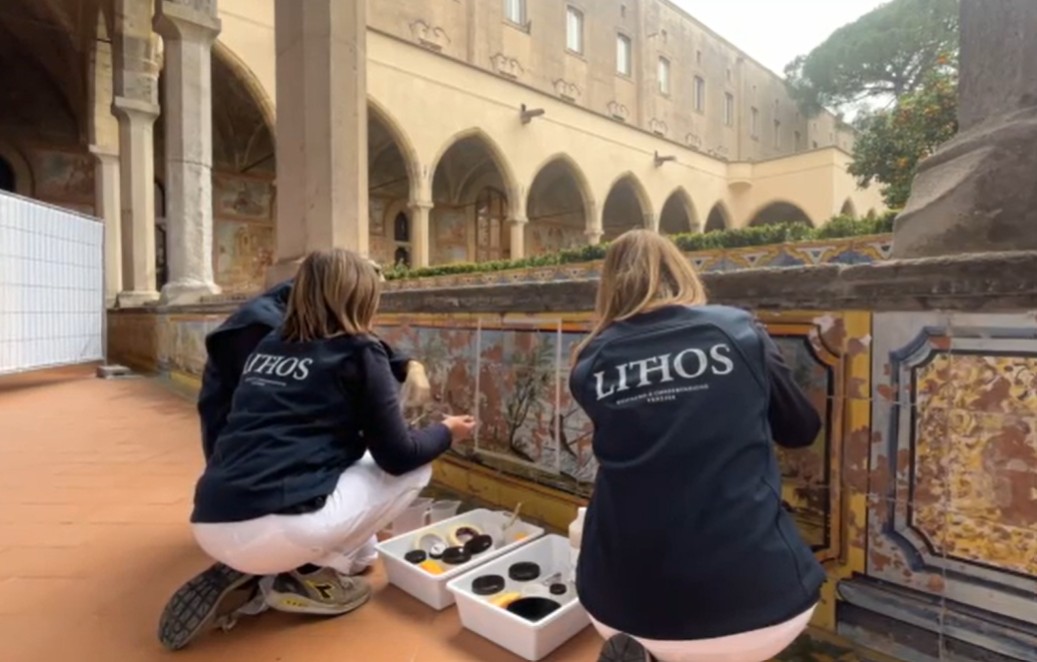
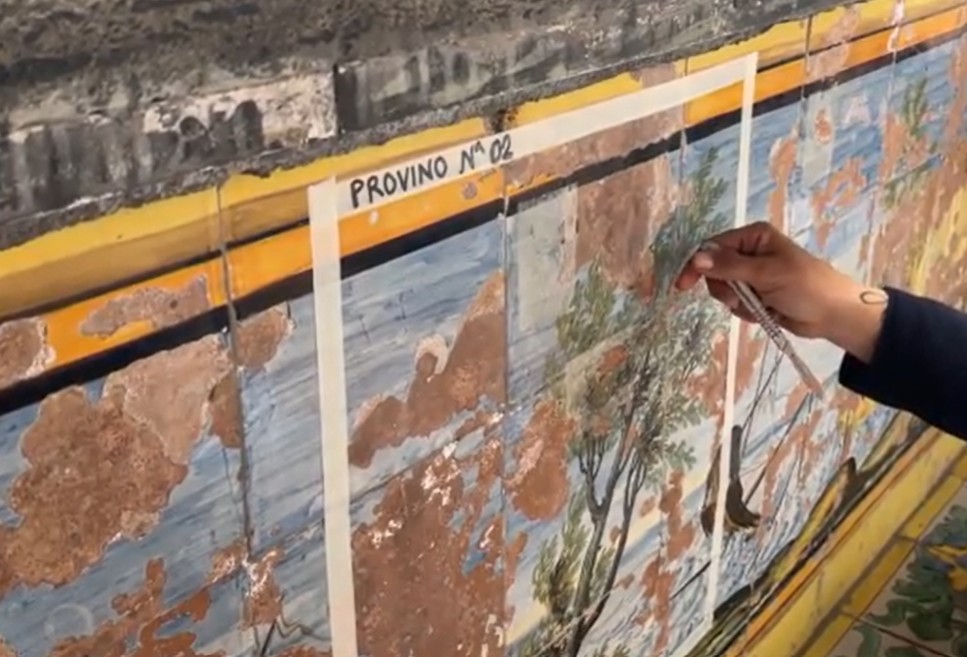
Si è trattato di un intervento conservativo particolarmente complesso. Le superfici sono state sottoposte a operazioni di preconsolidamento, pulitura e rimozione di muschi e licheni che nel tempo avevano compromesso la leggibilità delle decorazioni. Successivamente si è proceduto al consolidamento strutturale delle ceramiche e alle necessarie stuccature.
Grande attenzione è stata riservata alla reintegrazione cromatica delle parti danneggiate, effettuata con materiali innovativi studiati per garantire durabilità, compatibilità e pieno rispetto del manufatto storico.
Santa Chiara, un patrimonio che guarda al futuro
Il restauro del Chiostro Maiolicato rappresenta soltanto il primo tassello di un programma più ampio di interventi sul complesso monumentale. Oltre ai due milioni destinati al chiostro, sono stati stanziati ulteriori otto milioni di euro per il recupero del campanile e per la valorizzazione dell’area archeologica occidentale.
L’intero progetto rientra nel piano nazionale finanziato dal Recovery Plan per il recupero dei beni appartenenti al Fondo Edifici di Culto, che interessa centinaia di siti storici in tutta Italia. In Campania sono previsti decine di interventi destinati a restituire piena fruibilità a luoghi simbolo della storia e della cultura regionale.
Un simbolo di Napoli che torna a emozionare
Per Napoli il Chiostro di Santa Chiara è un luogo identitario che custodisce secoli di memoria collettiva, arte e spiritualità. Tra i suoi spazi riposano membri della dinastia borbonica, illustri famiglie nobiliari e figure simboliche della storia italiana come Salvo D’Acquisto.
Oggi, grazie al completamento del restauro, il celebre giardino di maiolica torna a emozionare cittadini e visitatori. Le decorazioni settecentesche recuperano profondità, luminosità e dettagli che sembravano perduti, restituendo al pubblico uno dei tesori più preziosi del patrimonio culturale italiano. Un risultato che non rappresenta soltanto il recupero di un’opera d’arte, ma anche un investimento sulla memoria, sull’identità e sul futuro turistico di Napoli.
Per il momento il sempre vostro Michelangelo Buonarroti vi saluta dandovi appuntamento ai prossimi post e sui social.
Naples, the jewel of Santa Chiara is reborn: the spectacular majolica tiles of the Cloister shine again
After a delicate conservation project lasting approximately a year and a half, the Majolica Cloister of Santa Chiara in Naples once again displays all its extraordinary beauty.
The vibrant colors of the 18th-century majolica tiles, the rural scenes, landscapes, and floral motifs decorating the pillars and seats have been restored to their fullest possible clarity, bringing to light one of the most iconic masterpieces of Neapolitan artistic heritage.
The completion of the restoration represents a fundamental step in the enhancement of the monumental complex of Santa Chiara, one of the most visited sites in the city and among the most fascinating examples of a monumental garden decorated in ceramics in Europe.
The history of the Cloister of Santa Chiara: from Angevin patronage to Baroque transformation
The monumental complex of Santa Chiara has its roots in the 14th century. Its construction was commissioned by King Robert of Anjou and Queen Sancha of Majorca, who promoted the basilica and monastery as one of the most important religious centers of the Kingdom of Naples. Work began in 1310 and was completed in 1340, creating one of the largest Franciscan complexes in Europe.
The current Majolica Cloister, however, is the result of a profound transformation that took place in the 18th century. The client entrusted the architect and artist Domenico Antonio Vaccaro with the task of renovating the medieval cloister in the Baroque style of the time.
Between 1739 and 1742, the famous garden was created, decorated with pergolas and seats covered in polychrome majolica tiles made by Neapolitan ceramic workshops, likely under the direction of masters Donato and Giuseppe Massa.
Vaccaro’s intervention completely transformed the cloister’s appearance, creating a unique space in the European panorama. The majolica tiles depict scenes of everyday life, rural landscapes, seascapes, and plant motifs that celebrate the nature and culture of the Kingdom of Naples, making the complex one of the finest examples of 18th-century decorative art.
How the majolica tiles of the Cloister of Santa Chiara were restored
The project, financed with funds from the National Recovery and Resilience Plan (PNRR) and coordinated by the Prefecture of Naples together with the Ministry of the Interior through the Fund for Religious Buildings, the Public Works Department, and the Superintendency, required an investment of approximately €2 million.
The work involved the entire Majolica Cloister, and thanks to savings made during construction, it was possible to extend the restoration to all four wings of the structure. The operation was conducted by the specialized firm Lithos under the supervision of the conservation authorities and involved a team of fourteen restorers.
It was a particularly complex conservation project. The surfaces underwent pre-consolidation, cleaning, and removal of moss and lichens that had compromised the legibility of the decorations over time. Subsequently, the ceramics were structurally consolidated and the necessary grouting applied.
Great attention was paid to restoring the color of the damaged areas, using innovative materials designed to ensure durability, compatibility, and full respect for the historical artifact.
Santa Chiara, a heritage that looks to the future
The restoration of the Majolica Cloister represents only the first step in a broader program of interventions on the monumental complex. In addition to the €2 million allocated to the cloister, an additional €8 million has been allocated for the restoration of the bell tower and the enhancement of the western archaeological area.
The entire project is part of the national plan funded by the Recovery Plan for the restoration of assets belonging to the Fondo Edifici di Culto (Edifices of Worship Fund), which involves hundreds of historic sites throughout Italy. Dozens of interventions are planned in Campania to restore full usability to places that are symbolic of regional history and culture.
A symbol of Naples that thrills again
For Naples, the Cloister of Santa Chiara is a place of identity that preserves centuries of collective memory, art, and spirituality. Its spaces are the resting places of members of the Bourbon dynasty, illustrious noble families, and iconic figures in Italian history such as Salvo D’Acquisto.
Today, thanks to the completion of the restoration, the famous majolica garden once again thrills residents and visitors. The eighteenth-century decorations regain depth, luminosity, and detail that seemed lost, returning to the public one of the most precious treasures of Italy’s cultural heritage. This achievement represents not only the recovery of a work of art, but also an investment in Naples’s memory, identity, and future tourism.
For now, yours truly, Michelangelo Buonarroti bids farewell and invites you to join him in future posts and on social media.

Sostienici – Support Us
Se questo blog ti piace e ti appassiona, puoi aiutarci a farlo crescere sempre più sostenendoci in modo concreto condividendo i post, seguendo le pagine social e con un contributo che ci aiuta ad andare avanti con il nostro lavoro di divulgazione. . ENGLISH: If you like and are passionate about this blog, you can help us make it grow more and more by supporting us in a concrete way by sharing posts, following social pages and with a contribution that helps us to move forward with our dissemination work.
10,00 €




Condividi:


Questo sono io




sostienici

Sostienici – Support Us
Se questo blog ti piace e ti appassiona, puoi aiutarci a farlo crescere sempre più sostenendoci in modo concreto condividendo i post, seguendo le pagine social e con un contributo che ci aiuta ad andare avanti con il nostro lavoro di divulgazione. . ENGLISH: If you like and are passionate about this blog, you can help us make it grow more and more by supporting us in a concrete way by sharing posts, following social pages and with a contribution that helps us to move forward with our dissemination work.
€10,00


Che spettacolo!! Meraviglioso davvero 👏👏👏👏👍👍👌👌👌👌
"Mi piace"Piace a 1 persona