

Matera d’estate: la città di pietra che si accende di luce, silenzio e meraviglia
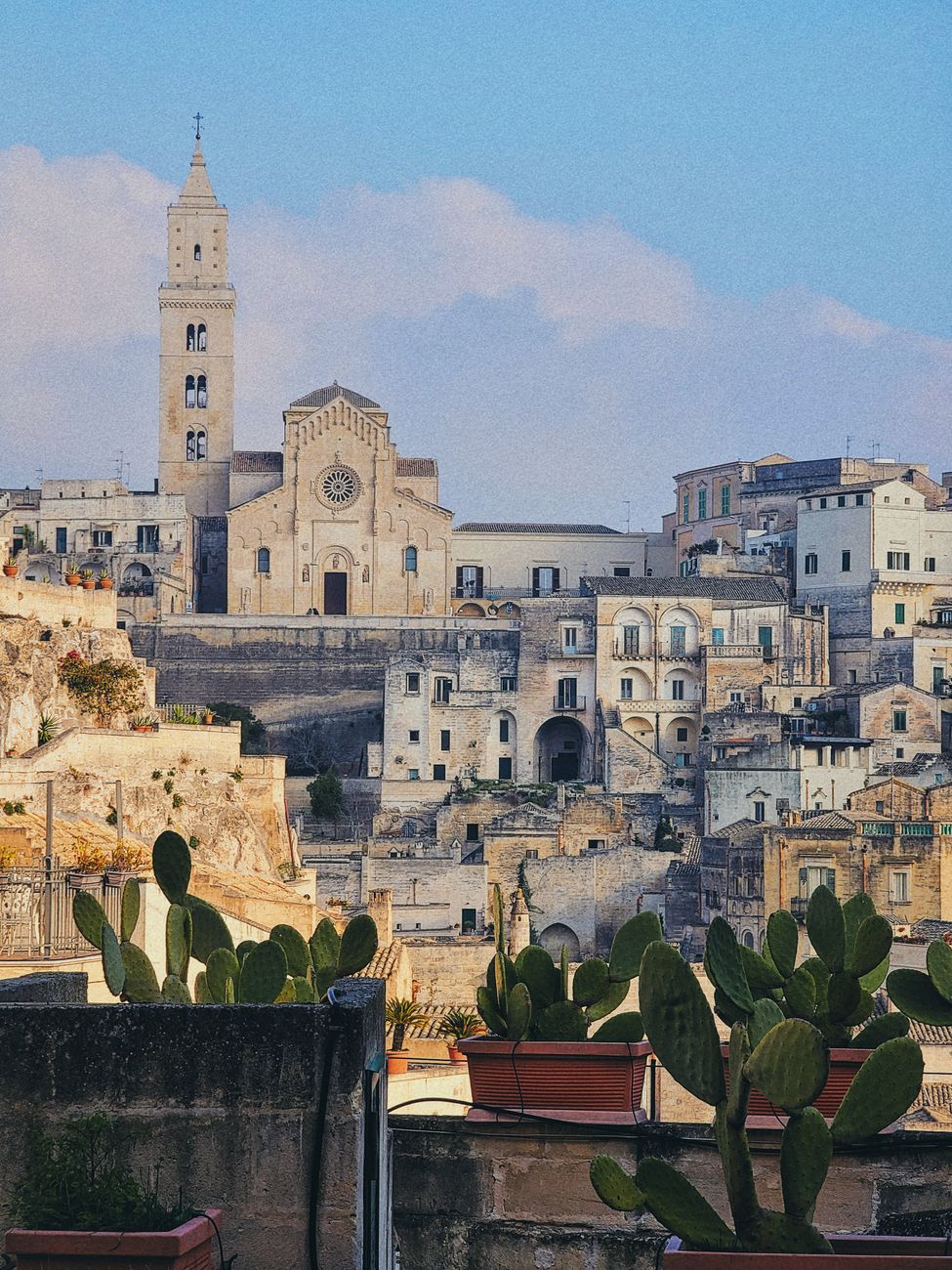
In estate Matera si lascia attraversare dalla luminosità. La luce si posa sui Sassi come una carezza lenta, e la città sembra cambiare umore a ogni ora del giorno. C’è un momento preciso, quello del tardo pomeriggio, in cui tutto si ferma: i muri color miele diventano oro antico e il silenzio si fa quasi fisico, come se la pietra trattenesse il respiro.
Non è una città solo da osservare. Bisogna saper ascoltare affinché le sue storie arrivino a farsi scoprire.
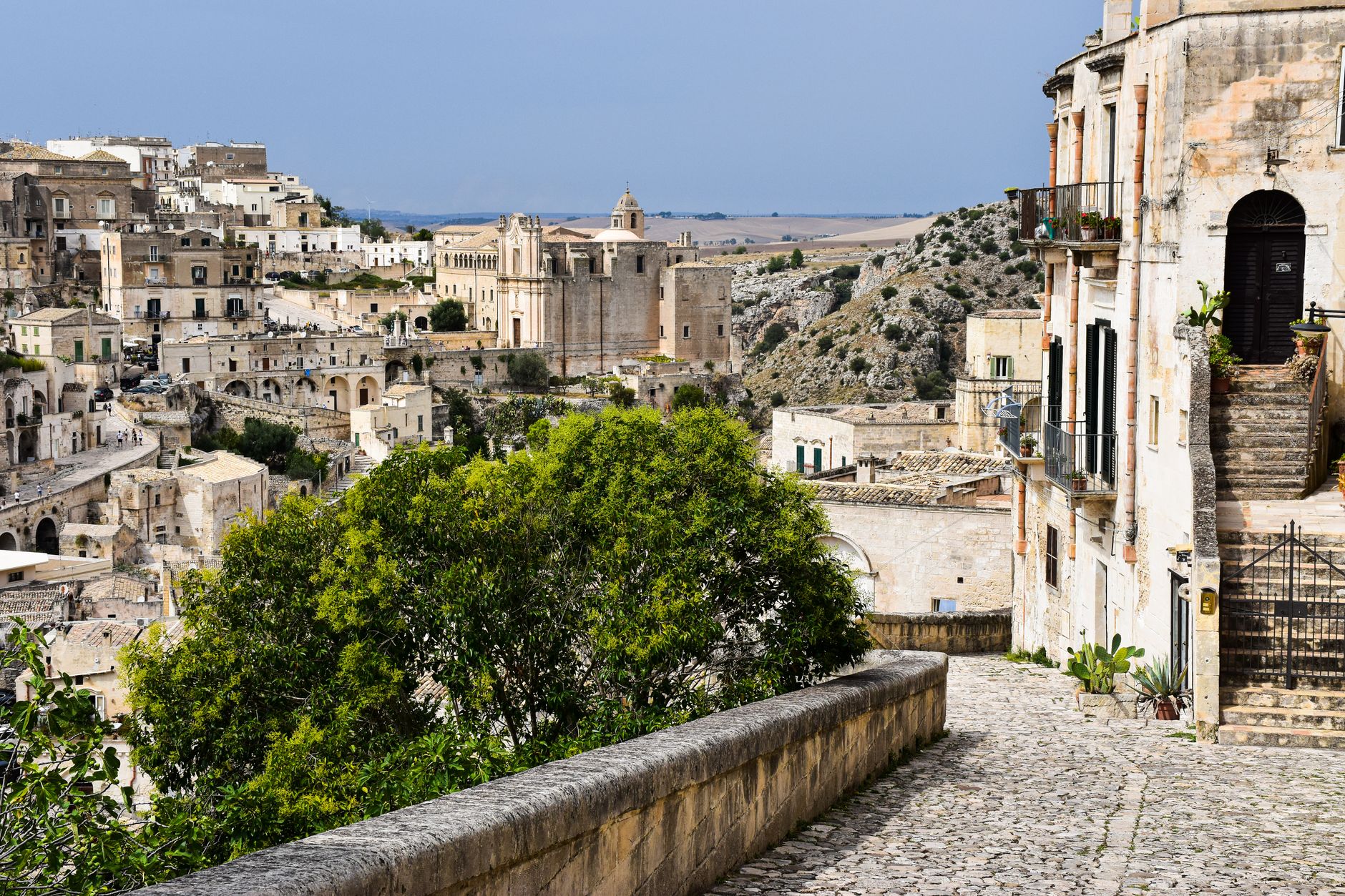
I Sassi di Matera tra storia viva e paesaggio umano
Nei Sassi di Matera il tempo non è lineare. Si arrampica, scende, si piega nei vicoli stretti, si nasconde dietro archi improvvisi. Qui le case sono la continuità della roccia stessa. Passeggiando tra Sasso Caveoso e Sasso Barisano si ha la sensazione di entrare dentro una città che non è mai stata costruita, ma scoperta.
Le strade sono fatte di scalinate consumate, passaggi che si aprono all’improvviso su belvedere sospesi, e curve che sembrano disegnate più dalla necessità che dall’uomo. In alcuni punti i vicoli sono così stretti che il cielo diventa una linea sottile sopra la testa. In altri, si aprono in piccole piazze dove il vento porta odore di pietra calda e piante selvatiche.
Camminare qui significa perdere l’orientamento e a volte è proprio quello che ci serve per lasciare fluire le idee e mettere al centro la bellezza, senza limiti.
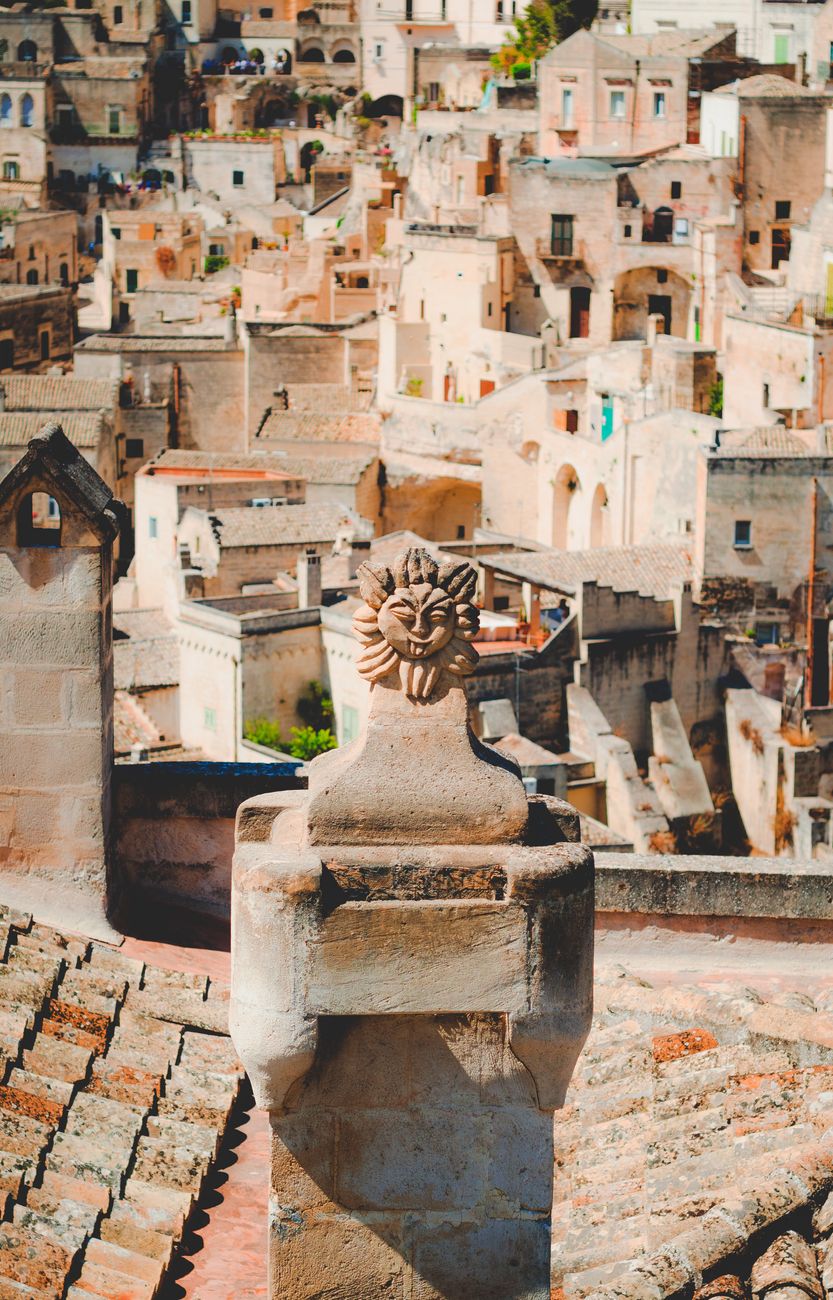
Tra vicoli e silenzi: il cuore nascosto della città
Le strade di Matera non sono mai davvero dritte. Sono percorsi che seguono la roccia, che si adattano al dislivello, che obbligano a rallentare. Ogni gradino sembra raccontare un passaggio di vita, ogni porta scavata nella pietra conserva una memoria invisibile.
E poi ci sono i momenti in cui la città si apre all’improvviso, e davanti agli occhi compare il vuoto della gravina. Da lì lo sguardo si perde e Matera sembra sospesa, come se stesse galleggiando tra cielo e terra.
È in questi istanti che la città colpisce più forte: quando non sta facendo nulla per impressionare.
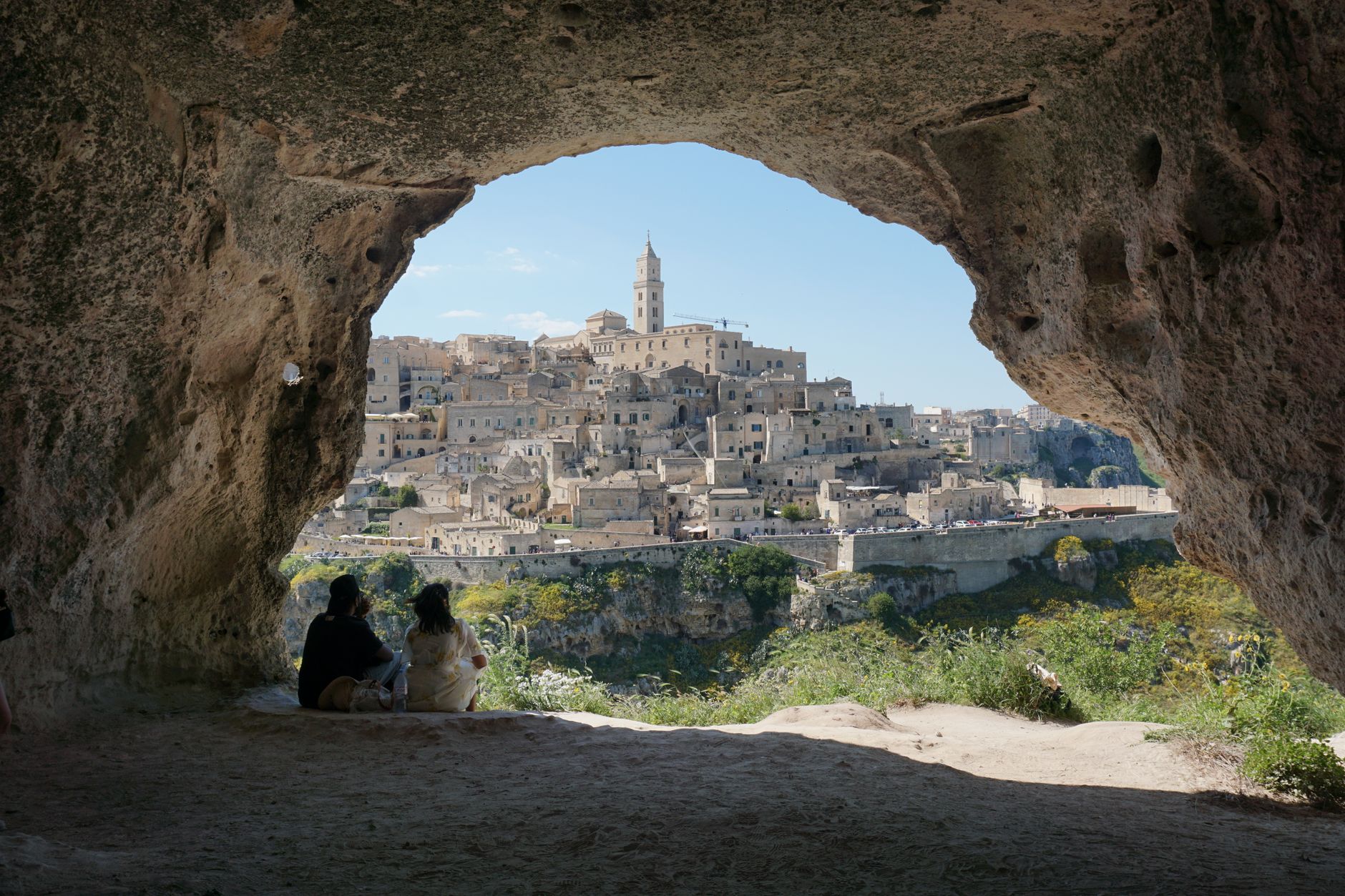
Cosa vedere a Matera tra arte, storia e spazi nella roccia
Nel centro storico la Cattedrale di Matera domina la città dall’alto, con la sua presenza discreta ma imponente. Da lì lo sguardo abbraccia tutto il labirinto dei Sassi, e si comprende quanto la città sia un equilibrio fragile tra costruzione e natura.
Scendendo nei vicoli si incontra la Casa Grotta di Vico Solitario, dove la vita di un tempo sembra ancora sospesa negli oggetti, nelle stanze essenziali, nel silenzio che racconta più delle parole.
Nel cuore più contemporaneo della città, il Museo MUSMA crea un dialogo continuo tra arte moderna e spazi rupestri, come se la pietra stessa fosse diventata una galleria viva.
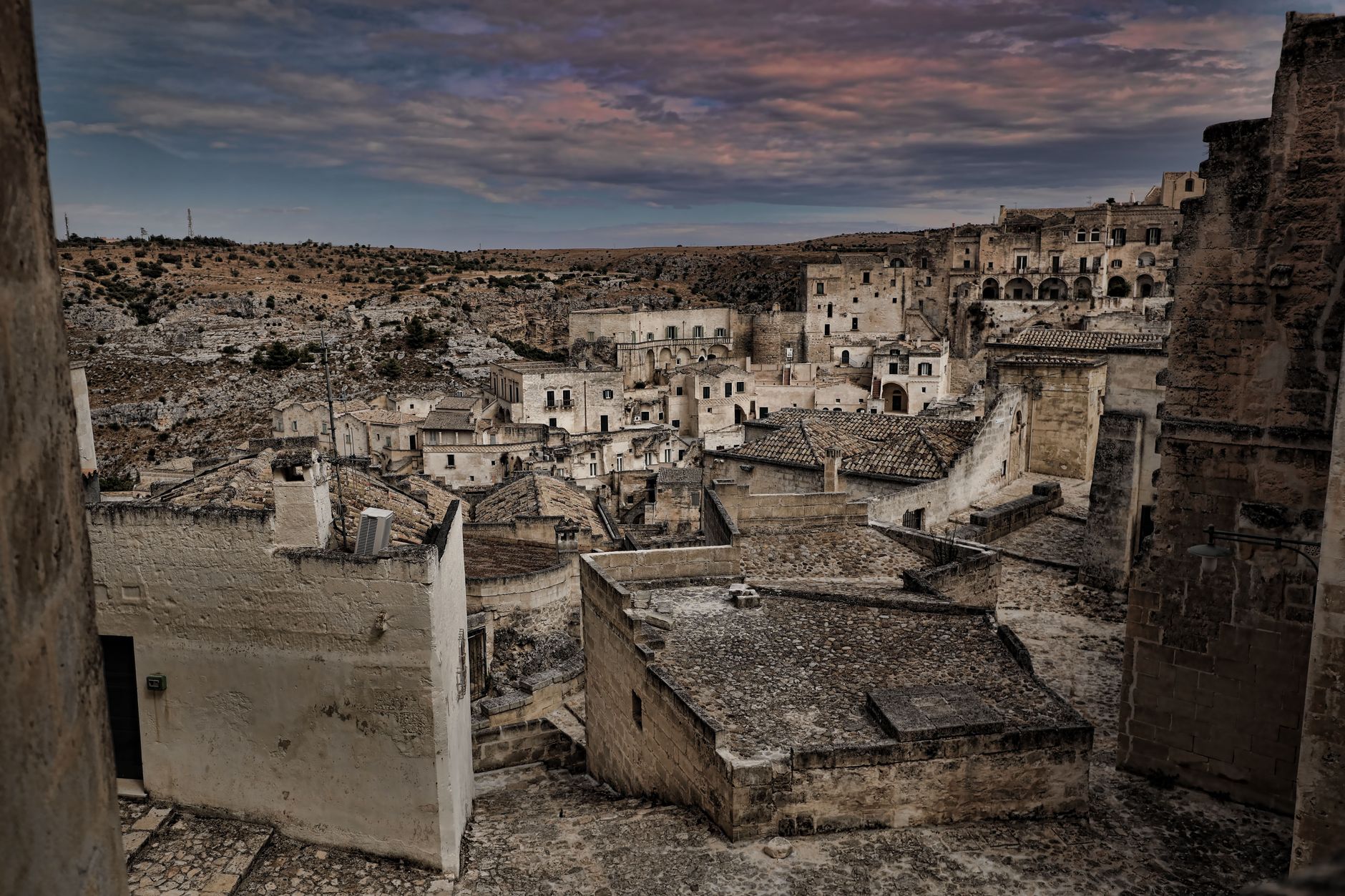
Sotto la superficie, il Palombaro Lungo apre un mondo sommerso fatto di acqua e oscurità, dove il suono cambia e il tempo sembra sospeso.
Fuori dal centro, il Parco della Murgia Materana offre una distanza necessaria: da lì Matera si osserva come un’apparizione, scolpita nella roccia e nel silenzio.
Matera in estate tra emozione, cammino e memoria
In estate Matera va conquistata lentamente, passo dopo passo, tra scalinate e vicoli che sembrano non avere fine. E proprio quando si pensa di averla capita, cambia prospettiva.
C’è qualcosa di profondamente umano in questa città fatta di pietra. Forse perché nonostante la sua antichità, Matera non appare mai ferma. Respira. E in quel respiro, chi la visita finisce inevitabilmente per riconoscere anche qualcosa di sé.
Per il momento il sempre vostro Michelangelo Buonarroti vi saluta dandovi appuntamento ai prossimi post e sui social.
Matera in summer: the stone city alight with light, silence, and wonder
In summer, Matera is bathed in luminosity. The light settles on the Sassi like a slow caress, and the city seems to change mood with every hour of the day. There’s a precise moment, late afternoon, when everything stops: the honey-colored walls turn to antique gold, and the silence becomes almost physical, as if the stone were holding its breath.
It’s not a city to simply observe. You have to know how to listen for its stories to be revealed.
The Sassi of Matera: living history and human landscape
In the Sassi of Matera, time is not linear. It climbs, descends, bends in narrow alleys, hides behind sudden arches. Here, the houses are the continuity of the rock itself. Walking between Sasso Caveoso and Sasso Barisano, you have the feeling of entering a city that was never built, but discovered.
The streets are made of worn stairways, passages that suddenly open onto suspended viewpoints, and curves that seem designed more by necessity than by man. In some places, the alleys are so narrow that the sky becomes a thin line overhead. In others, they open onto small squares where the wind carries the scent of warm stone and wild plants.
Walking here means losing your bearings, and sometimes that’s exactly what we need to let our ideas flow and focus on beauty, without limits.
Amid alleys and silence: the hidden heart of the city
The streets of Matera are never truly straight. They are paths that follow the rock, that adapt to the change in altitude, that force you to slow down. Each step seems to tell the story of a life passage, each door carved into the stone preserves an invisible memory.
And then there are moments when the city suddenly opens up, and the emptiness of the ravine appears before our eyes. From there, the view stretches out, and Matera seems suspended, as if floating between heaven and earth.
It’s in these moments that the city strikes you most: when it’s doing nothing to impress.
What to see in Matera: art, history, and rock spaces
In the historic center, the Cathedral of Matera dominates the city from above, with its discreet yet imposing presence. From there, the gaze encompasses the entire labyrinth of the Sassi, and one understands how the city is a fragile balance between construction and nature.
Descending into the alleys, you come across the Casa Grotta di Vico Solitario, where the life of the past still seems suspended in objects, in essential rooms, in the silence that speaks louder than words.
In the most contemporary heart of the city, the MUSMA Museum creates a continuous dialogue between modern art and rock spaces, as if the stone itself had become a living gallery.
Beneath the surface, the Palombaro Lungo opens up to a submerged world of water and darkness, where sound changes and time seems suspended.
Outside the city center, the Murgia Materana Park offers a necessary distance: from there, Matera can be observed like an apparition, carved into the rock and silent.
Matera in summer: emotion, walking, and memory
In summer, Matera must be conquered slowly, step by step, along seemingly endless stairways and alleys. And just when you think you’ve understood it, perspective changes.
There’s something profoundly human about this city of stone. Perhaps because, despite its antiquity, Matera never seems still. It breathes. And in that breathing, those who visit it inevitably recognize something of themselves.
For now, yours truly, Michelangelo Buonarroti bids you farewell, saying he’ll see you in future posts and on social media.

Sostienici – Support Us
Se questo blog ti piace e ti appassiona, puoi aiutarci a farlo crescere sempre più sostenendoci in modo concreto condividendo i post, seguendo le pagine social e con un contributo che ci aiuta ad andare avanti con il nostro lavoro di divulgazione. . ENGLISH: If you like and are passionate about this blog, you can help us make it grow more and more by supporting us in a concrete way by sharing posts, following social pages and with a contribution that helps us to move forward with our dissemination work.
10,00 €
Articoli
Condividi:


Questo sono io




sostienici

Sostienici – Support Us
Se questo blog ti piace e ti appassiona, puoi aiutarci a farlo crescere sempre più sostenendoci in modo concreto condividendo i post, seguendo le pagine social e con un contributo che ci aiuta ad andare avanti con il nostro lavoro di divulgazione. . ENGLISH: If you like and are passionate about this blog, you can help us make it grow more and more by supporting us in a concrete way by sharing posts, following social pages and with a contribution that helps us to move forward with our dissemination work.
€10,00


Ci sono stato, città meravigliosa 👍👍👍👍👍👌👌👌👌👌😊😊
"Mi piace"Piace a 1 persona
che bellezza
"Mi piace"Piace a 1 persona