
Il Bacio di Klimt: il significato nascosto del dipinto che emoziona il mondo da oltre un secolo
Ci sono immagini che non hanno bisogno di spiegazioni. Basta uno sguardo per riconoscerle e sentirsi immediatamente attratti dalla loro magia. Il Bacio di Gustav Klimt appartiene a questa rara categoria di opere. Da oltre un secolo continua a emozionare milioni di persone, diventando il simbolo universale dell’amore, della passione e dell’intimità.
Eppure, dietro quella coppia avvolta dall’oro si nasconde molto più di una semplice scena romantica. Ogni dettaglio racconta una storia fatta di simboli, emozioni e significati profondi che ancora oggi affascinano studiosi e visitatori provenienti da ogni parte del mondo.
Chi era Gustav Klimt
Quando Gustav Klimt dipinse Il Bacio, era già considerato uno degli artisti più innovativi del suo tempo. Nato a Vienna nel 1862, fu il protagonista della Secessione Viennese, movimento che rivoluzionò il panorama artistico europeo sfidando le regole tradizionali dell’arte accademica.
Klimt amava esplorare temi universali come l’amore, il desiderio, la bellezza e il mistero dell’esistenza. La sua arte si distingueva per la straordinaria ricchezza decorativa e per l’uso di materiali preziosi che trasformavano i dipinti in autentici gioielli visivi.
Il Bacio nasce durante il cosiddetto Periodo Aureo, una fase creativa caratterizzata dall’impiego della foglia d’oro, ispirata anche ai meravigliosi mosaici bizantini che l’artista aveva ammirato durante i suoi viaggi in Italia.
Il Bacio: descrizione dell’opera
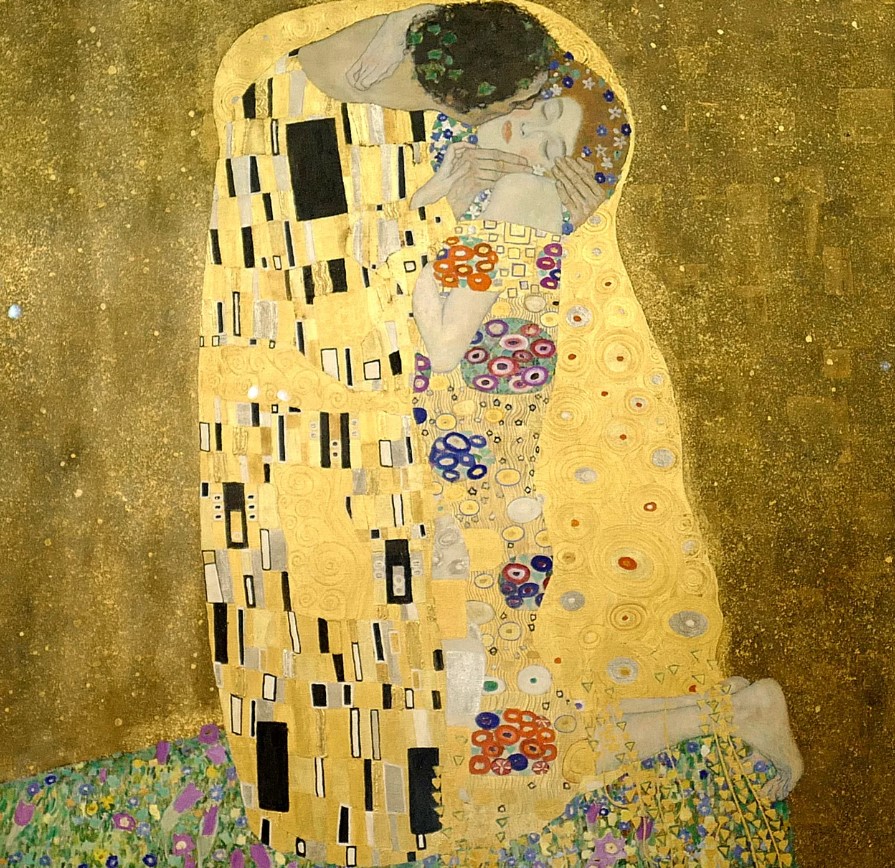
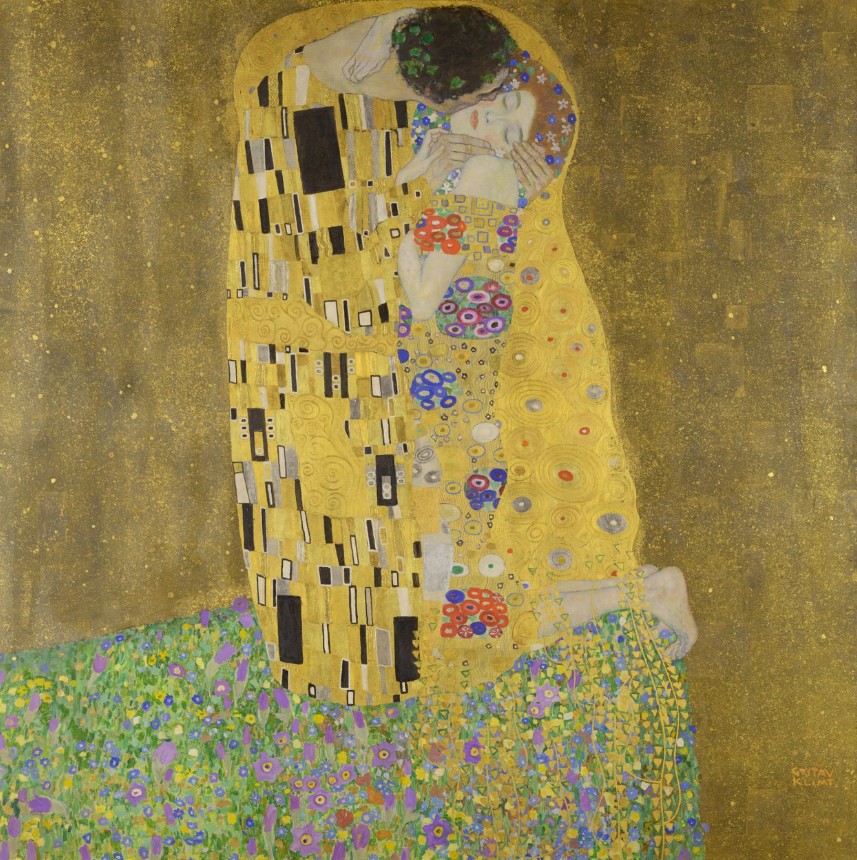
Davanti al dipinto si ha quasi la sensazione di assistere a un momento privato. Un uomo si china dolcemente verso una donna e le sfiora il volto con un bacio. Lei chiude gli occhi e si lascia avvolgere dall’abbraccio, come se il tempo si fosse fermato.
I due amanti sembrano isolati dal mondo. Non esistono città, paesaggi o riferimenti precisi. Attorno a loro si apre uno spazio dorato che annulla ogni confine tra realtà e sogno. L’oro riflette la luce e trasforma la scena in qualcosa di quasi sacro, come se quell’istante appartenesse all’eternità.
L’effetto è straordinario: chi osserva l’opera non vede soltanto due persone che si amano, ma viene coinvolto in un’emozione che appare senza tempo.
Il significato del dipinto
L’amore come esperienza universale
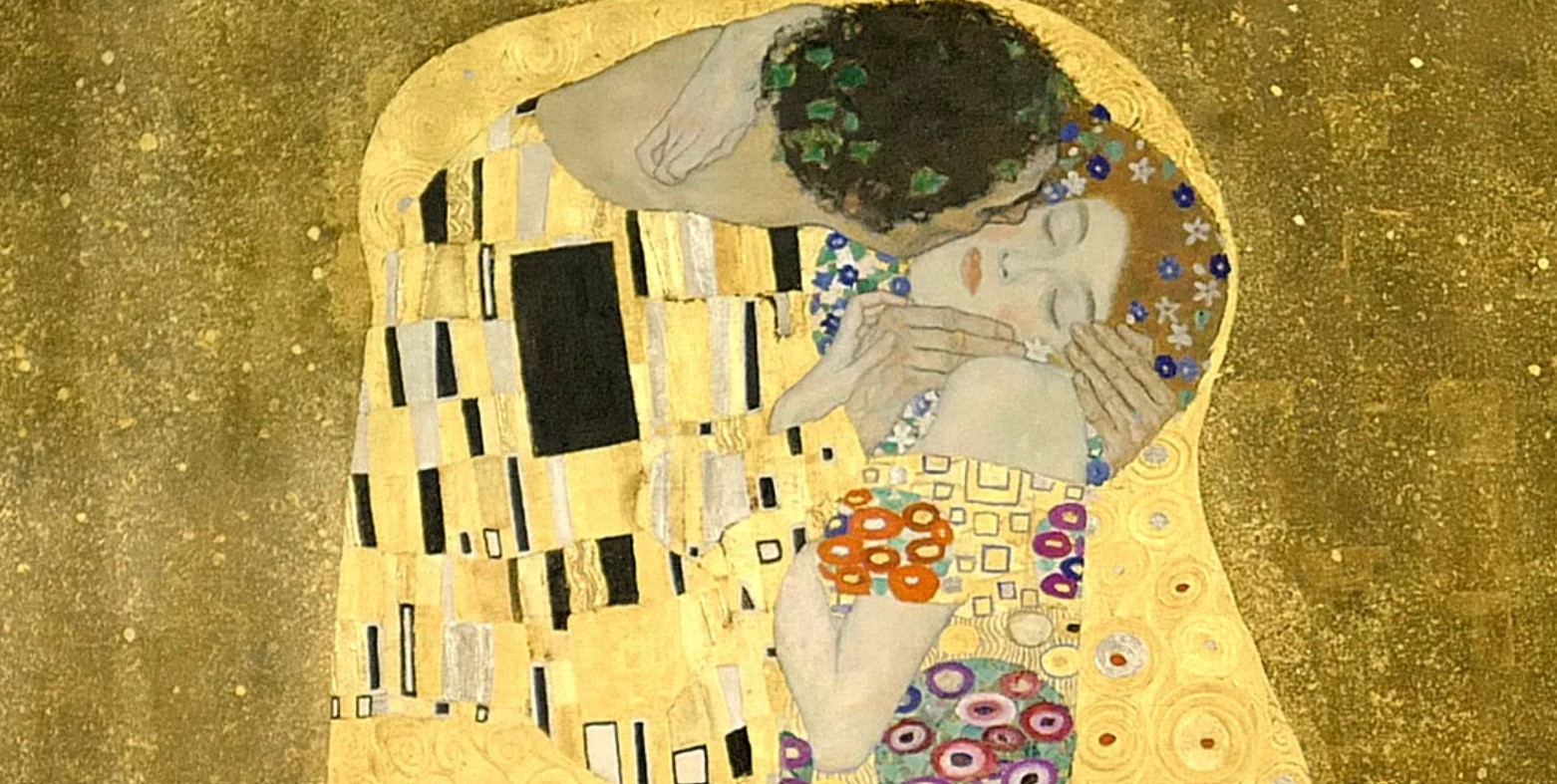
La forza de Il Bacio risiede nella sua capacità di parlare a tutti. Non importa l’età, la cultura o il periodo storico: chiunque può riconoscersi nella delicatezza di quell’abbraccio.
Klimt rappresenta l’amore come una delle esperienze più profonde della vita umana. Non si tratta soltanto di attrazione o romanticismo, ma di una connessione che supera le parole. I due protagonisti sembrano fondersi in un’unica presenza, come se il sentimento fosse capace di annullare ogni distanza.
È proprio questa universalità a rendere il dipinto così attuale ancora oggi.
L’incontro tra maschile e femminile
Osservando con attenzione i dettagli decorativi emergono significati ancora più profondi. Il mantello dell’uomo è caratterizzato da forme geometriche rigide e rettangolari, simboli che evocano energia, forza e stabilità.
L’abito della donna, invece, è ricoperto da motivi circolari, fiori e linee sinuose che richiamano la delicatezza, la fertilità e la dimensione emotiva.
Attraverso questi elementi Klimt racconta l’incontro tra due energie diverse ma complementari, capaci di trovare armonia proprio nel momento del bacio.
I dettagli nascosti che pochi notano
I piedi sul bordo del precipizio
A una prima osservazione si è catturati dalla luminosità dell’oro e dalla dolcezza della scena. Solo successivamente emerge un particolare sorprendente.
La coppia si trova infatti ai margini di un piccolo prato fiorito che sembra interrompersi improvvisamente nel vuoto. Questo dettaglio è stato interpretato come una metafora dell’amore stesso: un sentimento capace di portare gioia e pienezza, ma anche di richiedere coraggio e abbandono.
Amare significa spesso accettare una forma di vulnerabilità, proprio come chi decide di avvicinarsi al bordo di un precipizio senza sapere cosa troverà oltre.
Gli occhi chiusi della donna
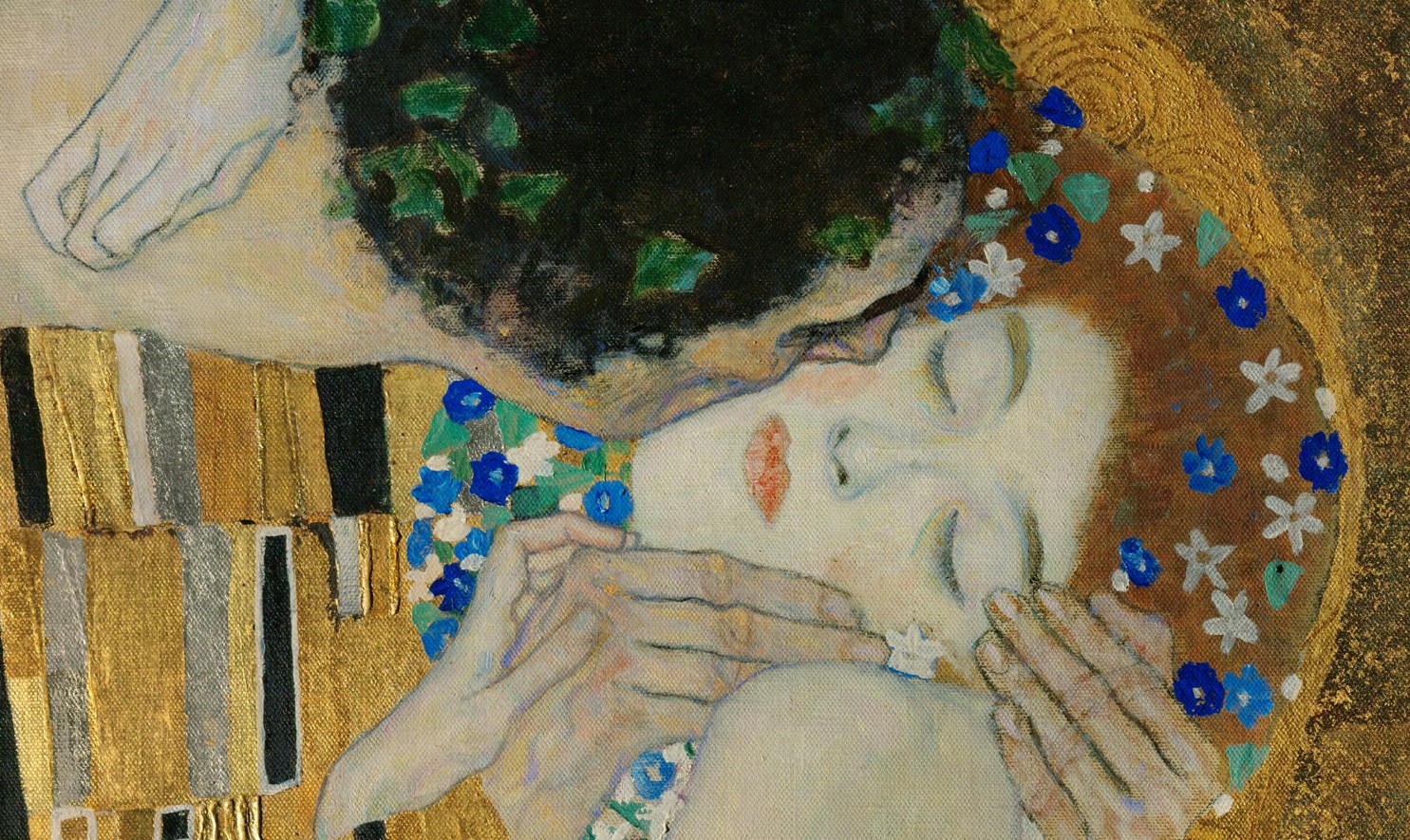
Lo sguardo della donna è uno degli elementi più emozionanti dell’opera. I suoi occhi chiusi trasmettono una sensazione di pace assoluta. Non c’è tensione, non c’è esitazione.
In quel gesto molti hanno visto il simbolo della fiducia totale, della capacità di lasciarsi andare a un sentimento autentico. È un dettaglio apparentemente semplice, ma contribuisce in modo decisivo alla potenza emotiva del dipinto.
L’oro come simbolo di eternità
L’oro utilizzato da Klimt non ha soltanto una funzione estetica. Nella tradizione artistica bizantina era il colore del sacro, della luce divina e dell’eternità.
Inserendolo nell’opera, l’artista trasforma il bacio in qualcosa che supera la dimensione terrena. L’amore diventa un’esperienza universale, destinata a esistere oltre il tempo e oltre la vita stessa.
Perché Il Bacio continua ad affascinare milioni di persone
Molte opere vengono ammirate per la loro tecnica, altre per il loro valore storico. Il Bacio riesce in qualcosa di più raro: crea un legame emotivo immediato con chi lo osserva.
Anche chi non conosce nulla della storia dell’arte percepisce la forza di quell’abbraccio. C’è una dolcezza autentica, una fragilità umana che attraversa i secoli e continua a parlare alle persone di oggi.
Forse il segreto del suo successo sta proprio qui. Klimt non dipinge semplicemente due amanti. Dipinge un desiderio universale: quello di sentirsi compresi, accolti e amati.
Dove si trova oggi Il Bacio di Klimt
Oggi il celebre capolavoro è conservato presso la Österreichische Galerie Belvedere di Vienna, dove rappresenta una delle opere più ammirate dell’intera collezione.
Ogni anno migliaia di visitatori entrano nelle sale del museo con l’idea di vedere un quadro famoso. Molti ne escono con qualcosa di diverso: la sensazione di aver assistito a un momento di rara bellezza, capace di rimanere impresso nella memoria molto più a lungo di quanto immaginassero.
Curiosità sull’opera
Quando Klimt completò Il Bacio nel 1908, il dipinto suscitò immediatamente entusiasmo. L’opera venne acquistata dallo Stato austriaco ancora prima di essere terminata, un riconoscimento straordinario che confermò il talento dell’artista già durante la sua vita.
Nel corso dei decenni il quadro è diventato una delle immagini artistiche più riprodotte al mondo. La sua popolarità non ha mai conosciuto un vero declino e continua a crescere grazie alla capacità dell’opera di emozionare generazioni sempre nuove.
A più di cento anni dalla sua realizzazione, Il Bacio continua a esercitare un fascino irresistibile. La straordinaria combinazione di simbolismo, eleganza e intensità emotiva ha trasformato questo dipinto in un’icona senza tempo.
L’opera racconta il bisogno profondamente umano di trovare qualcuno con cui condividere un frammento di eternità.
Per il momento il sempre vostro Michelangelo Buonarroti vi saluta dandovi appuntamento ai prossimi post e sui social.
Klimt’s The Kiss: The Hidden Meaning of the Painting That’s Thrilled the World for Over a Century
There are images that need no explanation. A glance is enough to recognize them and be immediately drawn to their magic. Gustav Klimt’s The Kiss belongs to this rare category of works. For over a century, it has continued to thrill millions, becoming the universal symbol of love, passion, and intimacy.
Yet, behind that couple draped in gold lies much more than a simple romantic scene. Every detail tells a story of symbols, emotions, and profound meanings that still fascinate scholars and visitors from around the world.
Who Was Gustav Klimt?
When Gustav Klimt painted The Kiss, he was already considered one of the most innovative artists of his time. Born in Vienna in 1862, he was a leading figure in the Vienna Secession, a movement that revolutionized the European art scene by challenging the traditional rules of academic art.
Klimt loved exploring universal themes such as love, desire, beauty, and the mystery of existence. His art was distinguished by its extraordinary decorative richness and the use of precious materials that transformed his paintings into authentic visual jewels.
The Kiss was created during the so-called Golden Period, a creative phase characterized by the use of gold leaf, also inspired by the marvelous Byzantine mosaics the artist had admired during his travels in Italy.
The Kiss: Description of the Work
Standing before the painting almost feels like witnessing a private moment. A man leans gently toward a woman and touches her face with a kiss. She closes her eyes and lets himself be enveloped in his embrace, as if time had stopped.
The two lovers seem isolated from the world. There are no cities, landscapes, or precise landmarks. A golden space opens up around them, blurring the boundaries between reality and dream. The gold reflects the light and transforms the scene into something almost sacred, as if that moment belonged to eternity.
The effect is extraordinary: those who observe the work not only see two people in love, but are drawn into an emotion that seems timeless.
The Meaning of the Painting
Love as a Universal Experience
The strength of The Kiss lies in its ability to speak to everyone. Regardless of age, culture, or historical period: anyone can recognize themselves in the tenderness of that embrace.
Klimt represents love as one of the most profound experiences of human life. It is not simply attraction or romance, but a connection that transcends words. The two protagonists seem to merge into a single presence, as if the feeling were capable of erasing all distance.
It is precisely this universality that makes the painting so relevant even today.
The Encounter between Masculine and Feminine
By carefully observing the decorative details, even deeper meanings emerge. The man’s cloak is characterized by rigid, rectangular geometric shapes, symbols that evoke energy, strength, and stability.
The woman’s dress, on the other hand, is covered in circular motifs, flowers, and sinuous lines that evoke delicacy, fertility, and emotion.
Through these elements, Klimt depicts the encounter between two different yet complementary energies, capable of finding harmony precisely in the moment of a kiss.
Hidden Details That Few Notice
Feet on the Edge of the Precipice
At first glance, one is captivated by the brilliance of the gold and the softness of the scene. Only later does a surprising detail emerge.
The couple stands at the edge of a small flowery meadow that seems to suddenly end in emptiness. This detail has been interpreted as a metaphor for love itself: a feeling capable of bringing joy and fulfillment, but also requiring courage and abandon.
Love often means accepting a form of vulnerability, just like someone who decides to approach the edge of a precipice without knowing what they will find beyond.
The Woman’s Closed Eyes
The woman’s gaze is one of the most moving elements of the work. Her closed eyes convey a sense of absolute peace. There is no tension, no hesitation.
In that gesture, many have seen a symbol of total trust, of the ability to surrender to an authentic feeling. It is a seemingly simple detail, but it contributes decisively to the emotional power of the painting.
Gold as a Symbol of Eternity
The gold Klimt used has more than just an aesthetic function. In the Byzantine artistic tradition, it was the color of the sacred, of divine light, and of eternity.
By incorporating it into his work, the artist transforms the kiss into something beyond the earthly. Love becomes a universal experience, destined to exist beyond time and life itself.
Why The Kiss Continues to Fascinate Millions
Many works are admired for their technique, others for their historical value. The Kiss achieves something rarer: it creates an immediate emotional bond with the viewer.
Even those who know nothing about art history can sense the power of that embrace. There is an authentic sweetness, a human fragility that spans the centuries and continues to speak to people today.
Perhaps this is the secret of his success. Klimt doesn’t simply paint two lovers. He paints a universal desire: to feel understood, welcomed, and loved.
Where Klimt’s The Kiss is today
Today, the famous masterpiece is housed at the Austrian Gallery Belvedere in Vienna, where it is one of the most admired works in the entire collection.
Every year, thousands of visitors enter the museum expecting to see a famous painting. Many leave with something different: the feeling of having witnessed a moment of rare beauty, capable of remaining etched in their memory far longer than they imagined.
Fun Facts About the Work
When Klimt completed The Kiss in 1908, the painting immediately sparked enthusiasm. It was purchased by the Austrian state even before it was finished, an extraordinary recognition that confirmed the artist’s talent even during his lifetime.
Over the decades, the painting has become one of the most reproduced artistic images in the world. Its popularity has never truly waned and continues to grow thanks to its ability to move ever new generations.
More than a hundred years after its creation, The Kiss continues to exert an irresistible fascination. The extraordinary combination of symbolism, elegance, and emotional intensity has transformed this painting into a timeless icon.
The work speaks of the profoundly human need to find someone to share a fragment of eternity with.
For now, yours truly, Michelangelo Buonarroti bids you farewell and invites you to join him in future posts and on social media.

Sostienici – Support Us
Se questo blog ti piace e ti appassiona, puoi aiutarci a farlo crescere sempre più sostenendoci in modo concreto condividendo i post, seguendo le pagine social e con un contributo che ci aiuta ad andare avanti con il nostro lavoro di divulgazione. . ENGLISH: If you like and are passionate about this blog, you can help us make it grow more and more by supporting us in a concrete way by sharing posts, following social pages and with a contribution that helps us to move forward with our dissemination work.
10,00 €

Condividi:


Questo sono io




sostienici

Sostienici – Support Us
Se questo blog ti piace e ti appassiona, puoi aiutarci a farlo crescere sempre più sostenendoci in modo concreto condividendo i post, seguendo le pagine social e con un contributo che ci aiuta ad andare avanti con il nostro lavoro di divulgazione. . ENGLISH: If you like and are passionate about this blog, you can help us make it grow more and more by supporting us in a concrete way by sharing posts, following social pages and with a contribution that helps us to move forward with our dissemination work.
€10,00


Anni fa al Belvedere di Vienna mi riempii il cuore, al bookshop del museo acquistai una borsa totem col dipinto stampato e ogni tanto la sfoggio per la spesa 🙂 Comunque Klimt e Mucha rapiscono per Grazia e Colori
"Mi piace"Piace a 1 persona