
Camaiore, all’alba tra luce e segatura: l’arte effimera che il Corpus Domini cancella in poche ore
I tappeti di segatura di Camaiore, capolavori destinati a scomparire
Quando il sole non era ancora alto e le strade del centro storico erano immerse in un silenzio quasi irreale, Camaiore mostrava il suo volto più affascinante e fragile.
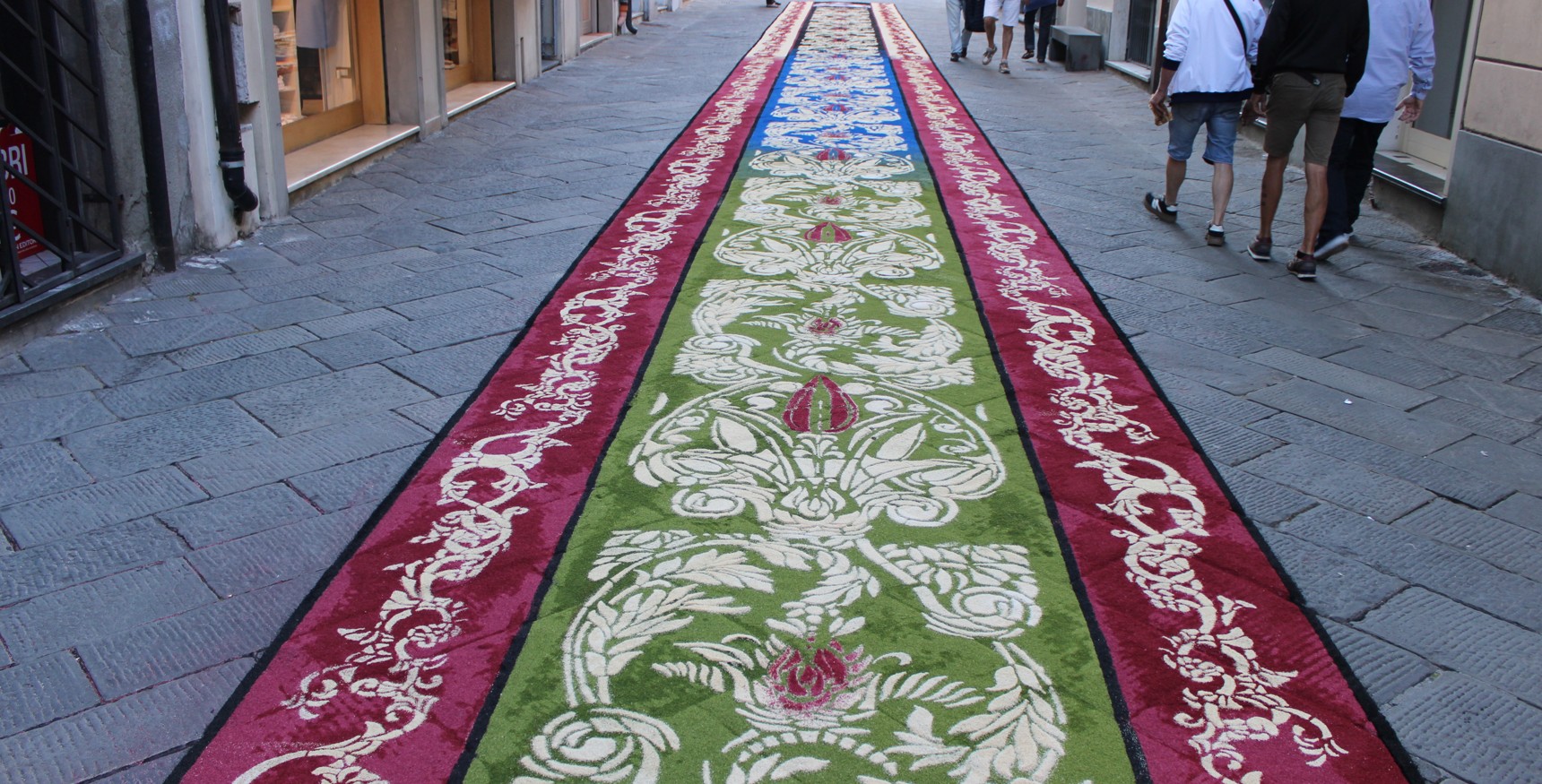
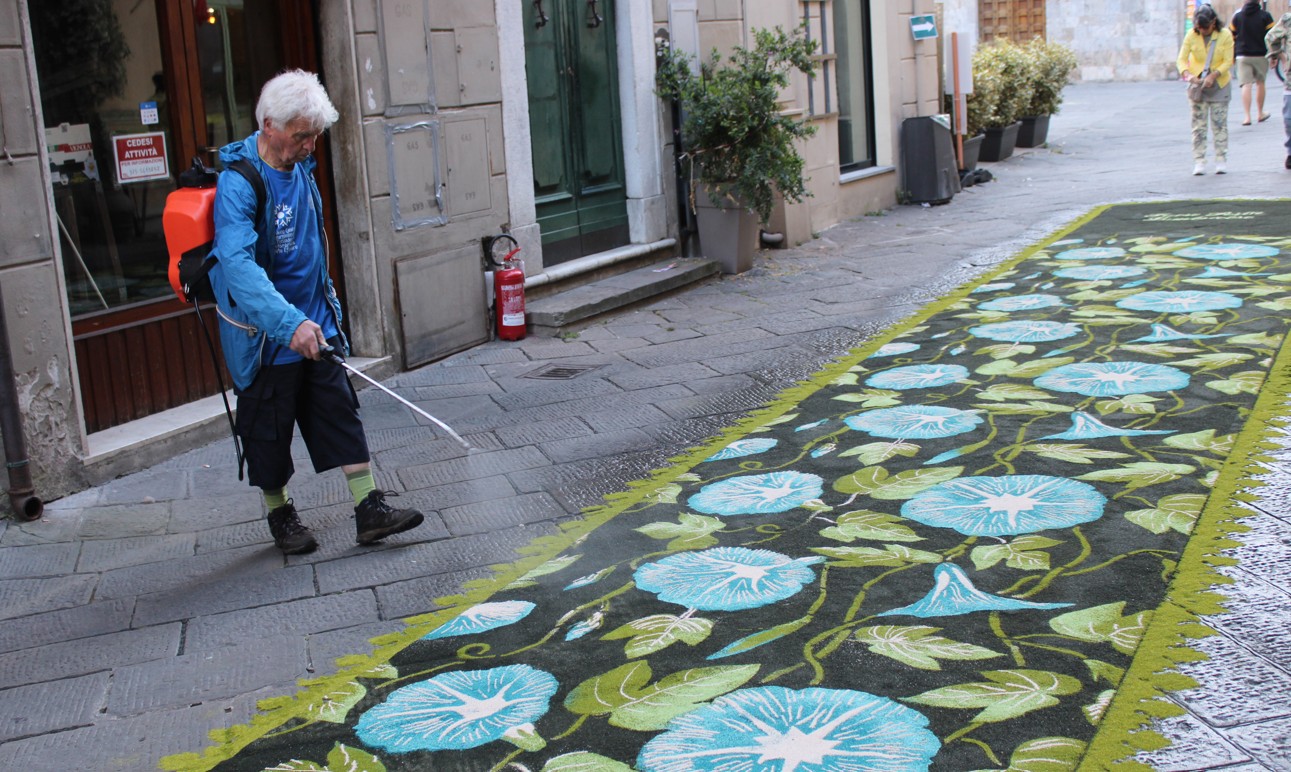
All’alba di questa mattina, poche ore prima del passaggio della processione del Corpus Domini, i celebri tappeti di segatura apparivano in tutta la loro straordinaria bellezza. Un patrimonio artistico destinato però a durare pochissimo.
Quella dei tappeti di segatura è infatti un’arte effimera che vive soltanto per una notte e per poche ore del mattino. Un lavoro immenso che nasce al tramonto, cresce nel cuore della notte e scompare sotto i passi della tradizionale processione religiosa, lasciando dietro di sé soltanto fotografie, ricordi ed emozioni.
Una notte di lavoro per creare opere destinate a sparire
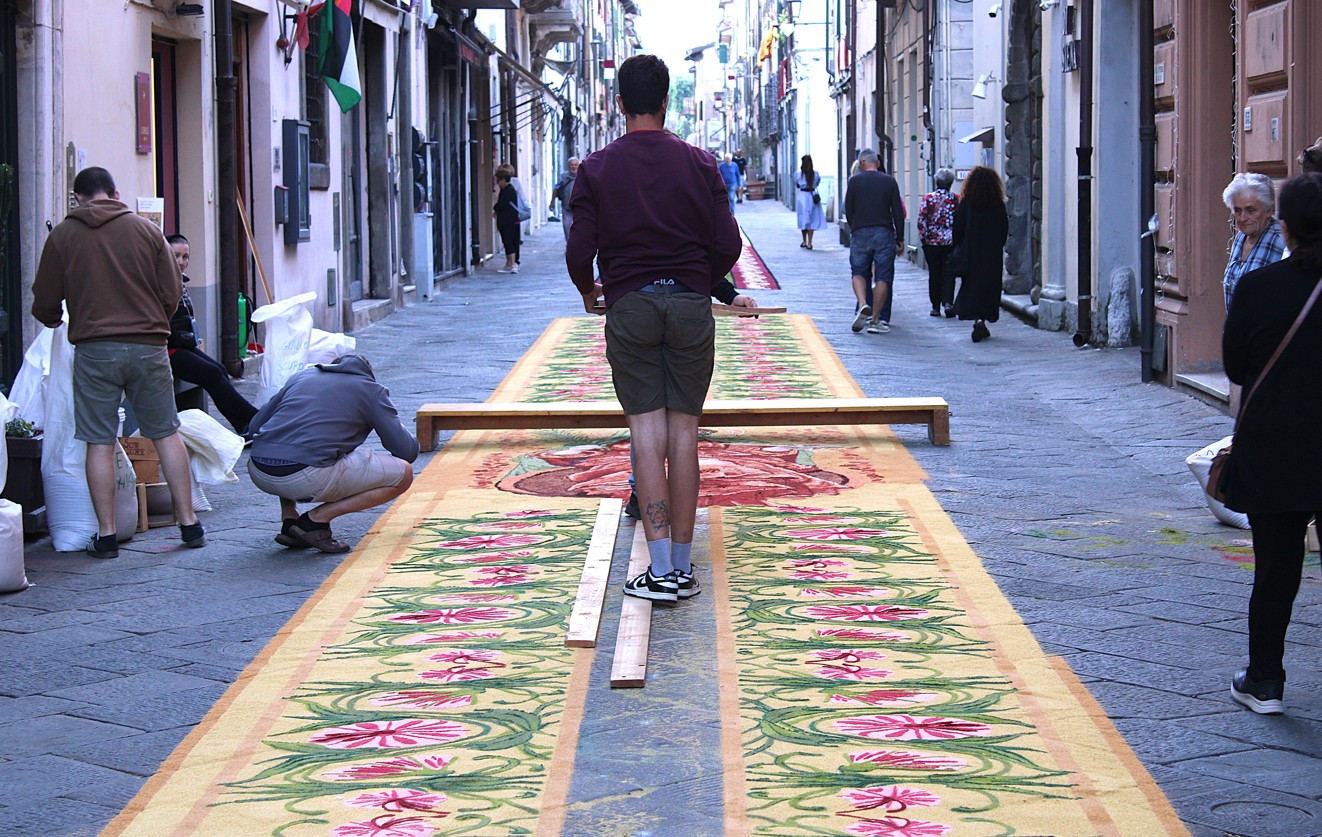
I Maestri Tappetari di Camaiore hanno iniziato il loro lavoro nella serata precedente, trasformando le vie del centro storico in un grande laboratorio a cielo aperto. Armati di sagome, disegni preparatori e quintali di segatura colorata, hanno lavorato senza sosta per tutta la notte.
Le ultime rifiniture sono state completate tra le cinque e le sei del mattino, quando le opere hanno finalmente preso forma definitiva. È proprio in quelle ore che si può ammirare il risultato nella sua interezza, prima che la città si prepari al momento culminante della celebrazione del Corpus Domini.
Diciannove opere nel cuore del centro storico
Quest’anno sono state diciannove le opere che hanno impreziosito il centro storico di Camaiore nella notte tra sabato 6 e domenica 7 giugno. Un percorso artistico diffuso che ha trasformato strade e piazze in una grande galleria temporanea all’aperto.
Ogni tappeto ha raccontato una storia diversa attraverso immagini, simboli e colori, ma tutti gli artisti hanno condiviso un unico filo conduttore, sviluppando interpretazioni personali di un tema comune scelto dalla Parrocchia di Camaiore.
Il tema del 2026: la luce che splende nelle tenebre
Il grande tema dell’edizione di quest’anno è stato quello della luce che splende nelle tenebre, ispirato al celebre passo del Vangelo di Giovanni:
“In lui era la vita e la vita era la luce degli uomini; la luce splende nelle tenebre e le tenebre non l’hanno vinta” (Gv 1,4-5).
Un messaggio che i Maestri Tappetari hanno tradotto in immagini di forte impatto visivo, capaci di unire spiritualità, tradizione e ricerca artistica. La luce è diventata simbolo di speranza, rinascita e fede, emergendo dai contrasti cromatici della segatura colorata e dai dettagli minuziosi realizzati durante le ore notturne.
L’emozione dell’alba prima della distruzione
Visitare i tappeti di segatura all’alba significa assistere a un momento unico. Le opere sono complete, le strade ancora tranquille e l’atmosfera è sospesa tra la fatica della notte appena conclusa e l’attesa della processione che ne segnerà la fine.
È forse proprio questa fragilità a rendere così speciale la tradizione di Camaiore. Sapere che quei capolavori verranno cancellati poche ore dopo aumenta il loro valore emotivo. L’arte non è pensata per durare, ma per essere vissuta intensamente nel breve spazio di tempo che le viene concesso.
I tappeti che mi hanno colpito di più
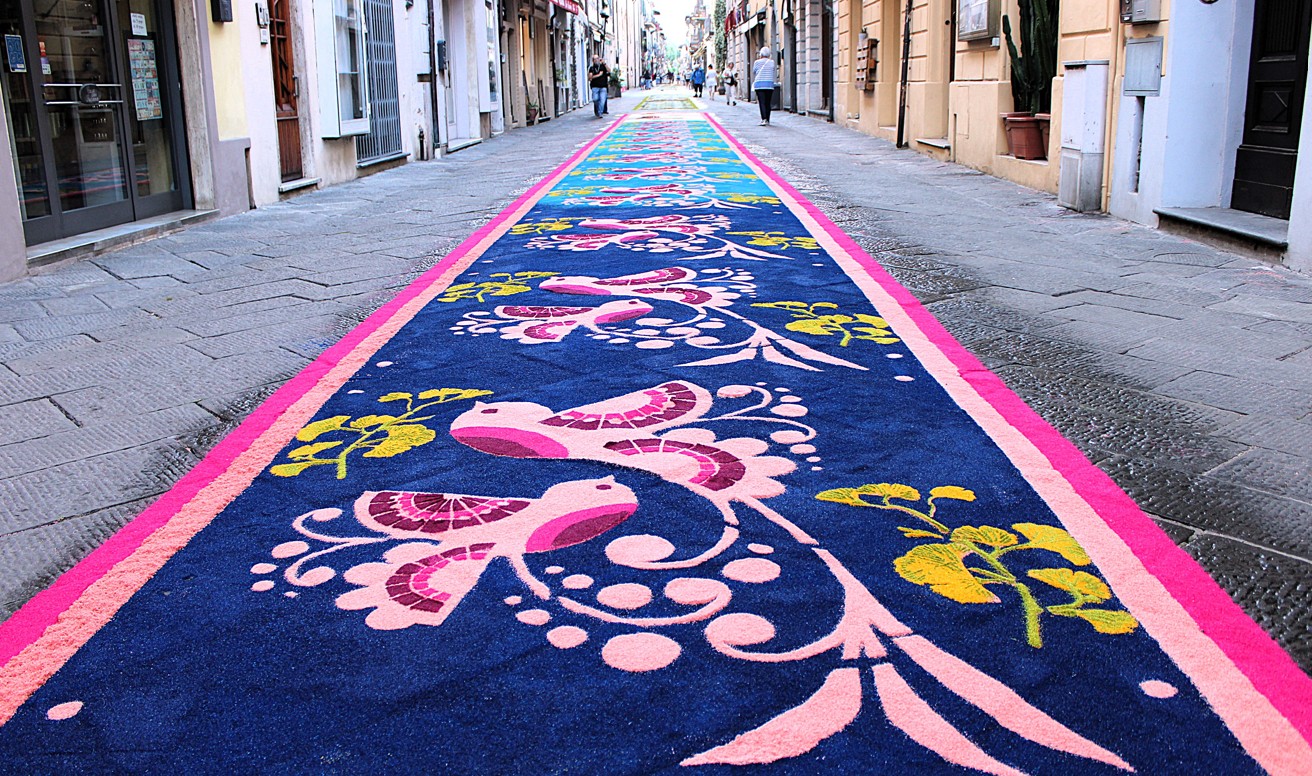
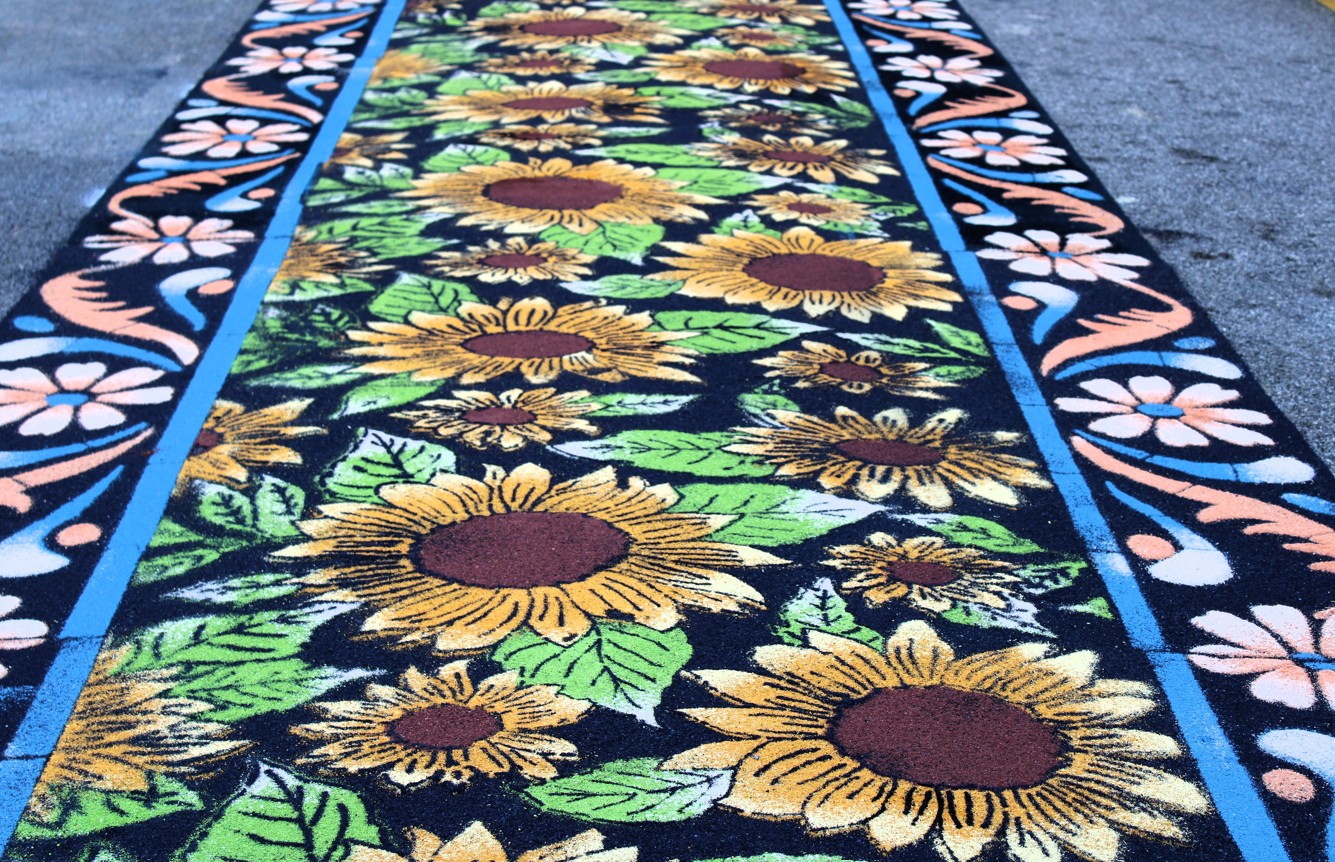
Tra le diciannove opere realizzate nel centro storico di Camaiore, alcune mi hanno particolarmente colpito per qualità artistica, composizione e capacità di interpretare il tema della luce che splende nelle tenebre.
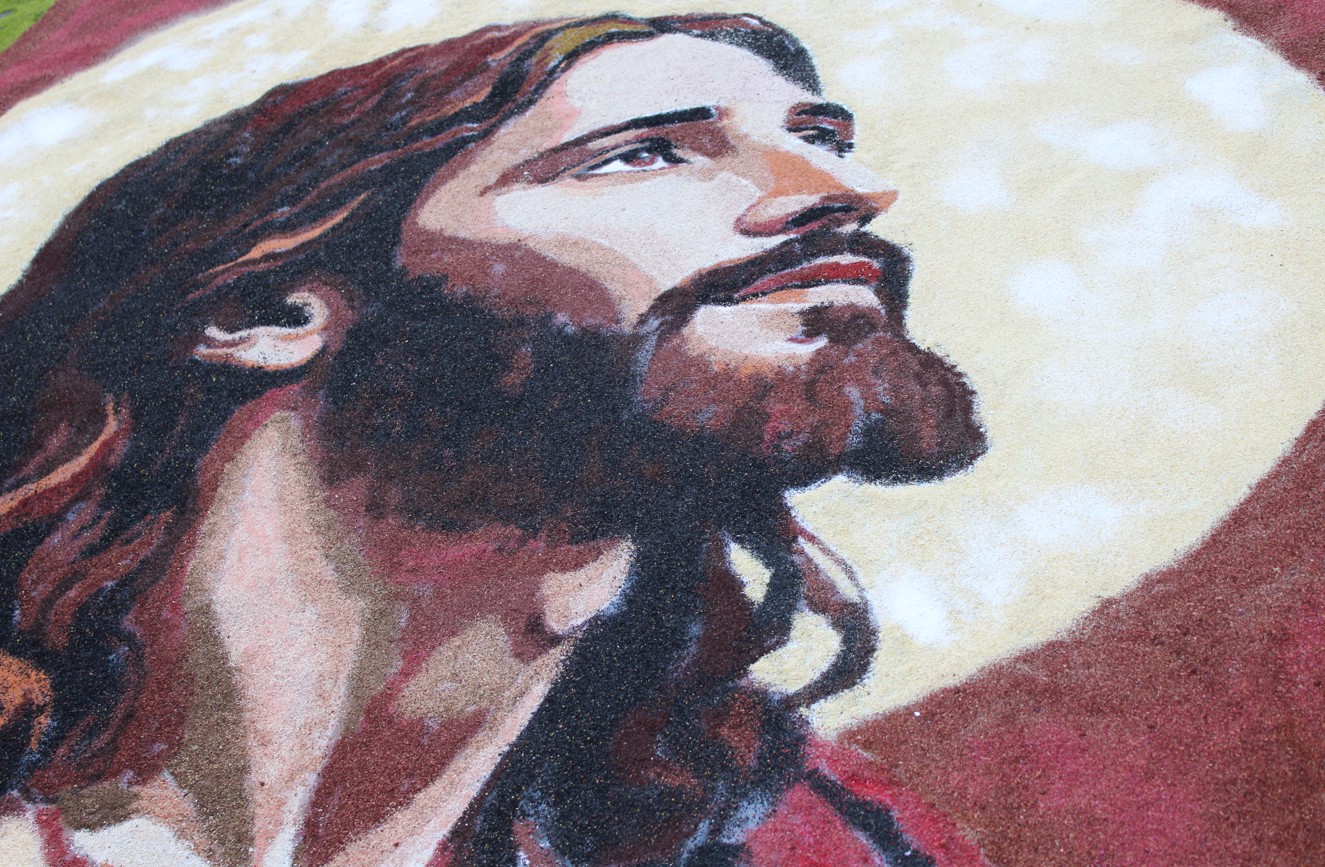
Uno dei tappeti più suggestivi è stato quello di Fuori Porta Lombricese, dominato dal volto di Cristo posto al centro della composizione. Attorno alla figura si sviluppavano ampie distese di fiori, disegnate con straordinaria precisione utilizzando esclusivamente la segatura colorata. Un’opera capace di coniugare spiritualità e armonia decorativa, valorizzata da una grande cura dei dettagli.
Molto elegante anche il lavoro realizzato da La Torre, che ha scelto uno stile Liberty particolarmente raffinato. Al centro del tappeto campeggiava la figura di San Francesco, inserita in una composizione ricca di motivi ornamentali e linee sinuose che richiamavano le atmosfere dell’Art Nouveau.
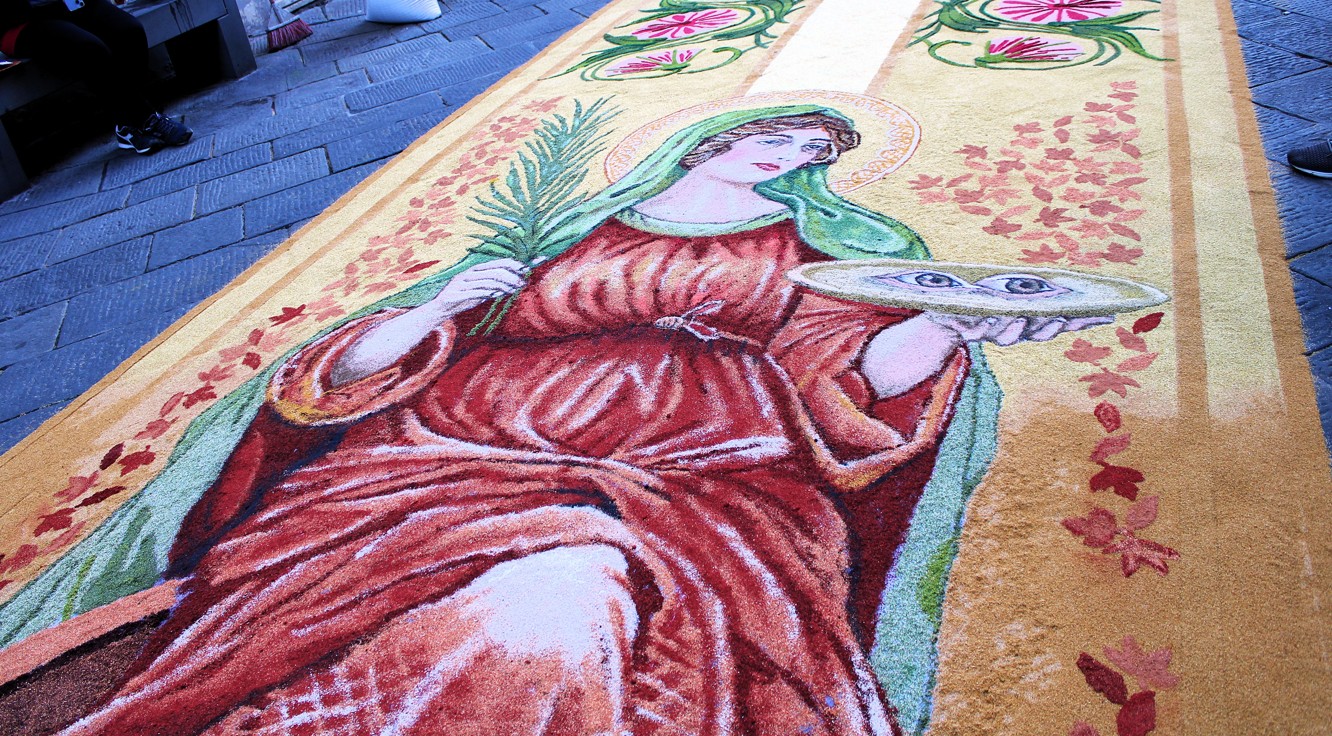
Se però devo indicare il tappeto che più mi ha emozionato, la mia preferenza va senza dubbio all’opera dedicata a Santa Lucia realizzata da Sesto Lucchese. Un lavoro che si distingueva per equilibrio compositivo, ricchezza cromatica e forza espressiva. La figura della santa emergeva con grande intensità dal fondo decorativo, offrendo una delle interpretazioni più riuscite dell’intera manifestazione. Una scelta personale, naturalmente, senza nulla togliere al valore degli altri lavori presenti lungo il percorso.
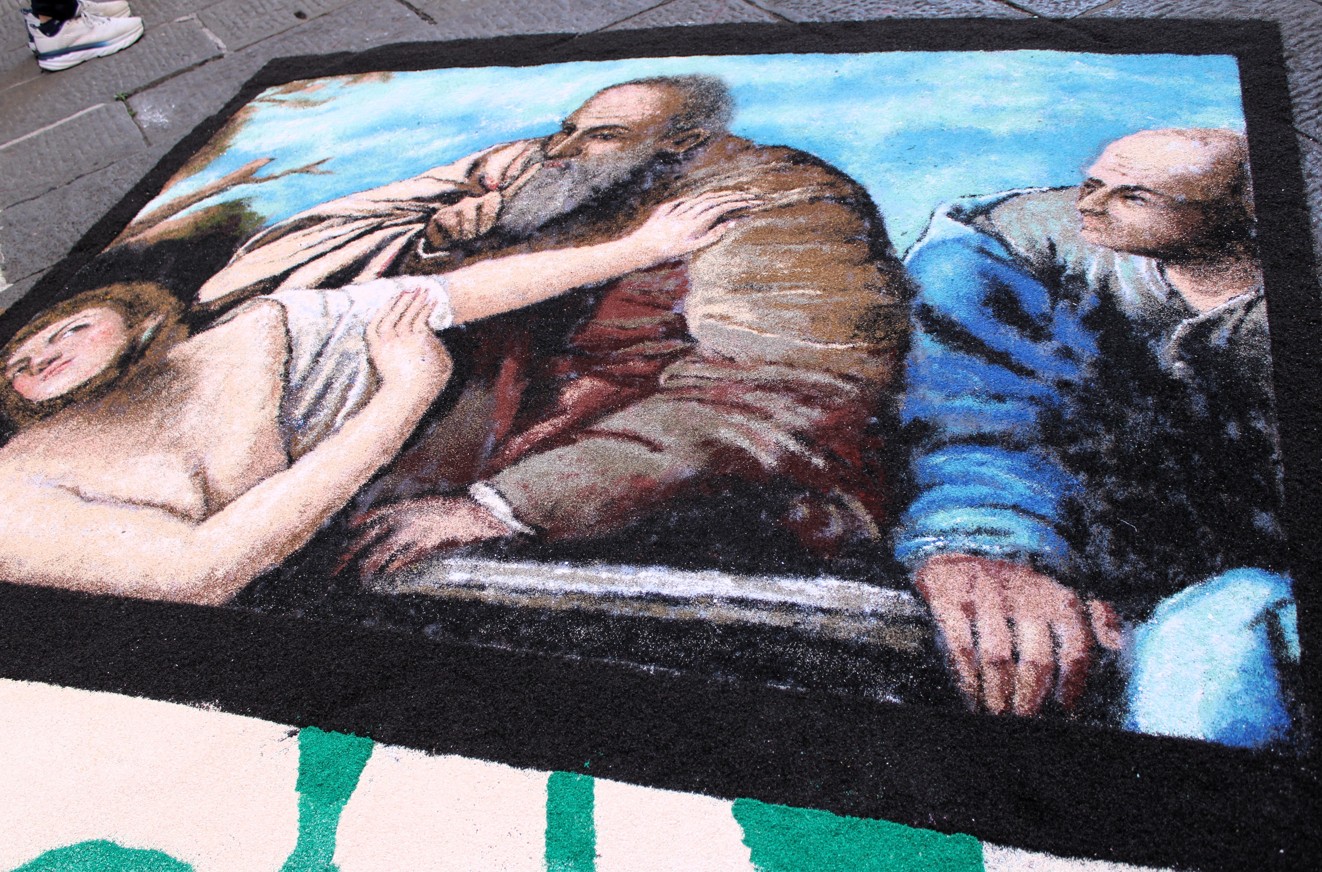
Molto interessante anche il dialogo con la storia dell’arte proposto da alcuni gruppi tappetari. Palinsesto ha infatti guardato alla pittura di Artemisia Gentileschi, richiamando il celebre dipinto Susanna e i Vecchioni, mentre la new entry della manifestazione ha scelto di omaggiare Caravaggio con una reinterpretazione della Vocazione di San Matteo.
Citazioni colte che hanno dimostrato come la tradizione dei tappeti di segatura sappia rinnovarsi continuamente, intrecciando arte sacra, grandi maestri della pittura e creatività contemporanea.
Camaiore e la tradizione secolare dei tappeti di segatura
La tradizione dei tappeti di segatura rappresenta uno degli appuntamenti più identitari della comunità camaiorese e richiama ogni anno visitatori, fotografi e appassionati d’arte da tutta la Toscana e non solo.
Tra spiritualità, creatività e partecipazione collettiva, questa forma d’arte continua a rinnovarsi anno dopo anno, dimostrando come la bellezza possa essere potente anche quando è destinata a scomparire. Per poche ore, le strade di Camaiore diventano una tela straordinaria; poi tutto svanisce, lasciando spazio al ricordo di una notte di lavoro e a un’alba che, ancora una volta, ha celebrato il fascino dell’arte effimera.
Per il momento il sempre vostro Michelangelo Buonarroti vi saluta dandovi appuntamento ai prossimi post e sui social.

Sostienici – Support Us
Se questo blog ti piace e ti appassiona, puoi aiutarci a farlo crescere sempre più sostenendoci in modo concreto condividendo i post, seguendo le pagine social e con un contributo che ci aiuta ad andare avanti con il nostro lavoro di divulgazione. . ENGLISH: If you like and are passionate about this blog, you can help us make it grow more and more by supporting us in a concrete way by sharing posts, following social pages and with a contribution that helps us to move forward with our dissemination work.
10,00 €
Per il momento il sempre vostro Michelangelo Buonarroti vi saluta dandovi appuntamento ai prossimi post e sui social.
Camaiore, at dawn between light and sawdust: the ephemeral art that Corpus Christi erases in a few hours
The sawdust carpets of Camaiore, masterpieces destined to disappear
When the sun was still rising and the streets of the historic center were immersed in an almost unreal silence, Camaiore revealed its most fascinating and fragile side. At dawn this morning, a few hours before the Corpus Christi procession, the famous sawdust carpets appeared in all their extraordinary beauty. An artistic heritage destined, however, to last a short time.
The sawdust carpets are, in fact, an ephemeral art that lives only for one night and a few hours in the morning. An immense work that is born at sunset, grows in the dead of night, and disappears beneath the footsteps of the traditional religious procession, leaving behind only photographs, memories, and emotions.
A night of work creating works destined to disappear
The Master Carpet Makers of Camaiore began their work the previous evening, transforming the streets of the historic center into a vast open-air workshop. Armed with templates, preparatory drawings, and tons of colored sawdust, they worked tirelessly throughout the night.
The final touches were completed between five and six in the morning, when the works finally took shape. It is precisely during those hours that the result can be admired in its entirety, before the city prepares for the culminating moment of the Corpus Christi celebration.
Nineteen works in the heart of the historic center
This year, nineteen works embellished the historic center of Camaiore on the night between Saturday, June 6th and Sunday, June 7th. A widespread artistic journey that transformed streets and squares into a large temporary open-air gallery.
Each carpet told a different story through images, symbols, and colors, but all the artists shared a common thread, developing personal interpretations of a common theme chosen by the Parish of Camaiore.
The 2026 theme: the light that shines in the darkness
The overarching theme of this year’s edition was the light that shines in the darkness, inspired by the famous passage from the Gospel of John:
“In him was life, and the life was the light of men; the light shines in the darkness, and the darkness has not overcome it” (John 1:4-5).
A message that the Master Carpet Makers translated into visually striking images, capable of uniting spirituality, tradition, and artistic research. Light became a symbol of hope, rebirth, and faith, emerging from the chromatic contrasts of the colored sawdust and the meticulous details created during the night hours.
The Emotion of Dawn Before Destruction
Visiting the sawdust carpets at dawn is like witnessing a unique moment. The works are complete, the streets are still quiet, and the atmosphere is suspended between the toil of the night just ended and the anticipation of the procession that will mark their end.
Perhaps it is precisely this fragility that makes Camaiore’s tradition so special. Knowing that those masterpieces will be destroyed just hours later heightens their emotional value. Art is not meant to last, but to be experienced intensely in the brief space of time allotted to it.
The Carpets That Impressed Me Most
Among the nineteen works created in Camaiore’s historic center, some particularly struck me for their artistic quality, composition, and ability to interpret the theme of light shining in the darkness.
One of the most evocative carpets was the one from Fuori Porta Lombricese, dominated by the face of Christ at the center of the composition. Vast expanses of flowers, designed with extraordinary precision using only colored sawdust, developed around the figure. A work capable of combining spirituality and decorative harmony, enhanced by meticulous attention to detail.
La Torre’s work was also very elegant, with a particularly refined Art Nouveau style. At the center of the carpet was the figure of Saint Francis, set within a composition rich in ornamental motifs and sinuous lines reminiscent of Art Nouveau.
If I had to name the carpet that moved me the most, my preference undoubtedly goes to the work dedicated to Saint Lucy by Sesto Lucchese. It was a work distinguished by its compositional balance, rich color, and expressive power. The figure of the saint emerged with great intensity from the decorative background, offering one of the most successful interpretations of the entire event. A personal choice, of course, without detracting from the value of the other works on display.
The dialogue with art history proposed by some of the carpet-making groups was also very interesting. The program looked to the paintings of Artemisia Gentileschi, recalling her famous painting Susanna and the Elders, while the event’s new entry paid homage to Caravaggio with a reinterpretation of The Calling of St. Matthew. These erudite quotes demonstrated how the tradition of sawdust carpets is continually evolving, intertwining sacred art, great masters of painting, and contemporary creativity.
Camaiore and the centuries-old tradition of sawdust carpets
The tradition of sawdust carpets represents one of the most distinctive events in the Camaiore community, attracting visitors, photographers, and art enthusiasts from all over Tuscany and beyond every year.
Between spirituality, creativity, and collective participation, this art form continues to renew itself year after year, demonstrating how beauty can be powerful even when it is destined to disappear. For a few hours, the streets of Camaiore become an extraordinary canvas; Then everything fades, leaving room for the memory of a night’s work and a dawn that, once again, celebrated the allure of ephemeral art.
For now, yours truly, Michelangelo Buonarroti bids you farewell, promising to see you in future posts and on social media.
Condividi:


Questo sono io




sostienici

Sostienici – Support Us
Se questo blog ti piace e ti appassiona, puoi aiutarci a farlo crescere sempre più sostenendoci in modo concreto condividendo i post, seguendo le pagine social e con un contributo che ci aiuta ad andare avanti con il nostro lavoro di divulgazione. . ENGLISH: If you like and are passionate about this blog, you can help us make it grow more and more by supporting us in a concrete way by sharing posts, following social pages and with a contribution that helps us to move forward with our dissemination work.
€10,00


