
21 maggio 1972, la mia Pietà ferita: il giorno in cui il marmo pianse sangue
Fui e sono tutt’ora figlio del marmo e del tormento. Mai avrei creduto che mano d’uomo potesse levarsi con tanta furia contro la creatura più dolente uscita dal mio scalpello. Eppure accadde.
Dentro la Basilica di San Pietro, nel cuore della Cristianità, la Vergine che avevo tratto dal marmo candido fu colpita come carne viva.
Era il mattino della Pentecoste del 21 maggio 1972. Le navate di San Pietro ribollivano di fedeli, pellegrini, sacerdoti e forestieri. Tutti attendevano Paolo VI. Nessuno immaginava che, di lì a pochi istanti, il silenzio sacro della Basilica sarebbe stato squarciato dal fragore del martello.

L’attentato alla Pietà Vaticana sconvolse il mondo
Alle 11:30 un uomo si fece largo fra la folla. Il suo nome era Laszlo Toth, geologo australiano di origini ungheresi. Salì sul piedistallo con la furia di chi vuole distruggere ciò che non comprende. In pugno teneva una pesante mazzetta, la testa dipinta di blu come strumento d’officina e di rovina.
“Sono Gesù Cristo, risorto dalla morte”, urlava con voce forsennata.
Poi iniziò il massacro.
Udii i colpi come se il marmo avesse nervi e sangue. Uno dopo l’altro, dodici fendenti si abbatterono sulla Vergine. Non sul Cristo morto che ella sostiene fra le braccia, ma sul volto della Madre, sul velo, sul braccio. Come se il dolore dovesse colpire ancora Maria, già trafitta dal destino del Figlio.
A ogni martellata cadevano schegge bianche sul pavimento della Basilica. Il marmo si spezzava fra urla, pianti e terrore. Restavano mutilazioni, fenditure e persino tracce di vernice blu impresse sulla purezza della scultura.
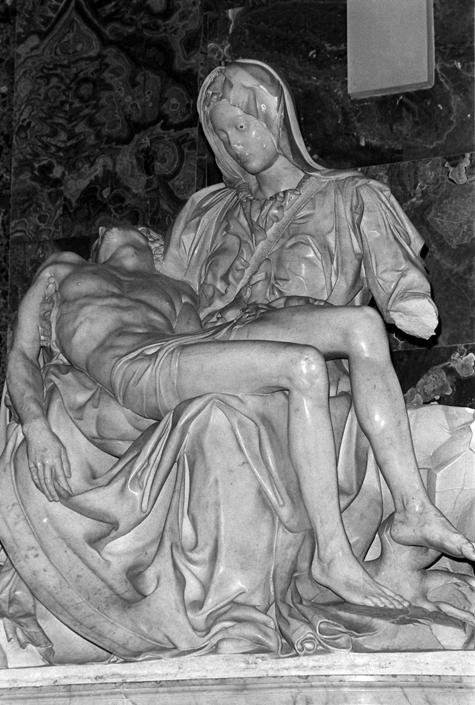
Il frammento rubato della Pietà Vaticana
Nel tumulto della folla, mentre gli uomini della sicurezza immobilizzavano Toth per sottrarlo al linciaggio, accadde un fatto quasi incredibile. Alcuni frammenti della mia Pietà giacevano a terra, come reliquie di un corpo santo.
Un visitatore, travolto dall’emozione o forse dalla follia del possesso, raccolse due pezzi di quel marmo prezioso e li nascose con sé. Attraversò l’oceano portando via una parte della Vergine mutilata.
Fu un furto silenzioso, consumato nel caos e nel dolore.
Ma la coscienza, talvolta, pesa più del marmo stesso.

Quando iniziò il restauro, quell’uomo comprese l’enormità del gesto. E così i frammenti tornarono indietro. Non dentro uno scrigno d’oro, non custoditi da cardinali o ambasciatori, ma in una semplice busta di carta spedita per posta. Come membra ferite che cercassero la via di casa.
Paolo VI si inginocchiò davanti alla Pietà ferita
Quel pomeriggio, verso le due, Paolo VI volle vedere con i propri occhi lo scempio.
Il pontefice si avvicinò alla cappella in silenzio. Dinanzi alla Vergine sfregiata si inginocchiò a pregare. Fu un gesto che pesò più di mille discorsi. Il Papa benedisse i presenti e ordinò che il mazzo di rose gialle e bianche ricevuto in dono quella mattina venisse deposto davanti alla Pietà devastata.
Le immagini fecero il giro del mondo.
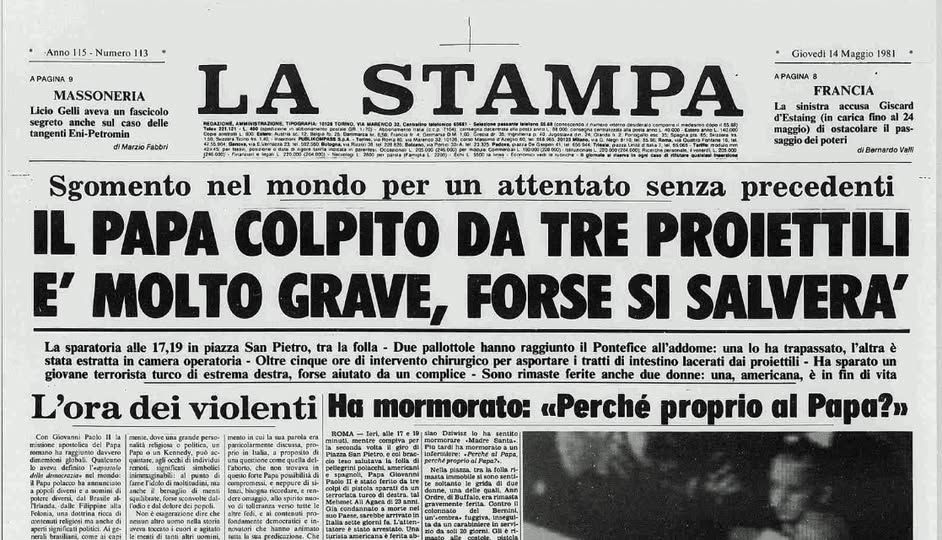
Il giorno seguente ogni giornale parlava dell’attentato. La mia opera, scolpita fra il 1498 e il 1499, divenne il simbolo universale della fragilità della bellezza.
Il restauro della Pietà Vaticana durò nove mesi
Subito dopo l’attacco iniziò il delicatissimo restauro. Il cantiere venne allestito direttamente dentro la Basilica Vaticana, ma nascosto agli occhi dei visitatori. Si lavorò nel silenzio, come chirurghi attorno a un corpo martoriato.
Ogni frammento fu studiato, ricomposto, reinserito con precisione quasi divina. A guidare quell’impresa vi era Cesare Brandi, il padre del restauro moderno, uomo capace di comprendere che restaurare non significa cancellare il dolore del tempo, ma custodirne la memoria.
Per nove mesi la Pietà rimase velata al mondo.
Poi tornò.
E quando il telo cadde, la Vergine apparve nuovamente intatta agli occhi dei fedeli. Ma chi conosce il marmo sa che ogni ferita lascia un ricordo invisibile.

La Pietà Vaticana oggi è protetta dietro un vetro blindato
Da quel giorno nulla fu più come prima. La Pietà Vaticana venne collocata dietro un vetro antiproiettile, lontana dalle mani degli uomini. Una barriera necessaria, ma triste, come se la bellezza fosse costretta a difendersi dal mondo che dovrebbe amarla.
Terminai di scolpire quella Vergine quando avevo appena ventiquattro anni. Volli che il marmo sembrasse carne, che il dolore diventasse eterno e che la Madre apparisse giovane come la purezza stessa.
Mai avrei pensato che secoli dopo un uomo avrebbe tentato di distruggerla a colpi di martello.
Eppure la Pietà sopravvisse.
Perché il marmo può spezzarsi, ma il genio, la fede e la memoria degli uomini trovano sempre il modo di ricomporre ciò che la follia tenta di annientare.
Per il momento il sempre vostro Michelangelo Buonarroti vi saluta dandovi appuntamento ai prossimi post e sui social.
May 21, 1972, my wounded Pietà: the day the marble wept blood
I was, and still am, a child of marble and torment. I never would have believed that a human hand could rise with such fury against the most painful creature ever to emerge from my chisel. And yet it happened.
Inside St. Peter’s Basilica, in the heart of Christianity, the Virgin I had carved from the white marble was struck like living flesh.
It was the morning of Pentecost, May 21, 1972. The naves of St. Peter’s were bustling with the faithful, pilgrims, priests, and visitors. Everyone was waiting for Paul VI. No one imagined that, in a few moments, the sacred silence of the Basilica would be shattered by the thunder of the hammer.
The attack on the Vatican Pietà shocked the world.
At 11:30 a man made his way through the crowd. His name was Laszlo Toth, an Australian geologist of Hungarian origins. He climbed onto the pedestal with the fury of one who wants to destroy what he doesn’t understand. In his hand he held a heavy mallet, his head painted blue like a tool of workshop and ruin.
“I am Jesus Christ, risen from the dead,” he shouted in a frenzied voice.
Then the massacre began.
I heard the blows as if the marble had nerves and blood. One after another, twelve blows fell on the Virgin. Not on the dead Christ she holds in her arms, but on the Mother’s face, her veil, her arm. As if the pain would strike Mary again, already pierced by her Son’s fate.
With each hammer blow, white splinters fell to the floor of the Basilica. The marble cracked amidst screams, cries, and terror. Mutilations, cracks, and even traces of blue paint imprinted on the purity of the sculpture remained.
The Stolen Fragment of the Vatican Pietà
In the tumult of the crowd, while security men restrained Toth to save him from lynching, an almost unbelievable event occurred. Some fragments of my Pietà lay on the ground, like relics of a holy body.
A visitor, overwhelmed by emotion or perhaps the madness of possession, picked up two pieces of that precious marble and hid them with him. He crossed the ocean, carrying away a part of the mutilated Virgin.
It was a silent theft, consummated in chaos and pain.
But conscience, sometimes, weighs more than the marble itself.
When the restoration began, that man understood the enormity of the gesture. And so the fragments returned. Not in a golden casket, not guarded by cardinals or ambassadors, but in a simple paper envelope sent by mail. Like wounded limbs seeking a way home.
Paul VI knelt before the wounded Pietà
That afternoon, around two o’clock, Paul VI wanted to see the devastation with his own eyes.
The pontiff approached the chapel in silence. He knelt to pray before the disfigured Virgin. It was a gesture that carried more weight than a thousand speeches. The Pope blessed those present and ordered that the bouquet of yellow and white roses he had received as a gift that morning be placed before the devastated Pietà.
The images traveled around the world.
The next day, every newspaper covered the attack. My work, sculpted between 1498 and 1499, became the universal symbol of the fragility of beauty.
The restoration of the Vatican Pietà lasted nine months
Immediately after the attack, the extremely delicate restoration began. The work was set up directly inside the Vatican Basilica, but hidden from the eyes of visitors. They worked in silence, like surgeons over a tortured body.
Each fragment was studied, reassembled, and reinserted with almost divine precision. Leading that undertaking was Cesare Brandi, the father of modern restoration, a man capable of understanding that restoration does not mean erasing the pain of time, but preserving its memory.
For nine months, the Pietà remained veiled from the world.
Then it returned.
And when the veil fell, the Virgin once again appeared intact to the eyes of the faithful. But those who know marble know that every wound leaves an invisible memory.
The Vatican Pietà is now protected behind bulletproof glass
From that day on, nothing was the same. The Vatican Pietà was placed behind bulletproof glass, far from the hands of men. A necessary but sad barrier, as if beauty were forced to defend itself from the world that should love it.
I finished sculpting that Virgin when I was just twenty-four. I wanted the marble to seem flesh, for the pain to become eternal, and for the Mother to appear as young as purity itself.
I never would have thought that centuries later, a man would attempt to destroy it with a hammer.
And yet, the Pietà survived.
Because marble may break, but the genius, faith, and memory of men always find a way to recompose what madness attempts to destroy.
For now, yours truly, Michelangelo Buonarroti bids you farewell, saying he’ll see you in future posts and on social media.

Sostienici – Support Us
Se questo blog ti piace e ti appassiona, puoi aiutarci a farlo crescere sempre più sostenendoci in modo concreto condividendo i post, seguendo le pagine social e con un contributo che ci aiuta ad andare avanti con il nostro lavoro di divulgazione. . ENGLISH: If you like and are passionate about this blog, you can help us make it grow more and more by supporting us in a concrete way by sharing posts, following social pages and with a contribution that helps us to move forward with our dissemination work.
10,00 €
Condividi:


Questo sono io




sostienici

Sostienici – Support Us
Se questo blog ti piace e ti appassiona, puoi aiutarci a farlo crescere sempre più sostenendoci in modo concreto condividendo i post, seguendo le pagine social e con un contributo che ci aiuta ad andare avanti con il nostro lavoro di divulgazione. . ENGLISH: If you like and are passionate about this blog, you can help us make it grow more and more by supporting us in a concrete way by sharing posts, following social pages and with a contribution that helps us to move forward with our dissemination work.
€10,00


Ero piccola ma ricordo bene il senso di sgomento in famiglia per quel gesto folle
"Mi piace"Piace a 1 persona
una cosa che sembra quasi impossibile da pensare
"Mi piace""Mi piace"