
Il Profeta Zaccaria nella Cappella Sistina: la sua visione sopra l’ingresso
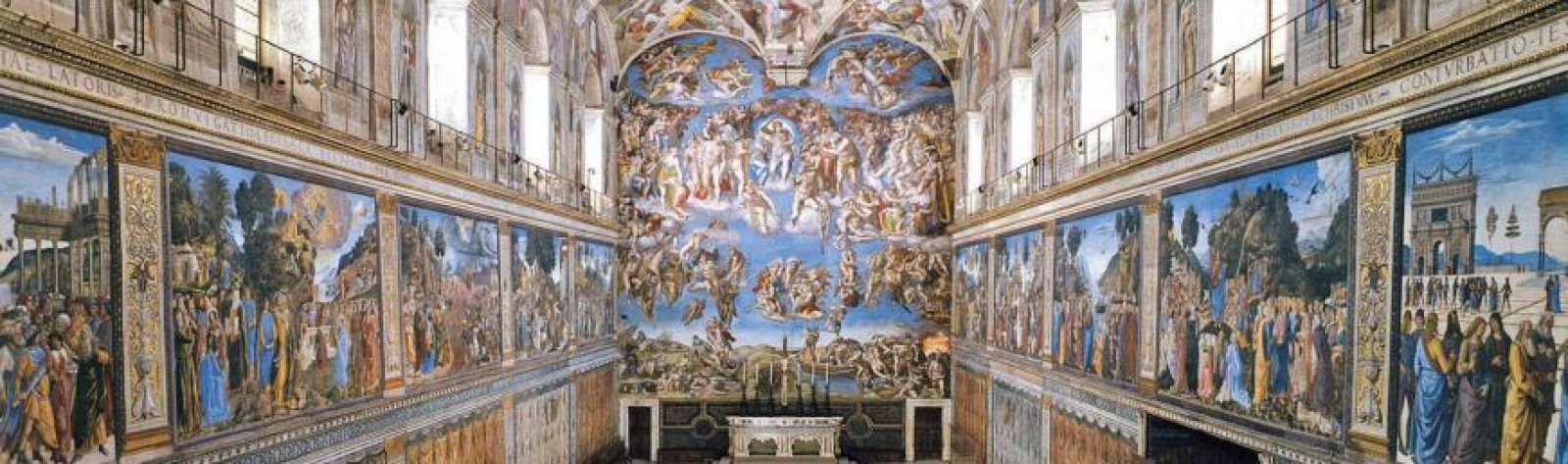
Tra i primi veggenti che affrescai nella volta della Cappella Sistina, ci fu Zaccaria, il profeta della saggezza, collocato immediatamente sopra la porta d’ingresso, nella testata Ovest.
E no, non fu casuale la scelta della sua posizione.
Zaccaria sopra la porta: una scelta simbolica potente
Sotto la targa che reca il suo nome venne apposto lo stemma dei Della Rovere, la famiglia di Papa Giulio II, colui che mi affidò la grandiosa impresa della decorazione della volta.
La posizione di Zaccaria non è casuale come vi ho accennato: fu il profeta che annunciò l’ingresso di Cristo in Gerusalemme, un momento centrale che si riflette nella celebrazione della Domenica delle Palme.
Durante questa festività, il Santo Padre entrava processionalmente da quella porta, ripercorrendo simbolicamente il gesto di Cristo che varcava le soglie di Gerusalemme su un asinello, umile e solenne. Zaccaria diventa così il ponte tra Antico e Nuovo Testamento, tra promessa e compimento.
Lo sguardo del profeta: calma o furia?
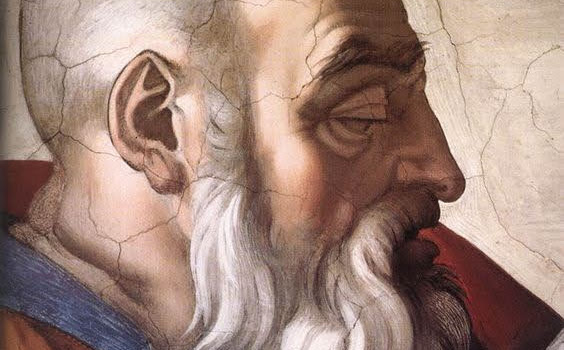
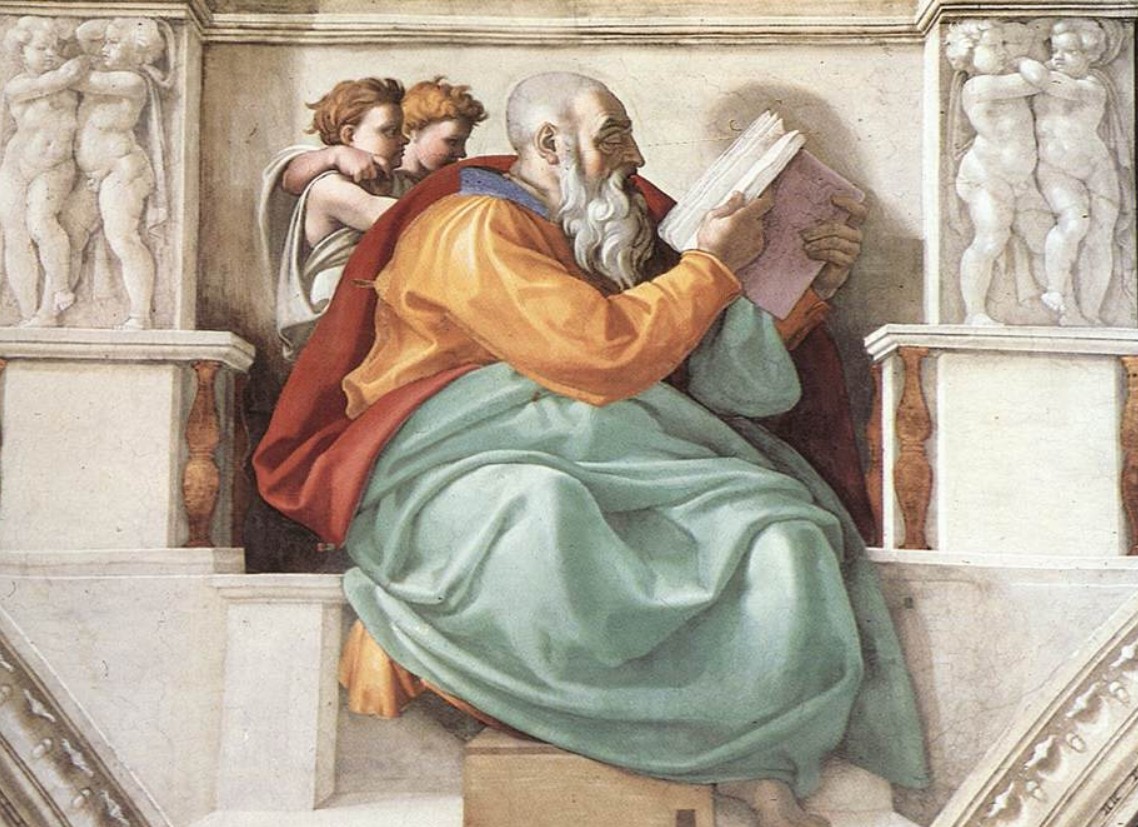
Lo dipinsi assorto nella lettura del libro che tiene fra le mani. Gli occhi sono profondi, la bocca serrata, la fronte segnata dalle fatiche e dall’esperienza. Egli appare concentrato, raccolto nella parola, e non turbato.
Tuttavia, il mio carissimo amico Giorgio Vasari, nelle sue Vite, descrisse la postura del profeta come frutto di un impeto quasi furioso, con una gamba più alta dell’altra, come se fosse in tensione alla ricerca di qualcosa che non trova.
Io volli invece rappresentare la calma intellettuale, la concentrazione del veggente che scruta il mistero divino senza lasciarsi sopraffare dalla frenesia. Zaccaria conosce il peso della visione e sa che ciò che legge cambierà il destino del mondo.
L’abito e i colori: teologia dipinta
Il profeta indossa una veste giallo ocra dalle lunghe maniche, con il colletto bordato di smaltino. Sulla spalla sinistra posa un mantello rosso cremisi che scende sulle gambe rivelando la fodera verde chiaro. Nulla è casuale: il giallo ocra richiama la luce dell’intelletto e della sapienza, il rosso cremisi esprime l’ardore profetico e il sacrificio, il verde simboleggia la speranza e il rinnovamento.
Ogni colore diventa così un messaggio silenzioso, un ponte tra pittura e teologia.

Le veggenze di Zaccaria: oltre l’ingresso a Gerusalemme
Molti oggi ricordano Zaccaria solo per la profezia dell’ingresso messianico su un asinello, ma nel Medioevo e nel Rinascimento era molto più venerato.
Annunciò non solo il Re giusto e umile che sarebbe venuto a Gerusalemme, ma anche eventi di grande portata: il tradimento per trenta monete d’argento, il dolore del popolo di fronte al trafitto, la purificazione del tempio e la rinascita della città sacra. Le sue visioni erano dense di simboli e immagini potenti: cavalieri, candelabri d’oro, città ricostruite e germogli che nascono dalla rovina. Il suo volto non è disperato, ma segnato dal tempo, saldo e consapevole della portata del messaggio che porta.
Il disegno preparatorio agli Uffizi
Prima di affrescare la volta, studiai con attenzione l’espressione di Zaccaria. Ancora oggi un mio disegno a carboncino è conservato al Gabinetto dei Disegni e delle Stampe della Galleria degli Uffizi. Realizzato attorno al 1508, il tratteggio è essenziale ma potente: occhi profondi, bocca serrata, fronte corrugata. In quel foglio cercai di concentrare fatica, visione e dignità, catturando tutto ciò che volevo comunicare attraverso la sua espressione.

Il restauro: riportare alla luce la verità del colore
Nei secoli, la mia pittura subì numerosi interventi. Nel Settecento, Annibale Mazzuoli apportò ridipinture che alteravano i colori originali.
L’ultimo grande restauro, guidato da Gianluigi Colalucci, fu complesso e delicato: rimuovere le aggiunte senza danneggiare i miei ritocchi a secco richiese estrema precisione. Quando i colori tornarono a respirare, la vibrazione originaria riemerse: l’ocra caldo, il rosso vivo e il verde luminoso tornarono a dare vita alla saggezza del profeta.
Un profeta per chi entra
Chiunque varchi la porta della Cappella Sistina è accolto da Zaccaria. Egli è il primo a parlare, il veggente che annuncia la venuta del Re umile e giusto.
La sua presenza ricorda che l’ingresso in quella volta non è solo fisico, ma spirituale. Zaccaria continua a leggere silenzioso, come allora, e guida lo sguardo di chi entra verso il compimento della profezia e la luce della sapienza divina.
Per il momento il sempre vostro Michelangelo Buonarroti vi saluta dandovi appuntamento ai prossimi post e sui social.
The Prophet Zechariah in the Sistine Chapel: His Vision Above the Entrance
Among the first visionaries I frescoed on the Sistine Chapel ceiling was Zechariah, the prophet of wisdom, placed immediately above the entrance door, in the west apex.
And no, his position was not chosen by chance.
Zechariah above the door: a powerful symbolic choice
Beneath the plaque bearing his name was placed the coat of arms of the Della Rovere family, the family of Pope Julius II, who entrusted me with the grandiose undertaking of decorating the ceiling.
Zechariah’s position is not accidental, as I mentioned: he was the prophet who announced Christ’s entry into Jerusalem, a central moment reflected in the celebration of Palm Sunday.
During this feast, the Holy Father entered in procession through that door, symbolically retracing the steps of Christ who crossed the threshold of Jerusalem on a donkey, humble and solemn. Zechariah thus becomes the bridge between the Old and New Testaments, between promise and fulfillment.
The prophet’s gaze: calm or fury?
I painted him absorbed in the book he holds in his hands. His eyes are deep, his mouth tight, his forehead marked by fatigue and experience. He appears focused, absorbed in his words, and unperturbed.
However, my dear friend Giorgio Vasari, in his Lives, described the prophet’s posture as the result of an almost furious impetus, with one leg higher than the other, as if tensely searching for something he cannot find.
I instead wanted to represent intellectual calm, the concentration of the seer who scrutinizes the divine mystery without being overwhelmed by frenzy. Zechariah knows the weight of vision and knows that what he reads will change the fate of the world.
The dress and the colors: painted theology
The prophet wears a long-sleeved ochre-yellow robe, with a collar trimmed with enamel. A crimson red cloak rests over the left shoulder, flowing down the legs to reveal a light green lining. Nothing is accidental: the yellow ochre evokes the light of intellect and wisdom, the crimson red expresses prophetic ardour and sacrifice, and the green symbolizes hope and renewal.
Each color thus becomes a silent message, a bridge between painting and theology.
The Visions of Zechariah: Beyond the Entry into Jerusalem
Many today remember Zechariah only for the prophecy of the messianic entry on a donkey, but in the Middle Ages and the Renaissance, he was much more revered.
He announced not only the just and humble King who would come to Jerusalem, but also events of great significance: the betrayal for thirty pieces of silver, the pain of the people facing the pierced one, the purification of the temple, and the rebirth of the sacred city. His visions were full of powerful symbols and images: knights, golden candelabra, rebuilt cities, and sprouts rising from the ruin. His face is not desperate, but marked by time, firm and aware of the significance of the message it conveys.
The preparatory drawing at the Uffizi
Before frescoing the vault, I carefully studied Zaccaria’s expression. One of my charcoal drawings is still preserved today in the Cabinet of Prints and Drawings of the Uffizi Gallery. Created around 1508, the hatching is essential yet powerful: deep eyes, a tight mouth, a furrowed brow. In that sheet, I tried to concentrate effort, vision, and dignity, capturing everything I wanted to communicate through his expression.
The restoration: bringing the truth of color to light
Over the centuries, my painting underwent numerous interventions. In the 18th century, Annibale Mazzuoli applied overpainting that altered the original colors.
The last major restoration, led by Gianluigi Colalucci, was complex and delicate: removing the additions without damaging my dry retouching required extreme precision. When the colors began to breathe again, the original vibration resurfaced: the warm ochre, the vivid red, and the luminous green once again brought the prophet’s wisdom to life.
A prophet for those who enter
Whoever enters the Sistine Chapel is greeted by Zechariah. He is the first to speak, the seer who announces the coming of the humble and just King.
His presence reminds us that entering that vault is not merely physical, but spiritual. Zechariah continues to read silently, as he did then, and guides the gaze of those who enter toward the fulfillment of the prophecy and the light of divine wisdom.
For now, yours truly, Michelangelo Buonarroti bids you farewell, inviting you to join him in future posts and on social media

Sostienici – Support Us
Se questo blog ti piace e ti appassiona, puoi aiutarci a farlo crescere sempre più sostenendoci in modo concreto condividendo i post, seguendo le pagine social e con un contributo che ci aiuta ad andare avanti con il nostro lavoro di divulgazione. . ENGLISH: If you like and are passionate about this blog, you can help us make it grow more and more by supporting us in a concrete way by sharing posts, following social pages and with a contribution that helps us to move forward with our dissemination work.
10,00 €
Articoli

Condividi:


Questo sono io




sostienici

Sostienici – Support Us
Se questo blog ti piace e ti appassiona, puoi aiutarci a farlo crescere sempre più sostenendoci in modo concreto condividendo i post, seguendo le pagine social e con un contributo che ci aiuta ad andare avanti con il nostro lavoro di divulgazione. . ENGLISH: If you like and are passionate about this blog, you can help us make it grow more and more by supporting us in a concrete way by sharing posts, following social pages and with a contribution that helps us to move forward with our dissemination work.
€10,00


