
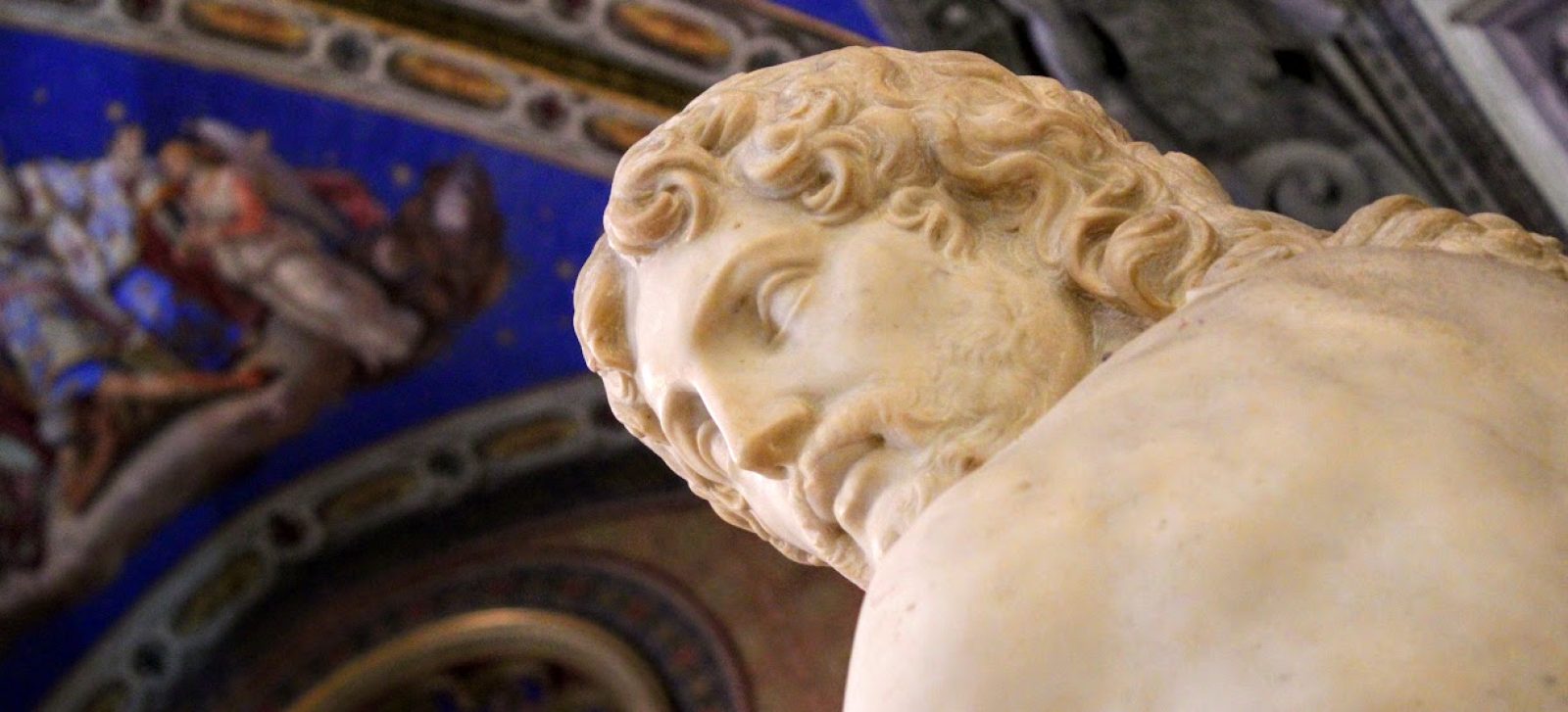
La Scultura del giorno: la Vergine Vestale velata di Andreoni
La scultura del giorno che vi propongo oggi è la Vergine Vestale velata di Orazio Andreoni, scolpita a Roma nel 1880.
Un’opera scolpita con quella che non definirei maestria ma con una buona approssimazione dei dettagli.
Sembra che con lo scalpello voglia di proposito non entrare nel marmo più di tanto, lasciando il velo e i fiori che porta in mano e adagiati sul braccio la giovane accennati ma non completati nei petali.
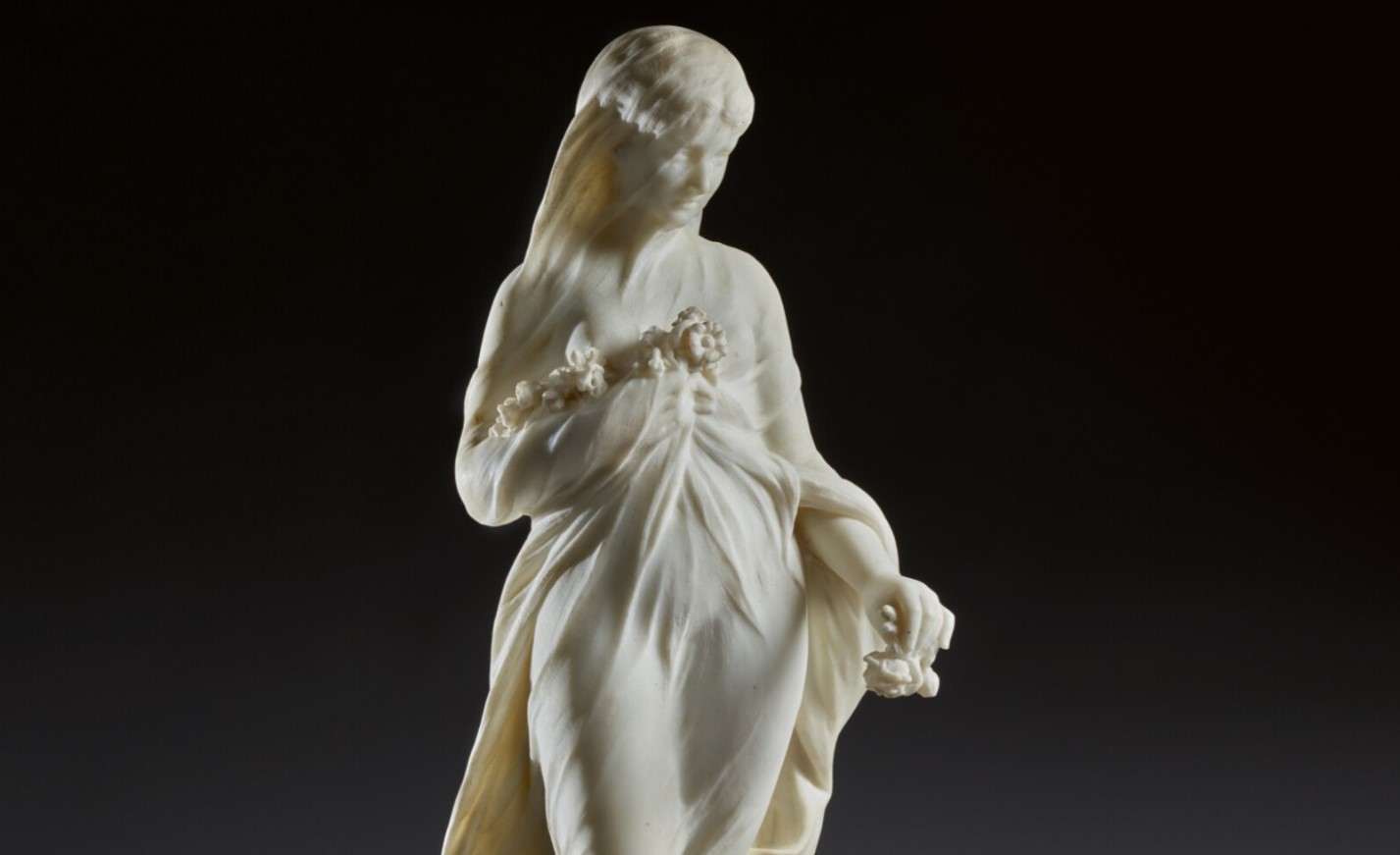
Dopo il successo delle opere velate prima di Strazza e poi di Monti, ispirate dal capolavoro inarrivabile del Cristo Velato di Sanmartino, molti furono gli artisti che vollero scolpire opere con il volto coperto, scolpite come se fossero velate da un panno impalpabile.
Alcune opere sono degne di nota, altri artisti invece raggiunsero risultati non eccellenti riuscendo comunque a produrre sculture piacevoli da vedere ma che non vanno al di là di quello.

Proprio la Vergine Vestale velata di Orazio Andreoni ne è un esempio lampante. L’artista riuscì a dar forma a un’opera decorativa ma che non riesce a emozionare.
L’artista che aveva il suo studio a Roma, inviò la scultura in questione prima alla mostra di Glasgow del 1888 e successivamente a quella di Berlino del 1892. Riuscì a conquistarsi una buona fama nel mondo grazie a un lungo soggiorno negli Stati Uniti, dopo aver preso parte alle due esposizioni europee.
Era noto soprattutto per la realizzazione di soggetti biblici e storici ma per i trattamenti dei veli non fu propriamente un maestro.
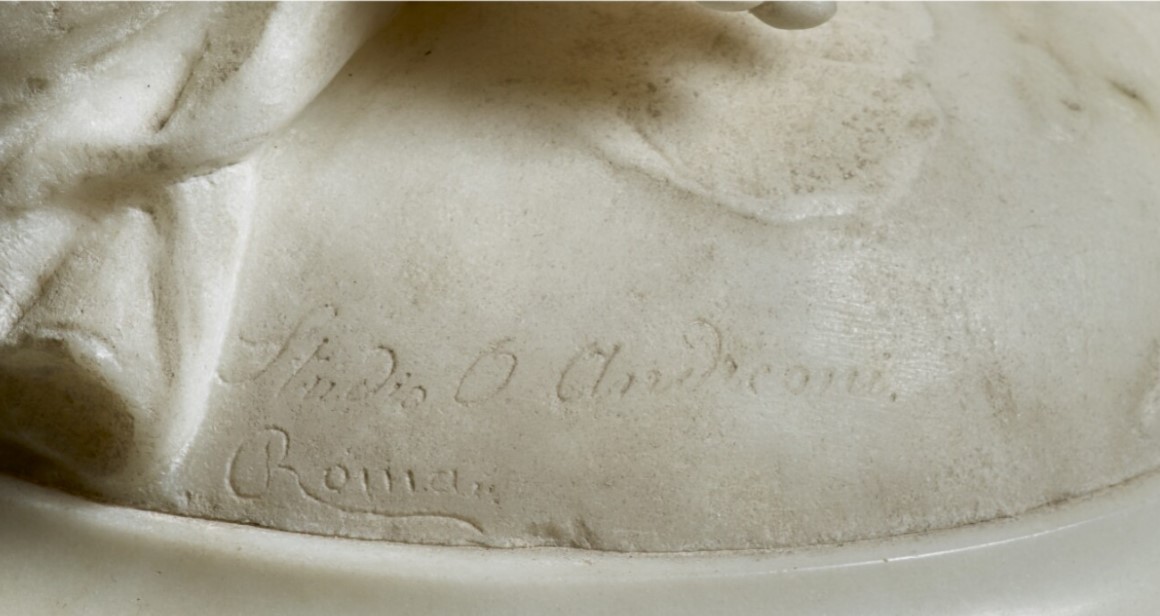
La scultura della Vergine Vestale velata appartiene a una collezione privata ed è firmata dall’artista Studio O, Andreoni/ Roma.
Per il momento il sempre vostro Michelangelo Buonarroti vi saluta dandovi appuntamento ai prossimi post e sui social.
© Riproduzione riservata
Sculpture of the day: the Veiled Vestal Virgin by Andreoni
The sculpture of the day that I propose to you today is the Veiled Vestal Virgin by Orazio Andreoni, sculpted in Rome in 1880.
A work sculpted with what I would not call mastery but with a good approximation of the details. It seems that with the chisel he purposely wants not to enter the marble too much, leaving the veil and the flowers that she carries in her hand and lying on the arm of the young woman hinted at but not completed in the petals.
After the success of the veiled works first by Strazza and then by Monti, inspired by the unrivaled masterpiece of the Veiled Christ by Sanmartino, many were the artists who wanted to sculpt works with the face covered, sculpted as if they were veiled by an impalpable cloth.
Some works are worthy of note, other artists instead achieved results that were not excellent, still managing to produce sculptures that are pleasant to look at but that do not go beyond that.
Orazio Andreoni’s Veiled Vestal Virgin is a prime example of this. The artist managed to create a decorative work that fails to excite.
The artist, who had his studio in Rome, sent this work first to the Glasgow exhibition in 1888 and then to the Berlin exhibition in 1892. He managed to gain a good reputation in the world thanks to a long stay in the United States, after having taken part in the two European exhibitions.
He was known above all for the creation of biblical and historical subjects but he was not exactly a master for the treatment of veils.
The sculpture of the Veiled Vestal Virgin belongs to a private collection and is signed by the artist Studio O, Andreoni/ Rome.
For the moment, yours truly Michelangelo Buonarroti bids you farewell and looks forward to seeing you in the next posts and on social media.
© All rights reserved

Sostienici – Support Us
Se questo blog ti piace e ti appassiona, puoi aiutarci a farlo crescere sempre più sostenendoci in modo concreto condividendo i post, seguendo le pagine social e con un contributo che ci aiuta ad andare avanti con il nostro lavoro di divulgazione. . ENGLISH: If you like and are passionate about this blog, you can help us make it grow more and more by supporting us in a concrete way by sharing posts, following social pages and with a contribution that helps us to move forward with our dissemination work.
10,00 €
-
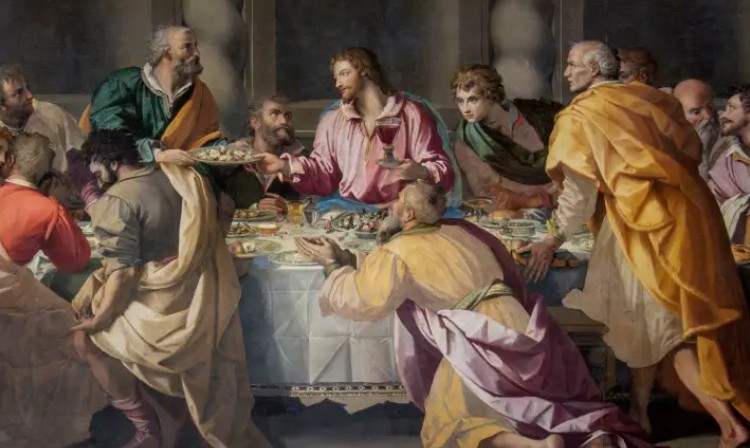
Giovedì Santo: l’Ultima Cena di Allori che pochi conoscono a Firenze
🇮🇹Nel cuore di Museo di Santa Maria Novella, a Firenze, si conserva una delle interpretazioni più affascinanti e meno note dell’Ultima Cena: quella realizzata da Alessandro Allori nel 1584… 🇬🇧In the heart of the Santa Maria Novella Museum in Florence, one of the most fascinating and least-known interpretations of the Last Supper is preserved: the…
-
Cenacolo di Leonardo: i dettagli che raccontano il tradimento
🇮🇹Nel Cenacolo di Leonardo da Vinci, custodito a Santa Maria delle Grazie, Cristo annuncia il tradimento e il tempo si ferma… 🇬🇧In Leonardo da Vinci’s Last Supper, housed in Santa Maria delle Grazie, Christ announces the betrayal and time stands still…
-
La Lavanda dei Piedi di Tintoretto: Il Capolavoro Veneziano al Prado
🇮🇹Tra i capolavori più affascinanti del Rinascimento veneziano, “La Lavanda dei Piedi” di Jacopo Tintoretto rappresenta un perfetto equilibrio tra spiritualità, innovazione compositiva e straordinaria forza narrativa… 🇬🇧Among the most fascinating masterpieces of the Venetian Renaissance, Jacopo Tintoretto’s “The Washing of the Feet” represents a perfect balance between spirituality, compositional innovation, and extraordinary narrative force…
Condividi:


Questo sono io





sostienici

Sostienici – Support Us
Se questo blog ti piace e ti appassiona, puoi aiutarci a farlo crescere sempre più sostenendoci in modo concreto condividendo i post, seguendo le pagine social e con un contributo che ci aiuta ad andare avanti con il nostro lavoro di divulgazione. . ENGLISH: If you like and are passionate about this blog, you can help us make it grow more and more by supporting us in a concrete way by sharing posts, following social pages and with a contribution that helps us to move forward with our dissemination work.
€10,00


“Sembra che lo scalpello non voglia entrare nel marmo più di tanto… ” meglio non si poteva dire di questa sorta di sfocato accorgimento. Immagine di una purezza dolcissima
"Mi piace"Piace a 1 persona
Grazie Daniela, un abbraccio
"Mi piace"Piace a 1 persona
ricambiato 🙂 buon fine settimana
"Mi piace"Piace a 1 persona
Grazie, anche a lei :-*
"Mi piace"Piace a 1 persona