
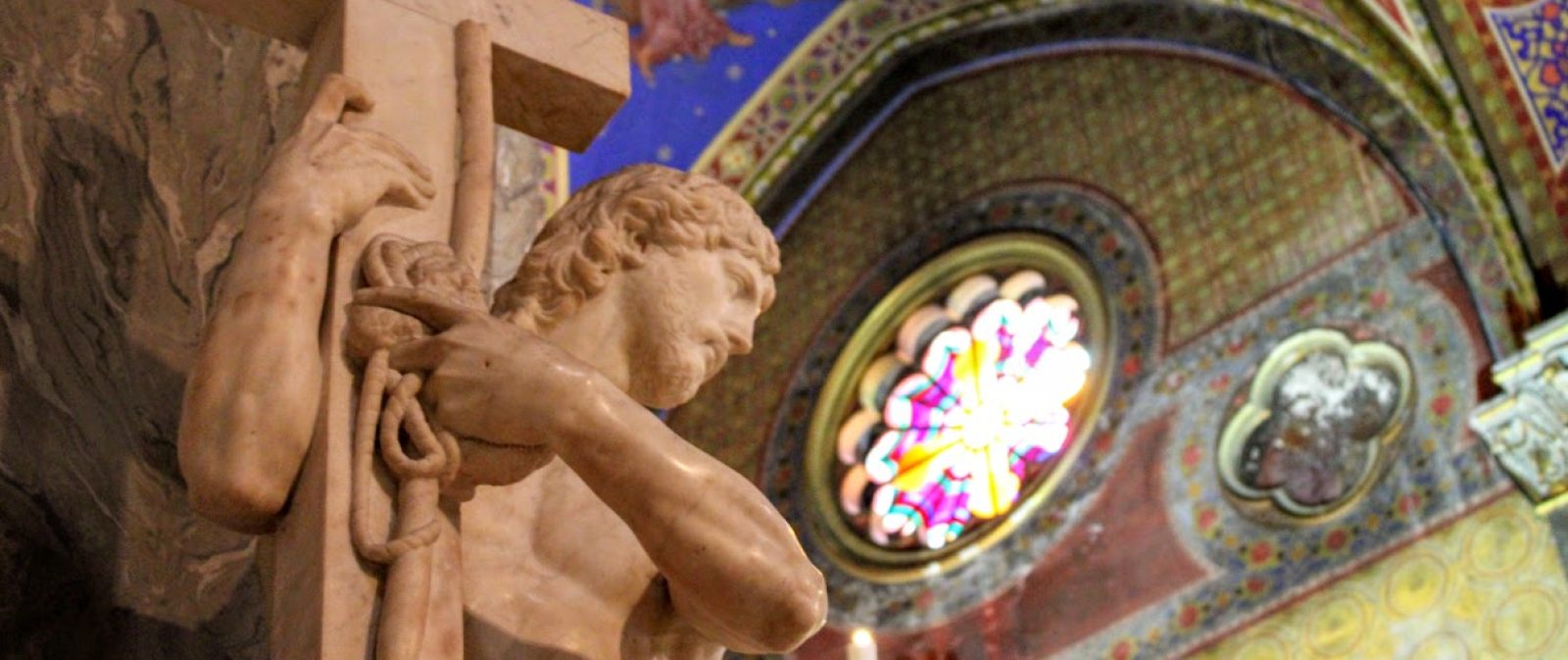
La Madonna con Bambino della Tomba di Giulio II: ecco la sua storia
Dinnanzi alla Tomba di Giulio II lo sguardo viene letteralmente rapito dal Mosè e spesso, chi ci si trova dinnanzi per la prima volta, nemmeno fa caso alle altre opere presenti nel complesso monumentale.
Basta alzare gli occhi per notare la presenza di Giulio II giacente, affiancato da una Sibilla e da un Profeta. In posizione leggermente più elevata si vede la Madonna in piedi con il Figlio fra le braccia che a sua volta tiene fra le mani un uccellino, probabilmente un cardellino.
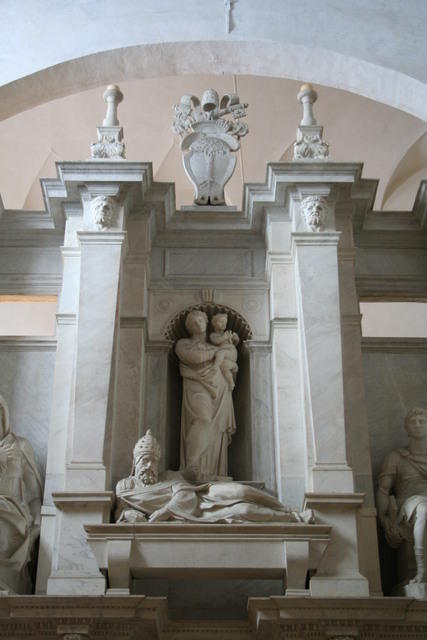
Sebbene l’impostazione della Madonna con Bambino sia mia, fu Scherano a sbozzarla nel dicembre del 1537. In pratica eliminò un bel po’ di marmo in eccedenza dal blocco grezzo eseguendo la stessa operazione che tante volte avevano fatto gli scalpellini in cava che lavoravano per me.
Successivamente iniziai a metterci mano io nel periodo compreso fra il 1437 e il 1542. Ovvio, non ci lavorai costantemente e senza interruzioni. Avevo mille cose da fare e solo ventiquattrore al giorno, come tutti d’altro canto.

La torsione del Bambino è impeccabile dal punto di vista anatomico mentre la Madonna ha alcune incongruenze assai importanti.
Per quale ragione ci sono questi erroracci anatomici nella Vergine? Ebbene, affidai l’opera ancora non terminata al fidato collaboratore Raffaello da Montelupo che la portò al punto che vedete oggi.
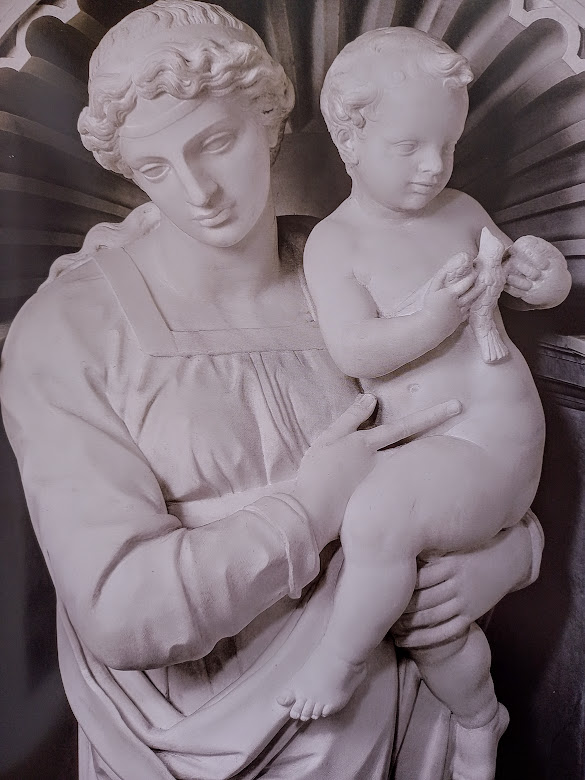
Stando a quanto riportato sui pagamenti, è assai lampante che ne avevo già scolpito gran parte di quell’opera. Il Montelupo infatti m’aveva richiesto 400 scudi per lavorare alla Madonna, alla Sibilla e al Profeta e, facendo due conti, ammontano a 133 euro a scultura. Una cifra assai bassa che fa supporre che le opere fossero già in gran parte scolpite.
Per il momento il vostro Michelangelo Buonarroti vi saluta dandovi appuntamento ai prossimi post e sui social.
The Madonna and Child from the Tomb of Julius II: this is his story
In front of the Tomb of Julius II the gaze is literally kidnapped by Moses and often, whoever is in front of it for the first time, does not even notice the other works present in the monumental complex.
Just look up to notice the presence of Julius II lying, flanked by a Sibyl and a Prophet. In a slightly higher position we see the Madonna standing with her Son in her arms who in turn holds a bird in her hands, probably a goldfinch.
Although the setting of the Madonna and Child was mine, it was Scherano who roughed it in December 1537. In practice he eliminated a lot of surplus marble from the rough block by performing the same operation that the stonecutters in the quarry who worked for myself.
Subsequently I began to work on it myself in the period between 1437 and 1542. Obviously, I did not work on it constantly and without interruptions. I had a thousand things to do and only twenty-four hours a day, like everyone else on the other hand.

The twisting of the child is flawless from the anatomical point of view while the Madonna has some very important inconsistencies. Why are there these anatomical errors in Virgo?
Well, I entrusted the still unfinished work to my trusted collaborator Raffaello da Montelupo who took it to the point you see today.
According to what was reported on the payments, it is very clear that I had already sculpted a large part of that work.
In fact, Montelupo had asked me for 400 scudi to work on the Madonna, the Sibyl and the Prophet, and doing the math is around 133 euros per sculpture. A very low figure that suggests that the works were already largely sculpted.
For the moment, your Michelangelo Buonarroti greets you by giving you an appointment at the next posts and on social networks.
Sostienici – Support Us
Se questo blog ti piace e ti appassiona, puoi aiutarci a farlo crescere sempre più sostenendoci in modo concreto condividendo i post, seguendo le pagine social e con un contributo che ci aiuta ad andare avanti con il nostro lavoro di divulgazione. . ENGLISH: If you like and are passionate about this blog, you can help us make it grow more and more by supporting us in a concrete way by sharing posts, following social pages and with a contribution that helps us to move forward with our dissemination work.
5,00 €
-
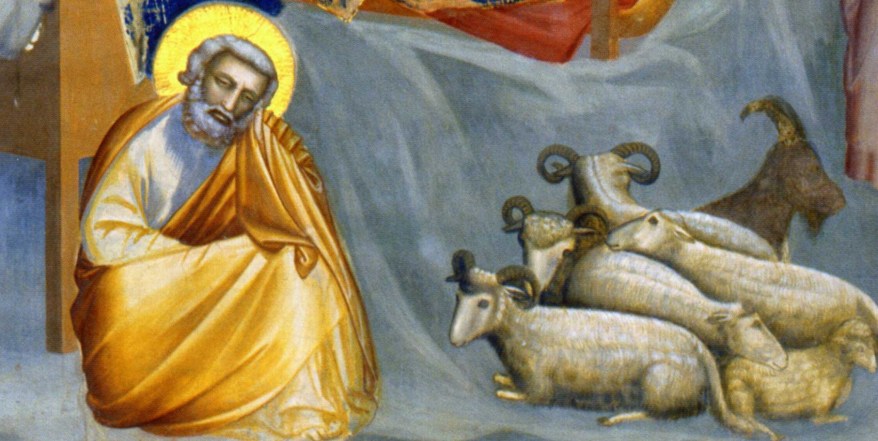
Perché San Giuseppe dorme nei dipinti della Natività?
🇮🇹Perché San Giuseppe dorme in tanti dipinti della Natività? Da Giotto a Bosch, vi porto alla scoperta di questo dettaglio… 🇬🇧Why is Saint Joseph asleep in so many paintings of the Nativity? From Giotto to Bosch, let me take you on a journey to discover this detail…
-
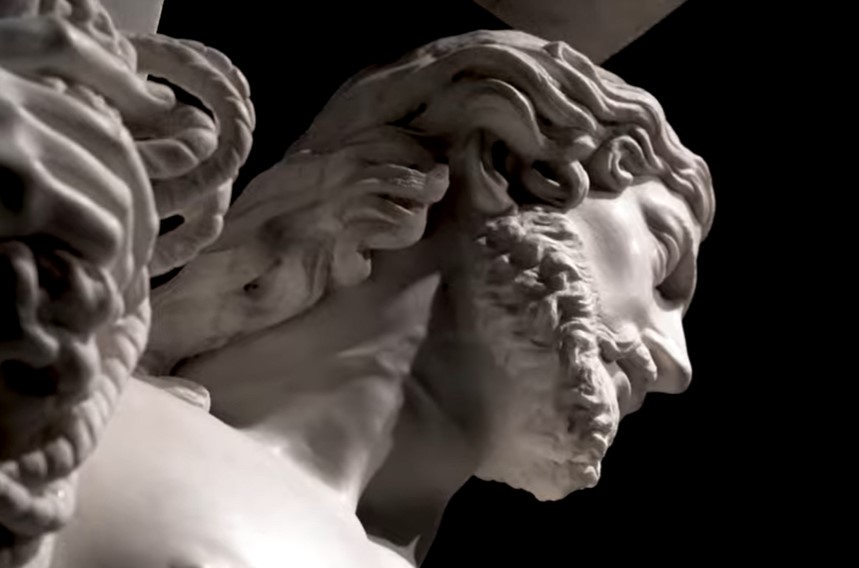
Il Cristo Portacroce col volto venato arriva al Forte di Bard, in Valle d’Aosta
🇮🇹La prima versione del mio Cristo Portacroce sta per compiere l’ennesimo viaggio. Dopo Palermo e Osaka, giungerà in Valle d’Aosta… 🇬🇧The first version of my *Christ Carrying the Cross* is about to embark on yet another journey. After Palermo and Osaka, it will arrive in the Aosta Valley…
-
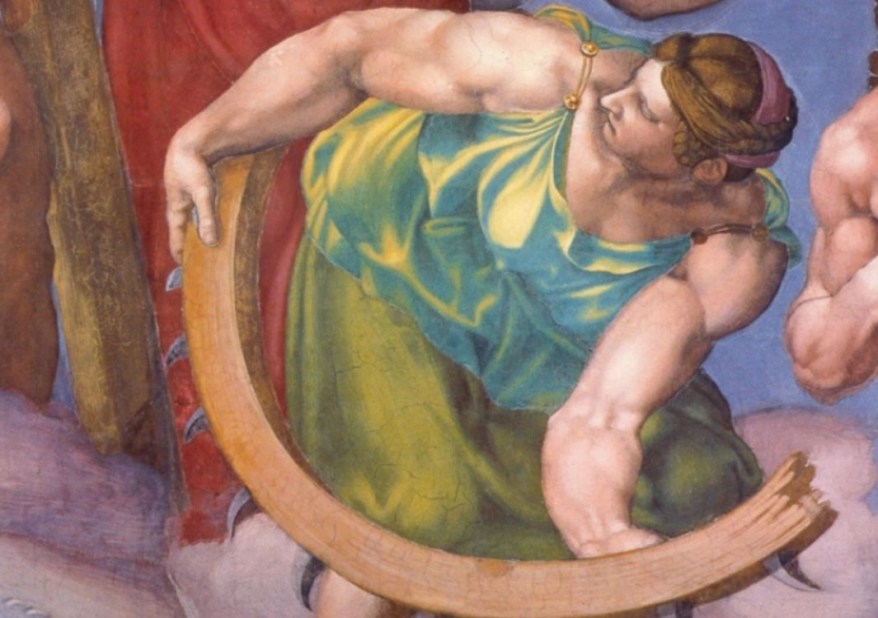
25 novembre, Santa Caterina d’Alessandria nell’arte: la santa censurata nel mio Giudizio Universale
🇮🇹Il 25 novembre si celebra Santa Caterina d’Alessandria, giovane martire cristiana diventata nei secoli una delle figure più rappresentate nella storia dell’arte. Da Raffaello a Caravaggio, fino al mio Giudizio Universale, ecco come gli artisti hanno raccontato la sua storia e il suo martirio… 🇬🇧November 25th marks the feast of Saint Catherine of Alexandria, a…
Condividi:


Questo sono io



sostienici

Sostienici – Support Us
Se questo blog ti piace e ti appassiona, puoi aiutarci a farlo crescere sempre più sostenendoci in modo concreto condividendo i post, seguendo le pagine social e con un contributo che ci aiuta ad andare avanti con il nostro lavoro di divulgazione. . ENGLISH: If you like and are passionate about this blog, you can help us make it grow more and more by supporting us in a concrete way by sharing posts, following social pages and with a contribution that helps us to move forward with our dissemination work.
€10,00


