

Cena in Emmaus di Pontormo: il pane, il gatto e il cane alle Scuderie del Quirinale
Nella Cena in Emmaus di Pontormo tutto sembra fermarsi. Un uomo spezza il pane, due pellegrini seduti a tavola comprendono finalmente chi hanno davanti e, attorno a loro, alcuni monaci assistono silenziosi alla scena.
Nessun gesto teatrale. La rivelazione avviene nel modo più semplice possibile, attraverso un gesto che appartiene alla vita di tutti i giorni.
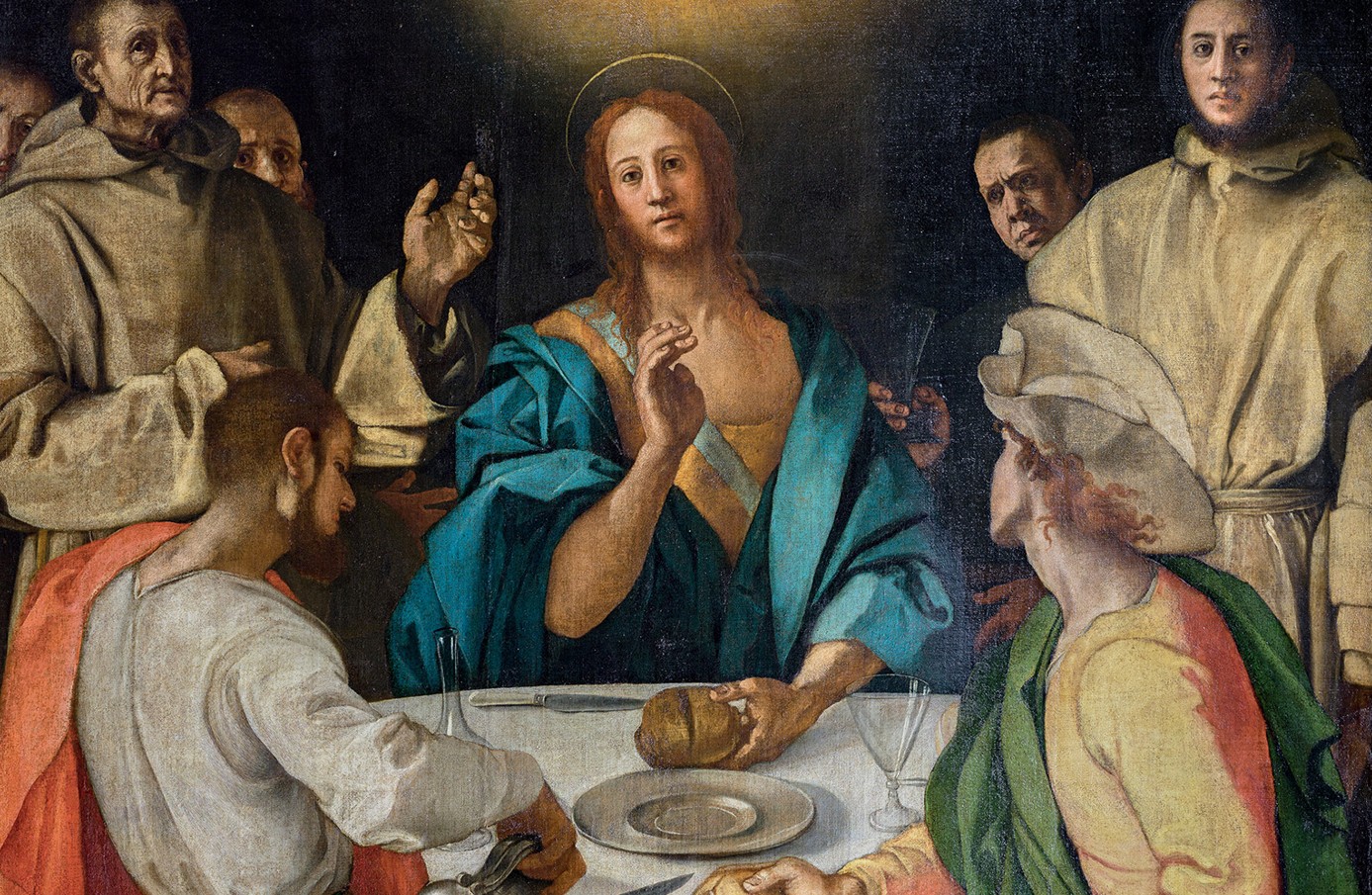
La potenza del dipinto di Jacopo Carucci, più noto come il Pontormo sta nella semplicità dei gesti abbinati alla potenza del colore. Realizzato nel 1525 e oggi conservato alle Gallerie degli Uffizi di Firenze, il capolavoro Cena in Emmaus è tra le opere presentate alla mohttps://link.amazon/B023mraVHstra Pontormo, alle Scuderie del Quirinale a Roma. Un’occasione per soffermarsi su una tavola nella quale la narrazione evangelica, la vita quotidiana e la ricerca artistica si intrecciano indissolubilmente.
La Cena in Emmaus di Pontormo: il momento in cui i discepoli riconoscono Gesù
Per comprendere il dipinto bisogna tornare al racconto del Vangelo di Luca (24,13-35). È la sera della domenica di Resurrezione e due discepoli, uno dei quali si chiama Cleopa, stanno lasciando Gerusalemme, ancora sconvolti dalla morte di Gesù.
Durante il cammino si unisce a loro un viandante. I due non lo riconoscono e gli raccontano gli avvenimenti degli ultimi giorni, senza sapere che stanno parlando proprio con Cristo risorto. Arrivati a Emmaus, lo invitano a fermarsi con loro. È a tavola che accade qualcosa di straordinario.
Gesù prende il pane, pronuncia la benedizione, lo spezza e lo porge ai compagni. In quel gesto i discepoli riconoscono finalmente il loro maestro. Subito dopo, però, Gesù scompare dalla loro vista.

Pontormo sceglie di rappresentare esattamente questo istante: non il viaggio, non l’ingresso nella locanda, ma il momento in cui l’identità del viandante si rivela attraverso la frazione del pane. La sorpresa non viene affidata a espressioni esagerate, ma alla disposizione delle figure e agli oggetti posati sulla tavola.
Il pane al centro della scena: un dettaglio che cambia tutto
Osservando la composizione, lo sguardo viene attirato quasi inevitabilmente dal centro della tavola. Su una tovaglia bianca, apparecchiata senza ostentazione, si trovano un grande pane, alcuni coltelli e un vassoio di peltro.
È una natura morta di una concretezza straordinaria. Il pane diventa il fulcro visivo e spirituale dell’intera composizione. È attraverso di esso che i discepoli riconoscono Cristo e che il pasto ordinario si trasforma in un momento sacro.
Anche gli altri particolari contribuiscono a rendere la scena vicina allo spettatore. Il vino viene versato da una brocca, gli oggetti sono disposti con semplicità e i due pellegrini siedono su sgabelli a tre piedi, visti di spalle. Non sembrano personaggi lontani, appartenenti a un tempo irraggiungibile. Hanno piuttosto la concretezza di persone incontrate in una locanda, durante una sosta lungo il cammino.
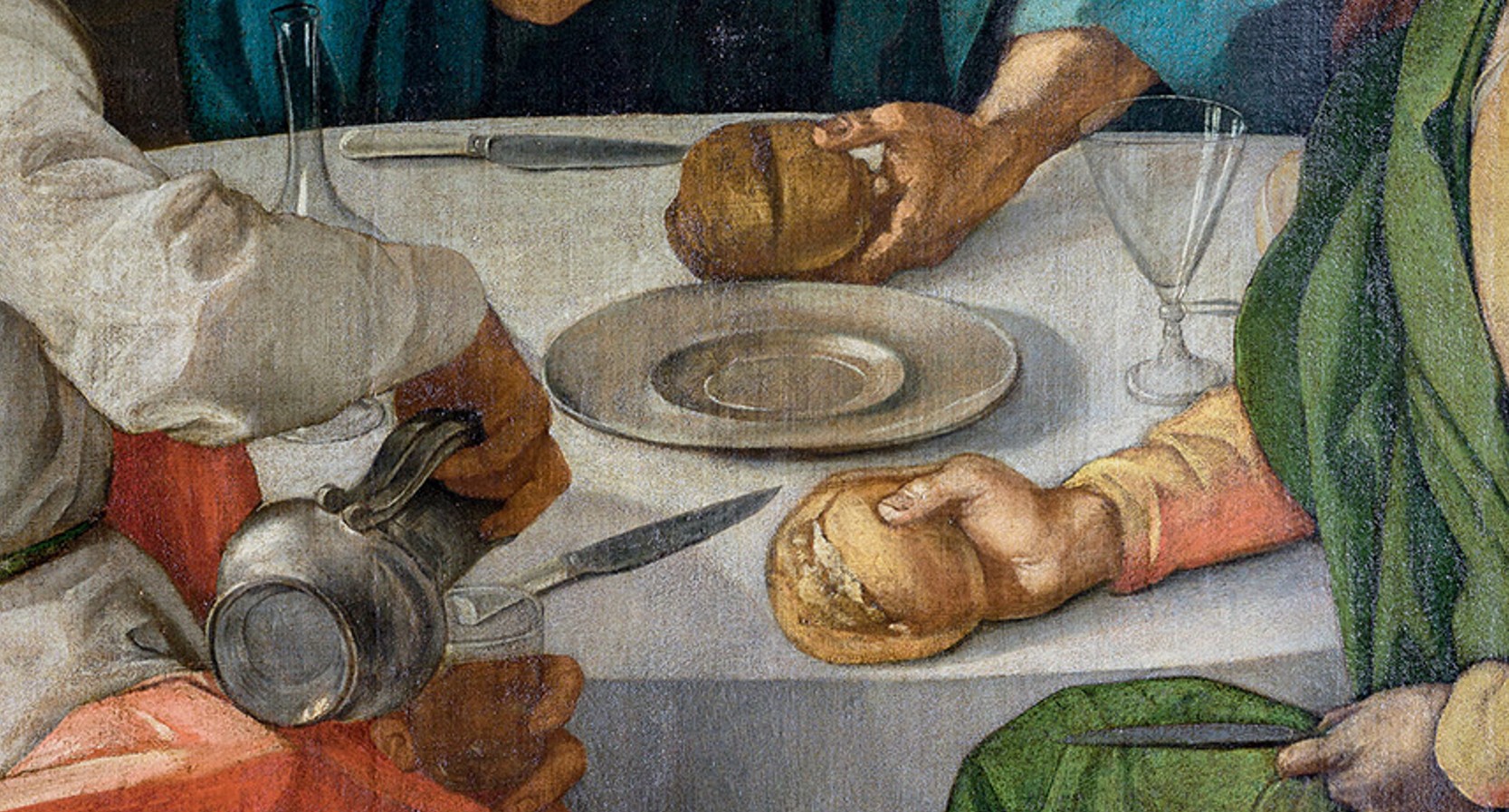
Cleopa tiene in mano un pezzo di pane e porta il cappello tipico del viandante, mentre il compagno versa il vino. Entrambi sono a piedi nudi. La loro posizione, con le spalle rivolte verso chi osserva, permette quasi di prendere posto idealmente accanto a loro e assistere alla rivelazione.
È una scelta compositiva che rende lo spettatore partecipe dell’episodio, senza bisogno di inserirlo materialmente nella scena.
I cinque certosini e il monaco con la mano alzata
Dietro i protagonisti del racconto evangelico compaiono cinque monaci certosini. I loro volti, definiti con una notevole attenzione individuale, sembrano appartenere a persone reali più che a figure generiche chiamate a fare da contorno alla storia sacra.
La loro presenza è particolarmente significativa perché il dipinto era destinato alla Certosa del Galluzzo, nei pressi di Firenze. La tradizione identifica il monaco più anziano, collocato a sinistra con una mano sollevata, con Leonardo Buonafede, religioso e spedalingo dell’ospedale fiorentino di Santa Maria Nuova.
Il suo gesto accompagna la scena senza interromperla. I certosini non prendono il posto dei discepoli, ma sembrano assistere alla rivelazione e invitare chi guarda a fare altrettanto.
La forza ritrattistica di questi volti contribuisce a creare un collegamento fra l’episodio evangelico e la comunità religiosa per la quale l’opera era stata realizzata.
Il gatto bigio e il cane bianco: i dettagli nascosti del dipinto
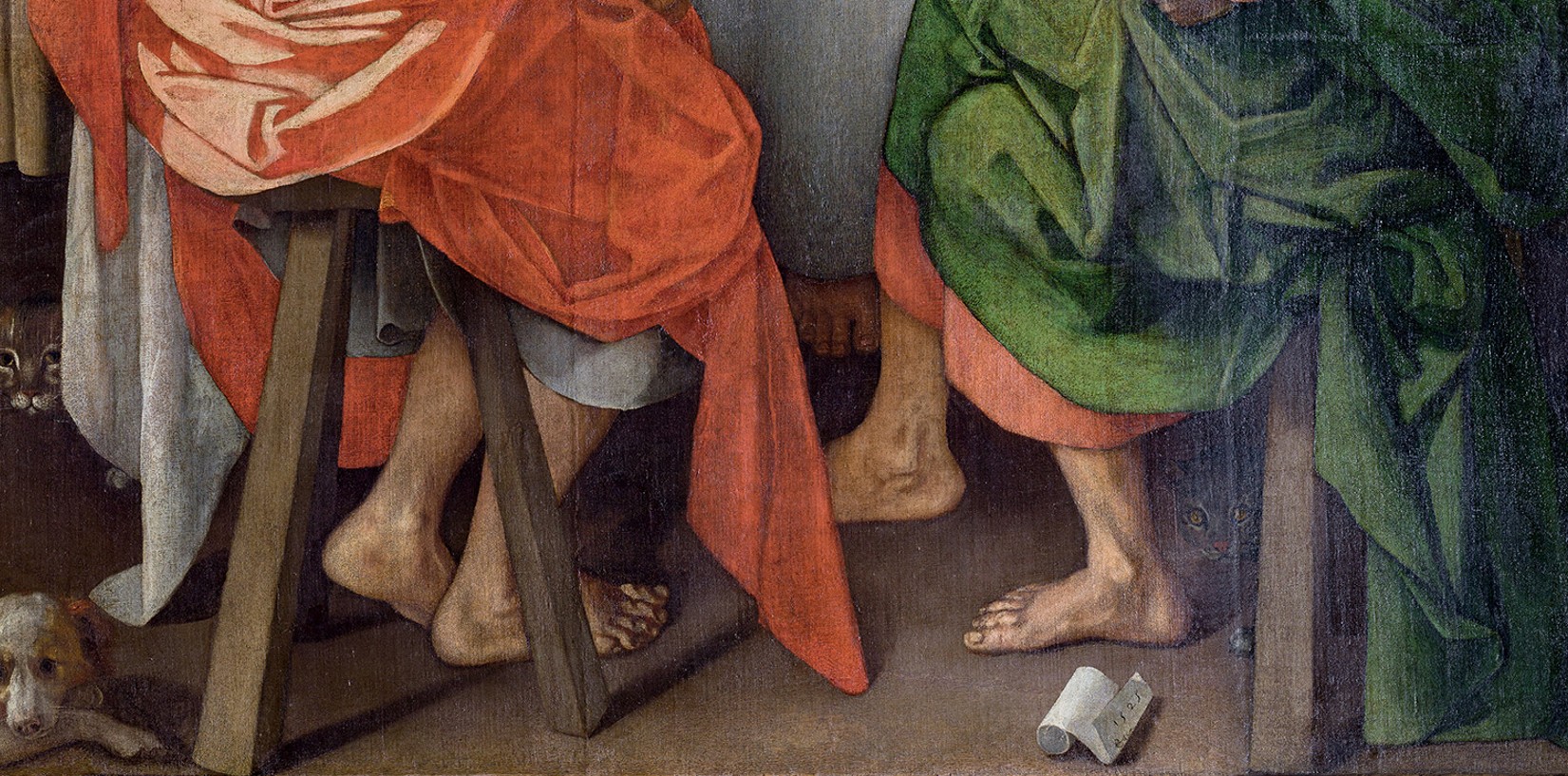
Fra gli elementi meno appariscenti della Cena in Emmaus c’è un piccolo particolare che merita di essere cercato: in basso a sinistra si nasconde un gatto nero, dietro un cane bianco.
Il cane è tradizionalmente associato alla fedeltà, mentre il gatto, abitualmente indicante il male o il tradimento in scene di questo tipo, potrebbe invece assumere una valenza protettiva e di buon auspicio.
L’occhio nel triangolo: il simbolo della Trinità
Sopra la testa di Gesù, nella parte alta e centrale della composizione, compare un triangolo con un occhio luminoso: un’immagine che richiama il mistero della Trinità.
In origine Pontormo aveva dipinto una rappresentazione della Trinità detta tricefala, nella quale le tre persone divine erano raffigurate attraverso una figura con tre volti. Questa soluzione fu successivamente coperta dal simbolo dell’occhio inserito nel triangolo radiante, in accordo con le disposizioni ecclesiastiche relative alla rappresentazione della Trinità.
Dalla foresteria della Certosa agli Uffizi di Firenze
La destinazione originaria della Cena in Emmaus aiuta a comprenderne ancora meglio il significato. Il dipinto si trovava nella foresteria della Certosa del Galluzzo, dove l’immagine di Cristo che condivide il pane con i discepoli assumeva un valore particolare per i pellegrini e i viandanti in cerca di accoglienza.
Il soggetto era perfettamente adatto a quel luogo: offriva un modello di ospitalità cristiana nel quale il ristoro materiale si accompagnava a quello spirituale. Accogliere un viaggiatore significava, idealmente, accogliere Cristo stesso.
Secondo le ricostruzioni storiche relative all’opera, dopo la costruzione della nuova foresteria, terminata nel 1580, il dipinto rimase nella cappella di San Giuliano, in un’area riservata ai monaci. Fu rimosso nel 1810 e giunse alla Galleria degli Uffizi nel 1948.
Da quel momento la tavola è entrata stabilmente nella storia delle collezioni pubbliche fiorentine, continuando a essere studiata per la sua complessità iconografica e per la qualità della sua pittura.
Il catalogo della mostra Pontormo, pubblicato da Electa
Per chi desidera approfondire la vita e le opere dell’artista anche dopo la visita, la mostra è accompagnata dal catalogo edito da Electa, concepito come strumento di studio aggiornato sulla pittura di Pontormo e sul contesto culturale della Firenze del Cinquecento.
Il volume affronta il percorso dell’artista nel passaggio dal Rinascimento maturo al Manierismo, offrendo un approfondimento utile per comprendere le scelte stilistiche, le iconografie e le relazioni tra le opere riunite in esposizione.
La mostra Pontormo alle Scuderie del Quirinale: date, orari e informazioni
La Cena in Emmaus è tra le opere da cercare alla mostra Pontormo. La Maniera Italiana, allestita alle Scuderie del Quirinale di Roma. L’esposizione, curata da Cristina Acidini con Elena Capretti, Philippe Costamagna, Bruce Edelstein e Carlo Falciani, riunisce dipinti e disegni che permettono di ripercorrere la ricerca di uno degli artisti più originali del Cinquecento fiorentino.
- Dove: Scuderie del Quirinale, via XXIV Maggio 16, Roma.
- Quando: dal 9 ottobre 2026 al 7 febbraio 2027.
- Orari ordinari: tutti i giorni dalle 10:00 alle 20:00, ultimo ingresso alle 19:00.
- Biglietti: informazioni e prenotazioni sul sito ufficiale delle Scuderie del Quirinale.
La mostra è promossa da Ales – Scuderie del Quirinale in collaborazione con le Gallerie degli Uffizi e prodotta insieme a Electa.
Per il momento il sempre vostro Michelangelo Buonarroti vi saluta dandovi appuntamento ai prossimi post e sui social.
Pontormo’s Supper at Emmaus: Bread, a Cat, and a Dog at the Scuderie del Quirinale
In Pontormo’s Supper at Emmaus, everything seems to come to a standstill. A man breaks bread; two pilgrims seated at the table finally realize who is before them, while, all around, a few monks watch the scene in silence.
There are no theatrical gestures. The revelation unfolds in the simplest way possible—through an act belonging to everyday life.
The power of this painting by Jacopo Carucci—better known as Pontormo—lies in the simplicity of the gestures, combined with the intensity of the color. Created in 1525 and now housed in the Uffizi Galleries in Florence, this masterpiece, Supper at Emmaus, is among the works featured in the Pontormo exhibition at the Scuderie del Quirinale in Rome. It offers a chance to reflect on a panel painting in which the Gospel narrative, daily life, and artistic exploration are inextricably intertwined.
Pontormo’s Supper at Emmaus: The moment the disciples recognize Jesus
To understand the painting, one must look back at the account in the Gospel of Luke (24:13–35). It is the evening of Resurrection Sunday, and two disciples—one of whom is named Cleopas—are leaving Jerusalem, still reeling from the death of Jesus.
Along the way, a traveler joins them. Not recognizing him, the two recount the events of the past few days, unaware that they are speaking to the risen Christ himself. Upon arriving in Emmaus, they invite him to stay with them. It is at the table that something extraordinary occurs.
Jesus takes the bread, pronounces a blessing, breaks it, and offers it to his companions. In that gesture, the disciples finally recognize their master. Immediately afterward, however, Jesus vanishes from their sight.
Pontormo chooses to depict this precise instant: not the journey, nor the arrival at the inn, but the moment when the traveler’s identity is revealed through the breaking of the bread. The sense of surprise is conveyed not through exaggerated expressions, but through the arrangement of the figures and the objects placed upon the table.
The bread at the center of the scene: a detail that changes everything
As one observes the composition, the eye is almost inevitably drawn to the center of the table. On a white tablecloth—laid out without any ostentation—rest a large loaf of bread, a few knives, and a pewter platter.
It is a still life of extraordinary tangibility. The bread becomes the visual and spiritual focal point of the entire composition. It is through this bread that the disciples recognize Christ, and an ordinary meal is transformed into a sacred moment.
Other details also serve to bring the scene closer to the viewer. Wine is being poured from a pitcher, the objects are arranged with simplicity, and the two pilgrims sit on three-legged stools, seen from behind. They do not appear as distant figures belonging to some unreachable era; rather, they possess the tangible reality of people one might encounter at an inn during a stop along a journey.
Cleopas holds a piece of bread and wears a typical traveler’s hat, while his companion pours the wine. Both are barefoot. Their positioning—with their backs turned toward the observer—makes it easy to imagine taking a seat beside them and witnessing the revelation.
It is a compositional choice that draws the viewer into the episode, making them a participant without the need to physically place them within the scene itself. The Five Carthusians and the Monk with a Raised Hand
Behind the protagonists of the Gospel account appear five Carthusian monks. Their faces, rendered with remarkable individual attention, seem to belong to real people rather than generic figures serving merely as a backdrop to the sacred narrative.
Their presence is particularly significant because the painting was intended for the Charterhouse (Certosa) of Galluzzo, near Florence. Tradition identifies the eldest monk—positioned on the left with a raised hand—as Leonardo Buonafede, a religious figure who also served as the administrator (spedalingo) of the Florentine hospital of Santa Maria Nuova.
His gesture complements the scene without disrupting it. The Carthusians do not take the place of the disciples; rather, they appear to be witnessing the revelation and inviting the viewer to do the same.
The powerful, portrait-like quality of these faces helps forge a connection between the Gospel episode and the religious community for whom the work was created.
The Grey Cat and the White Dog: Hidden Details in the Painting
Among the less conspicuous elements in the Supper at Emmaus is a small detail worth seeking out: tucked away in the lower-left corner, behind a white dog, is a cat.
The dog is traditionally associated with fidelity, while the cat—which in scenes of this nature typically signifies evil or betrayal—might here instead carry a protective, auspicious meaning.
The Eye within the Triangle: A Symbol of the Trinity
Above the head of Jesus, in the upper central section of the composition, a triangle containing a luminous eye appears—an image that evokes the mystery of the Trinity.
Originally, Pontormo had painted a “three-headed” (tricephalic) representation of the Trinity, in which the three divine persons were depicted as a single figure with three faces. This version was later covered over by the symbol of an eye within a radiant triangle, in accordance with ecclesiastical regulations regarding the depiction of the Trinity.
From the guesthouse of the Charterhouse to the Uffizi in Florence
Knowing the original destination of the Supper at Emmaus helps to better understand its meaning. The painting was located in the guesthouse of the Charterhouse of Galluzzo (Certosa del Galluzzo), where the image of Christ sharing bread with his disciples held special significance for the pilgrims and wayfarers seeking shelter.
The subject was perfectly suited to this setting: it offered a model of Christian hospitality in which physical refreshment was accompanied by spiritual nourishment. To welcome a traveler meant, in a sense, to welcome Christ himself.
According to historical accounts of the work, following the construction of a new guesthouse—completed in 1580—the painting remained in the Chapel of Saint Julian, an area reserved for the monks. It was removed in 1810 and eventually arrived at the Uffizi Gallery in 1948.
Since then, the panel has become a permanent part of the history of Florence’s public collections, remaining a subject of study due to its iconographic complexity and the high quality of its execution.
The exhibition catalogue for Pontormo, published by Electa
For those who wish to delve deeper into the artist’s life and works after their visit, the exhibition is accompanied by a catalogue published by Electa. It is designed as an up-to-date scholarly resource on Pontormo’s painting and the cultural context of 16th-century Florence.
The volume explores the artist’s trajectory during the transition from the High Renaissance to Mannerism, providing valuable insight into the stylistic choices, iconography, and connections between the works brought together in the exhibition.
The Pontormo exhibition at the Scuderie del Quirinale: dates, opening hours, and information
The Supper at Emmaus is one of the works to look for at the exhibition Pontormo: The Italian Manner (Pontormo. La Maniera Italiana), hosted at the Scuderie del Quirinale in Rome. Curated by Cristina Acidini, alongside Elena Capretti, Philippe Costamagna, Bruce Edelstein, and Carlo Falciani, the exhibition brings together paintings and drawings that trace the artistic exploration of one of the most original figures of 16th-century Florence.
Where: Scuderie del Quirinale, Via XXIV Maggio 16, Rome.
When: From October 9, 2026, to February 7, 2027.
Regular opening hours: Daily from 10:00 AM to 8:00 PM; last admission at 7:00 PM.
Tickets: Information and reservations are available on the official Scuderie del Quirinale website.
The exhibition is promoted by Ales – Scuderie del Quirinale in collaboration with the Uffizi Galleries, and produced in partnership with Electa.
For now, yours truly, Michelangelo Buonarroti, bids you farewell—see you in future posts and on social media.

Condividi:


Questo sono io



sostienici
Sostienici - Support Us
Se questo blog ti piace e ti appassiona, puoi aiutarci a farlo crescere sempre più sostenendoci in modo concreto condividendo i post, seguendo le pagine social e con un contributo che ci aiuta ad andare avanti con il nostro lavoro di divulgazione. . ENGLISH: If you like and are passionate about this blog, you can help us make it grow more and more by supporting us in a concrete way by sharing posts, following social pages and with a contribution that helps us to move forward with our dissemination work.
€10,00


