
Come Giotto ha cambiato per sempre il modo di rappresentare la Natività
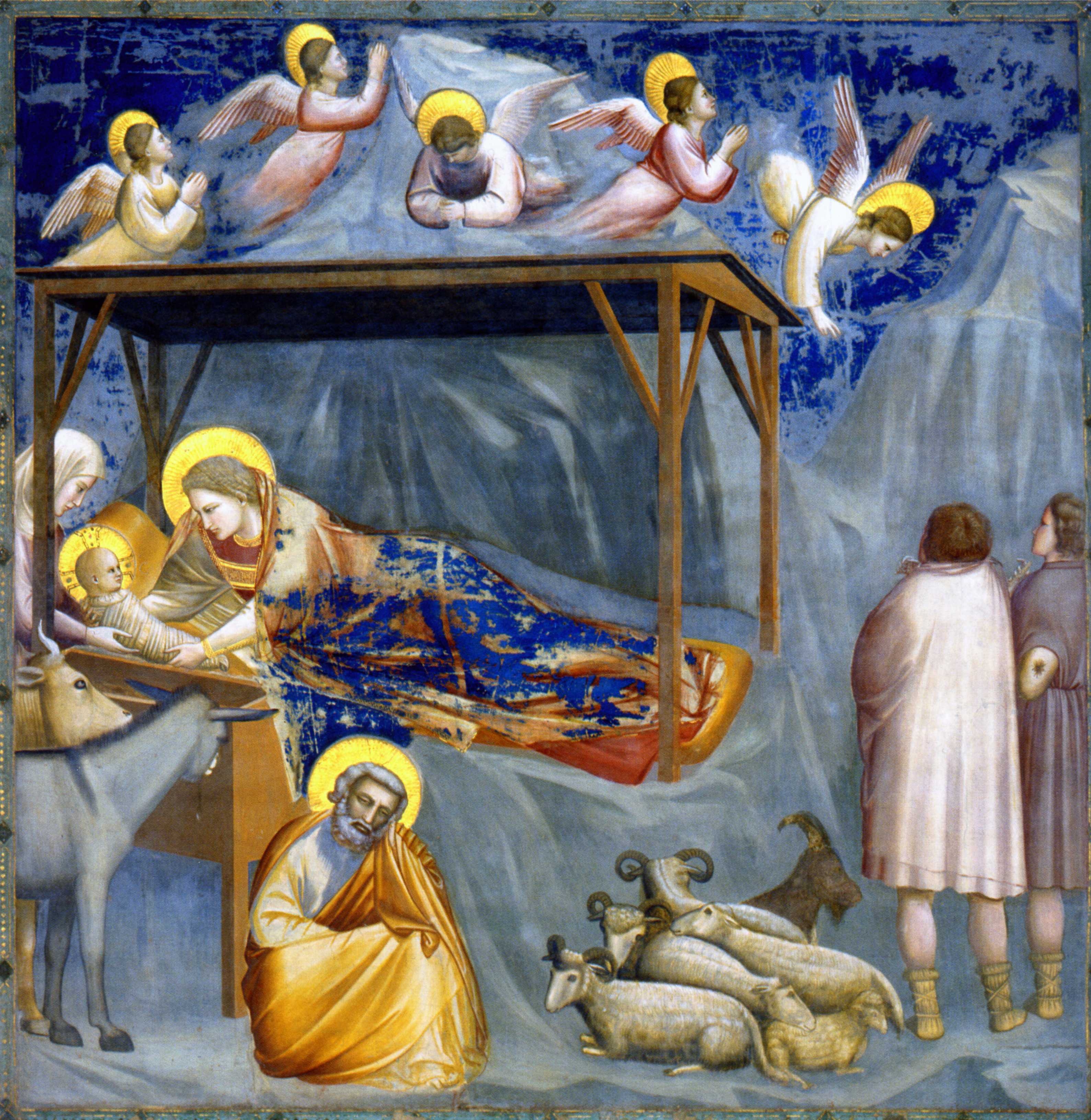
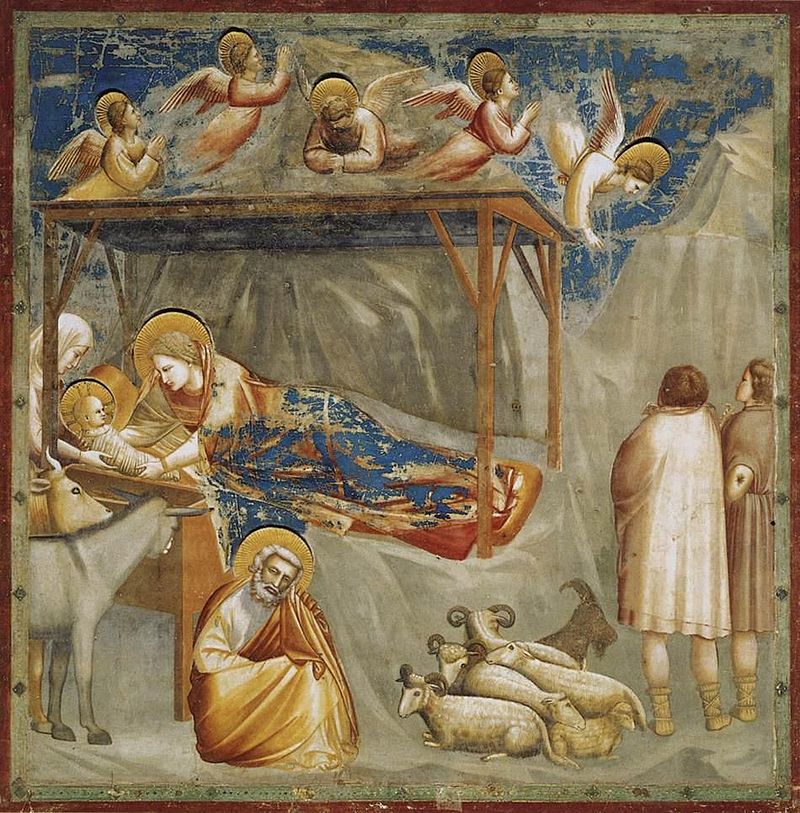
C’è un particolare nella Natività di Giotto che merita di essere osservato prima di ogni altro: l’asino, visto di scorcio, con il corpo rivolto verso la mangiatoia. Potrebbe sembrare un dettaglio secondario, eppure racconta molto della rivoluzione compiuta dal pittore toscano all’inizio del Trecento.
Giotto lo rappresenta nello spazio, dandogli un volume e una posizione che lo fanno sembrare presente davanti ai nostri occhi.
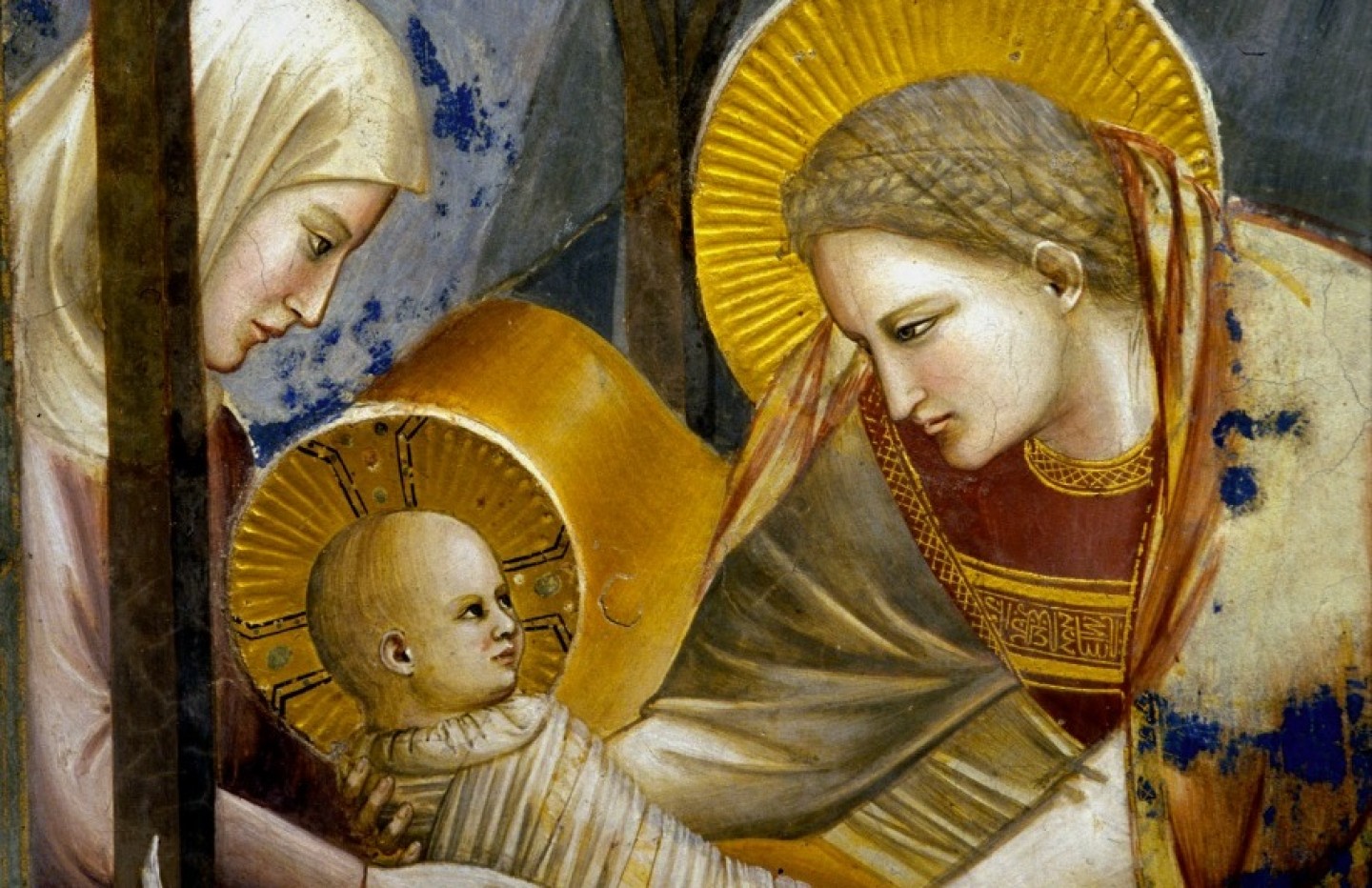
Giotto abbia cambiato il modo di raccontare il Natale attraverso la pittura. Nella sua Natività, conservata nella Cappella degli Scrovegni a Padova, i personaggi sacri non sembrano più appartenere soltanto a un mondo lontano e solenne: hanno corpi concreti, assumono posture naturali e partecipano a un avvenimento che acquista una nuova intensità umana.
Realizzato nei primi anni del XIV secolo, questo affresco non nasce dal nulla. Giotto riprende una tradizione iconografica già consolidata, ma la rinnova attraverso la costruzione dello spazio, l’attenzione ai gesti e la capacità di dare alle figure una presenza fisica ed emotiva. Il risultato è una delle immagini della Natività più importanti della storia dell’arte occidentale.
La Natività di Giotto: dove si trova e quando fu dipinta
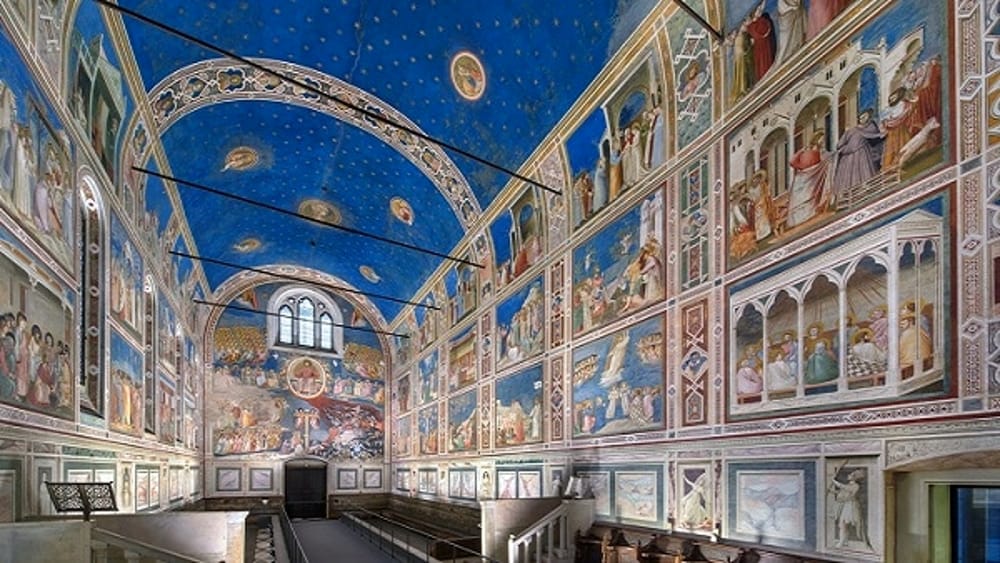
Per incontrare questa scena bisogna entrare nella Cappella degli Scrovegni, a Padova, uno dei luoghi fondamentali per comprendere l’evoluzione della pittura europea.
La cappella, dedicata a Santa Maria della Carità, fu fatta costruire dal ricco committente padovano Enrico Scrovegni e venne affrescata da Giotto tra il 1303 e il 1305. Le pareti raccontano le vicende di Gioacchino e Anna, la vita della Vergine Maria e quella di Gesù, fino alla Passione e alla morte. Sulla controfacciata si trova il grandioso Giudizio Universale, che conclude il percorso dedicato alla storia della salvezza.
La Natività di Gesù occupa un riquadro della parete destra, all’interno del ciclo dedicato alla vita di Cristo. Non è quindi un dipinto isolato, ma un episodio inserito in un racconto più ampio, nel quale ogni scena contribuisce a rendere comprensibile il significato dell’intero percorso religioso.
La cappella è oggi riconosciuta come uno dei massimi capolavori della pittura medievale ed è parte del sito UNESCO.
Prima di Giotto, la Natività era soprattutto un’immagine sacra
Per comprendere la novità di Giotto occorre ricordare come venivano rappresentati gli episodi religiosi nella tradizione medievale.
Per secoli, la pittura bizantina aveva sviluppato un linguaggio fondato su figure solenni, fondi preziosi, gerarchie visive e composizioni pensate per comunicare verità religiose. Non si trattava di una pittura incapace di esprimere emozioni, ma di un sistema figurativo nel quale la funzione spirituale dell’immagine aveva un ruolo centrale.
Anche la Natività seguiva schemi riconoscibili: la Vergine, il Bambino, Giuseppe, la mangiatoia, il bue e l’asino. I personaggi erano disposti secondo convenzioni consolidate, tramandate e rielaborate da generazioni di artisti.
Giotto conosceva questa tradizione e non la cancellò. La sua innovazione consiste nel darle una nuova vitalità, facendo apparire le figure più concrete e introducendo relazioni spaziali e gestuali capaci di coinvolgere lo spettatore.
La scena sacra non perde il proprio significato religioso. Al contrario, diventa più vicina all’esperienza umana: la nascita di Cristo può essere osservata come un avvenimento nel quale le persone si muovono, si guardano e partecipano emotivamente a ciò che accade.
È una trasformazione decisiva, perché apre nuove possibilità alla pittura italiana del Trecento e prepara alcuni sviluppi che saranno ulteriormente approfonditi nel Rinascimento.
Maria e Gesù Bambino: la tenerezza entra nella pittura
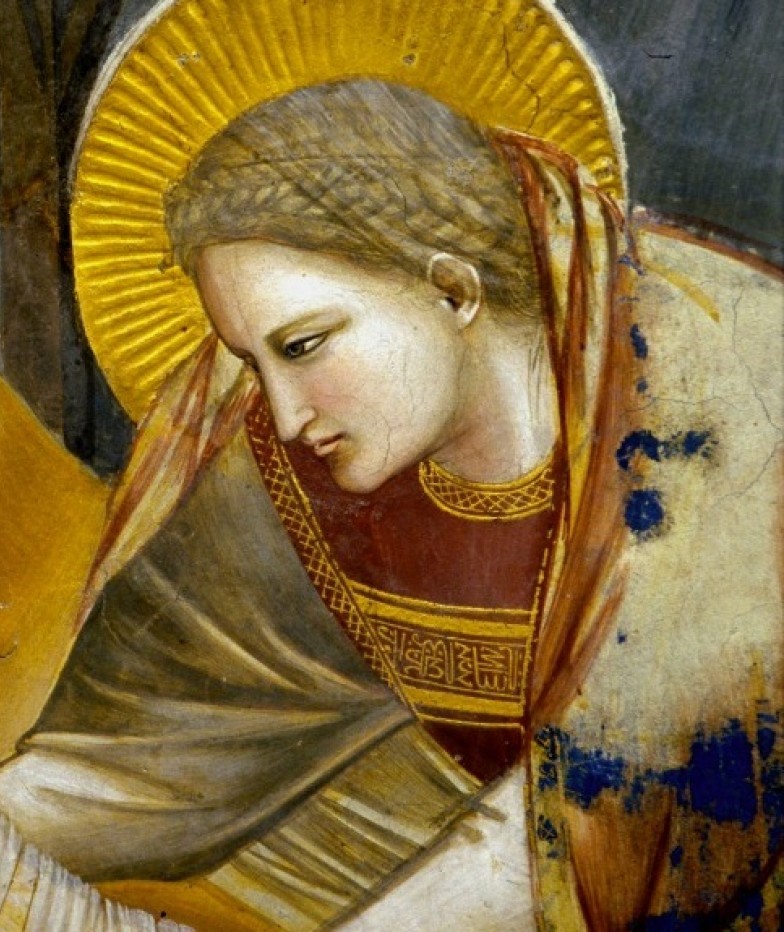
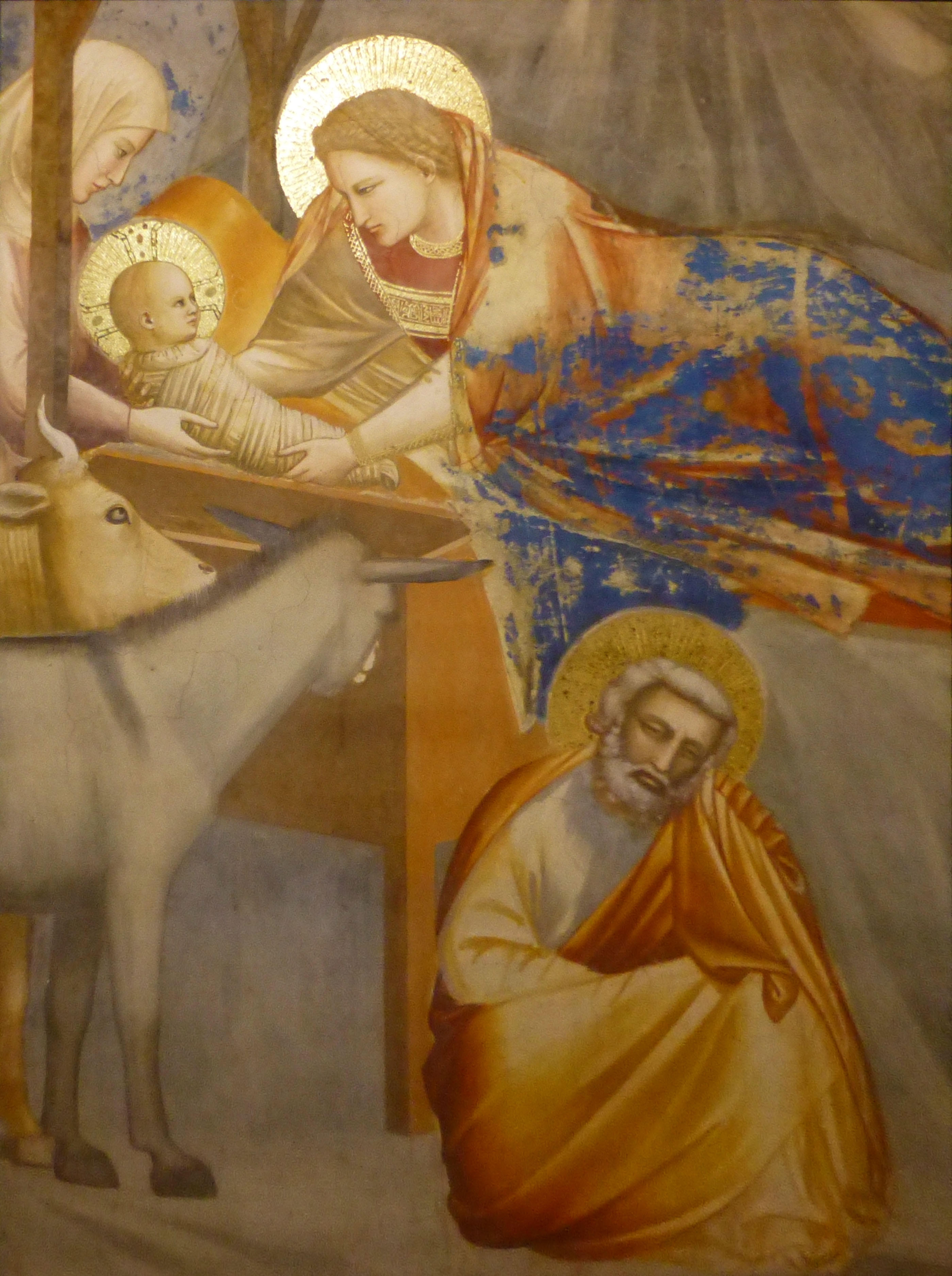
Al centro dell’affresco troviamo Maria, distesa su un giaciglio inclinato, mentre avvicina Gesù Bambino alla mangiatoia. La sua figura occupa una posizione importante nella composizione, ma non è rappresentata come una presenza astratta, separata dal resto della scena.
Il suo corpo ha un peso, una postura e una relazione concreta con il neonato. La maternità diventa così un’esperienza riconoscibile: Maria è una madre che si prende cura del proprio figlio, mentre intorno a lei si svolge un evento destinato a cambiare la storia della cristianità.
Accanto al Bambino compare una figura femminile che partecipa alle cure del neonato, richiamando la tradizione della levatrice presente in alcune narrazioni apocrife della Natività.
Giotto non ha bisogno di ricorrere a espressioni teatrali per rendere intensa la scena. La disposizione delle figure, la vicinanza dei corpi e la naturalezza dei gesti sono sufficienti a costruire un’immagine nella quale la dimensione divina e quella umana convivono.
È qui che la sua pittura mostra una delle sue qualità più importanti: la capacità di rendere comprensibile un episodio sacro attraverso esperienze che appartengono alla vita di tutti.
Il dettaglio dell’asino che anticipa una nuova idea dello spazio
Torniamo all’asino, quel particolare apparentemente marginale da cui siamo partiti.
Nella Natività della Cappella degli Scrovegni, l‘animale è raffigurato di scorcio, con il corpo orientato verso la mangiatoia. La sua posizione è una delle invenzioni che gli stessi curatori della cappella considerano particolarmente innovative nella storia della pittura italiana.
Perché è importante? Perché lo scorcio consente di suggerire la profondità e il volume del corpo. L’animale non viene mostrato soltanto attraverso un profilo facilmente leggibile, ma è inserito nello spazio secondo una posizione più complessa.
Non siamo ancora davanti alla prospettiva geometrica elaborata nel Quattrocento, ma siamo di fronte a un modo nuovo di costruire la scena: le figure cominciano a occupare uno spazio più credibile e a rapportarsi fisicamente tra loro.
Questo aspetto è essenziale per comprendere il contributo di Giotto. La sua pittura non abbandona le convenzioni medievali, ma sperimenta soluzioni che rendono le immagini più vicine alla percezione del mondo reale.
Giuseppe accovacciato: un uomo dentro la scena
Un altro particolare da non perdere è san Giuseppe. Nell’affresco è raffigurato accovacciato, in una postura raccolta che lo distingue dalla posizione di Maria e dai personaggi che partecipano più direttamente all’azione.
La postura di Giuseppe, insieme a quella dei pastori, diventerà un modello ripreso anche da artisti e collaboratori vicini a Giotto.
È un dettaglio importante perché mostra come la novità giottesca non riguardi soltanto l’aspetto dei personaggi, ma anche il modo in cui vengono rappresentati i loro corpi. Le figure non devono essere sempre frontali o rigidamente impostate: possono piegarsi, sedersi, chinarsi e assumere posizioni diverse in funzione dell’azione.
I pastori e l’angelo: due momenti che diventano un’unica storia
Nella parte superiore dell’affresco, un angelo annuncia ai pastori la nascita di Gesù. I due uomini sono raffigurati di scorcio e sembrano partecipare direttamente al messaggio che stanno ricevendo.
Questa scelta crea un collegamento tra due momenti della narrazione: la nascita di Cristo e l’annuncio rivolto a coloro che si trovano nei campi.
Invece di trattare gli episodi come immagini completamente separate, Giotto costruisce una relazione visiva tra i personaggi. Lo spettatore può leggere la scena come un evento unitario, nel quale il messaggio dell’angelo raggiunge gli uomini e li coinvolge.
Il Natale secondo Giotto: una storia divina raccontata attraverso l’umanità
La Natività della Cappella degli Scrovegni non chiede allo spettatore di ammirare soltanto un evento lontano nel tempo. Lo invita a osservare una madre che si prende cura del figlio, un uomo raccolto accanto alla mangiatoia, due pastori che ricevono un annuncio e animali che sembrano partecipare alla scena.
La grande innovazione di Giotto sta proprio in questa capacità di rendere vicina una storia sacra senza impoverirne il significato.
Il Natale diventa un momento concreto, fatto di corpi, gesti e relazioni. La nascita di Cristo non è più soltanto qualcosa da contemplare: è qualcosa a cui lo spettatore può sentirsi vicino.
Per il momento il sempre vostro Michelangelo Buonarroti vi saluta dandovi appuntamento ai prossimi post e sui social.
How Giotto Changed the Way the Nativity Is Depicted Forever
There is one detail in Giotto’s Nativity that deserves to be noticed above all others: the donkey, shown in foreshortening, with its body turned toward the manger. It might seem like a minor detail, yet it speaks volumes about the revolution brought about by the Tuscan painter at the beginning of the 14th century.
Giotto places the animal within a defined space, giving it volume and a positioning that make it appear as though it were present right before our eyes.
Giotto transformed the way the Nativity is told through painting. In his Nativity—housed in the Scrovegni Chapel in Padua—the sacred figures no longer seem to belong solely to a distant, solemn realm; they possess tangible bodies, adopt natural postures, and take part in an event that gains a new, human intensity.
Created in the early 14th century, this fresco did not emerge from a vacuum. Giotto drew upon an already established iconographic tradition, yet he revitalized it through his construction of space, his focus on gestures, and his ability to imbue his figures with a physical and emotional presence. The result is one of the most significant depictions of the Nativity in the history of Western art.
Giotto’s Nativity: Location and Date
To see this scene, one must visit the Scrovegni Chapel in Padua—a site essential to understanding the evolution of European painting.
The chapel, dedicated to Saint Mary of Charity, was commissioned by the wealthy Paduan patron Enrico Scrovegni and frescoed by Giotto between 1303 and 1305. Its walls recount the stories of Joachim and Anne, the life of the Virgin Mary, and the life of Jesus, culminating in the Passion and the Crucifixion. On the counter-façade lies the magnificent Last Judgment, which brings the narrative of the history of salvation to its conclusion.
The Nativity of Jesus occupies a panel on the right-hand wall, as part of the cycle dedicated to the life of Christ. It is, therefore, not an isolated painting, but an episode integrated into a broader narrative, in which each scene contributes to clarifying the meaning of the entire religious sequence.
Today, the chapel is recognized as one of the greatest masterpieces of medieval painting and is part of a UNESCO World Heritage site.
Before Giotto, the Nativity was primarily a sacred icon
To understand the novelty of Giotto’s approach, one must consider how religious episodes were depicted within the medieval tradition.
For centuries, Byzantine painting had developed a visual language characterized by solemn figures, opulent backgrounds, established hierarchies, and compositions designed to convey religious truths. This was not a style incapable of expressing emotion; rather, it was a figurative system in which the spiritual function of the image held a central role.
The Nativity, too, followed recognizable patterns: the Virgin, the Child, Joseph, the manger, the ox, and the donkey. The figures were arranged according to established conventions, passed down and refined by generations of artists.
Giotto was well-versed in this tradition and did not discard it. Instead, he infused it with new vitality, rendering the figures more tangible and introducing spatial and gestural relationships that draw the viewer into the scene.
The sacred event does not lose its religious significance. On the contrary, it becomes more closely aligned with human experience: the birth of Christ is presented as an occurrence in which individuals move, exchange glances, and participate emotionally in the unfolding events. This is a decisive transformation, as it opens up new possibilities for 14th-century Italian painting and paves the way for developments that would be explored further during the Renaissance.
Mary and the Infant Jesus: tenderness enters the realm of painting
At the center of the fresco, we see Mary, reclining on an inclined pallet, as she brings the infant Jesus toward the manger. Her figure holds a prominent place within the composition, yet she is not depicted as an abstract presence, detached from the rest of the scene.
Her body possesses weight and posture, and it shares a tangible connection with the newborn. Motherhood thus becomes a relatable experience: Mary is a mother caring for her child, even as an event destined to alter the history of Christianity unfolds around her.
Beside the infant, a female figure assists in his care—an allusion to the tradition of the midwife, which appears in certain apocryphal accounts of the Nativity.
Giotto has no need for theatrical gestures to imbue the scene with intensity. The arrangement of the figures, the physical proximity of the bodies, and the natural quality of their movements are enough to construct an image in which the divine and the human dimensions coexist.
It is here that his painting reveals one of its most significant qualities: the ability to make a sacred episode intelligible through experiences rooted in everyday life.
The detail of the donkey: a precursor to a new concept of space
Let us return to the donkey—the seemingly marginal detail with which we began.
In the Nativity at the Scrovegni Chapel, the animal is depicted in a foreshortened view, its body oriented toward the manger. This positioning is considered by the chapel’s own curators to be a particularly innovative invention in the history of Italian painting.
Why is this significant? Because foreshortening allows for the suggestion of depth and physical volume. The animal is not merely presented in an easily readable profile; rather, it is situated within the space in a more complex orientation.
While this does not yet constitute the geometric perspective developed in the fifteenth century, it represents a new method of constructing a scene: the figures begin to occupy a more credible space and to engage with one another in a physically tangible way.
This aspect is essential to understanding Giotto’s contribution. His painting does not abandon medieval conventions entirely; instead, it experiments with solutions that bring images closer to how we perceive the real world.
Joseph, crouched: a man within the scene
Another detail worth noting is Saint Joseph. In the fresco, he is shown crouched—a contained posture that sets him apart from the Virgin Mary and the other figures more directly involved in the unfolding action.
Joseph’s posture—much like that of the shepherds—would go on to become a model adopted by other artists and collaborators within Giotto’s circle.
This is a significant detail, as it demonstrates that Giotto’s innovations extended beyond the mere appearance of the figures to the very way their bodies are rendered. Figures need not always be presented frontally or in rigid, fixed poses; they can bend, sit, stoop, and adopt a variety of positions dictated by the action taking place. The shepherds and the angel: two moments that become a single story
In the upper part of the fresco, an angel announces the birth of Jesus to the shepherds. The two men are depicted in foreshortening, appearing to engage directly with the message they are receiving.
This choice creates a connection between two moments in the narrative: the birth of Christ and the announcement delivered to those out in the fields.
Rather than treating these episodes as entirely separate images, Giotto establishes a visual relationship between the figures. The viewer can interpret the scene as a unified event, in which the angel’s message reaches the men and draws them into the narrative.
Christmas according to Giotto: a divine story told through humanity
The Nativity in the Scrovegni Chapel does not merely ask the viewer to admire an event from the distant past. It invites them to observe a mother caring for her child, a man gathered beside the manger, two shepherds receiving an announcement, and animals that seem to take part in the scene.
Giotto’s great innovation lies precisely in this ability to bring a sacred story closer, without diminishing its meaning.
Christmas becomes a tangible moment, composed of bodies, gestures, and relationships. The birth of Christ is no longer just something to contemplate from afar; it is something to which the viewer can feel a personal connection.
For now, yours truly, Michelangelo Buonarroti, bids you farewell—until the next posts and our continued interaction on social media.
Sostienici – Support Us
Se questo blog ti piace e ti appassiona, puoi aiutarci a farlo crescere sempre più sostenendoci in modo concreto condividendo i post, seguendo le pagine social e con un contributo che ci aiuta ad andare avanti con il nostro lavoro di divulgazione. . ENGLISH: If you like and are passionate about this blog, you can help us make it grow more and more by supporting us in a concrete way by sharing posts, following social pages and with a contribution that helps us to move forward with our dissemination work.
10,00 €

Condividi:


Questo sono io



sostienici

Sostienici - Support Us
Se questo blog ti piace e ti appassiona, puoi aiutarci a farlo crescere sempre più sostenendoci in modo concreto condividendo i post, seguendo le pagine social e con un contributo che ci aiuta ad andare avanti con il nostro lavoro di divulgazione. . ENGLISH: If you like and are passionate about this blog, you can help us make it grow more and more by supporting us in a concrete way by sharing posts, following social pages and with a contribution that helps us to move forward with our dissemination work.
€10,00


