
Quando il disegno diventò preghiera: le ultime Crocifissioni che disegnai
Negli ultimi anni della mia vita, disegnare non fu più il dare forma alle idee. La carta divenne quasi un luogo di preghiera, uno spazio privato nel quale tornavo ancora e ancora davanti a Cristo, alla sua sofferenza e al dolore di coloro che erano rimasti ai piedi della Croce.
Tra la fine degli anni Cinquanta e i primi anni Sessanta del Cinquecento realizzai alcuni dei miei più intensi disegni dedicati alla Crocifissione. Oggi questi fogli sono conservati in importanti raccolte europee, tra cui il British Museum, la Royal Collection, l’Ashmolean Museum, il Courtauld Institute of Art e il Musée du Louvre.
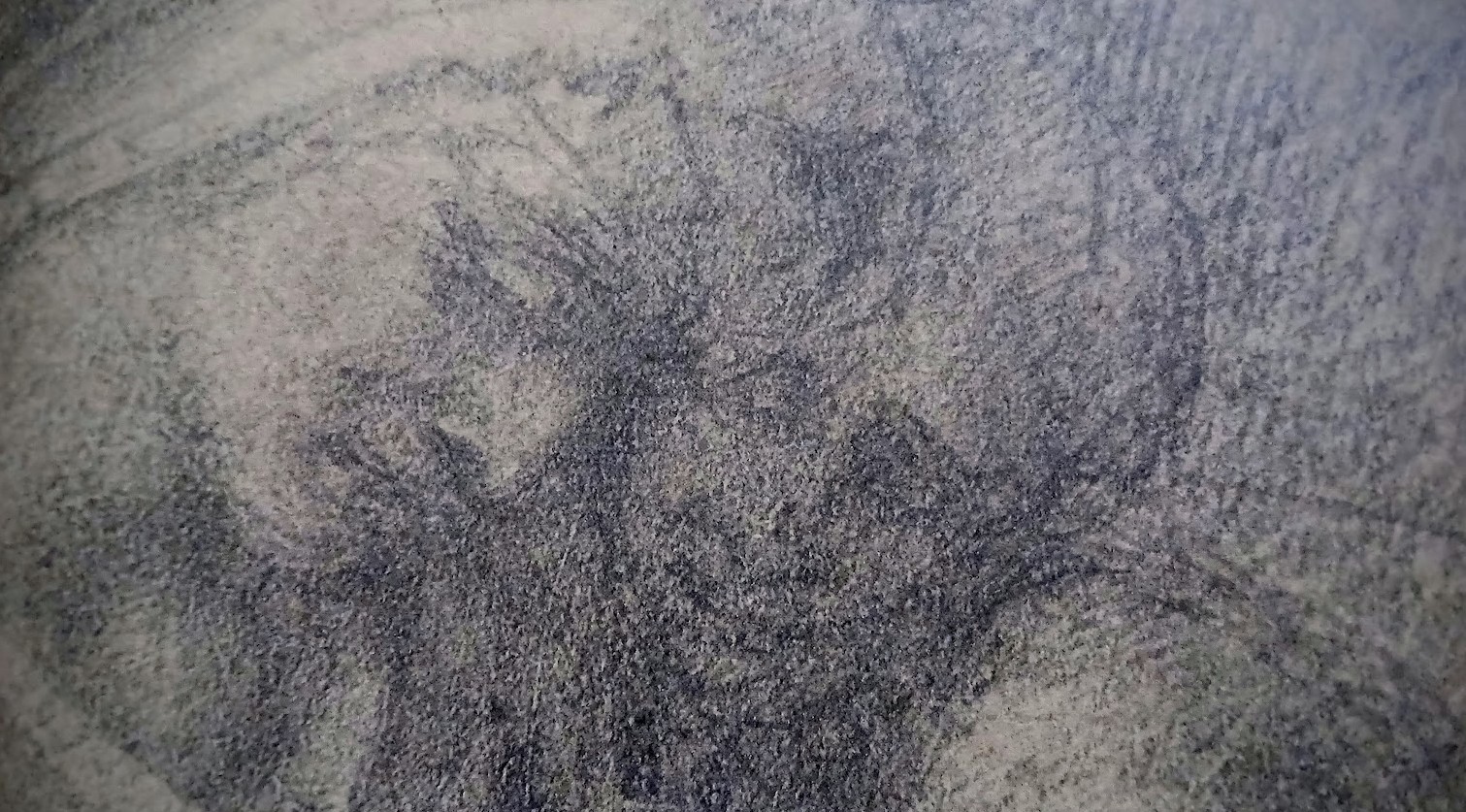
Non erano studi preparatori per una commissione conosciuta e non seguivano un progetto compositivo ordinato. Tornavo semplicemente sullo stesso tema, modificandolo, cancellandolo, ripensandolo.
Tornai più volte davanti alla Croce
Avevo affrontato il tema della Passione di Cristo molte volte nel corso della mia vita. La Pietà di San Pietro, scolpita quando ero ancora giovane, aveva rappresentato una delle prime grandi meditazioni sul dolore e sulla morte. Molti anni dopo, la mia riflessione sarebbe diventata ancora più intima.
Negli anni Trenta del Cinquecento avevo realizzato il disegno noto come Pietà Warwick, nel quale il corpo di Cristo appariva fragile, quasi spezzato dal peso della sofferenza. Non c’era più l’immagine di un essere sovrumano e vittorioso: vedevo davanti a me un uomo il cui corpo mostrava tutta la vulnerabilità della carne.
Quella fragilità sarebbe tornata nei miei ultimi disegni della Crocifissione.
Cristo era Colui davanti al quale confrontavo la mia stessa fragilità, le mie inquietudini e le mie mancanze.
Anche il dolore di chi rimaneva mi interessava
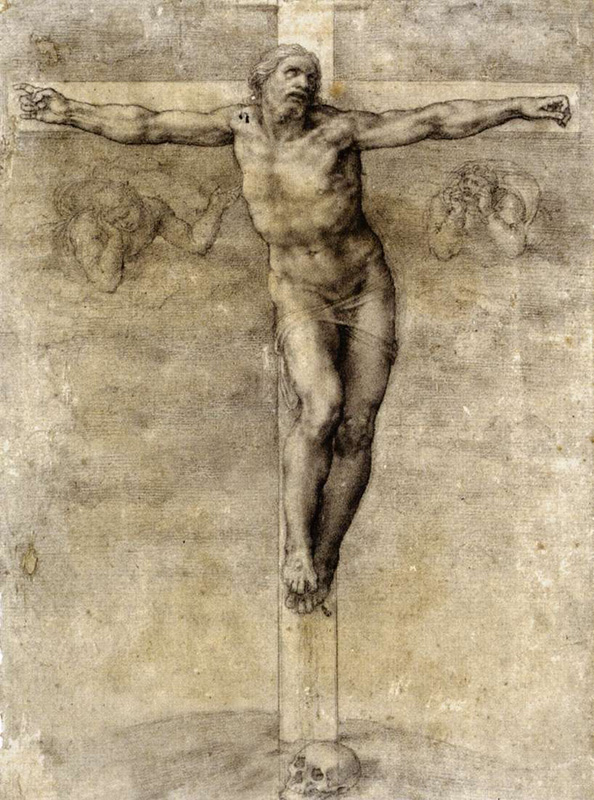
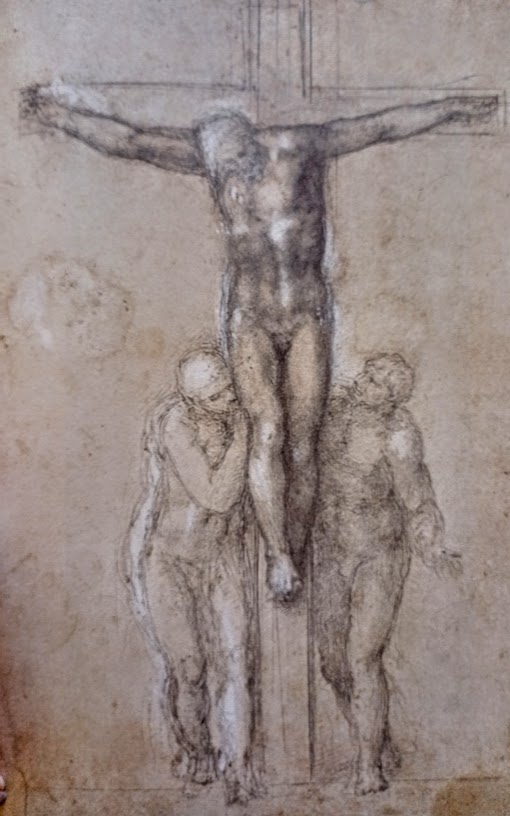
Nei fogli dedicati alla Crocifissione inserii quasi sempre la Vergine e San Giovanni Evangelista. Volevo mostrare ciò che la sua morte provocava in chi gli stava accanto.
Le figure dei dolenti assumono così gesti diversi: stupore, dolore, meditazione, sottomissione alla volontà divina. Erano gesti che la tradizione medievale e rinascimentale aveva reso riconoscibili attraverso immagini, prediche e testi devozionali ma io volli raffigurarli secondo il mio sentire.
In alcuni fogli la Vergine sembra quasi raccogliersi dentro il proprio dolore; in altri san Giovanni manifesta una sofferenza più evidente. Le loro figure sono spesso meno definite di quella di Cristo e sembrano nascere direttamente dalle linee della carta.
In un disegno conservato all’Ashmolean Museum, invece, accanto a Cristo compare una figura maschile barbuta al posto della consueta Vergine. La sua identità è ancora discussa: potrebbe trattarsi di san Pietro e san Paolo, oppure di Nicodemo e San Giovanni. Una delle interpretazioni più suggestive vede proprio in san Pietro e san Giovanni le incarnazioni di due differenti modi di vivere la fede: l’azione e la contemplazione.
Era una distinzione che avevo già affrontato nelle figure di Lia e Rachele per la tomba di Giulio II.
Le mani di Cristo
Le mani di Cristo non le disposi simmetricamente, come accadeva frequentemente nelle rappresentazioni della Crocifissione. Una mano è aperta, con le dita distese contro la croce; l’altra è leggermente ruotata e stretta attorno al chiodo.
Forse volevo suggerire due aspetti differenti di Cristo: da una parte il Salvatore che accoglie, dall’altra il Giudice fermo e severo. Oppure quelle mani potevano richiamare gesti della retorica contemporanea.
Io, però, vedevo nella Croce qualcosa che andava oltre la semplice composizione di una scena.
Questi disegni li modificai più volte.
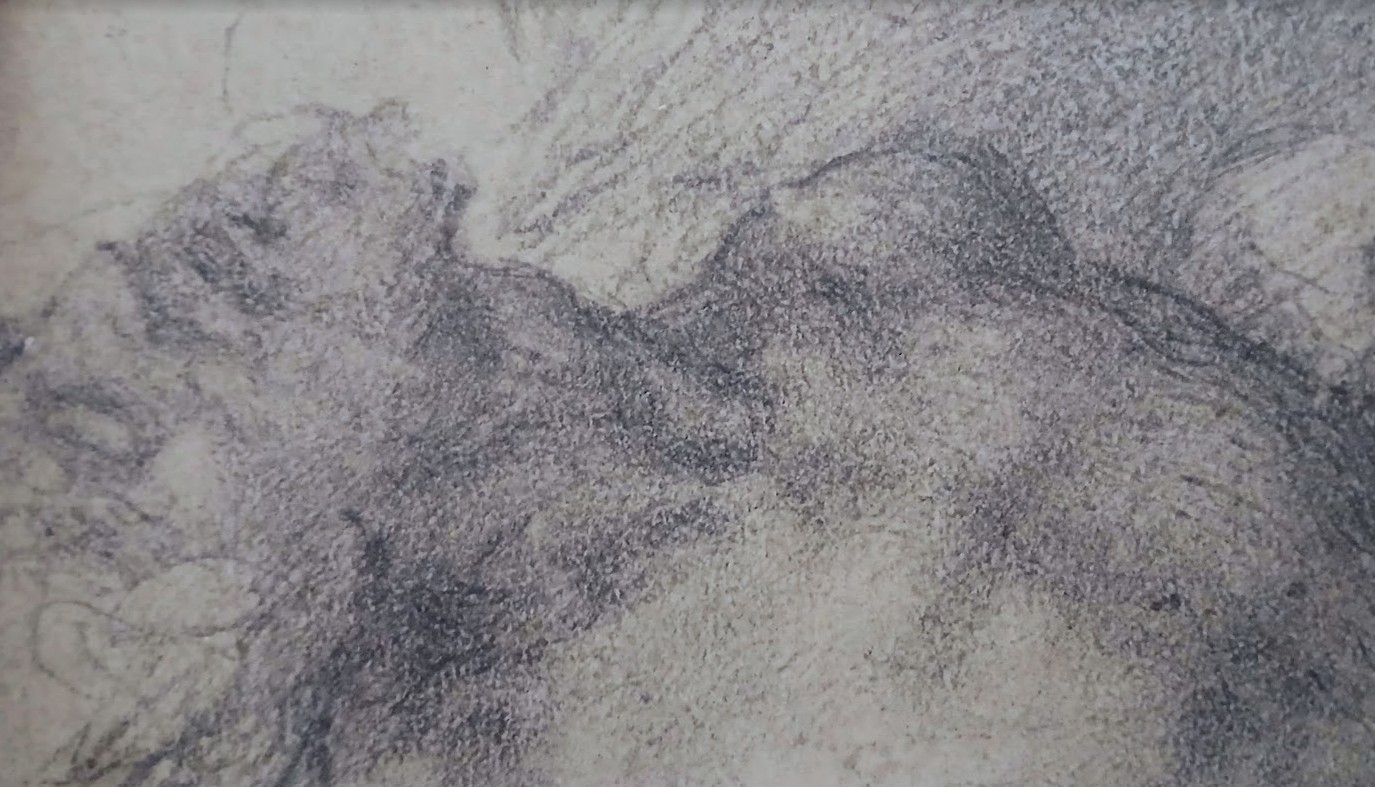
Cancellai, sovrapposi, spostai le figure, cambiai le posizioni dei corpi. In uno dei fogli del British Museum, per esempio, modificai radicalmente la posizione della Vergine: inizialmente aveva un braccio disteso nel gesto del dolore; successivamente ruotai il suo corpo verso Cristo e portai entrambe le braccia sul petto.
Quel gesto aveva un significato preciso per chi conosceva il linguaggio delle immagini del Rinascimento: la sottomissione alla volontà di Dio. Usai anche il bianco per coprire alcune parti e correggere la composizione e lasciai visibili le tracce delle modifiche.
Anche Cristo continuava a cambiare
In un disegno della Royal Collection, la Vergine e san Giovanni appaiono relativamente definiti, mentre il corpo di Cristo fu ripensato più volte. Modificai la posizione dell’anca e della gamba e trasformai radicalmente la postura delle braccia.
In origine erano distese orizzontalmente; poi le portai verso l’alto, formando una sorta di V, aumentando la torsione e la tensione del corpo. Cristo sembra stabilire un rapporto emotivo con entrambe le figure ai suoi piedi.
Vittoria Colonna rimase presente nella mia memoria
In tutto questo percorso spirituale non posso dimenticare Vittoria Colonna. La sua religiosità e il suo modo di utilizzare l’arte come strumento di meditazione avevano avuto una grande influenza su di me. Anche dopo la sua morte, avvenuta nel 1547, il suo pensiero continuò a accompagnarmi.
Nel 1558 acquistai una nuova edizione delle sue poesie e, ello stesso periodo, i miei disegni della Crocifissione diventavano sempre più profondamente legati alla mia ricerca spirituale.
Vittoria aveva utilizzato l’arte per riflettere sulla propria fede attraverso la contemplazione delle immagini: io trasformai l’atto stesso del disegnare in una forma di meditazione.

Disegnavo poco, ma quando tornavo alla carta era diverso
Negli ultimi anni della mia vita mi dedicai sempre più all’architettura. La cupola di San Pietro, Porta Pia, Santa Maria degli Angeli e altri grandi progetti occupavano il mio tempo e le mie energie.
Nel 1561 il mio assistente Tiberio Calcagni scrisse al mi nipote Leonardo Buonarroti raccontando che avevo disegnato per circa tre ore. Nel contesto della lettera, quella durata appariva quasi insolita.
Io, che per tutta la vita avevo utilizzato il disegno come strumento istintivo per esplorare le forme, negli ultimi anni sembravo averne fatto un uso diverso. Nell’ultima parte della mia vita, disegnavo per cercare qualcosa dentro di me.
Tornavo ossessivamente sulla Crocifissione perché quel soggetto aveva assunto per me un significato sempre più personale. La sofferenza di Cristo, il dolore della Vergine, il silenzio di Giovanni e la solitudine dell’uomo davanti alla propria fede erano diventati parte della mia stessa ricerca.
Anche nella mia poesia degli ultimi anni mi rivolsi direttamente a Cristo, riconoscendo le mie debolezze e chiedendo aiuto per riuscire ad accogliere quello che consideravo il dono più grande: la fede capace di condurre alla salvezza.
La carta diventò il luogo nel quale continuai a interrogare Cristo, la morte, il dolore e me stesso.
Per il momento il sempre vostro Michelangelo Buonarroti vi saluta dandovi appuntamento ai prossimi post e sui social.
When drawing became prayer: the final Crucifixions I drew
In the final years of my life, drawing was no longer merely about giving form to ideas. The paper became almost a place of prayer—a private space where I returned again and again to stand before Christ, contemplating His suffering and the grief of those who remained at the foot of the Cross.
Between the late 1550s and the early 1560s, I created some of my most intense drawings of the Crucifixion. Today, these sheets are held in major European collections, including the British Museum, the Royal Collection, the Ashmolean Museum, the Courtauld Institute of Art, and the Musée du Louvre.
They were not preparatory studies for a known commission, nor did they follow an orderly compositional plan. I simply returned to the same theme—altering, erasing, and rethinking it.
I returned to the Cross time and again
I had addressed the theme of Christ’s Passion many times throughout my life. The Pietà in St. Peter’s, sculpted when I was still young, had marked one of my first great meditations on grief and death. Many years later, my reflection would become even more intimate.
In the 1530s, I had created the drawing known as the Warwick Pietà, in which Christ’s body appeared fragile—almost broken by the weight of suffering. Gone was the image of a superhuman, triumphant figure; before me, I saw a man whose body revealed the full vulnerability of the flesh.
That fragility would reappear in my final drawings of the Crucifixion.
Christ was the One against whom I measured my own frailty, my anxieties, and my shortcomings.
I was also interested in the grief of those left behind
In the drawings dedicated to the Crucifixion, I almost always included the Virgin Mary and Saint John the Evangelist. I wanted to show the impact His death had on those standing beside Him. The figures of the mourners thus adopt various gestures: astonishment, grief, meditation, and submission to the divine will. These were gestures that medieval and Renaissance tradition had made recognizable through imagery, sermons, and devotional texts, yet I wished to depict them according to my own sensibility.
In some sheets, the Virgin seems almost to withdraw into her own grief; in others, Saint John displays a more overt suffering. Their figures are often less defined than that of Christ and seem to emerge directly from the lines of the paper.
In a drawing held at the Ashmolean Museum, however, a bearded male figure appears beside Christ in place of the customary Virgin. His identity remains a subject of debate: it could be Saint Peter and Saint Paul, or perhaps Nicodemus and Saint John. One of the most compelling interpretations sees Saint Peter and Saint John as embodiments of two different ways of living out one’s faith: action and contemplation.
It was a distinction I had already addressed in the figures of Leah and Rachel for the tomb of Julius II.
The Hands of Christ
I did not arrange Christ’s hands symmetrically, as was frequently the case in depictions of the Crucifixion. One hand is open, with fingers outstretched against the cross; the other is slightly turned and clenched around the nail.
Perhaps I wanted to suggest two different aspects of Christ: on the one hand, the welcoming Savior; on the other, the steadfast and stern Judge. Or perhaps those hands alluded to gestures found in the rhetoric of the time.
Yet, I saw something in the Cross that went beyond the mere composition of a scene.
I revised these drawings repeatedly.
I erased, layered, and shifted the figures; I altered the positioning of the bodies. In one of the sheets at the British Museum, for instance, I radically changed the Virgin’s pose: initially, she had one arm outstretched in a gesture of grief; I subsequently turned his body toward Christ and brought both arms across his chest.
That gesture held a precise meaning for those familiar with the visual language of the Renaissance: submission to God’s will. I also used white paint to cover certain areas and adjust the composition, leaving traces of the alterations visible.
Christ, too, kept changing
In a drawing from the Royal Collection, the Virgin and Saint John appear relatively well-defined, whereas Christ’s body was reimagined several times. I altered the position of the hip and leg and radically transformed the posture of the arms.
Originally, they were outstretched horizontally; later, I raised them to form a V-shape, thereby heightening the body’s torsion and tension. Christ appears to establish an emotional connection with both figures at his feet.
Vittoria Colonna remained in my thoughts
Throughout this spiritual journey, I cannot forget Vittoria Colonna. Her devoutness and her use of art as a vehicle for meditation had profoundly influenced me.
Even after her death in 1547, her thoughts continued to stay with me.
In 1558, I purchased a new edition of her poems; around that same time, my drawings of the Crucifixion became increasingly intertwined with my spiritual quest.
Vittoria had used art to reflect on her faith through the contemplation of images; I, however, transformed the very act of drawing into a form of meditation.
I drew infrequently, but whenever I returned to the paper, it felt different. In the final years of my life, I devoted myself increasingly to architecture. The dome of St. Peter’s, Porta Pia, Santa Maria degli Angeli, and other major projects consumed my time and energy.
In 1561, my assistant Tiberio Calcagni wrote to my nephew Leonardo Buonarroti, mentioning that I had spent about three hours drawing. In the context of the letter, that duration seemed almost unusual.
I, who had spent a lifetime using drawing as an instinctive tool to explore forms, seemed to have adopted a different approach in those later years. Towards the end of my life, I drew in search of something within myself.
I returned obsessively to the Crucifixion because the subject had taken on an increasingly personal significance for me. The suffering of Christ, the sorrow of the Virgin, the silence of John, and the solitude of a man facing his own faith had all become part of my own spiritual journey.
In the poetry of my final years, too, I addressed Christ directly, acknowledging my weaknesses and asking for the help needed to embrace what I considered the greatest gift: a faith capable of leading to salvation.
Paper became the space where I continued to question Christ, death, suffering, and myself.
For now, yours truly, Michelangelo Buonarroti, bids you farewell and looks forward to seeing you in future posts and on social media.

Sostienici – Support Us
Se questo blog ti piace e ti appassiona, puoi aiutarci a farlo crescere sempre più sostenendoci in modo concreto condividendo i post, seguendo le pagine social e con un contributo che ci aiuta ad andare avanti con il nostro lavoro di divulgazione. . ENGLISH: If you like and are passionate about this blog, you can help us make it grow more and more by supporting us in a concrete way by sharing posts, following social pages and with a contribution that helps us to move forward with our dissemination work.
10,00 €
-
Dopo un secolo lontano dal pubblico, il Banchetto di Psiche torna a vivere: al via il restauro
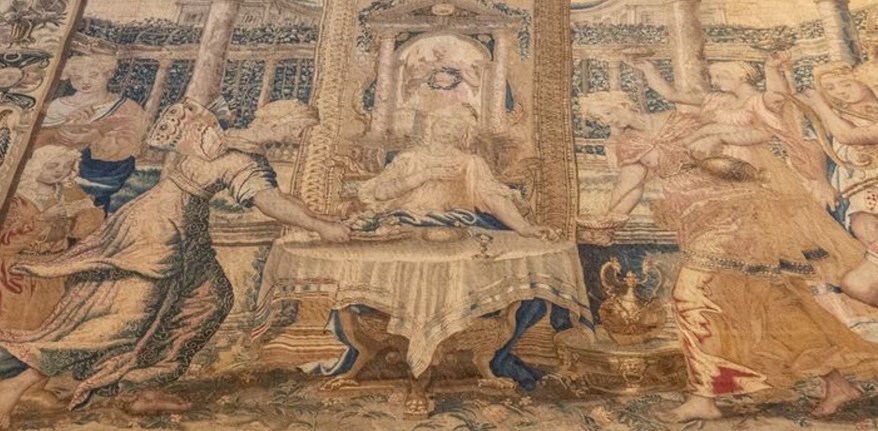
🇮🇹Al via a Firenze il restauro del Banchetto di Psiche, l’arazzo seicentesco del Bargello rimasto nei depositi per un secolo. L’intervento durerà 30 mesi… 🇬🇧Restoration work has begun in Florence on *The Banquet of Psyche*, a 17th-century tapestry from the Bargello that had remained in storage for a century. The project will last 30 months…
-
Artemisia Gentileschi, Giuditta e l’ancella con la testa di Oloferne: il dramma biblico
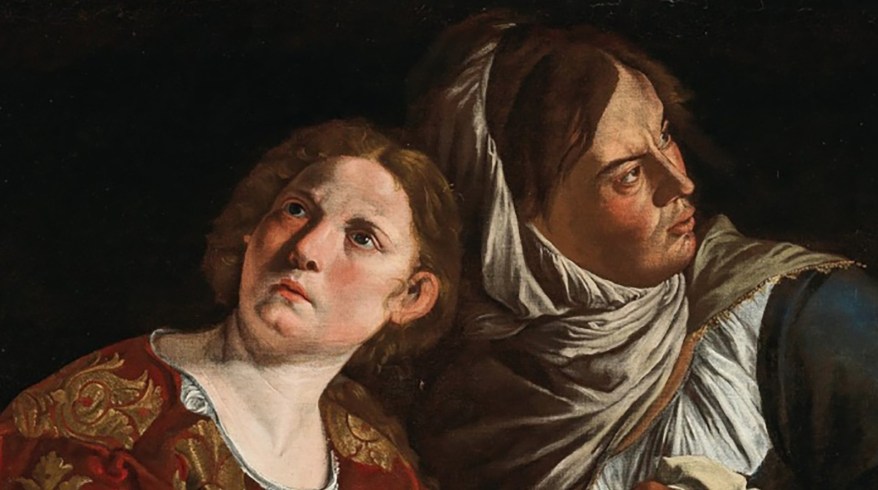
🇮🇹Giuditta e l’ancella con la testa di Oloferne di Artemisia Gentileschi è in mostra al Museo degli Innocenti di Firenze: storia, dettagli e confronti con Orazio Gentileschi… 🇬🇧Judith and Her Maidservant with the Head of Holofernes* by Artemisia Gentileschi is on display at the Museo degli Innocenti in Florence: history, details, and comparisons with Orazio…
-
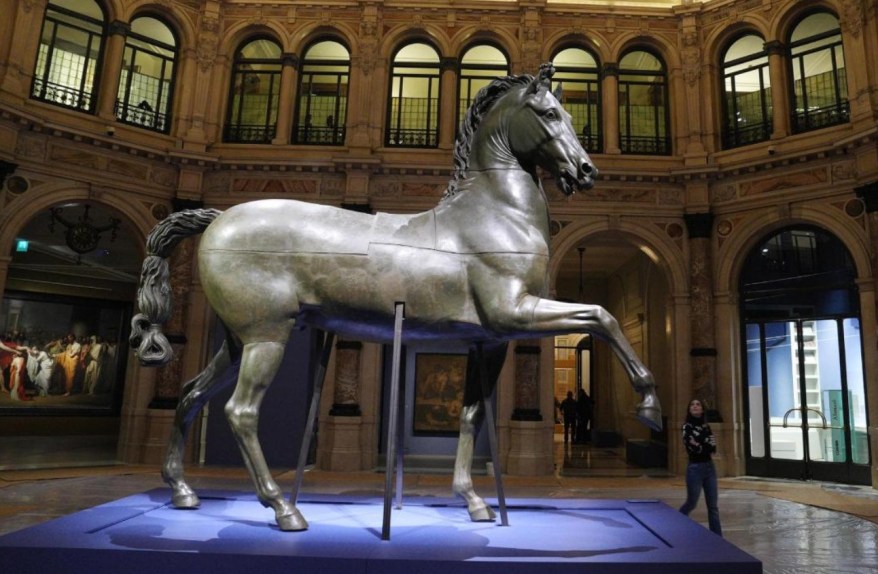
Il Cavallo colossale di Canova torna a casa in 10 casse: ecco quando si potrà ammirare
🇮🇹Il Cavallo colossale di Antonio Canova torna a Bassano il 27 ottobre 2026. Dopo il restauro, sarà visibile al Museo Civico dal 12 dicembre… 🇬🇧Antonio Canova’s colossal horse returns to Bassano on October 27, 2026. Following its restoration, it will be on display at the Civic Museum starting December 12…
Condividi:


Questo sono io




sostienici

Sostienici – Support Us
Se questo blog ti piace e ti appassiona, puoi aiutarci a farlo crescere sempre più sostenendoci in modo concreto condividendo i post, seguendo le pagine social e con un contributo che ci aiuta ad andare avanti con il nostro lavoro di divulgazione. . ENGLISH: If you like and are passionate about this blog, you can help us make it grow more and more by supporting us in a concrete way by sharing posts, following social pages and with a contribution that helps us to move forward with our dissemination work.
€10,00


