

Dürer, Parmigianino e Baselitz: il Rinascimento che rompe le regole
Dal 10 settembre 2026 al 5 gennaio 2027 Palazzo Medici Riccardi ospita “Oltre il Rinascimento. Tra Dürer e Parmigianino”, una grande mostra dedicata alla grafica manierista europea e alla straordinaria collezione di stampe di Georg Baselitz.
Cosa accade quando il Rinascimento smette di essere una regola e diventa un punto di partenza? È proprio oltre quel confine che prende forma la mostra “Oltre il Rinascimento. Tra Dürer e Parmigianino”, in programma a Palazzo Medici Riccardi a Firenze dal 10 settembre 2026 al 5 gennaio 2027.
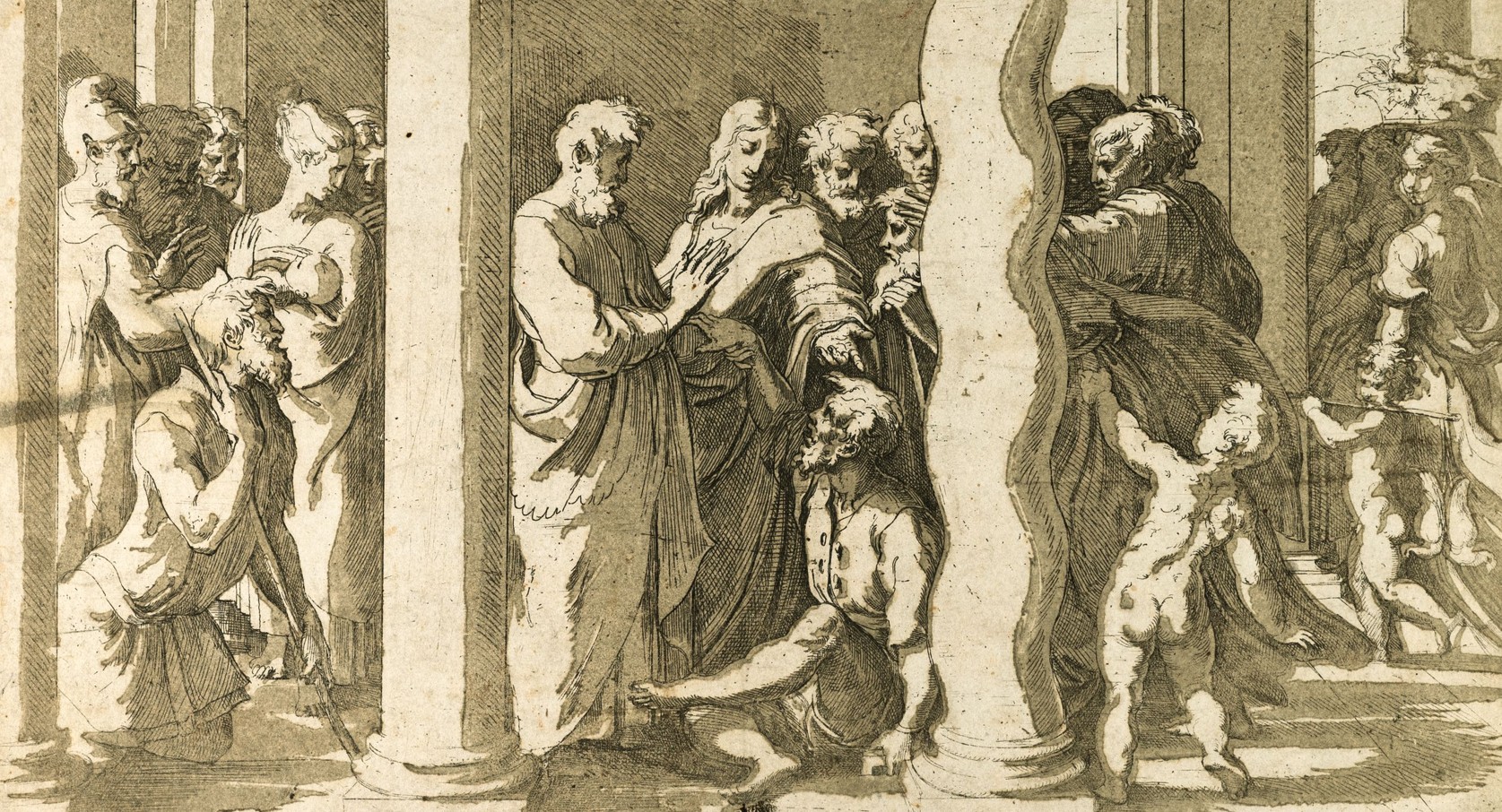
PIETRO E SAN GIOVANNI GUARISCONO LO STORPIO ALLA PORTA DEL TEMPIO, 1527-1530 circa,
Acquaforte e puntasecca o bulino, xilografia da un legno in grigio verdastro su carta, mm 282 × 409,
Collezione Baselitz/Blau
Circa 150 opere raccontano la straordinaria stagione della grafica europea tra la fine del Quattrocento, il Cinquecento e i primi decenni del Seicento, mettendo in dialogo alcuni dei più importanti maestri dell’incisione con la collezione di Georg Baselitz, uno dei protagonisti dell’arte contemporanea.
Il risultato è un viaggio nel mondo delle stampe, delle incisioni e delle xilografie, dove il corpo umano si deforma, la prospettiva viene messa in discussione e la perfezione classica lascia spazio a immagini più inquietanti, eccentriche e visionarie.
La mostra a Palazzo Medici Riccardi
Promossa dalla Città Metropolitana di Firenze e organizzata dalla Fondazione MUS.E, la mostra è curata da Daniel Blau, Sergio Risaliti e Valentina Zucchi.
Il progetto nasce dall’incontro tra due straordinari patrimoni: la collezione privata di Georg Baselitz e le opere provenienti dal Museo di Belle Arti di Budapest.
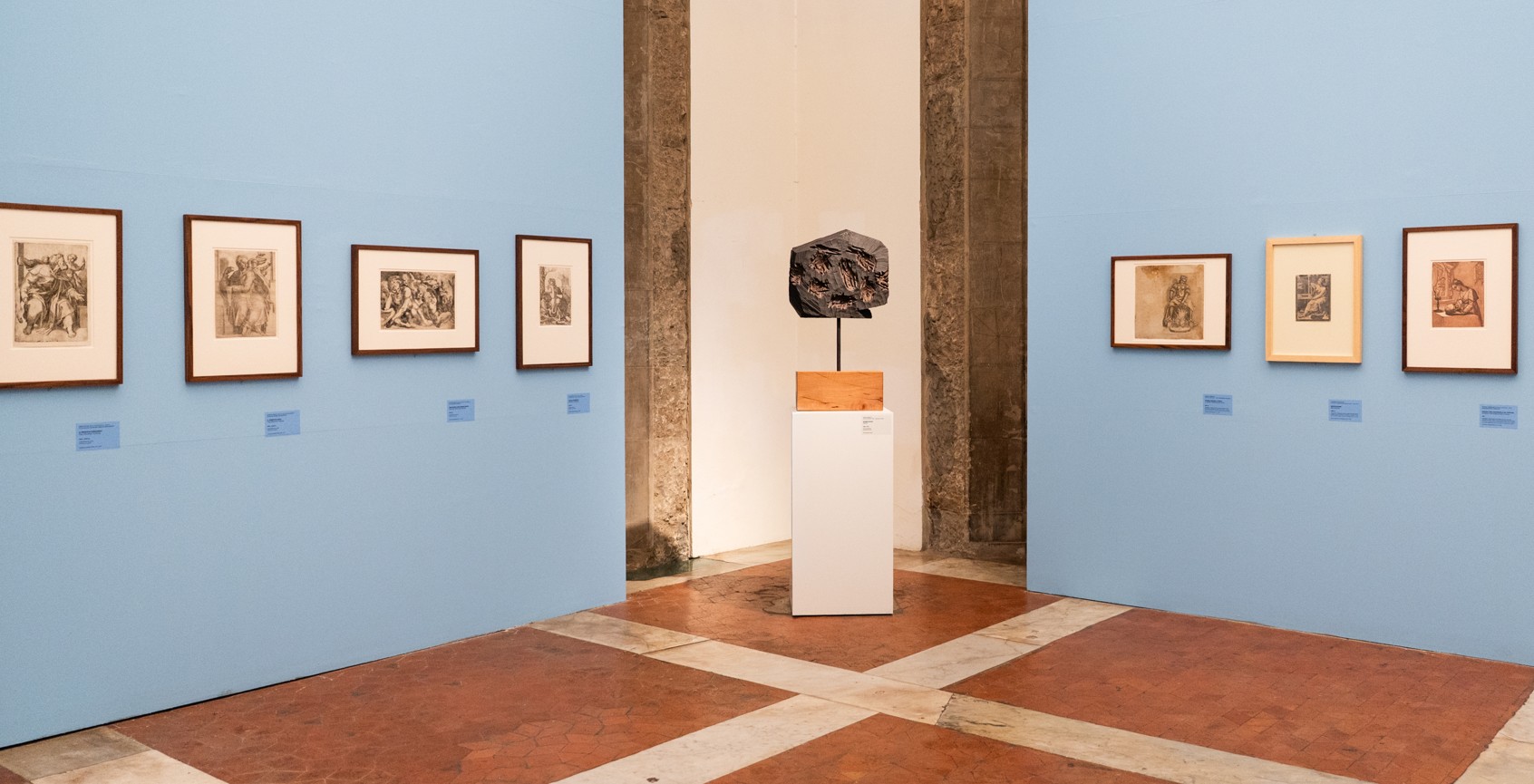
Il vero protagonista è anche il dialogo tra passato e contemporaneità, tra gli artisti del Cinquecento e lo sguardo di Baselitz.
Una relazione particolarmente significativa perché l’artista tedesco ha dedicato gran parte della propria vita allo studio e al collezionismo delle stampe dei grandi maestri antichi.
Georg Baselitz, l’artista che collezionava il Manierismo
La passione di Georg Baselitz per la grafica antica affonda le proprie radici negli anni Sessanta.
Nel 1964 acquistò “Il sacrificio” di Antonio Fantuzzi da Trento, stampa ispirata al dipinto di Rosso Fiorentino conservato a Fontainebleau. Quell’acquisto rappresentò l’inizio di una collezione destinata a crescere per oltre sessant’anni.
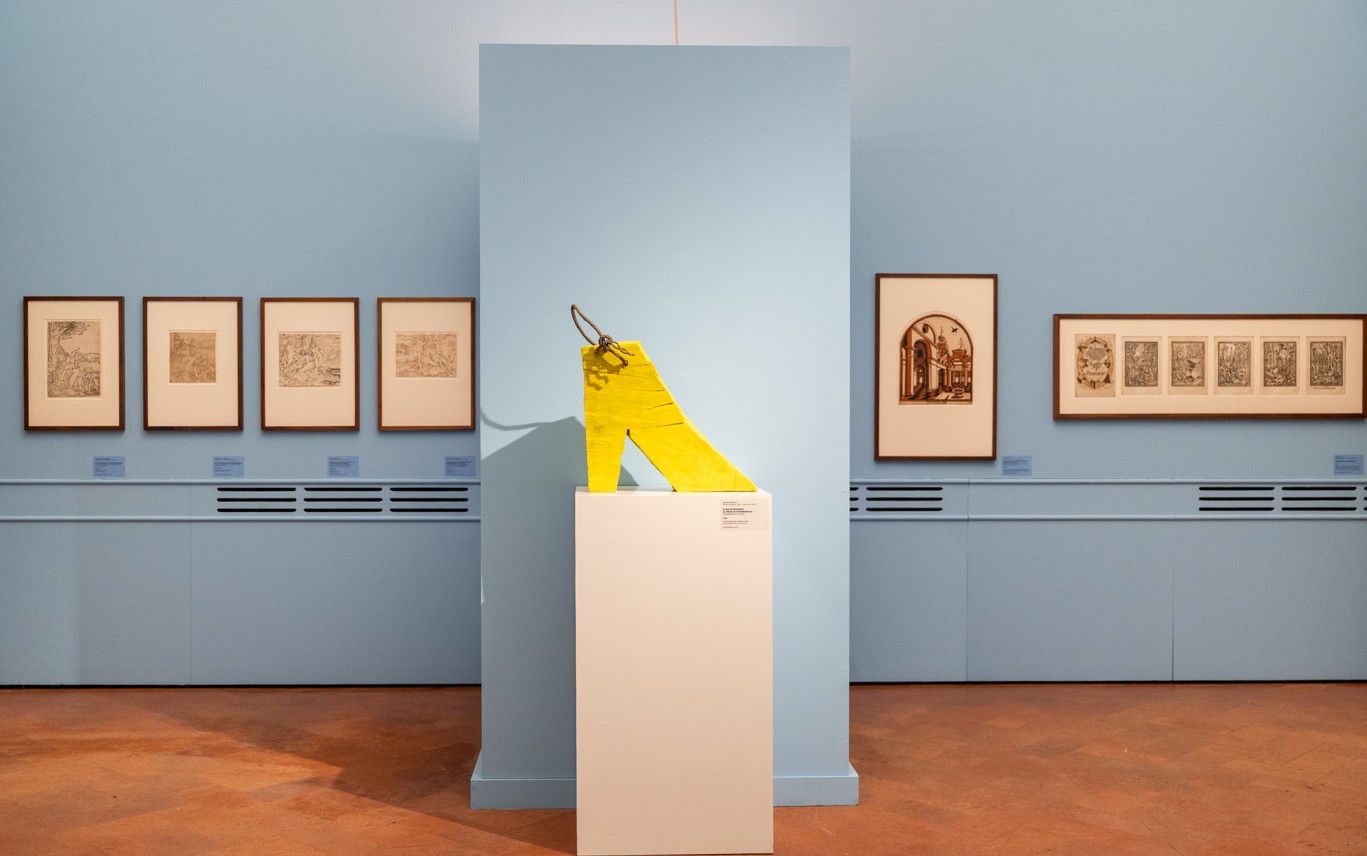
Baselitz rimase affascinato soprattutto dalla libertà degli artisti manieristi, dalla loro capacità di deformare la realtà, esasperare le proporzioni e mettere in discussione l’armonia classica.
Ed è proprio questa libertà che crea un sorprendente ponte tra il Manierismo del Cinquecento e l’arte contemporanea.
Nelle parole di Georg Baselitz:
«Mi interessano quei casi di confine nell’arte, in cui il terreno acquisito diventa incerto e la visione classica si disgrega. Oltre quel punto, le cose si fanno più vive».
Dürer, Parmigianino e i grandi protagonisti della grafica europea
Il percorso espositivo riunisce opere di alcuni dei più importanti protagonisti della storia dell’incisione europea.
Tra questi troviamo Albrecht Dürer, Andrea Mantegna, Parmigianino, Andrea Schiavone, Lucas Cranach il Vecchio, Hans Sebald Beham, Ugo da Carpi, Domenico Beccafumi, Andrea Andreani e Hendrick Goltzius.
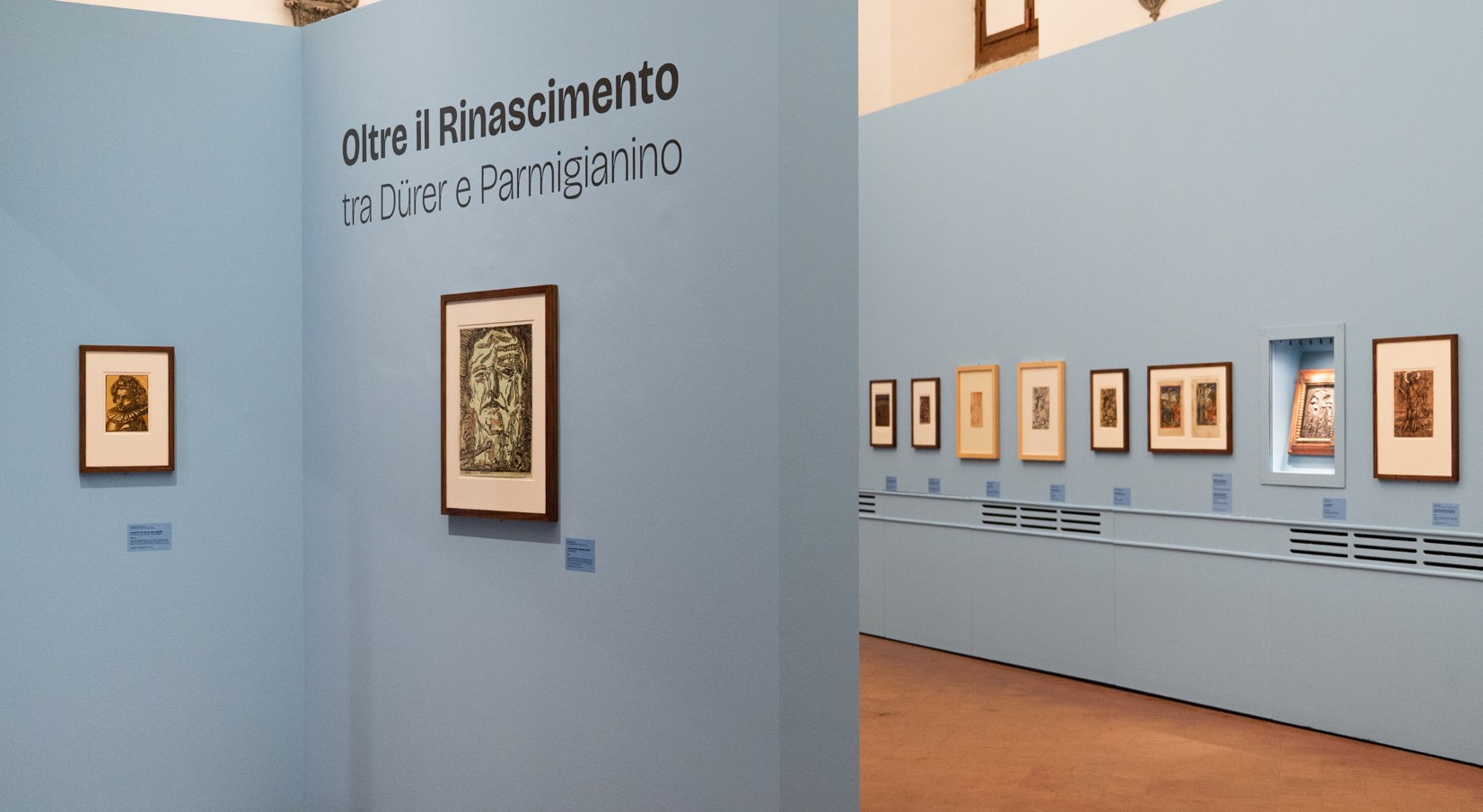
Non mancano inoltre gli artisti francesi legati alla Scuola di Fontainebleau, come Léon Davent, Geoffroy Dumonstier e Juste de Juste.
Un vero atlante della grafica europea, nel quale l’incisione diventa uno strumento di sperimentazione e non semplicemente una tecnica per riprodurre immagini.
Il celebre “Rinoceronte” di Dürer
Uno dei momenti più affascinanti del percorso è rappresentato dalle celebri stampe di Albrecht Dürer, tra cui il famosissimo Rinoceronte.
L’opera dimostra perfettamente quanto una stampa potesse diventare qualcosa di molto più importante di una semplice riproduzione. Attraverso il segno inciso sulla matrice, l’immagine poteva viaggiare, essere replicata e raggiungere un pubblico vastissimo.
La grafica contribuì così alla circolazione delle idee e dei modelli artistici in Europa, creando una rete culturale che superava i confini geografici.
Parmigianino e la nuova libertà del Manierismo
Un’attenzione particolare è dedicata a Parmigianino, protagonista di quella stagione artistica nella quale la perfezione rinascimentale comincia a incrinarsi.
Le sue figure allungate, eleganti e quasi irreali incarnano perfettamente la nuova sensibilità manierista.
La mostra permette di seguire anche le ricerche di Parmigianino e dei suoi contemporanei intorno all’opera di Raffaello, oltre alle diverse interpretazioni del tema della Deposizione di Cristo.
È proprio qui che emerge con maggiore evidenza una delle caratteristiche più affascinanti del Manierismo: la tradizione non viene semplicemente abbandonata, ma viene trasformata, esasperata e reinventata.
Quando l’incisione diventa sperimentazione
Xilografie, acqueforti, bulini, puntasecche e stampe chiaroscurali raccontano un universo tecnico estremamente sofisticato.
Ogni tecnica produce effetti differenti: linee nette, ombre profonde, passaggi tonali, contrasti di luce e atmosfere quasi pittoriche. Le matrici diventano così veri e propri strumenti creativi.
Gli artisti sperimentano il segno, modificano le matrici, lavorano sulle diverse possibilità di stampa e trasformano progressivamente il rapporto tra immagine, tecnica e invenzione.
Per questo la mostra invita anche a superare una vecchia distinzione: quella che considera la grafica un’arte “minore”. Al contrario, le stampe sono state per secoli uno dei più importanti strumenti attraverso i quali le idee artistiche potevano essere create, diffuse e trasformate.
Da Ugo da Carpi ad Arcimboldo
Tra le opere esposte spiccano anche le celebri stampe chiaroscurali di Ugo da Carpi e Domenico Beccafumi, insieme al potente Diogene.
Il percorso conduce poi verso immagini ispirate a un dipinto perduto di Giuseppe Arcimboldo, accanto a fantasiose figure di costume.
Quattro sculture di Baselitz entrano nel percorso
Il dialogo con la contemporaneità non è affidato soltanto alla collezione.
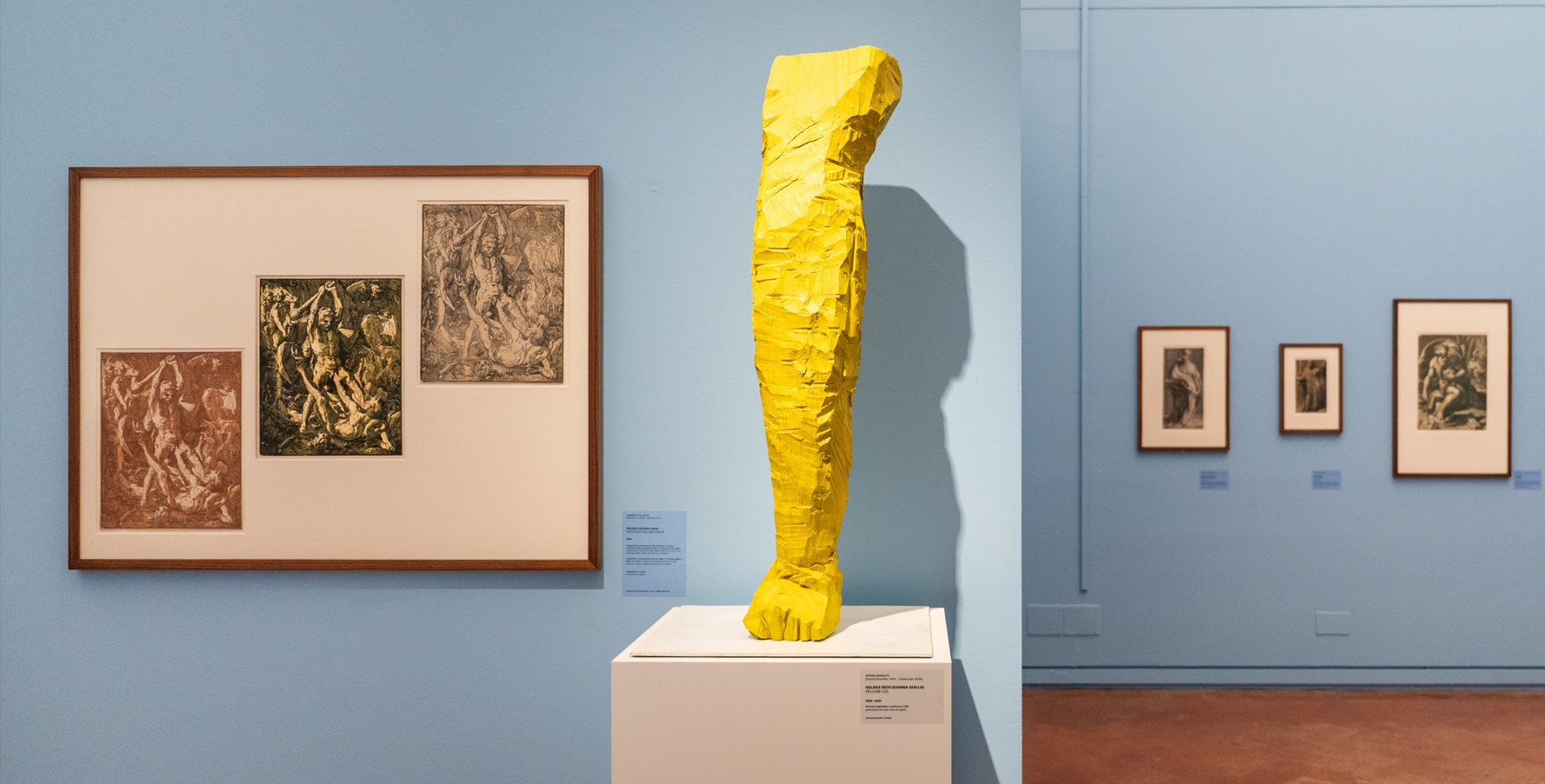
All’interno della mostra sono infatti presenti anche quattro importanti sculture di Georg Baselitz, insieme a un suo significativo autoritratto. La loro presenza crea un cortocircuito visivo tra passato e presente.
Le forme antiche e quelle contemporanee sembrano interrogarsi reciprocamente, mostrando quanto le inquietudini del Manierismo possano essere ancora attuali.
Il percorso diventa così anche una riflessione sulla capacità dell’arte di rompere le regole e reinventare continuamente l’immagine.
Baselitz e Firenze: un legame speciale
Firenze occupa un posto importante nella storia personale e artistica di Baselitz. L’artista trascorse infatti un periodo significativo in città, dopo aver ottenuto una borsa di studio che gli permise di studiare per sei mesi alla Villa Romana di Firenze.
Il rapporto con la città rende quindi particolarmente significativa la scelta di Palazzo Medici Riccardi come sede della mostra. Come ha ricordato il figlio e curatore Daniel Blau, Firenze ebbe un ruolo profondo nella vita e nel lavoro del padre.
La mostra diventa dunque anche una sorta di omaggio a Baselitz, scomparso pochi mesi fa, e alla sua lunga passione per la grafica dei maestri antichi.
Una mostra per scoprire un Rinascimento diverso
“Oltre il Rinascimento. Tra Dürer e Parmigianino” non racconta quindi soltanto una stagione della storia dell’arte.
Racconta il momento in cui le certezze del Rinascimento iniziano a vacillare e gli artisti cercano nuove strade. È il momento delle figure allungate, delle pose impossibili, delle composizioni eccentriche, delle deformazioni e delle invenzioni grafiche.
È il momento in cui il Manierismo apre una porta verso la modernità.
Visite guidate e laboratori
La mostra prevede anche un programma di attività per il pubblico. Le visite guidate sono in programma tutti i sabati e le domeniche alle ore 15.
La domenica alle 10.30 è invece prevista un’attività dedicata alle famiglie con laboratorio di incisione.
Sono inoltre disponibili visite e attività rivolte alle scuole primarie e secondarie di primo e secondo grado. Un’occasione per avvicinarsi concretamente alle tecniche dell’incisione e comprendere come nasce una stampa.
Oltre il Rinascimento: informazioni sulla mostra
Titolo: Oltre il Rinascimento. Tra Dürer e Parmigianino
Sede: Palazzo Medici Riccardi, Firenze
Date: 10 settembre 2026 – 5 gennaio 2027
Curatori: Daniel Blau, Sergio Risaliti, Valentina Zucchi
Opere: circa 150
Provenienze: collezione Georg Baselitz e Museo di Belle Arti di Budapest
Per il momento il sempre vostro Michelangelo Buonarroti vi saluta dandovi appuntamento ai prossimi post e sui social.
Dürer, Parmigianino, and Baselitz: The Renaissance That Breaks the Rules
From September 10, 2026, to January 5, 2027, Palazzo Medici Riccardi hosts Beyond the Renaissance: Between Dürer and Parmigianino, a major exhibition dedicated to European Mannerist graphic art and the extraordinary print collection of Georg Baselitz.
What happens when the Renaissance ceases to be a rule and becomes a starting point? It is precisely beyond that boundary that the exhibition Beyond the Renaissance: Between Dürer and Parmigianino—scheduled for Palazzo Medici Riccardi in Florence from September 10, 2026, to January 5, 2027—takes shape.
Around 150 works recount the extraordinary era of European graphic art spanning the late 15th century, the 16th century, and the early decades of the 17th century, creating a dialogue between some of the most important masters of printmaking and the collection of Georg Baselitz, a leading figure in contemporary art.
The result is a journey into the world of prints, engravings, and woodcuts, where the human body is distorted, perspective is challenged, and classical perfection gives way to more unsettling, eccentric, and visionary imagery.
The Exhibition at Palazzo Medici Riccardi
Promoted by the Metropolitan City of Florence and organized by the MUS.E Foundation, the exhibition is curated by Daniel Blau, Sergio Risaliti, and Valentina Zucchi.
The project stems from the meeting of two extraordinary collections: the private collection of Georg Baselitz and works from the Museum of Fine Arts in Budapest.
A central element is the dialogue between the past and the present—between the artists of the 16th century and Baselitz’s own perspective.
This relationship is particularly significant, as the German artist has dedicated much of his life to studying and collecting prints by the great Old Masters.
Georg Baselitz: The Artist Who Collected Mannerism
Georg Baselitz’s passion for historical graphic art dates back to the 1960s. In 1964, he purchased The Sacrifice by Antonio Fantuzzi da Trento—a print inspired by the painting by Rosso Fiorentino housed at Fontainebleau. That acquisition marked the beginning of a collection destined to grow for over sixty years.
Baselitz was particularly fascinated by the freedom of Mannerist artists—by their ability to distort reality, exaggerate proportions, and challenge classical harmony.
It is precisely this freedom that creates a surprising bridge between sixteenth-century Mannerism and contemporary art.
In the words of Georg Baselitz:
“I am interested in those borderline cases in art where established ground becomes uncertain and the classical vision disintegrates. Beyond that point, things come alive.”
Dürer, Parmigianino, and the Great Figures of European Printmaking
The exhibition brings together works by some of the most important figures in the history of European printmaking.
These include Albrecht Dürer, Andrea Mantegna, Parmigianino, Andrea Schiavone, Lucas Cranach the Elder, Hans Sebald Beham, Ugo da Carpi, Domenico Beccafumi, Andrea Andreani, and Hendrick Goltzius.
Also featured are French artists associated with the School of Fontainebleau, such as Léon Davent, Geoffroy Dumonstier, and Juste de Juste.
It is a veritable atlas of European printmaking, in which the print becomes a tool for experimentation rather than merely a technique for reproducing images.
Dürer’s Famous Rhinoceros
One of the exhibition’s highlights is the display of famous prints by Albrecht Dürer, including the iconic Rhinoceros.
The work perfectly demonstrates how a print could become something far more significant than a simple reproduction. Through the lines incised into the printing matrix, the image could travel, be replicated, and reach a vast audience. Printmaking thus contributed to the circulation of ideas and artistic models across Europe, creating a cultural network that transcended geographical boundaries.
Parmigianino and the New Freedom of Mannerism
Special attention is devoted to Parmigianino, a key figure of the artistic era in which Renaissance perfection began to fracture.
His elongated, elegant, and almost ethereal figures perfectly embody the new Mannerist sensibility.
The exhibition also allows visitors to trace the explorations undertaken by Parmigianino and his contemporaries regarding the work of Raphael, as well as the various interpretations of the Deposition of Christ theme.
It is precisely here that one of the most fascinating characteristics of Mannerism becomes most apparent: tradition is not simply abandoned but is transformed, heightened, and reinvented.
When Printmaking Becomes Experimentation
Woodcuts, etchings, engravings, drypoints, and chiaroscuro prints reveal a highly sophisticated technical universe.
Each technique produces distinct effects: crisp lines, deep shadows, tonal gradations, and contrasts of …light and almost painterly atmospheres. The matrices thus become genuine creative tools.
Artists experiment with the mark, modify the matrices, explore various printing possibilities, and progressively transform the relationship between image, technique, and invention.
For this reason, the exhibition also invites us to move beyond an old distinction: the one that regards printmaking as a “minor” art form. On the contrary, for centuries, prints have been among the most important tools for creating, disseminating, and transforming artistic ideas.
From Ugo da Carpi to Arcimboldo
Notable among the exhibited works are the celebrated chiaroscuro prints by Ugo da Carpi and Domenico Beccafumi, alongside the powerful Diogenes.
The exhibition path then leads to images inspired by a lost painting by Giuseppe Arcimboldo, displayed next to imaginative figures in period costume.
Four sculptures by Baselitz join the exhibition
The dialogue with the contemporary world is not left solely to the collection itself.
Indeed, the exhibition features four important sculptures by Georg Baselitz, alongside a significant self-portrait. Their presence creates a visual spark connecting past and present.
Ancient and contemporary forms seem to engage in a dialogue with one another, revealing just how relevant the anxieties of Mannerism remain today.
The exhibition thus becomes a reflection on art’s capacity to break the rules and continuously reinvent the image.
Baselitz and Florence: a special bond
Florence holds a significant place in Baselitz’s personal and artistic history. The artist spent a considerable period in the city after winning a scholarship that allowed him to study for six months at the Villa Romana in Florence.
This connection to the city makes the choice of Palazzo Medici Riccardi as the exhibition venue particularly meaningful. As his son and curator Daniel Blau has noted, Florence played a profound role in his father’s life and work. The exhibition thus also serves as a tribute to Baselitz—who passed away just a few months ago—and to his enduring passion for the graphic art of the Old Masters.
An exhibition to discover a different side of the Renaissance
“Beyond the Renaissance: Between Dürer and Parmigianino” tells the story of more than just a single era in art history.
It chronicles the moment when Renaissance certainties began to waver and artists sought new paths. It is the era of elongated figures, impossible poses, eccentric compositions, distortions, and graphic innovations.
It is the moment when Mannerism opened the door to modernity.
Guided tours and workshops
The exhibition also features a program of public activities. Guided tours are scheduled for every Saturday and Sunday at 3:00 PM.
On Sundays at 10:30 AM, there is a family-oriented activity that includes an engraving workshop.
Tours and activities are also available for primary and secondary schools. It is an opportunity to gain hands-on experience with engraving techniques and understand how a print is created.
Beyond the Renaissance: Exhibition Information
Title: Beyond the Renaissance: Between Dürer and Parmigianino
Venue: Palazzo Medici Riccardi, Florence
Dates: September 10, 2026 – January 5, 2027
Curators: Daniel Blau, Sergio Risaliti, Valentina Zucchi
Works: approximately 150
Provenance: Georg Baselitz Collection and the Museum of Fine Arts, Budapest
For now, your ever-faithful Michelangelo Buonarroti bids you farewell and looks forward to seeing you in future posts and on social media.

Sostienici – Support Us
Se questo blog ti piace e ti appassiona, puoi aiutarci a farlo crescere sempre più sostenendoci in modo concreto condividendo i post, seguendo le pagine social e con un contributo che ci aiuta ad andare avanti con il nostro lavoro di divulgazione. . ENGLISH: If you like and are passionate about this blog, you can help us make it grow more and more by supporting us in a concrete way by sharing posts, following social pages and with a contribution that helps us to move forward with our dissemination work.
10,00 €
-
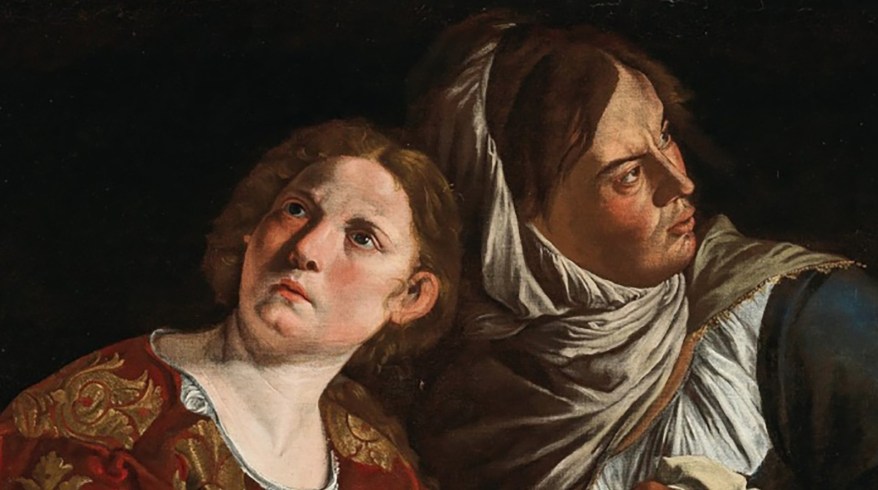
Artemisia Gentileschi, Giuditta e l’ancella con la testa di Oloferne: il dramma biblico
🇮🇹Giuditta e l’ancella con la testa di Oloferne di Artemisia Gentileschi è in mostra al Museo degli Innocenti di Firenze: storia, dettagli e confronti con Orazio Gentileschi… 🇬🇧Judith and Her Maidservant with the Head of Holofernes* by Artemisia Gentileschi is on display at the Museo degli Innocenti in Florence: history, details, and comparisons with Orazio…
-
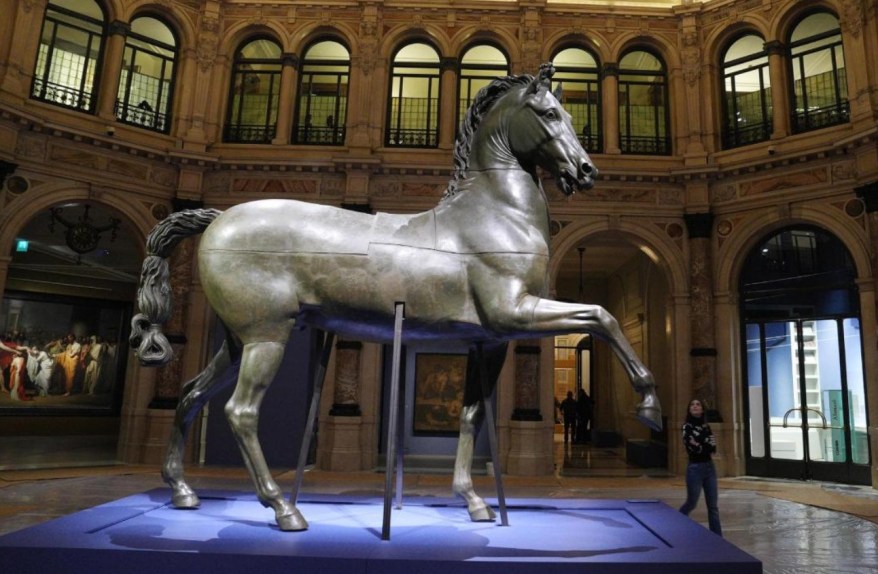
Il Cavallo colossale di Canova torna a casa in 10 casse: ecco quando si potrà ammirare
🇮🇹Il Cavallo colossale di Antonio Canova torna a Bassano il 27 ottobre 2026. Dopo il restauro, sarà visibile al Museo Civico dal 12 dicembre… 🇬🇧Antonio Canova’s colossal horse returns to Bassano on October 27, 2026. Following its restoration, it will be on display at the Civic Museum starting December 12…
-
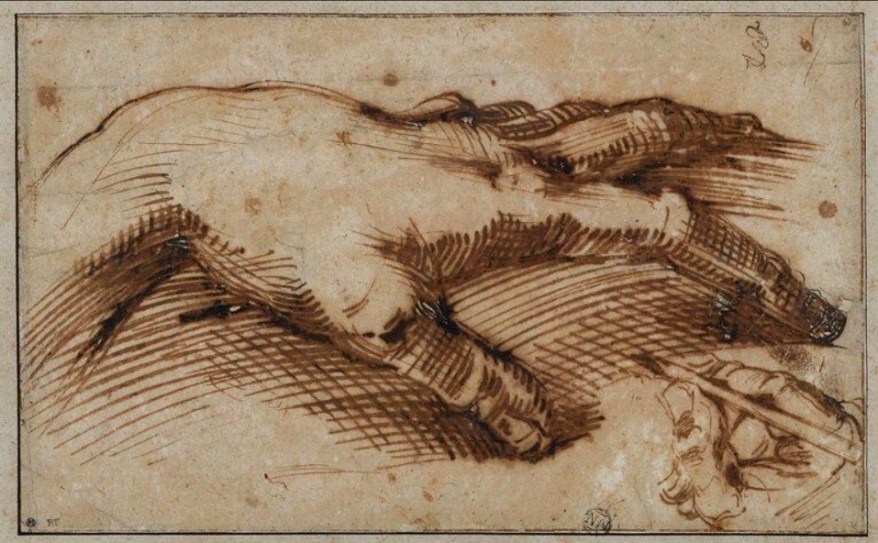
La mano che disegna la mano: il disegno del Louvre che ha fatto discutere gli studiosi
🇮🇹Il disegno di una mano che ne disegna un’altra: il curioso foglio del Louvre, la storia delle attribuzioni e il mistero della sua paternità… 🇬🇧A drawing of a hand drawing another hand: the intriguing sheet at the Louvre, the history of its attributions, and the mystery of its authorship…
Condividi:


Questo sono io




sostienici

Sostienici – Support Us
Se questo blog ti piace e ti appassiona, puoi aiutarci a farlo crescere sempre più sostenendoci in modo concreto condividendo i post, seguendo le pagine social e con un contributo che ci aiuta ad andare avanti con il nostro lavoro di divulgazione. . ENGLISH: If you like and are passionate about this blog, you can help us make it grow more and more by supporting us in a concrete way by sharing posts, following social pages and with a contribution that helps us to move forward with our dissemination work.
€10,00


