
San Lorenzo: storia, arte e capolavori del santo celebrato il 10 agosto
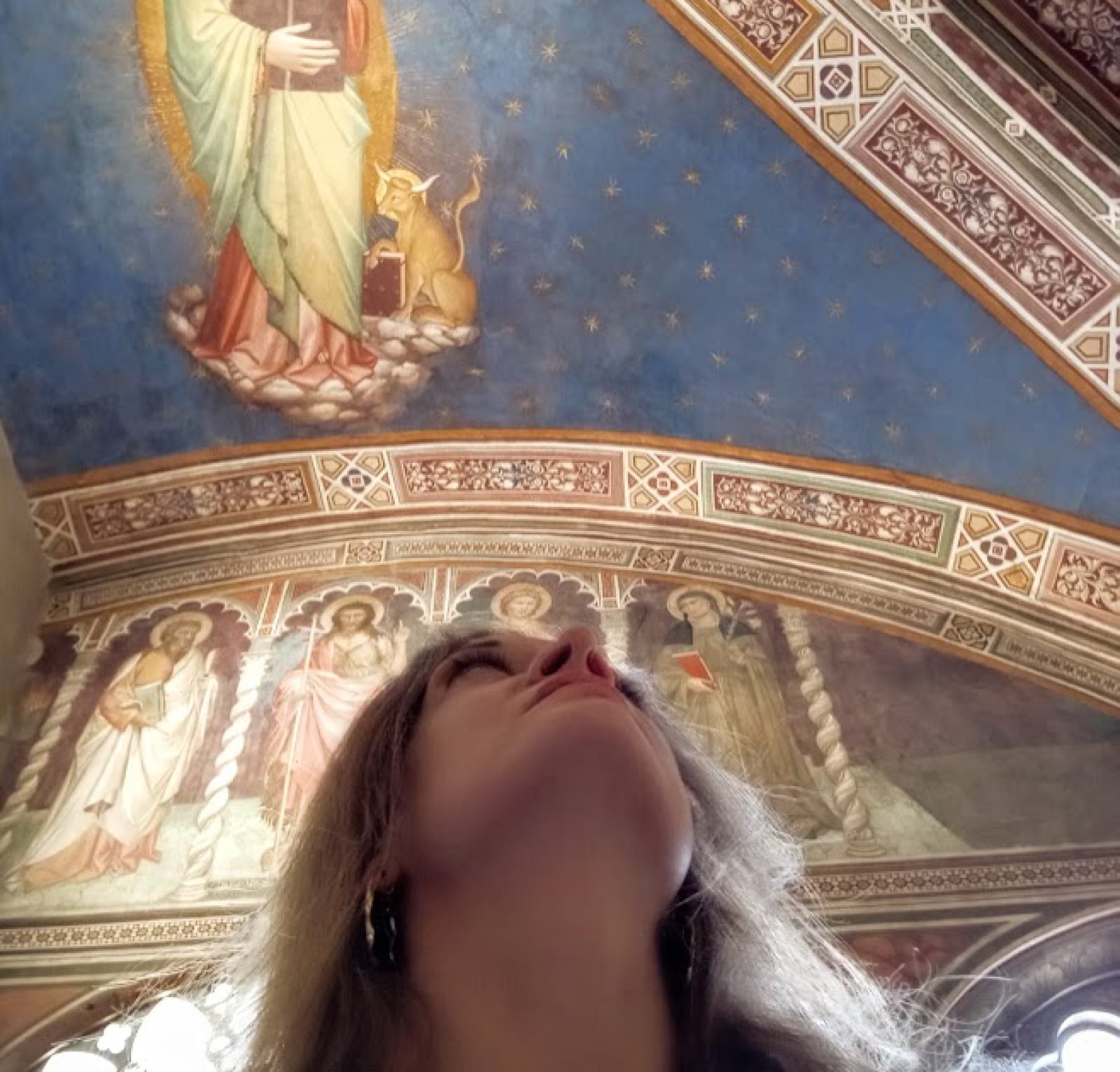
Ogni anno, quando arriva il 10 agosto, milioni di persone alzano gli occhi verso il cielo nella speranza di vedere una stella cadente e affidarle un desiderio. È la notte di San Lorenzo, una delle ricorrenze più suggestive dell’estate italiana, capace di unire tradizione religiosa, memoria popolare, astronomia e poesia.
Ma San Lorenzo non è soltanto il santo delle stelle cadenti.
La sua è una storia antichissima, fatta di fede, carità e martirio, che per secoli ha affascinato gli artisti. Pittori e scultori lo hanno rappresentato mentre distribuisce i beni della Chiesa ai poveri, durante il terribile supplizio sulla graticola oppure già trasfigurato dalla fede.
Il risultato è un patrimonio straordinario di immagini nel quale il santo del 10 agosto assume di volta in volta l’aspetto di un giovane diacono, di un martire, di un uomo immerso nelle fiamme oppure di una figura capace di guardare oltre la sofferenza.

Chi era San Lorenzo, il santo celebrato il 10 agosto
Lorenzo visse nel III secolo e fu uno dei sette diaconi della Chiesa di Roma durante il pontificato di papa Sisto II.
Il suo incarico non era soltanto liturgico. Lorenzo amministrava infatti i beni della comunità cristiana e aveva il compito di assistere i poveri e i bisognosi.
La sua vita fu sconvolta dalla persecuzione dei cristiani voluta dall’imperatore Valeriano.
Nel 258 papa Sisto II venne arrestato e ucciso insieme ad alcuni diaconi. Lorenzo fu catturato pochi giorni dopo. Secondo la tradizione, il prefetto di Roma gli ordinò di consegnare i tesori della Chiesa. Lorenzo chiese del tempo e utilizzò quei giorni per distribuire ai poveri ciò che era rimasto.
Quando gli venne chiesto di consegnare le ricchezze, avrebbe quindi indicato proprio i poveri come il vero tesoro della Chiesa.

Il martirio di San Lorenzo e la graticola
La tradizione racconta che Lorenzo venne condannato a una morte terribile: fu posto sopra una graticola e bruciato vivo.
La graticola è diventata così il principale attributo iconografico del santo.
È proprio questo strumento di tortura che permette ancora oggi di riconoscere San Lorenzo in moltissime opere d’arte. Ma ciò che colpisce è il modo completamente diverso con cui gli artisti hanno interpretato quel momento.
Alcuni hanno scelto il dramma, il fuoco e la violenza. Altri hanno invece rappresentato il santo già spiritualmente vittorioso sul dolore, con lo sguardo rivolto verso il cielo.

Tiziano e il Martirio di San Lorenzo: il fuoco diventa luce
Uno dei capolavori assoluti dedicati al santo è il Martirio di San Lorenzo di Tiziano, conservato nella chiesa dei Gesuiti, oggi Santa Maria Assunta, a Venezia.
Tiziano affrontò il soggetto in almeno due importanti versioni. La prima fu realizzata per Lorenzo Massolo e venne eseguita tra il 1556 e il 1559; una seconda versione fu commissionata da Filippo II di Spagna nel 1564 per il monastero di San Lorenzo de El Escorial.
Ed è soprattutto la versione veneziana a lasciare senza fiato.
La scena è immersa nell’oscurità. Il fuoco della graticola, le torce e la luce che sembra provenire dall’alto costruiscono un’atmosfera drammatica nella quale il corpo del santo emerge dalla notte.
Il fuoco che dovrebbe rappresentare la morte diventa paradossalmente una sorgente di luce, mentre la dimensione terrena e quella divina sembrano incontrarsi proprio nel momento estremo della sofferenza.
La versione realizzata per Filippo II porta questa ricerca ancora più avanti: l’artista ambienta il martirio in un’architettura immersa nella notte e sfrutta il contrasto tra le fiamme e l’oscurità per accentuare la drammaticità della scena. L’opera, datata 1564-1567, è oggi conservata al Real Monastero di San Lorenzo de El Escorial.

Bernini e San Lorenzo: il dolore scolpito nel marmo
Se Tiziano racconta il martirio attraverso la pittura e la luce, Gian Lorenzo Bernini lo porta dentro il marmo.
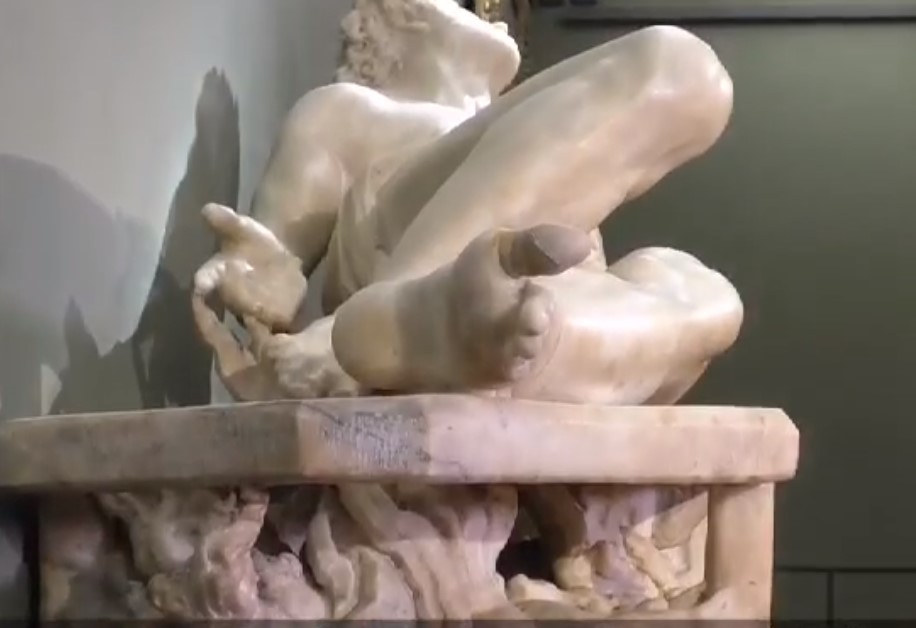
Il suo San Lorenzo, realizzato nel 1617 e oggi conservato nelle Gallerie degli Uffizi nella Collezione Contini Bonacossi, è una delle opere giovanili più sorprendenti dello scultore.
Il santo è rappresentato nudo, disteso sulla graticola, con il corpo in una posizione che comunica dolore ma anche abbandono.
Bernini guarda alla grande tradizione della scultura rinascimentale e alle opere mie. Non vi ricorda forse l’Adamo che affrescai nella volta della Cappella Sistina?
C’è poi un particolare straordinario legato alla realizzazione della scultura.
Secondo la biografia scritta dal figlio Domenico Bernini, lo scultore avrebbe cercato di immedesimarsi fisicamente nel dolore del santo, avvicinando una gamba al fuoco per osservare attraverso uno specchio gli effetti del calore sul proprio volto.
Zurbarán e il San Lorenzo che guarda verso di noi
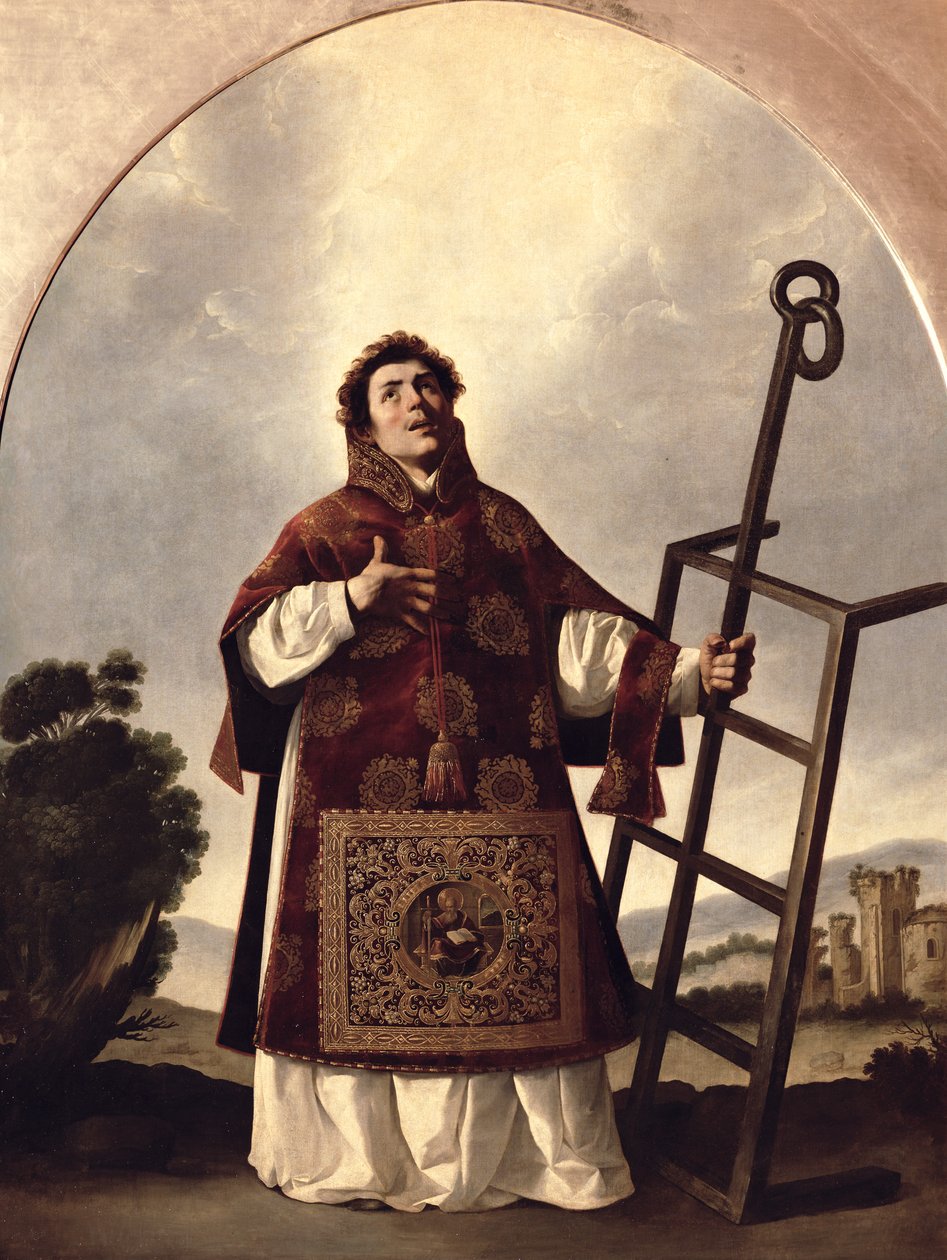
Anche Francisco de Zurbarán, uno dei grandi protagonisti della pittura spagnola del Seicento, si confrontò con la figura del santo.
Il suo San Lorenzo è caratterizzato dalla presenza della graticola, attributo che identifica immediatamente il martire.
Zurbarán sceglie però una soluzione molto diversa rispetto alla spettacolarità di Tiziano e alla tensione fisica di Bernini.
La figura del santo acquista una presenza monumentale e silenziosa. L’attenzione si concentra sull’uomo e sul suo rapporto diretto con lo spettatore.
Il dipinto oggi conservato al Museo di Cadice fu realizzato per la Cartuja de Nuestra Señora de la Defensión tra il 1637 e il 1639 e apparteneva originariamente al programma del retablo maggiore.
Il 10 agosto e le stelle cadenti: perché San Lorenzo è legato al cielo
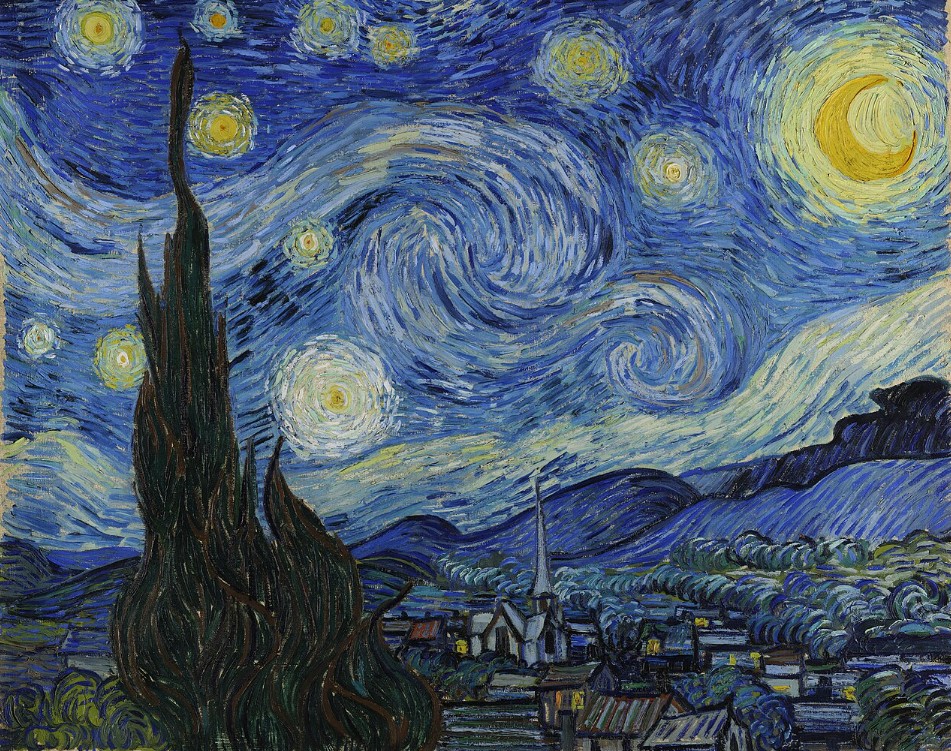
Ma come è nato il legame tra San Lorenzo e le stelle cadenti? La risposta appartiene alla tradizione popolare.
Le meteore che solcano il cielo intorno a questo periodo dell’anno sono associate allo sciame delle Perseidi, uno dei fenomeni astronomici più conosciuti e spettacolari dell’estate.
Nell’immaginario popolare quelle scie luminose sono diventate le “lacrime di San Lorenzo”, una suggestiva interpretazione simbolica collegata al martirio del santo e il fenomeno astronomico e la ricorrenza religiosa finiscono così per sovrapporsi.
Il cielo sembra piangere per il martire e ogni scia luminosa diventa, almeno nella fantasia popolare, una lacrima che attraversa la notte.
Per il momento il sempre vostro Michelangelo Buonarroti vi saluta dandovi appuntamento ai prossimi post e sui social.
Saint Lawrence: History, Art, and Masterpieces of the Saint Celebrated on August 10
Every year, on August 10th, millions of people raise their eyes to the sky in the hope of seeing a shooting star and making a wish upon it. It is the night of Saint Lawrence, one of the most evocative celebrations of the Italian summer, combining religious tradition, folk memory, astronomy, and poetry.
But Saint Lawrence is not just the saint of shooting stars.
His is an ancient story, one of faith, charity, and martyrdom, which has fascinated artists for centuries. Painters and sculptors have depicted him distributing the Church’s goods to the poor, during the terrible torture on the gridiron, or already transfigured by faith.
The result is an extraordinary legacy of images in which the saint of August 10th takes on the appearance of a young deacon, a martyr, a man immersed in flames, or a figure capable of seeing beyond suffering.
Who was Saint Lawrence, the saint celebrated on August 10th?
Lawrence lived in the 3rd century and was one of the seven deacons of the Church of Rome during the pontificate of Pope Sixtus II.
His role was not merely liturgical. Lawrence administered the assets of the Christian community and was charged with assisting the poor and needy.
His life was upended by the persecution of Christians ordered by Emperor Valerian.
In 258, Pope Sixtus II was arrested and killed along with several deacons. Lawrence was captured a few days later. According to tradition, the prefect of Rome ordered him to hand over the Church’s treasures. Lawrence asked for time and used those days to distribute what remained to the poor.
When asked to hand over the riches, he would have pointed to the poor as the true treasure of the Church.
The Martyrdom of Saint Lawrence and the Gridiron
Tradition holds that Lawrence was condemned to a terrible death: he was placed on a gridiron and burned alive.
The gridiron thus became the saint’s primary iconographic attribute.
It is precisely this instrument of torture that still allows us to recognize Saint Lawrence in so many works of art. But what is striking is the completely different ways in which artists have interpreted that moment.
Some have chosen drama, fire, and violence. Others have instead depicted the saint already spiritually victorious over pain, his gaze turned toward heaven.
Titian and the Martyrdom of Saint Lawrence: Fire Becomes Light
One of the absolute masterpieces dedicated to the saint is Titian’s Martyrdom of Saint Lawrence, preserved in the Jesuit church, now Santa Maria Assunta, in Venice.
Titian approached the subject in at least two important versions. The first was created for Lorenzo Massolo between 1556 and 1559; a second version was commissioned by Philip II of Spain in 1564 for the monastery of San Lorenzo de El Escorial.
And it is the Venetian version in particular that is breathtaking.
The scene is immersed in darkness. The fire from the grill, the torches, and the light that seems to come from above create a dramatic atmosphere in which the saint’s body emerges from the night.
The fire, supposed to represent death, paradoxically becomes a source of light, while the earthly and divine dimensions seem to meet precisely at the final moment of suffering.
The version created for Philip II takes this research even further: the artist sets the martyrdom in a building immersed in night and exploits the contrast between flames and darkness to accentuate the drama of the scene. The work, dated 1564-1567, is now preserved in the Royal Monastery of San Lorenzo de El Escorial.
Bernini and Saint Lawrence: Pain Carved in Marble
If Titian recounts martyrdom through painting and light, Gian Lorenzo Bernini captures it in marble.
His Saint Lawrence, created in 1617 and now housed in the Uffizi Galleries as part of the Contini Bonacossi Collection, is one of the sculptor’s most striking early works.
The saint is depicted naked, stretched out on a grill, his body in a position that conveys pain but also abandonment.
Bernini draws on the great tradition of Renaissance sculpture and my works. Doesn’t this remind you of the Adam I frescoed on the Sistine Chapel ceiling?
There is also an extraordinary detail linked to the creation of the sculpture.
According to the biography written by his son Domenico Bernini, the sculptor attempted to physically identify with the saint’s pain by placing one leg near the fire to observe the effects of the heat on his face through a mirror.
Zurbarán and the Saint Lawrence Looking At Us
Francisco de Zurbarán, one of the great protagonists of 17th-century Spanish painting, also explored the figure of the saint.
His Saint Lawrence is characterized by the presence of the grill, an attribute that immediately identifies the martyr.
Zurbarán, however, chooses a very different solution from the spectacularity of Titian and the physical tension of Bernini.
The figure of the saint takes on a monumental and silent presence. Attention is focused on the man and his direct relationship with the viewer.
The painting now preserved in the Museum of Cadiz was created for the Cartuja de Nuestra Señora de la Defense between 1637 and 1639 and was originally part of the program for the main altarpiece.
August 10th and Shooting Stars: Why Saint Lawrence Is Connected to the Sky
But how did the connection between Saint Lawrence and shooting stars arise? The answer lies in popular tradition.
The meteors that streak across the sky around this time of year are associated with the Perseid meteor shower, one of the most famous and spectacular astronomical phenomena of the summer.
In the popular imagination, those luminous trails have become the “tears of Saint Lawrence,” a suggestive symbolic interpretation linked to the saint’s martyrdom, thus merging the astronomical phenomenon and the religious holiday.
The sky seems to weep for the martyr, and each luminous trail becomes, at least in popular imagination, a tear that pierces the night.
For now, yours truly, Michelangelo Buonarroti, bids farewell and invites you to join him in future posts and on social media.

Sostienici – Support Us
Se questo blog ti piace e ti appassiona, puoi aiutarci a farlo crescere sempre più sostenendoci in modo concreto condividendo i post, seguendo le pagine social e con un contributo che ci aiuta ad andare avanti con il nostro lavoro di divulgazione. . ENGLISH: If you like and are passionate about this blog, you can help us make it grow more and more by supporting us in a concrete way by sharing posts, following social pages and with a contribution that helps us to move forward with our dissemination work.
10,00 €
-
Facevo paura anche ai papi
🇮🇹Facevo paura persino ai papi. Non sono mai stato famoso per la diplomazia. Avevo un carattere difficile, poca pazienza e nessuna voglia di compiacere i potenti… 🇬🇧I struck fear even into popes. I was never known for diplomacy. I had a difficult temperament, little patience, and no desire to curry favor with the powerful…
-
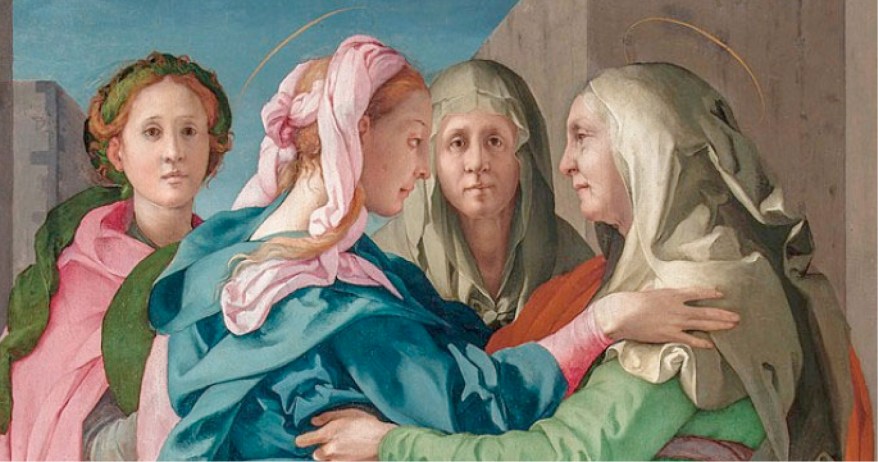
Pontormo a Roma: apre oggi la grande mostra alle Scuderie del Quirinale
🇮🇹Apre oggi a Roma la mostra di Pontormo: oltre 130 opere, la celebre Visitazione, dipinti, disegni e prestiti internazionali alle Scuderie del Quirinale… 🇬🇧A Pontormo exhibition opens today in Rome at the Scuderie del Quirinale, featuring over 130 works—including the famous *Visitation*—as well as paintings, drawings, and international loans…
-
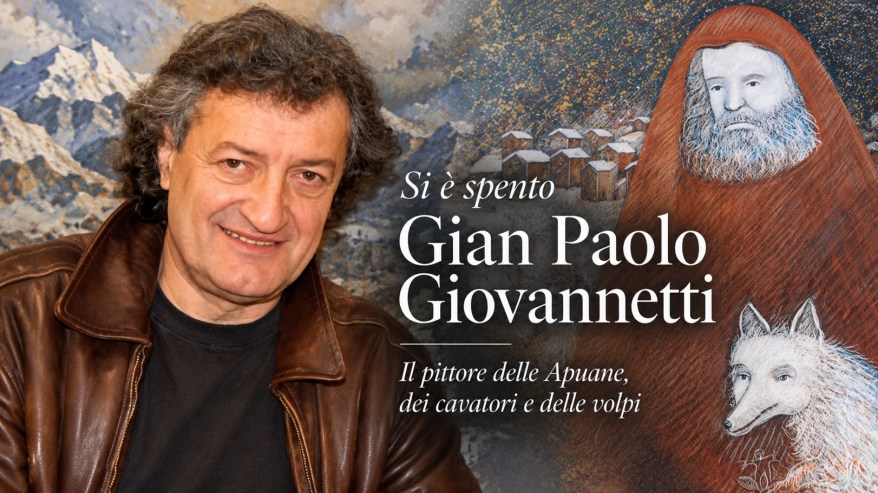
Si è spento Gian Paolo Giovannetti, il pittore delle Apuane, dei cavatori e delle volpi
🇮🇹È morto Gian Paolo Giovannetti, pittore e scultore di Giustagnana. Il ricordo di un artista che ha raccontato Apuane, cavatori, volpi e Alta Versilia… 🇬🇧Gian Paolo Giovannetti, a painter and sculptor from Giustagnana, has passed away. A tribute to an artist who chronicled the Apuan Alps, quarrymen, foxes, and Alta Versilia…
Condividi:


Questo sono io




sostienici

Sostienici – Support Us
Se questo blog ti piace e ti appassiona, puoi aiutarci a farlo crescere sempre più sostenendoci in modo concreto condividendo i post, seguendo le pagine social e con un contributo che ci aiuta ad andare avanti con il nostro lavoro di divulgazione. . ENGLISH: If you like and are passionate about this blog, you can help us make it grow more and more by supporting us in a concrete way by sharing posts, following social pages and with a contribution that helps us to move forward with our dissemination work.
€10,00


