
La Strega di Karl Cauer e quel marmo che sembra tessere una rete tra magia, Leonardo e la Cappella Sansevero
Tra le sale della Alte Nationalgalerie di Berlino si nasconde una delle sculture meno note ma non per questo meno affascinanti del XIX secolo: La Strega di Karl Cauer, opera in marmo scolpita nel 1874 che ancora oggi lascia i visitatori senza parole per la straordinaria precisione tecnica e per l’atmosfera inquietante che riesce a evocare.
È un racconto fatto di simboli, mistero e virtuosismo: una creatura sospesa tra il mondo umano e quello dell’ombra con citazioni prese direttamente da altro capolavoro dell’arte passata.

Karl Cauer e la sfida impossibile del marmo: quando la pietra diventa magia
Karl Cauer appartiene a quella generazione di scultori ottocenteschi che portarono il marmo oltre il semplice ritratto o la celebrazione monumentale. Nella sua Strega, l’artista mette in mostra una padronanza tecnica straordinaria:la pelle, le ali, gli animali e gli elementi simbolici sembrano emergere dalla materia con una leggerezza sorprendente.
Il vero prodigio dell’opera è però la rete di marmo sulla quale siede la strega. Una trama sottilissima, scolpita direttamente nella pietra che sembra invece essere stata realizzata con del cordame reale.
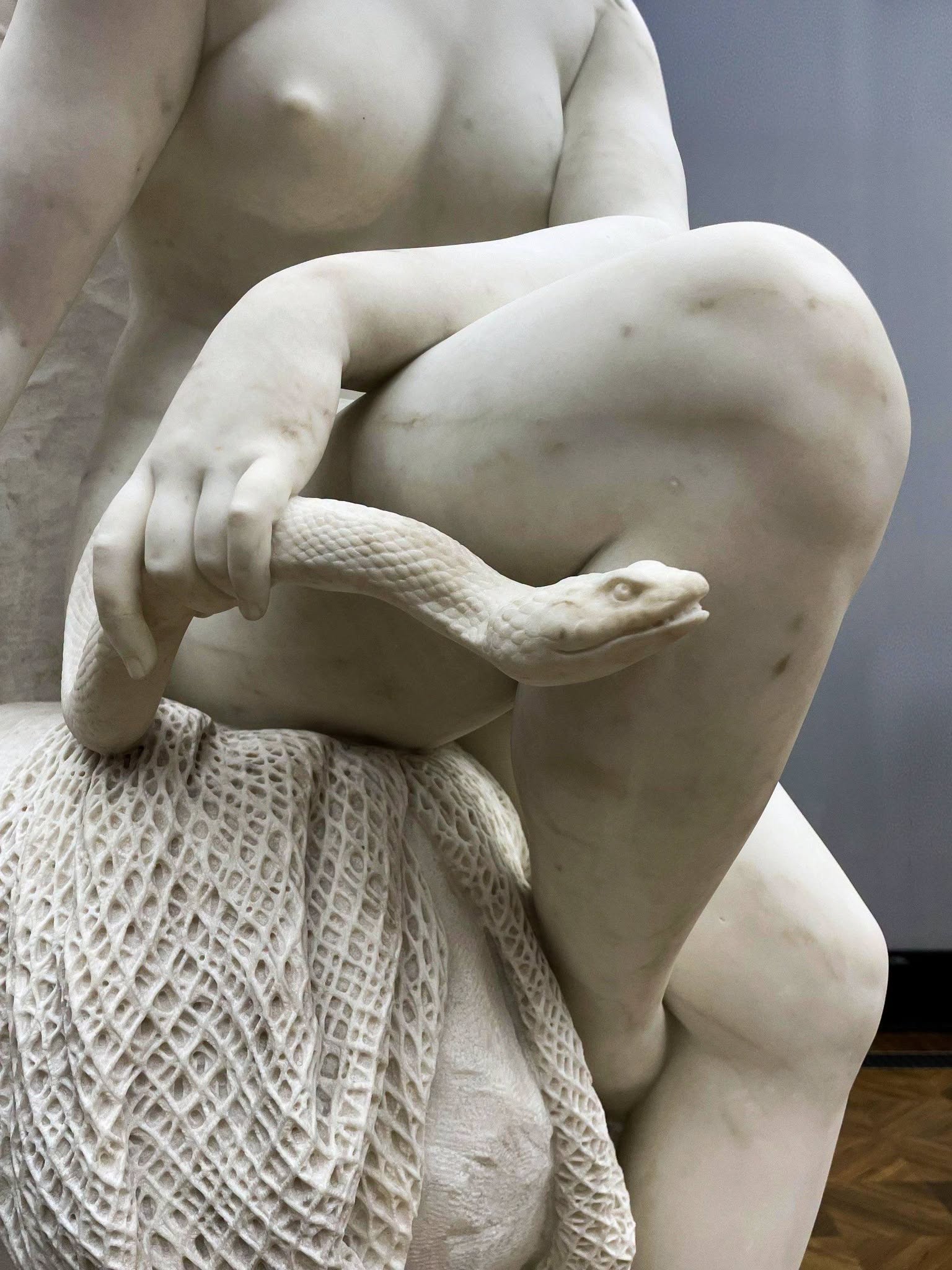
Un simile virtuosismo non può non richiamare alla memoria un altro capolavoro della scultura europea: la celebre rete marmorea scolpita da Francesco Queirolo nel Disinganno della Cappella Sansevero, a Napoli.
Realizzata più di cento anni prima, quella rete rappresentava il simbolo dell’inganno e della liberazione spirituale. Cauer sembra raccogliere quella straordinaria eredità tecnica e simbolica, trasformandola però in un elemento oscuro e misterioso: una trama che non libera, ma avvolge la creatura magica che vi siede sopra.
Le ali di pipistrello della Strega: il richiamo agli studi sul volo di Leonardo da Vinci
Assai suggestive anche le ali di pipistrello che si aprono dietro la schiena della Strega.
Scolpite con grande attenzione anatomica, evocano immediatamente il rapporto tra arte, natura e osservazione scientifica che aveva caratterizzato gli studi di Leonardo da Vinci sul volo.
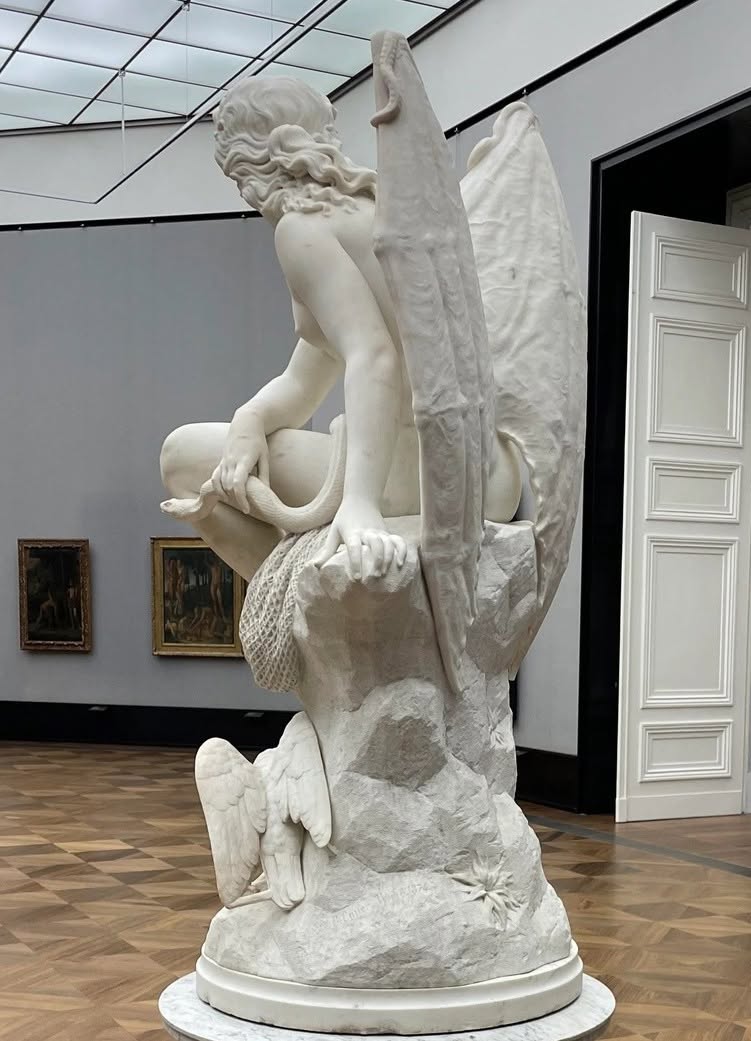
Leonardo aveva studiato per anni il movimento degli uccelli e dei pipistrelli, cercando di comprendere i principi che permettono agli esseri viventi di sfidare la gravità. Nella Strega di Cauer, quelle ali diventano però qualcosa di diverso: non più il simbolo del desiderio umano di volare, ma quello di una creatura appartenente alla notte, al confine tra il naturale e il soprannaturale.
Il barbagianni accanto alla Strega: il guardiano silenzioso della notte
Al fianco della figura compare un altro protagonista inquietante: un barbagianni dalle ali semi spiegate.
Nella tradizione simbolica europea, gli animali notturni rapaci sono da sempre associati all’oscurità, al mistero e alla capacità di vedere ciò che gli altri non possono percepire. Il gufo e il barbagianni, grazie alla loro vita nelle ore buie, sono spesso diventati immagini della conoscenza nascosta, ma anche presenze legate al mondo dell’ignoto.
Non notate un parallelismo con il barbagianni che scolpii nella Notte della Sagrestia Nuova? In fondo spesso alle ore del buio si associa il simbolo della civetta e invece Cauer volle scolpire il barbagianni, proprio come feci io secoli or sono.

La serpe nel grembo: il simbolo del pericolo che osserva chi si avvicina
Un altro dettaglio fondamentale della scultura è la serpe che la strega porta in grembo.
Il suo sguardo vigile sembra rivolgersi direttamente verso chi osserva l’opera. La testa sollevata e l’atteggiamento attento trasmettono una sensazione di difesa e minaccia. È come se la serpe fosse un guardiano, pronta a tenere lontano chiunque osi avvicinarsi troppo.
Nella Strega di Cauer la serpe diventa una presenza viva, quasi un confine invisibile tra lo spettatore e il mistero della figura.
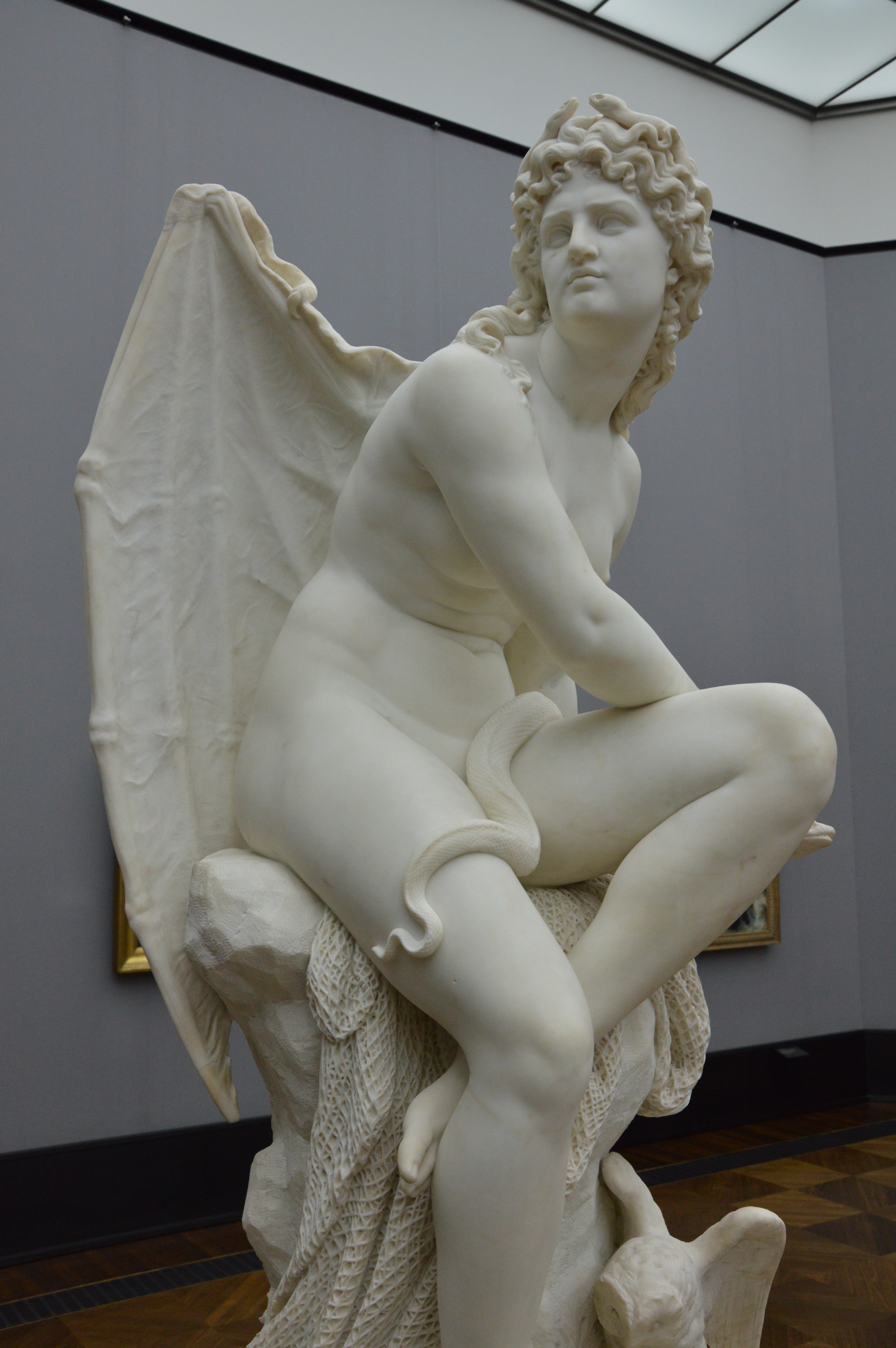
La Strega di Karl Cauer del 1874 è dunque una creatura malvagia, una custode di antichi segreti o forse il simbolo di una parte nascosta dell’animo umano?
Per il momento il sempre vostro Michelangelo Buonarroti vi saluta dandovi appuntamento ai prossimi post e sui social.
Karl Cauer’s The Witch and the Marble That Seems to Weave a Web of Magic, Leonardo, and the Sansevero Chapel
Among the halls of Berlin’s Alte Nationalgalerie lies one of the lesser-known, yet no less fascinating, sculptures of the 19th century: Karl Cauer’s The Witch, a marble work sculpted in 1874 that still leaves visitors speechless with its extraordinary technical precision and the unsettling atmosphere it evokes.
It is a tale of symbols, mystery, and virtuosity: a creature suspended between the human and shadowy worlds, with references drawn directly from another masterpiece of past art.
Karl Cauer and the Impossible Challenge of Marble: When Stone Becomes Magic
Karl Cauer belongs to that generation of 19th-century sculptors who took marble beyond simple portraiture or monumental celebration. In his Witch, the artist displays extraordinary technical mastery: the skin, wings, animals, and symbolic elements seem to emerge from the material with surprising lightness.
The true marvel of the work, however, is the marble net on which the witch sits. A delicate web, carved directly into the stone, seemingly crafted from real cordage.
Such virtuosity cannot help but bring to mind another masterpiece of European sculpture: the famous marble net sculpted by Francesco Queirolo in Disillusionment in the Sansevero Chapel in Naples.
Created over a hundred years earlier, that net represented a symbol of deception and spiritual liberation. Cauer seems to embrace this extraordinary technical and symbolic legacy, transforming it into a dark and mysterious element: a web that does not liberate, but envelops the magical creature sitting on it.
The Witch’s bat-like wings: a reference to Leonardo da Vinci’s studies of flight
The bat-like wings that open behind the Witch’s back are also highly evocative.
Sculpted with meticulous anatomical attention, they immediately evoke the relationship between art, nature, and scientific observation that characterized Leonardo da Vinci’s studies on flight.
Leonardo had studied the movements of birds and bats for years, seeking to understand the principles that allow living beings to defy gravity. In the Witch of Cauer, however, those wings become something different: no longer the symbol of the human desire to fly, but that of a creature belonging to the night, on the border between the natural and the supernatural.
The barn owl beside the Witch: the silent guardian of the night
Next to the figure appears another disturbing protagonist: a barn owl with half-spread wings.
In European symbolic tradition, nocturnal predatory animals have always been associated with darkness, mystery, and the ability to see what others cannot. The owl and the barn owl, thanks to their existence in the hours of darkness, have often become images of hidden knowledge, but also presences linked to the world of the unknown.
Don’t you notice a parallel with the barn owl I sculpted in the Night of the New Sacristy? After all, the symbol of the owl is often associated with the hours of darkness, and yet Cauer chose to sculpt the barn owl, just as I did centuries ago.
The snake in her womb: the symbol of danger that watches those who approach
Another key detail of the sculpture is the snake the witch carries in her womb.
Her watchful gaze seems to be directed directly at the viewer. The raised head and attentive stance convey a sense of defense and threat. It’s as if the snake were a guardian, ready to keep away anyone who dares get too close.
In Cauer’s Witch, the snake becomes a living presence, almost an invisible boundary between the viewer and the figure’s mystery.
Is Karl Cauer’s Witch from 1874, then, an evil creature, a guardian of ancient secrets, or perhaps the symbol of a hidden part of the human soul?
For now, yours truly, Michelangelo Buonarroti bids farewell and invites you to join him in future posts and on social media.

Sostienici – Support Us
Se questo blog ti piace e ti appassiona, puoi aiutarci a farlo crescere sempre più sostenendoci in modo concreto condividendo i post, seguendo le pagine social e con un contributo che ci aiuta ad andare avanti con il nostro lavoro di divulgazione. . ENGLISH: If you like and are passionate about this blog, you can help us make it grow more and more by supporting us in a concrete way by sharing posts, following social pages and with a contribution that helps us to move forward with our dissemination work.
10,00 €
Articoli
Condividi:


Questo sono io




sostienici

Sostienici – Support Us
Se questo blog ti piace e ti appassiona, puoi aiutarci a farlo crescere sempre più sostenendoci in modo concreto condividendo i post, seguendo le pagine social e con un contributo che ci aiuta ad andare avanti con il nostro lavoro di divulgazione. . ENGLISH: If you like and are passionate about this blog, you can help us make it grow more and more by supporting us in a concrete way by sharing posts, following social pages and with a contribution that helps us to move forward with our dissemination work.
€10,00


