

Il mosaico filato: la tecnica nata a Roma che ha rivoluzionato l’arte del micromosaico
Una scoperta riscrive la storia del mosaico filato: non nacque nel Settecento, ma nella Roma del Seicento
Per oltre due secoli si è creduto che il mosaico filato fosse nato nella seconda metà del Settecento grazie al celebre mosaicista Giacomo Raffaelli, considerato il padre del micromosaico moderno. Oggi, però, una ricerca destinata a cambiare la storia dell’arte dimostra che questa raffinata tecnica affonda le proprie radici almeno cento anni prima.
Lo studio condotto da Paolo Di Buono, direttore dello Studio del Mosaico Vaticano, e dalla storica dell’arte Veronika Maria Seifert, raccolto nel volume L’invenzione del mosaico in filato, ricostruisce con rigore tecnico e documentario le origini di una delle più sofisticate lavorazioni artistiche mai realizzate. La scoperta più sorprendente riguarda il luogo di nascita di questa tecnica: non Venezia, come si è spesso ipotizzato per la sua tradizione nella lavorazione del vetro, ma Roma, all’interno della Fabbrica di San Pietro.
Che cos’è il mosaico filato e perché è così speciale
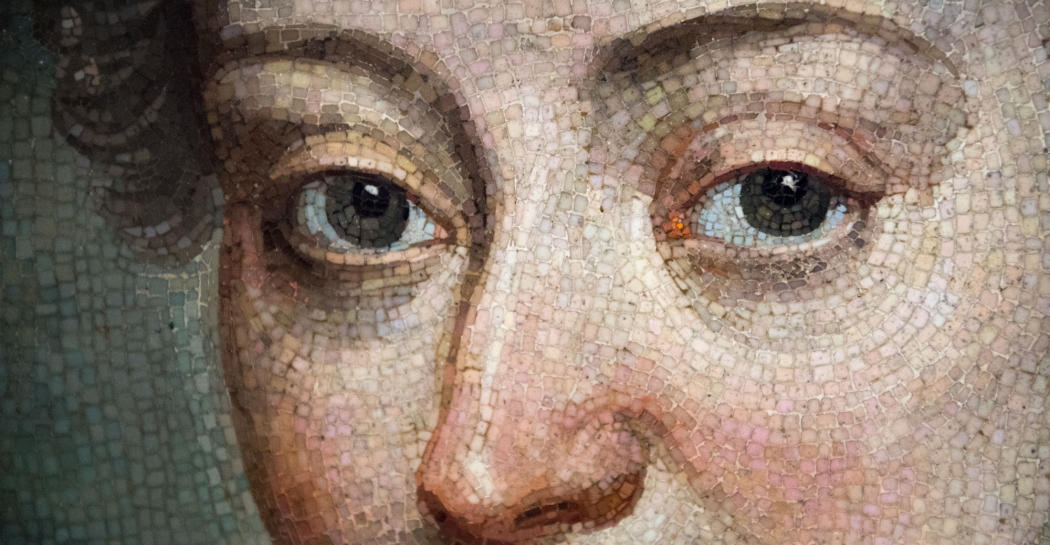
Il mosaico filato è una particolare evoluzione dell’arte musiva che utilizza sottilissimi fili di smalto colorato ottenuti attraverso la fusione del vetro ad altissime temperature. Gli smalti incandescenti vengono tirati fino a formare sottili bacchette o fili, dal diametro anche inferiore al millimetro.
Una volta raffreddati, questi minuscoli elementi vengono tagliati in piccolissime tessere e assemblati una ad una per creare immagini di straordinaria precisione. Il risultato è un’opera che, osservata da lontano, appare simile a un dipinto, mentre da vicino rivela una complessa trama composta da migliaia di microscopici frammenti.
Questa tecnica permette sfumature cromatiche, passaggi di luce e dettagli impossibili da ottenere con il mosaico tradizionale, rendendo il micromosaico una delle espressioni più raffinate dell’arte decorativa europea.
L’invenzione nella Fabbrica di San Pietro
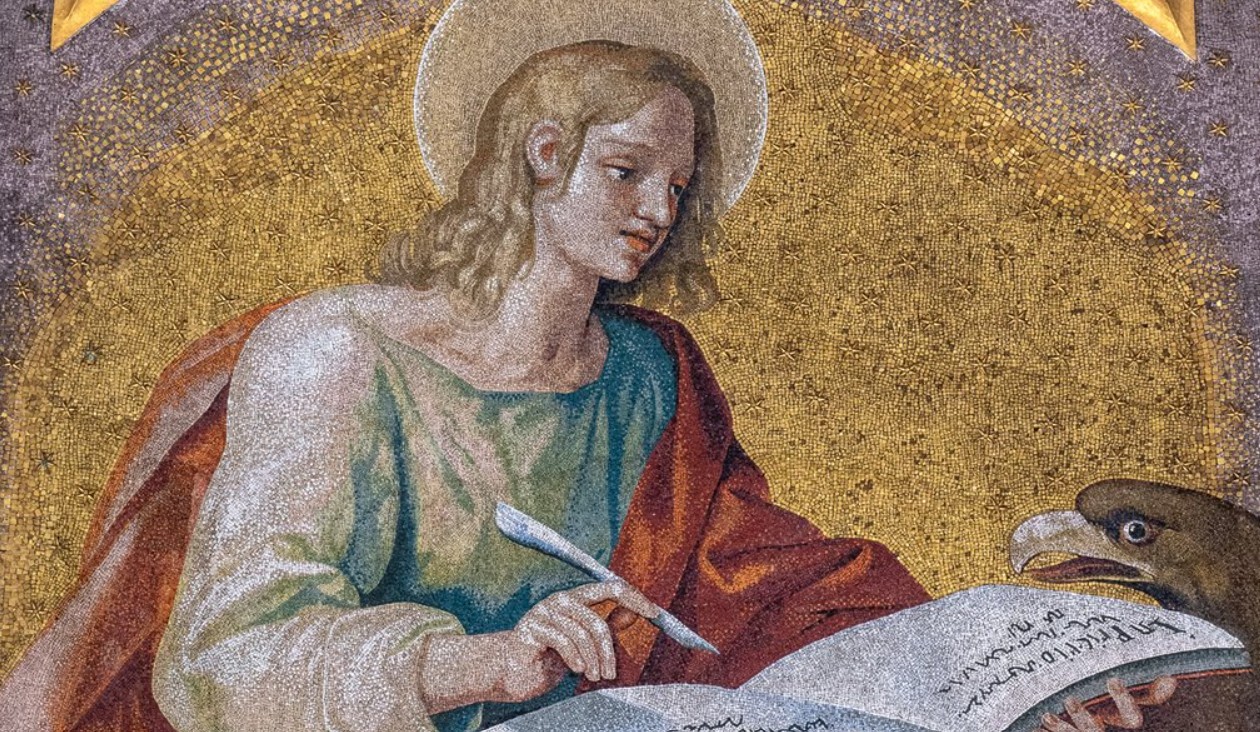
Le nuove ricerche dimostrano che il mosaico in filato nacque nei primi decenni del Seicento grazie ai mosaicisti Marcello Provenzale da Cento e Giovanni Battista Calandra, entrambi protagonisti dell’attività della Fabbrica di San Pietro.
Lo Studio del Mosaico Vaticano, fondato per volontà di papa Gregorio XIII alla fine del XVI secolo per decorare la Basilica di San Pietro con mosaici destinati a sostituire progressivamente le pale d’altare dipinte, divenne un autentico laboratorio di innovazione artistica.
Fu proprio qui che vennero perfezionate le tecniche di lavorazione degli smalti filati, tramandate nei secoli fino ai giorni nostri. Ancora oggi lo Studio Vaticano conserva strumenti, metodi e conoscenze che derivano direttamente da quella tradizione seicentesca.

La scoperta della “Sacra Famiglia” di Dresda cambia tutto
La prova decisiva arriva da una scoperta avvenuta a Dresda.
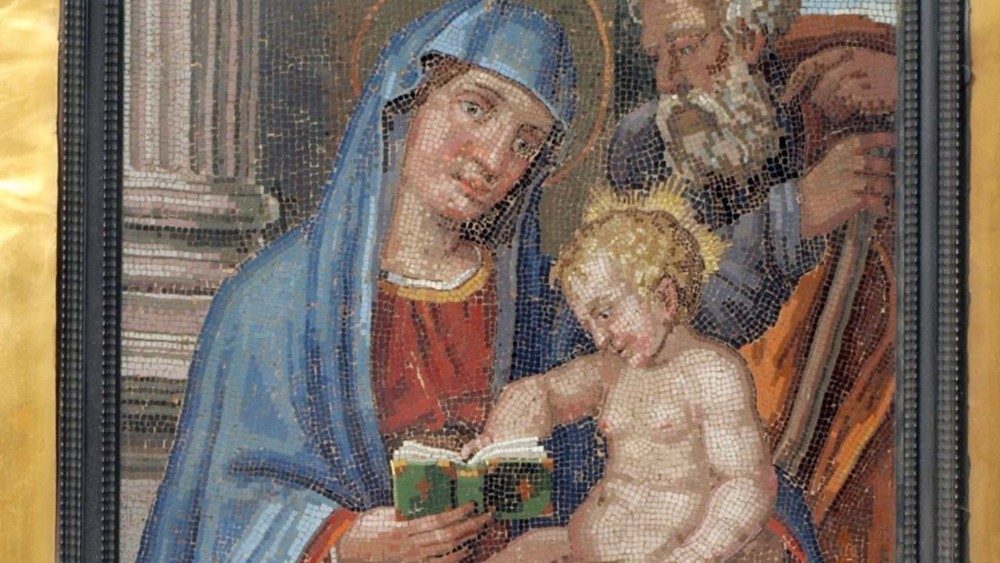
Durante lo studio di una piccola Sacra Famiglia, attribuita a Giovanni Battista Calandra, gli studiosi hanno rimosso la cornice originale trovando una firma nascosta accompagnata dalla data 1622.
Questa semplice iscrizione rappresenta una svolta per la storia dell’arte: dimostra infatti che il mosaico filato era già perfettamente sviluppato oltre un secolo prima rispetto alla data finora comunemente accettata.
L’opera costituisce una delle più antiche testimonianze conosciute di micromosaico realizzato con questa tecnica.
Dal mosaico monumentale al micromosaico
Il mosaico filato nasce inizialmente per esigenze monumentali.
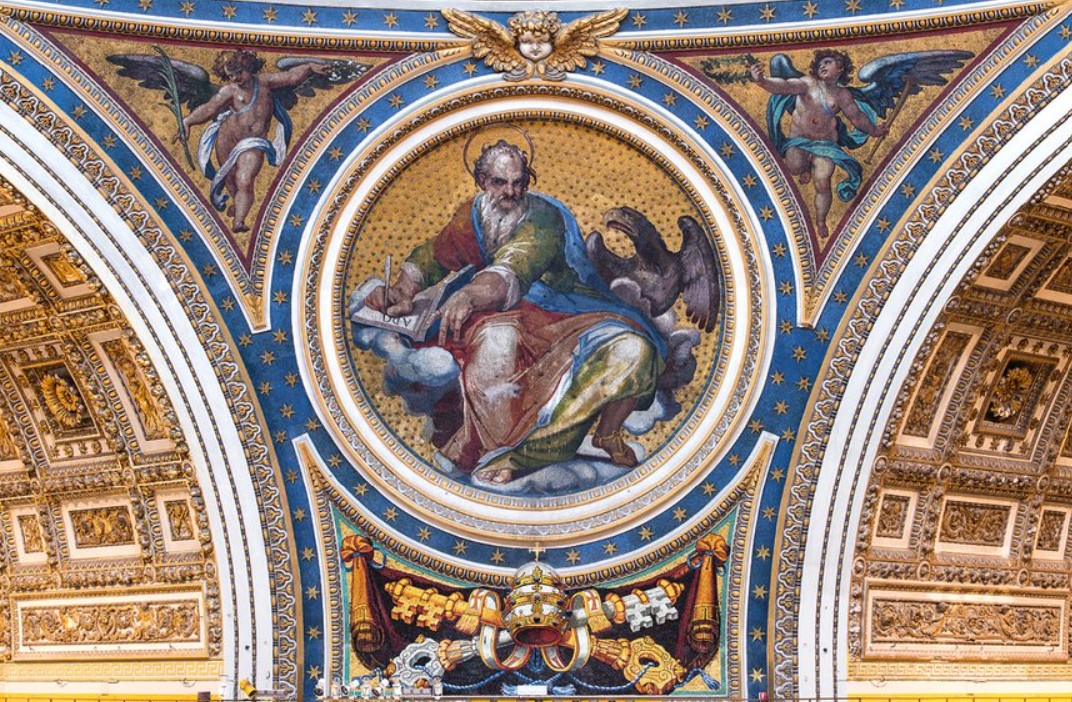
Le decorazioni della Basilica di San Pietro richiedevano infatti immagini resistenti all’umidità e al tempo, capaci di sostituire progressivamente i dipinti soggetti a deterioramento.
L’incredibile precisione raggiunta dai mosaicisti vaticani rese però possibile ridurre progressivamente le dimensioni delle opere fino a creare piccoli capolavori destinati alla devozione privata o alle collezioni.
Fu così che nacque il micromosaico, destinato nei secoli successivi a conquistare l’Europa.
Il boom nel Settecento grazie a Giacomo Raffaelli
Se l’invenzione appartiene al Seicento, è nel XVIII secolo che il mosaico filato conosce una straordinaria diffusione.
Tra i grandi protagonisti emerge Giacomo Raffaelli, artista romano considerato il massimo interprete del micromosaico. Le sue opere conquistarono aristocratici, sovrani e collezionisti provenienti da tutta Europa.
Durante il Grand Tour, Roma divenne una tappa obbligata per i viaggiatori stranieri, che acquistavano micromosaici come preziosi souvenir artistici.
Tabacchiere, cofanetti, pendenti, spille, tavoli, placche decorative e gioielli divennero il simbolo del gusto neoclassico.
Raffaelli contribuì a trasformare il micromosaico in una vera eccellenza internazionale, esportando questa tecnica fino alla corte russa.
Gli artisti che hanno reso celebre il micromosaico
Oltre a Marcello Provenzale, Giovanni Battista Calandra e Giacomo Raffaelli, numerosi artisti contribuirono allo sviluppo di questa tecnica. Tra i più importanti figurano Cesare Aguatti; Michelangelo Barberi; Antonio Aguatti; Domenico Moglia e Giovanni Battista Brugnatelli.
Le loro opere sono oggi conservate nei principali musei del mondo e nelle collezioni reali europee.
Molti di questi artisti collaborarono direttamente con lo Studio del Mosaico Vaticano oppure ne raccolsero l’eredità tecnica nei laboratori romani.
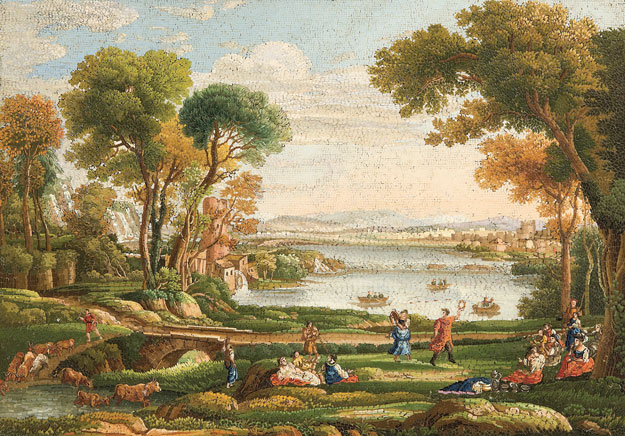
Winckelmann e Goethe non ne compresero subito il valore
Curiosamente, il successo del micromosaico non convinse alcuni tra i maggiori intellettuali del Settecento.
Lo storico dell’arte Johann Joachim Winckelmann giudicò con sarcasmo queste miniature musive, ritenendole semplici oggetti decorativi destinati alla moda del tempo.
Anche Johann Wolfgang von Goethe, durante il suo viaggio in Italia, osservò come l’antica e nobile arte del mosaico fosse ormai impiegata soprattutto nella realizzazione di tabacchiere e piccoli gioielli.
Il tempo ha però ribaltato quei giudizi.
Perché il mosaico filato è ancora oggi una tecnica unica
Realizzare un micromosaico richiede una pazienza straordinaria.
Ogni singola tessera viene selezionata, tagliata e posizionata manualmente. In un’opera di pochi centimetri possono essere impiegate decine di migliaia di elementi, ciascuno diverso per forma, colore e inclinazione.
La gamma cromatica degli smalti è vastissima e consente effetti pittorici sorprendenti, con sfumature quasi impercettibili.
Per questo motivo il mosaico filato continua a essere considerato una delle tecniche artistiche più complesse mai sviluppate.
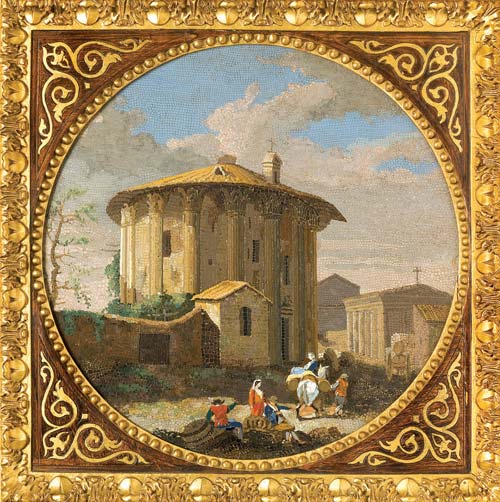
Lo Studio del Mosaico Vaticano custodisce una tradizione secolare
A distanza di oltre quattro secoli, lo Studio del Mosaico Vaticano rappresenta ancora il principale centro mondiale per la conservazione di questa straordinaria tradizione.
Qui vengono restaurati i mosaici della Basilica di San Pietro e tramandate tecniche che affondano le proprie radici nel primo Seicento.
Le ricerche di Paolo Di Buono e Veronika Maria Seifert restituiscono finalmente al mosaico filato la sua autentica origine romana, riconoscendo alla Fabbrica di San Pietro il ruolo di culla di una delle più raffinate invenzioni artistiche della storia.
Per il momento il sempre vostro Michelangelo Buonarroti vi saluta dandovi appuntamento ai prossimi post e sui social.
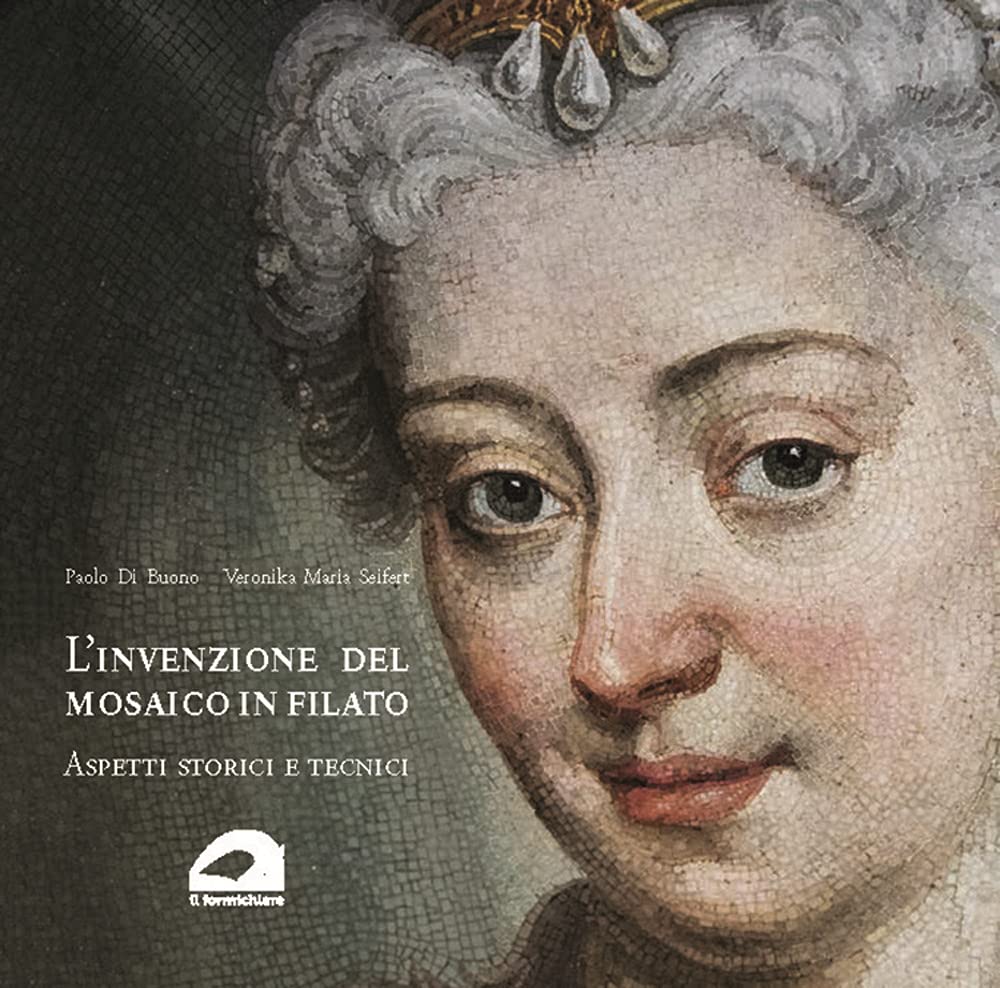
Spun Mosaic: The Technique Born in Rome That Revolutionized the Art of Micromosaic
A Discovery Rewrites the History of Spun Mosaic: It Was Born Not in the 18th Century, but in 17th-Century Rome.
For over two centuries, it was believed that spun mosaic originated in the second half of the 18th century thanks to the renowned mosaicist Giacomo Raffaelli, considered the father of modern micromosaic. Today, however, research destined to change the history of art demonstrates that this refined technique has its roots at least a hundred years earlier.
The study conducted by Paolo Di Buono, director of the Vatican Mosaic Studio, and art historian Veronika Maria Seifert, collected in the book The Invention of Spun Mosaic, reconstructs with technical and documentary rigor the origins of one of the most sophisticated artistic techniques ever created. The most surprising discovery concerns the birthplace of this technique: not Venice, as has often been assumed due to its glassmaking tradition, but Rome, within the Fabbrica di San Pietro.
What is spun mosaic and why is it so special?
Spun mosaic is a unique evolution of mosaic art that uses extremely thin threads of colored enamel obtained by fusing glass at extremely high temperatures. The incandescent enamels are pulled to form thin rods or threads, even less than a millimeter in diameter.
Once cooled, these tiny elements are cut into tiny tesserae and assembled one by one to create images of extraordinary precision. The result is a work that, when viewed from a distance, appears similar to a painting, but up close reveals a complex pattern composed of thousands of microscopic fragments.
This technique allows for nuanced chromatic effects, light reflections, and details impossible to achieve with traditional mosaic, making micromosaic one of the most refined expressions of European decorative art.
The invention at the Fabbrica di San Pietro
New research shows that spun mosaic originated in the early decades of the 17th century thanks to mosaicists Marcello Provenzale da Cento and Giovanni Battista Calandra, both key figures in the activity of the Fabbrica di San Pietro.
The Vatican Mosaic Studio, founded by Pope Gregory XIII in the late 16th century to decorate St. Peter’s Basilica with mosaics that would gradually replace the painted altarpieces, became a true laboratory of artistic innovation.
It was here that the techniques of working with spun enamels were perfected, techniques that have been passed down through the centuries to the present day. Even today, the Vatican Studio preserves tools, methods, and knowledge that derive directly from that 17th-century tradition.
The discovery of the Dresden “Holy Family” changes everything
The decisive proof comes from a discovery in Dresden.
While studying a small Holy Family attributed to Giovanni Battista Calandra, scholars removed the original frame and found a hidden signature accompanied by the date 1622.
This simple inscription represents a turning point in art history: it demonstrates that spun mosaic was already fully developed over a century earlier than the previously accepted date.
The work is one of the oldest known examples of micromosaic created using this technique.
From Monumental Mosaic to Micromosaic
Spun mosaic was initially developed for monumental purposes.
The decorations of St. Peter’s Basilica required images resistant to humidity and time, capable of gradually replacing paintings subject to deterioration.
The incredible precision achieved by Vatican mosaicists, however, made it possible to progressively reduce the size of the works until they created small masterpieces intended for private devotion or collections.
Thus was born the micromosaic, destined to conquer Europe in the following centuries.
The 18th-Century Boom Thanks to Giacomo Raffaelli
While the invention dates back to the 17th century, it was in the 18th century that spun mosaic experienced extraordinary diffusion.
Among the great protagonists was Giacomo Raffaelli, a Roman artist considered the greatest interpreter of micromosaic. His works won over aristocrats, sovereigns, and collectors from all over Europe.
During the Grand Tour, Rome became a must-see for foreign travelers, who purchased micromosaics as precious artistic souvenirs.
Snuffboxes, caskets, pendants, brooches, tables, decorative plaques, and jewelry became symbols of neoclassical taste.
Raphael helped transform micromosaic into a true international excellence, exporting the technique to the Russian court.
The artists who made micromosaic famous
Besides Marcello Provenzale, Giovanni Battista Calandra, and Giacomo Raffaelli, numerous artists contributed to the development of this technique. Among the most important are Cesare Aguatti; Michelangelo Barberi; Antonio Aguatti; Domenico Moglia, and Giovanni Battista Brugnatelli.
Their works are now held in major museums around the world and in European royal collections.
Many of these artists collaborated directly with the Vatican Mosaic Studio or inherited its technical legacy from the Roman workshops.
Winckelmann and Goethe did not immediately understand its value
Curiously, the success of micromosaic did not convince some of the leading intellectuals of the eighteenth century.
Art historian Johann Joachim Winckelmann sarcastically judged these miniature mosaics, believing them to be mere decorative objects meant to serve the fashion of the time.
Even Johann Wolfgang von Goethe, during his trip to Italy, observed how the ancient and noble art of mosaic was now used primarily in the creation of snuffboxes and small jewelry.
Time, however, has overturned those judgments.
Why spun mosaic is still a unique technique today
Creating a micromosaic requires extraordinary patience.
Each individual tile is selected, cut, and positioned by hand. Tens of thousands of elements, each different in shape, color, and inclination, can be used in a work measuring just a few centimeters.
The chromatic range of enamels is vast and allows for surprising pictorial effects, with almost imperceptible nuances.
For this reason, spun mosaic continues to be considered one of the most complex artistic techniques ever developed.
The Vatican Mosaic Studio preserves a centuries-old tradition
More than four centuries later, the Vatican Mosaic Studio remains the world’s leading center for the preservation of this extraordinary tradition.
Here, the mosaics of St. Peter’s Basilica are restored and techniques dating back to the early 17th century are passed down.
The research of Paolo Di Buono and Veronika Maria Seifert finally restores the authentic Roman origins of spun mosaic, recognizing the Fabbrica di San Pietro as the cradle of one of the most refined artistic inventions in history.
For now, yours truly, Michelangelo Buonarroti bids you farewell and invites you to join us in future posts and on social media.

Sostienici – Support Us
Se questo blog ti piace e ti appassiona, puoi aiutarci a farlo crescere sempre più sostenendoci in modo concreto condividendo i post, seguendo le pagine social e con un contributo che ci aiuta ad andare avanti con il nostro lavoro di divulgazione. . ENGLISH: If you like and are passionate about this blog, you can help us make it grow more and more by supporting us in a concrete way by sharing posts, following social pages and with a contribution that helps us to move forward with our dissemination work.
10,00 €
Condividi:


Questo sono io





sostienici

Sostienici – Support Us
Se questo blog ti piace e ti appassiona, puoi aiutarci a farlo crescere sempre più sostenendoci in modo concreto condividendo i post, seguendo le pagine social e con un contributo che ci aiuta ad andare avanti con il nostro lavoro di divulgazione. . ENGLISH: If you like and are passionate about this blog, you can help us make it grow more and more by supporting us in a concrete way by sharing posts, following social pages and with a contribution that helps us to move forward with our dissemination work.
€10,00


Mi piace
"Mi piace"Piace a 1 persona