
Vermeer arriva a Roma: la “Donna in blu che legge una lettera” in mostra a Palazzo Barberini
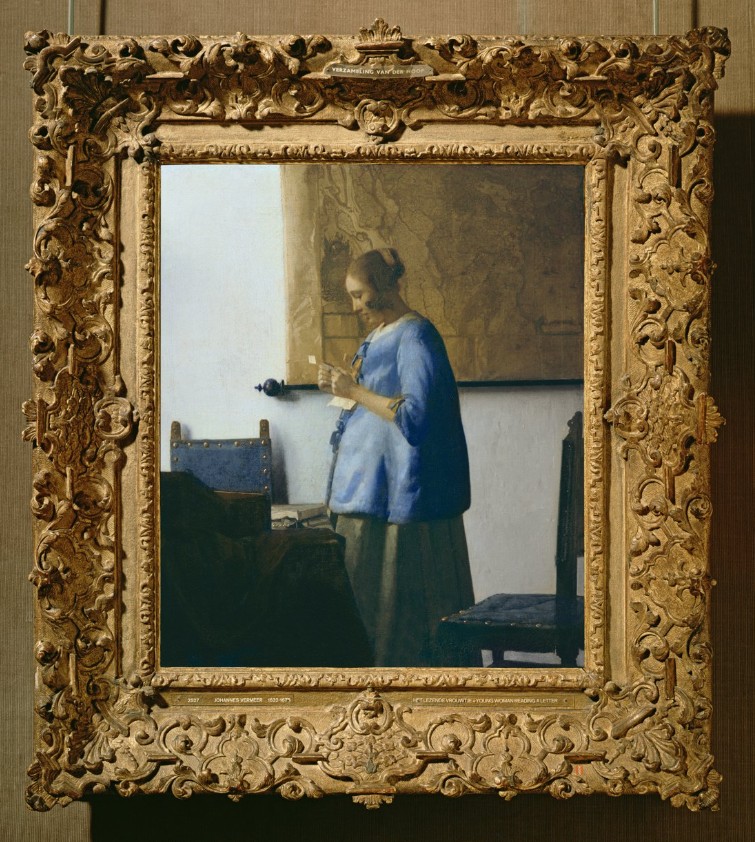
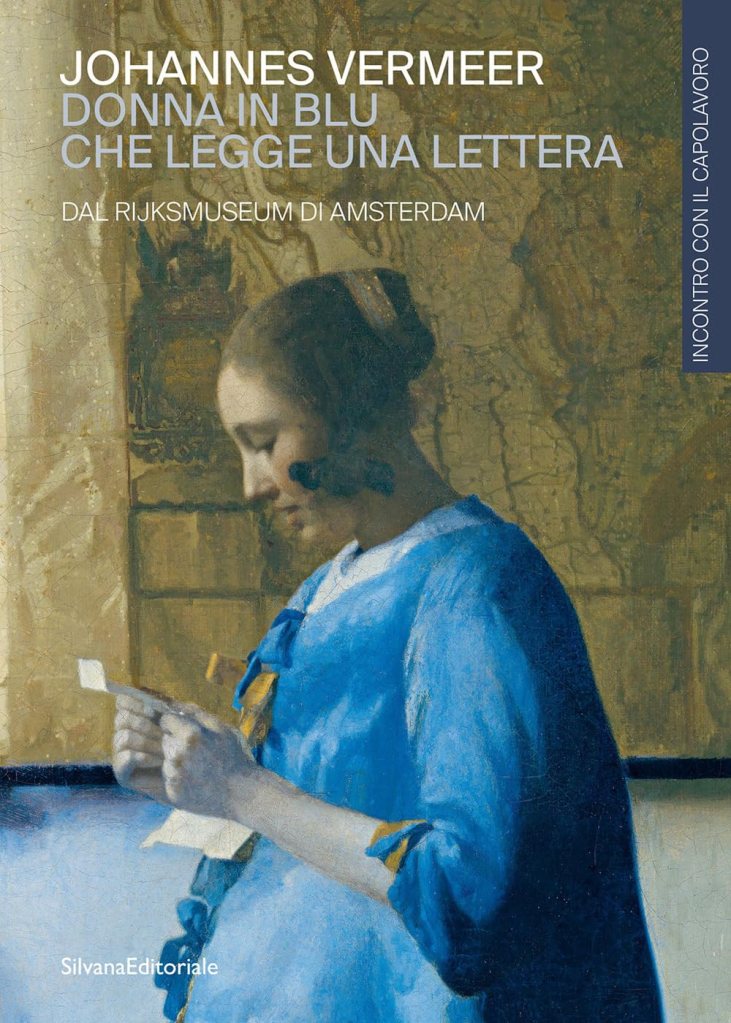
Dall’8 luglio all’11 ottobre, Palazzo Barberini a Roma ospiterà “Donna in blu che legge una lettera”, uno dei dipinti più celebri di Johannes Vermeer, eccezionalmente concesso in prestito dal Rijksmuseum di Amsterdam. Si tratta di un evento di straordinaria importanza: nessuna delle poco più di trenta opere autografe attribuite al maestro olandese è conservata in Italia, rendendo questa esposizione un’occasione irripetibile per il pubblico italiano.
L’opera sarà allestita nella Sala Paesaggi del museo e sarà accompagnata da un percorso multimediale dedicato alla produzione artistica e alla ricerca pittorica di Vermeer, offrendo ai visitatori un’immersione nella poetica di uno dei più grandi protagonisti del Secolo d’Oro olandese.
La storia del dipinto: dalle collezioni private al Rijksmuseum
La storia della Donna in blu che legge una lettera attraversa oltre tre secoli di collezionismo europeo. Gli studiosi ritengono che possa coincidere con il dipinto citato al numero 22 del catalogo dell’asta di Pieter van der Lip, tenutasi ad Amsterdam nel 1712. L’opera fu particolarmente apprezzata nel Settecento e passò attraverso diverse raccolte private prima di essere acquistata, nel 1839, dal banchiere Adriaan van der Hoop, influente socio della Hope & Co.
Alla sua morte, Van der Hoop lasciò alla città di Amsterdam l’intera collezione composta da 225 dipinti, comprendente anche la celebre Sposa ebrea di Rembrandt.
Quando il Rijksmuseum aprì definitivamente le proprie sale nel 1885, la tela di Vermeer fu il primo dipinto dell’artista a entrare nelle collezioni del museo, diventandone uno dei simboli più ammirati.
La donna che legge una lettera: il mistero di una scena quotidiana
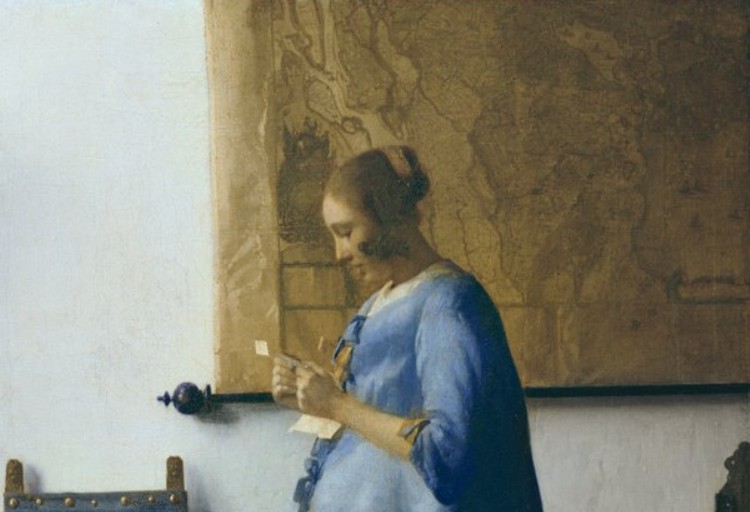
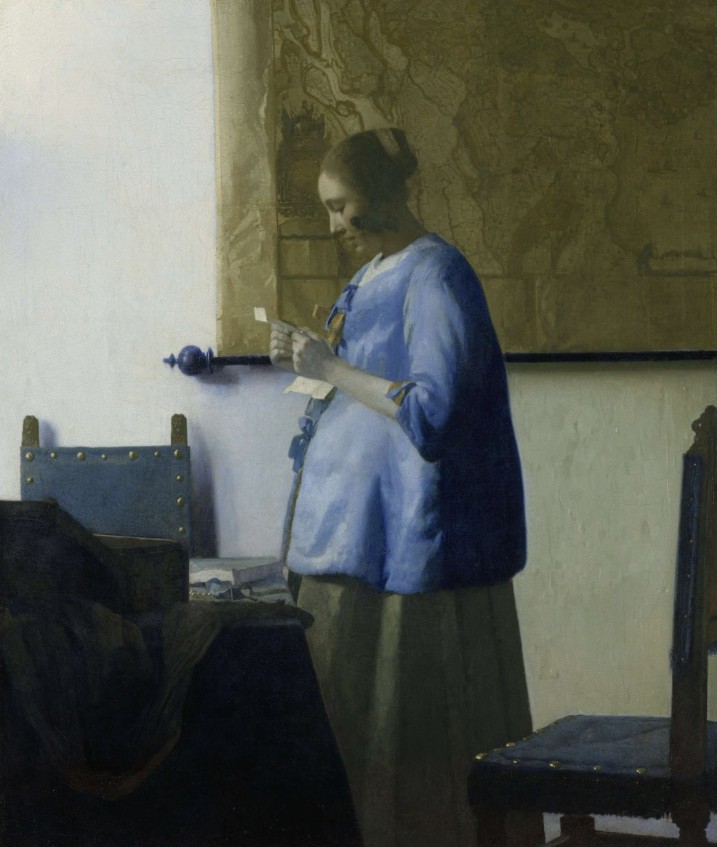
Come spesso accade nelle opere di Vermeer, la scena raffigurata è semplice solo in apparenza. La protagonista è una giovane donna, probabilmente incinta a giudicare dall’ampiezza dell’abito, colta mentre legge una lettera davanti a una finestra invisibile, suggerita soltanto dalla luce che entra da sinistra.
L’impressione è che la lettura abbia interrotto le sue occupazioni quotidiane. Sul tavolo, infatti, sono rimasti un libro e una collana di perle che la donna sembrava sul punto di indossare. Tutto si svolge in un’atmosfera sospesa, dove il tempo sembra essersi fermato e ogni gesto acquista una straordinaria intensità narrativa.
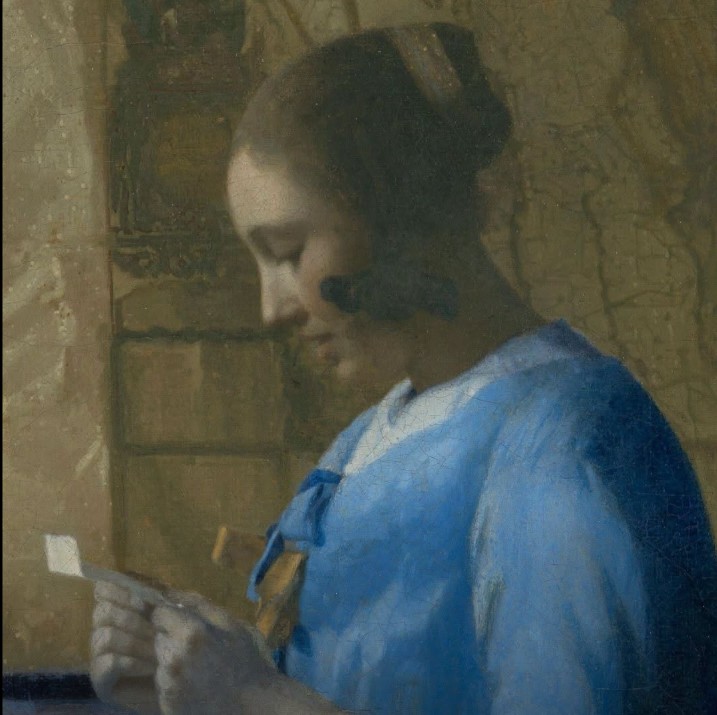
Vermeer evita qualsiasi esplicita indicazione emotiva. Il volto della giovane rimane imperscrutabile, lasciando allo spettatore il compito di immaginare il contenuto della lettera e il significato di quel momento di silenziosa concentrazione.
La luce di Vermeer e il dialogo con la “Lattaia”
Gli storici dell’arte hanno spesso accostato questa tela alla celeberrima Lattaia, anch’essa conservata al Rijksmuseum. In entrambe le opere la protagonista è immersa in una luce naturale che modella i volumi con incredibile delicatezza, trasformando un gesto comune in un’immagine di assoluta perfezione.
La figura appare monumentale pur nella semplicità della scena, mentre il silenzio diventa elemento fondamentale della composizione. Non esistono effetti teatrali né drammatici: Vermeer costruisce un equilibrio perfetto tra la presenza umana, gli oggetti e lo spazio domestico, raggiungendo una straordinaria profondità psicologica attraverso la sola osservazione della realtà.
La carta geografica e gli oggetti: ogni dettaglio racconta una storia
Alle spalle della protagonista compare una grande carta geografica realmente esistita, raffigurante la Frisia e l’Olanda occidentale. Disegnata nel 1620 da Balthasar Florisz. van Berckenrode e pubblicata da Willem Jansz. Blaeu pochi anni dopo, la stessa mappa compare anche nel dipinto Soldato con ragazza sorridente, confermando l’attenzione di Vermeer per gli oggetti autentici dell’epoca.
Accanto alla donna si notano due sedie decorate con borchie e un tavolo ricoperto da un pesante drappo. Alcuni studiosi hanno interpretato la sedia vuota e la carta geografica come possibili allusioni a una persona lontana, forse il destinatario o il mittente della lettera, ma Vermeer lascia volutamente aperta ogni interpretazione.
La straordinaria tecnica pittorica di Vermeer
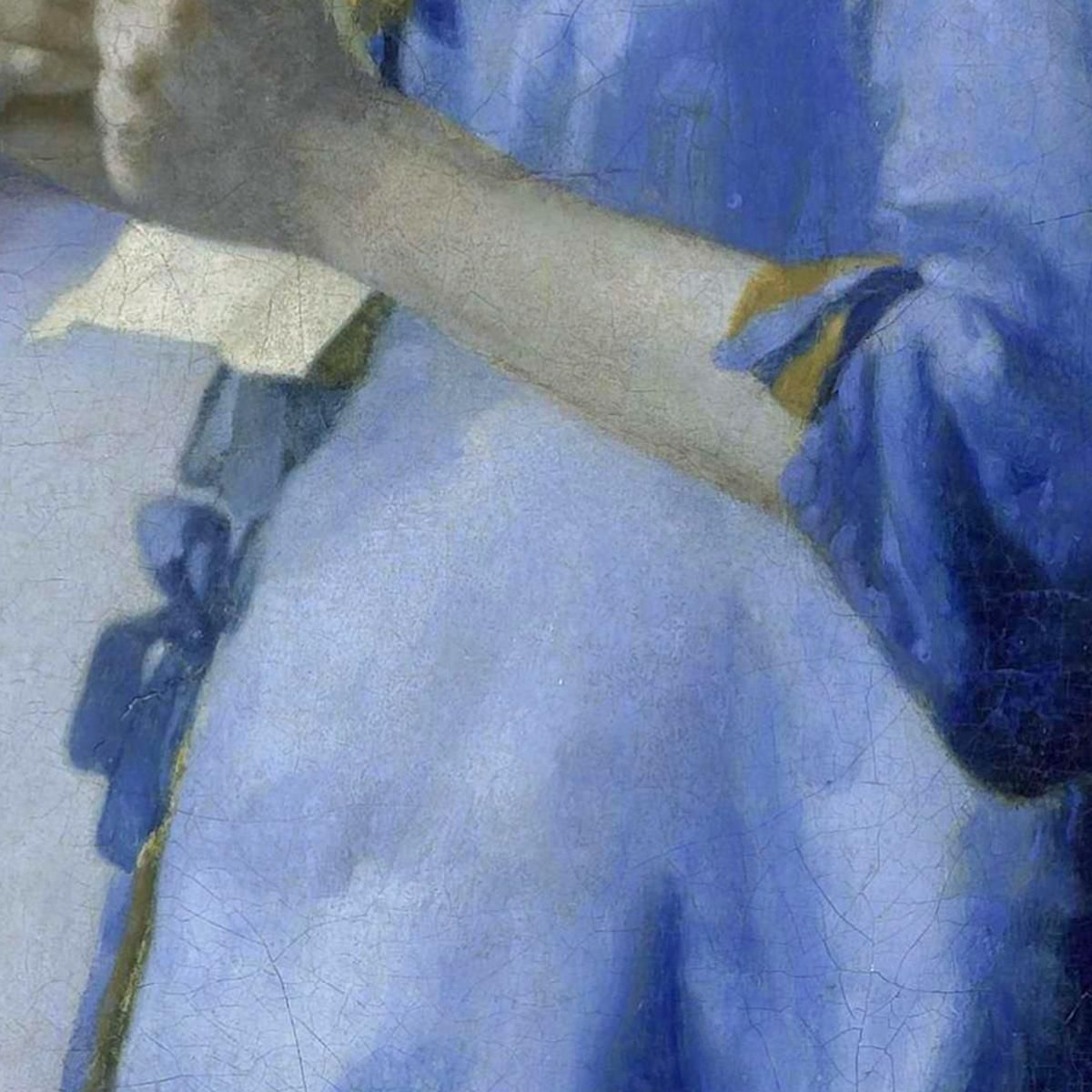
Uno degli aspetti più affascinanti della Donna in blu che legge una lettera è la raffinatezza tecnica. L’intera composizione si sviluppa attraverso una tavolozza limitata, dominata da tonalità di azzurro, giallo e ocra, che creano un’armonia cromatica di rara eleganza.
Anche le ombre sulla parete assumono leggere sfumature bluastre, testimonianza dell’eccezionale studio ottico dell’artista. Questa sensibilità nella resa della luce rappresenta uno dei tratti distintivi della pittura di Vermeer, capace di trasformare l’ordinario in qualcosa di profondamente universale.
L’inaugurazione con apertura serale gratuita
L’arrivo del capolavoro sarà celebrato con un’apertura straordinaria gratuita di Palazzo Barberini il 7 luglio 2026, dalle ore 18.00 alle 22.00, con ultimo ingresso alle 21.00. Sarà un’occasione speciale per ammirare l’opera in anteprima e inaugurare una delle mostre più importanti dell’anno.
Dal giorno successivo, l’8 luglio, il dipinto sarà visitabile fino all’11 ottobre 2026 all’interno di un percorso espositivo che accompagnerà il pubblico alla scoperta della ricerca artistica di Vermeer, uno dei pittori più amati e misteriosi della storia dell’arte.
Per il momento il sempre vostro Michelangelo Buonarroti vi saluta dandovi appuntamento ai prossimi post e sui social.
Vermeer comes to Rome: “Woman in Blue Reading a Letter” on display at Palazzo Barberini
From July 8th to October 11th, Palazzo Barberini in Rome will host “Woman in Blue Reading a Letter,” one of Johannes Vermeer’s most famous paintings, exceptionally loaned by the Rijksmuseum in Amsterdam. This is an event of extraordinary importance: none of the just over thirty autographed works attributed to the Dutch master are preserved in Italy, making this exhibition a unique opportunity for the Italian public.
The work will be displayed in the museum’s Landscape Room and will be accompanied by a multimedia exhibition dedicated to Vermeer’s artistic production and pictorial exploration, offering visitors an immersive experience in the poetics of one of the greatest exponents of the Dutch Golden Age.
The history of the painting: from private collections to the Rijksmuseum
The history of “Woman in Blue Reading a Letter” spans over three centuries of European collecting. Scholars believe it may coincide with the painting cited at number 22 in the catalogue of Pieter van der Lip’s auction, held in Amsterdam in 1712. The work was particularly appreciated in the eighteenth century and passed through several private collections before being purchased in 1839 by the banker Adriaan van der Hoop, an influential partner of Hope & Co.
Upon his death, Van der Hoop left his entire collection of 225 paintings, including Rembrandt’s famous Jewish Bride, to the city of Amsterdam.
When the Rijksmuseum finally opened its doors in 1885, Vermeer’s canvas was the artist’s first painting to enter the museum’s collection, becoming one of its most admired symbols.
The Woman Reading a Letter: The Mystery of an Everyday Scene
As often happens in Vermeer’s works, the scene depicted is only seemingly simple. The protagonist is a young woman, likely pregnant judging by the ampleness of her dress, captured reading a letter in front of an invisible window, hinted only by the light entering from the left.
The impression is that reading has interrupted her daily activities. On the table, in fact, remain a book and a pearl necklace that the woman seemed about to put on. Everything unfolds in a suspended atmosphere, where time seems to have stood still and every gesture takes on an extraordinary narrative intensity.
Vermeer avoids any explicit emotional indication. The young woman’s face remains inscrutable, leaving the viewer to imagine the letter’s content and the meaning of that moment of silent concentration.
Vermeer’s Light and the Dialogue with the “Milkmaid”
Art historians have often compared this canvas to the celebrated “Milkmaid,” also housed in the Rijksmuseum. In both works, the protagonist is bathed in natural light that shapes the volumes with incredible delicacy, transforming a common gesture into an image of absolute perfection.
The figure appears monumental despite the simplicity of the scene, while silence becomes a fundamental element of the composition. There are no theatrical or dramatic effects: Vermeer creates a perfect balance between the human presence, the objects, and the domestic space, achieving extraordinary psychological depth through the observation of reality alone.
The Map and the Objects: Every Detail Tells a Story
Behind the protagonist is a large, real-life map depicting Friesland and the West Netherlands. Drawn in 1620 by Balthasar Florisz. van Berckenrode and published by Willem Jansz. A few years later, the same map also appears in the painting Soldier with a Smiling Girl, confirming Vermeer’s attention to authentic objects of the period.
Near the woman are two chairs decorated with studs and a table covered with a heavy drape. Some scholars have interpreted the empty chair and the map as possible allusions to a distant person, perhaps the recipient or sender of the letter, but Vermeer deliberately leaves these interpretations open.
Vermeer’s Extraordinary Painting Technique
One of the most fascinating aspects of Woman in Blue Reading a Letter is its technical refinement. The entire composition unfolds through a limited palette, dominated by shades of blue, yellow, and ochre, creating a chromatic harmony of rare elegance.
Even the shadows on the wall take on subtle bluish hues, a testament to the artist’s exceptional optical study. This sensitivity in the rendering of light is one of the hallmarks of Vermeer’s painting, capable of transforming the ordinary into something profoundly universal.
Free Evening Opening
The arrival of the masterpiece will be celebrated with a free, special opening of Palazzo Barberini on July 7, 2026, from 6:00 PM to 10:00 PM, with last admission at 9:00 PM. It will be a special opportunity to preview the work and inaugurate one of the most important exhibitions of the year.
From the following day, July 8, the painting will be open to the public until October 11, 2026, as part of an exhibition itinerary that will guide the public through the artistic research of Vermeer, one of the most beloved and mysterious painters in the history of art.
For now, yours truly, Michelangelo Buonarroti bids farewell and invites you to join him in future posts and on social media.

Sostienici – Support Us
Se questo blog ti piace e ti appassiona, puoi aiutarci a farlo crescere sempre più sostenendoci in modo concreto condividendo i post, seguendo le pagine social e con un contributo che ci aiuta ad andare avanti con il nostro lavoro di divulgazione. . ENGLISH: If you like and are passionate about this blog, you can help us make it grow more and more by supporting us in a concrete way by sharing posts, following social pages and with a contribution that helps us to move forward with our dissemination work.
10,00 €
Condividi:


Questo sono io





sostienici

Sostienici – Support Us
Se questo blog ti piace e ti appassiona, puoi aiutarci a farlo crescere sempre più sostenendoci in modo concreto condividendo i post, seguendo le pagine social e con un contributo che ci aiuta ad andare avanti con il nostro lavoro di divulgazione. . ENGLISH: If you like and are passionate about this blog, you can help us make it grow more and more by supporting us in a concrete way by sharing posts, following social pages and with a contribution that helps us to move forward with our dissemination work.
€10,00


