
Marcello Provenzale, il genio che inventò il mosaico barocco
Per secoli il suo nome è rimasto nell’ombra rispetto ai grandi pittori del Seicento, eppure senza Marcello Provenzale il mosaico non sarebbe mai diventato una delle arti più raffinate dell’età barocca. Nato a Cento nel 1576 e morto a Roma nel 1639, Provenzale fu il grande innovatore che trasformò una tecnica antichissima in un linguaggio moderno, capace di competere con la pittura per ricchezza cromatica, luminosità ed espressività.
Nel 450° anniversario della sua nascita, la sua figura torna finalmente al centro dell’attenzione come uno dei protagonisti della cultura artistica della Roma dei papi Borghese. Un maestro che seppe fondere invenzione tecnica, sensibilità pittorica e spiritualità, aprendo la strada al mosaico barocco.
L’artista che cambiò per sempre il mosaico
Quando Marcello Provenzale arrivò a Roma, la città era impegnata in uno dei più imponenti programmi artistici della Controriforma. Proveniente da una formazione come pittore, comprese immediatamente che il mosaico poteva superare il semplice ruolo decorativo che aveva avuto per secoli.
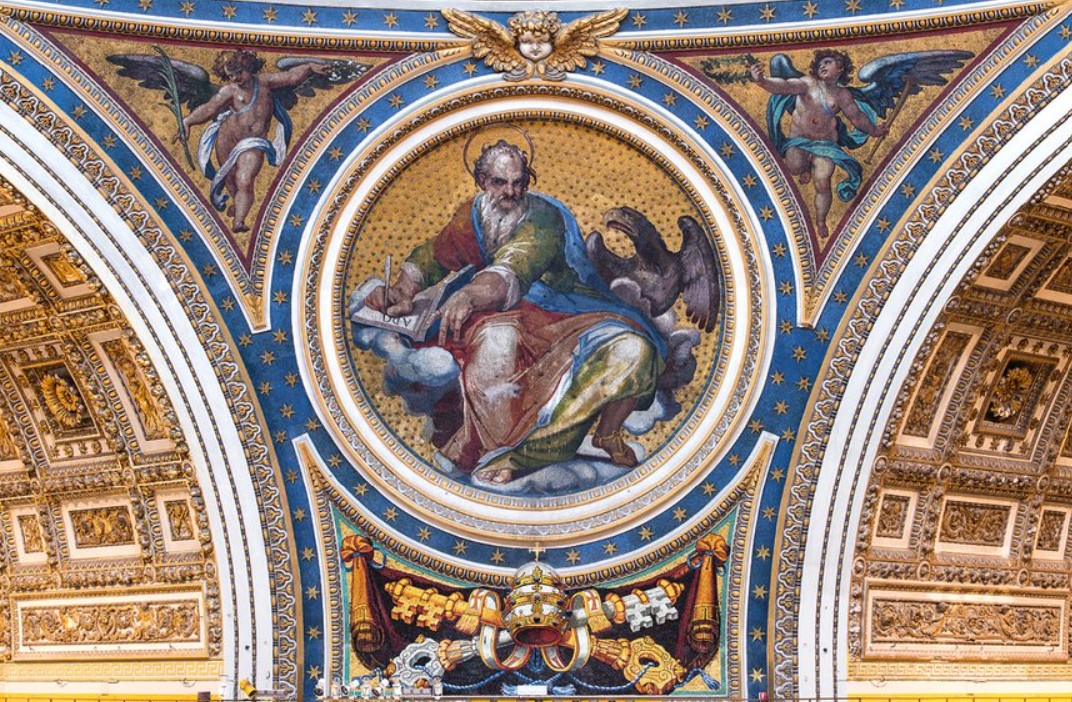
Il suo talento lo portò rapidamente nei grandi cantieri della Basilica di San Pietro, dove partecipò ai lavori della Cupola, della Cappella Clementina e, successivamente, al delicato restauro della celebre Navicella di Giotto.
Lavorare nel cuore della basilica significava collaborare con i più importanti artisti dell’epoca e contribuire alla costruzione dell’immagine della Chiesa cattolica nel pieno della Controriforma. Provenzale riuscì a ritagliarsi un ruolo di assoluto prestigio grazie a una capacità tecnica senza precedenti.
Paolo V riconobbe ufficialmente la sua invenzione
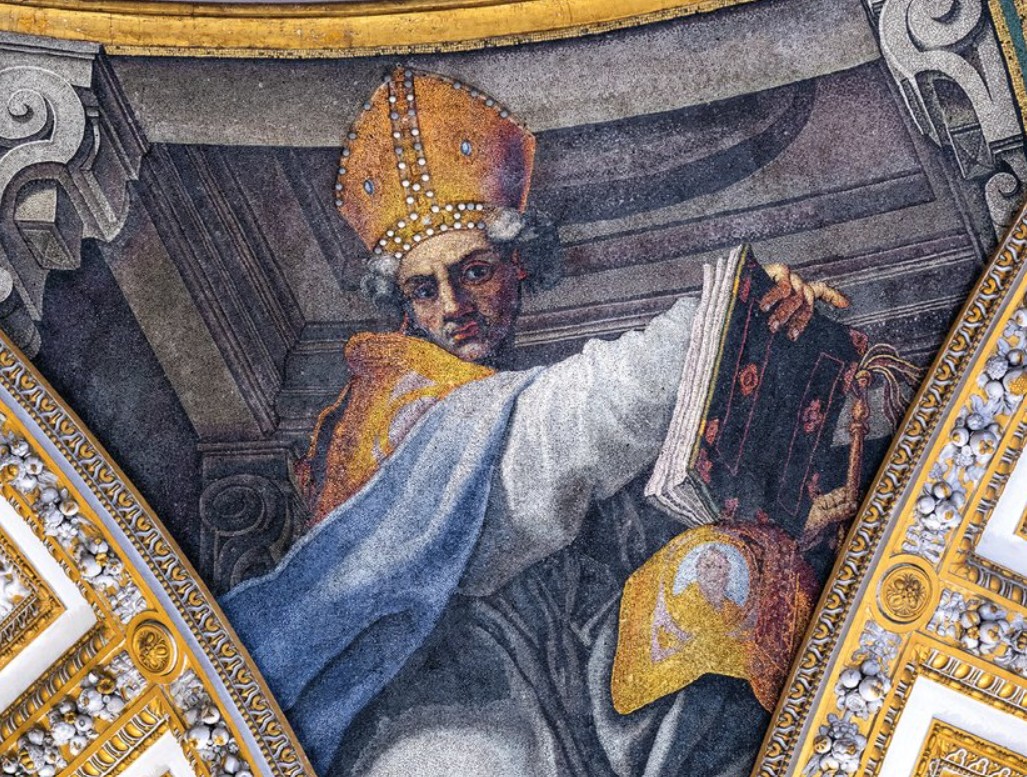
Il valore dell’artista fu tale che nel 1616 papa Paolo V Borghese gli attribuì ufficialmente l’invenzione di “un nuovo modo di far mosaico assai diverso e più bello dell’antico”.
Si trattava di un riconoscimento eccezionale.
Provenzale aveva infatti rivoluzionato la tecnica musiva introducendo un metodo completamente nuovo, fondato sull’impiego di tessere sempre più piccole e raffinate, capaci di ricreare le sfumature della pittura con una precisione fino ad allora impensabile.
Non era più soltanto un mosaico destinato a ricoprire pareti e cupole: diventava una vera opera d’arte autonoma.
L’invenzione del mosaico filato: quando le tessere sembrano pennellate
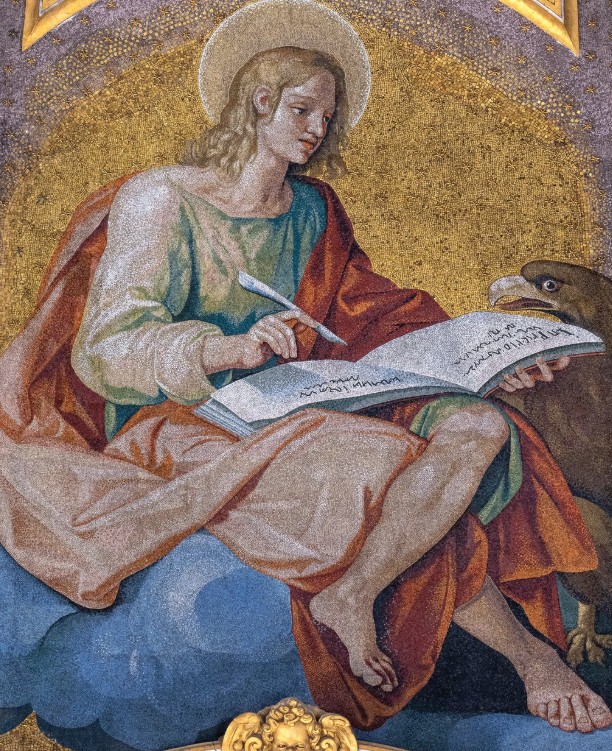
La più grande innovazione di Provenzale fu il cosiddetto mosaico filato.
Attraverso sottilissime tessere vitree, spesso ridotte a minuscoli filamenti, riusciva a ottenere mezze tinte, passaggi cromatici delicatissimi e giochi di luce capaci di imitare la morbidezza delle pennellate.
Per la prima volta il mosaico non appariva più rigido o geometrico, ma vibrava di luce e colore come una tela dipinta.
Questa tecnica rappresentò una svolta decisiva nella storia dell’arte europea e influenzò profondamente gli artisti delle generazioni successive.
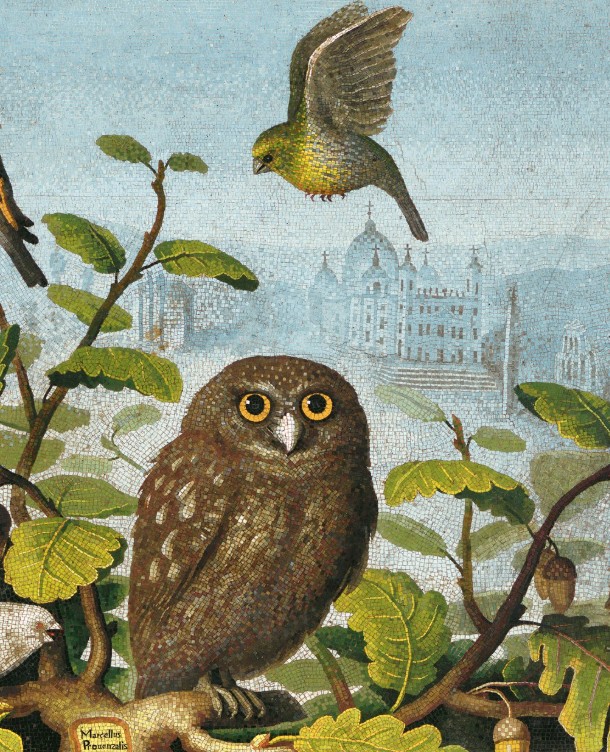
I primi mosaici da cavalletto conquistarono il collezionismo aristocratico
Intorno al 1600 Provenzale iniziò anche una sperimentazione destinata a cambiare il mercato artistico: i cosiddetti mosaici da cavalletto.
Piccole opere portatili, realizzate con una precisione quasi microscopica, che potevano essere esposte come quadri.
Erano oggetti preziosissimi, destinati ai grandi collezionisti e alle famiglie nobiliari, in particolare ai Borghese, che divennero tra i principali estimatori dell’artista.
Questi capolavori trasformarono il mosaico da rivestimento architettonico a opera destinata alle raccolte private, anticipando una nuova idea di collezionismo artistico.
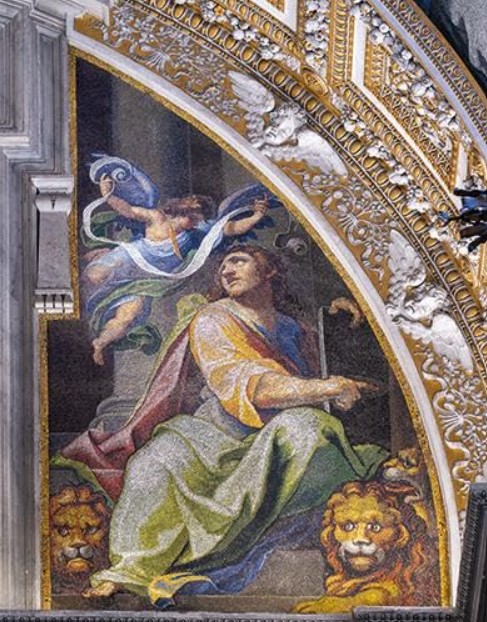
Le opere che dimostrano la sua straordinaria modernità
Tra i capolavori conservati oggi spiccano la Madonna col Bambino del 1600, Orfeo del 1618 e il magnifico Ritratto di Paolo V del 1621, tutti custoditi alla Galleria Borghese.
Di straordinaria raffinatezza sono anche la Civetta con uccelli, oggi al Museo degli Argenti di Firenze, e il suggestivo Volto di Cristo, una delle testimonianze più alte della sua produzione religiosa.
In queste opere la materia vitrea assume una forza simbolica straordinaria. Il mosaico diventa immagine dell’eternità: materiale incorruttibile capace di conservare per sempre il volto del pontefice, dei santi e dei protagonisti della storia.
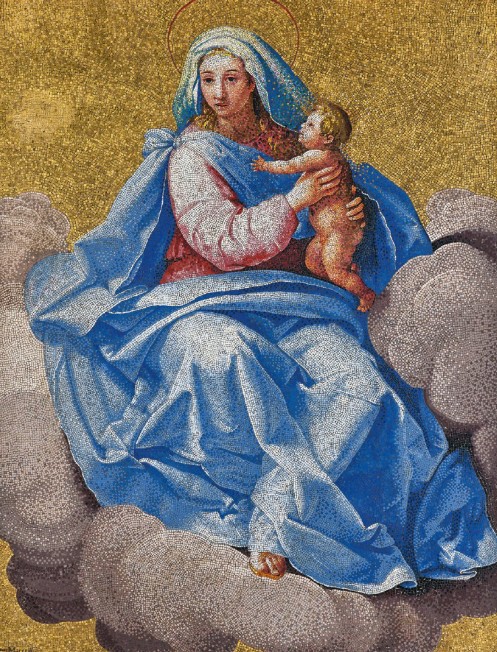
Il protagonista della Roma della Controriforma
L’opera di Provenzale si inserisce perfettamente nella cultura della Roma borghesiana, dove arte, fede e potere erano strettamente intrecciati.
I suoi mosaici non erano semplici esercizi di abilità tecnica, ma strumenti di comunicazione politica e religiosa.
Attraverso la brillantezza della pasta vitrea, la Chiesa celebrava la propria grandezza e trasmetteva un’immagine di eternità e magnificenza che nessun altro materiale riusciva a esprimere con la stessa intensità.
In questo senso Provenzale fu uno degli artisti che meglio interpretarono lo spirito della Controriforma, traducendolo in un linguaggio completamente nuovo.
L’eredità raccolta da Giovanni Battista Calandra
Alla morte di Marcello Provenzale, avvenuta nel 1639 nel Palazzo Borghese a Campo Marzio, il suo lavoro non si interruppe.
L’eredità tecnica e artistica passò al suo più celebre allievo, Giovanni Battista Calandra, che sviluppò ulteriormente il linguaggio del mosaico barocco fino alla piena maturità del Seicento.
Ma fu proprio Provenzale ad aver aperto quella strada, dimostrando che il mosaico poteva diventare un linguaggio autonomo, raffinato e capace di dialogare con la migliore pittura del suo tempo.
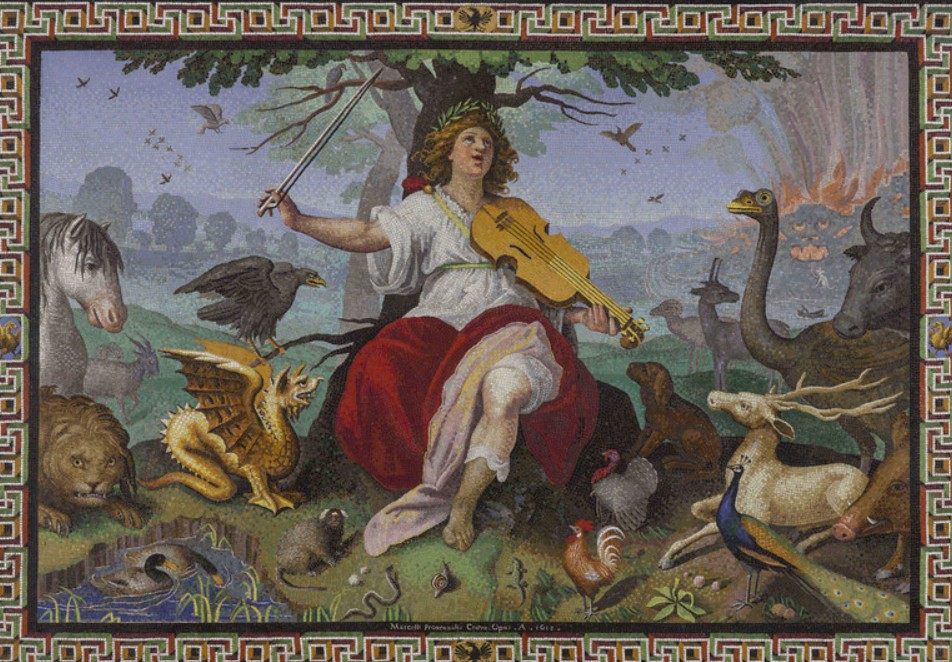
Perché Marcello Provenzale merita di essere riscoperto
Oggi Marcello Provenzale è ancora poco conosciuto dal grande pubblico ma fu uno dei protagonisti assoluti della rinascita del mosaico tra Cinquecento e Seicento.
La sua capacità di reinventare una tecnica millenaria, trasformandola in uno strumento espressivo moderno, lo rende una figura fondamentale della cultura figurativa europea.
Per il momento il sempre vostro Michelangelo Buonarroti vi saluta dandovi appuntamento ai prossimi post e sui social.
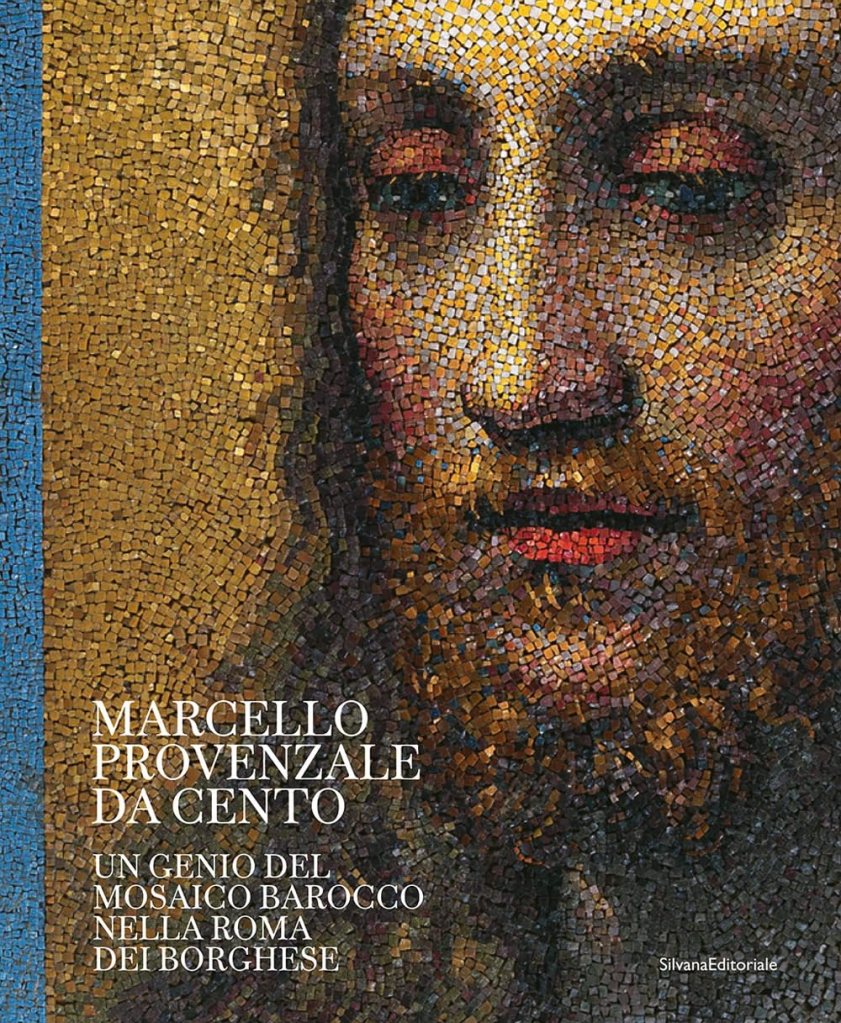
Marcello Provenzale, the genius who invented Baroque mosaic
For centuries, his name remained in the shadow of the great painters of the 17th century, yet without Marcello Provenzale, mosaic would never have become one of the most refined arts of the Baroque era. Born in Cento in 1576 and died in Rome in 1639, Provenzale was the great innovator who transformed an ancient technique into a modern language, capable of rivaling painting in terms of chromatic richness, luminosity, and expressiveness.
On the 450th anniversary of his birth, he finally returns to the forefront as one of the protagonists of the artistic culture of Rome under the Borghese popes. A master who combined technical invention, pictorial sensitivity, and spirituality, paving the way for Baroque mosaic.
The artist who changed mosaic forever
When Marcello Provenzale arrived in Rome, the city was engaged in one of the most impressive artistic programs of the Counter-Reformation. Trained as a painter, he immediately understood that mosaic could transcend the simple decorative role it had played for centuries.
His talent quickly led him to the major construction sites of St. Peter’s Basilica, where he participated in the work on the Dome, the Clementine Chapel, and, later, the delicate restoration of Giotto’s famous Navicella.
Working in the heart of the basilica meant collaborating with the most important artists of the time and contributing to the construction of the image of the Catholic Church at the height of the Counter-Reformation. Provenzale managed to carve out a role of absolute prestige thanks to his unprecedented technical ability.
Paul V officially recognized his invention
The artist’s value was such that in 1616, Pope Paul V Borghese officially attributed to him the invention of “a new way of making mosaics, very different and more beautiful than the ancient ones.”
This was an exceptional recognition.
Provenzale had revolutionized mosaic technique by introducing a completely new method, based on the use of increasingly smaller and more refined tesserae, capable of recreating the nuances of painting with a previously unimaginable precision.
It was no longer simply a mosaic intended to cover walls and domes: it became a true work of art in its own right.
The invention of spun mosaic: when the tesserae resemble brushstrokes
Provenzale’s greatest innovation was the so-called spun mosaic.
Through extremely thin glass tesserae, often reduced to tiny filaments, he was able to create half-tones, delicate color transitions, and plays of light capable of imitating the softness of brushstrokes.
For the first time, mosaic no longer appeared rigid or geometric, but vibrated with light and color like a painted canvas.
This technique represented a decisive turning point in the history of European art and profoundly influenced artists of subsequent generations.
The first easel mosaics won over aristocratic collectors
Around 1600, Provenzale also began an experiment destined to change the art market: the so-called easel mosaics.
Small, portable works, crafted with almost microscopic precision, could be displayed like paintings.
They were highly prized objects, destined for great collectors and noble families, particularly the Borghese family, who became among the artist’s greatest admirers.
These masterpieces transformed mosaic from an architectural covering to a work destined for private collections, anticipating a new concept of art collecting.
Works that demonstrate his extraordinary modernity
Among the masterpieces preserved today are the Madonna and Child from 1600, Orpheus from 1618, and the magnificent Portrait of Paul V from 1621, all housed in the Galleria Borghese.
Also of extraordinary refinement are the Owl with Birds, now in the Museo degli Argenti in Florence, and the evocative Face of Christ, one of the finest examples of his religious art.
In these works, glass takes on an extraordinary symbolic power. Mosaic becomes an image of eternity: an incorruptible material capable of forever preserving the faces of the pontiff, saints, and historical figures.
A Protagonist of Counter-Reformation Rome
Provenzale’s work fits perfectly into the culture of Borghese Rome, where art, faith, and power were closely intertwined.
His mosaics were not simple exercises in technical skill, but instruments of political and religious communication.
Through the brilliance of glass paste, the Church celebrated its own greatness and conveyed an image of eternity and magnificence that no other material could express with the same intensity.
In this sense, Provenzale was one of the artists who best interpreted the spirit of the Counter-Reformation, translating it into a completely new language.
The Legacy of Giovanni Battista Calandra
Upon Marcello Provenzale’s death in 1639 in the Palazzo Borghese in Campo Marzio, his work continued.
The technical and artistic legacy passed to his most famous pupil, Giovanni Battista Calandra, who further developed the language of Baroque mosaic until its full maturity in the 17th century.
But it was Provenzale himself who pioneered that path, demonstrating that mosaic could become an autonomous, refined language capable of dialoguing with the finest painting of his time.
Why Marcello Provenzale deserves to be rediscovered
Today, Marcello Provenzale is still little known to the general public, but he was one of the key figures in the renaissance of mosaic between the 16th and 17th centuries.
His ability to reinvent a thousand-year-old technique, transforming it into a modern means of expression, makes him a key figure in European figurative culture.
For now, yours truly, Michelangelo Buonarroti bids you farewell and invites you to join him in future posts and on social media.

Sostienici – Support Us
Se questo blog ti piace e ti appassiona, puoi aiutarci a farlo crescere sempre più sostenendoci in modo concreto condividendo i post, seguendo le pagine social e con un contributo che ci aiuta ad andare avanti con il nostro lavoro di divulgazione. . ENGLISH: If you like and are passionate about this blog, you can help us make it grow more and more by supporting us in a concrete way by sharing posts, following social pages and with a contribution that helps us to move forward with our dissemination work.
10,00 €
Condividi:


Questo sono io




sostienici

Sostienici – Support Us
Se questo blog ti piace e ti appassiona, puoi aiutarci a farlo crescere sempre più sostenendoci in modo concreto condividendo i post, seguendo le pagine social e con un contributo che ci aiuta ad andare avanti con il nostro lavoro di divulgazione. . ENGLISH: If you like and are passionate about this blog, you can help us make it grow more and more by supporting us in a concrete way by sharing posts, following social pages and with a contribution that helps us to move forward with our dissemination work.
€10,00


Grazie per il bell’articolo. Vi aspettiamo a Cento, nella Civica Pinacoteca “Il Guercino”, dal 2 ottobre prossimo. Dopo la mostra dossier che si è tenuta la scorsa primavera alla Galleria Borghese, quella di Cento sarà la prima mostra monografica su Marcello Provenzale nella sua città natale, e offrirà l’occasione per ammirarne da vicino tutti i celebri mosaici minuti. La riscoperta è iniziata.
"Mi piace"Piace a 1 persona
Grazie, a presto
"Mi piace""Mi piace"