
Riemerge dopo 1.800 anni il volto del dio del fiume: scoperta eccezionale in Turchia
Dopo quasi diciotto secoli di silenzio, il volto del fiume che rese ricca una delle più importanti città romane dell’Anatolia torna a vedere la luce. Nel sito archeologico di Aspendos, nella Turchia meridionale, gli archeologi hanno riportato alla luce uno straordinario mosaico del III secolo d.C. raffigurante il giovane dio fluviale Eurimedonte, una delle più rare personificazioni di una divinità delle acque mai documentate nell’arte musiva romana.
La scoperta, annunciata dal Ministero della Cultura e del Turismo della Turchia, rappresenta uno dei ritrovamenti archeologici più significativi degli ultimi anni nel Mediterraneo orientale e offre nuove informazioni sull’arte romana, sul culto delle acque e sulla storia di Aspendos.
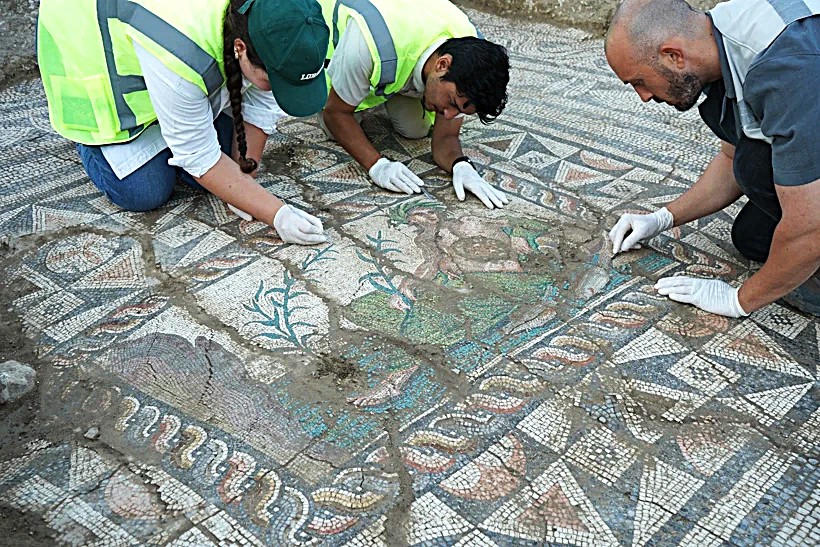
Un mosaico eccezionale scoperto lungo la Via del Teatro
Il rinvenimento è avvenuto nella parte orientale della cosiddetta Via del Teatro, il grande asse monumentale che collegava l’acropoli della città con il celebre teatro romano, ancora oggi considerato uno dei meglio conservati del mondo antico.
Gli scavi hanno portato alla luce un edificio largo circa sei metri e lungo venticinque, del quale è stata finora esplorata una porzione di circa sei metri per sette metri e mezzo. Gli archeologi ritengono che il mosaico prosegua sotto le aree ancora sepolte, lasciando intuire un complesso molto più esteso.
Le prime analisi indicano che la struttura fu costruita all’inizio del III secolo d.C. come ninfeo monumentale o grande piscina pubblica, uno spazio strettamente collegato al culto e alla celebrazione dell’acqua. Dopo il terremoto che colpì la regione nel 262 d.C., l’edificio sarebbe stato modificato con l’inserimento di muri divisori, adattandolo alle nuove esigenze della città tardoantica.

Dal terreno riaffiora il giovane dio del fiume
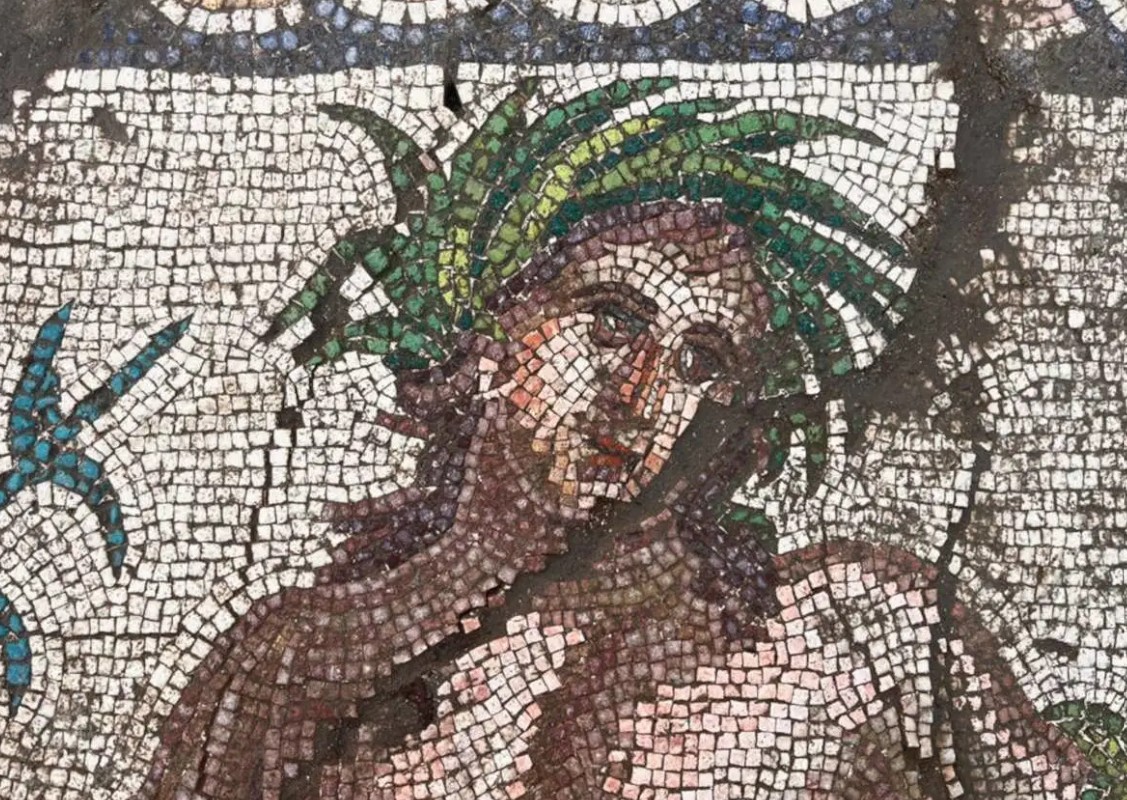
Il cuore della scoperta è costituito dalla grande scena figurata che occupa il pannello principale del mosaico. Disteso placidamente tra acque calme e vegetazione rigogliosa compare Eurimedonte, la personificazione divina del fiume che attraversava il territorio di Aspendos e che per secoli alimentò agricoltura, commerci e prosperità.
La figura sorprende per la sua iconografia. Mentre nell’arte greco-romana i fiumi sono generalmente raffigurati come uomini maturi e barbuti, simbolo della forza eterna delle acque, qui il dio appare come un giovane.
Sul capo porta una corona di foglie di canna, mentre nella mano stringe altri steli acquatici. Accanto al corpo compare un’anfora dalla quale sgorga l’acqua della sorgente, simbolo di fertilità e abbondanza. Ai lati nuotano pesci orientati in direzioni opposte, conferendo dinamismo alla scena e trasformando il mosaico in un’allegoria della vita che nasce dal fiume.
L’intera composizione è dominata da tonalità verde-azzurre che evocano perfettamente l’atmosfera ombrosa delle sorgenti e delle pozze fluviali. Il dio sembra fondersi con l’acqua stessa: non rappresenta semplicemente il fiume, ma è il fiume.
Un capolavoro dell’arte musiva romana
Le tessere, estremamente minute, permettono sfumature cromatiche raffinate e una modellazione quasi pittorica del corpo del giovane dio. Le delicate variazioni di colore richiamano le migliori produzioni musive dell’Asia Minore romana e testimoniano il lavoro di maestranze altamente specializzate.
Secondo gli archeologi, il mosaico si colloca tra gli esempi più raffinati dell’arte pavimentale romana scoperti negli ultimi anni in Anatolia.
Perché questa raffigurazione è così rara
L’aspetto più importante della scoperta risiede nella sua eccezionale iconografia. Le rappresentazioni di divinità fluviali nei mosaici romani sono infatti estremamente rare e ogni nuovo esemplare costituisce una preziosa fonte di informazioni sulle credenze religiose e sulle tradizioni artistiche delle comunità che li commissionarono.
Nel caso di Aspendos, la scelta di raffigurare il fiume locale anziché una divinità del pantheon più conosciuto dimostra il forte legame identitario che la città aveva con la propria principale risorsa naturale.
Il mosaico appare quasi come un manifesto civico: celebra il fiume che garantiva ricchezza, fertilità e commerci trasformandolo in una presenza divina benevola.
Chi era Eurimedonte
Oggi quel corso d’acqua è conosciuto con il nome di Köprüçay. Nasce tra i rilievi del Tauro occidentale e percorre oltre 180 chilometri prima di sfociare nel Mediterraneo.
Nell’antichità rappresentava la vera arteria economica della Panfilia. Le sue acque irrigavano vaste pianure agricole, alimentavano i commerci e rendevano possibile lo sviluppo della città.
Anche la storia militare del Mediterraneo orientale è legata a questo fiume. Nel 467 a.C., proprio lungo l’Eurimedonte, il generale ateniese Cimone inflisse una decisiva sconfitta alle forze persiane in una delle più importanti battaglie delle guerre greco-persiane.
Il nome deriva dal greco Eurymédōn, formato dai termini eurýs (“ampio”, “vasto”) e médōn (“signore”, “governatore”), con il significato di “signore delle grandi acque”, una definizione perfetta per il fiume che dominava il territorio.
Aspendos, una delle città romane meglio conservate del Mediterraneo
Fondata probabilmente da coloni greci provenienti da Argo, Aspendos raggiunse il massimo splendore tra il II e il III secolo d.C., quando entrò pienamente nell’orbita dell’Impero romano.
La città divenne celebre per il suo teatro monumentale, costruito sotto Marco Aurelio, capace di ospitare circa quindicimila spettatori e ancora oggi straordinariamente conservato.
Accanto al teatro sorsero terme, basiliche civili, agorà, ninfei e uno dei più sofisticati sistemi di acquedotti dell’intera Anatolia romana, opere che testimoniano il ruolo fondamentale dell’acqua nella vita quotidiana della città.
La scoperta del mosaico aggiunge ora un tassello fondamentale a questo straordinario patrimonio archeologico, mostrando non soltanto la magnificenza dei monumenti, ma anche il profondo valore simbolico attribuito alla risorsa che aveva reso possibile la prosperità di Aspendos.
Gli scavi continueranno
Le indagini archeologiche proseguiranno nelle prossime campagne di scavo per riportare completamente alla luce la struttura e stabilire l’estensione complessiva del mosaico.
Gli studiosi dovranno inoltre chiarire quale fosse l’esatta funzione dell’edificio e come si inserisse nel sistema monumentale della città romana.
Prima di qualsiasi esposizione al pubblico, il mosaico sarà sottoposto a delicati interventi di conservazione e restauro.
Per il momento il sempre vostro Michelangelo Buonarroti vi saluta dandovi appuntamento ai prossimi post e sui social.
The Face of the River God Resurfaces After 1,800 Years: Exceptional Discovery in Turkey
After nearly eighteen centuries of silence, the face of the river that enriched one of the most important Roman cities in Anatolia is once again being revealed. At the archaeological site of Aspendos in southern Turkey, archaeologists have unearthed an extraordinary 3rd-century AD mosaic depicting the young river god Eurymedon, one of the rarest personifications of a water deity ever documented in Roman mosaic art.
The discovery, announced by the Turkish Ministry of Culture and Tourism, represents one of the most significant archaeological finds in recent years in the Eastern Mediterranean and offers new insights into Roman art, water worship, and the history of Aspendos.
An exceptional mosaic discovered along Theatre Street
The discovery was made on the eastern side of the so-called Theatre Street, the great monumental axis that connected the city’s acropolis with the famous Roman theater, still considered one of the best preserved from the ancient world.
The excavations have uncovered a building approximately six meters wide and twenty-five meters long, of which a portion measuring approximately six by seven and a half meters has been explored so far. Archaeologists believe the mosaic continues beneath the still-buried areas, suggesting a much larger complex.
Preliminary analyses indicate that the structure was built in the early 3rd century AD as a monumental nymphaeum or large public pool, a space closely linked to the cult and celebration of water. After the earthquake that struck the region in 262 AD, the building was modified with the insertion of dividing walls, adapting it to the new needs of the late antique city.
The young river god resurfaces from the ground.
The heart of the discovery is the large figurative scene that occupies the main panel of the mosaic. Eurymedon, the divine personification of the river that once flowed through the territory of Aspendos and fueled agriculture, trade, and prosperity for centuries, appears reclining peacefully among calm waters and lush vegetation.
The figure is surprising for its iconography. While in Greco-Roman art, rivers are generally depicted as mature, bearded men, symbolizing the eternal power of water, here the god appears as a young man.
On his head, he wears a crown of reed leaves, while in his hand he clutches other aquatic stems. Next to his body is an amphora from which spring water flows, a symbol of fertility and abundance. Fish swimming in opposite directions lend dynamism to the scene and transform the mosaic into an allegory of life born from the river.
The entire composition is dominated by green-blue hues that perfectly evoke the shady atmosphere of river springs and pools. The god seems to merge with the water itself: he does not simply represent the river, but is the river.
A masterpiece of Roman mosaic art
The extremely fine tesserae allow for refined chromatic nuances and an almost painterly modeling of the young god’s body. The delicate color variations recall the finest mosaics of Roman Asia Minor and testify to the work of highly specialized craftsmen.
According to archaeologists, the mosaic is among the finest examples of Roman pavement art discovered in recent years in Anatolia.
Why is this depiction so rare?
The most significant aspect of the discovery lies in its exceptional iconography. Representations of river deities in Roman mosaics are extremely rare, and each new example constitutes a valuable source of information on the religious beliefs and artistic traditions of the communities that commissioned them.
In the case of Aspendos, the choice to depict the local river rather than a deity from the more well-known pantheon demonstrates the city’s strong identity with its main natural resource.
The mosaic appears almost like a civic manifesto: it celebrates the river that guaranteed wealth, fertility, and trade, transforming it into a benevolent divine presence.
Who was Eurymedon?
Today, that waterway is known as the Köprüçay. It rises in the western Taurus Mountains and flows over 180 kilometers before flowing into the Mediterranean.
In ancient times, it represented the true economic artery of Pamphylia. Its waters irrigated vast agricultural plains, fueled trade, and enabled the city’s development.
The military history of the eastern Mediterranean is also linked to this river. In 467 BC, along the Eurymedon, the Athenian general Cimon inflicted a decisive defeat on the Persian forces in one of the most important battles of the Greco-Persian Wars.
The name derives from the Greek Eurymédōn, formed from the terms eurýs (“wide,” “vast”) and médōn (“lord,” “governor”), meaning “lord of the great waters,” a perfect definition for the river that dominated the area.
Aspendos, one of the best-preserved Roman cities in the Mediterranean
Probably founded by Greek colonists from Argos, Aspendos reached its peak between the 2nd and 3rd centuries AD, when it fully entered the orbit of the Roman Empire.
The city became famous for its monumental theater, built under Marcus Aurelius, which could accommodate approximately fifteen thousand spectators and is still remarkably preserved today.
Alongside the theater were baths, civic basilicas, agoras, nymphaea, and one of the most sophisticated aqueduct systems in Roman Anatolia, works that testify to the fundamental role of water in the city’s daily life.
The discovery of the mosaic now adds a crucial piece to this extraordinary archaeological heritage, demonstrating not only the magnificence of the monuments but also the profound symbolic value attributed to the resource that had made Aspendos’ prosperity possible.
Excavations will continue
Archaeological investigations will continue in the upcoming excavation campaigns to fully uncover the structure and determine the mosaic’s overall extent.
Scholars will also need to clarify the building’s exact function and how it fit into the monumental system of the Roman city.
Before any public display, the mosaic will undergo delicate conservation and restoration work.
For now, yours truly, Michelangelo Buonarroti, bids farewell and invites you to join him in future posts and on social media.

Sostienici – Support Us
Se questo blog ti piace e ti appassiona, puoi aiutarci a farlo crescere sempre più sostenendoci in modo concreto condividendo i post, seguendo le pagine social e con un contributo che ci aiuta ad andare avanti con il nostro lavoro di divulgazione. . ENGLISH: If you like and are passionate about this blog, you can help us make it grow more and more by supporting us in a concrete way by sharing posts, following social pages and with a contribution that helps us to move forward with our dissemination work.
10,00 €
Condividi:


Questo sono io




sostienici

Sostienici – Support Us
Se questo blog ti piace e ti appassiona, puoi aiutarci a farlo crescere sempre più sostenendoci in modo concreto condividendo i post, seguendo le pagine social e con un contributo che ci aiuta ad andare avanti con il nostro lavoro di divulgazione. . ENGLISH: If you like and are passionate about this blog, you can help us make it grow more and more by supporting us in a concrete way by sharing posts, following social pages and with a contribution that helps us to move forward with our dissemination work.
€10,00


