
La Girandola torna a illuminare Roma: il leggendario spettacolo di Castel Sant’Angelo che incantò l’Europa rivive dopo secoli
C’è uno spettacolo che per secoli ha fatto viaggiare nobili, artisti e pellegrini da ogni parte d’Europa pur di assistere a pochi, indimenticabili minuti di pura meraviglia.
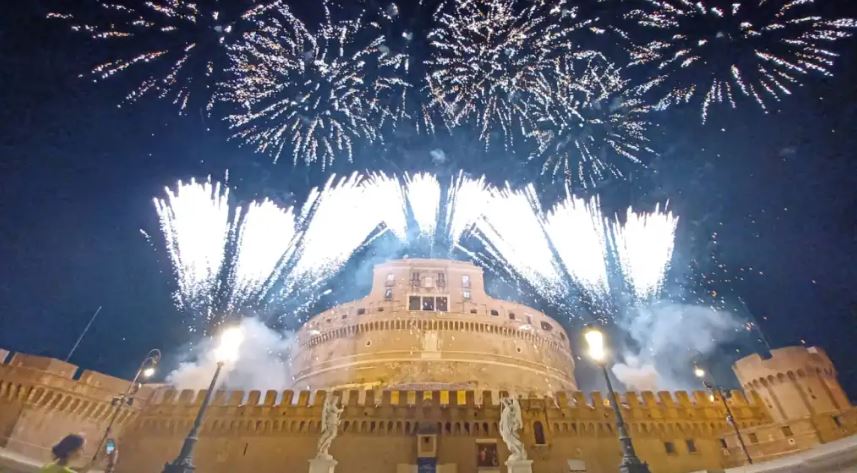
È la Girandola di Castel Sant’Angelo, il celebre spettacolo pirotecnico che questa sera, 29 giugno, tornerà a illuminare il cielo di Roma in occasione della festa dei Santi Pietro e Paolo, riportando in vita una delle tradizioni più affascinanti della storia della Città Eterna.
Le origini della Girandola affondano nel 1481, durante il pontificato di Sisto IV della Rovere, quando un unico spettacolo di fuochi d’artificio venne organizzato per celebrare la grandezza del suo mandato. Da quell’evento nacque una tradizione destinata a entrare nella leggenda.
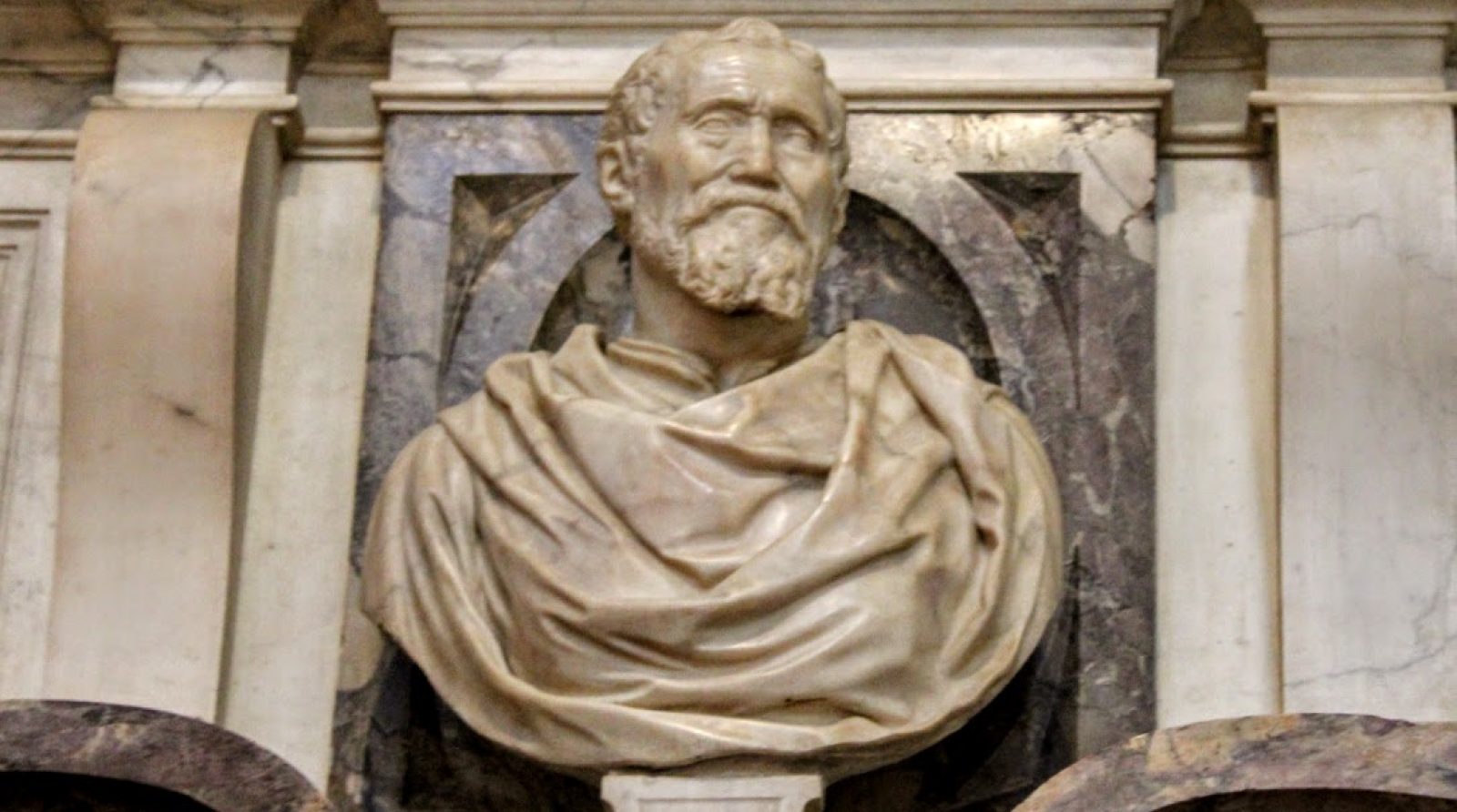
Pochi anni più tardi fu Papa Giulio II della Rovere, grande appassionato di spettacoli pirotecnici, a dare nuovo impulso a questa forma d’arte. La tradizione attribuisce a me l’ideazione del celebre marchingegno capace di creare effetti scenografici mai visti prima, mentre Gian Lorenzo Bernini ne perfezionò successivamente la spettacolarità, trasformando la Girandola in un appuntamento imperdibile della Roma barocca.
Per secoli migliaia di persone raggiunsero la capitale attraversando l’Europa a cavallo pur di assistere allo spettacolo che trasformava Castel Sant’Angelo in un gigantesco vulcano di luce.
I maestri fuochisti custodivano gelosamente i segreti delle miscele e delle sequenze di sparo, tramandando tecniche e formule di padre in figlio senza mai rivelarle all’esterno.

La Girandola, simbolo della Roma papale
La Girandola veniva tradizionalmente accesa ogni anno durante la Pasqua e il 29 giugno, giorno dedicato ai Santi Pietro e Paolo, patroni di Roma. Lo spettacolo veniva inoltre organizzato in occasione dell’elezione di un nuovo Pontefice, diventando uno dei simboli più rappresentativi della Roma papale.
Nel 1834 questa straordinaria tradizione si interruppe improvvisamente. Ancora oggi non esistono certezze sulle cause della sua scomparsa: probabilmente i custodi delle antiche tecniche morirono senza trasmettere completamente il loro sapere alle generazioni successive, facendo svanire uno degli spettacoli più celebri d’Europa.

La rinascita della Girandola grazie a Giuseppe Passeri
Dopo oltre un secolo di silenzio, la Girandola è tornata a vivere grazie al lungo lavoro di ricerca del Comm. Cav. Giuseppe Passeri. Nel 2006, esattamente vent’anni fa, al termine di approfonditi studi condotti negli Archivi Storici Vaticani e nelle principali biblioteche capitoline, Passeri è riuscito a ricostruire filologicamente lo spettacolo originale, recuperando le antiche tecniche di realizzazione e le miscele storiche utilizzate per ottenere le caratteristiche colorazioni dei fuochi.
Quella che il poeta Jérôme Lalande definì “La Maraviglia del Tempo” è così tornata a splendere nel cielo di Roma, restituendo al pubblico immagini spettacolari come il celebre “vulcano” di fuoco e le suggestive “stelle dal cielo”, effetti che richiamano simbolicamente l’apparizione dell’Arcangelo Michele a Papa Gregorio Magno nel 590, evento legato alla tradizione di Castel Sant’Angelo.

Vent’anni di spettacoli e ricerca storica
Il 2026 segna un anniversario particolarmente significativo: sono trascorsi vent’anni dalla rinascita moderna della Girandola. In questo periodo Giuseppe Passeri ha progettato, curato e diretto tredici edizioni storiche a Castel Sant’Angelo, una speciale rappresentazione sui Colli Vaticani ispirata ai progetti originali del Bernini e le celebri edizioni sulle terrazze del Pincio.
Il trasferimento temporaneo dello spettacolo al Pincio non fu dovuto a presunti problemi strutturali di Castel Sant’Angelo, ma rappresentò una precisa scelta filologica per ripercorrere l’evoluzione storica della manifestazione così come avveniva negli ultimi decenni dell’Ottocento.

Una tradizione che continua ad affascinare il mondo
Oggi la Girandola continua a superare i confini italiani, attirando appassionati e studiosi da tutto il mondo. Il progetto, realizzato dal Gruppo IX Invicta e guidato da Giuseppe Passeri, ha affrontato negli anni difficoltà organizzative, tecniche e burocratiche con l’obiettivo di preservare l’autenticità di una delle più antiche tradizioni pirotecniche europee.
Anche questa sera, 29 giugno, il cielo sopra Castel Sant’Angelo tornerà ad accendersi con uno spettacolo che unisce storia, arte e meraviglia, rinnovando un rito capace di emozionare Roma da oltre cinque secoli e di riportare in vita una pagina straordinaria del patrimonio culturale italiano.
Per il momento il sempre vostro Michelangelo Buonarroti vi saluta dandovi appuntamento ai prossimi post e sui social.
The Girandola returns to light up Rome: the legendary spectacle at Castel Sant’Angelo that enchanted Europe is revived after centuries.
There is a spectacle that for centuries has drawn nobles, artists, and pilgrims from all over Europe to witness a few unforgettable minutes of pure wonder.
It is the Girandola at Castel Sant’Angelo, the famous fireworks display that this evening, June 29th, will once again light up the Roman sky on the feast of Saints Peter and Paul, reviving one of the most fascinating traditions in the history of the Eternal City.
The origins of the Girandola date back to 1481, during the pontificate of Sixtus IV della Rovere, when a single fireworks display was organized to celebrate the grandeur of his mandate. From that event, a tradition destined to become legendary was born.
A few years later, Pope Julius II della Rovere, a great enthusiast of fireworks displays, gave new impetus to this art form. Tradition attributes to me the creation of the famous contraption, capable of creating unprecedented scenographic effects, while Gian Lorenzo Bernini later perfected its spectacularity, transforming the Girandola into an unmissable event in Baroque Rome.
For centuries, thousands of people traveled to the capital, crossing Europe on horseback, just to witness the spectacle that transformed Castel Sant’Angelo into a gigantic volcano of light.
The master stokers jealously guarded the secrets of the mixtures and firing sequences, passing down techniques and formulas from father to son without ever revealing them to others.
The Girandola, a symbol of Papal Rome
The Girandola was traditionally lit every year during Easter and on June 29th, the day dedicated to Saints Peter and Paul, patron saints of Rome. The show was also held to celebrate the election of a new Pope, becoming one of the most iconic symbols of Papal Rome.
In 1834, this extraordinary tradition was suddenly interrupted. Even today, the causes of its disappearance are unclear: likely, the custodians of the ancient techniques died without fully passing on their knowledge to subsequent generations, causing one of Europe’s most famous spectacles to vanish.
The rebirth of the Girandola thanks to Giuseppe Passeri
After over a century of silence, the Girandola has been brought back to life thanks to the extensive research of Comm. Cav. Giuseppe Passeri. In 2006, exactly twenty years ago, after extensive research conducted in the Vatican Historical Archives and the main libraries of the Capitoline Museums, Passeri succeeded in philologically reconstructing the original show, recovering the ancient production techniques and the historic mixtures used to achieve the characteristic colors of the fireworks.
What the poet Jérôme Lalande called “The Wonder of Time” has once again shone in the Roman sky, offering audiences spectacular images such as the famous “volcano” of fire and the evocative “stars from the sky,” effects that symbolically recall the appearance of the Archangel Michael to Pope Gregory the Great in 590, an event linked to the tradition of Castel Sant’Angelo.
Twenty Years of Performances and Historical Research
2026 marks a particularly significant anniversary: twenty years have passed since the modern rebirth of the Girandola. During this period, Giuseppe Passeri designed, curated, and directed thirteen historic performances at Castel Sant’Angelo, a special performance on the Vatican Hills inspired by Bernini’s original designs, and the celebrated performances on the Pincio terraces.
The temporary relocation of the show to the Pincio was not due to alleged structural problems at Castel Sant’Angelo, but rather represented a deliberate philological choice to retrace the historical evolution of the event as it unfolded in the final decades of the 19th century.
A tradition that continues to fascinate the world
Today, the Girandola continues to transcend Italian borders, attracting enthusiasts and scholars from around the world. The project, created by Gruppo IX Invicta and led by Giuseppe Passeri, has faced organizational, technical, and bureaucratic challenges over the years with the goal of preserving the authenticity of one of Europe’s oldest pyrotechnic traditions.
This evening, June 29th, the skies above Castel Sant’Angelo will once again light up with a spectacle that combines history, art, and wonder, renewing a ritual that has thrilled Rome for over five centuries and brought an extraordinary chapter in Italy’s cultural heritage back to life.
For now, yours truly, Michelangelo Buonarroti bids you farewell and invites you to join him in future posts and on social media.

Sostienici – Support Us
Se questo blog ti piace e ti appassiona, puoi aiutarci a farlo crescere sempre più sostenendoci in modo concreto condividendo i post, seguendo le pagine social e con un contributo che ci aiuta ad andare avanti con il nostro lavoro di divulgazione. . ENGLISH: If you like and are passionate about this blog, you can help us make it grow more and more by supporting us in a concrete way by sharing posts, following social pages and with a contribution that helps us to move forward with our dissemination work.
10,00 €
Condividi:


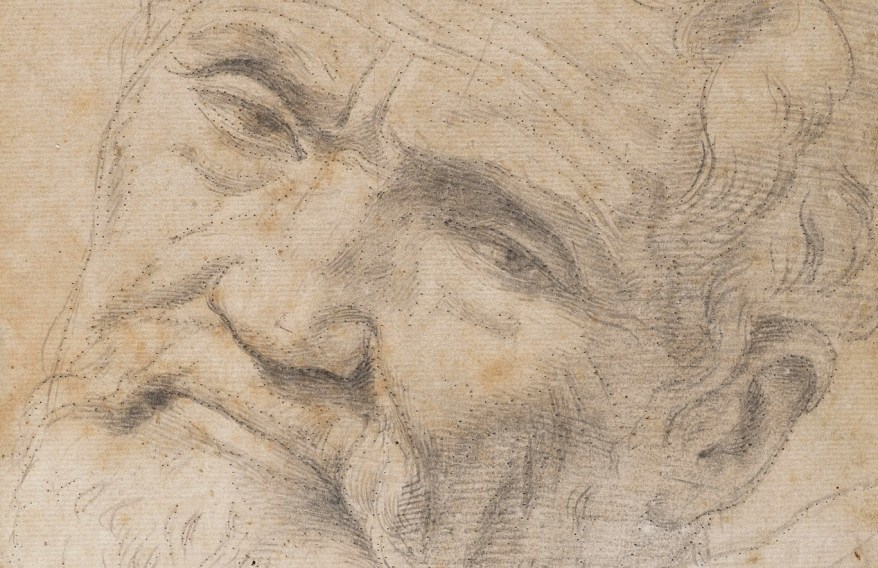
Questo sono io




sostienici

Sostienici – Support Us
Se questo blog ti piace e ti appassiona, puoi aiutarci a farlo crescere sempre più sostenendoci in modo concreto condividendo i post, seguendo le pagine social e con un contributo che ci aiuta ad andare avanti con il nostro lavoro di divulgazione. . ENGLISH: If you like and are passionate about this blog, you can help us make it grow more and more by supporting us in a concrete way by sharing posts, following social pages and with a contribution that helps us to move forward with our dissemination work.
€10,00


