

16 agosto 1501: il giorno in cui l’Arte della Lana mi commissionò il David
Il 16 agosto del 1501, giorno successivo all’Assunzione in cielo della Vergine, siglai il contratto per la realizzazione del David.
Un giorno storico che non posso non ricordare. Misi in calce aa quel figlio redatto dalla corporazione dell’Arte della Lana la mia firma, al tempo finanziatrice dell’Opera di Santa Maria del Fiore.

All’epoca avevo compiuto i 26 anni ma il mio nome già rimbalzava di bocca in bocca in tutte le corti europee. La Pietà scolpita qualche anno prima per il cardinale francese Jean de Bilhères de Lagraulas, ambasciatore del Re di Francia presso la Santa Sede, mi aveva reso celebre facendomi divenire uno degli scultori più ambiti del mio tempo.
Il contratto fu redatto in latino, come di consueto accadeva per tutti i documenti ufficiali all’epoca. Vi confesso però che latino non lo sapevo e mai nemmeno volli impararlo. Con il passare del tempo e l’aumentare della fama, pretesi che tutti i contratti venissero scritti in lingua volgare per consentire perlomeno a chi sapesse leggere di capire cosa ci fosse scritto sopra. Già ai miei tempi era poca la gente che sapeva leggere e scrivere, figuriamoci quelli che conoscevano la lingua dei dotti.
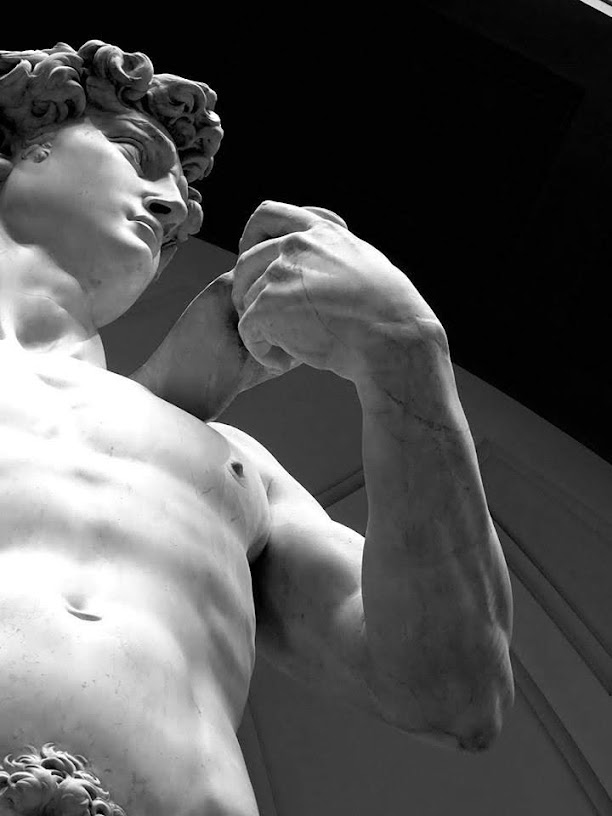
“…ad faciendum et perficiendum et perfece finendumquendam hominem, vocatum gigantem, abozatum, rachiorum novem ex marmore, existentem in dicta opera, olim abozatum per magistrum Augustinum(…) de florentia et male abozatum…”.
Il grande blocco di marmo che usai per realizzare quel capolavoro che oggi tutti riconscono come una delle più belle sculture al mondo, proveniva direttamente dal bacino di Fantiscritti di Carrara e da tempo era arrivato a Firenze.
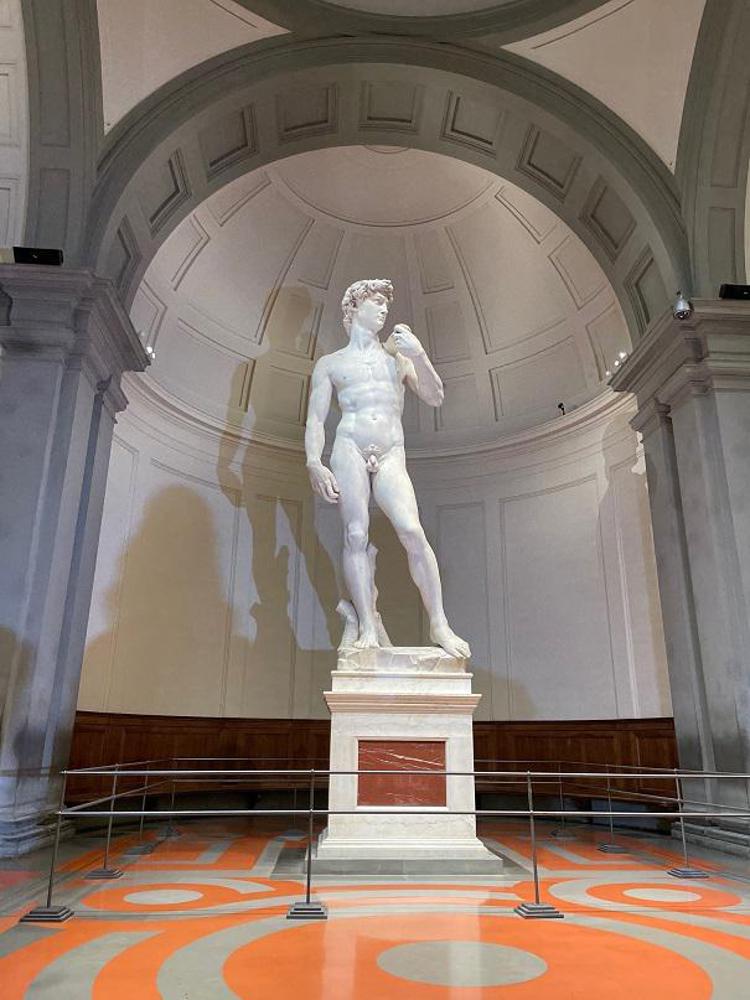
Era stato infatti fatto cavare per Agostino di Duccio in quale ci mise mano nel 1464. Lo scultore, scoraggiato per la grande mole di materia da affrontare lascò perdere l’impresa e fu la volta del tentativo di Antonio Rossellino nel 1475. Dopo aver creato un’apertura fra quelle che avrebbero dovuto essere le gambe del gigante, anche lui rinunciò a scolpire il blocco.
Il fatto di dovermi fronteggiare con un blocco così grande che già aveva fatto arrendere due scultori, mi garbava parecchio. Dopotutto le sfide erano il mio pane quotidiano e a perderle non ci pensavo nemmeno lontanamente.

In origine il David avrebbe dovuto essere collocato al di sopra di uno dei contrafforti esterni della zona absidale del duomo ma poi, una commissione messa in piedi appositamente per l’occasione, formata dagli artisti più in vista dell’epoca, decise di posizionarla sull’arengario di Palazzo Vecchio proprio come avrei voluto fare io.
Quel posto fino ad allora era stato occupato dalla Giuditta di Donatello, fusa dall’artista poco prima di compiere i settant’anni, fra 1453 e il 1457.
Il David “ha tolto il grido a tutte le statue moderne e antiche o greche o latine che si fussero” scrisse il Vasari nelle vite. Per per motivi conservativi oggi è possibile ammirarlo all’interno della Tribuna che de Fabris progettò appositamente per accogliere il colosso di marmo, nella Galleria dell’Accademia di Firenze.

Per evitare di lasciare un posto vacante in Piazza della Signoria, il vuoto fu riempito con la copia scolpita dall’Arrighetti nel 1910.
Il sempre vostro Michelangelo Buonarroti con i suoi racconti e i ricordi di importanti anniversari.
Per il momento il vostro Michelangelo Buonarroti vi saluta dandovi appuntamento ai prossimi post e sui social.

August 16, 1501: the day the Wool Guild commissioned me to create the David
On August 16, 1501, the day after the Assumption of the Virgin into Heaven, I signed the contract for the creation of the David.
A historic day I cannot help but remember. I signed the contract drawn up by the Wool Guild, which at the time was the financial backer of the Opera di Santa Maria del Fiore.
I was 26 at the time, but my name was already being talked about throughout the courts of Europe. The Pietà, sculpted a few years earlier for the French Cardinal Jean de Bilhères de Lagraulas, the King of France’s ambassador to the Holy See, had made me famous, making me one of the most sought-after sculptors of my time.
The contract was written in Latin, as was customary for all official documents of the time. I confess, however, that I didn’t know Latin and never even wanted to learn it. As time passed and my fame grew, I insisted that all contracts be written in the vernacular, so that at least those who could read could understand what was written. Even in my day, few people could read and write, let alone those who knew the language of the learned.
“…to make a man perfect and perfect, and to make him perfect, a giant called, abode, nine years of marble, existing in the said work, abode olim abozatum per magistrum Augustinum (…) de Florentia et male abozatum…”
The large block of marble I used to create that masterpiece, now recognized as one of the most beautiful sculptures in the world, came directly from the Fantiscritti basin in Carrara and had long since arrived in Florence.
It had actually been quarried for Agostino di Duccio, who began working on it in 1464. The sculptor, discouraged by the sheer size of the material, abandoned the project, and it was Antonio Rossellino’s turn to attempt it in 1475. After creating an opening between what would have been the giant’s legs, he too gave up on carving the block.
I was quite pleased to be faced with a block so large that it had already discouraged two sculptors. After all, challenges were my daily bread, and I never even considered losing them.
Originally, the David was supposed to be placed atop one of the external buttresses in the apse of the cathedral, but then a commission formed specifically for the occasion, made up of the most prominent artists of the time, decided to place it on the Arengario of Palazzo Vecchio, just as I would have liked.
Until then, that spot had been occupied by Donatello’s Judith, cast by the artist shortly before his seventieth birthday, between 1453 and 1457.
David “has taken away the outcry of all modern, ancient, Greek, or Latin statues,” wrote Vasari in his Lives. For conservation reasons, it can now be admired inside the Tribuna that de Fabris designed specifically to house the marble colossus, in the Galleria dell’Accademia in Florence.
To avoid leaving a vacant spot in Piazza della Signoria, the void was filled with the copy sculpted by Arrighetti in 1910.
Your ever-present Michelangelo Buonarroti, with his stories and memories of important anniversaries.
For now, your Michelangelo Buonarroti bids you farewell and looks forward to seeing you in future posts and on social media.

Sostienici – Support Us
Se questo blog ti piace e ti appassiona, puoi aiutarci a farlo crescere sempre più sostenendoci in modo concreto condividendo i post, seguendo le pagine social e con un contributo che ci aiuta ad andare avanti con il nostro lavoro di divulgazione. . ENGLISH: If you like and are passionate about this blog, you can help us make it grow more and more by supporting us in a concrete way by sharing posts, following social pages and with a contribution that helps us to move forward with our dissemination work.
10,00 €
Condividi:


Questo sono io





sostienici

Sostienici – Support Us
Se questo blog ti piace e ti appassiona, puoi aiutarci a farlo crescere sempre più sostenendoci in modo concreto condividendo i post, seguendo le pagine social e con un contributo che ci aiuta ad andare avanti con il nostro lavoro di divulgazione. . ENGLISH: If you like and are passionate about this blog, you can help us make it grow more and more by supporting us in a concrete way by sharing posts, following social pages and with a contribution that helps us to move forward with our dissemination work.
€10,00


