
Cappella Sistina: mi parve che divenisse cosa povera
‘Poi che io ebi fatto certi disegni, mi parve che riuscissi chosa povera, onde lui mi rifece un’altra allogagione insino alle storie di socto, e che io facessi nella volta quello che io volevo, che montava circha altrettanto‘.
La commissione iniziale per la decorazione della volta della Cappella Sistina mi parve cosa povera.
Me ne resi conto quando iniziai a realizzare qualche disegno con gli apostoli e le decorazioni geometriche. Ebbene sì, se avessi ascoltato i desideri del pontefice Giulio II senza battere ciglio, oggi la volta della Sistina avrebbe avuto una decorazione sicuramente bella ma molto più modesta e con un impatto scenico minore.

Nonostante le sue bizzarrie e le sue manie di conquista di terre che non gli appartenevano, il papa sapeva bene che un artista, per creare qualcosa di veramente bello, ha bisogno di sentirsi libero da vincoli.
Il progetto iniziale della decorazione prevedeva solo la rappresentazione dei dodici apostoli nei peducci mentre avrei dovuto decorare la parte centrale solamente con motivi geometrici. Per darvi un’idea di che aspetto potesse avere la volta, immaginatevi laddove oggi ci sono i veggenti sui troni, gli affreschi di dodici grandi apostoli e al centro solo disegni geometrici.
Di questo progetto iniziale è rimasta traccia jn due fogli: uno conservato al British Museum e l’altro a Detroit.
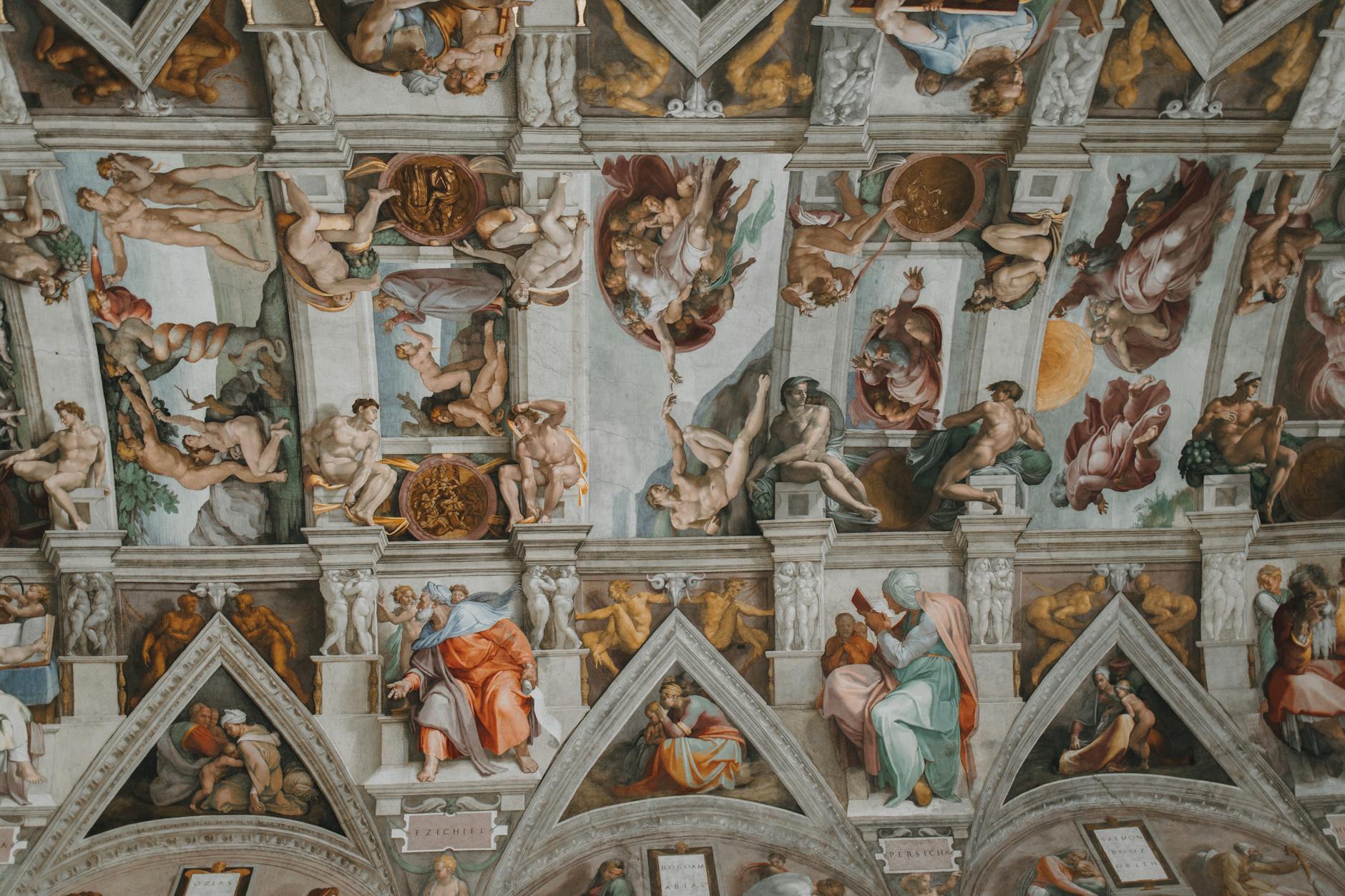
Papa Giulio II mi diede alla fine carta bianca e ho la certezza di aver oltrepassato di gran lunga le sue aspettative.
Ricordai quel momento anni dopo, mettendolo nero su bianco in una lettera:
“…Dipoi, tornando a Roma, non volse anchora che io seguissi la sepultura, e volse che io dipigniessi la volta di Sisto, di che fumo d’achordo di tremila ducati a ctucte mie spese, chon poche figure senplicemente.
Poi che io ebi fatto certi disegni, mi parve che riuscissi chosa povera, onde lui mi rifece un’altra allogagione insino alle storie di socto, e che io facessi nella volta quello che io volevo, che montava circha altrettanto.
E chosì fumo d’achordo, onde poi, finita la volta, quando veniva l’utile, la cosa non andò inanzi, in modo che io stimo restare avere parechi centinaia di ducati…“
Per il momento il sempre vostro Michelangelo Buonarroti vi saluta dandovi appuntamento ai prossimi post e sui social.

Sostienici – Support Us
Se questo blog ti piace e ti appassiona, puoi aiutarci a farlo crescere sempre più sostenendoci in modo concreto condividendo i post, seguendo le pagine social e con un contributo che ci aiuta ad andare avanti con il nostro lavoro di divulgazione. . ENGLISH: If you like and are passionate about this blog, you can help us make it grow more and more by supporting us in a concrete way by sharing posts, following social pages and with a contribution that helps us to move forward with our dissemination work.
10,00 €
Sistine Chapel: ‘It seemed to me that it was becoming a poor thing’
‘After I made some drawings, it seemed to me that it was becoming a poor thing, so the Pope allowed me to do whatever I wanted on the entire Sistine Chapel ceiling.‘
The initial commission for the decoration of the Sistine Chapel ceiling seemed to me to be a poor thing. I realized this when I started making some drawings with the apostles and geometric decorations. Well, yes, if I had listened to the wishes of Pope Julius II without batting an eyelid, today the Sistine Chapel ceiling would have had a decoration that was certainly beautiful, but much more modest and with less scenic impact.
Despite his eccentricities and his obsession with conquering lands that did not belong to him, the Pope knew well that an artist, to create something truly beautiful, needs to feel free from constraints.
The initial project for the decoration only included the representation of the twelve apostles in the corbels, while I should have decorated the central part only with geometric motifs. To give you an idea of what the vault might have looked like, imagine where today there are the seers on the thrones, the frescoes of twelve large apostles and in the center only geometric designs.
Traces of this initial project remain on two sheets: one preserved in the British Museum and the other in Detroit.
Pope Julius II finally gave me carte blanche and I am certain that I have far exceeded his expectations.
I remembered that moment years later, putting it down in black and white in a letter:
“…Then, returning to Rome, he still did not want me to follow the tomb, and wanted me to paint the vault of Sixtus, which was a chord of three thousand ducats at my own expense, with just a few figures.
After I had made some drawings, it seemed to me that it would turn out so poor, so he made me another contract up to the stories below, and that I would do on the vault what I wanted, which amounted to about the same.
And so a chord of chord, so then, once the vault was finished, when it was useful, the thing did not go forward, so that I estimate that I have several hundred ducats left…“
For the moment, yours truly Michelangelo Buonarroti greets you, making an appointment to see you in the next posts and on social media
Condividi:


Questo sono io




sostienici

Sostienici – Support Us
Se questo blog ti piace e ti appassiona, puoi aiutarci a farlo crescere sempre più sostenendoci in modo concreto condividendo i post, seguendo le pagine social e con un contributo che ci aiuta ad andare avanti con il nostro lavoro di divulgazione. . ENGLISH: If you like and are passionate about this blog, you can help us make it grow more and more by supporting us in a concrete way by sharing posts, following social pages and with a contribution that helps us to move forward with our dissemination work.
€10,00


