
Michelangelo 550: ecco come mi dipinse Hans Makart a Vienna
Per la rubrica ‘Michelangelo 550’ ideata per ricordare i 550 anni trascorsi dalla mia nascita (1475-2025), oggi vi parlo dell’affresco ottocentesco che ha me come protagonista, realizzato dal pittore austriaco Hans Makart.
Sapete in quale occasione fu realizzata l’opera? Orbene, il Kunsthistorisches Museum di Vienna aprì i battenti ai visitatori nel 1891.
All’artista Hans Makart, nato a Salisburgo il 28 maggio 1840, era stato commissionato l’affresco per decorare il soffitto, le lunette, pennacchi e le aree tra le colonne della scalinata principale del nuovo museo.
Makart siglò il contratto nel febbraio del 1881 e nel medesimo anno mostrò alla delegazione mandata dall’impero i disegni preparatori del progetto.
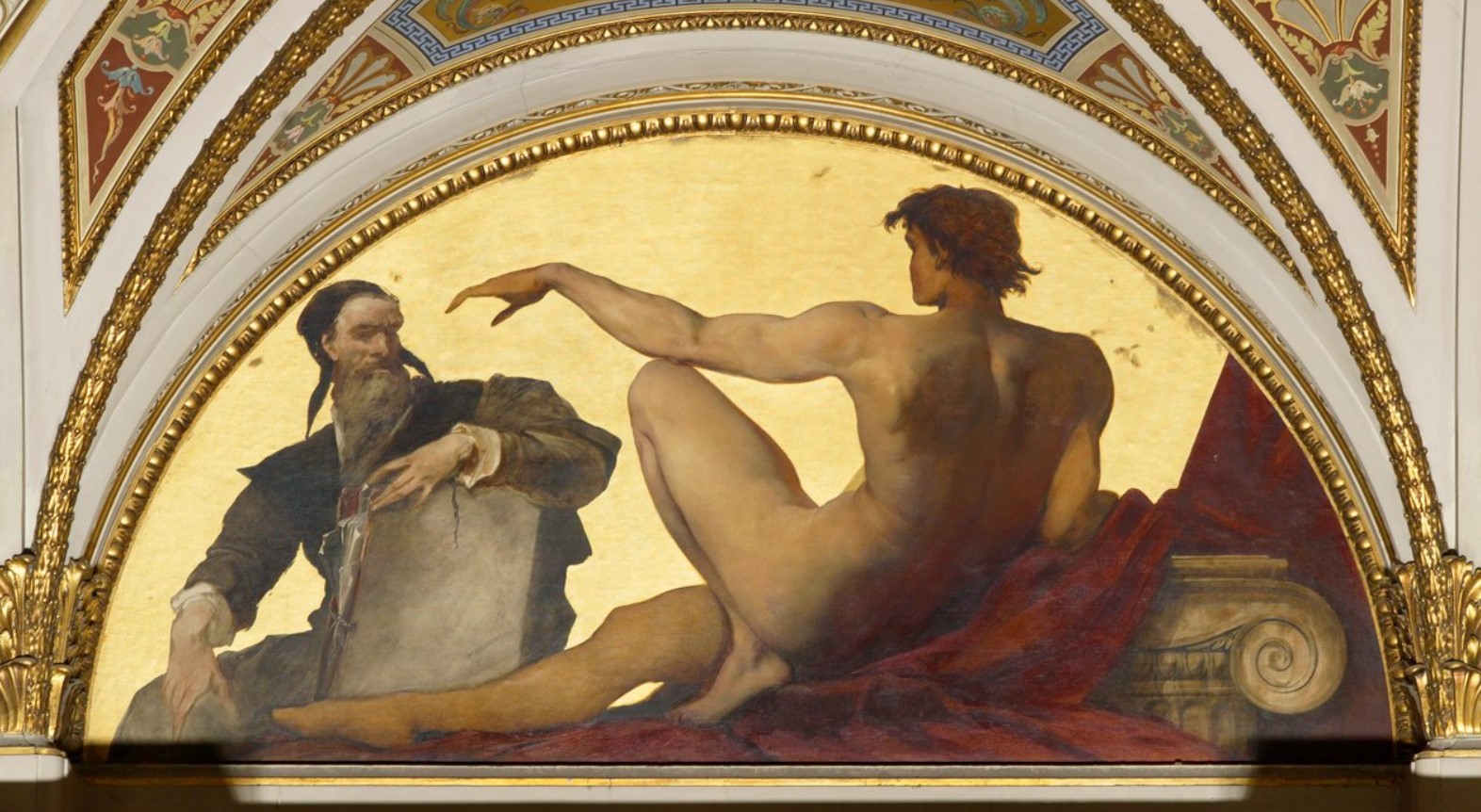
Poco prima di passare a miglior vita a soli 44 anni, il 3 ottobre del 1884, l’artista aveva portato a termine gli affreschi nelle lunette, raffiguranti ‘gli eroi classici della pittura assieme alle loro creazioni’.
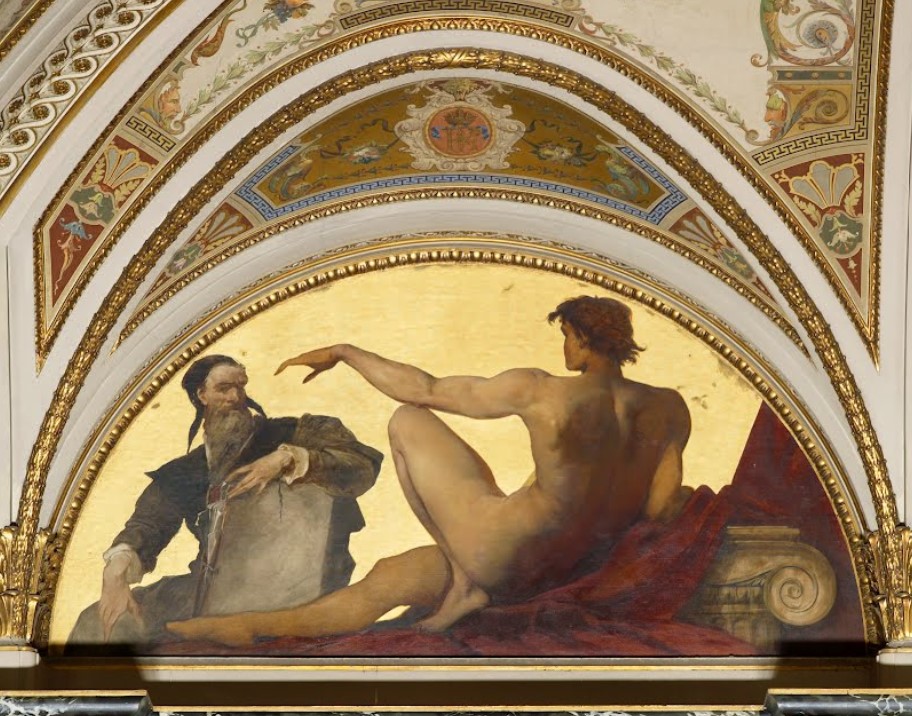
In questa serie dipinse anche me assieme all’Adamo che avevo affrescato secoli prima nella volta della Cappella Sistina, visto di spalle. Protende verso di me la mano, verso colui che lo ideò attraverso mente e pennelli.
Non è disteso su una roccia come nella Creazione di Adamo ma bensì su un drappo rosso, con il gomito destro appoggiato su un capitello ionico.
Io me ne sto lì ad osservarlo, per cercare di capire se lo avessi potuto fare meglio di così. Abbigliato com’era in uso ai miei tempi, porto in capo una cuffia e con la mano sinistra sostengo una serie di disegni rilegati in un libro.
Conoscevate quest’opera?
Per il momento il sempre vostro Michelangelo Buonarroti vi saluta dandovi appuntamento ai prossimi post e sui social.
Michelangelo 550: this is how Hans Makart painted me in Vienna
For the column ‘Michelangelo 550’ created to commemorate the 550 years that have passed since my birth (1475-2025), today I will talk to you about the 19th-century fresco featuring me, created by the Austrian painter Hans Makart.
Do you know when the work was created? Well, the Kunsthistorisches Museum in Vienna opened its doors to visitors in 1891.
The artist Hans Makart, born in Salzburg on May 28, 1840, was commissioned to paint the fresco to decorate the ceiling, lunettes, pendentives and areas between the columns of the main staircase of the new museum.
Makart signed the contract in February 1881 and in the same year showed the delegation sent by the empire the preparatory drawings of the project.
Shortly before passing away at the age of 44, on October 3, 1884, the artist had completed the frescoes in the lunettes, depicting ‘the classical heroes of painting together with their creations’.
In this series he also painted me together with the Adam that I had frescoed centuries earlier in the vault of the Sistine Chapel, seen from behind. He is stretching out his hand towards me, towards the one who conceived him through mind and brushes.
He is not lying on a rock as in the Creation of Adam but rather on a red cloth, with his right elbow resting on an Ionic capital.
I am standing there observing him, trying to understand if I could have done it better. Dressed as was customary in my time, I am wearing a cap on my head and with my left hand I am holding a series of drawings bound in a book.
Did you know this work?
For now, yours ever Michelangelo Buonarroti bids you farewell, making an appointment to see you in the next posts and on social media.

Sostienici – Support Us
Se questo blog ti piace e ti appassiona, puoi aiutarci a farlo crescere sempre più sostenendoci in modo concreto condividendo i post, seguendo le pagine social e con un contributo che ci aiuta ad andare avanti con il nostro lavoro di divulgazione. . ENGLISH: If you like and are passionate about this blog, you can help us make it grow more and more by supporting us in a concrete way by sharing posts, following social pages and with a contribution that helps us to move forward with our dissemination work.
10,00 €
Condividi:


Questo sono io




sostienici

Sostienici – Support Us
Se questo blog ti piace e ti appassiona, puoi aiutarci a farlo crescere sempre più sostenendoci in modo concreto condividendo i post, seguendo le pagine social e con un contributo che ci aiuta ad andare avanti con il nostro lavoro di divulgazione. . ENGLISH: If you like and are passionate about this blog, you can help us make it grow more and more by supporting us in a concrete way by sharing posts, following social pages and with a contribution that helps us to move forward with our dissemination work.
€10,00


Ammetto che non conoscevo affatto quest’opera ed è stato interessante conoscerla così com’è stato interessante sapere delle sue origini. Grazie mille!
"Mi piace"Piace a 1 persona
Grazie 🙂
"Mi piace"Piace a 1 persona