
La Scultura del giorno: la malinconica Primavera di Carrier-Belleuse
La scultura del giorno che vi propongo oggi è l’allegoria della Primavera, scolpita dall’artista francese Albert-Ernest Carrier-Belleuse prima del 1868.
Carrier-Belleuse a soli 13 anni già era apprendista presso una bottega orafa. Iniziò a studiare arte nel 1840 all’Ecole des Beaux-Arts nel 1840 sotto l’attenta guida di Pierre-Jean David d’Angers.

Abile nel disegno, lavorò a Londra dal 1850 al 1855, progettando modelli in ceramica e metallo. Quando poi ebbe modo di tornare a Parigi, espose regolarmente sculture di grandi dimensioni al Salon dove ricevette diverse medaglie e gli furono commissionate numerose opere.
Il suo primo vero successo fu quando nel 1863 l’imperatore Napoleone III acquistò la Baccante in marmo a grandezza naturale con l’Erma di Dioniso e lo volle assumere poi per lavorare alla ricostruzione di Parigi.

Lo scultore francese firmò le sue opere A. Carrier fino al 1868 circa, anno in cui decise di apporre la firma Carrier-Belleuse.
L’artista dirigeva uno dei più grandi laboratori in Francia per riuscire a tenere il passo con tutte le sue commissioni e attività. Alcuni dei principali scultori della generazione successiva come Auguste Rodin, Jules Dalou e Alexandre Falguière, impararono da lui tutti i benefici che potevano avere mediante il lavoro in serie.

Il busto della Primavera appartiene a una collezione privata. Gli elaborati boccoli che riprendono lo stile di Canova e i fiori fra i capelli e sul petto, contrastano nettamente con l‘espressione malinconica della giovane.
Non è una Primavera festosa e piena di belle speranze quella scolpita da Carrier-Belleuse ma preoccupata e riflessiva.

Per il momento il sempre vostro Michelangelo Buonarroti vi saluta dandovi appuntamento ai prossimi post e sui social.


Sostienici – Support Us
Se questo blog ti piace e ti appassiona, puoi aiutarci a farlo crescere sempre più sostenendoci in modo concreto condividendo i post, seguendo le pagine social e con un contributo che ci aiuta ad andare avanti con il nostro lavoro di divulgazione. . ENGLISH: If you like and are passionate about this blog, you can help us make it grow more and more by supporting us in a concrete way by sharing posts, following social pages and with a contribution that helps us to move forward with our dissemination work.
10,00 €
Sculpture of the day: Spring by Carrier-Belleuse
The sculpture of the day that I propose to you today is the bust depicting the allegory of Spring, sculpted by the French artist Albert-Ernest Carrier-Belleuse before 1868.
At just 13 years old, Carrier-Belleuse was already an apprentice in a goldsmith’s shop. He began studying art in 1840 at the Ecole des Beaux-Arts in 1840 under the careful guidance of Pierre-Jean David d’Angers.
Skilled in design, he worked in London from 1850 to 1855, designing ceramic and metal models. When he returned to Paris, he regularly exhibited large-scale sculptures at the Salon where he received several medals and was commissioned for numerous works.
His first real success was when in 1863 Emperor Napoleon III purchased the life-size marble Bacchae with the Herm of Dionysus and then wanted to hire him to work on the reconstruction of Paris.
The French sculptor signed his works A. Carrier until around 1868, the year in which he decided to sign Carrier-Belleuse.
The artist ran one of the largest workshops in France to keep up with all his commissions and activities. Some of the leading sculptors of the next generation such as Auguste Rodin, Jules Dalou and Alexandre Falguière learned from him all the benefits they could gain from working in series.
The bust of Spring belongs to a private collection. The elaborate curls that recall Canova’s style and the flowers in her hair and on her chest contrast sharply with the young woman’s melancholic expression.
It is not a festive Spring full of beautiful hopes that Carrier-Belleuse sculpts but rather a worried and reflective one.
For the moment, your always Michelangelo Buonarroti greets you and will meet you in the next posts and on social media.
Sostienici – Support Us
Se questo blog ti piace e ti appassiona, puoi aiutarci a farlo crescere sempre più sostenendoci in modo concreto condividendo i post, seguendo le pagine social e con un contributo che ci aiuta ad andare avanti con il nostro lavoro di divulgazione. . ENGLISH: If you like and are passionate about this blog, you can help us make it grow more and more by supporting us in a concrete way by sharing posts, following social pages and with a contribution that helps us to move forward with our dissemination work.
10,00 €
-
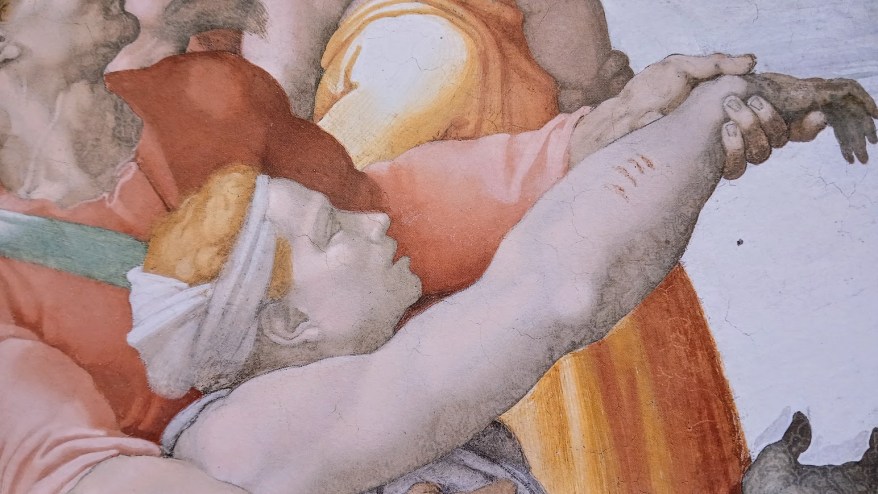
La donna morsa dal serpente nella Cappella Sistina
🇮🇹Quattro segni sul braccio. Nella volta della Cappella Sistina ho dipinto serpenti velenosi, corpi contorti e volti deformati dal terrore. Ma c’è un particolare che potrebbe sfuggirvi… 🇬🇧Four marks on the arm. On the ceiling of the Sistine Chapel, I painted venomous snakes, contorted bodies, and faces twisted by terror. But there is a detail…
-
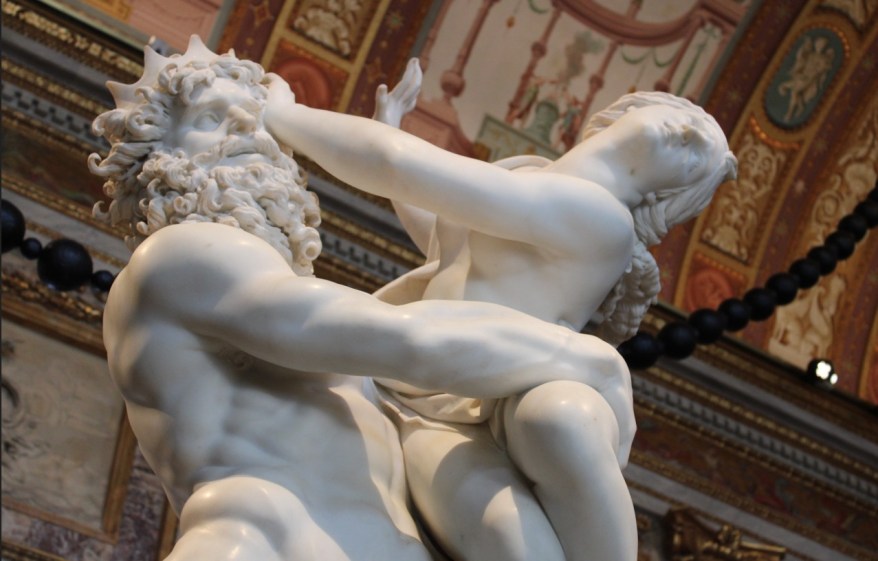
Gian Lorenzo Bernini: l’uomo che fece muovere il marmo
🇮🇹Davanti a una scultura di Gian Lorenzo Bernini, capita di avvicinarsi per osservare un dettaglio e ritrovarsi a seguire con lo sguardo l’intera scena. Una mano stringe una coscia, un volto si volta per sfuggire a uno sguardo, le dita si trasformano in foglie… 🇬🇧When standing before a sculpture by Gian Lorenzo Bernini, you might…
-
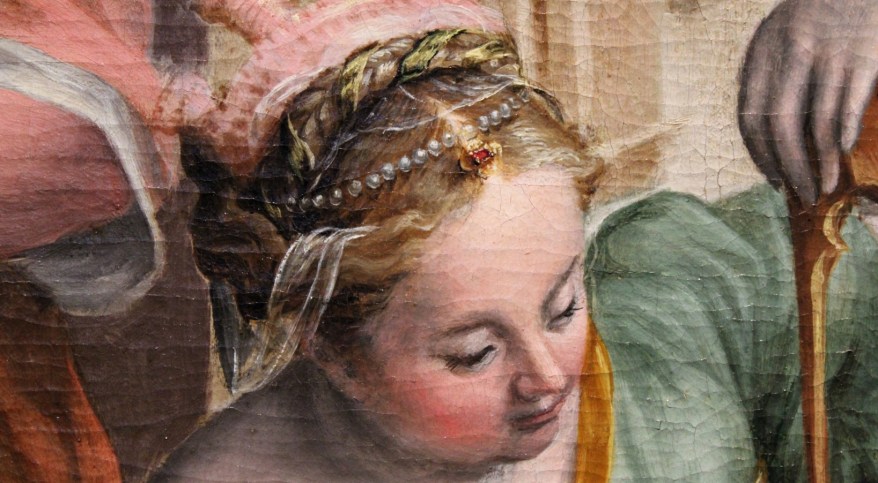
L’Allegoria della Geometria di Prospero Fontana: il dipinto attribuito per errore a Jacopo Coppi
🇮🇹L’Allegoria della Geometria, attribuita un tempo a Jacopo Coppi, è stata restituita a Prospero Fontana: storia, significato e segreti del dipinto… 🇬🇧The Allegory of Geometry, once attributed to Jacopo Coppi, has been reattributed to Prospero Fontana: the history, meaning, and secrets of the painting…
Condividi:


Questo sono io




sostienici

Sostienici - Support Us
Se questo blog ti piace e ti appassiona, puoi aiutarci a farlo crescere sempre più sostenendoci in modo concreto condividendo i post, seguendo le pagine social e con un contributo che ci aiuta ad andare avanti con il nostro lavoro di divulgazione. . ENGLISH: If you like and are passionate about this blog, you can help us make it grow more and more by supporting us in a concrete way by sharing posts, following social pages and with a contribution that helps us to move forward with our dissemination work.
€10,00


