

22-23 agosto 1944: la notte in cui scomparve il mascherone del Fauno sdentato
Era la notte compresa fra il 22 e il 23 agosto del 1944 quando il mascherone del Fauno sdentato a me attribuito fu rubato e scomparve nel nulla. Da allora se ne persero le tracce e ancora oggi non abbiamo idea di dove possa essere.
Sedetevi comodi: questa storia complessa ha inizio un bel po’ di tempo fa, quando ancora imparavo a scolpire nel Giardino di San Marco di Lorenzo il Magnifico.
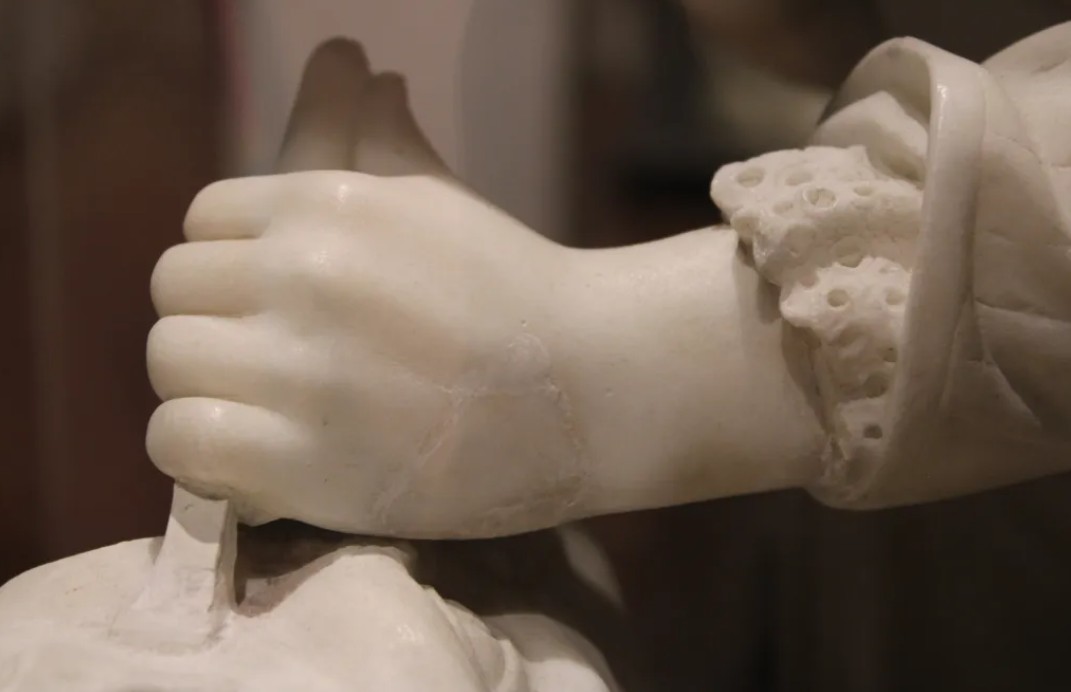
Poco più che bimbetto scolpii un bel mascherone di un attempato fauno, con una bella dentatura che mostrava ghignando. Mentre ero impegnato nel rifinirlo, passò di lì il Magnifico e mi fece un’acuta osservazione: “Come mai ha tutti quei denti? I vecchi son quasi sempre sdentati!”. Perbacco, aveva ragione.
Così ripresi gli attrezzi del mestiere in mano e gli feci saltare uno dopo l’altro tutti i denti lasciandone giusto un paio e trapanai il marmo laddove nemmeno la radice era più in loco.
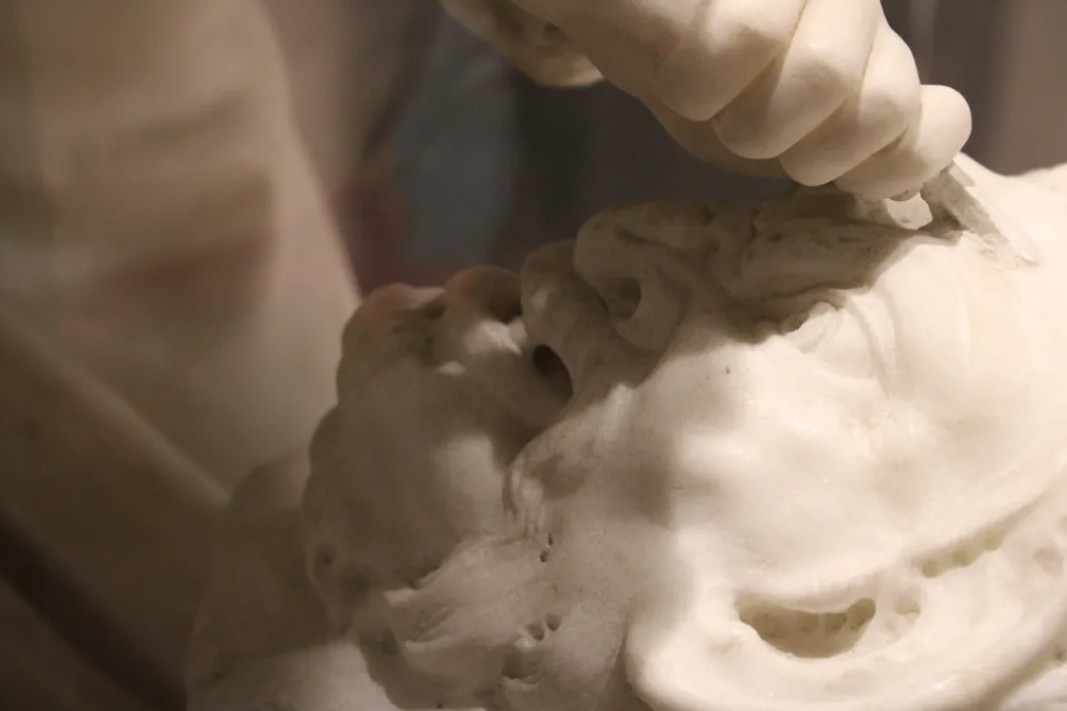
Di questa Testa di Fauno però, conservata al Museo Nazionale del Bargello, si hanno notizie fino allo scoppio della Seconda Guerra Mondiale quando, insieme ad altre opere, venne portata nel Castello di Poppi, nel Casentino, per essere sottratta dalle rapaci mani dei nazisti.
Il rifugio era considerato sicuro. Per arrivare al caveau era necessario aprire sette porte differenti, chiuse tutte a doppia mandata e ciascuna aveva bisogno di una propria chiave per essere aperta.
Le precauzioni prese non bastarono e vennero agilmente aggirate con l’inganno. Era la notte fra il 22 e il 23 agosto del 1944 quando gli ufficiali delle SS della 305° Infanterie Division entrarono con un espediente, riuscendo a portar via non solo il mio Fauno, ma anche molte altre preziose opere.

Caricarono in fretta e furia il maltolto su un furgoncino e sparirono, proteggendosi le spalle con raffiche di fuoco.
La maggior parte di quella refurtiva venne poi restituita all’Italia a guerra conclusa ma non la testa del mio Fauno sdentato.
In quell’occasione sparirono opere straordinarie come l’Autoritratto e La Velata di Raffaello, il Ritratto di Giovanni Bentivoglio di Lorenzo Costa tornate poi in patria mentre non verranno poi mai più recuperate come il Ritratto di Ignoto di Hans Memling prelevato dalla cassa n. 20, la Vergine che allatta il Bambino e Santi di Pierino da Vinci e per l’appunto la Maschera di Fauno custodite nella cassa 17.
Rodolfo Siverio, uno dei più noti cacciatori d’opere trafugate che per tutta la vita cercherà di far tornare in Italia quei capolavori, ha indagato a lungo sul Fauno arrivando a ipotizzare che al momento potrebbe trovarsi all’interno di qualche caveau in una banca svizzera oppure potrebbe essere finita in Russia, come risarcimento di guerra da parte di Berlino.

Prima di salutarvi vi ricordo che è al momento in corso la mostra Michelangelo rapito – Capolavori in guerra dagli Uffizi al Casentino allestita all’interno del Castello di Poppi.
Per i momento il vostro Michelangelo Buonarroti vi saluta dandovi appuntamento ai prossimi post e sui social.

22-23 August 1944: the night the mask of the toothless Faun disappeared
It was the night between 22 and 23 August 1944 when the mask of the toothless Faun attributed to me was stolen and disappeared into thin air. Since then, traces of it have been lost and even today we have no idea where it could be.
Sit down comfortably: this complex story begins quite some time ago, when I was still learning to sculpt in Lorenzo the Magnificent’s Garden of San Marco.
Little more than a little boy, I sculpted a beautiful mask of an elderly faun, with a beautiful set of teeth that he showed grinning. While I was busy finishing it, the Magnifico passed by and made a perceptive observation: “Why does it have all those teeth? Old people are almost always toothless!”. Wow, he was right.
So I took the tools of the trade back into my hands and knocked out all his teeth one after the other leaving just a couple and I drilled the marble where not even the root was anymore in place.
However, as I mentioned before, we have news of this Head of a Faun until the outbreak of the Second World War when, together with other works, it was taken to the Castle of Poppi, in the Casentino, to be stolen from the rapacious hands of the Nazis.
The shelter was considered safe. To get to the vault it was necessary to open seven different doors, all locked with a double lock and each needed its own key to be opened.
The precautions taken were not enough and were easily circumvented with deception. It was the night between 22 and 23 August 1944 when the SS officers of the 305th Infanterie Division entered with an expedient, managing to take away not only my Faun, but also many other precious works.
They hurriedly loaded the stolen goods into a van and disappeared, protecting their backs with volleys of fire.
Most of that stolen goods were then returned to Italy after the war, but not the head of my toothless Faun.
On that occasion, extraordinary works such as the Self-Portrait and La Velata by Raffaello, the Portrait of Giovanni Bentivoglio by Lorenzo Costa disappeared and then returned to their homeland, while the Portrait of an Unknown by Hans Memling taken from box no. 20, the Virgin nursing the Child and Saints by Pierino da Vinci and precisely the Mask of a Faun kept in box 17.
Rodolfo Siverio, one of the most well-known hunters of stolen works who throughout his life will try to get those masterpieces back to Italy, has investigated the Faun for a long time coming to the hypothesis that at the moment he could be inside some vault in a Swiss bank or it could have ended up in Russia, as war reparations from Berlin.
Before saying goodbye, I remind you that the exhibition Michelangelo Kidnapped – Masterpieces at War from the Uffizi to the Casentino is currently underway, set up inside the Castle of Poppi.
For the moment, your Michelangelo Buonarroti greets you by making an appointment for the next posts and on social media.

Sostienici – Support Us
Se questo blog ti piace e ti appassiona, puoi aiutarci a farlo crescere sempre più sostenendoci in modo concreto condividendo i post, seguendo le pagine social e con un contributo che ci aiuta ad andare avanti con il nostro lavoro di divulgazione. . ENGLISH: If you like and are passionate about this blog, you can help us make it grow more and more by supporting us in a concrete way by sharing posts, following social pages and with a contribution that helps us to move forward with our dissemination work.
10,00 €
-
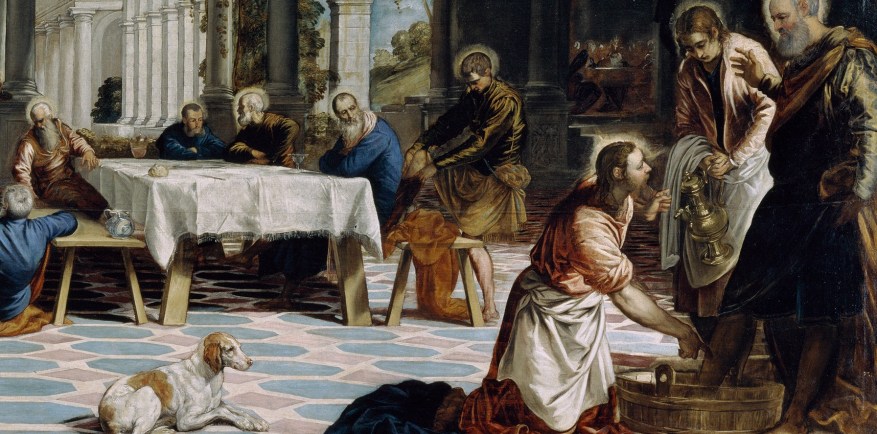
La Lavanda dei Piedi di Tintoretto: Il Capolavoro Veneziano al Prado
🇮🇹Tra i capolavori più affascinanti del Rinascimento veneziano, “La Lavanda dei Piedi” di Jacopo Tintoretto rappresenta un perfetto equilibrio tra spiritualità, innovazione compositiva e straordinaria forza narrativa… 🇬🇧Among the most fascinating masterpieces of the Venetian Renaissance, Jacopo Tintoretto’s “The Washing of the Feet” represents a perfect balance between spirituality, compositional innovation, and extraordinary narrative force…
-
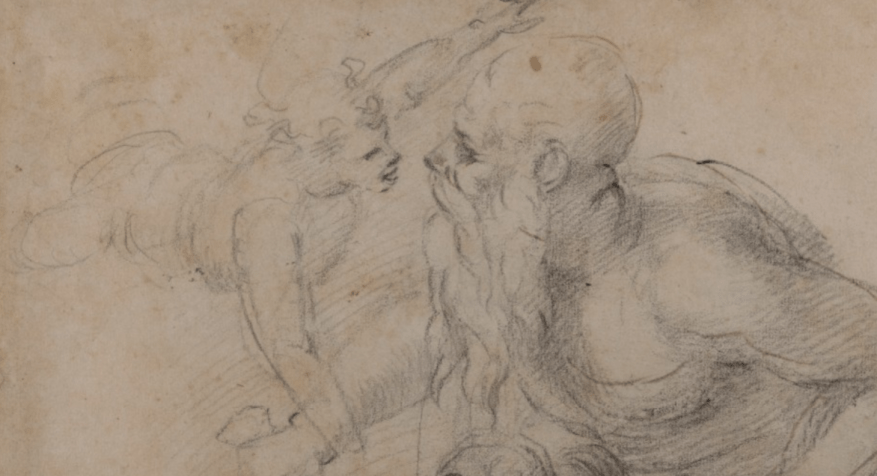
Il Sacrificio di Isacco e quel momento tra la vita e la morte
🇮🇹Oggi voglio raccontarvi alcuni dettagli sul mio disegno del Sacrificio di Isacco, conservato oggi a Casa Buonarroti. Su quel foglio volli tracciare il momento preciso in cui la paura fa spazio al miracolo… 🇬🇧Today I want to tell you some details about my drawing of the Sacrifice of Isaac, now preserved at Casa Buonarroti. On…
-
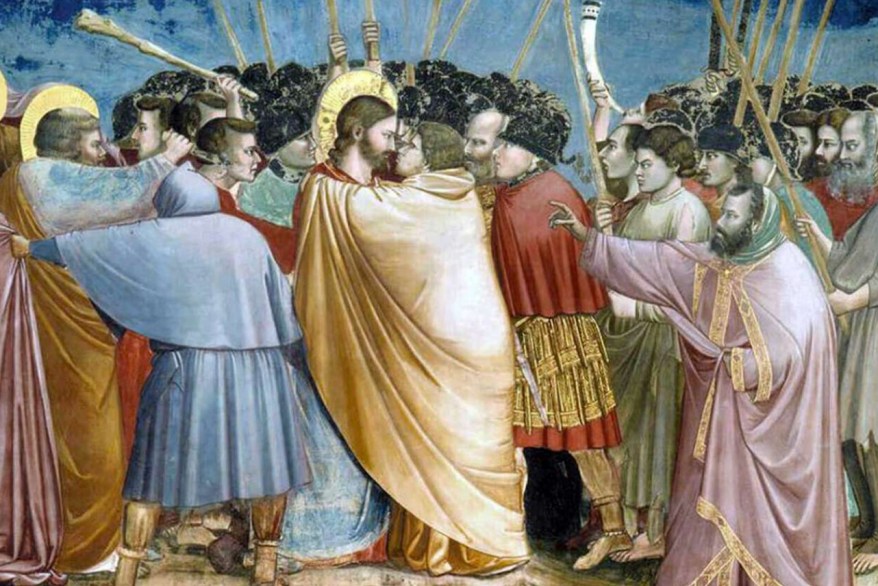
Mercoledì Santo: il giorno del tradimento di Giuda affrescato da Giotto
🇮🇹Il Mercoledì Santo è il giorno del silenzio, della riflessione e del tradimento. È il momento in cui Giuda sceglie di vendere Gesù per trenta denari, segnando uno dei passaggi più dolorosi della Settimana Santa…. 🇬🇧Holy Wednesday is a day of silence, reflection, and betrayal. ✝It is the moment when Judas chooses to sell Jesus…
Condividi:


Questo sono io





sostienici

Sostienici – Support Us
Se questo blog ti piace e ti appassiona, puoi aiutarci a farlo crescere sempre più sostenendoci in modo concreto condividendo i post, seguendo le pagine social e con un contributo che ci aiuta ad andare avanti con il nostro lavoro di divulgazione. . ENGLISH: If you like and are passionate about this blog, you can help us make it grow more and more by supporting us in a concrete way by sharing posts, following social pages and with a contribution that helps us to move forward with our dissemination work.
€10,00


o l’avrà in casa qualche nababbo senza scrupoli di coscienza
"Mi piace""Mi piace"