

La Scultura del giorno: quel materasso trapuntato del Bernini per l’Ermafrodito dormiente
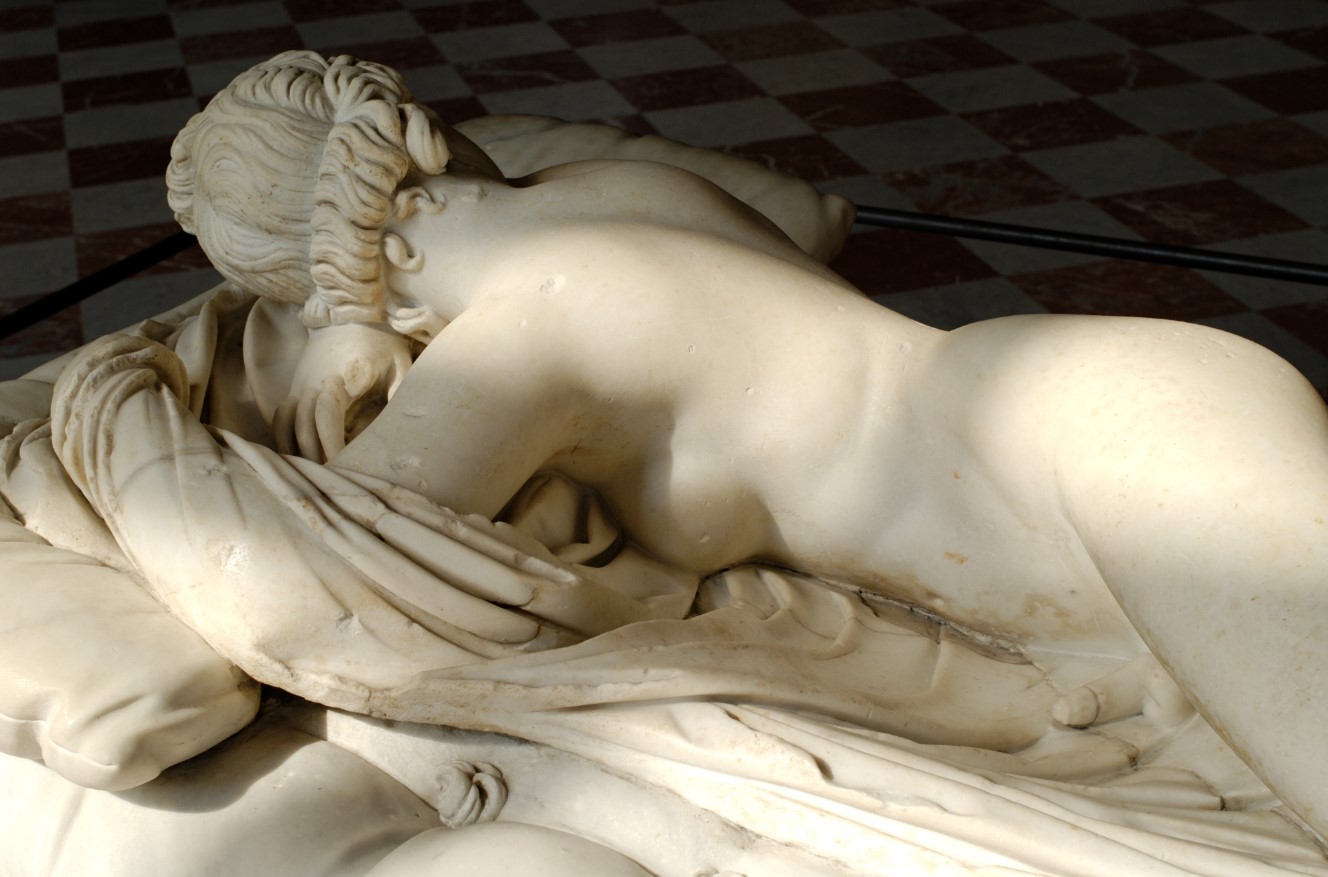
La scultura del giorno che vi propongo oggi è l’Ermafrodito dormiente a grandezza naturale, integrato con lo splendido materasso trapuntato scolpito da Gian Lorenzo Bernini.
La scultura giacente è una copia romana di epoca imperiale da originale greco in bronzo risalente al II secolo dopo Cristo, attribuito a Policleto.

L’opera fu ritrovata nel 1619 all’interno del giardino di Santa Maria della Vittoria a Roma, durante gli scavi effettuati per edificare la nuova chiesa.
Appenala scultura fu liberata dalla terra che la teneva prigioniera, i lavoratori andarono a chiamare Scipione Borghese, amante del bello e grande intenditore d’arte. Il cardinale non volle farsi sfuggire l’occasione di entrare in possesso di quel capolavoro e offrì in cambio il lavoro del suo architetto di fiducia Giovanni Battista Soria che avrebbe contribuito in modo importante alla realizzazione di quella chiesa.
L’Ermafrodito che un tempo apparteneva a Borghese è senza dubbio quello che divenne più ammirato e celebrato. Colto nell’atto di dormire in posizione prona ma con una torsione del corpo che consente di vedere il suo sesso.

Nel 1620 Scipione Borghese commissionò il restauro dell’opera con l’integrazione del materasso scolpito da Gian Lorenzo Bernini.
Mentre l’integrazione del piede mancante è attribuita allo scultore David Larique, il Bernini fu remunerato con 60 scudi per la realizzazione della base dell’opera.
Quel materasso in marmo di Carrara che sembra soffice, cede sotto il peso del corpo dell’Ermafrodito. Schiacciato nei punti di contatto con il corpo del giovane, lo sostiene rendendo l’insieme ancora più affascinante e sensuale.

Chi era Ermafrodito?
Secondo la mitologia greca, Ermafrodito era il figliolo di Afrodite ed Ermo. Il bambino appena nato fu allattato dalle Naiadi nelle grotte sacre del Monte Ida.
A quindici anni, oramai annoiato dal luogo che lo circondava iniziò a vagare per il mondo e raggiunse le rive di un lago in Caria.
Lo notò la ninfa Salmace e si innamorò perdutamente di lui. Tentò invano di sedurlo ma fu respinta. Ermafrodito si buttò nel lago per allontanarsi ma Salmace lo raggiunse e divennero un solo corpo dando vita a una figura androgina metà donna e metà uomo.
La collocazione dell’opera
Oggi questo capolavoro che unisce l’arte antica a quella barocca di Bernini si trova al Museo del Louvre.
Fu acquistata nel 1807 assieme a tanti altri pezzi della collezione di Scipione dal principe Camillo Filippo Ludovico Borghese che si era unito in matrimonio con Paolina Borghese, sorella di Napoleone.
Da quel momento il suo destino oltralpe fu segnato: venne trasferita al Louvre dove tutt’oggi è esposta. Di fatto non fu un opera trafugata da Napoleone ma acquistata in modo regolare sebbene assai discutibile.
Per il momento il vostro Michelangelo Buonarroti vi saluta dandovi appuntamento ai prossimi post e sui social.
Sculpture of the day: that quilted mattress by Bernini for the sleeping hermaphrodite
The sculpture of the day that I propose to you today is the life-size sleeping Hermaphrodite, integrated with the splendid quilted mattress sculpted by Gian Lorenzo Bernini.
The recumbent sculpture is a Roman copy of the imperial era from a Greek original in bronze dating back to the 2nd century AD, attributed to Polykleitos. It was found in 1619 in the garden of Santa Maria della Vittoria in Rome, during the excavations carried out to build the new church.
As soon as the work was freed from the earth that held it prisoner, the workers went to call Scipione Borghese, a lover of beauty and a great connoisseur of art. The cardinal did not want to miss the opportunity to take possession of that masterpiece and offered in exchange the work of his trusted architect Giovanni Battista Soria who would have contributed in an important way to the construction of that church.
The Hermaphrodite that once belonged to Borghese is undoubtedly the one that became the most admired and celebrated. Caught in the act of sleeping in the prone position but with a twist of the body that allows his sex to be seen.
In 1620 Scipione Borghese commissioned the restoration of the work with the integration of the mattress sculpted by Gian Lorenzo Bernini.
While the integration of the missing foot is attributed to the sculptor David Larique, Bernini was paid 60 scudi for the creation of the base of the work.
That mattress that seems soft, yields under the weight of the Hermaphrodite’s body. Crushed at the points of contact with the young man’s body, it supports it making the whole even more fascinating and sensual.
Who was Hermaphrodite?
According to Greek mythology, Hermaphroditus was the son of Aphrodite and Hermus. The newborn child was nursed by Naiads in the sacred caves of Mount Ida. At fifteen, bored by the place around him, he began to wander the world and reached the shores of a lake in Caria.
The nymph Salmace noticed him and fell in love with him. She tried in vain to seduce him but she was rejected. Hermaphroditus threw himself into the lake to get away but Salmace joined him and they became one body giving life to an androgynous figure half woman and half man.
The location of the work
Today this masterpiece that combines ancient and Baroque art by Bernini is located in the Louvre Museum.
It was purchased in 1807 along with many other pieces from Scipione’s collection by Prince Camillo Filippo Ludovico Borghese who had married Paolina Borghese, Napoleon’s sister.
From that moment on, his fate beyond the Alps was sealed. It was transferred to the Louvre where it is still on display today. In fact it was not a work stolen by Napoleon but purchased on a regular basis although very questionable.
For the moment, your Michelangelo Buonarroti greets you by making an appointment for the next posts and on social media.

Sostienici – Support Us
Se questo blog ti piace e ti appassiona, puoi aiutarci a farlo crescere sempre più sostenendoci in modo concreto condividendo i post, seguendo le pagine social e con un contributo che ci aiuta ad andare avanti con il nostro lavoro di divulgazione. . ENGLISH: If you like and are passionate about this blog, you can help us make it grow more and more by supporting us in a concrete way by sharing posts, following social pages and with a contribution that helps us to move forward with our dissemination work.
8,00 €
-
Al via il restauro del basamento del Perseo al Bargello con un cantiere visibile al pubblico
🇮🇹Al Museo Nazionale del Bargello prende il via il restauro del basamento del Perseo di Benvenuto Cellini. Il cantiere sarà visibile al pubblico… 🇬🇧The restoration of the base of Benvenuto Cellini’s Perseus begins at the Bargello National Museum. The work will be open to the public…
-

Lucca Città di Carta 2026: il 25 e 26 aprile tra libri, arte e creatività
🇮🇹Lucca profuma di carta, storie e creatività. Sabato 25 e domenica 26 aprile torna uno degli appuntamenti culturali più originali della Toscana: il festival Lucca Città di Carta, che animerà gli spazi del Real Collegio di Lucca con un ricco programma… 🇬🇧Lucca smells of paper, stories, and creativity. On Saturday, April 25th and Sunday, April…
-
Frammento dell’Iliade in una mummia in Egitto: scoperta straordinaria a Oxyrhynchus
🇮🇹Ritrovato a Oxyrhynchus un papiro con il “Catalogo delle navi” di Omero inserito intenzionalmente in un rituale di mummificazione: un caso unico nel mondo antico… 🇬🇧A papyrus containing Homer’s “Catalogue of Ships” intentionally inserted into a mummification ritual was found in Oxyrhynchus: a unique case in the ancient world…
Condividi:


Questo sono io





sostienici

Sostienici – Support Us
Se questo blog ti piace e ti appassiona, puoi aiutarci a farlo crescere sempre più sostenendoci in modo concreto condividendo i post, seguendo le pagine social e con un contributo che ci aiuta ad andare avanti con il nostro lavoro di divulgazione. . ENGLISH: If you like and are passionate about this blog, you can help us make it grow more and more by supporting us in a concrete way by sharing posts, following social pages and with a contribution that helps us to move forward with our dissemination work.
€10,00


opera sconvolgente, ogni volta che mi capita di osservarla, anche solo virtualmente, non posso fare a meno di commuovermi per la grande abilità di trasmettere la forza combinata ed equilibrata di sensualità e dolcezza
"Mi piace"Piace a 1 persona
è davvero emozionante
"Mi piace""Mi piace"
Policleto?
"Mi piace""Mi piace"
Probabilmente Policleto il Giovane per la scultura, il materasso Bernini
"Mi piace""Mi piace"
Grazie Buonarroti, davvero bello e affascinante! 😊
"Mi piace"Piace a 1 persona
grazie :-*
"Mi piace""Mi piace"