
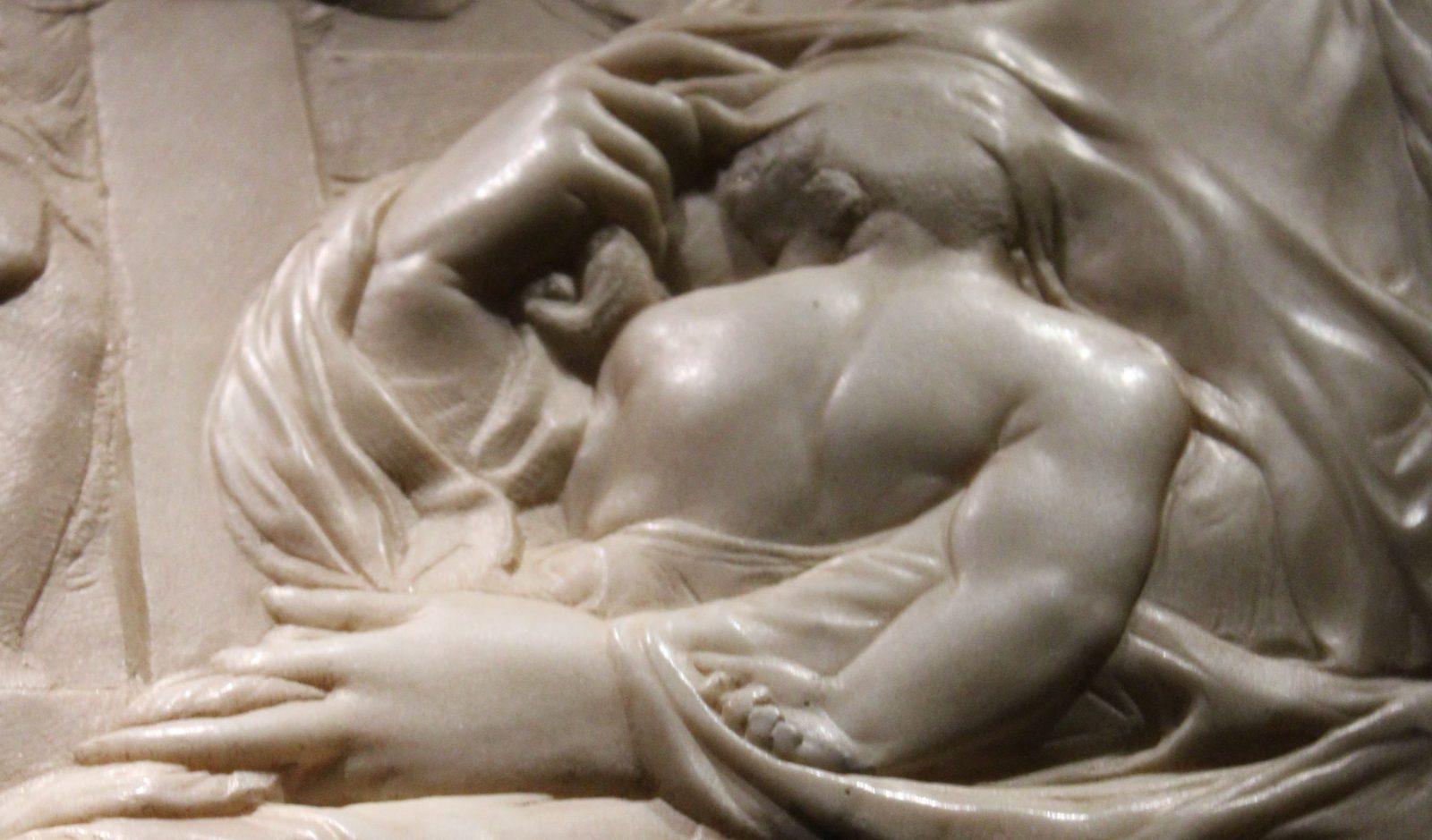
Il Crocifisso in tiglio non finito
A Casa Buonarroti, custodito in una teca in cristallo, c’è un piccolo Crocifisso in tiglio non terminato. La sua superficie permette di vedere uno dopo l’altro i segni della sgorbia, lo strumento che si utilizza per scavare e intaglia il legno.
Nel gruppo di lettere che Lorenzo Mariottini scrisse al mi nipote Lionardo tra l’agosto e l’ottobre del 1562, è evidente che volessi scolpire un Crocifisso in legno.
Desideravo che Lionardo mi facesse forgiare e poi spedire a Roma tutti i ferri necessari per poterlo fare.

Se l’opera da scolpire fosse stata di così piccole dimensioni come il Crocifisso di Casa Buonarroti probabilmente non sarebbe stato necessario l’utilizzo di così tanti ferri forgiati di proposito.
Tenendo a mente queste considerazioni, Tolnay ipotizzò che la piccola opera fosse piuttosto uno studio per un Crocifisso di maggiori dimensioni.
Un anno e mezzo dopo sarei passato a miglior vita

Per il momento il vostro Michelangelo Buonarroti vi saluta dandovi appuntamento ai prossimi post e sui social.
The unfinished linden Crucifix
At Casa Buonarroti, kept in a crystal case, there is a small unfinished linden Crucifix. Its surface allows you to see one after the other the signs of the gouge, the tool used to dig and carve wood.
In the group of letters that Lorenzo Mariottini wrote to my nephew Lionardo between August and October 1562, it is evident that he himself wanted to carve a wooden Crucifix. I wanted Leonardo to have me forged and then sent to Rome all the tools needed to do it.
If the work to be sculpted had been as small as the Casa Buonarroti Crucifix, it would probably not have been necessary to use so many purposely forged irons. With these considerations in mind, Tolnay speculated that the small work was rather a study for a larger Crucifix.
A year and a half later I would have passed away.
For the moment, your Michelangelo Buonarroti greets you by making an appointment for the next posts and on social media.

Sostienici – Support Us
Se questo blog ti piace e ti appassiona, puoi aiutarci a farlo crescere sempre più sostenendoci in modo concreto condividendo i post, seguendo le pagine social e con un contributo che ci aiuta ad andare avanti con il nostro lavoro di divulgazione. . ENGLISH: If you like and are passionate about this blog, you can help us make it grow more and more by supporting us in a concrete way by sharing posts, following social pages and with a contribution that helps us to move forward with our dissemination work.
8,00 €
-
Eugenio Battisti, lo storico dell’arte che sfidò le regole: un libro ne riscopre il pensiero
Eugenio Battisti, storico dell’arte anticonformista: il volume Olschki per il centenario ne riscopre il pensiero, L’Antirinascimento e il rapporto con me…
-
Van Gogh all’asta da record: ‘Castagni in fiore’ potrebbe superare i 200 milioni di dollari
🇮🇹Un Van Gogh dipinto nel 1890 e rimasto nascosto per oltre 60 anni va all’asta da Sotheby’s il 18 novembre. La stima è di 180 milioni di dollari… 🇬🇧A Van Gogh painting from 1890, which remained hidden for over 60 years, is set to go up for auction at Sotheby’s on November 18. It is…
-
Il Bambino Gesù che illumina la notte: il segreto delle Natività più belle della storia dell’arte
🇮🇹Perché in tante Natività il Bambino Gesù emana luce? Da Geertgen a Correggio, scopri il significato simbolico di uno dei temi più suggestivi dell’arte sacra… 🇬🇧Why does the Baby Jesus radiate light in so many Nativity scenes? From Geertgen to Correggio, discover the symbolic meaning behind one of the most evocative themes in sacred art…
Condividi:


Questo sono io





sostienici

Sostienici – Support Us
Se questo blog ti piace e ti appassiona, puoi aiutarci a farlo crescere sempre più sostenendoci in modo concreto condividendo i post, seguendo le pagine social e con un contributo che ci aiuta ad andare avanti con il nostro lavoro di divulgazione. . ENGLISH: If you like and are passionate about this blog, you can help us make it grow more and more by supporting us in a concrete way by sharing posts, following social pages and with a contribution that helps us to move forward with our dissemination work.
€10,00


