
La Scultura del giorno: il David di Donatello
La scultura del giorno che vi propongo oggi è uno dei capolavori assoluti dell’arte: il David di Donatello.
Il sommo Donatello, al secolo Donato di Niccolò di Betto Bardi, diede forma a questa sua opera in bronzo con una maniera “anticamente moderna e modernamente antica” come scrisse il Vasari.
Mentre io preferii scolpire un David poderoso privo di qualsiasi ornamento nell’attimo prima dello scontro con il gigante, Donatello si rifece all’iconografia classica che lo vede già vincitore con la testa di Golia ai piedi. Il suo è un Davi ragazzino, proprio come viene descritto nella Bibbia.
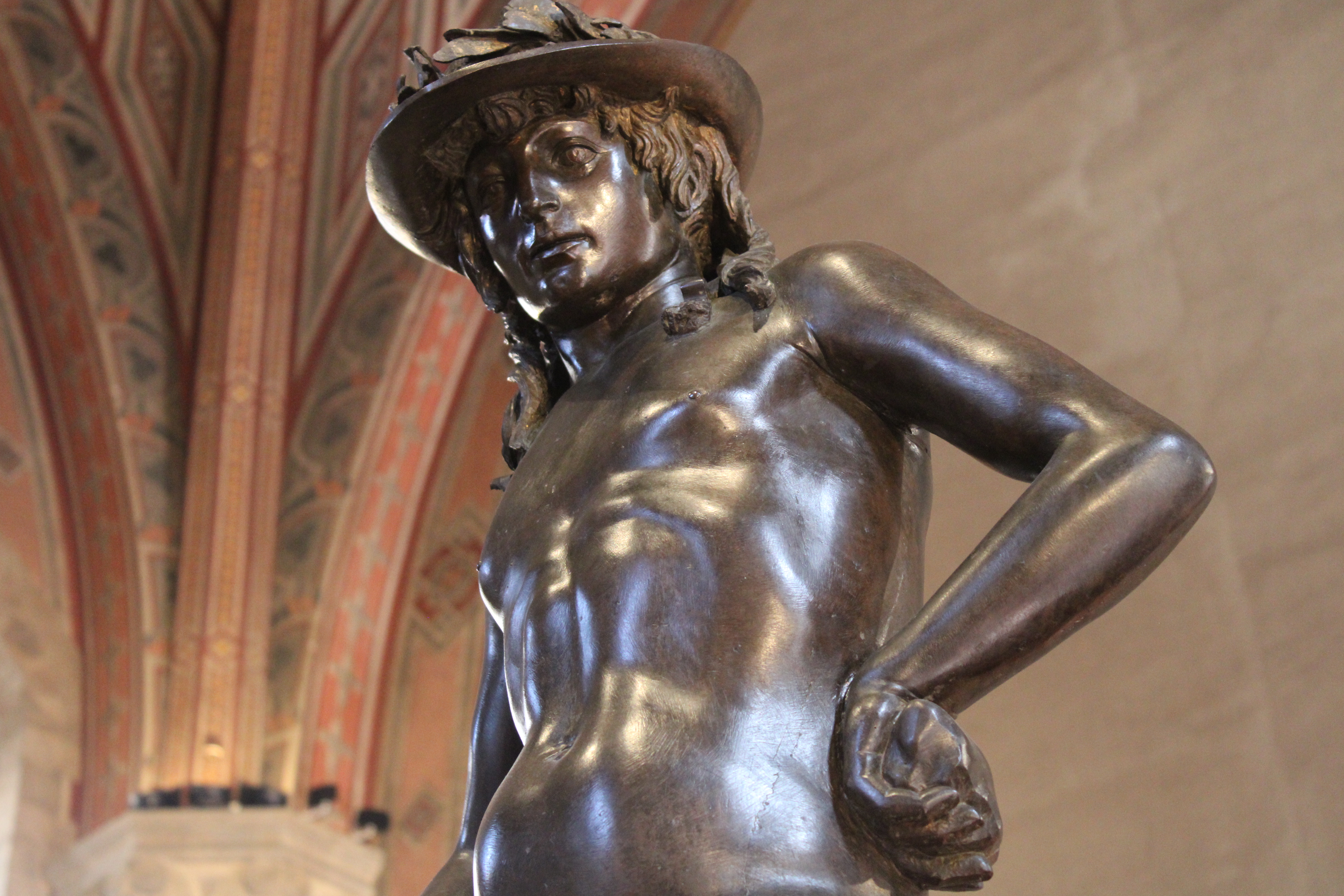
Sono esigue le fonti documentarie che fanno menzione del David. Sicuramente la più datata è quella relativa al resoconto dello sposalizio del Magnifico con Clarice Orsini, nel 1469. Nel documento si può leggere che nel cortile di Palazzo Medici il David fu collocato al di sopra di una colonna bellissima.
L’opera fu commissionata a Donatello da Cosimo de’ Medici fra i 1434 e il 1443 per la cosiddetta casa vecchia ovvero quello che oggi è Palazzo Medici Riccardi. Come accennato prima, l’opera fu posizionata sopra un alto piedistallo di marmi policromi decorato con arpie, foglie e realizzato da Desiderio da Settignano.
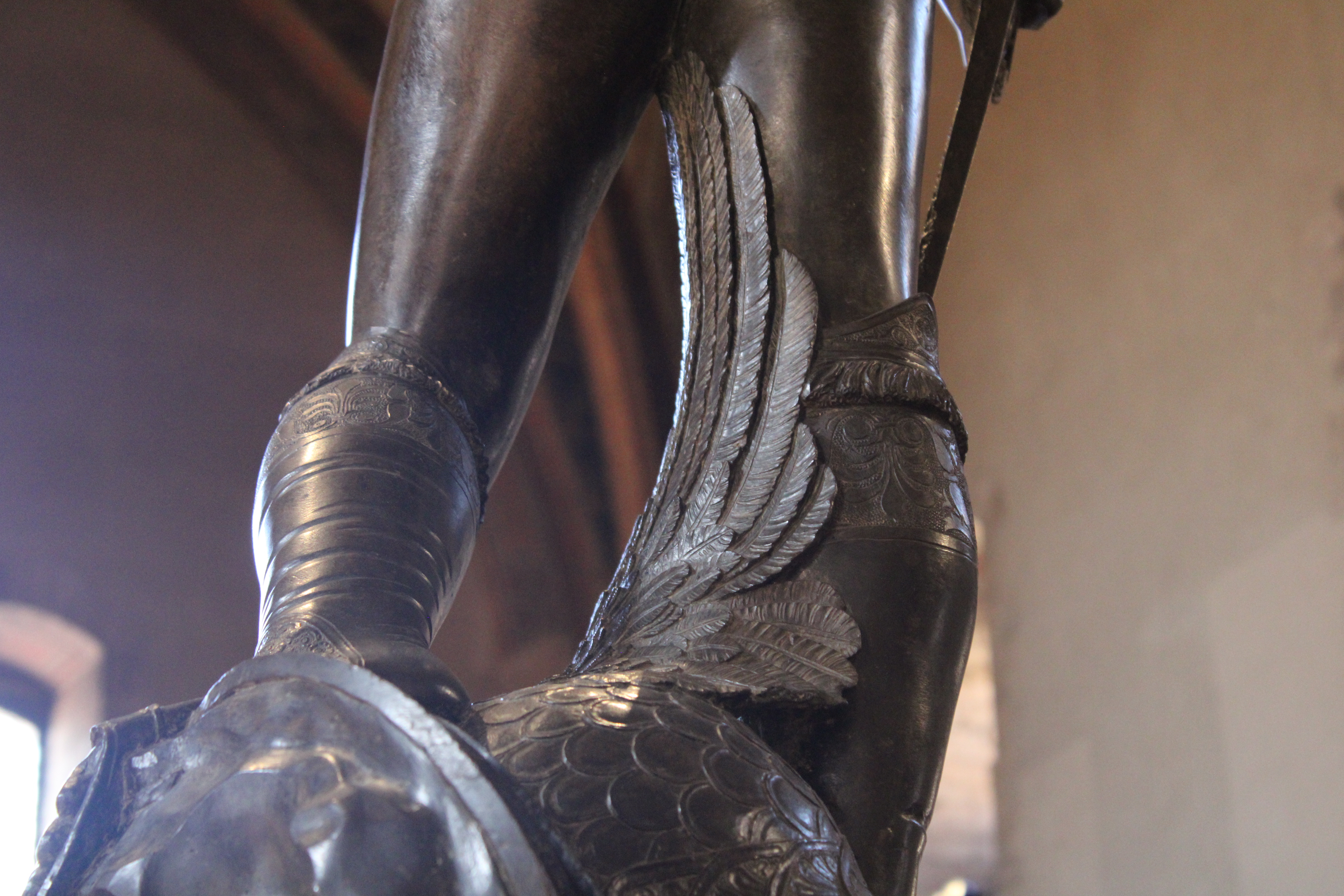
Al tempo si trovava al centro della Sala degli Uomini Famosi, affrescata da Bicci di Lorenzo, un ciclo pittorico purtroppo andato perduto. Era la sala di rappresentanza dei Medici.
Qualche anno dopo il David fu spostato nel cortile, all’aria aperta.
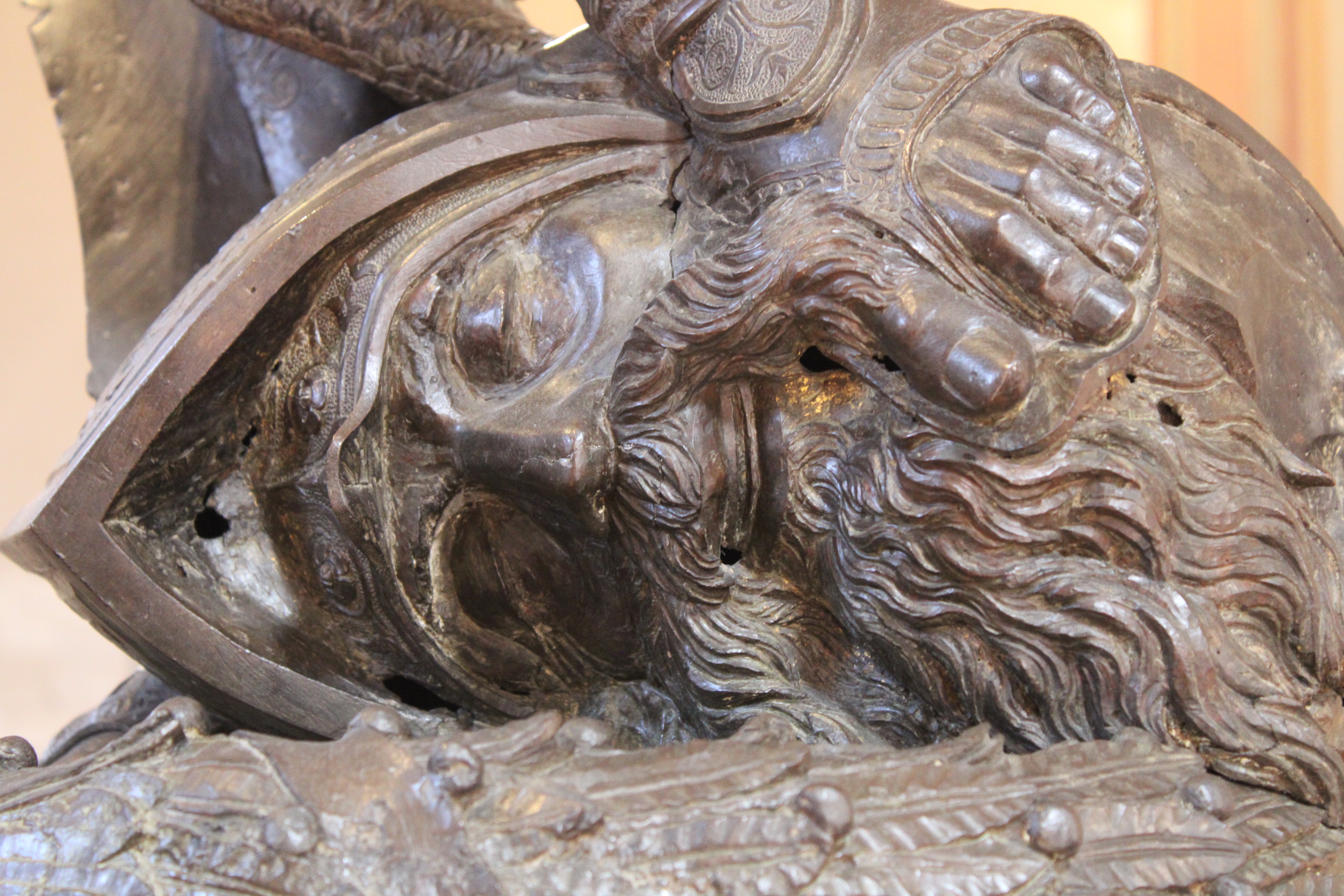
La fusione fu realizzata in otto differenti pezzi: il cappello, il capo, il corpo fino alle ginocchia, l’elsa della spada con tanto di mano destra, la lama della spada, la testa di Golia, la ghirlanda d’alloro posizionata all’altezza dei piedi e il collo del David.
Purtroppo nel corso dei secoli è andato perduto il pennacchio che il futuro re d’Israele sfoggiava sul cappello.
Il David dovesse essere visto dal basso e questo aspetto viene confermato dal fatto che, dopo la fusione, le parti non visibili da terra non fossero state rinettate scrupolosamente.
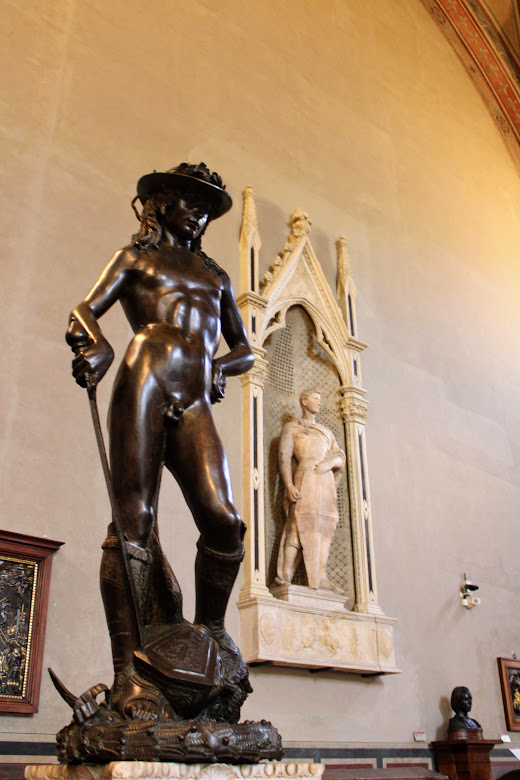
Alla stregua di tutti gli altri David rinascimentali realizzati in quel di Firenze, anche questo aveva una chiara simbologia: la raffigurazione della fiducia nelle capacità umane attraverso la fiducia in Dio.
Se guardate bene l’opera, non vi sfuggirà il fatto che abbia il cappello cinto con una corona di mirto. E’ la stessa corona che in epoca greca prima e romana poi alludeva all’eroismo in tempo di guerra e alla gloria eterna.
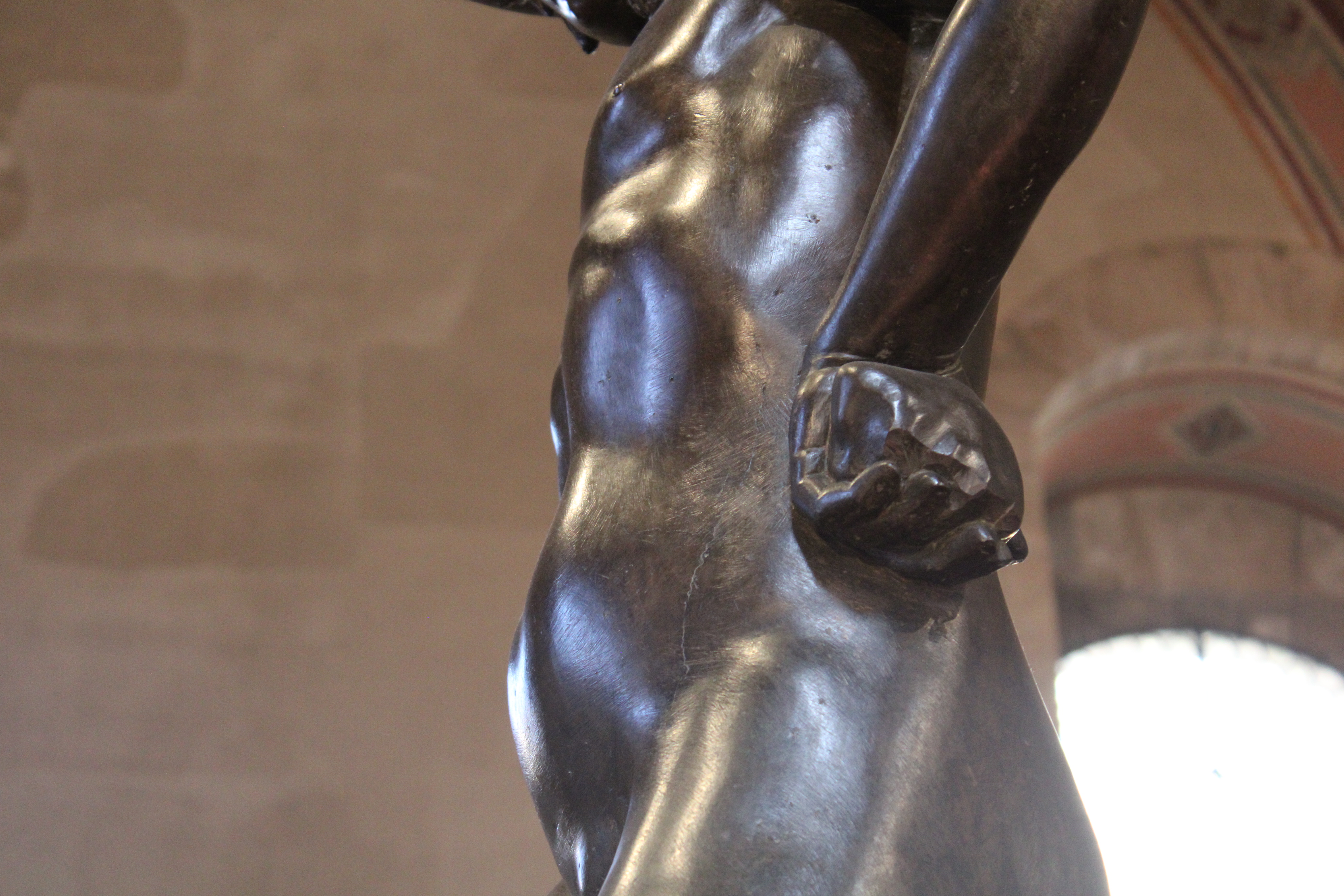
Il restauro
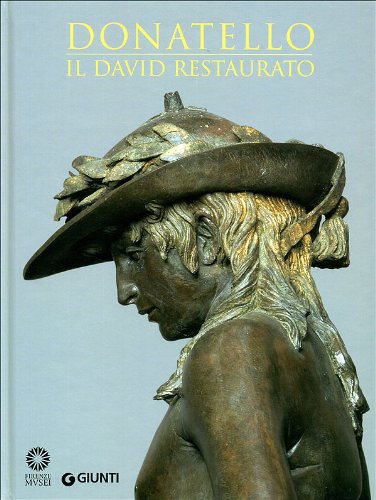
Il David di Donatello è stato sottoposto a un delicato intervento di restauro a partire dal 26 giugno 2007 che si è concluso nel novembre 2008. L’intervento fu diretto da Beatrice Paolozzi Strozzi ed eseguito materialmente da Ludovica Nicolai con l’apporto dell’Opificio delle Pietre Dure.
Venne eseguito a cantiere aperto, nel salone di Donatello del Bargello e visibile anche online. Finanziato con una cifra che si aggirava attorno ai 200mila euro dalla Protezione Civile, il restauro era divenuto irrimandabile a causa del deterioramento causato dalla lunga esposizione agli agenti atmosferici.
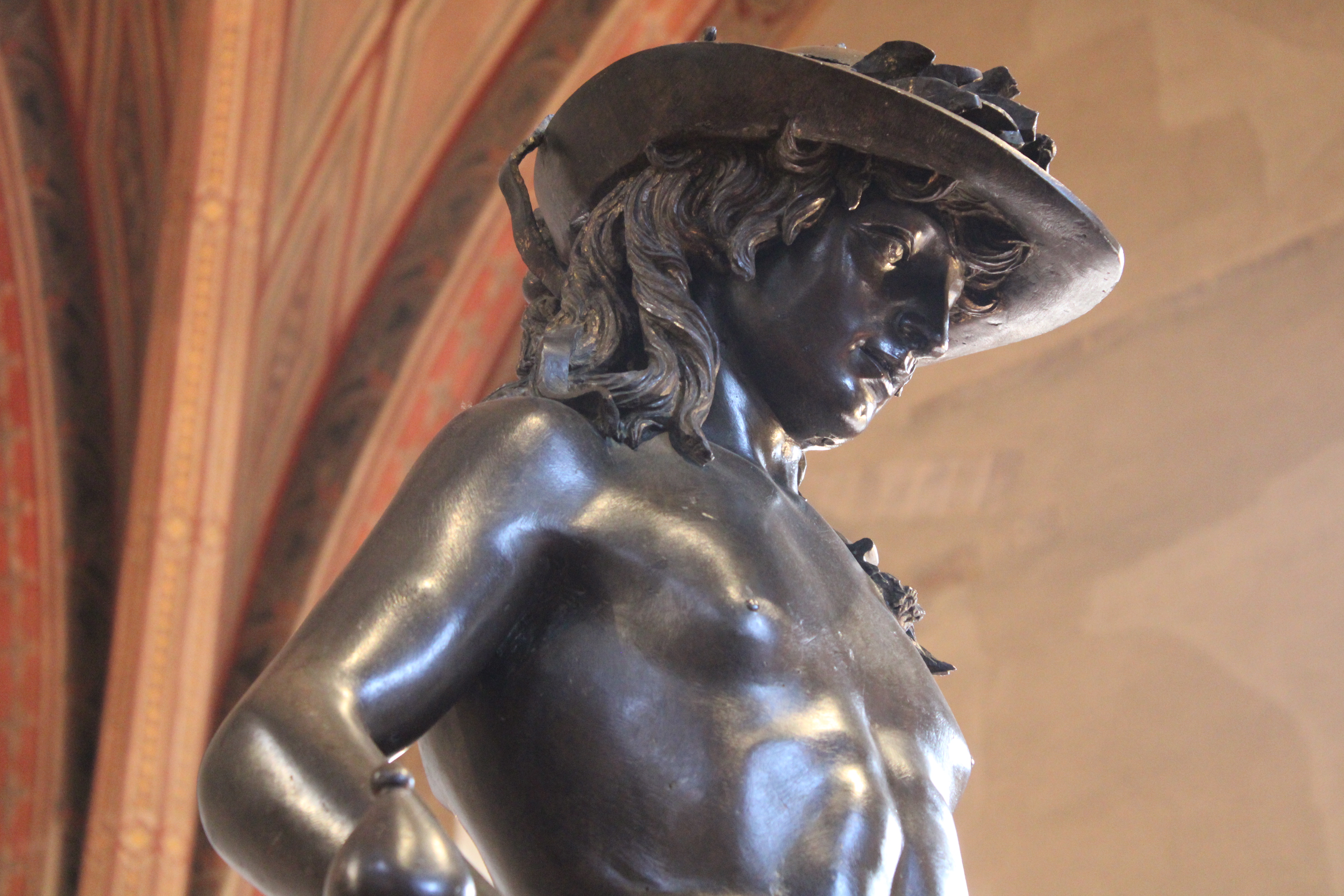
Il restauro fu preceduto da approfondite indagini diagnostiche che riscontrarono una superficie incrostata da sovrapposizioni di polvere e incerature mineralizzate che per secoli avevano occultato il colore reale dell’opera e soprattutto delle dorature a missione.
Per rimuovere le incrostazioni fu eseguita una pulitura meccanica mediante bisturi e microscopi nelle parti più difficili da rimuovere e l’uso localizzato del laser nella foglia oro rimasta. Durante il restauro vennero evidenziati anche i punti più fragili così come i difetti della fusione del bronzo, tecnica di cui si era completamente perso l’uso in epoca medievale.
Se andate a Firenze non perdete l’occasione di ammirare con i vostri occhi questo capolavoro di Donatello e tutte le altre opere che il Museo Nazionale del Bargello custodisce.
Per il momento il vostro Michelangelo Buonarroti vi saluta dandovi appuntamento ai prossimi post e sui social.
Sculpture of the day: Donatello’s David
The sculpture of the day that I propose to you today is one of the absolute masterpieces of art: the David di Donatello.
The great Donatello, born Donato di Niccolò di Betto Bardi, gave shape to this bronze work with an “anciently modern and modernly ancient” manner as Vasari wrote.
While I preferred to sculpt a powerful David devoid of any ornament in the moment before the clash with the giant, Donatello went back to the classic iconography which sees him already victorious with the head of Goliath at his feet. His is a Davi boy, just as described in the Bible.
The documentary sources that mention the David are scarce. Certainly the most dated is that relating to the report of the marriage of the Magnificent to Clarice Orsini, in 1469. In the document we can read that in the courtyard of Palazzo Medici the David was placed above a beautiful column.
The work was commissioned to Donatello by Cosimo de’ Medici between 1434 and 1443 for the so-called old house or what is now Palazzo Medici Riccardi. As mentioned before, the work was placed on a high pedestal of polychrome marble decorated with harpies and leaves and created by Desiderio da Settignano.
At the time it was located in the center of the Hall of Famous Men, frescoed by Bicci di Lorenzo, a pictorial cycle that has unfortunately been lost. It was the Medici boardroom.
A few years later the David was moved to the courtyard as noted in the first documentary mention of the work, dating back to 1449. The sculpture was noticed right there during the important wedding celebrations between Lorenzo the Magnificent and Clarice Orsini.
The fusion was made in eight different pieces: the hat, the head, the body up to the knees, the hilt of the sword with a right hand, the blade of the sword, the head of Goliath, the laurel wreath positioned at the height of the feet and the neck of the David.
Unfortunately, over the centuries the plume that the future king of Israel sported on his hat has been lost.
The David should be seen from below and this aspect is confirmed by the fact that, after the casting, the parts not visible from the ground were not scrupulously refinished.
Like all the other Renaissance Davids made in Florence, this one too had a clear symbology: the representation of trust in human abilities through trust in God.
If you look closely at the work, you will not miss the fact that his hat is surrounded by a myrtle crown. It is the same crown that in Greek and Roman times alluded to heroism in times of war and eternal glory.
The restoration
Donatello’s David underwent a delicate restoration operation starting from 26 June 2007 which ended in November 2008. The intervention was directed by Beatrice Paolozzi Strozzi and physically carried out by Ludovica Nicolai with the contribution of the Opificio delle hard stones.
It was carried out in an open building site, in the Donatello salon in the Bargello and can also be viewed online. Financed with an amount of around 200 thousand euros by the Civil Protection, the restoration had become irrevocable due to the deterioration caused by long exposure to atmospheric agents.
The restoration was preceded by in-depth diagnostic investigations which found a surface encrusted with dust overlaps and mineralized waxing which for centuries had hidden the real color of the work and above all of the mission gilding.
To remove the incrustations, a mechanical cleaning was performed using scalpels and microscopes in the most difficult parts to remove and the localized use of the laser in the remaining gold leaf. During the restoration, even the most fragile points were highlighted as well as the defects of the bronze casting, a technique whose use was completely lost in medieval times.
If you go to Florence, don’t miss the opportunity to admire this masterpiece by Donatello with your own eyes and all the other works that the Bargello National Museum houses.
For the moment, your Michelangelo Buonarroti greets you by making an appointment for the next posts and on social media.

Sostienici – Support Us
Se questo blog ti piace e ti appassiona, puoi aiutarci a farlo crescere sempre più sostenendoci in modo concreto condividendo i post, seguendo le pagine social e con un contributo che ci aiuta ad andare avanti con il nostro lavoro di divulgazione. . ENGLISH: If you like and are passionate about this blog, you can help us make it grow more and more by supporting us in a concrete way by sharing posts, following social pages and with a contribution that helps us to move forward with our dissemination work.
8,00 €
-
Il Sacrificio di Isacco e quel momento tra la vita e la morte
🇮🇹Oggi voglio raccontarvi alcuni dettagli sul mio disegno del Sacrificio di Isacco, conservato oggi a Casa Buonarroti. Su quel foglio volli tracciare il momento preciso in cui la paura fa spazio al miracolo… 🇬🇧Today I want to tell you some details about my drawing of the Sacrifice of Isaac, now preserved at Casa Buonarroti. On…
-
Mercoledì Santo: il giorno del tradimento di Giuda affrescato da Giotto
🇮🇹Il Mercoledì Santo è il giorno del silenzio, della riflessione e del tradimento. È il momento in cui Giuda sceglie di vendere Gesù per trenta denari, segnando uno dei passaggi più dolorosi della Settimana Santa…. 🇬🇧Holy Wednesday is a day of silence, reflection, and betrayal. ✝It is the moment when Judas chooses to sell Jesus…
-
31 marzo 1889: inaugurata la Torre Eiffel tra critiche feroci e un destino inaspettato
🇮🇹Il 31 marzo 1889 segna una data destinata a cambiare per sempre il volto di Parigi e dell’immaginario collettivo globale: viene inaugurata la Torre Eiffel, l’opera più audace e discussa del suo tempo… 🇬🇧March 31, 1889 marks a date destined to change the face of Paris and the global collective imagination forever: the Eiffel Tower,…
Condividi:


Questo sono io





sostienici

Sostienici – Support Us
Se questo blog ti piace e ti appassiona, puoi aiutarci a farlo crescere sempre più sostenendoci in modo concreto condividendo i post, seguendo le pagine social e con un contributo che ci aiuta ad andare avanti con il nostro lavoro di divulgazione. . ENGLISH: If you like and are passionate about this blog, you can help us make it grow more and more by supporting us in a concrete way by sharing posts, following social pages and with a contribution that helps us to move forward with our dissemination work.
€10,00


Un principe leggendario, elegante, plastico e vitale nella sua fresca e giovanile forza risolutiva che userà contro il gigante filisteo.
"Mi piace""Mi piace"