
La Scultura del giorno: i Bambini che scherzano con un Gatto di Giulio Monteverde
La Scultura del giorno che vi propongo oggi ha come protagonisti due bambini e un gatto. Un’opera di Giulio Monteverde che mette al centro della scena un quadretto familiare divertente, scolpito nella seconda metà dell’Ottocento.
Celebre per opere meravigliose di arte funeraria come l’Angelo della Morte, Monteverde non disdegnava di dedicarsi a soggetti meno impegnativi dal punto di vista interpretativo e di modeste dimensioni.

In questa simpatica opera scolpita nel marmo di Carrara dall’artista nato a Bistagno in provincia di Alessandria, si vedono due bambini in tenera età.
La bambina in piedi abbigliata con una veste che le sta scivolando dalle spalle, ha un’età maggiore del fratellino che siede sullo sgabello. In realtà non è propriamente uno sgabello se si osserva meglio ma una sedia con lo schienale rotto.

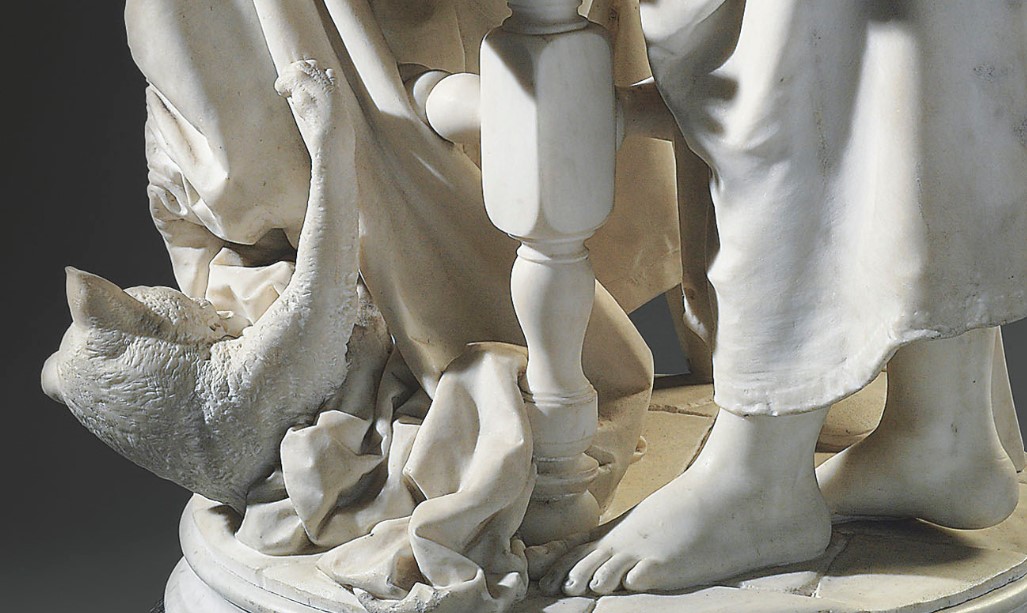
La bambina sta cercando di mettere le scarpe al fratellino che sgambetta e sembra non voler stare fermo. Con la mano destra si tiene allo sgabello mentre guarda divertito il gattino in basso che sta giocando animatamente con un drappo di tessuto.
L’amico a quattro zampe, con il suo impeto, ha appena rotto un piatto e si vede ciò che ne rimane sotto la sua schiena.
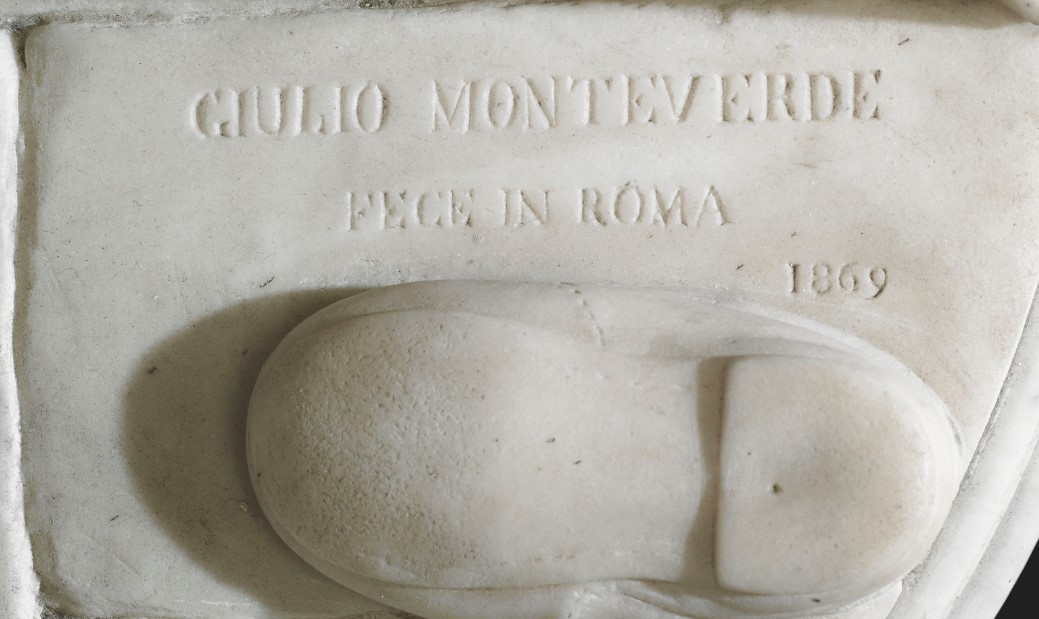
Un momento giocoso assai movimentato tanto da far perdere una scarpina al bambino che può essere ritrovata dallo spettatore accanto alla firma dell’artista.
Per quanto riguarda la datazione dell’opera ci sono pochi dubbi: l’artista la scolpì a Roma nel 1869 come lui stesso scalpellò sulla base.
Per scolpire i due bambini, Monteverde prese a modello i propri figli e il gatto di casa. In pratica ritrasse la bambina dopo che aveva fatto il bagno al fratellino mentre il gatto stava litigando con l’asciugamano.
Lo spettatore ha modo così di entrare direttamente nell’intimità di casa Monteverde e ammirare una scena familiare.
Tutti i dettagli come i capelli, il legno spaccato dello schienale della sedia rotto e la trama dei vari tipi di tessuti sono di un verismo sbalorditivo.

L’opera fu presentata per la prima volta all’Esposizione di Monaco del 1869 e venne immediatamente acquistata da Carlo I, re del Württemberg.
Successivamente finì in mani private. Il 20 settembre del 2012 è stata battuta all’asta da Christie’s a un altro privato e non è data sapere la sua ubicazione.

Per il momento il vostro Michelangelo Buonarroti vi saluta dandovi appuntamento ai prossimi post e sui social.
Sculpture of the day: Children playing with a Cat by Giulio Monteverde
The Sculpture of the day that I propose to you today has two children and a cat as protagonists. A work by Giulio Monteverde that puts a funny family picture at the center of the scene, sculpted in the second half of the 19th century.
Famous for marvelous works of funerary art such as the Angel of Death, Monteverde did not disdain to devote himself to less demanding subjects from an interpretative point of view and of modest dimensions.
In this nice work carved in Carrara marble by the artist born in Bistagno in the province of Alessandria, we see two children at a tender age.
The little girl standing dressed in a dress that is slipping from her shoulders, she is older than her little brother who sits on her stool. In reality it is not really a stool if you look better but a chair with a broken back.
The little girl is trying to put shoes on for her little brother who is kicking around and doesn’t seem to want to stay still. With her right hand she holds on to the stool while she looks amused at the kitten below who is playing animatedly with a drape of fabric.
The four-legged friend, with his impetus, has just broken a plate and what remains of it can be seen under his back.
A very lively playful moment so as to make the child lose a shoe which can be found by the spectator next to the artist’s signature.
As regards the dating of the work, there are few doubts: the artist sculpted it in Rome in 1869 as he himself chiselled on the base.
To sculpt the two children, Monteverde used his own children and the house cat as models. Basically he portrayed the little girl after she had given her little brother a bath while the cat was fighting with the towel.
The viewer thus has the opportunity to enter directly into the intimacy of the Monteverde house and admire a familiar scene.
All the details such as the hair, the split wood of the broken chair back and the texture of the various types of fabrics are astounding realism.
The work was presented for the first time at the 1869 Munich Exhibition and was immediately purchased by Charles I, King of Württemberg.
It later fell into private hands. On 20 September 2012 it was auctioned by Christie’s to another private individual and its whereabouts are not known.
For the moment, your Michelangelo Buonarroti greets you by making an appointment for the next posts and on social media.

Sostienici – Support Us
Se questo blog ti piace e ti appassiona, puoi aiutarci a farlo crescere sempre più sostenendoci in modo concreto condividendo i post, seguendo le pagine social e con un contributo che ci aiuta ad andare avanti con il nostro lavoro di divulgazione. . ENGLISH: If you like and are passionate about this blog, you can help us make it grow more and more by supporting us in a concrete way by sharing posts, following social pages and with a contribution that helps us to move forward with our dissemination work.
8,00 €
-
Festival La Versiliana 2026: tra musica, teatro e grandi narrazioni
Dal 17 luglio al 23 agosto 2026, la pineta di Marina di Pietrasanta ospiterà la 47ª edizione del Festival La Versiliana. Una kermesse aperta a tutti nella quale linguaggi diversi dialogano tra loro in un equilibrio tra tradizione e contemporaneità.
-
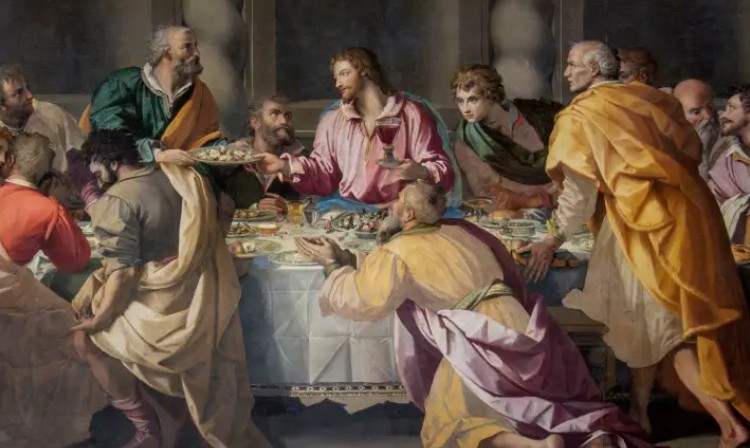
Giovedì Santo: l’Ultima Cena di Allori che pochi conoscono a Firenze
🇮🇹Nel cuore di Museo di Santa Maria Novella, a Firenze, si conserva una delle interpretazioni più affascinanti e meno note dell’Ultima Cena: quella realizzata da Alessandro Allori nel 1584… 🇬🇧In the heart of the Santa Maria Novella Museum in Florence, one of the most fascinating and least-known interpretations of the Last Supper is preserved: the…
-
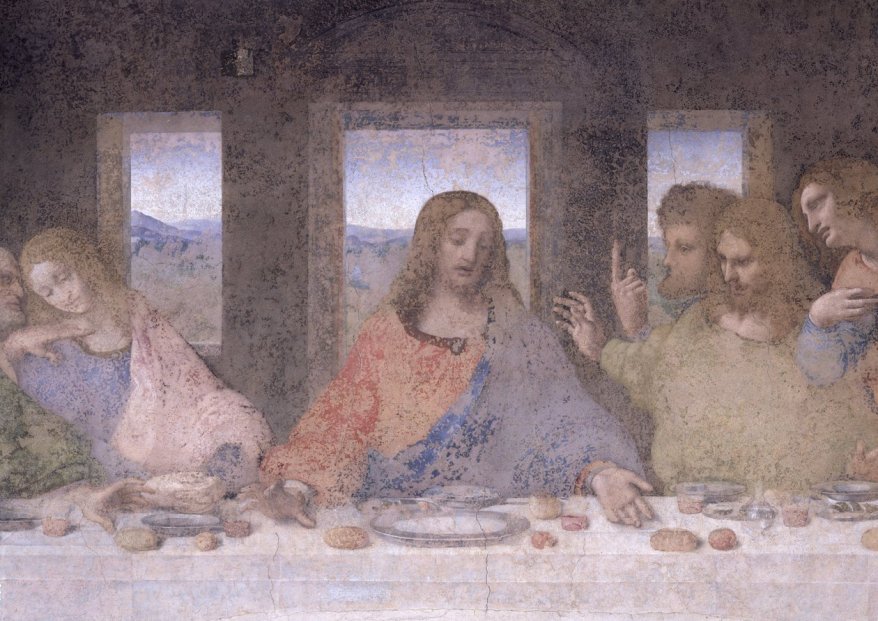
Cenacolo di Leonardo: i dettagli che raccontano il tradimento
🇮🇹Nel Cenacolo di Leonardo da Vinci, custodito a Santa Maria delle Grazie, Cristo annuncia il tradimento e il tempo si ferma… 🇬🇧In Leonardo da Vinci’s Last Supper, housed in Santa Maria delle Grazie, Christ announces the betrayal and time stands still…
Condividi:


Questo sono io





sostienici

Sostienici – Support Us
Se questo blog ti piace e ti appassiona, puoi aiutarci a farlo crescere sempre più sostenendoci in modo concreto condividendo i post, seguendo le pagine social e con un contributo che ci aiuta ad andare avanti con il nostro lavoro di divulgazione. . ENGLISH: If you like and are passionate about this blog, you can help us make it grow more and more by supporting us in a concrete way by sharing posts, following social pages and with a contribution that helps us to move forward with our dissemination work.
€10,00


1 commento »