
Le sculture degli Apostoli in San Giovanni in Laterano
La Basilica di San Giovanni in Laterano è la più antica basilica d’Occidente nonché la prima delle quattro basiliche papali maggiori. La sua costruzione più remota risale al tempo di Milziade papa, nel 314 mentre la consacrazione fu fatta da papa Silvestro I nel 324.
Da allora l’antica basilica ha subito talmente tanti interventi e riedificazioni da assumere l’aspetto che ha oggi. Pensate che papa Innocenzo X volle ricostruirla completamente e affidò il progetto al Borromini. essere come la vediamo oggi.

La cosa che stupisce entrando per la prima volta nella basilica di San Giovanni in Laterano sono le grandi sculture dei dodici apostoli, sistemate nelle nicchie della navata centrale che proprio il Borromini aveva progettato a metà del Seicento.
Quelle nicchie però rimasero vuote per anni fino a quando, nel 1702, papa Clemente XI e il cardinale Benedetto Pamphilj allora arciprete della basilica, vollero decorarle con dodici grandi apostoli scolpiti.
Siccome di palanche non è che ce ne fossero tante, il pontefice chiese espressamente alle famiglie romane più facoltose del tempo, di pagare di tasca le opere. Il papa stesso si occupò di pagare la scultura di San Pietro mentre il cardinale Pamphilj sponsorizzò la realizzazione di San Giovanni Evangelista.

C’è un’altra curiosità legata alle sculture degli apostoli.
Carlo Maratta, il pittore preferito del pontefice, fu incaricato di disegnare gli apostoli da affidare poi nelle mani di abili scultori. In questo modo tutte le opere avrebbero avuto un aspetto simile, come se fossero state realizzate da un solo artista.
Pierre-Etienne Monnot, Moratti, Lorenzo Ottoni, Legros, Mazzuoli, Camillo Rusconi e Angelo de Rossi si misero al lavoro per scolpire tutti e dodici gli apostoli seguendo linee guida comuni.
Pierre le Gros però non ne volle sapere di seguire una sorta di copione già scritto e volle fare di testa sua scolpendo il San Bartolomeo e il San Tommaso. Ecco perché queste due opere sono così differenti da tutte le altre.
A seguire vi presento tutte le opere dei dodici apostoli:


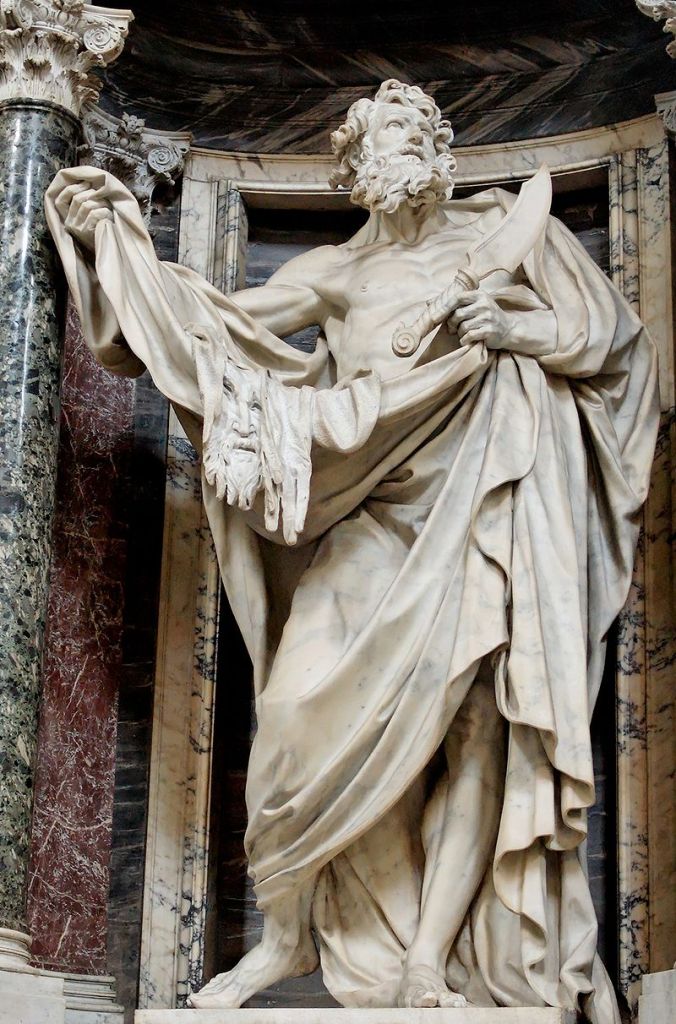


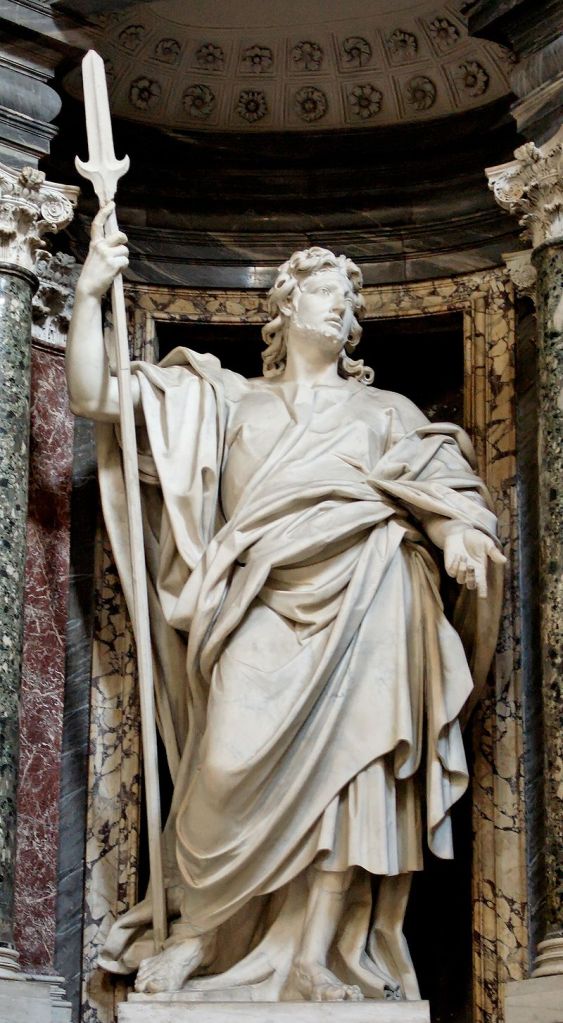
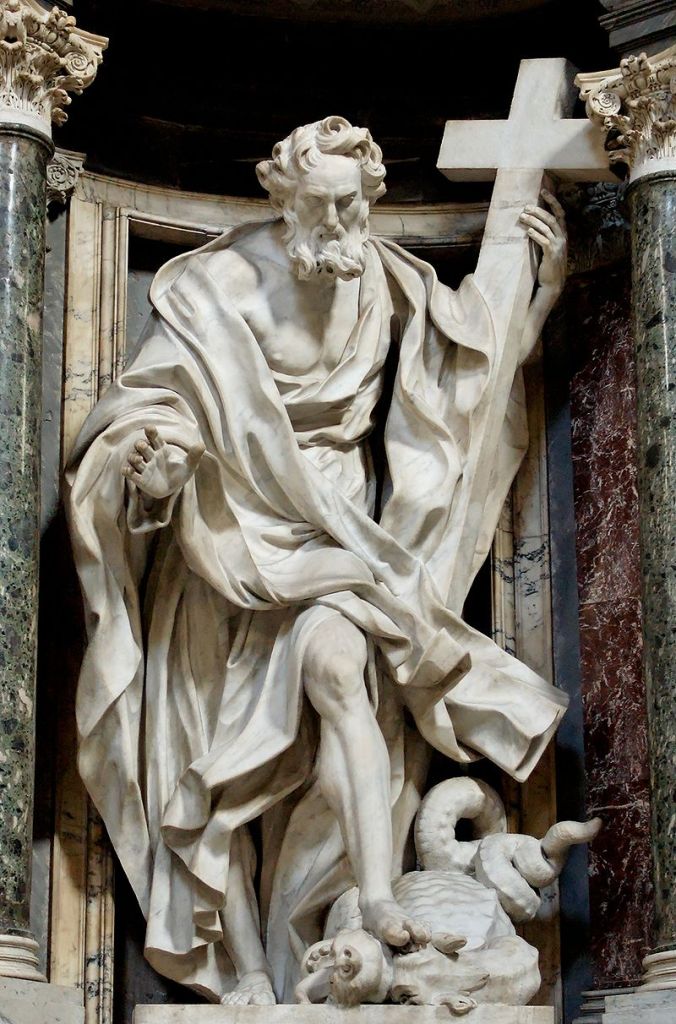

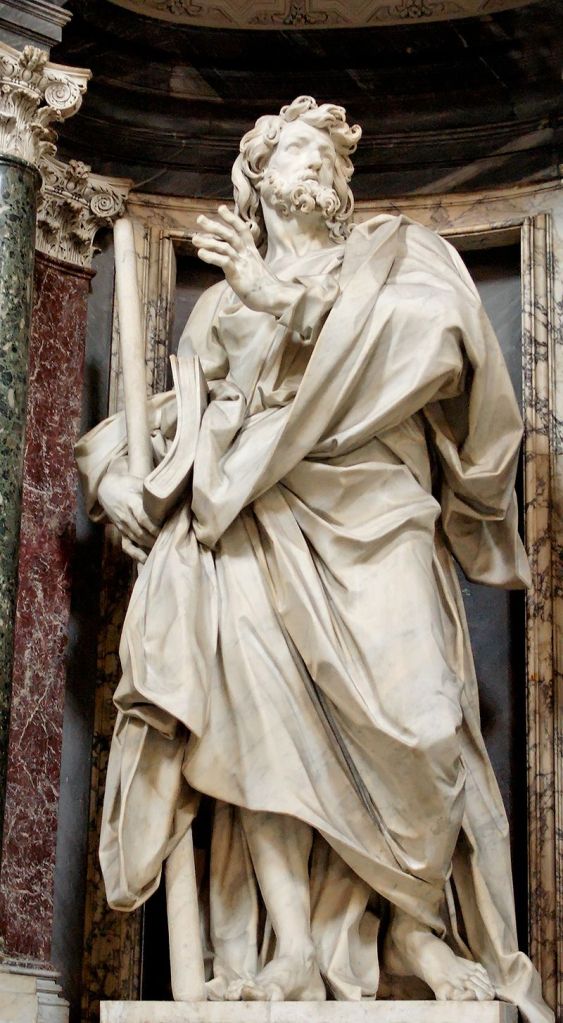


Camillo Rusconi: San Giovanni Evangelista, 1715-18, altezza 425 cm
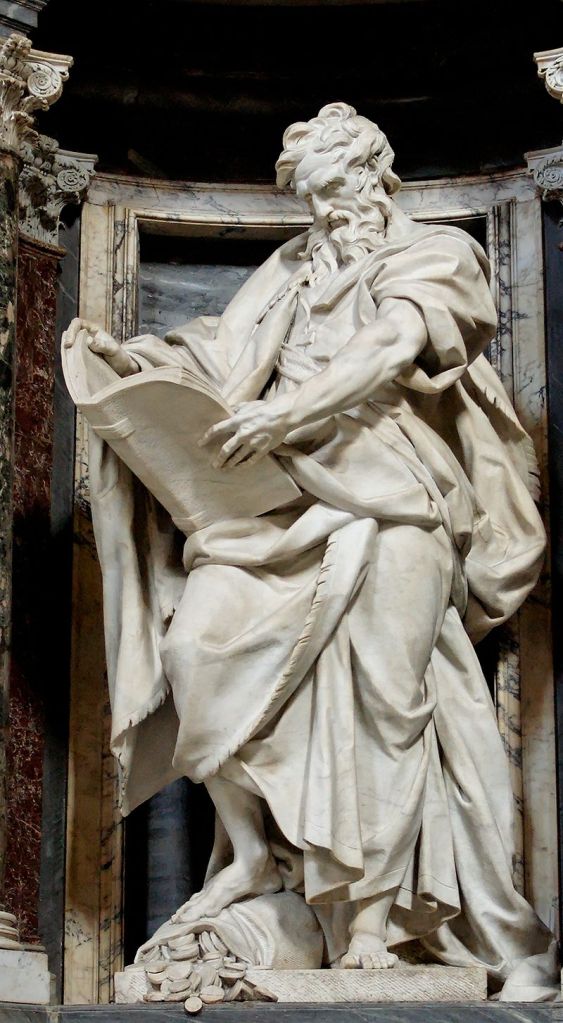
Camillo Rusconi: San Matteo”, 1708-18, altezza 425 cm
Il sempre vostro Michelangelo Buonarroti con i suoi racconti

Sostienici – Support Us
Se questo blog ti piace e ti appassiona, puoi aiutarci a farlo crescere sempre più sostenendoci in modo concreto condividendo i post, seguendo le pagine social e con un contributo che ci aiuta ad andare avanti con il nostro lavoro di divulgazione. . ENGLISH: If you like and are passionate about this blog, you can help us make it grow more and more by supporting us in a concrete way by sharing posts, following social pages and with a contribution that helps us to move forward with our dissemination work.
10,00 €
The sculptures of the Apostles in San Giovanni in Laterano
The Basilica of San Giovanni in Laterano is the oldest basilica in the West and the first of the four major papal basilicas. Its most remote construction dates back to the time of Pope Miltiades, in 314 while the consecration was made by Pope Sylvester I in 324.
Since then, the ancient basilica has undergone so many interventions and rebuilds that it assumes the appearance it has today. Just think that Pope Innocent X wanted to completely rebuild it and entrusted the project to Borromini. be as we see it today.
The surprising thing when entering the basilica of San Giovanni in Laterano for the first time are the large sculptures of the twelve apostles, arranged in the niches of the central nave that Borromini himself had designed in the mid-seventeenth century.
Those niches, however, remained empty for years until, in 1702, Pope Clement XI and Cardinal Benedetto Pamphilj, then archpriest of the basilica, wanted to decorate them with twelve great sculpted apostles.
Since there were not many palanche, the pontiff specifically asked the wealthiest Roman families of the time to pay for the works out of their pockets. The pope himself paid for the sculpture of St. Peter while Cardinal Pamphilj sponsored the construction of San Giovanni Evangelista.
There is another curiosity related to the sculptures of the apostles. Carlo Maratta, the pope’s favorite painter, was commissioned to draw the apostles to be then entrusted into the hands of skilled sculptors. In this way all the works would have a similar appearance, as if they were made by a single artist.
Pierre-Etienne Monnot, Moratti, Lorenzo Ottoni, Legros, Mazzuoli, Camillo Rusconi and Angelo de Rossi set to work sculpting all twelve apostles following common guidelines.
Pierre le Gros, however, did not want to follow a sort of script already written and wanted to make his own head by sculpting the San Bartolomeo and San Tommaso. This is why these two works are so different from all the others.
For the moment, your Michelangelo Buonarroti greets you by giving you an appointment at the next posts and on social networks.
-
Le 10 città d’arte europee più belle da visitare a Natale: musei e luoghi da non perdere
🇮🇹Quali città d’arte europee visitare a Natale? Da Vienna a Parigi, da Praga a Bruges, 10 mete tra mercatini, musei, capolavori e atmosfere da fiaba… 🇬🇧Which European cities of art should you visit at Christmas? From Vienna to Paris, from Prague to Bruges—10 destinations featuring Christmas markets, museums, masterpieces, and a fairytale atmosphere…
-
Artemisia Gentileschi a Firenze: la storia, le opere e la mostra agli Innocenti fino al 2027
🇮🇹Artemisia Gentileschi a Firenze: dalle commissioni dei Medici all’Allegoria dell’Inclinazione di Casa Buonarroti. La storia e la mostra agli Innocenti… 🇬🇧Artemisia Gentileschi in Florence: from commissions by the Medici to the *Allegory of Inclination* at Casa Buonarroti. The story and the exhibition at the Ospedale degli Innocenti…
-
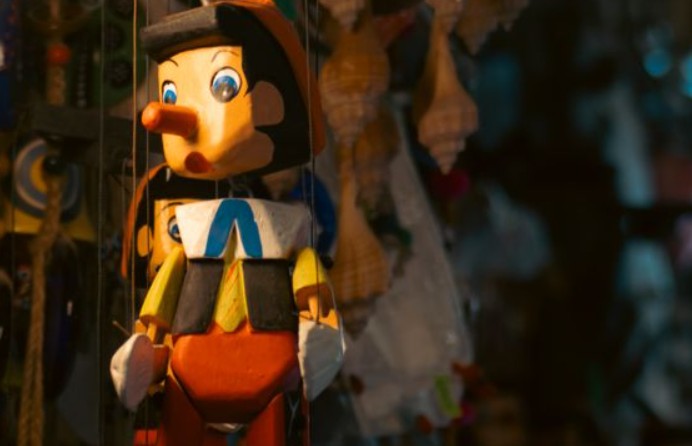
26 ottobre 1890: muore Carlo Collodi, lo scrittore toscano che inventò Pinocchio
Il 26 ottobre 1890 moriva a Firenze Carlo Collodi, autore di Pinocchio. Dalla prima pubblicazione nel 1881 al successo mondiale del burattino…
Condividi:


Questo sono io




sostienici

Sostienici – Support Us
Se questo blog ti piace e ti appassiona, puoi aiutarci a farlo crescere sempre più sostenendoci in modo concreto condividendo i post, seguendo le pagine social e con un contributo che ci aiuta ad andare avanti con il nostro lavoro di divulgazione. . ENGLISH: If you like and are passionate about this blog, you can help us make it grow more and more by supporting us in a concrete way by sharing posts, following social pages and with a contribution that helps us to move forward with our dissemination work.
€10,00


L’ha ripubblicato su Esquilino's Weblog.
"Mi piace""Mi piace"