

Sarcofago degli Sposi, concluso il restauro a Villa Giulia: quando torna in mostra
Dopo mesi di lavoro e un restauro seguito da centinaia di visitatori, il celebre Sarcofago degli Sposi è pronto a tornare nelle sale del Museo Nazionale Etrusco di Villa Giulia. Si conclude così un intervento importante su uno dei capolavori più conosciuti dell’arte etrusca, un’opera di circa 2.500 anni che continua ad affascinare per la sua straordinaria capacità di raccontare gesti, affetti e abitudini di una civiltà antica.
I due coniugi sono ancora lì, distesi sul loro letto da banchetto, con i volti sorridenti e quell’atteggiamento affettuoso che li ha resi una delle immagini più riconoscibili del mondo etrusco. Nonostante il passare dei secoli, sembrano conservare intatta la loro naturalezza, come se fossero stati sorpresi durante un momento di convivialità destinato a non finire mai.
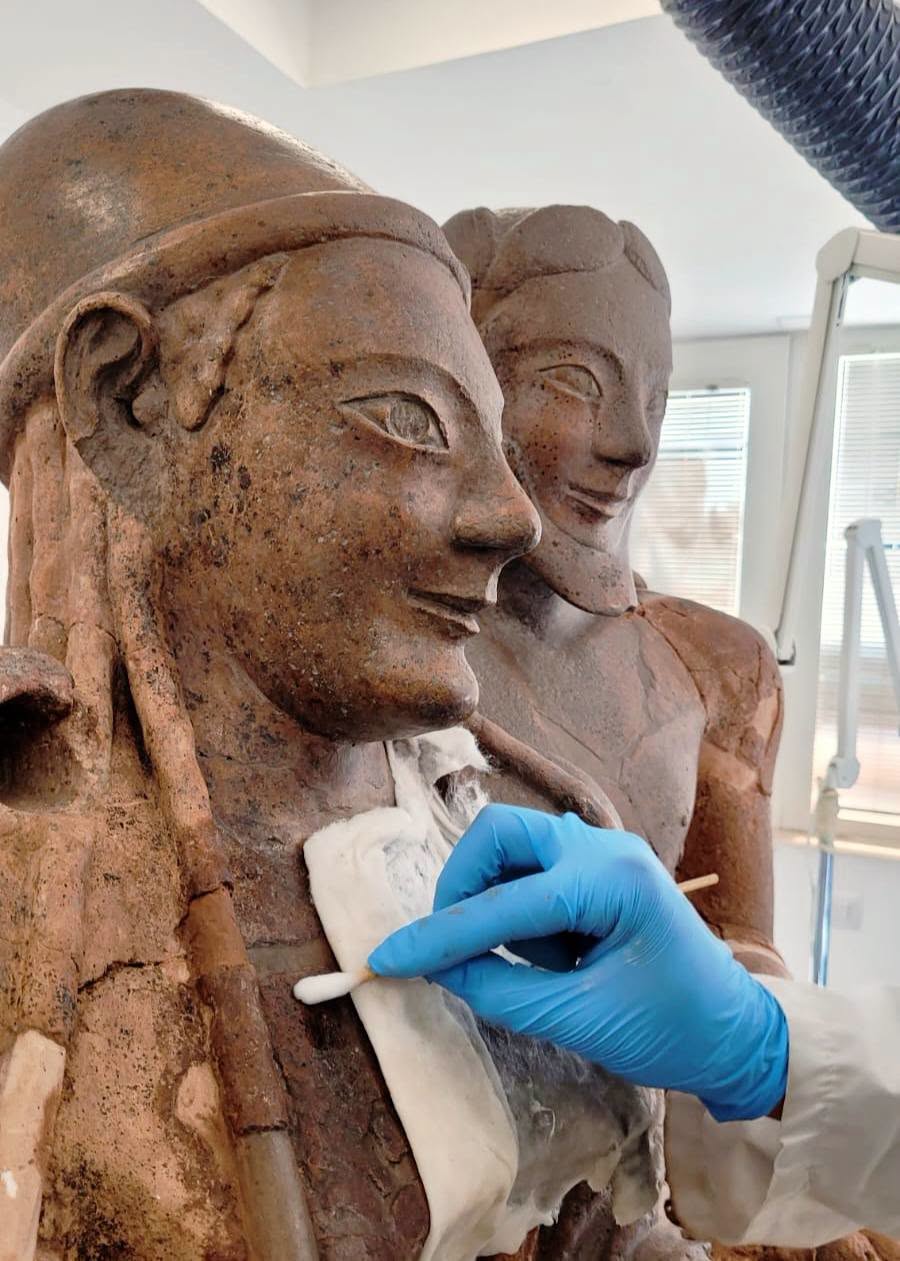
Il 29 ottobre 2026 si è concluso il restauro del Sarcofago degli Sposi, un intervento che ha avuto una caratteristica particolare: è stato realizzato in un laboratorio aperto al pubblico, permettendo ai visitatori di osservare da vicino il lavoro dei restauratori e le delicate operazioni necessarie per conservare un’opera tanto fragile quanto preziosa.
Un restauro aperto al pubblico: centinaia di visitatori davanti ai due sposi
Non è stata soltanto un’occasione per assistere a un intervento di conservazione. Il restauro del Sarcofago degli Sposi si è trasformato in un’esperienza di incontro diretto con la storia e con il lavoro quotidiano di chi si occupa di proteggere il patrimonio artistico.
Centinaia di persone hanno attraversato il laboratorio allestito al Museo Etrusco di Villa Giulia, fermandosi a osservare le operazioni, ascoltare le spiegazioni degli specialisti e comprendere quanto siano complesse le decisioni che accompagnano ogni intervento di restauro.
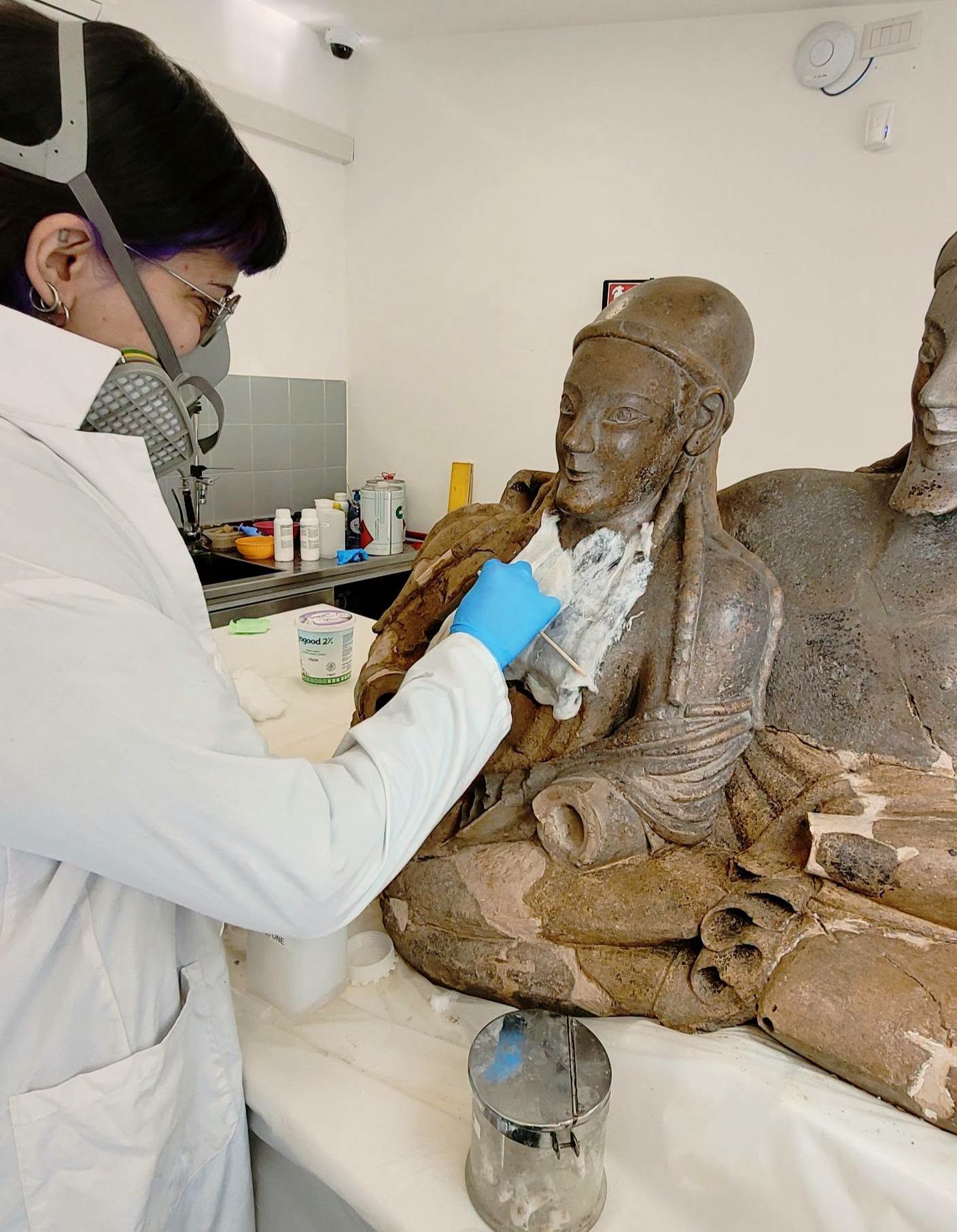
Come hanno raccontato dal museo, è stata un’esperienza di dialogo, condivisione e confronto sulle scelte necessarie per garantire la conservazione dell’opera. Per molti visitatori è stato anche un incontro ravvicinato e insolito con quelli che sono probabilmente i due coniugi più celebri dell’intera civiltà etrusca.
Adesso comincia il conto alla rovescia per il loro ritorno nelle sale espositive, previsto tra qualche giorno.
Il Sarcofago degli Sposi, un capolavoro etrusco di 2.500 anni
Realizzato in terracotta policroma nel VI secolo a.C., il Sarcofago degli Sposi è attribuito a una bottega di artigiani etruschi attiva a Cerveteri. La sua esecuzione viene generalmente collocata intorno al 530-520 a.C.
L’opera misura circa due metri di lunghezza e 1,40 metri di altezza e raffigura una coppia di coniugi semidistesi su un letto da banchetto. L’identità dei due personaggi e quella dell’artista che li ha modellati restano sconosciute.
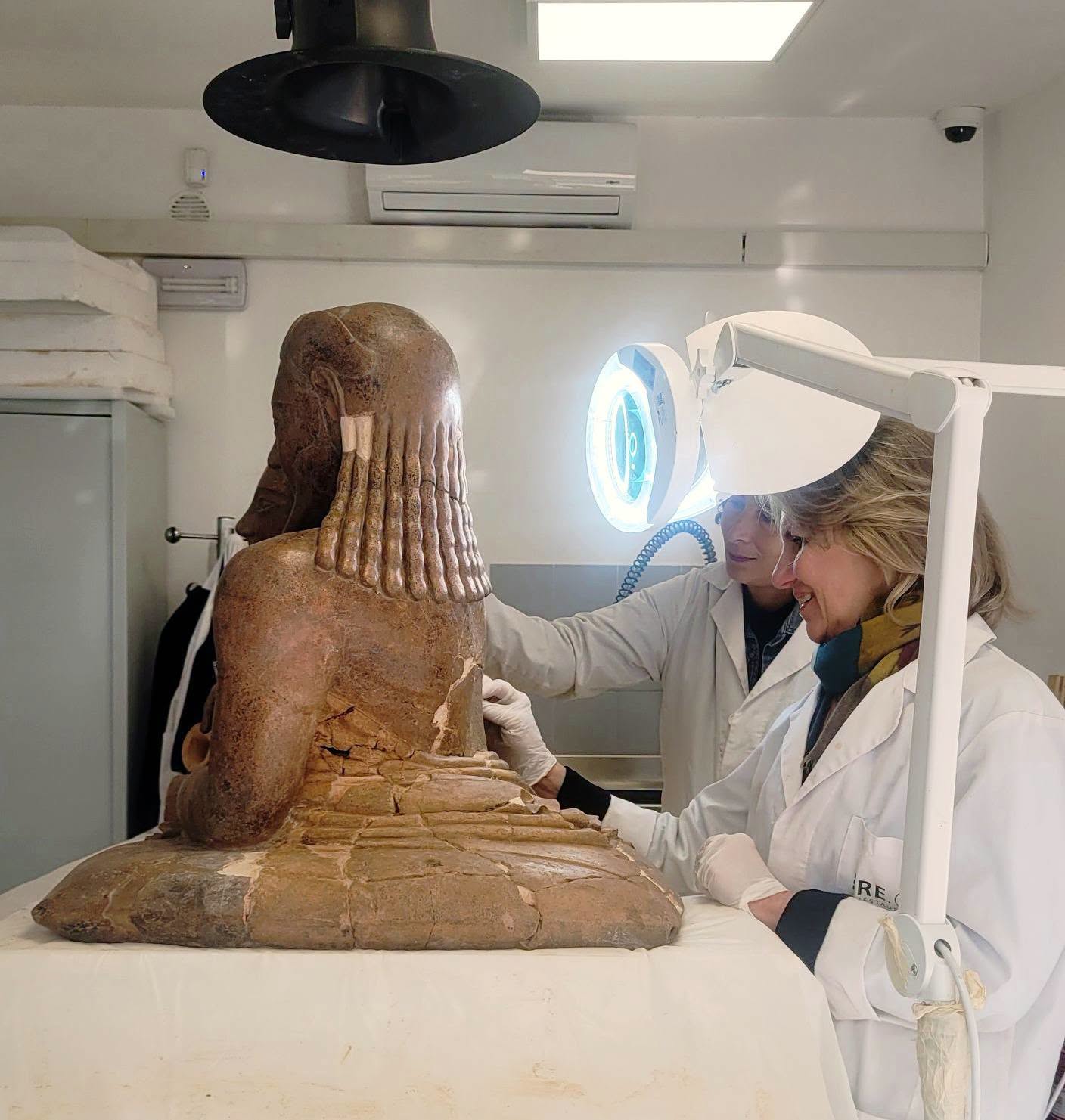
È soprattutto la straordinaria composizione a renderlo così particolare. I due sposi non sono rappresentati in una posizione rigida e solenne, ma sembrano partecipare insieme a un momento conviviale. I busti emergono dal letto, mentre le gambe sono distese sotto le coperte. I volti, caratterizzati dai tipici tratti stilizzati della scultura etrusca arcaica, si rivolgono verso chi osserva.
La donna è accanto al marito e partecipa alla scena con la stessa centralità. Un dettaglio tutt’altro che secondario, perché testimonia il ruolo e la visibilità che le donne potevano avere nella società etrusca, anche durante i banchetti.
Il sarcofago restituisce così un’immagine preziosa della dimensione familiare e sociale di questa civiltà, nella quale il banchetto rappresentava un momento fondamentale della vita collettiva.
Come è stato restaurato il Sarcofago degli Sposi
L’intervento si è reso necessario perché l’opera non veniva sottoposta a un restauro da diversi decenni. Sulla superficie erano presenti depositi di sporco e vecchi materiali protettivi ormai alterati, mentre alcune fratture e fessurazioni della terracotta richiedevano particolare attenzione.
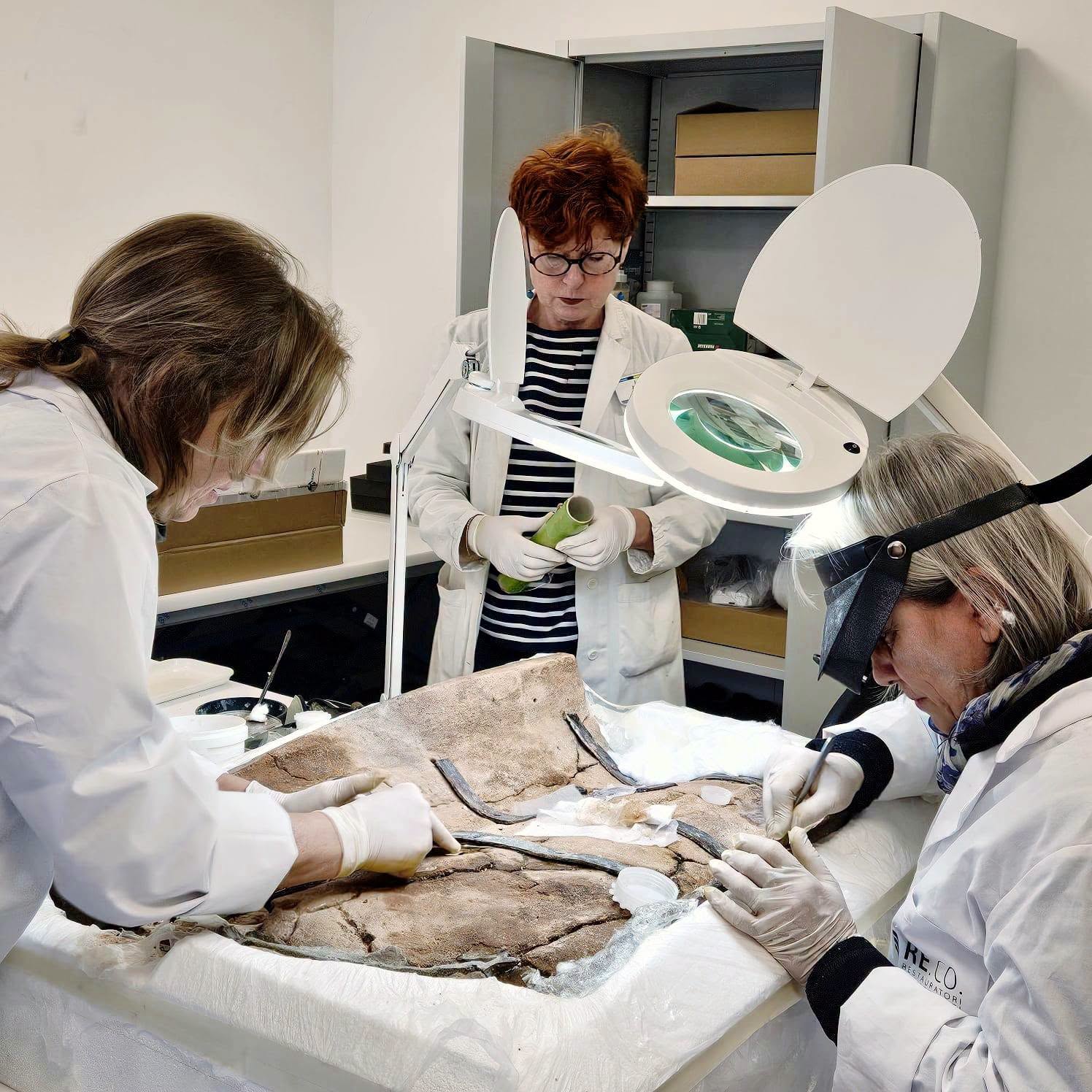
Il progetto, avviato nel 2025, aveva come obiettivo il consolidamento delle parti lesionate, la verifica dei precedenti incollaggi e il controllo dei supporti, con l’intento di assicurare condizioni di conservazione più adeguate a un manufatto che ha attraversato circa venticinque secoli.
La prima fase dei lavori si è svolta tra marzo e giugno 2025 ed è durata circa quattro mesi. In questa occasione i restauratori si sono concentrati su una porzione del coperchio.
L’intervento è stato realizzato grazie alla collaborazione tra il Museo Nazionale Etrusco di Villa Giulia e l’Istituto Centrale per il Restauro (ICR), con il coinvolgimento del Consorzio Re.Co e della ditta Equilibrarte.
Il costo complessivo del progetto ammonta a 327.837,20 euro. Le risorse sono state raccolte attraverso il programma Art Bonus, grazie al sostegno della Banca Popolare del Cassinate.
Quando torna in esposizione il Sarcofago degli Sposi?
Con la conclusione del restauro, uno dei momenti più attesi è ormai vicino. Il Sarcofago degli Sposi tornerà infatti nelle sale del Museo Etrusco di Villa Giulia tra qualche giorno, dopo le necessarie operazioni per il suo ricollocamento.
Sarà nuovamente possibile ammirare da vicino questa coppia che, con il suo sorriso enigmatico e la naturalezza della posa, continua a parlarci di una civiltà lontana nel tempo ma sorprendentemente vicina nei suoi sentimenti.
Per il momento il sempre vostro Michelangelo Buonarroti vi saluta dandovi appuntamento ai prossimi post e sui social.
Sarcophagus of the Spouses: Restoration at Villa Giulia Complete – When Will It Return to Display?
After months of work—a restoration process witnessed by hundreds of visitors—the famous Sarcophagus of the Spouses is ready to return to the galleries of the National Etruscan Museum of Villa Giulia. This marks the completion of a major conservation project on one of the best-known masterpieces of Etruscan art: a 2,500-year-old work that continues to captivate, offering a remarkable glimpse into the gestures, affections, and customs of an ancient civilization.
The couple remains there, reclining on their banquet couch, their faces wearing smiles and their posture exuding the warmth that has made them one of the most iconic images of the Etruscan world. Despite the passage of centuries, they seem to retain their natural, lifelike quality—as if caught in a moment of conviviality destined to last forever.
The restoration of the Sarcophagus of the Spouses was completed on October 29, 2026. The project featured a unique approach: it was carried out in a laboratory open to the public, allowing visitors to observe the conservators at work and witness the delicate procedures required to preserve a piece that is as fragile as it is precious.
A restoration open to the public: hundreds of visitors encounter the couple
This was more than just an opportunity to watch a conservation project unfold; the restoration of the Sarcophagus of the Spouses became an immersive experience, bringing people into direct contact with history and the daily efforts of those dedicated to protecting our artistic heritage. Hundreds of people passed through the workshop set up at the Villa Giulia Etruscan Museum, stopping to observe the work, listen to explanations from specialists, and gain an understanding of the complex decisions involved in any restoration project.
According to the museum, the event served as an opportunity for dialogue, sharing, and discussion regarding the choices necessary to ensure the preservation of the artifact. For many visitors, it also offered an unusual, up-close encounter with what are arguably the two most famous spouses in the entire Etruscan civilization.
The countdown to their return to the exhibition halls—expected in just a few days—has now begun.
The Sarcophagus of the Spouses: A 2,500-Year-Old Etruscan Masterpiece
Created from polychrome terracotta in the 6th century BC, the Sarcophagus of the Spouses is attributed to a workshop of Etruscan artisans based in Cerveteri. It is generally dated to around 530–520 BC.
The piece measures approximately two meters in length and 1.40 meters in height, depicting a married couple reclining on a banquet couch. The identities of the two figures, as well as that of the artist who sculpted them, remain unknown.
It is, above all, the extraordinary composition that makes the work so unique. Rather than being depicted in a rigid, solemn pose, the couple appears to be sharing a convivial moment. Their torsos emerge from the couch, while their legs are stretched out beneath covers. Their faces—marked by the stylized features characteristic of archaic Etruscan sculpture—are turned toward the viewer.
The woman sits beside her husband, playing an equally central role in the scene. This is a far from minor detail, as it testifies to the role and visibility that women could hold in Etruscan society—even during banquets.
The sarcophagus thus provides a valuable glimpse into the familial and social dimensions of this civilization, in which the banquet served as a fundamental aspect of collective life.
How the Sarcophagus of the Spouses was restored
The restoration work became necessary because the piece had not undergone any conservation treatment for several decades. The surface was covered in accumulated dirt and degraded protective materials from previous interventions, while various fractures and cracks in the terracotta required special attention.
The project, which began in 2025, focused on consolidating damaged sections, inspecting earlier repairs, and checking the structural supports—all with the goal of ensuring better preservation conditions for an artifact that has survived for approximately twenty-five centuries.
The first phase of the work took place between March and June 2025, lasting about four months. During this period, the conservators focused on a section of the lid.
The project was carried out through a collaboration between the National Etruscan Museum of Villa Giulia and the Central Institute for Restoration (ICR), with the involvement of the Re.Co Consortium and the firm Equilibrarte.
The total cost of the project amounts to 327,837.20 euros. The funds were raised through the “Art Bonus” program, with support from the Banca Popolare del Cassinate.
When will the Sarcophagus of the Spouses return to public display?
With the restoration now complete, one of the most anticipated moments is close at hand. The Sarcophagus of the Spouses will return to the halls of the Etruscan Museum of Villa Giulia in a few days, following the necessary procedures for its relocation.
Once again, it will be possible to admire this couple up close—a pair whose enigmatic smiles and natural poses continue to speak to us of a civilization distant in time, yet surprisingly close in its human sentiments.
For now, yours truly, Michelangelo Buonarroti, bids you farewell—until the next posts and over on social media.
Sostienici – Support Us
Se questo blog ti piace e ti appassiona, puoi aiutarci a farlo crescere sempre più sostenendoci in modo concreto condividendo i post, seguendo le pagine social e con un contributo che ci aiuta ad andare avanti con il nostro lavoro di divulgazione. . ENGLISH: If you like and are passionate about this blog, you can help us make it grow more and more by supporting us in a concrete way by sharing posts, following social pages and with a contribution that helps us to move forward with our dissemination work.
10,00 €
Condividi:


Questo sono io



sostienici
Sostienici - Support Us
Se questo blog ti piace e ti appassiona, puoi aiutarci a farlo crescere sempre più sostenendoci in modo concreto condividendo i post, seguendo le pagine social e con un contributo che ci aiuta ad andare avanti con il nostro lavoro di divulgazione. . ENGLISH: If you like and are passionate about this blog, you can help us make it grow more and more by supporting us in a concrete way by sharing posts, following social pages and with a contribution that helps us to move forward with our dissemination work.
€10,00


