

Dopo un secolo lontano dal pubblico, il Banchetto di Psiche torna a vivere: al via il restauro
È lungo 4,20 metri e largo 3,25, racconta una scena della favola di Amore e Psiche ed è rimasto lontano dagli occhi del pubblico per circa cento anni. Il restauro, affidato all’Opificio delle Pietre Dure di Firenze, durerà 30 mesi e sarà sostenuto con 100.000 euro attraverso l’Art Bonus.
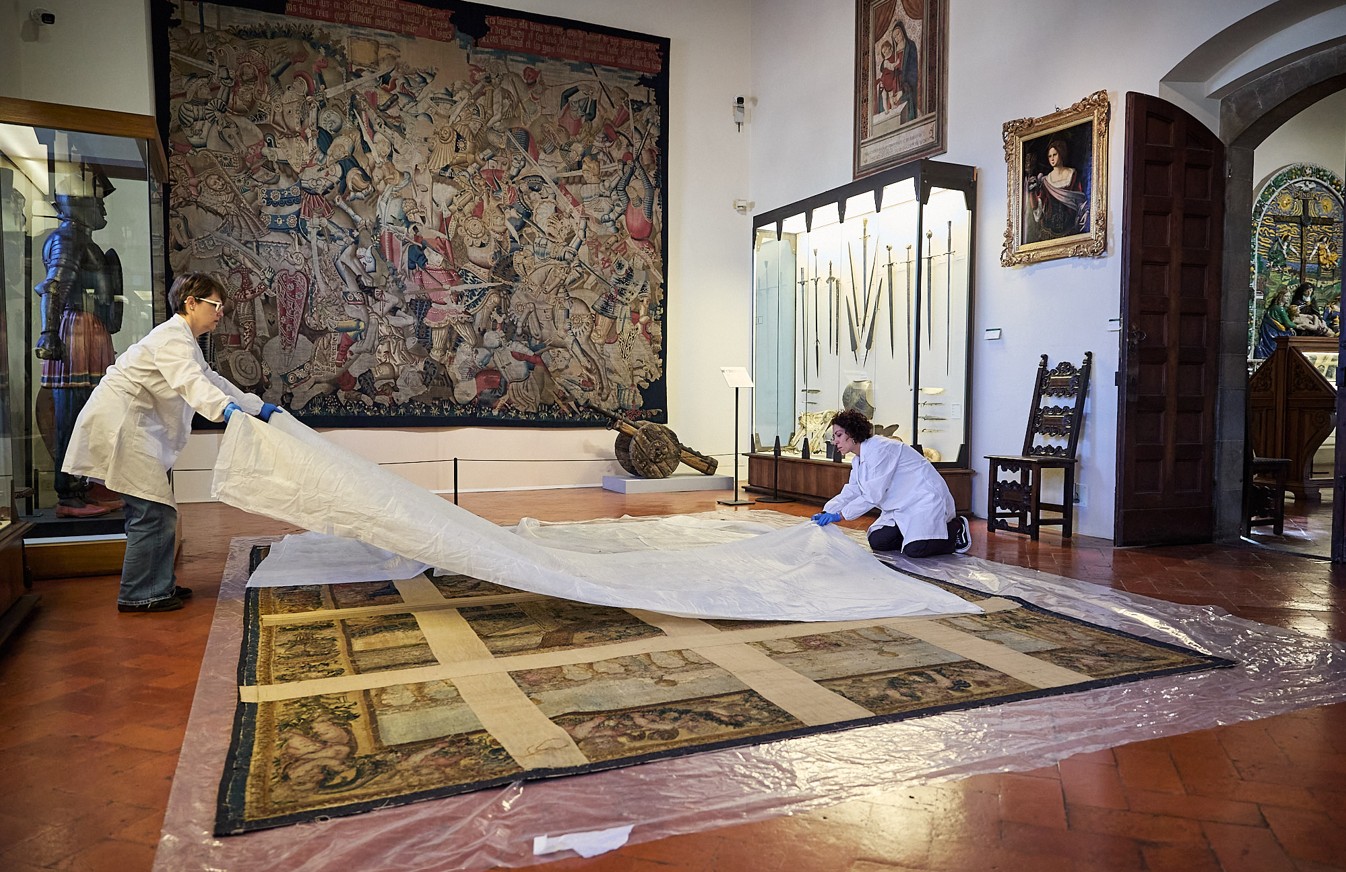
Il Banchetto di Psiche, il grande arazzo seicentesco conservato nei depositi del Museo Nazionale del Bargello di Firenze, dopo circa un secolo si prepara a una nuova fase della sua storia. Lunedì 19 ottobre 2026 l’opera ha lasciato il museo per raggiungere il laboratorio del Settore Arazzi e Tappeti dell’Opificio delle Pietre Dure, allestito nella Sala delle Bandiere di Palazzo Vecchio.
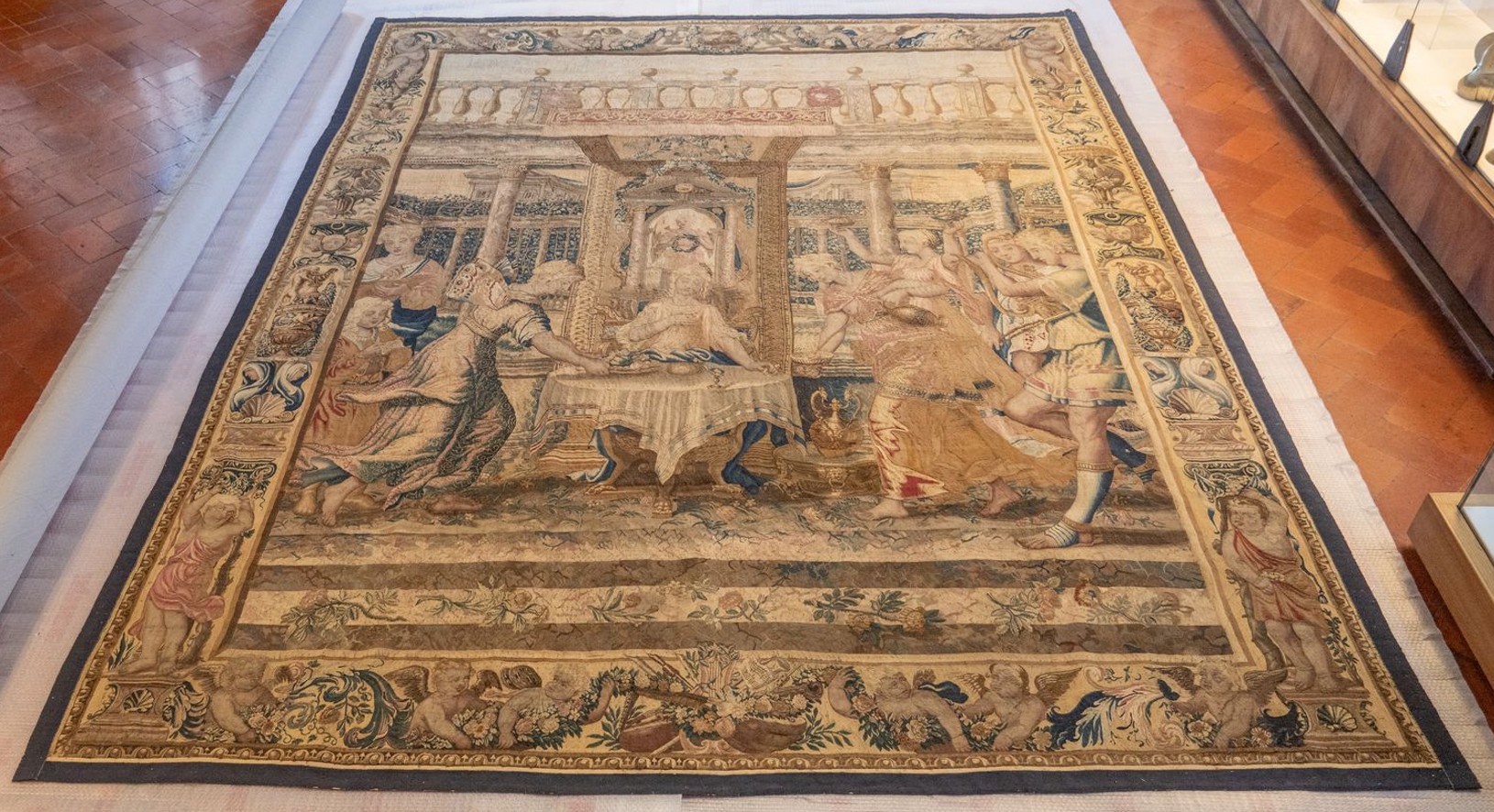
Qui comincerà un intervento lungo e delicato, destinato a restituire stabilità a un manufatto tessile prezioso, ma anche a offrire nuove informazioni sulla sua storia, sui materiali e sulle tecniche con cui è stato realizzato.
Il restauro avrà una durata prevista di 30 mesi e sarà possibile grazie a un contributo di 100.000 euro della Fondazione Il Bargello ETS, attraverso lo strumento dell’Art Bonus. Un progetto che riporta l’attenzione su una parte del patrimonio del Bargello meno conosciuta rispetto alle opere che siamo abituati a vedere nelle sale del museo, ma altrettanto importante per comprendere la storia del collezionismo e delle arti decorative.
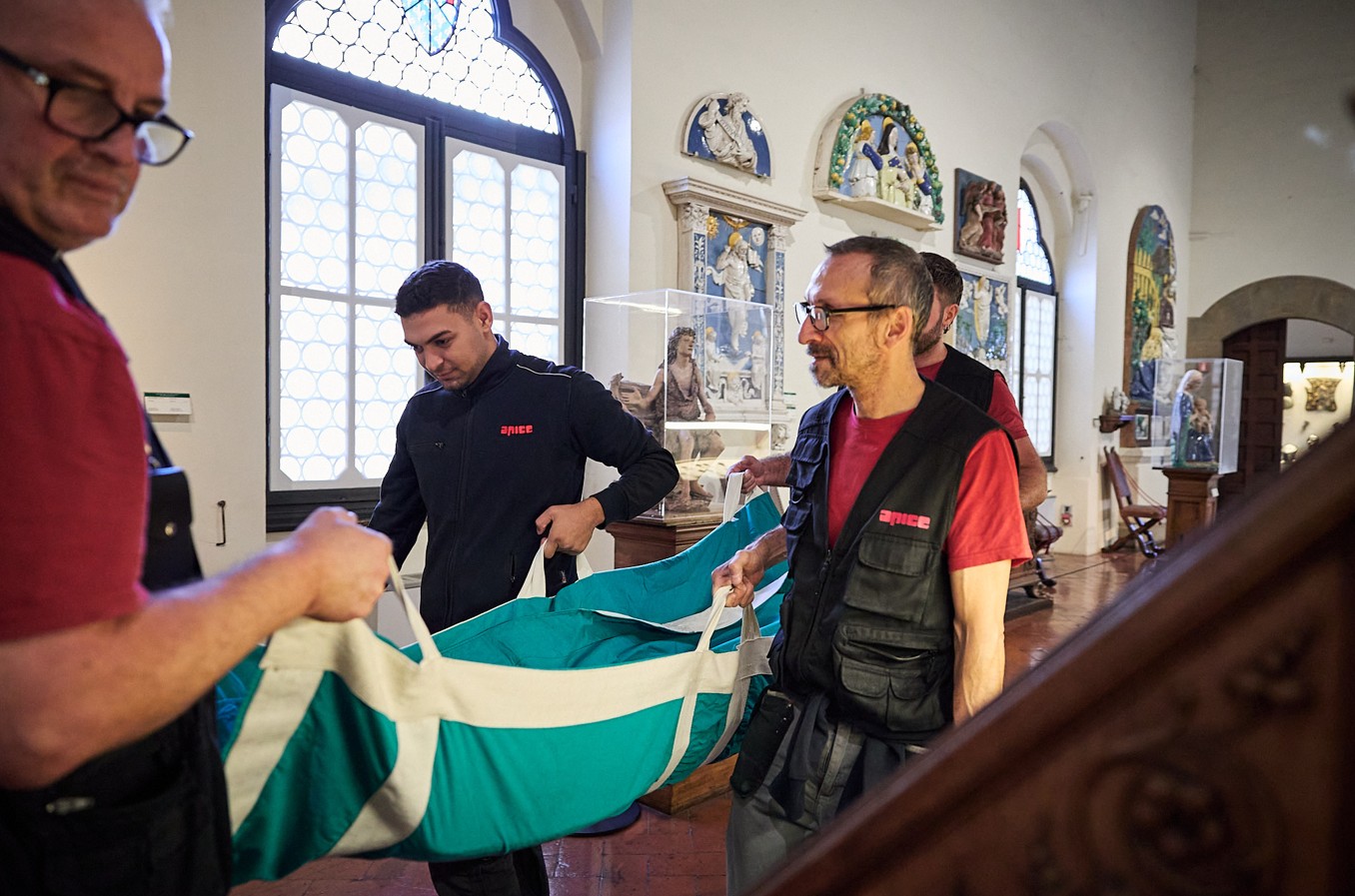
Il viaggio dell’arazzo dal Bargello a Palazzo Vecchio
Un arazzo di queste dimensioni, soprattutto quando presenta problemi di conservazione, richiede attenzioni particolari per evitare che il movimento provochi ulteriori danni.
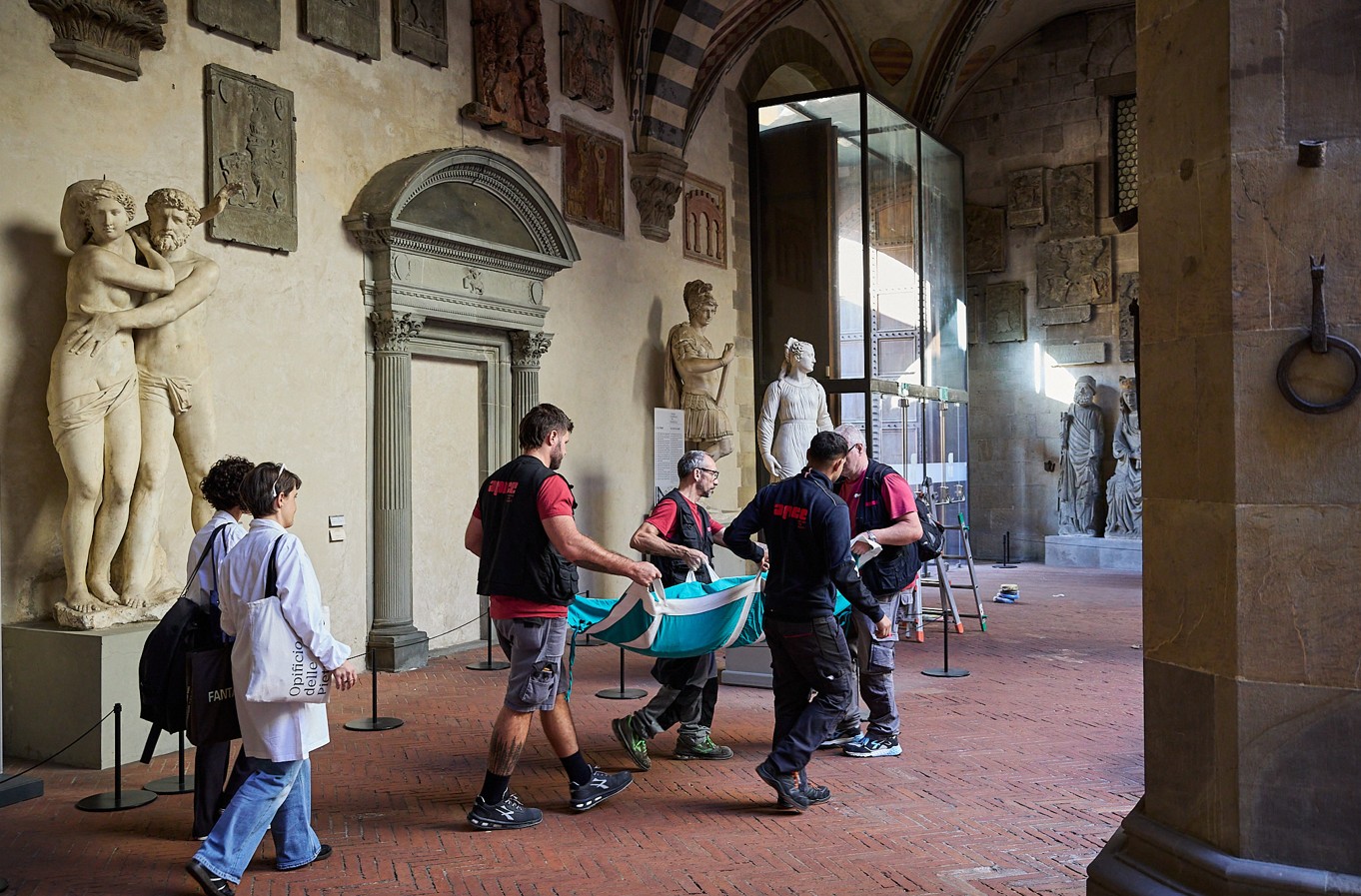
L’opera misura infatti 4,20 × 3,25 metri, per una superficie superiore ai 12 metri quadrati. Per trasportarla è stata arrotolata e sistemata in una speciale imbragatura, quindi movimentata a piedi fino a Palazzo Vecchio.
A occuparsi materialmente dell’operazione sono stati i tecnici della ditta Apice, sotto la supervisione delle funzionarie e delle restauratrici del Museo Nazionale del Bargello e dell’Opificio delle Pietre Dure.
Adesso l’arazzo si trova nel laboratorio specializzato dell’Opificio, dove sarà studiato e sottoposto alle diverse fasi dell’intervento. Non si tratta soltanto di riparare un tessuto antico: prima di intervenire, sarà necessario capire come è stato realizzato, quali materiali sono stati utilizzati e quali trasformazioni ha subito nel corso dei secoli.
Il Banchetto di Psiche, una scena di festa nella Parigi del Seicento
Al centro dell’arazzo si svolge un episodio della favola di Amore e Psiche, una delle storie più fortunate della mitologia antica, tornata più volte nelle arti figurative europee attraverso dipinti, decorazioni, sculture e manufatti tessili.
La composizione è attribuita alla Manifattura della Grande Galerie du Louvre, attiva a Parigi nella prima metà del XVII secolo, e si ricollega a modelli iconografici riconducibili al repertorio del pittore fiammingo Michiel Coxcie (1497-1592).
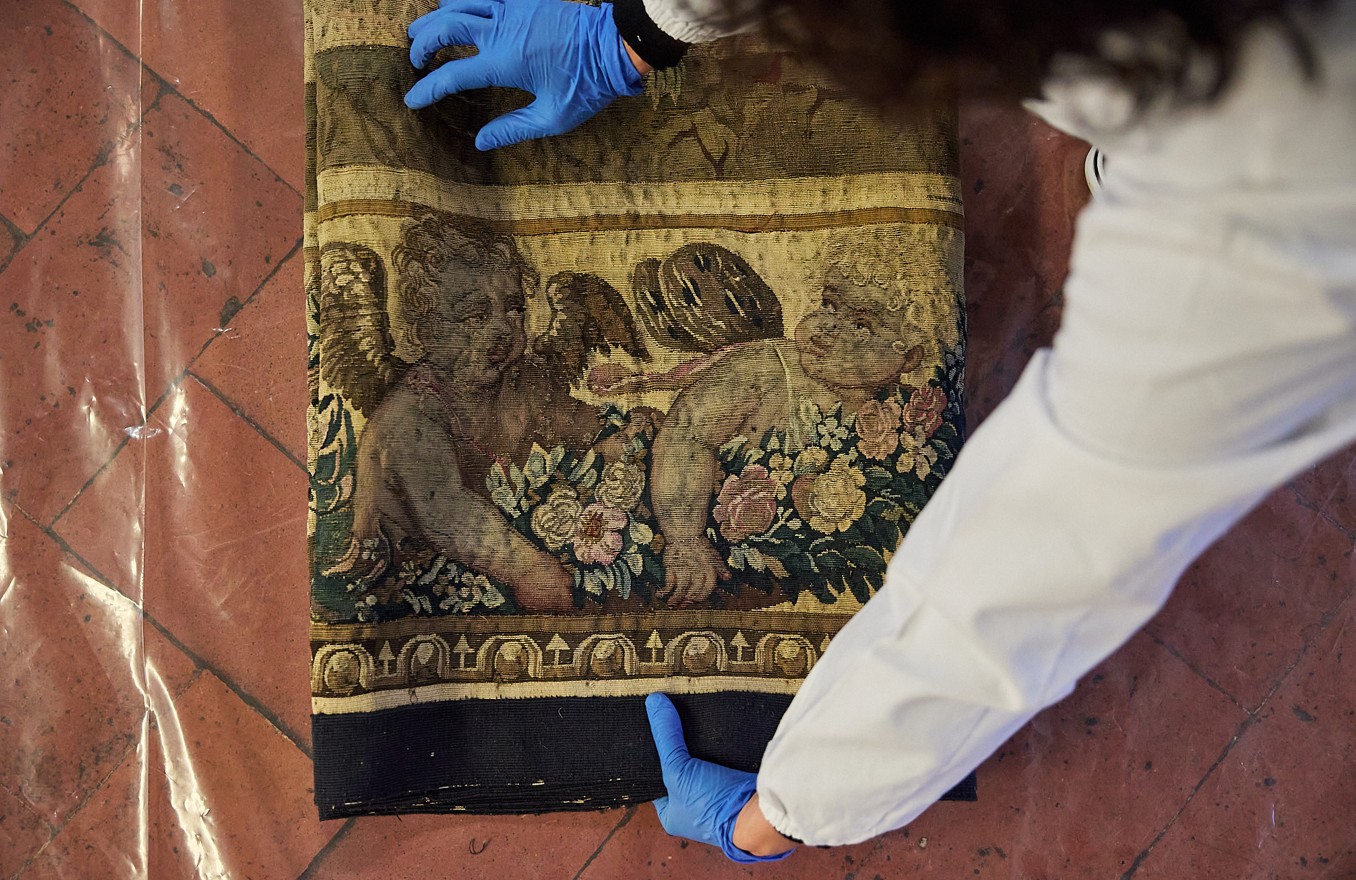
La scena è costruita intorno a Psiche, seduta davanti a una tavola imbandita. Intorno a lei si muovono ancelle e giovani musicisti, mentre l’architettura con colonnati aperti lascia intravedere il paesaggio sullo sfondo. La ricchezza della composizione è sottolineata dalla bordura, decorata con putti, fregi e ghirlande floreali, che incornicia l’intero episodio.
È un mondo fatto di cerimonie, musica e dettagli preziosi, nel quale la narrazione mitologica si intreccia con il gusto per gli ambienti sontuosi e per la ricchezza decorativa tipica delle grandi manifatture europee dell’epoca.
L’opera è realizzata in lana e seta, materiali che permettevano di ottenere effetti cromatici e differenze di superficie, ma che richiedono oggi una particolare attenzione conservativa. Proprio alcune delle parti in seta risultano particolarmente danneggiate.
La realizzazione dell’arazzo è attribuita a Girard Laurent e Maurice Dubourg, arazzieri legati alla manifattura reale durante i regni di Enrico IV e Luigi XIII. Lo studio che accompagnerà il restauro potrà contribuire a precisare ulteriormente le conoscenze su questo manufatto, che finora è rimasto poco presente negli studi storico-artistici.
Dal lascito di Louis Carrand ai depositi del Bargello
Il Banchetto di Psiche entrò nelle collezioni del Museo Nazionale del Bargello nel 1888, grazie al lascito testamentario di Louis Carrand (1827-1888), collezionista e mercante francese che aveva scelto Firenze come luogo in cui stabilirsi negli ultimi anni della sua vita.
Il suo lascito contribuì ad arricchire le raccolte del museo con opere di grande interesse, tra cui tre importanti arazzi oggi riconducibili alla collezione Carrand.
Il Banchetto di Psiche è l’unico dei tre a non essere ancora stato restaurato. Da circa un secolo non è più visibile al pubblico e la sua lunga permanenza nei depositi ha finito per renderlo una presenza poco conosciuta anche rispetto ad altri manufatti tessili conservati nelle raccolte del Bargello.
Il nuovo intervento rappresenta quindi un’occasione per tornare a studiare un’opera che, pur essendo parte delle collezioni museali da oltre 130 anni, ha avuto pochissime occasioni di essere conosciuta direttamente dai visitatori.
La sua storia, inoltre, ricorda quanto il lavoro dei collezionisti abbia contribuito alla formazione dei musei italiani e quanto sia importante continuare a studiare le opere che, per ragioni conservative, non possono essere esposte stabilmente.
Perché l’arazzo ha bisogno di un restauro
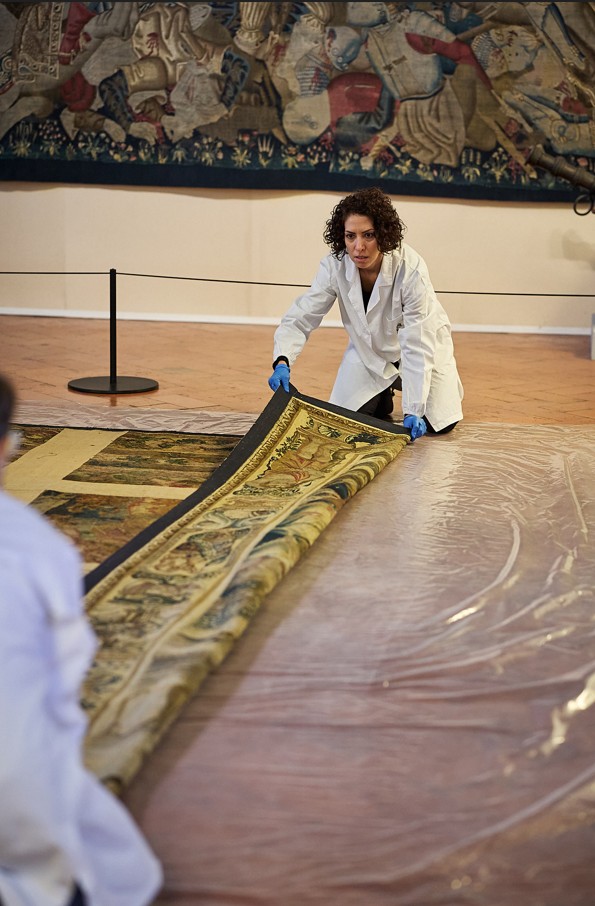
Il tempo ha lasciato segni evidenti sul Banchetto di Psiche. Il manufatto presenta depositi superficiali, scuciture, tagli, lacune e perdite di trama, con danni particolarmente evidenti nelle zone lavorate in seta.
A compromettere ulteriormente la stabilità dell’arazzo sono anche alcuni interventi eseguiti in passato, che hanno modificato in parte la struttura originaria del tessuto.
Per un’opera di queste dimensioni, il problema non riguarda soltanto l’aspetto visibile. Le fibre devono sostenere il peso dell’intero manufatto e qualsiasi indebolimento può rendere più complessa la movimentazione e, soprattutto, l’eventuale esposizione.
Per questo il restauro comincerà con una fase di documentazione e indagini diagnostiche. Gli specialisti analizzeranno i materiali e le tecniche esecutive, raccogliendo le informazioni necessarie per definire le modalità di intervento.
Seguiranno la pulitura, il consolidamento delle fibre e delle porzioni di tessitura danneggiate e la foderatura, necessaria per offrire un sostegno adeguato al manufatto e consentirne una futura esposizione in condizioni di maggiore sicurezza.
Il lavoro coinvolgerà almeno quattro restauratori specializzati e sarà condotto in collaborazione tra il personale tecnico-scientifico dei Musei del Bargello e quello dell’Opificio delle Pietre Dure.
Un progetto da 100.000 euro grazie all’Art Bonus
Il restauro è promosso dalla Galleria dell’Accademia di Firenze e Musei del Bargello, istituto del Ministero della Cultura, in collaborazione con l’Opificio delle Pietre Dure.
A renderlo possibile è un’erogazione liberale di 100.000 euro della Fondazione Il Bargello ETS, effettuata nell’ambito dell’Art Bonus, lo strumento che incentiva il sostegno economico al patrimonio culturale pubblico.
Quando tornerà visibile il Banchetto di Psiche?
Il restauro durerà circa 30 mesi. Se le tempistiche previste saranno rispettate, il lavoro potrà concludersi intorno alla primavera del 2029, ma al momento non è stata comunicata una data ufficiale per una nuova esposizione dell’arazzo.
Il risultato atteso non è soltanto il recupero della stabilità di un grande tessuto antico. Le indagini e il confronto tra specialisti potranno arricchire la conoscenza di un’opera che conserva ancora molti aspetti da approfondire.
Per il momento il sempre vostro Michelangelo Buonarroti vi saluta dandovi appuntamento ai prossimi post e sui social.
After a century away from public view, The Banquet of Psyche comes back to life: restoration begins
Measuring 4.20 meters in length and 3.25 meters in width, this piece depicts a scene from the tale of Cupid and Psyche and has remained hidden from the public for about a hundred years. The restoration, entrusted to the Opificio delle Pietre Dure in Florence, will last 30 months and is supported by a €100,000 contribution through the Art Bonus scheme.
The Banquet of Psyche—a large 17th-century tapestry held in the storage facilities of the Bargello National Museum in Florence—is entering a new chapter in its history after nearly a century. On Monday, October 19, 2026, the work left the museum, bound for the Tapestry and Carpet Conservation Department of the Opificio delle Pietre Dure, located in the Sala delle Bandiere (Hall of Flags) within Palazzo Vecchio.
There, it will undergo a long and delicate restoration process, designed not only to restore stability to this precious textile artifact but also to uncover new information about its history, the materials used, and the techniques employed in its creation.
The restoration is expected to take 30 months and has been made possible by a €100,000 contribution from the Fondazione Il Bargello ETS, facilitated through the Art Bonus program. This project draws attention to a part of the Bargello’s collection that is less well-known than the works typically displayed in the museum’s galleries—yet it remains equally significant for understanding the history of collecting and the decorative arts.
The tapestry’s journey from the Bargello to Palazzo Vecchio
A tapestry of this scale—especially one with existing conservation issues—requires special care during transport to ensure that the act of moving it does not cause further damage.
The piece measures 4.20 by 3.25 meters, covering a surface area of more than 12 square meters. For transport, it was rolled up and placed in a special harness, then moved on foot to Palazzo Vecchio.
The physical handling of the operation was carried out by technicians from the firm Apice, under the supervision of officials and conservators from the Bargello National Museum and the Opificio delle Pietre Dure.
The tapestry is now in the specialized laboratory of the Opificio, where it will be studied and undergo various stages of conservation work. This involves more than just repairing an ancient textile; before any intervention, it is necessary to understand how it was made, what materials were used, and what changes it has undergone over the centuries.
The Banquet of Psyche: A Festive Scene in 17th-Century Paris
At the center of the tapestry, an episode from the fable of Cupid and Psyche unfolds—one of the most enduring stories from ancient mythology, which has frequently reappeared in European visual arts through paintings, decorations, sculptures, and textile works.
The composition is attributed to the Manifattura della Grande Galerie du Louvre, which was active in Paris during the first half of the 17th century. It draws upon iconographic models linked to the repertoire of the Flemish painter Michiel Coxcie (1497–1592).
The scene is centered on Psyche, who is seated before a laden banquet table. Surrounding her are handmaidens and young musicians, while the architecture—featuring open colonnades—reveals a landscape in the background. The richness of the composition is further emphasized by a border decorated with putti, friezes, and floral garlands, which frames the entire scene. It is a world of ceremonies, music, and exquisite details, in which mythological narrative intertwines with a taste for sumptuous settings and the rich ornamentation characteristic of the great European manufactories of the era.
The piece is crafted from wool and silk—materials that allowed for nuanced color effects and varied surface textures, but which today require specialized conservation care. Indeed, some of the silk elements are particularly damaged.
The tapestry is attributed to Girard Laurent and Maurice Dubourg, weavers associated with the royal manufactory during the reigns of Henry IV and Louis XIII. The research accompanying the restoration will help further our understanding of this artifact, which has hitherto received little attention in art-historical scholarship.
From the Louis Carrand Bequest to the Bargello’s Storage
The Banquet of Psyche entered the collections of the Museo Nazionale del Bargello in 1888, as part of a bequest from Louis Carrand (1827–1888)—a French collector and dealer who had chosen to settle in Florence for the final years of his life.
His bequest significantly enriched the museum’s holdings with works of great importance, including three notable tapestries now identified as part of the Carrand collection.
The Banquet of Psyche is the only one of the three that has yet to undergo restoration. It has been hidden from public view for roughly a century; its long tenure in storage has rendered it little known, even in comparison to other textile artifacts held within the collections of the Bargello.
This new project therefore offers an opportunity to re-examine a work that, despite having been part of the museum’s collections for over 130 years, has rarely been seen by visitors.
Furthermore, its history serves as a reminder of how the efforts of private collectors contributed to the formation of Italian museums, and underscores the importance of continuing to study works that—due to conservation requirements—cannot be kept on permanent display.
Why the tapestry requires restoration
Time has left clear marks on The Banquet of Psyche. The piece shows surface deposits, unstitched seams, cuts, gaps, and losses in the weave—with damage particularly evident in the areas worked in silk.
The tapestry’s structural integrity has been further compromised by past interventions, which partially altered its original fabric.
For a work of this scale, the issue goes beyond mere visual appearance. The fibers must support the weight of the entire object; any weakening makes handling—and, crucially, any future display—significantly more complex.
For this reason, the restoration will begin with a phase of documentation and diagnostic analysis. Specialists will examine the materials and the techniques used in its creation, gathering the information necessary to determine the appropriate approach for the intervention.
This will be followed by cleaning, the consolidation of the fibers and damaged sections of the weave, and the application of a backing—a necessary step to provide adequate support and ensure the piece can be displayed in the future under safer conditions.
The project will involve at least four specialized conservators and will be carried out through a collaboration between the technical and scientific staff of the Bargello Museums and the Opificio delle Pietre Dure.
A €100,000 project, thanks to the “Art Bonus”
The restoration is promoted by the Galleria dell’Accademia di Firenze and the Bargello Museums—an institution under the Ministry of Culture—in collaboration with the Opificio delle Pietre Dure.
It has been made possible by a €100,000 donation from the Fondazione Il Bargello ETS, provided through the “Art Bonus”—a scheme designed to encourage financial support for public cultural heritage.
When will The Banquet of Psyche be on display again?
The restoration is expected to take approximately 30 months. If the current timeline is met, the work could be completed around the spring of 2029; however, no official date has yet been announced for the tapestry’s return to public view.
The goal goes beyond simply restoring the structural stability of this large, ancient textile. The research and collaboration among specialists will also deepen our understanding of a work that still holds many mysteries waiting to be explored.
For now, yours truly, Michelangelo Buonarroti, bids you farewell—see you in future posts and on social media.

Sostienici – Support Us
Se questo blog ti piace e ti appassiona, puoi aiutarci a farlo crescere sempre più sostenendoci in modo concreto condividendo i post, seguendo le pagine social e con un contributo che ci aiuta ad andare avanti con il nostro lavoro di divulgazione. . ENGLISH: If you like and are passionate about this blog, you can help us make it grow more and more by supporting us in a concrete way by sharing posts, following social pages and with a contribution that helps us to move forward with our dissemination work.
10,00 €

Condividi:


Questo sono io



sostienici

Sostienici - Support Us
Se questo blog ti piace e ti appassiona, puoi aiutarci a farlo crescere sempre più sostenendoci in modo concreto condividendo i post, seguendo le pagine social e con un contributo che ci aiuta ad andare avanti con il nostro lavoro di divulgazione. . ENGLISH: If you like and are passionate about this blog, you can help us make it grow more and more by supporting us in a concrete way by sharing posts, following social pages and with a contribution that helps us to move forward with our dissemination work.
€10,00


