
Artemisia Gentileschi, Giuditta e l’ancella con la testa di Oloferne: il dramma biblico
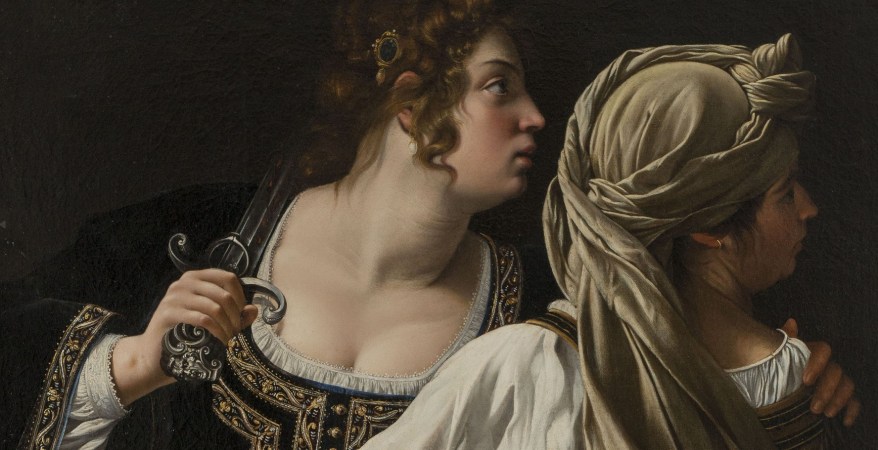
Artemisia Gentileschi sceglie di raccontare l’episodio biblico di Giuditta e Oloferne senza soffermarsi sull’atto violento in sé.
Dipinge quello che accade subito dopo, quando la protagonista e la sua ancella devono nascondere la testa del generale assiro appena decapitato e allontanarsi prima che qualcuno scopra quanto è accaduto.
In Giuditta e l’ancella con la testa di Oloferne, dipinto databile tra il 1640 e il 1645, l’artista concentra l’attenzione su quell’istante sospeso in cui la tensione non è ancora finita e il pericolo potrebbe essere dietro l’angolo.
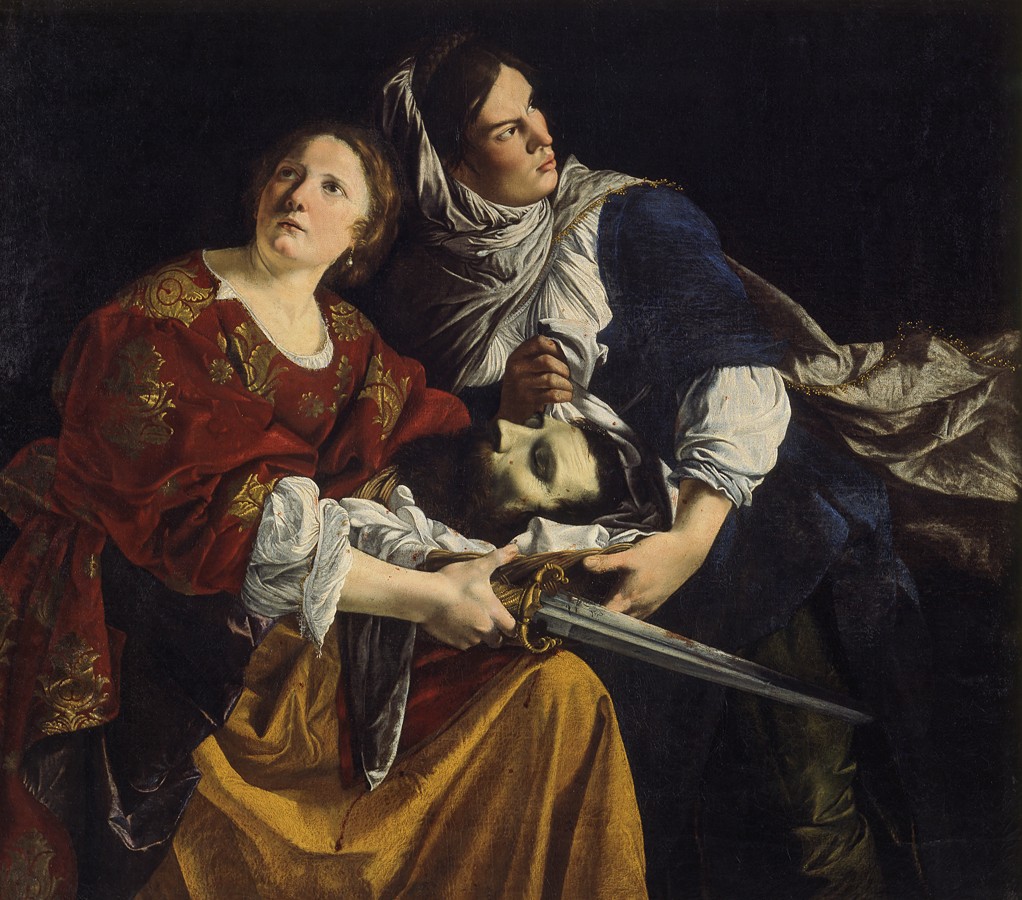
L’opera è attualmente esposta al Museo degli Innocenti di Firenze nell’ambito della mostra Artemisia Gentileschi a Firenze, un’occasione per riscoprire la pittura di un’artista che ha saputo affrontare temi drammatici con una straordinaria capacità narrativa, lavorando sulla luce, sui gesti e sulle espressioni dei personaggi.
Giuditta e l’ancella: il racconto di Artemisia Gentileschi
Il dipinto, realizzato a olio su tela e di formato pressoché quadrato, misura 115 × 116,5 centimetri. Proviene dalla Collezione d’Arte della Fondazione Cassa di Risparmio di Terni e Narni e rappresenta uno dei soggetti biblici più celebri della produzione artistica legata alla storia di Giuditta.
La vicenda è quella narrata nel Libro di Giuditta. Per salvare il proprio popolo dalla minaccia dell’esercito assiro, la giovane vedova entra nell’accampamento nemico e conquista la fiducia del generale Oloferne. Quando l’uomo si addormenta, lo decapita con la sua stessa spada, riuscendo poi a fuggire con l’aiuto della sua ancella.
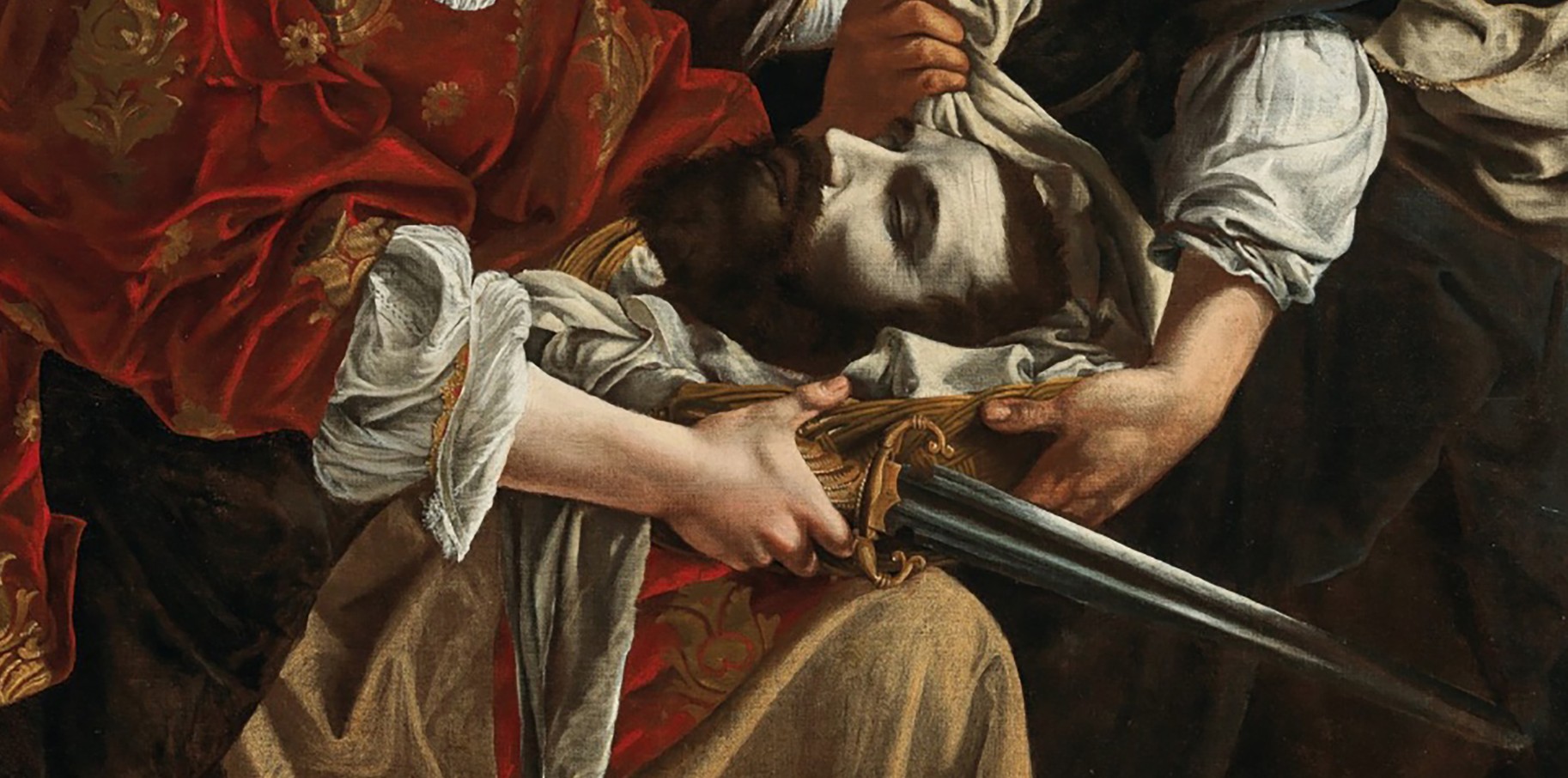
Artemisia sceglie di non rappresentare il momento della decapitazione, ma quello immediatamente successivo. La testa di Oloferne deve essere nascosta in una canestra, mentre le due donne sono ancora esposte al rischio di essere scoperte. La violenza è già avvenuta, ma la tensione rimane tutta nei loro corpi e nei loro sguardi.
Siamo messi di fronte a due donne che reagiscono in modo diverso alla stessa situazione, divise tra la necessità di agire e la consapevolezza del pericolo.
Lo sguardo di Giuditta e la paura dell’ancella
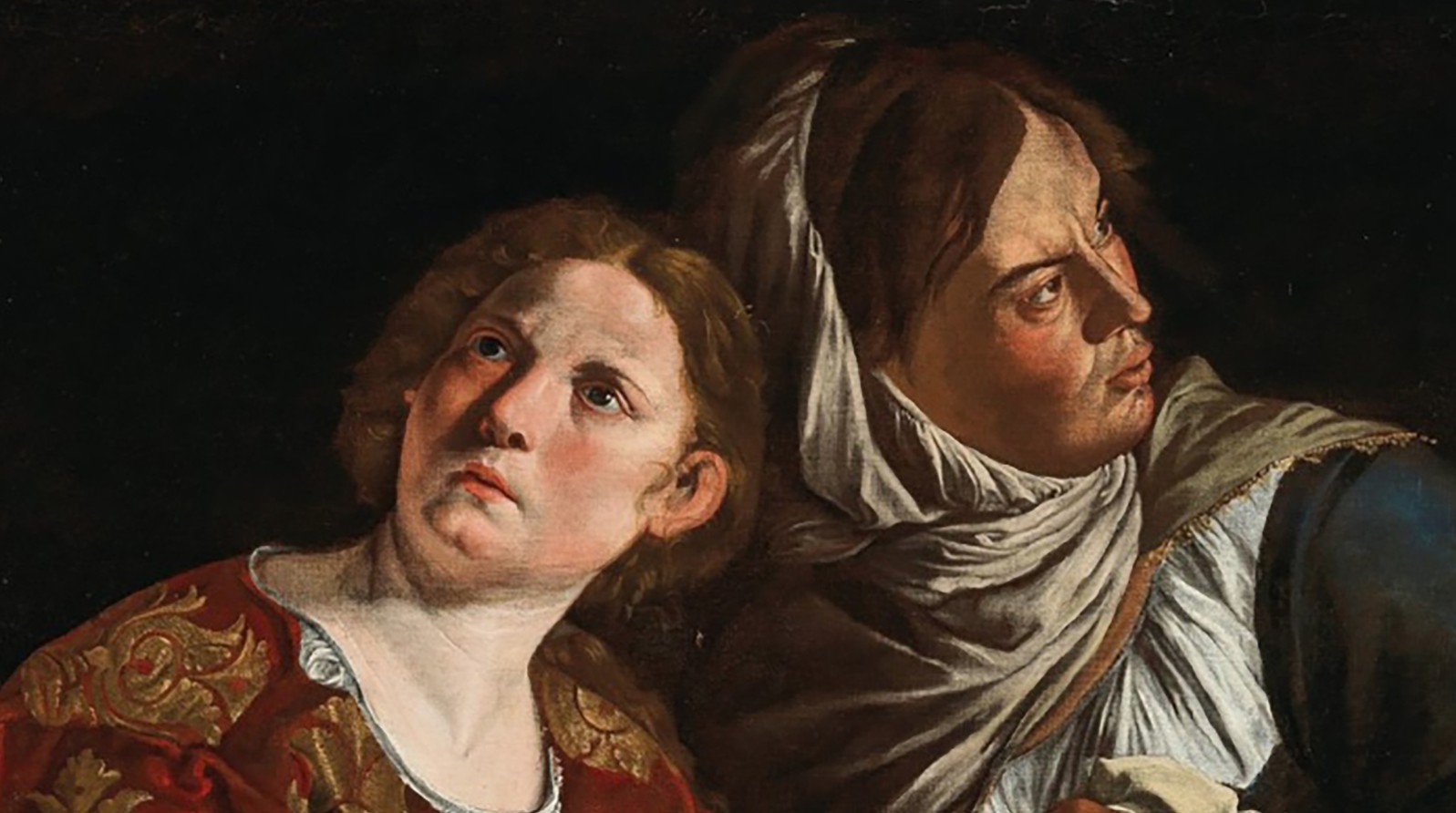
La composizione non è statica: le figure sembrano muoversi in direzioni differenti, come se la loro postura rivelasse due stati d’animo distinti.
L’ancella, chiamata Abra nella tradizione biblica, appare dominata dal timore. La torsione del suo corpo suggerisce un’improvvisa allerta, la sensazione che qualcosa possa accadere da un momento all’altro. È la figura che sembra avvertire maggiormente la fragilità della loro posizione, mentre il tempo per fuggire si sta esaurendo.
Giuditta, invece, volge lo sguardo verso l’alto. Il suo atteggiamento introduce una dimensione diversa, più raccolta e meditativa, che è stata interpretata come un richiamo alla sfera religiosa. Dopo aver compiuto un gesto estremo, la donna sembra rivolgersi a una realtà che supera la situazione contingente.
Questa contrapposizione dà profondità alla scena. L’ancella è concentrata sul pericolo immediato, Giuditta sembra invece sospesa tra l’azione appena compiuta e il significato più alto della propria impresa.
Il confronto con Orazio Gentileschi: un modello rielaborato da Artemisia
Il dipinto conservato a Terni ha una storia artistica particolarmente interessante perché deriva da una composizione ideata da Orazio Gentileschi, padre di Artemisia, durante il periodo trascorso a Genova.
Il prototipo è conservato al Wadsworth Atheneum Museum of Art di Hartford ed è stato datato dallo storico dell’arte Keith Christiansen tra il 1621 e il 1624. Un elemento importante per la ricostruzione della sua fortuna è uno studio della composizione presente nel taccuino di Antoon van Dyck, oggi al British Museum di Londra. Il pittore fiammingo avrebbe avuto modo di conoscerla durante il suo soggiorno genovese, compreso tra il 1621 e il 1627.
Esiste inoltre una versione conservata nella Pinacoteca Vaticana, attribuita a Orazio Gentileschi oppure alla sua bottega.
La tela esposta a Firenze non è quindi un soggetto inventato da Artemisia indipendentemente dal padre, ma una rielaborazione autografa di un modello compositivo di Orazio. Questo non diminuisce l’interesse dell’opera: al contrario, permette di osservare come una composizione potesse essere ripresa e trasformata all’interno della stessa famiglia di pittori.
Il confronto tra le diverse versioni mostra anche differenze nelle dimensioni dei supporti. Secondo Riccardo Lattuada, la tela di Terni potrebbe essere stata tagliata, perdendo circa otto centimetri in altezza e tra i 26 e i 29 centimetri in larghezza. Un’eventuale perdita di elementi figurativi riguarderebbe il margine destro e quello inferiore, anche se non è possibile affermare con certezza che cosa vi fosse originariamente rappresentato.
Anche le caratteristiche della tela offrono indicazioni sulla sua possibile provenienza, che potrebbe essere romana oppure napoletana. La questione si inserisce nel più ampio lavoro di ricostruzione della produzione di Artemisia e dei suoi spostamenti tra i diversi centri artistici italiani.
Le affinità con altre opere di Artemisia
La figura di Giuditta presenta affinità formali con altre opere riconducibili alla produzione di Artemisia Gentileschi. Tra queste è stata indicata la Giovane donna che suona il violino, conservata al Detroit Institute of Arts e riferibile al periodo genovese.
Riccardo Lattuada ha inoltre evidenziato somiglianze con l’Allegoria della Fortezza, raffigurata nel tondo centrale della decorazione del soffitto di Marlborough House a Londra. È stata avanzata l’ipotesi che Artemisia possa aver conosciuto direttamente questa composizione durante la sua permanenza nel cantiere londinese.
Un ulteriore elemento importante riguarda la storia attributiva del dipinto. La tela transitò sul mercato antiquario di Brescia nel 1998 e fu attribuita ad Artemisia da Federico Zeri, come documenta la relativa scheda della Fototeca Zeri. Nel tempo sono state individuate altre versioni della composizione, segno della fortuna incontrata dal modello ideato da Orazio Gentileschi.
La mostra fiorentina ‘Artemisia Gentileschi a Firenze’ offre l’opportunità di osservare da vicino un’opera che unisce la drammaticità del racconto biblico alla storia artistica di una composizione passata da Orazio ad Artemisia, rielaborata e riproposta in più versioni.
Per il momento il sempre vostro Michelangelo Buonarroti vi saluta dandovi appuntamento ai prossimi post e sui social.

Artemisia Gentileschi, Judith and Her Maidservant with the Head of Holofernes: A Biblical Drama
Artemisia Gentileschi chooses to recount the biblical episode of Judith and Holofernes without focusing on the violent act itself.
Instead, she depicts what happens immediately afterward: the protagonist and her maidservant must conceal the head of the newly beheaded Assyrian general and slip away before their actions are discovered.
In Judith and Her Maidservant with the Head of Holofernes—a painting dated between 1640 and 1645—the artist focuses on a suspended moment where the tension has not yet dissipated and danger may still be lurking around the corner.
The work is currently on display at the Museo degli Innocenti in Florence as part of the exhibition Artemisia Gentileschi in Florence. It offers an opportunity to rediscover the art of a painter who possessed an extraordinary narrative gift for addressing dramatic themes, masterfully employing light, gestures, and the expressions of her characters.
Judith and Her Maidservant: Artemisia Gentileschi’s Narrative
The painting, an oil-on-canvas work that is nearly square in format, measures 115 × 116.5 centimeters. It comes from the art collection of the Fondazione Cassa di Risparmio di Terni e Narni and represents one of the most famous biblical subjects associated with the story of Judith.
The narrative is drawn from the Book of Judith. To save her people from the threat of the Assyrian army, the young widow enters the enemy camp and gains the trust of the general, Holofernes. When the man falls asleep, she decapitates him with his own sword, subsequently managing to escape with the help of her handmaid.
Artemisia chooses not to depict the moment of the decapitation itself, but rather the instant that follows. Holofernes’ head must be concealed in a basket, all while the two women remain at risk of being discovered. The violence has already taken place, yet the tension lingers, palpable in their bodies and their gazes.
We are presented with two women reacting differently to the same situation—torn between the necessity to act and an acute awareness of the danger.
Judith’s Gaze and the Handmaid’s Fear
The composition is far from static; the figures appear to move in different directions, their postures revealing two distinct states of mind.
The handmaid—known as Abra in biblical tradition—seems consumed by fear. The twist of her body suggests a sudden state of alert, a sense that something could happen at any moment. She is the figure who appears most keenly aware of the precariousness of their position, even as time for their escape runs out.
Judith, by contrast, casts her gaze upward. Her demeanor introduces a different dimension—one more introspective and meditative—which has often been interpreted as an allusion to the religious realm. Having committed an extreme act, she seems to turn her attention toward a reality that transcends the immediate circumstances.
This contrast adds depth to the scene. While the handmaid remains focused on the imminent danger, Judith appears suspended between the act she has just performed and the higher significance of her undertaking.
A Comparison with Orazio Gentileschi: A Model Reworked by Artemisia
The painting held in Terni has a particularly interesting artistic history, as it derives from a composition conceived by Orazio Gentileschi—Artemisia’s father—during his time in Genoa.
The prototype is housed at the Wadsworth Atheneum Museum of Art in Hartford and has been dated by art historian Keith Christiansen to between 1621 and 1624. A key piece of evidence for tracing the work’s provenance is a study of the composition found in a sketchbook by Anthony van Dyck, now in the British Museum in London. The Flemish painter likely encountered the work during his own stay in Genoa, which took place between 1621 and 1627.
Furthermore, there is another version in the Vatican Pinacoteca, attributed either to Orazio Gentileschi himself or to his workshop.
Consequently, the canvas exhibited in Florence does not represent a subject invented by Artemisia independently of her father; rather, it is an autograph reworking of a compositional model created by Orazio. This does not diminish the work’s significance—on the contrary, it offers a fascinating look at how a composition could be revisited and transformed within the same family of painters.
A comparison of the various versions also reveals differences in the dimensions of the supports. According to Riccardo Lattuada, the canvas in Terni may have been trimmed, losing approximately eight centimeters in height and between 26 and 29 centimeters in width. Any lost figurative elements would have been located along the right and bottom edges, though it is impossible to state with certainty what was originally depicted there.
The physical characteristics of the canvas also provide clues regarding its potential provenance, which could be Roman—or perhaps Neapolitan period. This issue is part of a broader effort to reconstruct Artemisia’s body of work and her movements between various Italian artistic centers.
Affinities with other works by Artemisia
The figure of Judith shares formal affinities with other works attributed to Artemisia Gentileschi. Among these is the Young Woman Playing the Violin, held at the Detroit Institute of Arts and associated with her time in Genoa.
Riccardo Lattuada has also pointed out similarities to the Allegory of Fortitude, depicted in the central tondo of the ceiling decoration at Marlborough House in London. It has been hypothesized that Artemisia may have encountered this composition firsthand during her time working on the London project.
Another significant element concerns the painting’s attribution history. The canvas appeared on the antiquarian market in Brescia in 1998 and was attributed to Artemisia by Federico Zeri, as documented in the corresponding entry in the Zeri Photo Archive (Fototeca Zeri). Over time, other versions of the composition have been identified—a testament to the success of the model originally conceived by Orazio Gentileschi.
The Florentine exhibition “Artemisia Gentileschi in Florence” offers an opportunity to examine, up close, a work that bridges the drama of the biblical narrative with the artistic evolution of a composition that passed from Orazio to Artemisia, subsequently reworked and presented in multiple versions.
For now, yours truly, Michelangelo Buonarroti, bids you farewell—until the next post, and see you on social media.

Sostienici – Support Us
Se questo blog ti piace e ti appassiona, puoi aiutarci a farlo crescere sempre più sostenendoci in modo concreto condividendo i post, seguendo le pagine social e con un contributo che ci aiuta ad andare avanti con il nostro lavoro di divulgazione. . ENGLISH: If you like and are passionate about this blog, you can help us make it grow more and more by supporting us in a concrete way by sharing posts, following social pages and with a contribution that helps us to move forward with our dissemination work.
10,00 €

Condividi:


Questo sono io




sostienici

Sostienici - Support Us
Se questo blog ti piace e ti appassiona, puoi aiutarci a farlo crescere sempre più sostenendoci in modo concreto condividendo i post, seguendo le pagine social e con un contributo che ci aiuta ad andare avanti con il nostro lavoro di divulgazione. . ENGLISH: If you like and are passionate about this blog, you can help us make it grow more and more by supporting us in a concrete way by sharing posts, following social pages and with a contribution that helps us to move forward with our dissemination work.
€10,00


